Rudy Baylor (Matt Damon) is an idealistic young law school graduate who discovers that having a degree and passing the bar doesn’t automatically make you a success. He gets a job working a bar that just happens to be owned by an ambulance chasing attorney named Bruiser Stone (Mickey Rourke). Bruiser takes Rudy on as an associate and assigns his associate, Deck Shifflet (Danny DeVito), to teach Rudy how to find cases. When Bruiser flees the country to escape an FBI investigation, Rudy and Deck start their own law firm. Rudy soon finds himself with the case of his young career, representing a family in a law suit against Great Benefit Insurance. Rudy also falls for Kelly (Claire Danes), a young woman who is being abused by her husband (Andrew Shue).
It can be hard to believe today but, in the 90s, every John Grisham novel was adapted for the screen. Most of the adaptations weren’t very good but audiences ate them up. In many ways, The Rainmaker is the ultimate John Grisham adaptation because it contains every single trope that John Grisham made popular with his legal thrillers. This time, Matt Damon is the charismatic attorney. Roy Scheider is the soulless corporate CEO who needs to be brought down. Jon Voight is the intimidating opposing counsel. Danny DeVito is the eccentric comic relief and Mickey Rourke is the dues ex machina who returns to the movie to give Rudy a piece of information at the exact right moment. The appeal of Grisham is that he made readers (and eventually moviegoers) feel like insiders while presenting them with stories that were essentially very simple good vs evil morality tales. The insurance company is so cartoonishly evil that there’s no doubt Rudy is going to defeat them. There’s also no doubt that Rudy is going to find a better calling than ambulance chasing because the only thing that people hate more than insurance companies is lawyers.
The Rainmaker is never as complex as it pretends to be but it’s an entertaining legal movie. It was also director Francis Ford Coppola’s last big hit. It’s really more of a Grisham film than a Coppola film but Coppola’s influence is still felt in the almost uniformly excellent cast. (Ignore Andrew Shue if you can. Melrose Place was very popular in the 90s.) Damon, Danes, Rourke, Voight, Dean Stockwell, Danny Glover, Teresa Wright, Virginia Madsen, and Mary Kay Place all give memorable performances. Roy Scheider is loathsome as the sweater-wearing CEO. Best of all is Danny DeVito, who gets all of the best lines.
The Rainmaker was the best of the 1990s Grisham adaptations. While it’s not quite a masterpiece, it’s still emotionally very satisfying.
“The sleeper has awakened.” — Paul “Muad’Dib” Atreides
David Lynch’s Dune is one of those movies that somehow manages to be both a spectacular failure and a strangely hypnotic piece of cinema at the same time. It feels like a film willed into existence through pure creative tension: on one side, Frank Herbert’s dense, political, and spiritual sci‑fi novel; on the other, David Lynch’s surreal, psychological, dream‑logic sensibility. The result is a singular oddity—visually bold, dramatically uneven, and endlessly fascinating if you’re in the mood for something that feels more like a hallucination than a conventional space opera.
To call the adaptation ambitious is underselling it. After the collapse of Alejandro Jodorowsky’s infamous attempt to adapt Dune, the project eventually landed at Universal with producer Dino De Laurentiis, and Lynch—fresh off The Elephant Man—was brought in to turn Herbert’s galaxy‑spanning book into a two‑hour‑ish feature. On paper, it seems like inspired casting: Lynch had the visual imagination and emotional intensity to do something memorable with the material. But he was never a natural fit for streamlined blockbuster storytelling. His instincts live in mood, subconscious imagery, and uneasy psychological textures rather than clean plot mechanics. You can feel that clash all over the final film, and it’s part of what makes it so weirdly compelling.
Right from the opening, Dune doesn’t hold your hand. Princess Irulan’s floating head lays out a massive info‑dump about spice, the Imperium, and Arrakis that plays like someone reading you the glossary at the back of a sci‑fi novel. It’s dense, awkward, and kind of charming in its sincerity. The movie takes Herbert’s universe extremely seriously—no wink, no irony, no attempt to sand off the stranger edges. The Bene Gesserit, mentats, feudal houses, and prophecies are all presented straight, as if the audience will either keep up or be left behind. There’s something almost punk about that level of commitment.
Kyle MacLachlan, in his debut as Paul Atreides, is perfectly cast for Lynch’s take on the character. He’s got this earnest, slightly naive presence that gradually hardens as the story pushes him toward messiah status. Instead of leaning into a swashbuckling hero archetype, Lynch frames Paul’s evolution as something interior and dreamlike, almost like a spiritual awakening happening inside a hostile universe. Paul’s visions aren’t giant, crystal‑clear CGI prophecy sequences; they’re fragmented, flickering images, whispers, and flashes of desert and blood. You can feel Lynch trying to drag the sci‑fi epic into his own subconscious, even if the narrative doesn’t always keep up.
The supporting cast is packed with strong, sometimes delightfully bizarre performances. Francesca Annis gives Lady Jessica a sensual, haunted calm that fits the Bene Gesserit’s mix of discipline and manipulation. Jurgen Prochnow’s Duke Leto radiates dignified doom; he feels like a man who knows he’s walking into a trap but can’t step off the path. Then you get to the Harkonnens, where Lynch just lets his freak flag fly. Kenneth McMillan’s Baron is a grotesque comic‑book monster, oozing, cackling, floating on anti‑grav tech, and reveling in cruelty. It’s not subtle, but it is unforgettable. And of course Sting as Feyd‑Rautha, stalking around in barely‑there outfits and sneering like a rock star beamed in from another film entirely, just adds to the movie’s fever‑dream energy.
Visually, Dune is a feast and sometimes a bit of a choke. The production design leans into a kind of retro‑futurist baroque: cavernous sets, ornate technology, and spaces that feel less like functional environments and more like places out of a dark fantasy. Lynch and cinematographer Freddie Francis infuse everything with shadow, smoke, and texture, so even the quiet scenes feel heavy and loaded. The sandworms are huge, tactile, and worshipful in scale; the way they burst from the desert feels more like a religious manifestation than a monster attack. Even if you’re lost in the plot, the images stick with you—daggers, stillsuits, weirding whispers, blood on sand.
The sound and music do a ton of work in giving the film its identity. The score, primarily by Toto with contributions from Brian Eno, is this fusion of 80s rock sensibility and orchestral grandeur. It shouldn’t work, but it does; the main theme swells with tragic heroism, while other cues veer into eerie, synthy territory that matches Lynch’s off‑kilter tone. The sound design around the “weirding” abilities, the internal monologues, and the roar of the sandworms all help sell the world even when the script is sprinting past exposition. It’s one of those films where you might not fully grasp every detail, but the combined force of image and sound makes you feel like you’ve visited a real, deeply strange place.
The big structural problem, and the thing that most clearly separates Lynch’s adaptation from Denis Villeneuve’s two‑part version, is time and emphasis. Lynch is trying to cram the entire arc of Dune into a single film, and that means the plotting goes from methodical to breakneck halfway through. The first half lingers on the setup—Caladan, the move to Arrakis, the betrayal—while the second half rockets through Paul’s Fremen transformation, the guerrilla war, the sandworm riding, and the final confrontation. Subplots are hinted at and dropped, character arcs feel truncated, and the voiceover is forever trying to patch gaps the edits created. Themes like ecological transformation, the manipulation behind religious prophecy, and the long‑term horror of Paul’s rise are mostly reduced to gestures.
The best way to see Dune in Lynch’s version is actually through the extended cut, which adds a bit more context to certain scenes and lets the film breathe slightly more than the theatrical release. The theatrical cut is so aggressively compressed that pieces of motivation and setup just vanish, leaving the story feeling even more disjointed. The extended version restores some of the connective tissue—especially around Paul’s early time with the Fremen, the political maneuvering in the lead‑up to the final act, and the way certain characters orient themselves in the larger conflict. It doesn’t magically fix the studio‑driven structure or the inherent weirdness of Lynch’s choices, but it does make the film feel a little more complete, a little closer to the director’s original vision. It’s still messy, but less like a rushed homework assignment and more like a genuinely eccentric, if compromised, longform take on Herbert’s world.
Tonally, Lynch and Villeneuve are almost mirror images. Lynch’s film is cramped, loud in its weirdness, and often grotesque, playing like a baroque horror‑opera about destiny. Villeneuve’s is stately, slow‑burn, and solemn, more interested in the weight of empire, colonialism, and religious manipulation. Even their takes on Paul are distinct. In Lynch’s film, Paul ultimately plays more like a triumphant chosen one; whatever ambiguity is there gets overshadowed by the climactic victory and the literal act of making it rain as a grand, almost celebratory miracle. Villeneuve leans harder into the darker implications: Paul is framed as a potentially dangerous figure whose rise may unleash something terrible, and his two‑part arc emphasizes the holy war and fanaticism coalescing around him instead of treating his ascension as a clean win. Where Lynch’s ending lands somewhere between pulp myth and studio‑mandated uplift, Villeneuve’s execution feels closer to a tragedy about messianic power.
Knowing all that, Lynch’s Dune ends up feeling like a relic from an era when studios occasionally handed gigantic, unwieldy properties to filmmakers with intensely personal styles and just hoped for the best. It doesn’t “work” in a conventional plot sense, and if you’re coming to it after the sleek coherence of Villeneuve’s films, it can feel like a chaotic, cluttered alternate‑universe version of the same story. But that alternate universe has its own power. There’s a raw, handmade intensity to Lynch’s take—a sense that he’s trying to turn Dune into a waking dream about destiny, decay, and the seduction of power, even as the studio scissors are hacking away at his vision.
In the end, David Lynch’s Dune is a beautifully broken thing: a movie that fails as a straightforward adaptation but succeeds as a cinematic experience you can’t quite shake. Villeneuve gives you a clearer, more faithful, and philosophically aligned Dune, the one that explains itself and lets you sit with its implications. Lynch gives you the nightmare version, messy and compromised, but pulsing with strange life. If Villeneuve’s two‑part saga is the definitive modern telling, Lynch’s film—especially the extended cut—remains the haunting alternate path, a vision of Arrakis filtered through a very particular mind, sandblasted, grotesque, and unforgettable.
Electric Dreams is a film about a love triangle between a man, his neighbor, and his personal computer.
Miles (Lenny Von Dohlen) is an architect who wants to develop a special brick that can withstand earthquakes. One of his colleagues suggests that he buy something called a — let me check my notes to make sure I got it right — com-put-er. Apparently, computers can do anything! Miles is skeptical but he decides to give it a try.
(In all fairness, this movie came out at a time when there were no iPhones or even laptops and personal computers were viewed as being strange and exotic. )
Miles get his computer and it’s basically one of those boxy computers that used to populate computer labs in high schools across the country. As soon as I saw the computer, I wanted to play Oregon Trail. After the computer overheats and Miles tries to cool it down by pouring champagne on it (!), the computer comes to life. Now voiced by Burt Cort, the computer develops a crush on Mile’s neighbor, a cellist named Madeleine (Virginia Madsen). The computer hears Madeleine playing her cello and composes its own music to play with her. Madeleine hears the music and assumes that Miles must be a great composer. Soon, Miles and Madeleine are falling in love and the computer is getting jealous. The computer composes more more music for Miles but grows angry when Miles doesn’t give the computer any credit. Even though the computer can’t move from the desk and has to be plugged in to work, it still manages to wreck havoc with Miles’s life. When this movie came out, the idea of someone’s entire life being electronically monitored and recorded probably seemed like an out-there idea. Today, that’s just a normal Tuesday for most people.
Electric Dreams is a mix of romance, comedy, and science fiction. The scenes of Miles and Madeleine falling in love are mixed with scenes of the computer basically having a nervous breakdown and conspiring to ruin Miles’s credit and even trap him in his apartment. Electric Dreams is probably the most good-natured film ever made about a computer run amuck. The computer doesn’t mean to hurt anyone, it’s just jealous and feeling neglected. It’s a weird mix but the movie is so dedicated to its premise and Lenny Von Dohlen and Virginia Madsen are so appealing as the romantic leads that it works. Electric Dreams proves that true love can conquer all, even in the Computer Age.
Lola (Nicola Peltz Beckham) works her days working in a convenience store and her nights dancing at a strip club. It’s not enjoyable work but she’s trying to raise money so that she can enroll her little brother, Arlo (Luke David Blumm) in a special arts school in Dallas. At present, Arlo is being homeschooled by their religious fanatic mother, Mona (Virginia Madsen). Heavy-drinking Mona throws a fit whenever she sees Arlo putting on makeup or wearing a dress but she doesn’t do a thing about the way her boyfriend (Trevor Long) leers at Lola. She’s the type who gives people doughnuts with “God” written in icing.
Lola thinks that it is a film about poor people but actually, it isn’t. Written by, directed by, and starring the daughter of billionaire Nelson Peltz, Lola is less a film about poor people and more a film about what rich people think being poor is like. As such, everyone smokes and everyone lives in either a trailer or a one-story house but the inside of those houses are perfectly lit and not the least bit cluttered. Lola may have to work two jobs and she may be hooked on cocaine but her hair and her makeup are always perfect. Lola’s homelife may not be perfect but, as all poor white girls do in movies like this, she has a super-loyal Black friend (Raven Goodwin) who doesn’t appear to have a life outside of obsessing on Lola’s problems. Lola also has a dumbass boyfriend (played by Richie Merritt, the star of White Boy Rick) who keeps her supplied with cocaine but who also gets upset when Lola says she’s not ready to lose her virginity to him.
The film follows Lola from one trauma to another. We’re supposed to sympathize with her because her life is so bad but the film itself doesn’t seem to realize that Lola is often her own worst enemy. For instance, knowing that she cannot afford to lose her job at the convenience store, she still tries to steal from the store in the most obvious way possible. When she gets caught, her boss fires her. Even when she offers to get the stolen stuff out of her locker (seriously, she put it in her locker?), her boss tells her that she’s fired. The film sets this up as if the boss is somehow being unfair but actually, he’s doing what any boss would do to an employee stealing products from his shelf. He has every right to fire her and if he didn’t, he would basically be inviting everyone else who works for him to steal from him as well. Losing the job sends Lola into a spiral of depression and desperation but again, it was her own fault so how sorry am I supposed to feel for her?
Eventually, there is a tragedy. It’s not great shock when it happens but it does lead to scene of Lola sobbing while portentous string music playing on the soundtrack. Much like everything else in the film, the music choice is so obvious and heavy-handed that it’s more like to inspire a chuckle than a tear. The right to portentous string music is something that a movie has to earn. Requiem For A Dream earned LuxAeterna. Lola is no Requiem For A Dream.
Instead, Lola has more in common with Ryan Gosling’s directorial debut, Lost River. Both Lola and Lost River are films about poverty that try way too hard to be profound. The difference is that Lola lacks the spark of madness that made Lost River interesting, albeit incoherent. That said, I do think that Nicole Peltz Beckham does have some talent as a director. There are a few impressive shots to be found in Lola, even if Beckham doesn’t really seem to yet understand how to use them to tell a compelling story. But with some experience and a script written by someone other than herself, Nicole Peltz Beckham seems like she has the potential to be a worthwhile director.
During the month of October, we like to share classic episodes of horror-themed television. That was easier to do when we first started doing our annual October Horrorthon here at the Shattered Lens because every single episode of the original, black-and-white Twilight Zone was available on YouTube. Sadly, that’s no longer the case.
However, there is some good news! Twilight Zone may be gone but there are other horror shows on YouTube! For instance, I’ve discovered that there are several episodes of The Hitchhiker on YouTube! The Hitchhiker was an American/French/Canadian co-production that aired on HBO from 1983 to 1987 and on the USA Network from 1989 to 1991. It was an anthology show, one in which each story was introduced by a mysterious hitchhiker (played by Page Fletcher).
Let’s get things started with Perfect Order, an episode featuring Virginia Madsen as a model who works with a famous but eccentric photographer named Simon (Steve Inwood). It turn out that Simon’s eccentricity includes an obsession with death. Along with featuring good performances from Madsen and the underrated Inwood, this episode both satirizes the world of New York fashion and it features a climax that is full of laser beams. What more could one want for the beginning of October?
This episode originally aired on February 17th, 1987.
I’ve never really gotten the obsession that some people have with wine.
Some of that may be because I hardly ever drink. I’m not quite a teetotaler but I seem to be getting closer with each passing year. But, beyond that, I just don’t get the whole culture that’s sprung up around wine snobbery. I don’t get the people who sit around and say, “Oh, this is an amazing Australian wine and, someday, my great-great grandchilden will get to open it when they’re 90 and on their deathbeds.” Everything that I’ve seen about wine tastings annoys me, from the overdramatic sniffing to the big bowls of spit-out wine. (I’m not a big fan of spitting in general.)
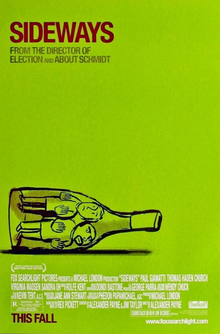
The 2004 film Sideways is a film that’s all about wine snobs. It follows two friends as they take a week-long vacation in the Santa Barbara wine country. Miles (Paul Giamatti) is a depressed English teacher who loves wine and who has never gotten over his divorce. He’s also a writer, though a remarkably unsuccessful one. He’s waiting to hear back on his latest manuscript, an autobiographical novel that he fears might not be commercial enough. Jack (Thomas Haden Church) was Miles’s college roommate and they’ve remained friends, despite Miles feeling that they have nothing in common. Jack is a former semi-successful actor who now works as a voice over artist. Jack knows little about wine. He’s just looking for a chance to indulge in some meaningless, commitment-free sex before getting married.
Miles attempts to teach Jack to appreciate wine. Jack attempts to get Miles to actually enjoy life for once. Together …. THEY SOLVE CRIMES!
Actually, they don’t solve crimes. That’s not the type of film that Sideways is. This is an Alexander Payne film, which means that it’s essentially a road film in which two different characters consider their own mortality and question whether or not there’s more to life than just what they see around them. The difference between the two characters is that Miles obsesses on the meaning of it all while Jack doesn’t exactly ignore Miles’s concerns but he’s much better at shrugging them off and blithely moving from one experience to another. Miles wears his neurosis on his sleeve while Jack is slightly better at hiding them.
During their week-long excursion into wine country, Miles and Jack fall for two women who undoubtedly deserve better. Maya (Virginia Madsen) is a waitress who is working on her master’s degree in horticulture. Maya shares Miles’s love of wine and is one of the few people to show any genuine interest in Miles’s book. Stephanie (Sandra Oh) is as much of a free spirit as Jack and, after spending two days with her and her daughter, Jack starts talking about canceling (or, at the very least, delaying) his upcoming wedding. Miles, meanwhile, is falling in love with Maya but there’s a problem. Jack lied to Maya and told her that Miles’s book is about to be published and Jack has failed to tell Stephanie that he’s engaged….
And really, it would be very easy to be dismissive of both Miles and Jack if they were played by anyone other than Paul Giamatti and Thomas Haden Church. If you ever need a movie to cite as an example of how perfect casting can inspire you to forgive characters who do rotten things and make stupid mistakes, Sideways would be a good film to go with. Thomas Haden Church brings an unexpected sincerity to the role of Jack, one that keeps him from coming across as being malicious but instead suggests that he just can’t help himself. If nothing else, Haden Church’s concern for Miles comes across being genuine. (“I guess because you were wearing your seat belt.”) Meanwhile, in the role of Miles, Paul Giamatti again proves that he’s one of those rare actors who can take a rather annoying character and somehow make him totally sympathetic. It help that Giamatti brings a lot of self-awareness to the role. Yes, Miles can be whiny and self-absorbed but at least he knows that he’s whiny and self-absorbed and he’s just as annoyed with himself as we often are.
The actors even manage to make all of the wine talk palpable for non-wine people like me. During Virginia Madsen’s lengthy monologue about why she loves wine, I found myself thinking, “That’s why I love movies.” Just as wine tastes different depending on who is drinking it and when they opened the bottle, how one experiences a movie can change from time to time and depending on each individual viewing experience. Just as the best wine was cultivated over time, the same can be said of movies, many of which are not recognized for their greatness until years after they were first produced. Just as Maya thinks about all the people who played a part in creating the perfect bottle of wine, I think about all the people who played a part in creating the movies that I love. You don’t have to love wine to enjoy Sideways. You just have to love something.
Sideways was nominated for Best Picture but it lost to Million Dollar Baby. Amazingly, Paul Giamatti was not nominated for Best Actor.
As befits the title, the 1990 film, The Hot Spot, is all about heat.
There’s the figurative heat that comes from a cast of characters who are obsessed with sex, lies, and murder. There’s the literal heat that comes from a fire that the film’s “hero” sets in order to distract everyone long enough so that he can get away with robbing a bank. And, of course, there’s the fact that the film is set in a small Texas town that appears to be the hottest place on Earth. Every scene in the film appears to be drenched by the sun and, if the characters often seem to take their time from getting from one point to another, that’s because everyone knows better than to rush around when it’s over a hundred degrees in the shade. As someone who has spent most of her life in Texas, I can tell you that, if nothing else, The Hot Spot captures the feel of what summer is usually like down here. I’ve often felt that stepping outside during a Texas summer is like stepping into a wall of pure heat. The Hot Spot takes place on the other side of that wall.
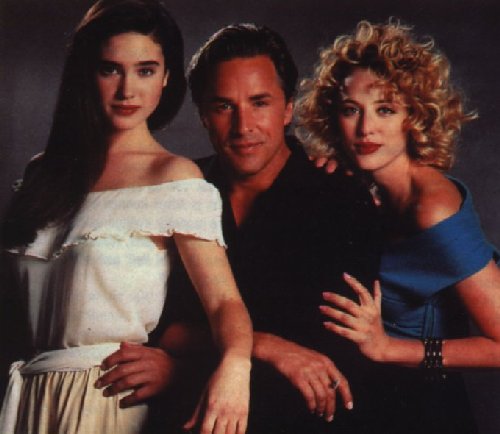
The Hot Spot is a heavily stylized film noir, one in which the the traditional fog and shadows have been replaced by clouds of dust and blinding sunlight. Harry (Don Johnson) is a drifter who has just rolled into a small Texas town. Harry’s not too bright but he’s handsome and cocky and who needs to be smart when you’ve got charm? Harry gets a job selling used cars, though he actually aspires to be a bank robber. Harry finds himself falling in love with Gloria (Jennifer Connelly), a seemingly innocent accountant who is being blackmailed by the brutish Frank Sutton (William Sadler). Meanwhile, Harry is also being pursued by his boss’s wife, Dolly (Virginia Madsen), an over-the-top femme fatale who is just as amoral as Harry but who might be a little bit smarter. Complicating matters is that, while Harry’s trying to rob a bank, he also ends up saving a man’s life. Only Dolly knows that Harry isn’t the hero that the rest of the town thinks he is. She tells him that she’ll keep his secret if he does her just one little favor….
The Hot Spot was directed by Dennis Hopper (yes, that Dennis Hopper) and, from the start, it quickly becomes apparent that he’s not really that interested in the film’s story. Instead, he’s more interested in exploring the increasingly surreal world in which Harry has found himself. The Hot Spot plays out at a languid pace, which allows Hopper to focus on his cast of small-town eccentrics. (My particular favorite was Jack Nance as the alcoholic bank president who also doubles as the town’s volunteer fire marshal.) The film is so hyper stylized that it’s hard not to suspect that every character — with the possible exception of Harry — understands that they’re only characters in a film noir. For instance, is Dolly really the over-the-top femme fatale that she presents herself as being or is she just a frustrated housewife playing a role? Is Gloria really an innocent caught up in a blackmail scheme or is she just smart enough to realize that the rules of noir requires her to appear to be Dolly’s opposite? And is Harry being manipulated or is he allowing himself to be manipulated because, deep down, he understands that’s his destiny as a handsome but dumb drifter in a small town? Do any of the characters really have any control over their choices and their actions or has everyone’s fate been predetermined by virtue of them being characters in a film noir? In the end, The Hot Spot is more than just a traditional noir. It’s also a study of why the genre has endured.
It’s a long and, at times, slow movie, one that plays out at its own peculiar pace. As a result, some people will be bored out of their mind. But if you can tap into the film surreal worldview and adjust to the languid style, The Hot Spot is a frequently entertaining and, at times, rather sardonic slice of Texas noir.
Andrea (Virginia Madsen) is a small town teenager who has just received a scholarship to attend the Ettinger Academy, a formelyr all-male boarding school. Andrea is excited because some of the most powerful and wealthy people in the country have graduated from Ettinger. Her boyfriend (James Wilder) is less excited because he worries that Ettinger is going to change Andrea. He might be right because all of the students at Ettinger are emotionless robots who read the Wall Street Journal and listen to classic music. Even Andrea’s new friends, who all seem normal, soon change into mindless preppies who wear sweaters over their shoulders.
A high school version of The Stepford Wives, Zombie High features no zombies and is more of a comedy than a straight up horror film. The movie’s original title was the far cooler The School That Ate My Brain. Zombie High is nothing special but it does feature Sherilyn Fenn in a small role, as one of the students who goes from being vampy to preppy in just one day. Virginia Madsen and Sherilyn Fenn in the same movie? What 80s or 90s kid could resist that? Also, Zombie High wins points by proving that heavy metal music is the key to reversing brainwashing.
Today was the first day of a new year so, of course, I had to go down to the Alamo Drafthouse and see a movie. What was the title of the first movie that I saw in a theater in 2016?
Joy.
Despite the fact that Joy has gotten some seriously mixed reviews, I had high hopes when I sat down in the Alamo. After all, Joy represents the third collaboration between director David O. Russell and one of my favorite actresses, Jennifer Lawrence. (Their previous collaborations — Silver Linings Playbook and American Hustle — happen to be two of my favorite films of the past 5 years.) Add to that, Joy has been advertised as being a tribute to a real-life, strong-willed woman and I figured that, at the very least, it would provide a nice alternative to the testosterone-crazed movies that I’ve recently sat through. And finally, Joy had a great trailer!
Sure, there were a few less than positive signs about Joy. As I mentioned before, the majority of the reviews had been mixed and the word of mouth was even worse. (My friend, the sportswriter Jason Tarwater, used one word to describe the film to me: “Meh.”) But what truly worried me was that Sasha Stone of AwardsDaily absolutely raved about the film on her site and that’s usually a bad sign. Let’s not forget that this is the same Sasha Stone who claimed that Maps To The Stars was one of the best films ever made about Hollywood.
And, to be honest, I had much the same reaction to Joy that I had to Map To The Stars. I really wanted to love Joy and, occasionally, there would be a clever bit of dialogue or an unexpected directorial choice and I would briefly perk up in my seat and think to myself, “Okay, this is the film that I wanted to see!” But, for the most part, Joy is a disappointment. It’s not so much that it’s bad as it’s just not particularly great. For the most part, it’s just meh.
But let’s talk about what worked. Overall, this may be one of Jennifer Lawrence’s lesser films but she gives a great performance, one that reminds us that she truly is one of the best actresses working today. I’ve read some complaints that Lawrence was too young for the title role and, to be absolutely honest, she probably is. She looks like she could easily go undercover at a high school and help Jonah Hill and Channing Tatum bust drug dealers. But, at the same time, she projects the inner weariness of a survivor. For lack of a better term, she has an old soul and it comes across in her films.
In Joy, she plays Joy Mangano, a divorced mother of two who lives in upstate New York. Her mother (Virginia Madsen) lives with Joy and spends all of her time watching soap operas. Joy ex-husband, a lounge singer named Tony (Edgar Ramirez), lives in the basement. Meanwhile, her grandmother (Diane Ladd, who narrates the film) is always hovering in the background, offering Joy encouragement and optimism. At the start of the film, Joy’s cantankerous father (Robert De Niro) has also moved into the house. Joy, who was the valedictorian of her high school, has got a demeaning job working as a flight booker at the airport.
(“What’s your name?” one rude customer asks, “Joy? You don’t seem very joyful to me…”)
How stressful is Joy’s life? It’s so stressful that she has a reoccurring nightmare in which she’s trapped in her mother’s favorite soap opera and Susan Lucci (cleverly playing herself) tells her that she should just give up.
However, as difficult as life may get, Joy refuses to take Susan Lucci’s advise. She invents a miraculous mop known as the miracle mop and eventually becomes a highly successful businesswoman. Along the way, she makes her television debut on QVC and becomes a minor celebrity herself…
The film’s best scenes are the ones that deal with Joy and QVC. These scenes, in which the inexperienced Joy proves herself to be a natural saleswoman, are the best in the film. These scenes are filled with the spark that I was hoping would be present throughout the entire film. Of course, it helps that these scenes also feature Bradley Cooper as a sympathetic television executive. This is the third time that Bradley Cooper and Jennifer Lawrence have acted opposite each other and there’s an immediate chemistry between them. In this case, it’s not a romantic chemistry (and one of the things that I did appreciate about Joy was that it didn’t try to force a predictable romance on the title character). Instead, it’s the type of mutual respect that you rarely see between male and female characters in the movies. It’s a lot of fun to watch, precisely because it is so real and unexpected.
But sadly, the QVC scenes only make up a relatively small part of Joy. The rest of the film is something of a mess, with David O. Russell never settling on a consistent tone. At times, Joy feels like a disorganized collection of themes from his previous films. Just as in The Fighter and Silver Linings Playbook, we get the quirky and dysfunctional family. Just as in American Hustle, we get the period detail, the Scorsese-lite soundtrack, and the moments of cynical humor. There’s a lot going on in Joy and, at time, it doesn’t seem that Russell really knows what to do with all the theme and characters that he’s mixed into the movie. I found myself wondering if he truly understood the story that he was trying to tell.
Finally, at the end of the film, Joy visits a business rival in Dallas, Texas. Let’s just say that the film’s version of Dallas looks nothing like the city that I know. (The minute that the scene cut from her ex-husband discovering that Joy had left to a close-up of a Bar-B-Q sign, I let out an exasperated, “Oh, come on!”) I suppose I should be happy that Russell didn’t have huge mountains in the background of the Dallas scenes but seriously, would it have killed anyone to do a little research or maybe hop on a plane and spend a day or two filming on location?
(After all, if Richard Linklater or Wes Anderson decided to set a movie in David O. Russell’s home state of Massachusetts, I doubt that they would film the Boston scenes in El Paso….)
Joy features great work from Jennifer Lawrence and Bradley Cooper and it tells a story that has the potential to be very empowering. But, when it comes to the overall film … meh.
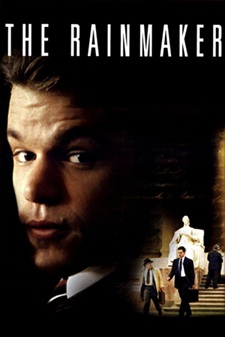 Rudy Baylor (Matt Damon) is an idealistic young law school graduate who discovers that having a degree and passing the bar doesn’t automatically make you a success. He gets a job working a bar that just happens to be owned by an ambulance chasing attorney named Bruiser Stone (Mickey Rourke). Bruiser takes Rudy on as an associate and assigns his associate, Deck Shifflet (Danny DeVito), to teach Rudy how to find cases. When Bruiser flees the country to escape an FBI investigation, Rudy and Deck start their own law firm. Rudy soon finds himself with the case of his young career, representing a family in a law suit against Great Benefit Insurance. Rudy also falls for Kelly (Claire Danes), a young woman who is being abused by her husband (Andrew Shue).


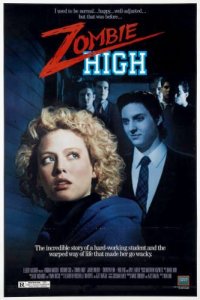 Andrea (Virginia Madsen) is a small town teenager who has just received a scholarship to attend the Ettinger Academy, a formelyr all-male boarding school. Andrea is excited because some of the most powerful and wealthy people in the country have graduated from Ettinger. Her boyfriend (James Wilder) is less excited because he worries that Ettinger is going to change Andrea. He might be right because all of the students at Ettinger are emotionless robots who read the Wall Street Journal and listen to classic music. Even Andrea’s new friends, who all seem normal, soon change into mindless preppies who wear sweaters over their shoulders.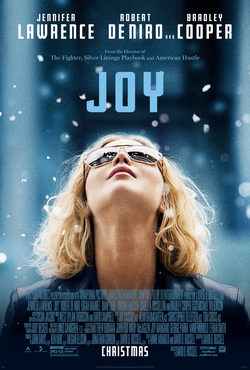

 Through the Shattered Lens