FTL – Advanced Edition


When Faster Than Light first launched, in the before time, in the long long ago… the developers talked about updates. Upgrades. Expansions. For a long time, we had nothing.

But then, as good developers are wont to do… we got everything. We got FTL – Advanced Edition. It’s more than just an expansion to the amazing space-based Rogue-like that we already played. It’s more than a remake which provides tons of extra features and cosmetic improvements that would have helped the initial release. It’s both an expansion and a remake all at once. It’s a huge upgrade to the core game filled with many quality-of-life improvements combined with an expansion that introduces many new mechanics, a new cruiser, a heavy load of new weapons and augments… even a new alien race. It’s pretty good.

And before I go a step further, let me tell you about the best part: It’s free!

It’s free because you already bought Faster Than Light on my recommendation. If you didn’t… well, I feel for you. Because a great game has been out for years without your knowledge. Luckily, it’s not too late. Things haven’t changed. Even if you’re just buying now, the game is still going to cost you only $9.99 US. For everything! If you have any interest in this deep, strategic, space-based Rogue-like… this is an excellent price point. It could get better on the Steam sale… but in general, this isn’t too dear a price to pay to support an excellent indie developer who has produced an excellent product.

So what’s so good about FTL Advanced Edition? I guess everything. Let’s talk about the improvements, in no particular order.

– A new alien cruiser, provided free of charge to owners of Advanced Edition. It’s a totally unique ship. The new alien species (no surprise) mans this craft… and their special characteristic is being awesome… but also draining oxygen out of any room they’re in. Obviously, you can create an awesome ship out of these aliens alone. But that’s not guaranteed in FTL. Still, it’s brutally hard for boarders to take a ship with no oxygen. I’m sure we’ve all tried and been burned horribly by automated ships in the past!

– A new alien species! They suck oxygen, but otherwise are pretty awesome. Wait, it’s easy to turn no air to your advantage? Maybe they’re just awesome.

– Tooltips. The game has had a staggering upgrade in UI. One of the biggest and most immediately apparent differences is in UI. I think literally one zillion (technical term) tooltips have been added to the game. More or less everything now has some information associated. In some ways, you’re still flying blind, but in others… there’s a degree of transparancy which will help you decode what to do.

– Piles of new stuff. New equipment. New weapons. New events. Old events re-worked. It’s the same game, but it’s different enough. If you thought, for example, Reaper of Souls, was a very nice quality of life upgrade with some new content… this is at least that good. Only it’s free to game owners. Pretty rough, huh?

– New qualities, new hazards. Ion events in deep space. Freezing. Fire! Totally new qualities. In many ways, this is the same FTL that you already knew… except there’s a thousand more variables now. The expansiveness of the game has increased dramatically.

– Let’s talk more about those UI upgrades. Simple quality of life stuff. Making a jump on the sector map? You can now see what jumps are ‘in range’ and you can make from your destination. Ever been frustrated, being stuck in a random corner you thought you could escape, fighting Rebel cruiser after Rebel cruiser? Nah, no big deal now.

– More ship layouts. More ship access. You can now unlock any ship in the game (except for the Crystal cruiser) by beating the game. If you’re good, you’ll get access to ship after ship… and eventually, you’ll begin to gain access to C-style layouts. They include many of the new…

– New ships systems. Replace your medical healing bay with a Clone Bay that heals crew members only on jump, but also clones new copies of dead crewmates. Gain a battery backup that gives you a gigantic reactor boost for 30 seconds, giving you overwhelming power in those nebulae. Gain a hacking module which lets you close doors and cripple opposing ships. Gain the mind control module, turning opposing crewmen into your crewmen. Try deploying MC tech against the Rebel flagship, and make a winning strategy even better!

– A new sector. This exists, but I have not yet been able to produce it, through the games I’ve played. I apologize. Rumour holds that it centers around the new alien race, and their oxygen-sucking ways. It’s probably awesome.

– It bears repeating that the script has been revisited, expanded, and improved. This includes both old events and new. The overall experience is more streamlined, and more awesome, than it was before.

Do I seriously need to keep stumping for a free upgrade with bullet points?

Buy the game! Upgrade the game! Enjoy the game!

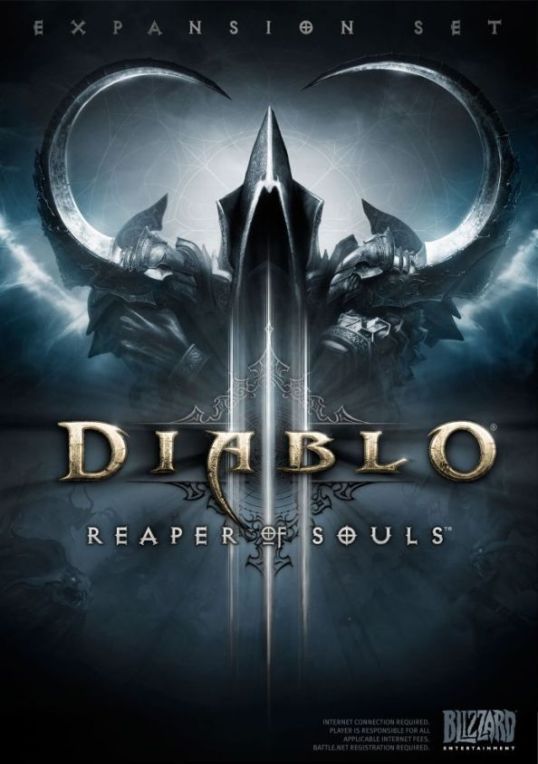
The Reaper of Souls


Diablo_3_reaper_of_souls_box_art_0

There’s no need to be afraid. Spoilers do follow (to the extent that a Diablo game can be spoiled). You have been warned.

So, in the relatively recent (surprisingly still recent!) past… Blizzard Entertainment released a hilariously long-delayed sequel, which is sort of their hallmark, in Diablo 3. Probably everyone who had some interest in the Diablo franchise played it. And, in several ways, it was sort of the ultimate evolution of the Diablo formula and format. Is the storyline silly? Yes. In fact, it borders on preposterous. But it also holds together in a ‘good enough’ way to propel the action through a variety of beautifully rendered locales killing everything in sight. Reaper of Souls does not alter this formula. Presumably none of us tuned into Diablo for storytelling, right? It’s not an RPG. It’s a game where you click on monsters and kill them. Your reward is better loot, which makes it easier to click on monsters and kill them. It is weirdly absorbing in its way, but it is not high art. This is a game about a visceral experience; it is purely about fun.

And Diablo 3 was fun. It improved heavily upon Diablo 2. Each class can now be either sex! Each class now has a half dozen abilities in play at a given time, rather than just ‘left click’ and ‘right’ click… and the procedural generation, while still present, is a little more structured… or, at least, it feels a little more structured. Some areas seem to vary little between different playthroughs. To be perfectly honest, while it is a very competently produced game, a tight experience, with lovely graphics… I didn’t feel like I had $60 worth of game when I acquired Diablo 3. I think I eventually got enough play hours out of it to where I can shrug and move on… but I didn’t expect to find myself shelling out another $40 for Reaper of Souls. I did it anyway, though.

The good news is, for what fence-sitters may remain… Reaper of Souls is pretty good! Let’s discuss several reasons why:

– Act V. Act V is a massive act, easily twice the size of any of Diablo 3’s four acts. It comes complete with an entirely new selection of monsters, three major bosses with complex battle mechanics and a variety of environments, all of which are pretty cool. It’s hard not to respond to Act V as the best overall Act available in the game now. Act V, for those who haven’t been paying attention, follows the Nephalem’s quest to save the entire world of Sanctuary from a renegade angel, Malthael, whose exact plan remains unknown.

– Crusader. Crusader is the new class, a melee attacker like the Barbarian or Monk. The Crusader uses a weapon and shield style, though the weapon can be two-handed with the use of a passive skill slot. In play, they feel strong defensively, with a good area of effect capability. I have yet any of their legendary items with my own eyes, but the class does represent a new way to experience the game. I certainly can’t claim to have 60’d a Crusader, let alone 70’d… but I have played the Crusader, and it is good.

– Loot 2.0. I know this actually launched at the start of March, but it was part of the build-up to Reaper of Souls. I get how a company seeking profit would clamp onto the idea of the real cash auction house. I get how the economic power of the World of WarCraft Aution House could invite the creation of a similar body in Diablo 3… but even the most hardcore players I know would suggest that the existence of both cash and gold AHs was a mistake in Diablo 3. At best, they did nothing to improve the experience. In the real world, they significantly harmed it.

Now that the Auction House is gone… we get Loot 2.0. A universal improvement over loot 1.0, randomly generated loot now tends to generate according to your needs. Stats are much more likely to roll for your class, legendaries will (almost) always be for your class. Sets? I haven’t seen much of, despite a good number of hours invested… but I assume they adhere to similar principles.

– Bosses 2.0.

One area where Reaper of Souls really shrines is in boss design. Did you like the act bosses in Diablo 3? Because loot 2.0 comes with boss 2.0, and even without the expansion, the purple encounters throughout the game have been tweaked, revisited, improved… and it goes double for Reaper of Souls itself. Uzrael, the first of three significant act bosses, was more complex than the act bosses in Diablo 3… more complex than Baal had been in Diablo 2… Blizzard applying lessons learned from years of creating raid encounters for increasingly sophisticated MMO players. But there are balances to be struck, and they differ between products. A single character has to be able to confront Malthael at the finale of Reaper of Souls, and ultimately that’s as much a part of the game as 10/25 man raids are for World of WarCraft. This is a process that easily could have been screwed up, but instead it’s been implemented beautifully. Malthael’s encounter is an epic affair, featuring no easily discernible pattern, with Malthael possessing at least a dozen different types of attacks, some of which are not easy to dodge. He will test both your skill and your gear, and it was awfully satisfying to finally see him fall.

– Difficulty 2.0

Reaper of Souls heralds a new dynamic difficulty system for Diablo.. one that is based, more or less, on your gear… rather than your level. In Diablo 2, and again at Diablo 3’s launch, difficulty consisted of Normal, Nightmare, Hell, etc. difficulties, each higher difficulty “unlocked” by completing the previous one. In order to proceed, you have no choice but to play through the entire storyline, consecutively. It made it harder to just “jump in” to games with your friends unless they were in the same difficulty of the game, and the difficulty jumps generally were quite drastic.

Difficulty 2.0 attempts to smooth all of this with a much more dynamic difficulty system. Now, the player has access to a several ‘standard’ difficulty levels, and then Torment levels which are designed for high-level (60+ minimum) play. The higher the difficulty you play on, the bigger the bonus is to the player’s experience points earned, gold and item find. Since this sliding scale also stacks with the inherent bonuses from having multiple players in the game, high level runs on Torment difficulties with your friends can produce quick dividends in terms of loot. Of course, there’s always better loot just around the corner…

These are the most substantive changes. They were needed, they are positive, and if anything could re-invigorate the Diablo 3 experience for you… this patch and expansion will probably do it. The game features many other improvements, like customising items (both a single property of a given item can be swapped out, and its appearance ‘transmogrified’, using a new artisan in town), an expanded stash, re-worked items and class features, and so on.

There are two big negatives, however. They are intertwined, and they are compelling.

– $39.95 U.S.. And that’s not me getting overcharged for physical media at Wal-Mart. That’s from Blizzard’s digital store, through my Battle.net account. For an expansion? Ouch. Now, obviously, they did a lot of work on this one. Act V is big, Malthael is a bad ass, and all of the other updates and improvements were welcome… but it’s still a stiff price tag to pay for a game add-on. I’m suspicious of the idea that a new character class is really that big of an addition to this type of game. But there it is. They’ve already got my money.

– It’s still Diablo. That means that its replayability mileage for you [i]may vary[/i]. Just keep that in mind, before you shell out your hard-earned money. Still, if Diablo has always been something you’ve enjoyed, you will find this the most pleasing offering so far.

Payday 2


Payday2_logo_white

A little while back, a little studio called Overkill put a game on Steam called Payday: The Heist. The release completely passed me by. In fact, I was totally ignorant even of the existence of the title until a group of my friends all bought it and decided to start robbing banks together. They were so taken with it that they demanded that I join them, and I couldn’t have been happier with the purchase. We passed many nights (and into the early mornings, sometimes!) trying to grind our way through harder difficulties, and try to learn more advanced ways to stealth through the various ‘heists’, which included stuff ranging from your standard-issue bank job through a Left 4 Dead inspired hospital mission called, fittingly, No Mercy, where a shadowy anonymous buy was willing to pay bank in exchange for a sample of infected blood.

The game was marked by a number of good ideas. It includes minor RPG elements in that your account ‘levels up’ as you play more heists, granting access to useful abilities. In the original game, most of these bonuses were tied directly to weapons and armor and your ability to last in combat against the inevitable waves of police and SWAT forces that would attempt to keep you from escaping with your ill-gotten gains. Being stealthy at the start of a heist by using silenced weapons and preventing any civilian hostages in the area from escaping to summon help could pay significant dividends as you waited for your large thermal drill to bore its way into this vault or that one. A variety of weapons and gadgets rounded out your heisting arsenal, modeled off of real-life weapons augmented by just a bit of fancy. The game included multiple difficulty levels for every heist which would affect the number and types of enemies that spawn, and add other random factors that could make heists substantially more challenging. Indeed, that random AI Director feature of the game also helped its replayability dramatically, as heists could play out very differently if things went right – or very much wrong.

Payday 2 improves noticeably upon almost all of this. The heists are now more elaborate, including multi-day criminal enterprises (such as a ‘Watchdog’ mission where you must first secure a shipment of cocaine against an FBI operation, then in ‘day 2’ load the coke onto a drug boat at the docks, all while under police assault), and a wider variety of possible objectives – your crew are no longer strictly robbers, but rather highly skilled specialists for higher, men of limited principles and significant hardware.

The skill trees (Mastermind, Enforcer, Technician and Ghost, respectively) now include a wider variety of abilities, many of which can be directly employed for greater speed or stealth in the missions. Now, being a high level player with access to the best gadgets can make the simpler heists significantly easier, allowing the players to focus on the greater challenges of high difficulty level multi-day jobs. I personally find it very rewarding to try and work through missions in a stealthy way. Not only can some rewards become greater when you don’t have to battle you way through police lines, but the heists can also (often) be done cleaner and more quickly with the application of stealth. Returning is the oft-failing thermal drill which is the centerpiece of a number of missions where you try to gain access to a safe or other place you shouldn’t be, but this can now be circumvented if your technician is skilled enough to deploy shaped charges to blow off hinges, or if your ghost has an ECM Jammer that can bypass electronic security. The Mastermind can talk down inquisitive guards on the other end of the phone, easily intimidate and control civilians, and provide a slew of buffs to the group, and the Enforcer can (among so many other things) bring a powerful rotary saw to slice open less-imposing lockboxes, ATM machines, and encroaching enemies who draw too close.

Also notable in Payday 2 is a more credible electronic opponent. In the original game, the challenge was typically increased by sending more powerful units earlier in the mission, legions of ‘special’ units, and an unending stream of SWAT goons and their guns. To an extent, this is still completely true. However, the enemy now employs lesser raw numbers in favour of better tactics, and more threatening enemy units. Of course, stealth your way through the missions, and you may never have to suffer their wrath…

Payday 2 is not by any means a perfect game, however. The mission select is now done through an interface called Crime.net, which is a black and white overhead map of a city on which missions appear as ‘pings’ (as if the job just became available, complete with a timer before the job eventually disappears). Because of this system, if your crew is in favour of running a particular heist, it quite literally might take as long as half an hour of ‘browsing’ Crime.net for it to appear (or perhaps even longer!). In the most recent update, Overkill added some very basic filters to the Crime.net interface, allowing you to opt out of missions below a certain difficulty level… but this seems woefully inadequate. Though the game contains 10 heists, they re-use a couple of maps between them, and some of them are completely basic – there’s almost nothing to them. These are offset by some very complex heists higher up in pay scale, but some of them start to feel less replayable after a couple of solid nights with the group. This happened in the first game too, of course, but it’s much more annoying now with the obstacle of Crime.net possibly throwing you copy after copy of an undesirable heist that you are totally burned out on… instead of something you’d really like to do. I frankly do not understand the creative choice behind not offering better filters for this system.

While it is true that the police do not attack in such great numbers as before, they do still leave a lot of artifacts around the map, with corpses, piles of ammo, and miscellaneous gear (such as riot shields) strewn about, and I have seen the game start to chug on systems that are powerful enough to run many other contemporary games without issue. By its nature, this is probably something that’s hard for this game to overcome, but it’s a frustrating problem to have when the key resource that you need to enjoy this game to its fullest is friends who can also play it with you.

Yes, Payday 2 has in-game voice chat, and yes, you can jump into public games with strangers anytime you want. Some people might really enjoy doing so, in fact, and I don’t really mind it…. but I would much rather gather a group of 3 friends to roll with and work in tandem to complete heists. The AI team-mate can be valuable in combat because of their accuracy (though sometimes the team AI seems bewildered in a way the police AI rarely is… failing to respond even in a dire emergency) but is also frustratingly useless as they cannot transport filthy lucre, or drugs, or whatever, cannot advance mission objectives, and will occasionally blunder into unwinnable firefights against a legion of police in the middle of the street… where they can’t even be reached for a quick revive. As a result, you really want a full party, regardless of how you have to get it.

One thing to admire entirely about Payday 2 is its price point. At $29.99 on Steam (it’s also available on Xbox 360 and Playstation 3, the physical media involved means your price point will be $39.99 instead), this game has real value, though I can’t necessarily recommend it if you don’t have at least one friend who would be willing to buy the game as well and commit to playing it with you. Your mileage may vary with teaming up with strangers (I’ve had a mixed bag of results, myself) but I wouldn’t have purchased the game without friends I knew for certain would play, so I certainly won’t tell you to do it!

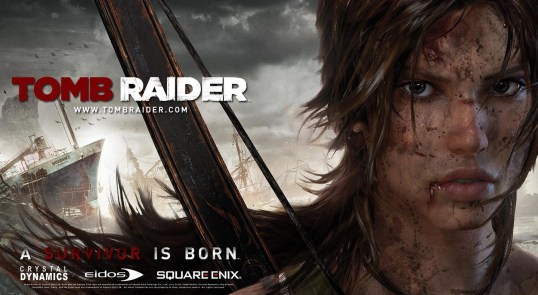
What I Played Today: Tomb Raider (2013)


tomb-raider-2013-wallpaper1

I hate to call this a “review”… because the game came out months ago, and I just now finished it. By now, probably everyone who is interested already knows that this game exists, that it is awesome, and that it needs to be played. But we here at The Shattered Lens also exist to serve the conservative buyer, the type who wonders to themselves “Is any single player game worth $60 anymore? How much of that $60 is being taken up by a Tomb Raider multiplayer nobody asked for or wanted?” “Oh God, another Tomb Raider?” I imagine that last line being accompanied by an outward eye roll, but with a quiet inner voice whispering, God, I hope it does not suck.

Well, fortunately for that tiny segment of the population… I am here to help you. I finished Tomb Raider today, and I have plenty to say about it, some of which I’m going to truncate in acknowledgment of the fact that this take would be a lot fresher if I’d written it two days after the game came out. I pre-ordered it. Obviously, there is no excuse for my having dismissed the game for even an instant. Now, with all that preamble managed…

Let’s look at Tomb Raider.

Of olde, Tomb Raider was a PC (first) and Console (adaptations, later simultaneous releases) puzzle / platformer game that starred well-endowed protagonist Lara Croft as she went about exploring ruins of the ancient world. As with any good “archaeology” narrative, the lines between historical fact and myth are blurred, and Lara would go on to discover things like oh, I dunno, the lost continent of Atlantis. The games focused heavily on platforming with some puzzles, which had (unfortunately) been forced into a relationship with a perennially awkward and not-optimal combat “system” which allowed for varying degrees of athleticism and varying degrees of inaccurate bullet spraying.

Tomb Raider (2013) is built on a more stable foundation. The game here essentially plays like any third person shooter you know of – there are plenty of chest-high obstacles available to shield you from enemy fire, ammo can be found everywhere (I’d say there’s a real argument that the game offers way too much ammo to the player, in fact), and like any good shooter in the Call of Duty era, you have several weapons that can be aimed down their sights and fired accurately at a precisely determined target. Not bad, right? Actually, it improves from there, hybriding in several elements that fans of the wildly popular Batman Arkham: (whatever) franchise. Lara, like Batman, learns skills and acquires new equipment as she proceeds through the story. That stuff can be used to go back and open up previously inaccessible secret areas and retrieve formerly inaccessible historical relics (though, to be honest, very little serious backtracking is required even if you intend to complete 100% of the collectibles). Lara has a predictable array of athletic moves at her disposal, including running, jumping, and climbing (including climbing-with-an-axe-climbing [the axe doubles as debatably Lara’s most powerful weapon]) as well as being a 100 pound girl who also happens to be qualified to pass the Presidential Fitness Test (try to outlast Lara Croft doing pull-ups. I dare you.) The action reminds me of Batman or Assassin’s Creed in the big picture, but the devil is in the details, and those details really do a lot to differentiate Tomb Raider from the gameplay that definitely influenced it.

Tomb Raider (2013) takes place on a lush, temperate island in the Dragon’s Triangle (a real-life region of water which extends from the southeastern Japanese coast toward the Phillipines) that was home to the ancient Yamatai civilization. Things immediately go totally awry, of course, and the rest of the game chronicles Lara’s individual journey to survive her experiences on the island – something complicated by savage and seemingly malevolent storms, and the discovery of a whole nation of crazed cultists who call the island home. Your mileage will probably vary with the actual storyline, particularly the endgame where Lara discovers the truth behind the island’s various mysteries (no fear, Lost fans, it’s all spelled out in the end!), and with the supporting characters, who are pretty one-note. To be frank, the supporting characters just don’t have much to do with this story, which is all about Lara Croft.

Lara herself is characterized extremely well, both through the excellent voice acting of Camilla Luddington, as well as through her physicality. As the player acquires new skills for Lara, she becomes demonstrably more capable in the game… and also more brutal. I have heard it argued that the game is diminished by the extent to which Lara – who has a hard time with the first occasion on which she kills another human being to survive – indulges in increasingly brutal violence as the game goes on. I would argue the opposite. I thought the game was very effective in putting myself in Lara’s shoes, so to speak, from the way the camera hovers close to her to the way she talks to herself, trying to encourage herself in grim situations, and reflecting on the madness and horror in which she has become buried. Far from objecting to Lara’s thought progression – and “morality” progression, if you want to call it that – I found myself snapping earlier than she does, at one point cursing her enemies and resolving to destroy them. Perhaps all of that pales in comparison to what I think is the strongest, best, part of Lara Croft’s character, however: Lara is never a victim. During the game, she is captured more than once, and encounters a variety of terrible situations, some of which she needs a little (very little) help to escape. But time and again, Lara draws deep into her own reserves of resourcefulness and willpower and not only extracts herself from increasingly dangerous situations… but attempts to drag the other survivors of her wrecked ship, and their would-be rescuers, with her to safety.

Fans of the series who were primarily interested in the puzzle-solving action of previous Tomb Raider games are almost certainly going to find this game a bit of a disappointment. Certainly, there are puzzles around – particularly in the optional ‘Hidden Tombs’ which can be completed for a bounty of salvage parts and experience points to upgrade Lara – but they definitely aren’t the core focus of the game in the way that they have been in previous titles. Once you have learned what to look for in the environment, the method of advancing through each open-roam area should be fairly obvious – it’s simply up to you to make the necessary jumps, climbs, etc. to reach your goals. It’s worth restating that the combat is quite a bit smoother than it was in previous installments, with obvious influences from other modern shooters giving it a much more polished feel. You may occasionally find the combat difficult, however, depending on your personal ability at sneaking around the island and murdering guards noiselessly (or avoiding them entirely). I consider myself good at stealth mechanics, but that I often prefer a straightforward solution if it will save me a lot of time (this goes triple for games where I know I’m going to be running around searching for collectibles. Better to just wipe out the whole population of badguys so they can’t harass me later).

Oh, and as for those pesky collectibles? There are a lot of them, and some of them are super hard to see in the game environment, but don’t go rushing off to find a game guide just yet… The game contains plenty of ways to find them (try setting a waypoint on the object of your desire and using Lara’s “Survival Instincts” if you really get stuck!) between the treasure maps and some of the skills you can purchase for Lara.

For me, even as a fan of both puzzles and previous installments… I really loved Tomb Raider (2013). This is one of the best pure single-player experiences I’ve gone through in a while (and, it’s worth noting, the game is not short by any means, although obviously it could be completed much faster than I managed if you were avoiding collectibles and time-killing puzzles). I encourage any of the remaining fence sitters to check this one out.

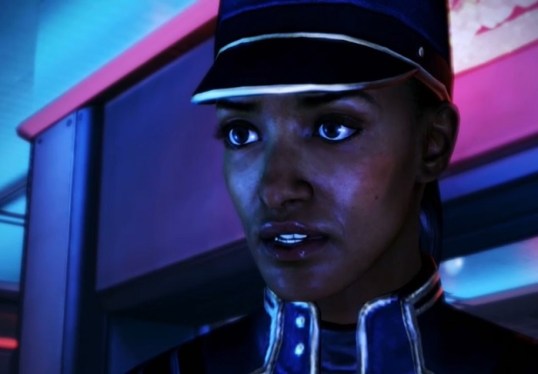
Shepard’s Last Dance


Mara_Brooks

Well, it’s been quite a journey, hasn’t it? We’ve followed Commander Shepard across the years, and across the galaxy, battling against nothing less than our complete annihilation. But there’s one last shot in the chamber, it seems, as a sinister conspiracy seems aimed at killing off the legendary Commander Shepard. Such is the plot of the new Mass Effect 3 “Citadel” DLC, now available for 1200 MS Points.

Note that this review openly discusses details from the original Mass EFfect 3 game. So if you somehow still haven’t played it and still want to, come back and read us later. It’s alright, I won’t be offended.

I know that people have mixed feelings about content DLCs for Mass Effect 3, the ending of which is very definitive. Even with the “best” ending and the added fluff of the “Extended Cut” DLC released last summer, there isn’t anywhere else for Shepard’s story to go after the credits roll. While the “best” ending leaves Shepard’s ultimate fate ambiguous, Bioware has told us that Shepard’s story is over. So what is there to add to the gameplay of Mass Effect 3? I actually think Bioware has done a decent job of addressing this; I enjoyed the “Leviathan” DLC if only for its interesting story reveal. “Return to Omega” is cutting room floor stuff; the conclusion of Aria’s plot arc belonged in the original game, but at least its spot in the Mass Effect story makes sense. But “Citadel”… “Citadel” is one fine DLC. I would have said that the gold standard for Bioware’s DLC before this one was probably “Lair of the Shadow Broker”, which added substantially to my Mass Effect 2 experience, had an interesting plot, and some interesting combats interwoven with some great moments for Liara and Shepard.

“Citadel” is better, and it is better because it honours what has been Mass Effect’s biggest strength all along: the characters. The party interaction. The dialogue. The combat system in Mass Effect 3 is very polished, and it functions very well for what it needs to do, but I would not play Mass Effect 3’s campaign for just the combat sequences. Instead of just fighting through waves of mooks, Shepard finds himself blending into a gala at a casino, blending in at the roulette table and socializing with the who’s who of the Citadel… in between casually shutting down cameras and bypassing security while a companion distracts nettlesome guards. Meanwhile, another companion is sneaking through the ventilation system, all so you can get one single crack at someone who may or may not have answers Shepard wants. It is probably worth noting that this DLC is simply not self-serious in the way that the rest of Mass Effect 3 is. If you feel a shift in tone is dramatically inappropriate, this DLC could rub you the wrong way I suppose.

Things open with orders to put the Normandy in to the Citadel for refits and repairs, where our old friend Admiral Anderson has given over his (ridiculously) swanky Citadel apartment for your use. Anderson does not anticipate ever leaving Earth again; even if he survives the final confrontation with the Reapers, the effort to rebuild Earth is something he knows he can’t walk away from. Once there, you end up meeting Joker for sushi in a highly exclusive restaurant on the Citadel. Things go south soon after, and Shepard is forced to deal with yet another problem dragging him away from the master situation of the Reapers. Things culminate in what could possibly be the most difficult combat in the game (about which I will reveal nothing at all; better that way). I found that I didn’t mind.

The thing about “Citadel” is that it’s genuinely lighthearted and funny, with razor-sharp writing. It’s a remarkably refreshing detour from the otherwise dour tone of Mass Effect 3. The game’s tone is, largely, completely warranted… but this DLC provides a break from the agonizing struggle of the war that the original game really, for the most part, lacked. Combat sequences breezed by in a frenzy of faced-paced action and constant party banter, making me think fondly on the constant party interactions from Dragon Age II. The respites between the action sequences are more of the same. Granted, just shoving characters into the setting of Shepard’s ultra-unbelievably-luxurious-swanky Citadel apartment doesn’t feel as organic as another scenario might… but gathering party members on the Normandy is a bit of a contrivance as well, isn’t it? Let’s give Bioware a pass here. They try hard to get your old squad members involved. Tons of characters return from the previous games, offering them more screen time than they otherwise received in Mass Effect 3… including the opportunity to once again use fan-favourite Wrex as a squad member (really, what’s a squad without a Krogan?)

If you’re still angry about Mass Effect 3’s ending, after all of the time, discussion, and the “Extended Cut” DLC (and, if you are, I certainly don’t blame you – it was a travesty) then you may not find the send-off this DLC gives to the characters and the scenario any more satisfying… but, on the other hand, you might. I thought it was a nice fan-service sort of addition to the Mass Effect canon, and a fun adventure besides. Incidentally, this DLC occupied me for at least three hours so far, and I haven’t gone through everything it offers. You should make your own decisions on whether it is priced fairly based on this.

Arcade Review: Skulls of the Shogun


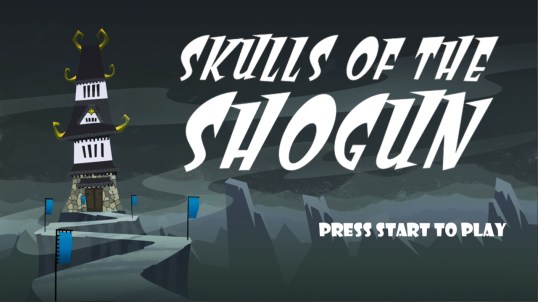
titlescreen

I went diving through the XBox Live Arcade’s new releases the other day. And you all know what that means! Yes, I’ve played Skulls of the Shogun, a new release by new developer 17-BIT (their only release to date, as far as I’ve determined), and available for 1200 Microsoft Points which (I think) is something like $15. The game draws inspiration from the classic GBA title “Advance Wars” in its game play, while its visual style reminds me of the classic XBox Live Arcade release “Castle Crashers”.

In its single player mode, the game follows the story of the tactically brilliant General Akamoto… after his death. He arrives in the afterlife prepared to claim all of the glory that his countless victories in life earned him, and is instead consigned to a bleak shore outside of the afterlife proper with only a few skeletons to keep him company. Obviously unsatisfied, Akamoto (you, the player!) begins gathering undead soldiers for an assault on the gates of the afterlife, to claim what is rightfully his. You soon learn the truth; Akamoto was stabbed in the back in life by his right hand man, Kurokawa, a noted coward. Immediately after stabbing you, Kurokawa fell on a spear, and was able to arrive in the afterlife first. There, he assumed your identity (and one of your daisho swords) and generally left everyone pretty torqued off in his wake.

Each mission (or multiplayer level) begins with each side commanding units drawn from a small pool. At first, you have access to only the slow-moving but defensively powerful Infantry and the faster but more vulnerable Cavalry. Soon after, you gain access to Archers, who are vulnerable in close combat, but very powerful at range. Archers are lethal to Infantry, whom they can outrun, but are outpaced by Cavalry and can’t fire when the enemy has closed in, while Cavalry can’t win a stand-up fight with Infantry, you see? Of course, your units can power-up in battle by consuming the skulls of the fallen. Each skull increases the maximum hitpoints of the unit, heals it somewhat, and if you eat three skulls you enter a Demon form, which gains a second action on each of your turns. The game also adds another twist in the form of Monks, spellcasting allies that you gain through capturing their shrines on the battlefield. Monks gain new spells from eating skulls, and can turn the course of a battle.

Your other main unit of concern is the General, a powerful unit (with an Infantry’s defense, the highest attack of all, and reasonable speed), however, the loss of the General means the loss of the mission. For this reason, it’s often wise to simply let the General hang around (in fact, each turn you go without ‘activating’ your General to give him orders, he heals a hitpoint and gains a maximum hitpoint, this is called ‘Meditating’, and is unique to the General) behind his men and direct the battle. Your units can also group together in tight formation to prevent the enemy from speeding past – an invaluable tactic that can help to protect your Archers, Monks, and General.

Although the unit list is limited and the game’s rules are not difficult to learn, there’s definitely some strategic depth to the game. In addition, the dialogue of the game is tight and fairly humourous, and the game itself is fun to play. You can’t ask for much more than that.

Faster Than Light


Entirely by accident, I discovered a game called Faster Than Light (FTL) while I was making my weekly perusal through the library over at Great Old Games. Because I like spaceships and bright shiny stars, I was instantly intrigued. Without really taking the time to learn a whole lot about the game, I went ahead and made the purchase. At $9, I didn’t feel like I had to get much return on my investment. After having sunk roughly a billion hours into FTL since that purchase, I’ve subsequently learned that FTL was funded by Kickstarter (another rousing success story! Go Kickstarter!), is actually new, despite having been on Great Old Games, and there was some buzz before it came out that I literally can’t believe that I didn’t hear even a single whisper about. I guess I haven’t been reading enough blogs after all.

My embarrassment over this game being news to me is a side issue, however. I have played Faster Than Light. Extensively. Allow me to tell you how it is, so you can decide whether that daunting $9 price point is worth it for you.

It’s great! Go buy it!

Well, alright. Let’s start with the premise. FTL is a Roguelike that stars you as the commander of a lone Federation starship with vital intelligence on the Rebel armada which you need to hustle across seemingly the entire galaxy to return to the last Federation fleet before they’re stomped by the aforementioned Rebels. Going against space type, we’re not rooting for the Rebels this time, as they are brutal, corrupt, jerks. On your journey, your ship will pick up space scrap which is used as currency. You need as much of this currency as possible in order to upgrade your single cruiser’s capabilities (the possibilities for this are extensive, including eight main ship systems, three subsystems, up to four weapon slots and three drone slots, three ‘augmentation’ slots for special systems, and your crew itself which starts small but can be expanded and include powerful alien species. So yeah.) You will need to upgrade your systems if you want to survive the long trek to the Federation fleet, and even more so if you intend to successfully defeat the final boss located there.

Your advance across the galaxy is star by star across multiple ‘sectors’ of space, with the Rebel armada in pursuit all the while, seeking to bring you down before you can bring your vital information to the Federation. Each star contains a random event, which can range from absolutely nothing, to running laser gun battles in asteroid fields, nebulae, or near stars that are experiencing solar flares. Suffice to say, given the random generation and the large range of customization options, no trek across the stars is ever exactly the same. Add in the fact that the game ultimately features about twenty unique ships each with its own unique interior layout and a unique starting loadout (some of which are much stronger than others) and you have a game that you can sink a great deal of time into.

The primary things that you, as a player, will need to do include managing your crew (crew members can be assigned to ‘man’ your ship systems. They can also be moved around to repair damaged systems, fight shipboard fires, repair hull breaches, board enemy craft, or repel boarders against your own), battling enemy ships with your craft’s weapons, drones, and boarding parties, and purchasing new upgrades and equipment to create a load-out that you feel like can go the distance. Finding combinations of weapons and special systems that work well for you is a big part of the game, and the only way that you will ultimately be able to experience any success against the final boss – an extremely difficult encounter, particularly if you are not prepared for it.

The downside for some players will be the difficulty. Faster Than Light is not an easy game. Not by a long shot. For those unfamiliar with Roguelikes, runs of horrific luck leading to catastrophe and death are incorporated by design. It is not a “problem” with the game that you might encounter a series of random events with no way out that lead to your ship exploding in the very first sector, or right before your confrontation with the boss. Death is deadly. There aren’t save points, folks, you’re back to the start if you go down in flames. This is, again, by design. It is not a “problem”, but it could be a reason why you would prefer not to play the game. So if the difficulty thing doesn’t appeal to you – and I didn’t even mention a learning curve that’s somewhat difficult to quantify – Faster Than Light may not be entirely to your liking. Of course, you may end up addicted anyway, and end up on a spiral of increasing frustration. I don’t personally recommend that path, but it’s your mouse to break, as they say.

The graphics “look like a flash game” as I’ve been told, which I suppose is true enough, but the game has spot-on sound effects and an excellent environmental music score that provides exactly the right touch of ambiance while you play. I found the graphics adequate, if nothing to rave about, and there’s something charming about the presentation, which is reminiscent of older video games and tugs at my nostalgia strings in a way that I find appealing. I definitely find myself recommending the game, even freely acknowledging that it may not be for everyone. After all, what game is?

For those who are interested, you can acquire FTL off of its official website or on Steam. You can also purchase the DRM-free version on GOG, but this version is only available for Windows platforms. Regardless, of where you get it, the game will be $9 until the sale price ends, after which it will price out at a whopping $10. So, act now, or whatever.

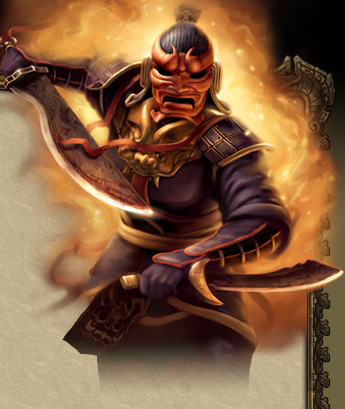
What I Played Today: Jade Empire


Every so often – because I like old games better than I like new ones, or so I’m told – I like to revisit a classic game. I’m sure, if you read my columns often, you’ve noticed that by now. Continuing this month’s theme of BioWare inundation (spurred, of course, by the release of Dragon Age II and the Arrival DLC) today I decided once again to play a little Jade Empire. Longtime WRPG fans will remember the title from its 2005 debut. Newcomers to BioWare’s camp may have missed this jewel. In the interests of saving the integrity of the game for anyone who never played the original release, I’m going to avoid serious game spoilers here, even though the game has been out for six years now.

The first thing I’ll say is that this game holds up better than most other original XBox titles with graphics that are bearable, at least, and smooth play on the XBox 360. I never played the game when it was originally launched on XBox, and only got into it after a friend recommended that I fork over the cash to buy it on the XBox Originals in Marketplace. Smooth emulation aside, I immediately fell in love with the title. Jade Empire offers a highly interactive game-play experience (more on this later) that is settled on the solid foundation of classic BioWare RPG structure. We slowly accumulate a group of loyal followers, whose personal story develops through conversation options between major plot developments in the overall story. Although many of these characters follow what we might call the “BioWare Rules” in terms of their personality archetypes (although Dawn Star is unconventional, she still reeks of Carth Onasi, doesn’t she?) they’re predictably detailed, with a diverse set of backgrounds and motivations. In this respect, I hardly think that Jade Empire is the gold standard for WRPGs. Its relatively simple story progression doesn’t lend toward diverse side missions undertaken in far-off locales.

The game’s outstanding feature, however, is not the party members, the story, the voice acting, the graphics… or even the interesting-in-theory morality system of competing philosophies. Unfortunately, while the idea of two philosophies competing against one another (Open Palm and Closed Fist) sounds compelling, and a refreshing departure from someone merely being good or evil, light or dark side, it amounts to the same thing. The complex motivations that would drive a practitioner of the Closed Fist according to the game’s story ultimately don’t matter; points are accrued by being a jerk, just as always. Sliding scale morality systems are always going to be imperfect in general, of course, while we’re on the subject… but I almost feel as if Jade Empire could have benefitted from a dual system; having both a good vs. evil slider, as well as competing philosophies (in this scenario, we might wish for more than two that are so diametrically opposed). Oh, and why can’t we ever have a philosophy of neutrality in these games? Wouldn’t that be fun? Maybe not.

The reason I keep revisiting Jade Empire, attempting to jump off for the third time, is because of the interactive game-play system. Even Mass Effect with its shooter based game-play doesn’t explore the potential as deeply as Jade Empire, which plays successfully like some kind of action game, only with distinct RPG elements. It lacks the elaborate combos that we might see from Devil May Cry or similar games, but it interweaves level-ups and equipped items just like a more traditional RPG. Unlike latter-day BioWare offering Dragon Age, we are truly rewarded in Jade Empire for dodging, and knowing when (and from where) to use our different martial arts styles and their different unique powers. Now, of course, those who are traditionalists and would rather have the stats decide things (this also includes people who just aren’t that good at action games) I suppose this is probably frustrating. I personally think it’s mild enough that once you get the hang of it almost anyone could have fun with the system and be successful in the game. For me, this outstanding combat system makes the game incredibly easy to just drop in to and play. In fact, every time I load it up and play, I angst over how much fun it is… and how it’s the one game amongst all of BioWare’s RPGs that never got a sequel.

Oh, yeah, and as a side bonus, the game features a 2-D scroller style airplane game where you pilot your airship and fire your weapon straight up toward a variety of aerial enemies and hazards that cross the screen and generally try to ruin your day. All of these sequences but the first one are optional, but they provide a nostalgic element for me…  and completing them provides a bunch of XP within the game, too.

And hey, maybe if enough people realize what a great game Jade Empire was… we’ll get that sequel after all.

On Special: 4 DLCs


Micro-transactions… are the future. In the future, the principle game will be less important than it even now is. We’ve already learned to expect from pioneers in the DLC field like BioWare that a retail game may be half of what it ends up being… and not through the antiquated idea of a full expansion (although those are still nice and profitable too, I’m sure) but rather through add-ons. DLC. Updates. Extras. Once we’re paying for little tidbits to enhance the game we’ve already paid full retail for, we are just walking, talking wallets for the developer.

In a way? This is actually a good thing. We can expect more content to be established over time and to bridge the gap from release to release. Does this seem lazier, and a way to push retail titles out faster? Unquestionably. However, even with full eyes-wide-open knowledge that I’m being exploited somehow… I’d earnestly rather be able to download and play a few new scenarios over the course of a year that eventually complete the game I had purchased… rather than finishing a more-complete-at-retail-launch game… and having nothing to play for a year.

Unfortunately, I think the developers realized this even before I did… and it led them to release games that weren’t even ready to go, reasoning that they could be completed later. Still, the idea of rushed production isn’t new. Let’s take the example that I’m sure some of us are still angry about… Knights of the Old Republic II. Obsidian’s sequel offering to the critically acclaimed original threatened to be better than BioWare’s classic original in literally every way. We had more characters, more sophisticated interactions, a more diversified playing field in terms of character customization as well as available items. We threatened to go to more places, more diverse locales, and places not quite so stubbornly grounded in the Star Wars trilogy canon. In short, the game threatened to be an all-time great. Oh, except that a third of the content was cut before release. It was released with roughly ten trillion bugs. It was released, in short, because the producers wanted to make money for Christmas… rather than put out a game that would endure even through 2011.

But if Knights of the Old Republic II were released in 2011… we would have gotten the HK factory. It would have been a $5 (U.S.) add-on, but we would have gotten it. We would have gotten patches and updates to make the game stable and play-able so that we could have gotten the HK factory. So that we could have gotten the Sith Academy. Or whatever else cut content we found ourselves to be lacking.

Given that I was going to buy Knights of the Old Republic II either way… and given that I’m going to buy incomplete DLC-driven money-grubbing games today… I guess I’ve just accepted, at this point, the inevitability of DLC and micro-transactions in general. If I can spend $5 at a time for some cool add-on, I do it almost without thinking. At least, for my favourite games. If the retail release is garbage, I’ll never think about it again. So I suppose that’s the line that developers have to walk in this brave new world. Make it good enough that I’m willing to play it on-and-off for a year. This will keep the game always in my head, so I’m already thinking about the sequel… and it will keep me happy, so that I don’t write scathing reviews about your product.

Phew. Rant over. Alright, here’s something that might potentially become a regular feature for me. Four (or more, but this time, four) DLCs or add-ons I played recently. My impressions, whether they were worth the money I shelled out, and what they did to the overall game. These are, in this case, in no particular order, but I did include the launch DLC for Dragon Age II… just because.

Jill Valentine / Shuma Gorath – Additional Characters for Marvel vs. Capcom 3 – It’s been two weeks (or more?) and I still earnestly can’t believe what I paid for these characters. As anyone could have guessed (and, really, since these two at least were in the game files anyway, it didn’t take a savant to anticipate) the first ‘major’ DLC for MvC3 is the addition of fan-favourites from MvC2. Unfortunately for my wallet, the idea of being able to use Jill Valentine and Shuma Gorath again somehow justified the cost. Given that these add-ons were basically unlocks (costing me roughly 100 KB of space on my XBox 360’s hard drive) and not new content at all, I’m extremely unimpressed with their addition. Couldn’t I have gotten this as a bonus for pre-ordering? I already forgave developers for adding cut content on later as DLC packs, but I feel like this reaches a point where content is deliberately cut in order to make a few extra dollars. Are video games not enough of a growth industry? I’ve got an idea – make a better game. Sell me a half dozen characters as an add-on, not two individual ones each of which cost me a few bucks. As much as it pains me, I really can’t discourage this DLC enough. What a disappointment!

The Golems of Amgarrak – Add-on Scenario to Dragon Age: Origins – I reviewed this just today, so I won’t spend a ton of time on it. Considering its cost, and how much I enjoyed the original game, I can’t say that I regretted this purchase. After playing it, I’m sternly disapproving of the marketing of this DLC as some kind of super ultimate difficult challenge. I thought the Emerald and Ruby Weapons in Final Fantasy VII were harder… and they were literally just a matter of patience in game-play. And fine, say what you will, that in a game that allows tactical thinking you can’t make a challenge that is difficult for everyone yet also possible for everyone… but don’t try to tell people who really enjoyed the tactical combat of Origins and were hoping for more just how hard Golems would be. Because it wasn’t.

Arrival – Add-on Scenario to Mass Effect 2 – Very much following in the vein of the Overlord DLC, we are treated to what is ultimately an elongated single mission. For this scenario, we have Commander Shepard rolling solo, and the scenario is quite a bit more challenging than normal – mostly as a result of this solo-Shepard format. However, I can’t argue with the scenario design, which is fun to play through. The DLC is about the average BioWare-single-scenario-add-on length… but yet again, the marketing let me to expect something that I don’t feel like I got. Arrival didn’t do much to bridge ME2 and ME3 for me. Now, of course, I’ve envisioned scenarios in which it stands as a direct bridge, but the DLC still felt a little lazy to me… and not something that profoundly changes the way I felt about the setting. I was earnestly disappointed after the DLC that we’d received from the ME2 team in the past, with Shadow Broker, Kasumi’s Stolen Memory, and Project Overlord all head-and-shoulders above this offering. Still, it was fun, and if you’re hungry for a re-visit to ME2, Arrival isn’t a terrible choice.

The Black Emporium / The Exiled Prince – Launch DLC for Dragon Age IIAs a pleased pre-order customer of this game, I received both of these DLC packs via the usual unwieldy 4957 digit prize code entry which gave me permission to spend twenty minutes downloading add-on content for my launch copy of Dragon Age II. My fundamental issues with the format aside, I’m reasonably happy with the fact that I got these add-ons for free. The Black Emporium is little more than a curiousity, despite its potential. Its existence provides a solid jump to your Hawke in the early stages of the game, but you earnestly may never visit the in-game Emporium more than once… maybe twice.

As for the Exiled Prince… it was actually a very strong DLC. I may not have liked Sebastian Vael as much as I liked the game’s stock companions, but he has a very complete role in the story. He’s interwoven with elements of the plot, with events from the previous game, and with the most important underlying themes of Dragon Age II. He feels like an integral part of the story if you take the time to do each of his plot scenarios and speak with him when the opportunity is given. Of course, as is common with this game, the overall sheen of Exiled Prince is marred by the bugs it launched with. Most notable amongst them? Not being able to earn achievements from the DLC. I don’t mean to sound overly critical… but this is just unacceptable, particularly for customers who would have purchased this add-on after market, not received it for free with a pre-ordered copy.

Review: Dragon Age 2


Unfocused Ramblings

After a long wait, I hope to be back and better than ever. I was originally planning to go off the board with MLB 2K11… which is still getting a review I might add … but Dragon Age II consumed my life for a while, and I have to talk about it. BioWare and I have had a rocky relationship. The first game of theirs which I played was actually Neverwinter Nights… which I got about halfway through before my friend told me to stop playing it and go back and hit Baldur’s Gate II: Shadows of Amn instead. It was a formative experience for me. Up until that time, I would have described myself as an irredeemable JRPG fan. Since that fateful day, I’m not sure I’ve ever enjoyed a JRPG as much again. Naturally, this launched my love affair with BioWare. There have definitely been parts of that relationship that I’ve enjoyed more than others. For me, as much as I enjoyed Baldur’s Gate II, the current generation of these games is really the golden age of WRPGs in my eyes.

Is Dragon Age II the best WRPG that I’ve ever played? Ultimately, I would have to say no. Its release was too obviously rushed, which is evident in the plethora of bugs available for your gaming pleasure (some of them pretty damaging to your game experience, and all of those impossible to correct when playing the console versions). In years past, it was always true that the PC release was preferable because the developer could release patches that would solve a lot of the known bugs, and knowledgeable use of the game’s console could solve a lot of other problems. Obviously console games still don’t have the latter option, and only (relatively) recently gained the former. But as time has gone on and computers have easily outpaced what I need them for in terms of work, it became steadily less economically viable for me to upgrade my GPU three times a year… especially when I could own one XBox 360 for four years and counting.

The potential annoyance factor only comes out occasionally – when games are pushed through release with known bugs, and you have some agonizing wait for them to be fixed for the console version. Unfortunately, this was definitely the case with Dragon Age II and it sapped some of the luster off of what I otherwise felt to be an extremely fun offering from one of my favourite developers.

Oh, and a little disclaimer before I begin complaining in earnest. As I am wont to do, I’m going to table any discussions about DLC, micro-transactions, and EA’s 2010+ marketing strategy of bundling add-ons with pre-orders and adding content at regular intervals to bridge the gaps between releases. I think we can all agree that it is one of the more brilliant marketing ploys (not that we’re giving EA credit for coming up with it, but that doesn’t really detract from the idea itself) that we’ve seen… ever. I think we can also all agree that regardless of our personal feelings, on the whole, it works. This was the first game I’ve pre-ordered in years, and I did it entirely to gain access to the launch DLC that I’d otherwise have to pay for. It wasn’t particularly onerous, since I knew I was going to purchase the game anyway, and EA knew for a fact that they’d sold me a copy six months before launch. I’m sure some executives slept very soundly knowing that they’d suckered yet another fan into pre-ordering titles and sitting around in anticipation of Amazon’s launch day delivery time.

So how is Dragon Age II? As a sequel to the dark fantasy original, Dragon Age: Origins I would say that it both succeeds masterfully and disappoints completely. The feel of the two games is almost entirely different. In the original, we’re treated to a bleak literal-end-of-the-world scenario that is playing out before our eyes. Factions of whom we urgently require aid are fighting one another, the enemy is building in power, and in the grand tradition of Tolkien-esque fantasy, evil used to have a hell of a lot harder time of it. The sequel, rather, takes us through an eight-ish year period in the life of a single protagonist within the Dragon Age setting. It deals heavily with plot elements that were introduced in the original game and it has some obligatory cameos from characters we’ll recognize, but it otherwise is entirely stand alone. Gone is the overarching threat of a darkspawn-fueled apocalypse. Instead, the conflict centers around the city of Kirkwall, a deeply troubled metropolis that was formerly the center of a bustling slave trade in the ancient Tevinter Imperium.

We haven’t really gotten away from the slavery, however. Not only is Kirkwall infested with some of those very same modern-day Tevinter slavers, but the whole city lies under the pall of another form of slavery. As brutal as we may have found the treatment of mages in Ferelden – what with the vials of blood taken from every Apprentice that could allow them to be unerringly tracked down, or with the merciless hunting of unlicensed ‘Apostate’ mages – we only saw the tip of the iceberg in terms of both what mages have to suffer through, and what they’re capable of when they’re left unshackled. The picture painted by this conflict is an interesting one primarily for its gray morality. Very few issues in real life have the kind of clear-cut good and evil dynamics that we often see in video games. Real people are complex organisms with complex motivations. We are not a society of mustache-twirling villains tying maidens to railroad tracks only to be foiled by tights-wearing do-gooders from every angle. To an extent, we experienced this in Dragon Age: Origins as well. Both games mercifully liberate us from the point-based good-versus-evil system that characterized the Knights of the Old Republic games and others during that era.

In Dragon Age II we’re treated to a whole new system which bears a little resemblance to the party-favour style system we saw in Origins, but with a new twist. Now, our party members (as expected) either approve or disapprove of our protagonist, Hawke, and the actions we take as Hawke. The relative level of either ‘Friendship’ or ‘Rivalry’ (I’m sure you can figure out which is which) then begins to colour all of Hawke’s interactions with the rest of the party. Many of the changes are subtle, but Dragon Age II is rife with subtle-but-appreciated touches that make it stand out as a game above many of the other offerings in this same genre. These little touches serve ultimately to give this title a more authentic feel than many games that I’ve played over the years, and I appreciated the attention to detail. It seems an odd contrast with the various bugs, which, I really can’t state enough, were plentiful and ranged from mildly irritating to infuriating.

Oh, and while we’re unfocused, and while we’re talking about subtle details? An odd thing occurs in this game. One which I might have appreciated more than almost anything else in the whole thing. Each conversation option is responded to with a variant of the Mass Effect style conversation wheel – responses to the right tend to lead toward the conclusion of the conversation and have a certain tone, while ones to the left tend to be follow-up questions. Unlike Mass Effect, we are treated to some symbols which help to identify the tone of the message before Hawke plants her foot in her mouth. For example, a sarcastic or whimsical reply will be accompanied by a comedy mask icon. A decisive, aggressive reply is accompanied by a closed fist. A bribe is accompanied by an image of falling coins. And so on. Anyway, this in and of itself is nice, but the truly outstanding dialog feature of the game? If you reply consistently in one vein (i.e., if you are consistently sarcastic) then the filler dialog or automatic replies from Hawke begin to mirror that type of response. Again, using the ‘sarcastic Hawke’ as an example… the dialog which is default, that is, not under the control of the player. Eventually, if enough sarcastic replies are given in order to establish a pattern, Hawke will begin to respond in a sarcastic manner on her own. It adds a lot of character to Hawke solely based on how you’re already playing the game. I hope that you can see why I think this is one of the best (albeit very subtle) features that BioWare thoughtfully included for me in this title.

So, I suppose the real question is… what is Dragon Age II like? True to how it was promoted, it’s sort of a compromise between the FPS-action-with-RPG-elements style of Mass Effect 2 and the old-school WRPG tactical gameplay of Dragon Age: Origins. If what you loved most about Origins was how it harkened back to Baldur’s Gate II, you’ll probably find the combat system in Dragon Age II to be a bit on the shallow side. You’re still, of course, perfectly at liberty to pause the game, arrange your party, and launch a more tactical assault. On the harder difficulties, being discriminating and tactical pays off big dividends. However, the game clearly wants to draw in fans of the Mass Effect games with a pace that is overall faster, and a system that is much more streamlined. As a result of this intention, it’s pretty quick-paced… or, at least, it can be, with an optimized party on the lower difficulties. Don’t expect the same degree of difficulty that Origins could present, either, if you chose to visit Orzammar first and played on the higher difficulties. Although, again, on the higher difficulties Dragon Age II has its own challenges.

Let’s boil things down, shall we?

The Good

– It’s a beautiful, detailed, thoughtful world. We’re introduced to more of a setting we’ve been introduced to. In a lot of ways, Dragon Age II exceeds Mass Effect 2 in terms of expanding on an existing setting. If you were really drawn into the world of Dragon Age, you’ll find a lot to like in the sequel.

– The voice acting is exceptional. I can’t think of a single character whose voice acting was poor, whether you like the character or not (and – almost as a side note – I liked them all)

– The characters offer a lot to the narrative, and have some fantastic interactions. BioWare has done a stunning job letting the party members banter back and forth during quiet moments. Try different combinations. You won’t be disappointed!

– The slice-of-life style which follows a single character, Hawke, and her life is perhaps a bit less ‘epic’ on the overall than the Grey Warden’s quest, but it delves far deeper into the underlying themes of the setting.

– Combat system is streamlined and intuitive. You’ll recognize everything from Dragon Age: Origins and the menus are actually easier to navigate now.

– Party members have completely unique skills, maintain their own wardrobe, and maintain their personal opinions, which lets them keep a refreshing flavour each of their own.

– BioWare went out of their way to make crafting your own potions, Runes, poisons, grenades, and supplies more attractive. Given how frustrating it could be to locate certain components in Origins, it may almost seem like an overreaction for how simple things become in Dragon Age II – but it works well.

– Girthy. This game is pretty long. If you’re planning to do everything… settle in. You’re looking at forty hours of game-play or more.

– The DLC items (from every source!) are not the best items in the game. They’ll definitely serve you well in the early part of the game, but they’re outclassed by the mid-game, and they also don’t sell for a ton of money. Just having DLC gear won’t make this game a breeze for you, or render all other equipment useless. It’s a nice touch to actually be trying to upgrade my stuff, rather than just equipping Blood Dragon Plate and calling it a day.

The Bad

– Buggy. Buggy. Buggy. Buggy. I really can’t overstate this. Every game launches with bugs, but this one launches with an unacceptable amount, and an unacceptable severity. Patches have already cleared up a couple of them (even for the console versions) but I was still frustrated to see the sloppy polish on what is otherwise a very delicious fruit.

– Much of the tactical aspect of gameplay is gone. Baldur’s Gate II could be a serious pain in the ass sometimes, but it really rewarded good planning and a thorough knowledge of spells and mechanics. Dragon Age: Origins made a strong compromise between viable-console-game and hardcore-tactical-gameplay… this element isn’t nearly as strong in Dragon Age II.

– Did I mention the bugs? Seriously. Hopefully more of the issues in this game can be patched out.

– Overused sets. Although the set pieces are beautiful and I love the look of the game, it suffers from a bit of the Mass Effect syndrome, where there are a hundred caves which are all built using the same “cave” layout and look. Very disappointing to see a step backward here after what we saw from Origins, Awakening, and Mass Effect 2. I can only assume this is another aspect of rushed production.

– We revisit too many places. I understand the scope of the game, its focus on Kirkwall and the surrounding environs, and whatever else… but while I don’t mind re-treads within the city (especially in, as the game runs on, a number of years) it seems like there should be more unique locales around the city. It feels lazy for us to revisit the same places over and over again for quests in each Act of the game. I’ll mention it once more… it was probably intended to have a few more locales, and that was probably scrapped for time. I’m in no position to complain because I bought the game, and I loved it, but I would have loved it more if EA/BioWare had spent another month catering to my discerning tastes.

– The game seems to lack focus at times in terms of the narrative. I actually appreciated this characteristic as it seemed to mirror how a real person’s life would tend to pan out… but it does seem out of place in a video game. At times, it’s not clear where the game is headed.

– This may sound stupid, but I’m far from above personal pique, so… way too much energy spent on promoting the game prior to launch. Although their strategy of offering DLC items for interacting with people on the BioWare website or whatever else might have drawn in a couple of new fans, it almost assuredly annoyed a lot of fans who were planning to buy the game anyway.

The Bottom Line

BioWare has me, at least, hook line and sinker. In spite of my various whiny complaints. I can’t wait for their next release.