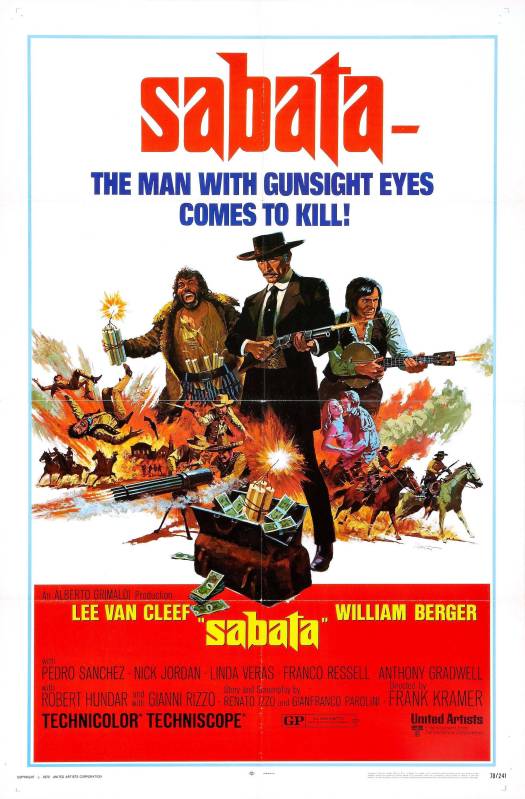
Weird Western Tale: Lee Van Cleef in SABATA (United Artists 1970)


gary loggins's avatarcracked rear viewer

Let’s face it, Lee Van Cleef was one cool hombre, and he’s at his coolest in SABATA, the first film of a trilogy written and directed by Gianfranco Parolini (aka Frank Kramer). The beady-eyed Van Cleef is obviously enjoying himself as Sabata, a trickster with a sinister chuckle and an array of tricked-out weapons who always manages to stay one step ahead of the bad guys.
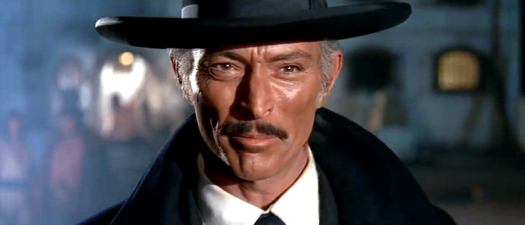
The movie begins traditionally enough, as $100,000 in Army payroll is deposited for safe keeping in the town of Daughtrey’s bank. A daring robbery finds the guards murdered and the safe heisted. It’s all a plot by banker Ferguson, Judge O’Hara, and ex-Confederate Colonel Stengel to buy up land needed for the railroad to come through. What they didn’t count on is the presence of the mysterious Sabata, who stops the bandits with his extra-long range Winchester, carting their carcasses back to town with…

View original post 400 more words
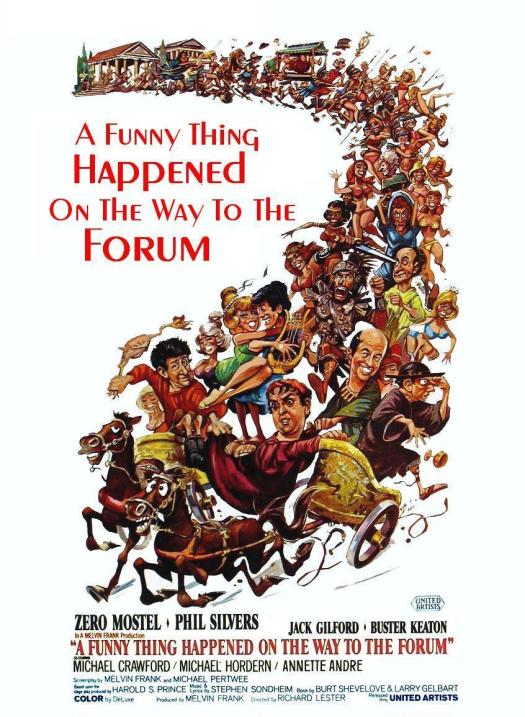
Comedy Tonight: A FUNNY THING HAPPENED ON THE WAY TO THE FORUM (United Artists 1966)


gary loggins's avatarcracked rear viewer

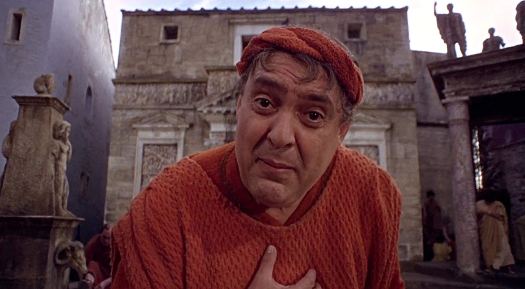
Director Richard Lester made the jump from The Beatles to Broadway in filming A FUNNY THING HAPPENED ON THE WAY TO THE FORUM, but it wasn’t that far a leap. In adapting the Tony-winning musical comedy to the screen, Lester energizes the film with his unmistakably 60’s cinematic style, resulting in one of the decade’s best comedies, aided and abetted by a cast of pros including Zero Mostel , Phil Silvers, Jack Gilford, and the great Buster Keaton in his final film performance.

The credits roll to the tune of Stephen Sondheim’s “Comedy Tonight”, which may be my favorite song from any musical, as Zero introduces us to the main players. He’s Psuedolus, a slave owned by young Hero (Michael Crawford), son of unhappily married Senex (Michael Hordern) and his shrewish (not Jewish) wife Domina (Patricia Jessel, who’s a riot!). Hero has fallen in love with Philia (Annette Andre), the…

View original post 586 more words

Blues On The Downbeat: ODDS AGAINST TOMORROW (United Artists 1959)


gary loggins's avatarcracked rear viewer


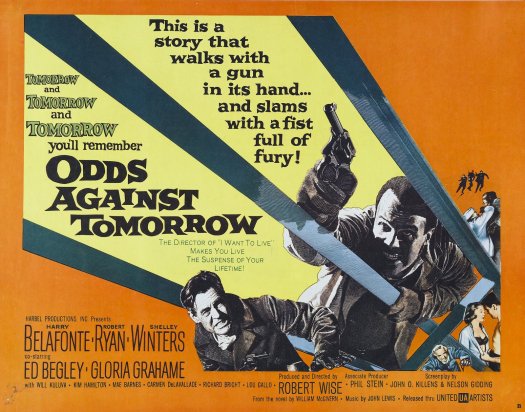
Desperate men commit desperate acts, and the three protagonists of ODDS AGAINST TOMORROW are desperate indeed in this late entry in the film noir cycle. This is a powerful film that adds social commentary to the usual crime and it’s consequences plot by tainting one of the protagonists with the brush of racism. Robert Wise, who sharpened his skills in the RKO editing room, directs the film in a neo-realistic style, leaving the studio confines for the most part behind, and the result is a starkly lit film where the shadows of noir only dominate at night.

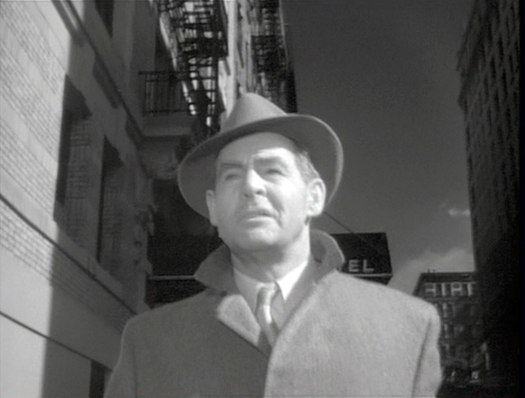
But more on Wise later… first, let’s meet our three anti-heroes. We see Earle Slater (Robert Ryan ) walking down a New York street bathed in an eerie white glow (Wise used infra-red film to achieve the effect). Slater’s a fish out of water, a transplanted Southerner drifted North, a loser and loose cannon…

View original post 665 more words

Bump’N’Grind: LADY OF BURLESQUE (United Artists 1943)


gary loggins's avatarcracked rear viewer

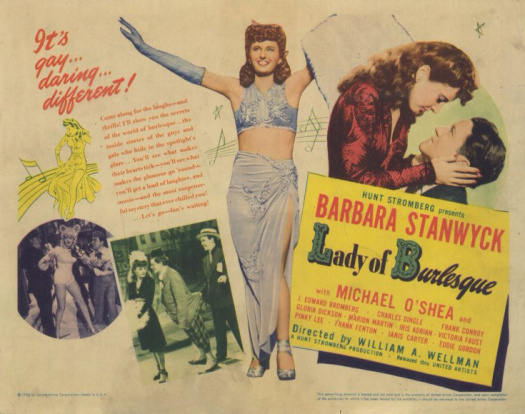
Famed striptease artist Gypsy Rose Lee published a steamy mystery novel called “The G-String Murders” in 1941, all about backstage intrigue at a burlesque house. The book was a best seller, and so of course Hollywood came a-calling, and William Wellman was assigned the director’s job for LADY OF BURLESQUE, a somewhat sanitized version of Gypsy’s racy tome, though Wellman and screenwriter James Gunn got away with what they could in those heavy-handed Production Code days.

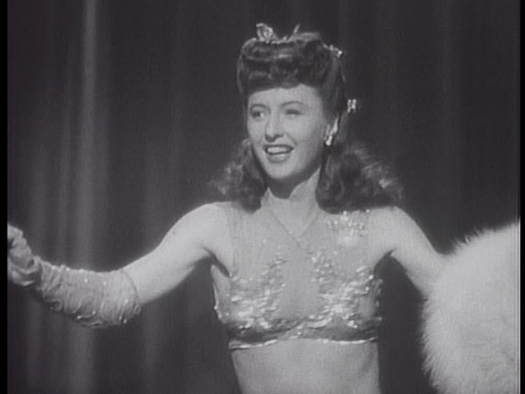
The film opens with the glittering lights of The Great White Way, then takes a turn onto 42nd Street, where benevolent burlesque impresario S.B. Foss (J. Edward Bromberg) has purchased the old Opera House to present his bump’n’grind shows. Barbara Stanwyck plays new headliner Dixie Daisy, and (as they said back then) va-va-voom…

La Stanwyck is some kinda hot in her skimpy Edith Head-designed costume! Dixie sings “Take It Off the E-String, Put It…

View original post 483 more words

Double Your Fun: Laurel & Hardy in BLOCKHEADS (MGM 1938) and SAPS AT SEA (United Artists 1940)


gary loggins's avatarcracked rear viewer

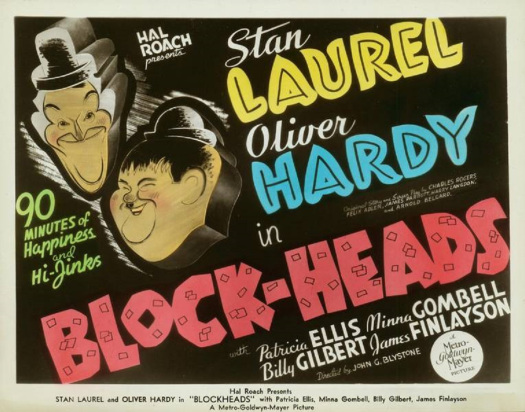
Hal Roach first teamed Stan Laurel with Oliver Hardy in 1927, beginning a long and prosperous screen comedy collaboration. The pair became the movie’s most beloved, and funniest, screen team, a point  that’s hard to argue against after a recent rewatching of BLOCKHEADS and SAPS AT SEA, two films that each clock in at less than an hour, but pack more laughs than many longer, larger budgeted films of the era – or any era, for that matter!

In BLOCKHEADS, L&H are soldiers during WWI, and Stan is ordered to stand guard in the trench until the troop returns from battle. Twenty years later, he’s still there! Found by a pilot he shoots down, Stan is taken to an Old Soldiers’ Home, when Ollie (once again a henpecked husband) spots his picture in the newspaper. Ollie rushes to see his old pal, and finds him sitting in a wheelchair with…

View original post 780 more words

Rockin’ in the Film World #17: Frank Zappa’s 200 MOTELS (United Artists 1971)


gary loggins's avatarcracked rear viewer

Frank Zappa is definitely an acquired taste, one I acquired as a young kid listening to albums like “Absolutely Free”, “Weasels Ripped My Flesh”,  and “Apostrophe”, which goes a long way in helping to explain my warped world view. Zappa’s avant garde rock’n’roll, a mélange of jazz, classical, doo-wop, psychedelica, and anything else he could think of, combined with his nonsensical, sexual, and scatological lyrics, skewered convention, the plastic world of suburban America, and hippie culture as well (Zappa was an equal opportunity offender). 200 MOTELS was his first attempt at making a movie, co-directing and co-writing with British documentarian Tony Palmer, and to call it bizarre would be a gross understatement.

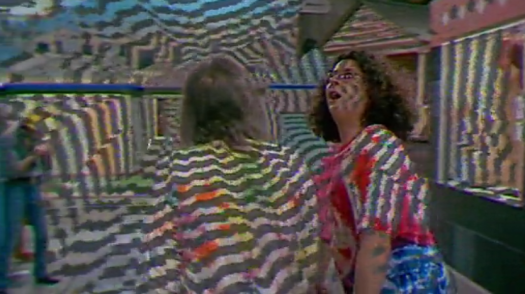
Visually, the film is as close to Zappa’s avant garde compositions as you can get. 200 MOTELS was shot on videotape and transferred to 35mm film, using techniques like double and triple exposure, color filters, flash-cut editing, and…

View original post 395 more words

That’s Blaxploitation! 12: COTTON COMES TO HARLEM (United Artists 1970)


gary loggins's avatarcracked rear viewer


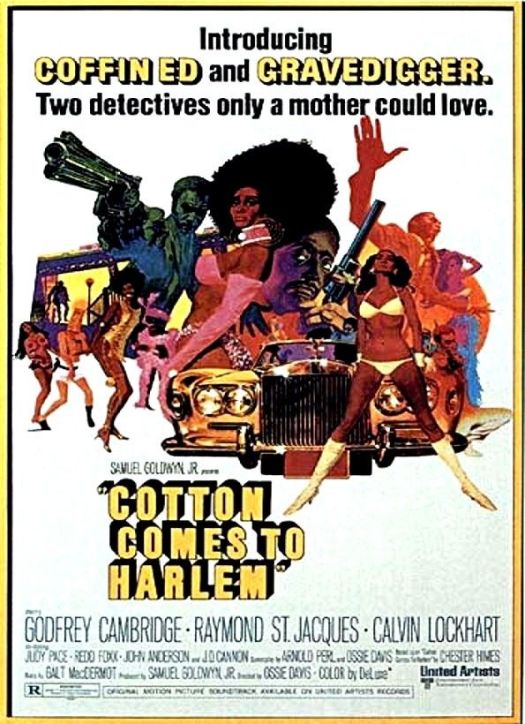
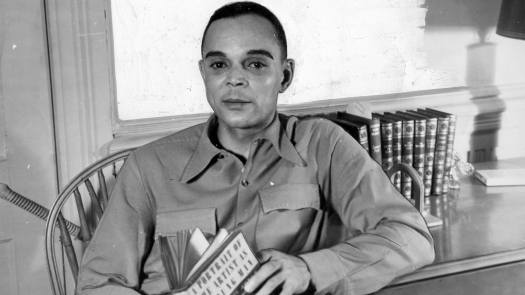
I’m not really sure if COTTON COMES TO HARLEM qualifies as a Blaxploitation film. Most genre experts point to Melvin Van Peebles’ SWEET SWEETBACK’S BADASSSSS SONG and/or Gordon Parks’s SHAFT , both released in 1971, as the films that kicked off the Blaxploitation Era. Yet this movie contains many of the Blaxploitation tropes to follow, and is based on the works of African-American writer Chester Himes.

Hardboiled author Chester Himes

Himes (1909-1984) began his writing career while doing a prison stretch for armed robbery. After his short stories started being published in Esquire, he was paroled in 1936, and soon met poet Langston Hughes, who helped him get established in the literary world. Reportedly, Himes worked for a time as a screenwriter for Warner Brothers in the 40’s, but was let go when a racist Jack Warner declared he “don’t want no n*ggers on this lot” (1). His first …

View original post 591 more words

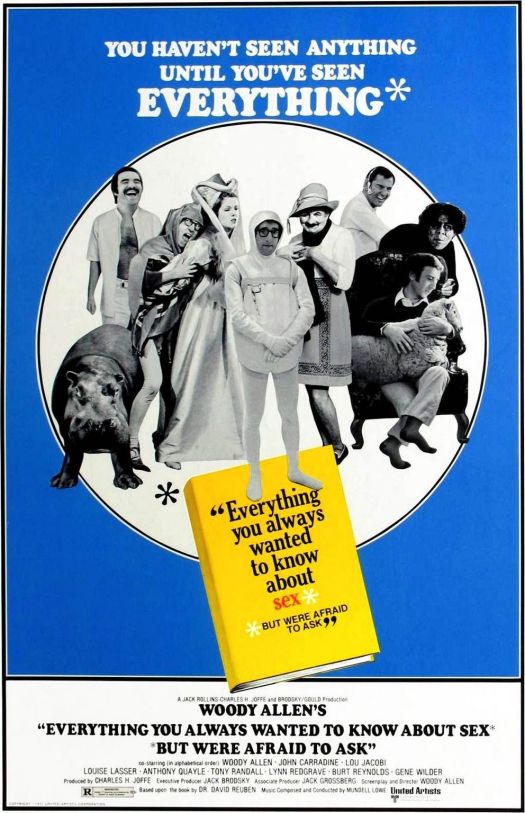
Gettin’ a Woody: EVERYTHING YOU ALWAYS WANTED TO KNOW ABOUT SEX* (United Artists 1972)


gary loggins's avatarcracked rear viewer

*(but were afraid to ask)

Say what you will about Woody Allen (and I’m sure some of you will), but from 1969 to 1977 he wrote, directed, and starred in some of the laugh-out-loud funniest movies ever made (after that, things got a bit pretentious, and his output has been hit-or-miss far as I’m concerned). Allen’s inventive mind took Dr. David Reuben’s best-selling sex manual EVERYTHING YOU ALWAYS WANTED TO KNOW ABOUT SEX (*but were afraid to ask) and turned it into a hilarious anthology that skewers not only societal mores and morals, but every segment parodies a different film genre.

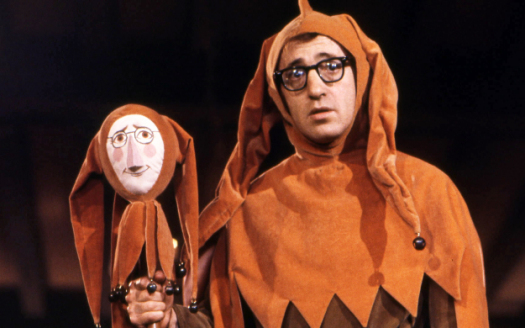
Some are better than others, but each has something funny to offer. The first, “Do Aphrodisiacs Work?”, finds Woody as a medieval court jester whose lousy Bob Hope one-liners bomb with the King (Anthony Quayle). The randy jester is dying to enter the Queen’s (Lynn Redgrave) “royal chambers”, but…

View original post 633 more words

Crime Does Not Pay: Stanley Kubrick’s THE KILLING (United Artists 1956)


gary loggins's avatarcracked rear viewer

Before Stanley Kubrick became Stanley Kubrick, he made a pair of low-budget crime dramas in the mid-50’s that are standouts in the film noir canon. The second of these, THE KILLING, is a perfect movie in every way imaginable, showing flashes of the director’s genius behind the camera, featuring just about the toughest cast you’re likely to find in a film noir, and the toughest dialog as well, courtesy of hard-boiled author Jim Thompson.

THE KILLING is done semi-documentary style (with narration by Art Gilmore), and follows the planning, execution, and aftermath of a two million dollar racetrack heist. Sterling Hayden plays the mastermind behind the bold robbery, a career criminal looking for one last score. He’s aided and abetted by a moneyman (Jay C. Flippen ), a track bartender (Joe Sawyer ), a teller (Elisha Cook Jr. ), and a crooked cop (Ted de Corsia ). He…

View original post 412 more words

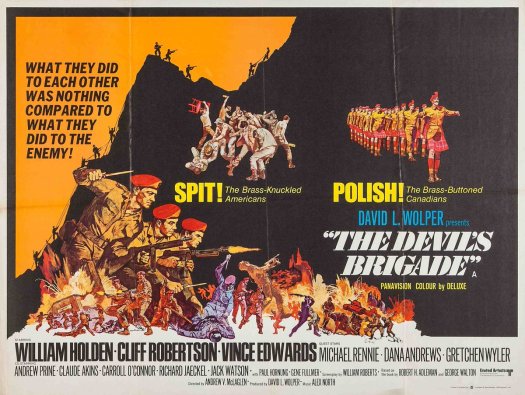
Special Memorial Day Edition: THE DEVIL’S BRIGADE (United Artists 1968)


gary loggins's avatarcracked rear viewer

In the wake of 1967’s THE DRITY DOZEN came a plethora of all-star, similarly themed films. THE DEVIL’S BRIGADE is one of those, though just a bit different: it’s based on the true-life exploits of the First Special Service Force, a collection of American misfits straight from the stockades and the crack, highly disciplined Canadian military, forging them into one cohesive fighting unit.

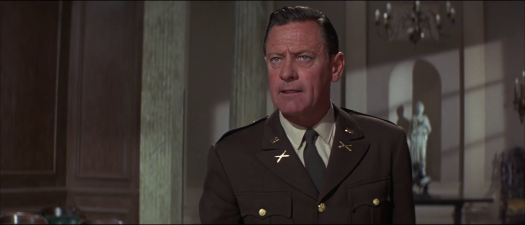
William Holden  heads the cast as Lt. Col. Robert Frederick, tasked with putting the units together. His seconds-in-command are the cigar chomping American Major Brecker (Vince Edwards) and proud Canadian Major Crown (Cliff Robertson). The Americans, as rowdy a bunch of reprobates as there ever was, include Claude Akins , Luke Askew, Richard Jaeckel, and Tom Troupe, while the Canadians are represented by the likes of Richard Dawson, Jeremy Slate, and Jack Watson , war movie vets all.  Andrew Prine is also aboard as an AWOL…

View original post 365 more words