4 Or More Shots From 4 Or More Films is just what it says it is, 4 shots from 4 of our favorite films. As opposed to the reviews and recaps that we usually post, 4 Shots From 4 Films lets the visuals do the talking!
Today, the Shattered Lens wishes a happy early birthday to German director Uli Edel, who will be turning 79 tomorrow! It’s time for….
4 Shots from 4 Uli Edel Films
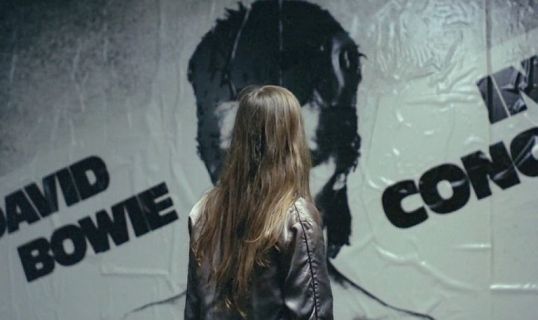
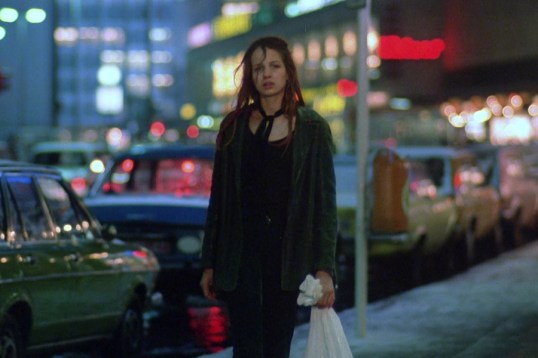
Christiane F. (1981, dir b Uli Edel, DP: Justus Pankau and Jürgen Jürges)
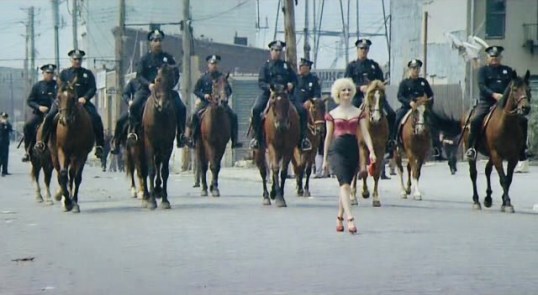
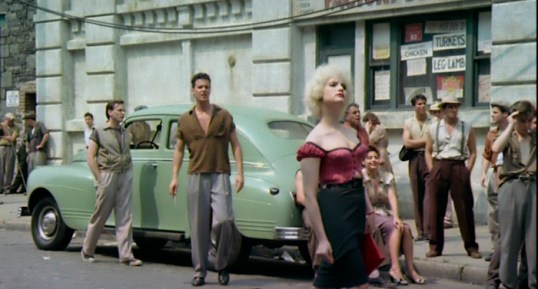
Last Exit to Brooklyn (1989, dir by Uli Edel, DP: Stefan Czapsky)
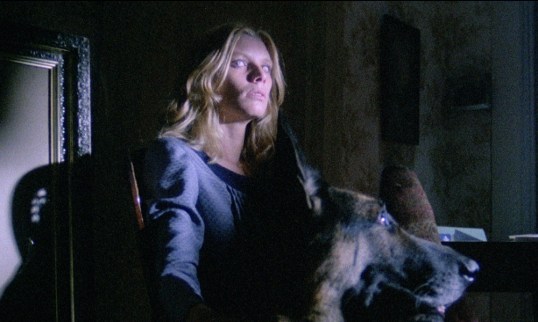
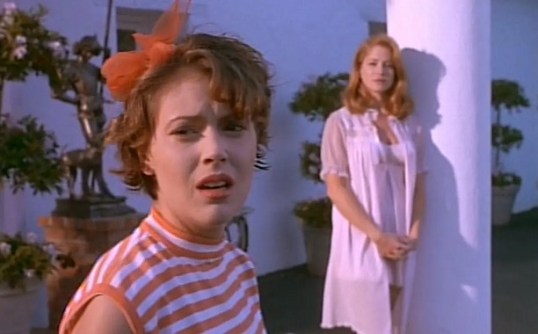
Body of Evidence (1993, dir by Uli Edel, DP: Douglas Milsome)
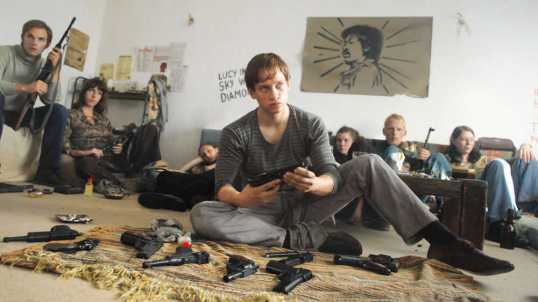
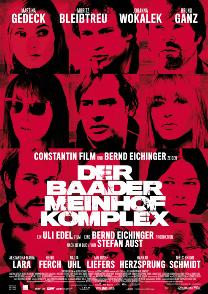
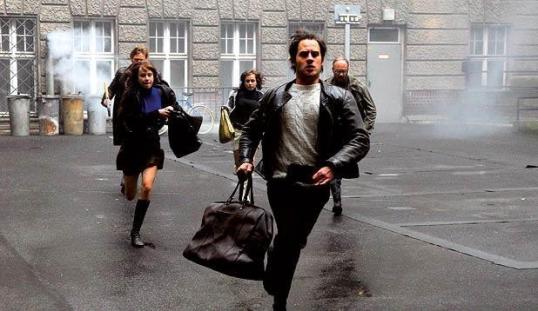
The Baader Meinhof Complex (2008, dir by Uli Edel, DP: Rainer Klausmann)
4 Or More Shots From 4 Or More Films is just what it says it is, 4 shots from 4 of our favorite films. As opposed to the reviews and recaps that we usually post, 4 Shots From 4 Films lets the visuals do the talking!
Today, we pay tribute to the year 2008! It’s time for….
4 Shots From 4 2008 Films
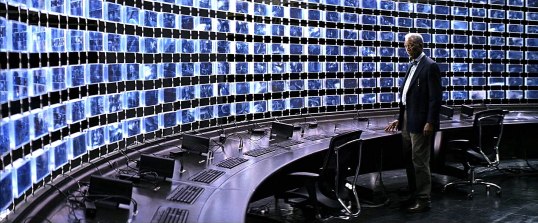
The Dark Knight (2008, dir by Christopher Nolan, DP: Wally Pfister)
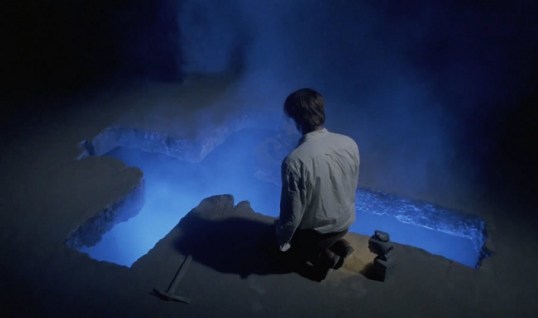
Rachel Getting Married (2008, dir by Jonathan Demme, DP: Declan Quinn)
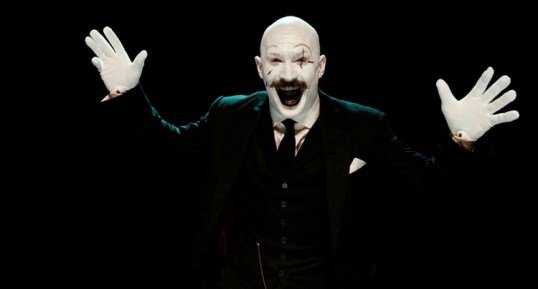
Bronson (2008, dir by Nicolas Winding Refn, DP: Larry Smith)
The Baader Meinhof Complex (2008, dir by Uli Edel, DP: Rainer Klausmann)
4 Or More Shots From 4 Or More Films is just what it says it is, 4 shots from 4 of our favorite films. As opposed to the reviews and recaps that we usually post, 4 Shots From 4 Films lets the visuals do the talking!
Today, we pay tribute to the year 1989! It’s time for….
4 Shots From 4 1989 Films
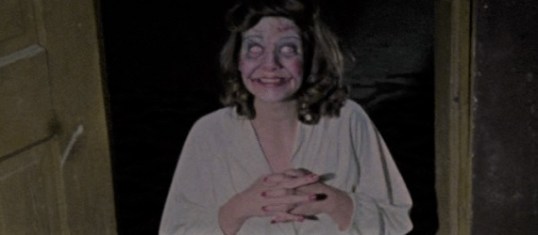
The Church (1989, dir by Michele Soavi, DP: Renato Tafuri)
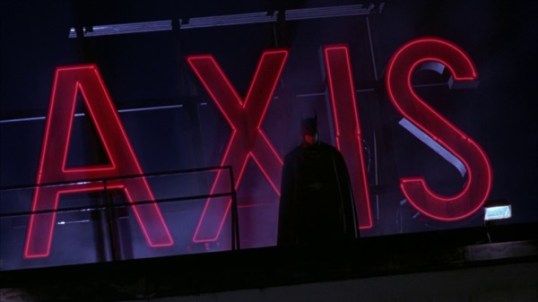
Batman (1989, dir by Tim Burton, DP: Roger Pratt)
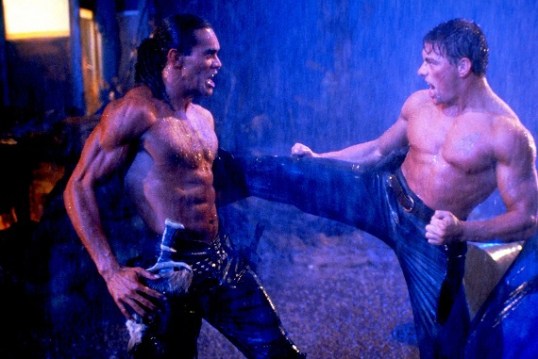
Cyborg (1989, dir by Albert Pyun, DP: Philip Alan Waters)
Last Exit to Brooklyn (1989, dir by Uli Edel, DP: Stefan Czapsky)
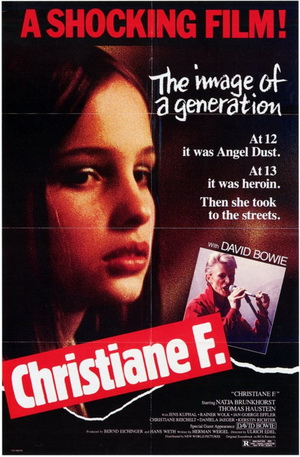
Today’s scene that I love is from the 1981 German film, Christiane F. Directed by Uli Edel and based on a true story, Christiane F. is the story of a 13 year-old drug addict. It’s a powerful film, though perhaps not one to watch if you’re dealing with any sort of severe depression. David Bowie both composed the film’s soundtrack and appeared in the film himself.
Here, he performs Station to Station while Christiane F. watches. The scene perfectly captures not only Christiane F.’s fascination with Bowie but also Bowie’s charisma as a performer. The scene was shot an actual concert that David Bowie performed in Berlin, though the shots of Christiane F. and her friends watching were filmed separately.
4 Or More Shots From 4 Or More Films is just what it says it is, 4 shots from 4 of our favorite films. As opposed to the reviews and recaps that we usually post, 4 Shots From 4 Films lets the visuals do the talking!
Today, we pay tribute to the year 1981 with….
4 Shots From 4 1981 Films
Christiane F. (1981, dir b Uli Edel, DP: Justus Pankau and Jürgen Jürges)
The Beyond (1981, dir by Lucio Fulci, DP; Sergio Salvati)
Escape From New York (1981, dir by John Carpenter, DP: Dean Cundey)
The year is 1952 and one neighborhood in Brooklyn is on the verge of exploding.
A thug named Vinnie (Peter Dobson) holds court at a local bar. (His associates include the moronic Sal, who is played by a very young Stephen Baldwin.) Some nights, Vinnie and his associates mug people for money. Sometimes, they just attack people for fun.
A strike at the local factory has entered its sixth month, with management showing no sign of compromising and Boyce (Jerry Orbach), the head of the union, showing little concern for the men who are now struggling to feed their families. The local shop steward, Harry Black (Stephen Lang), is a self-important braggart who never stops talking about how he’s the one leading the strike. At home, Harry ignores his wife, with the exception of a violent quickie. On the streets, Harry embezzles money from the union and uses it to try to impress the men that he would rather be spending his time with. But even the men who Harry considers to be friends quickly turn on him when he is at his most pathetic.
Big Joe (Burt Young) is a proud union member who is shocked to discover that his teenage daughter (Ricki Lake) is 8-months pregnant. Despite being out-of-work and not caring much for Tommy (John Costelloe), Joe puts together the wedding that appears to be the social event of a shabby season. But even at the reception, violence lurks below the surface.
Georgette (Alexis Arquette) is a transgender prostitute who loves Vinnie, even after he and his idiot friends stab her in the leg while playing with a knife. Beaten at home by her homophobic brother (Christopher Murney), Georgette sinks into drug addiction.
Tralala (Jennifer Jason Leigh) is an amoral prostitute, one who specializes in picking up military men and then arranging from them to be mugged by Vinnie and his gang. Sick of being exploited by Vinnie, Tralala heads to Manhattan and meets Steve (Frank Military), an earnest soldier from Idaho. For the first time, Tralala is treated decently by a man but Steve is set to ship out to Korea in a few days and, as he continually points out, there’s a chance that he might not return. For all of the happiness she finds in Manhattan, Tralala is continually drawn back to her self-destructive life in Brooklyn.
First released in 1989 and directed by Uli Edel (who directed another film about desperation, Christiane F.), Last Exit To Brooklyn is based on a controversial novel by Hubert Selby, Jr. In fact, it was so controversial that the novel was banned in several countries and, for a while, was listed as being obscene by the U.S. Post Office. I read the novel in the college and it is indeed a dark and depressing piece of work, one that offers up very little hope for the future. It’s also brilliantly written, one that sucks you into its hopeless world and holds your interest no matter how bleak the stories may be. Due to its reputation, it took over 20 years for Last Exit to Brooklyn to be adapted into a film.
The film is actually a bit more positive than the book. One character who appears to die in the book manages to survive in the film. The wedding subplot was a minor moment in the book but, in the film, it’s made into a major event and provides some mild comedic relief. That said, the film is definitely dark. Almost every character is greedy and angry and those who aren’t are victimized by everyone else. Unfortunately, the film lacks the power of Selby’s pungent prose. As a writer, Selby held your attention even when you want to put the book away. When it comes to the film, the lack of Selby’s voice makes it very easy to stop caring about the characters or their stories. Even with the attempts to lighten up the story, the film is still so dark that it’s easy to stop caring. The non-stop bleakness starts to feel like a bit of an affectation.
And that’s a shame because there are some brilliant moments and some brilliant performances to be found in Last Exit To Brooklyn. An extended sequence where the police fight the striking workers is wonderfully directed, with the police becoming an invading army and the men on strike being transformed from just factory workers to rebels. The scene where Boyce informs Harry that he’s not as important as he thinks is wonderfully acted by both Jerry Orbach and Stephen Lang. As Tralala, Jennifer Jason Leigh gives a raw and powerful performance, whether she’s shyly accepting Steve’s kindness or drunkenly exposing herself to a bar full of lowlifes. In many ways, Tralala is the most tragic of all the characters to be found in Last Exit to Brooklyn. She’s tough. She’s angry. But, in the end, she’s ultimately the victim of men who are too stupid to understand anything other than aggression. The neighborhood applauds her when she confidently walks past a line of cops and strikebreakers but the same people who cheered for her later try to destroy her.
The film ends on an ambiguous note, with a peace that feels very temporary. The message seems to be that men are at their worst when they’re bored so perhaps it’s best to keep them busy, whether with a job or perhaps a wedding. It’s a flawed film but it sticks with you.
Released in 2008, Germany’s The Baader Meinhof Complex begins in 1967. The entire world appears to be in the grip of protest and revolution. The Viet Nam War is raging. Economic inequality is increasing. For neither the first nor the last time, the Middle East is consumed with conflict. All across Europe, young Leftist activists protest against what they consider to be American imperialism.
At a protest in Berlin, the police shoot and kill an unarmed student. Outraged by not only the shooting but also the lack of accountability on the part of the police, journalist Ulrike Meinhof (Martina Gedeck) announces on television that, even though the Nazis may no longer be in power, Germany is still a fascist state. Her words scandalize many viewers but they inspire two young activists named Andreas Baader (Moritz Bliebtreu) and Gudrun Ensslin (Johanna Wokalek). Baader and Ensslin protest by blowing up a department store. Their subsequent arrest and trial makes them celebrities. It also leads to them meeting with Meinhof, who finds herself drawn to the two charismatic radicals. Though convicted, both Baader and Ensslin are released pending an appeal and they soon become the leaders of the Red Army Faction. They amass a following of other young radicals, many of whom are searching for some sort of purpose for their lives. Among those who join them is Meinhof herself, who abandons her safe, middle-class liberalism and instead commits to Baader and Ensslin’s revolution. For every violent act that Baader and Ensslin mastermind, Meinhof writes the press release that justifies it by pointing out the violent acts being carried out by governments acoss the world.
At first, the revolution itself is almost fun. Baader and Ensslin both obviously enjoy their celebrity. When the RAF goes to Jordan to attend a sort of terrorist training camp, they promptly get on their host’s nerves by appearing not to take their training particularly seriously. The heads of the camp want to teach combat skills. Baader just wants to learn how to rob a bank and he and Ensslin take such delight in upsetting the stuffy heads of the camp that it’s hard not to like them. From the start, though, there are hints that the fun isn’t going to last. Baader may be charismatic but he’s also arrogant, temperamental, and lacking in self-awareness. He’s the type of revolutionary who will goad his lawyer into stealing a woman’s bag but who throws a fit when, moments later, someone else steals his car. For all their talk of how they’re willing to do whatever it takes to bring about a revolution, neither Baader nor Ensslin seem to initially understand the true risks of their activities. When a member of their group is killed in a shoot-out with the police, they are stunned and angered, as if it never occurred to them that the police would kill someone who opened fire on them. As the RAF’s action grow more violent and more people are killed as a result, Meinhof struggles to justify the violence. Eventually, not even Baader and Ensslin can control the organization that they’ve created.
It’s a familiar story. What starts off as idealism is eventually consumed by fanaticism and cynicism. The belief that’s one cause is right leaves people on both sides convinced that anything they do to promote that cause is correct. The film presents the violence of the 60s and 70s as being a never-ending cycle, with the violent response of each side merely fueling the anger on the other. At one point, a government official wonders why Baader has such a hold on his followers and the reply is that Baader has become a living myth, an activist celebrity who is idealized by his followers but who, in reality, can be just as arrogant, petty, and egotistical as those that he’s fighting. For many, he and his organization offer an escape from a pointless bourgeois existence but, in the end, he and Ensslin and Meinhof are perhaps the most bourgeois of all.
Aided by a strong cast, director Uli Edel captures the feel of a world that seems like it’s perpetually on the verge of revolution. Though the film is full of scenes of car chases, bombs exploding, and bullets being fired, Edel never allows us to forget the real costs of such actions. The film ends with the suggestion that the cycle of violence and revolution is destined never to end as one act leads to another. As the film reminds us, it’s a story that has played out many times in the past and will continue to play out in the future.
4 Or More Shots From 4 Or More Films is just what it says it is, 4 shots from 4 of our favorite films. As opposed to the reviews and recaps that we usually post, 4 Shots From 4 Films lets the visuals do the talking!
Today, the Shattered Lens wishes a happy 76th birthday to German director, Uli Edel! It’s time for….
4 Shots from 4 Uli Edel Films
Christiane F. (1981, dir b Uli Edel, DP: Justus Pankau and Jürgen Jürges)
Last Exit to Brooklyn (1989, dir by Uli Edel, DP: Stefan Czapsky)
Confessions of a Sorority Girl (1994, dir by Uli Edel, DP: Jean de Segonzac)
The Baader Meinhof Complex (2008, dir by Uli Edel, DP: Rainer Klausmann)
4 Or More Shots From 4 Or More Films is just what it says it is, 4 shots from 4 of our favorite films. As opposed to the reviews and recaps that we usually post, 4 Shots From 4 Films lets the visuals do the talking!
Today, the Shattered Lens wishes a happy 75th birthday to German director, Uli Edel! It’s time for….
4 Shots from 4 Uli Edel Films
Christiane F. (1981, dir b Uli Edel, DP: Justus Pankau and Jürgen Jürges)
Last Exit to Brooklyn (1989, dir by Uli Edel, DP: Stefan Czapsky)
Body of Evidence (1993, dir by Uli Edel, DP: Douglas Milsome)
The Baader Meinhof Complex (2008, dir by Uli Edel, DP: Rainer Klausmann)
Today would have been David Bowie’s 75th birthday. Though it’s been six years since David Bowie passed, he remains an iconic cultural force. He is missed, as both a musician and an actor.
In honor of the man’s birthday and his legacy as a performer, today’s scene that I love is from the 1981 German film, Christiane F. Directed by Uli Edel and based on a true story, Christiane F. is the story of a 13 year-old drug addict. It’s a powerful film, though perhaps not one to watch if you’re dealing with any sort of severe depression. David Bowie both composed the film’s soundtrack and appeared in the film himself.
Here, he performs Station to Station while Christiane F. watches. The scene perfectly captures not only Christiane F.’s fascination with Bowie but also Bowie’s charisma as a performer. The scene was shot an actual concert that David Bowie performed in Berlin, though the shots of Christiane F. and her friends watching were filmed separately.



 Through the Shattered Lens