Welcome to Horrorthon! Here’s 20 films to help get you into that October mood!

The Dreams of Jean Rollin
I have been a fan of the French director Jean Rollin ever since I first watched Night of the Hunted on one rainy night. His dream-like film were often both frightening and, in their way, rather touching. At heart, Rollin was a poet and a romantic, along with being a cinematic rebel. This October is the perfect time to get caught up on Rollin.
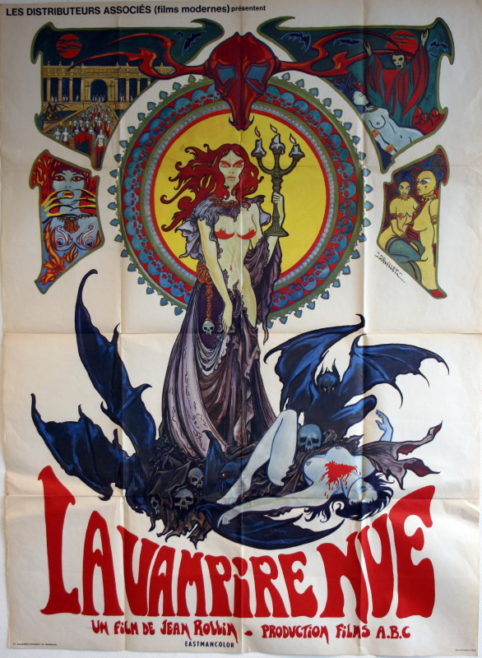
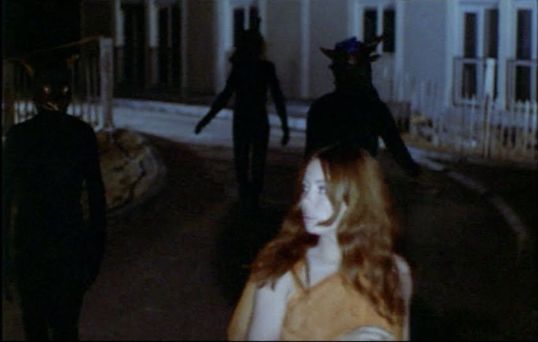
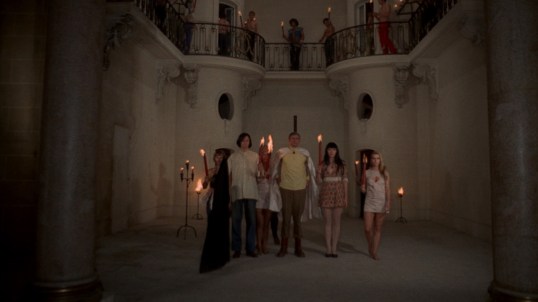
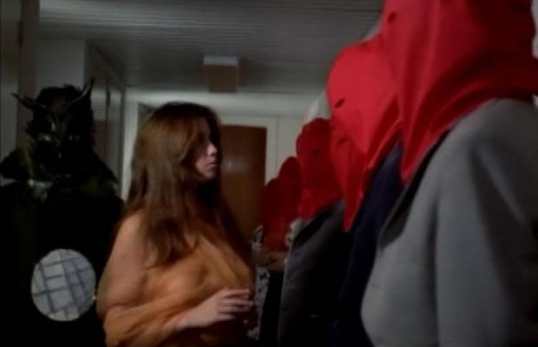
The Nude Vampire (1970) opens at night, with a woman wearing an orange nightgown being chased down a street by three men wearing bird-like masks. The woman runs into a man named Pierre. Pierre watches as the woman is shot in the back and then carried into what appears to be a secret club. Pierre follows and soon finds himself in the middle of a surreal world featuring cults, vampires, and one of Rollin’s trademark trips to the beach. This was Rollin’s second film. It’s surreal trip into an undergouns world and it owes more than a little to the serials that Rollin enjoyed as a young man. The Nude Vampire can be viewed on Shudder.
The Shiver of the Vampires (1971) is Rollin’s tribute to the old Universal haunted house films. A newlywed couple visits a castle that was owned by the wife’s cousins. Upon arriving, they are told that the cousins are dead and the house is now occupied by two mysterious young women. Over the course of the night, the couple discovers that the castle is also home to vampire named Isolde. This atmospheric film is best-remembered the scene with Isolde emerges from a grandfather clock. It was an image that Rollin liked so much that he reused it in several later films. Shiver of the Vampires can be viewed on Tubi.
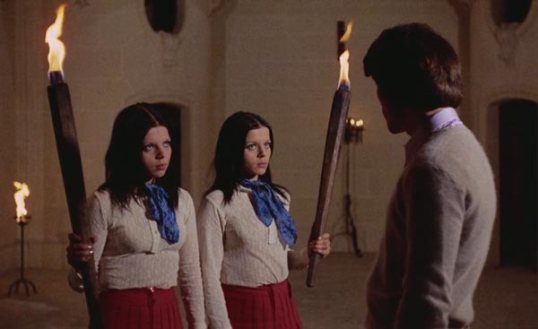
Requiem for a Vampire (1971) tells the story of two young girls who, having committed some sort of crime while wearing clown makeup, wander through the French countryside until they come across a castle that is occupied by a sickly vampire and his servants. Atmospheric, dream-like, and sexually-charged, Requiem for a Vampire is a mix of horror, crime, and melodrama. “Let’s go to the cemetery!” Requiem for a Vampire is available on Shudder.
Lips of Blood (1975) mixes two of Rollin’s favorite themes: vampires and memory. A man sees a picture of a ruined seaside castle and becomes convinced that he’s visited it in the past. His search for castle leads not just to vampires but also a meditation on the act of remembering and how people are always trying to recapture an idealized moment of time. A truly beautiful film, Lips of Blood can be found on Shudder.
The Living Dead Girl (1981) is one of Rollin’s best films. A toxic spill brings a young woman back to life. She has only vague memories of her past life but she also has an insatiable need for blood. When her childhood friend discovers that the woman has come back to life, she tries to keep her fed. It soon becomes clear that, even though the title character would rather be allowed to return to the peace of death, her friend is determined to keep her alive. This film is a bloody, gory, and ultimately very moving examination of love and friendship. How far would you go? The Living Dead Girl can be found on Tubi.
Hacking Away At October
Graduation Day (1981) is one of my favorite of the early 80s slasher, an entertainingly lowbrow film about a killer who is seeking revenge on the high school track and field team. Christopher George is the hard-pushing coach. Michael Pataki is the ineffective principal. Linnea Quigley, who was reportedly cast as the last minute after one of the actresses walked off the set, is the closest thing the film has to a likable character. Vanna White is a high school student. The music is incredible! Felony performs a 10-minute version of Gangsters of Rock. Graduation Day can be viewed on Tubi.
If you enjoyed Christopher George in Graduation Day, you’ll definitely want to follow up with Mortuary (1983), in which he plays the creepy owner of a funeral home. When he’s not embalming, he’s yelling at his socially awkward son (Bill Paxton). Someone is committing murder in the suburbs. Could it have something to do with the weird cult that occasionally meets in the mortuary’s back room? Christopher’s wife, Lynda Day George, plays the widow with a secret. Be sure to yell, “We can see you breathing!” during the later embalming scenes. Mortuary can be viewed on Tubi.
Christopher George and Lynda Day George also appear in Pieces (1982), one of the goriest slasher films ever made. The film’s tag line was “You don’t have to go to Texas for a chainsaw massacre” and this film proves it by setting the action in Boston. This film divides it’s time between genuinely disturbing gore and scenes that are so bizarre and misconceived that you can’t help but wonder if the director was trying to satirize the slasher genre. The random kung fu fight is an obvious example, as is the scene where the killer casually steps into an elevator while carrying his chainsaw. The film’s goriest scene is disturbing up until the moment that Lynda Day George starts screaming, “BASTARD!” at the sky. Pieces can be viewed on Tubi.
Hell Night (1981) may not feature Christopher and Lynda Day George but it does feature Linda Blair, Vincent Van Patten, and the absolutely dreamy Peter Barton as part of a group of fraternity and sorority pledges who spend the night in a supposedly haunted house. Uh-oh — it turns out the house really is haunted! Though the plot features the usual slasher hijinks, Hell Night is a well-acted movie that makes good use of its location and which features a few moments of wit to go along with all the death and horror. It can be viewed on Prime.
Even by the standards of director Jim Wynorski, Sorority House Massacre 2 (1990) is a trashy film. Four sorority girls try to clean up their new house, which basically translates to taking showers, wearing lingerie, and playing with a Ouija board. Their creepy neighbor, Orville, tries to warn them that they’ve moved into the old Hockstader Place but he just keeps getting stabbed for his trouble. The film is pure exploitation but it’s also cheerfully self-aware. It’s so shameless and the story plays out with so much energy that it becomes entertaining in its own very stupid way. Gail Harris and Melissa Moore give surprisingly committed performances. Peter Spellos is the neighbor who wants to help but keeps freaking everyone out. The film’s ending is oddly effective. It can be viewed on YouTube.
Supernatural Creeps
Ulli Lommel’s The Boogeyman (1980) has an intriguing premise. What if a mirror stored the evil that it once reflected? It also has a lot of ominous country atmosphere and a good performance from Lommel’s then partner, Suzanna Love. There’s a disturbing dream sequence that still freaks me out whenever I see it. It’s also an often ludicrous film that doesn’t always make a lot of sense but it’s still the best of Lommel’s American films. John Carradine shows up as a psychiatrist. It can be viewed on Tubi.
Burial Ground: Nights of Terror (1981) is an Italian film about what happens when a bunch of decadent, sex-crazed rich people find themselves trapped in a villa by a bunch of zombie. The zombie effects are surprisingly effective. There’s a lot of gore and also a political subtext of sorts. (The dead peasants rise from the dead and use the tools of their life — like scythes — to attack the rich.) That said, most people remember this film for Peter Bark’s bizarre performance of Michael, who is supposed to be a young teenager and who has a taboo scene with his mother (played by Mariangela Giordano) that seems to come out of nowhere. There’s some debate over whether or not Bark was an actual teenager or an elderly little person. I still have to cover my eyes during the finale. It can be viewed on Tubi.
Zombie 5: Killing Birds (1988) is another Italian zombie film. Ignore the “Five” in the title, this film isn’t an actual sequel to anything. A group of college students head to down to steamy bayous and find themselves besieged by the living dread. Birds may or may not be involved. Robert Vaughn hams it up as a blind man. There’s a genuinely frightening nightmare sequence. It can be viewed on Tubi.
Shock Waves (1977) also features zombies. In this case, they’re living underwater, off the coast of Florida for some reason. Shock Waves is a truly scary film. The zombies are relentless and brutal and the scene where they emerge from the water is a 100 times more frightening than it has any right to be. Brooke Adams plays the tourist who screams a lot. Peter Cushing is a mad scientist. John Carradine is a crusty old boat captain. Shock Waves can be viewed on Tubi.
Count Dracula (1970) stars Christopher Lee in a version of the Dracula story that sticks closer to the original Bram Stoker novel than any of the Hammer films. This version was directed by Jess Franco and features none other than Klaus Kinski as Renfield. Lee’s refined, aristocratic Dracula is quite a contrast to the feral version of the character that he often played for Hammer. Lee always cited this as the only Dracula film that he took pride in. It can be viewed on Tubi.
They’re Coming To Get You
Chopping Mall (1986) features the latest in mall security. Instead of security guards, the mall will now be patrolled by security robots. It’s all good and well until the robots malfunction and start chasing down the hot young employees who foolishly decided to spend the night in their store. Directed by Jim Wynorski and featuring Kelli Maroney, Russell Todd, Gerrit Graham, Barbara Crampton, and Dick Miller, Chopping Mall is a lot of fun. I don’t know if Wynorski has ever topped the exploding head scene. The film can be viewed on Tubi.
Hellmaster (1992) features John Saxon as a crazed and apparently immortal professor-turned-cult-leader who injects his followers with drugs that turn them into mindless zombies. David Emge, who was in Dawn of the Dead, plays the reporter who is haunted by Saxon’s crimes. Saxon is certainly intent on turning people into zombies but the film never really explains why. Still, the film has an intensity to it that I appreciate. John Saxon makes for a strong villain. The film can be viewed on Tubi.
Something Weird (1967) tells the story of Mitch. He gets electrocuted, which leaves him both psychic and disfigured. While his best friend wants to Mitch’s psychic abilities to defeat the communists, Mitch instead accepts a deal with a witch. She takes away his disfigurement and soon, Mitch is a celebrity. However, the witch doesn’t do anything for free. Eventually, Mitch takes LSD to try to strengthen his powers. Director Herschell Gordon Lewis was better-known for his gore films but Something Weird lives up to its title. With its mix of witches, ESP, and LSD, it’s a true horror time capsule. The film can be viewed on Tubi.
Terror At London Bridge (1985) features Jack The Ripper time traveling to Arizona. Can David Hasselhoff stop him!? Watch the film on Tubi to find out. The film will probably be best appreciated by David Hasselhoff fans but hey, who isn’t a fan of the Hoff?
Track of the Moon Beast (1976) is a film that is so much a product of the 70s that it deserves to be put in a museum. Come for the story of an innocent man transformed into a monster by a moon rock and stay for the lengthy performance of California Lady. Watch the film on YouTube!
Check out my previous week’s movies by clicking here!




 Through the Shattered Lens