8 Shots From 8 Films: Special Robert Evans Edition


4 Or More Shots From 4 Or More Films is just what it says it is, 4 shots from 4 of our favorite films. As opposed to the reviews and recaps that we usually post, 4 Shots From 4 Films lets the visuals do the talking!

95 years ago today, Robert Evans was born in New York City.  He started out working in his brother’s clothing business but a chance meeting with actress Norma Shearer led to him becoming an actor.  And while Evans, by his own account, was not a particularly good actor, he did prove himself to be very skilled at playing the games of Hollywood.  Evans eventually moved from acting to production, first as an executive at Paramount and then as an independent producer.

He lived a life as glamorous and tumultuous as the stars of his pictures and his memoir, The Kid Stays In The Picture, is considered to be one of the classic show biz autobiographies.  He hung out with cinematic rebels like Jack Nicholson and Robert Towne and counted Secretary of State Henry Kissinger as a friend.  He suggested that Francis Ford Coppola should direct The Godfather and, when Paramount put pressure on Coppola to cut the film down to two hours, it was Evans who famously announced that a two-hour Godfather was nothing more than a trailer.  He lost Ali MacGraw to Steve McQueen and, again by own account, he lost a lot of potentially productive years to cocaine.  (The Cotton Club scandal is one of the wildest in the history of Hollywood, though it should be noted that Evans himself was never charged with any wrongdoing.)  But, for all that he lost, Evans continues to gain admirers as being the epitome of the producer who was willing to take chances.  For all of his flamboyance, Evans had an eye for good material and the willingness to protect his directors.  In many ways, he was as important to the cinematic revolution of the 70s as the directors that he hired.  When Evans passed away in 2019, it was truly the end of an era.

Here, in honor of the birth and legacy of Robert Evans, are 8 Shots from 8 Films that Evans produced, either as studio chief at Paramount or as an independent producer.

8 Shots From 8 Robert Evans Films

Rosemary’s Baby (1968, dir by Romnn Polanski, DP: William A. Fraker)

Love Story (1970, dir by Arthur Hiller, DP: Richard Kratina)

The Godfather (1972, dir by Francis Ford Coppola, Cinematography by Gordon Willis)
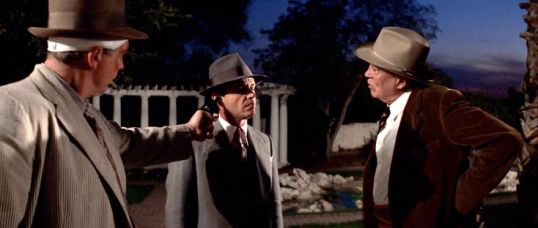
Chinatown (1974, dir by Roman Polanski, DP: John A. Alonzo)

Marathon Man (1976, dir by John Schlesinger, DP: Conrad Hall)

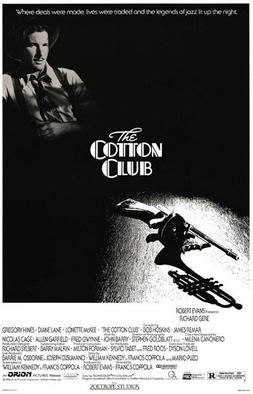
The Cotton Club (1984, dir by Francis Ford Coppola, DP: Stephen Goldblatt)
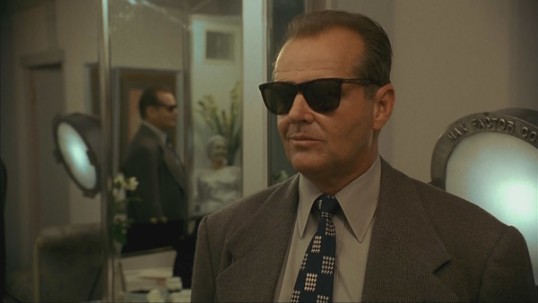
The Two Jakes (1990, dir by Jack Nicholson, DP: Vilmos Zsigmond)

Sliver (1993, dir by Phillip Noyce, DP: Vilmos Zsigmond)
8 Shots From 8 Films: Special Robert Evans Edition


4 Or More Shots From 4 Or More Films is just what it says it is, 4 shots from 4 of our favorite films. As opposed to the reviews and recaps that we usually post, 4 Shots From 4 Films lets the visuals do the talking!

92 years ago today, Robert Evans was born in New York City.  He started out working in his brother’s clothing business but a chance meeting with actress Norma Shearer led to him becoming an actor.  And while Evans, by his own account, was not a particularly good actor, he did prove himself to be very skilled at playing the games of Hollywood.  Evans eventually moved from acting to production, first as an executive at Paramount and then as an independent producer.

He lived a life as glamorous and tumultuous as the stars of his pictures and his memoir, The Kid Stays In The Picture, is considered to be one of the classic show biz autobiographies.  He hung out with cinematic rebels like Jack Nicholson and Robert Towne and counted Secretary of State Henry Kissinger as a friend.  He suggested that Francis Ford Coppola should direct The Godfather and, when Paramount put pressure on Coppola to cut the film down to two hours, it was Evans who famously announced that a two-hour Godfather was nothing more than a trailer.  He lost Ali MacGraw to Steve McQueen and, again by own account, he lost a lot of potentially productive years to cocaine.  (The Cotton Club scandal is one of the wildest in the history of Hollywood, though it should be noted that Evans himself was never charged with any wrongdoing.)  But, for all that he lost, Evans continues to gain admirers as being the epitome of the producer who was willing to take chances.  For all of his flamboyance, Evans had an eye for good material and the willingness to protect his directors.  In many ways, he was as important to the cinematic revolution of the 70s as the directors that he hired.  When Evans passed away in 2019, it was truly the end of an era.

Here, in honor of the birth and legacy of Robert Evans, are 8 Shots from 8 Films that Evans produced, either as studio chief at Paramount or as an independent producer.

8 Shots From 8 Robert Evans Films

Rosemary’s Baby (1968, dir by Romnn Polanski, DP: William A. Fraker)

Love Story (1970, dir by Arthur Hiller, DP: Richard Kratina)

The Godfather (1972, dir by Francis Ford Coppola, Cinematography by Gordon Willis)

Chinatown (1974, dir by Roman Polanski, DP: John A. Alonzo)

Marathon Man (1976, dir by John Schlesinger, DP: Conrad Hall)

The Cotton Club (1984, dir by Francis Ford Coppola, DP: Stephen Goldblatt)

The Two Jakes (1990, dir by Jack Nicholson, DP: Vilmos Zsigmond)

Sliver (1993, dir by Phillip Noyce, DP: Vilmos Zsigmond)

A Movie A Day #264: The Cotton Club (1984, directed by Francis Ford Coppola)


The time is the 1930s and the place is New York City.  Everyone wants to get into the Cotton Club.  Owned by British gangster Owney Madden (Bob Hoskins), the Cotton Club is a place where the stage is exclusively reserved for black performers and the audience is exclusively rich and white.  Everyone from gangsters to film stars comes to the Cotton Club.

It is at the Cotton Club that Dixie Dwyer (Richard Gere) meets everyone from Dutch Shultz (James Remar) to Gloria Swanson (Diane Venora).  Shultz hires Dixie to look after his girlfriend, Vera (Diane Lane).  Swanson arranges for Dixie to become a movie star.  Meanwhile, Dixie’s crazy brother, Vincent (Nicolas Cage), rises up through the New York underworld.  Meanwhile, dancing brothers Sandman and Clay Williams (played by real-life brothers Gregory and Maurice Hines) are stars on stage but face discrimination off, at least until Harlem gangster Bumpy Rhodes (Laurence Fishburne) comes to their aid.

The Cotton Club was a dream project of the legendary producer, Robert Evans, who was looking to make a comeback after being famously charged with cocaine trafficking in 1980.  Having commissioned a screenplay by his former Godfather collaborators, Mario Puzo and Francis Ford Coppola, Evans originally planned to direct the film himself.  At the last minute, Evans changes his mind and asked Coppola to direct the film.  After working with him on The Godfather, Coppola had sworn that he would never work with Evans again. (When he won an Oscar for The Godfather‘s screenplay, Coppola pointedly thanked everyone but Robert Evans.)  However, by 1984, a series of box office flops had damaged Coppola’s standing in Hollywood.  Needing the money, Coppola agreed to direct The Cotton Club.

Evans raised the film’s $58 million budget from a number of investors, including Roy Radin.  Roy Radin was best known for putting together Vaudeville reunions in the 70s and being accused of raping an actress in 1980.  Radin and Evans were introduced to each other by a drug dealer named Lanie Jacobs, who was hoping to remake herself as a film producer.  During the production of The Cotton Club, Radin was murdered by a contract killer who was hired by Jacobs, who apparently felt that Radin was trying to muscle her out of the film production.

While all of this was going on, Coppola fell into his familiar pattern of going overbudget and falling behind schedule.  This led to another investor filing a lawsuit against Orion Pictures and two other investors, claiming fraud and breach of contract.  When the film was finally released, it received mixed reviews, struggled at the box office, and only received two Oscar nominations.

With all of the murder and drama that was occurring offscreen, it is not surprising that the film itself was overshadowed.  The Cotton Club is a disjointed mix of gangster drama and big production numbers.  As always with post-Apocalypse Now Coppola, there are flashes of brilliance in The Cotton Club.  Some of the production numbers are impressive and visually, this movie has got style to burn.   However, among the leads, neither Richard Gere nor Diane Lane seem to be invested in their characters while the talented Hines brothers are underused.  The supporting cast is full of good character actors who are all in a search of a better script.  A few do manage to make an impression: James Remar, Bob Hoskins and Fred Gwynne as veteran gangsters, Nicolas Cage as the film’s stand-in for Mad Dog Coll, and Joe Dallesandro as Lucky Luciano.  The Cotton Club is sometimes boring and sometimes exciting but the onscreen story is never as interesting as what happened behind the scenes.