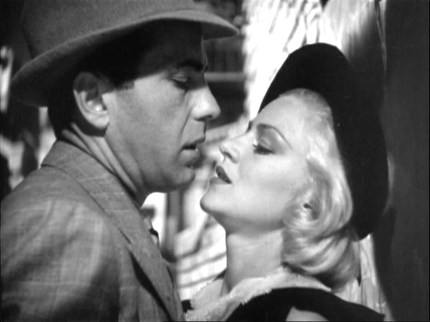
Retro Television Review: The Love Boat 4.22 “Sally’s Paradise/I Love You, Too, Smith/Mama and Me”


Welcome to Retro Television Reviews, a feature where we review some of our favorite and least favorite shows of the past!  On Wednesdays, I will be reviewing the original Love Boat, which aired on ABC from 1977 to 1986!  The series can be streamed on Paramount Plus!
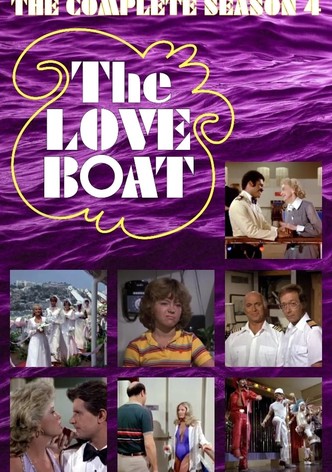
This week, Gopher finds love!

Episode 4.22 “Sally’s Paradise/I Love You, Too, Smith/Mama and Me”

(Dir by Earl Bellamy, originally aired on March 7th, 1981)

Occasionally, on The Love Boat, a member of the crew would happen to find love.

It seemed to happen most often to Julie.  Having watched three and three-quarters seasons of The Love Boat, I’ve lost track of the number of times that I’ve seen Julie tear up while saying goodbye to a passenger with whom she had fallen in love.  Isaac also seems to have had his share of shipboard romances.  Doc is almost always seen escorting someone to his cabin.  The Captain is usually busy running the ship but he’s found a few opportunities to fall in love.

And then there’s Gopher.  Poor, goofy Gopher.  He’s had a handful of cruise romances but, compared to his co-workers, they tend to be few and far apart.  This week, however, Gopher finally gets to have another romance.  (Perhaps not coincidentally, the Gopher storyline was co-written by Fred Grandy.)

Angelina Blenderman (Joanna Pettet) is the by-the-book customs agent who always takes her time checking people’s luggage when they disembark from the ship.  Blenderman and Gopher have an antagonistic relationship, with her making fun of him for wearing shorts with his uniform and Gopher complaining that Blenderman is a humorless scold.  But when Blenderman boards the ship and Gopher discovers that her boyfriend, Ray (Christopher Pennock), is a total cad who is cheating on her, Gopher and Blenderman fall in love.

And you know what?  It’s actually really sweet.  Fred Grandy and Joanna Pettet had a lot of chemistry and they made for a cute couple.  Pettet did an especially good job of capturing the insecurity lurking beneath the abrasive surface.  My heart really broke for her when she first discovered Ray cheating on her.  (Grandy himself had a nice moment where he shyly revealed to Blenderman that his little-used first name was actually “Burl.”  “Stick with Smith,” Blenderman replies.)  I was happy to see that Blenderman and Gopher were still together at the end of the cruise.

As for the other (less interesting) stories, Sally (Juliet Mills) is the manager of the ship’s gift shop.  When Julie hears that Sally’s fiancé, Donald (Gary Conway), is boarding the ship, she is excited for Sally.  Then Sally’s other fiancé, Ricardo (Pedro Armendariz, Jr.), unexpectedly boards the ship.  And then Henry (Kenneth Kimmins) boards the ship and Julie learns that Sally has gotten engaged to a third man!  None of the men know about each other.  Sally explains to Julie that she loves something different about all three of them.  When Donald, Ricardo, and Henry all stop by the gift shop at the same time, Sally’s secret is revealed.  Realizing that she has to choose and having been assured by the men that they will respect her choice, Sally decides to remain single and continue to date all three of the men.  Good for Sally!  On the one hand, her actions are very manipulative, regardless of how much she loves each man.  On the other hand, she is right when she says she has the right to explore different things and enjoy her life.  Somehow, Juliet Mills makes Sally into a likable character.  (One can only imagine how cringey this episode would have been if Hayley had played the role.)

Finally, Natalie Corson (Sylvia Sidney) boards the ship with her son, Stanley (Eddie Mekka).  Natalie wants Stanley to marry a woman that he’s not in love with.  Stanley would rather marry his childhood friend, Jill (Joan Prather).  Natalie accuses Jill of being a nudist because she wears a bikini but eventually, Natalie comes to realize that she’s not being fair and her son deserves to be happy.  The problem with this story was that Stanley was such a wimp that you couldn’t help but feel that Jill deserved better.

With the exception of the third story, this was a fun cruise.  I’m glad Gopher found love and Sally found lust.  It was an enjoyable trip on the boat that offers something for everyone.

Retro Television Reviews: The Secret Night Caller (dir by Jerry Jameson)


Welcome to Retro Television Reviews, a feature where we review some of our favorite and least favorite shows of the past!  On Sundays, I will be reviewing the made-for-television movies that used to be a primetime mainstay.  Today’s film is 1975’s The Secret Night Caller!  It  can be viewed on YouTube!

Though the show pretty much guaranteed that he would forever be a part of the American pop cultural landscape, Robert Reed was not a fan of The Brady Bunch.  Onscreen, Reed played Mike Brady, the stern patriarch who always knew the right thing to do and who, as a result, was named father of the year by the local chamber of commerce.  (Of course, even though she was responsible for him getting the reward, Mike still grounded Marcia for sneaking out to mail in his nomination forms.)  Offscreen, Reed was notoriously difficult, complaining that the scripts for the show were juvenile and shallow.  Reed was correct and it should be noted that all of the actors who played the Brady kids have said that Reed never took out his frustration on the cast and actually became a bit of a surrogate father to all of them.  Still, you have to wonder what Reed was expecting when he signed up for a show that was created by the man responsible for Gilligan’s Island.

The Brady Bunch was cancelled in 1974, temporarily setting Robert Reed free from the burden of playing Mike Brady.  (Of course, he would later return to the role in The Brady Bunch Hour and we all know how that turned out.)  One of the first post-Brady movies that Reed starred in was The Secret Night Caller.   

In this film, Reed plays a seemingly mild-mannered IRS (booo!) agent named Freddy Durant.  Freddy has a good career and a nice home but he’s deeply unsatisfied.  He barely communicates with his wife, Pat (Hope Lange).  He freaks out over his teenage daughter, Jan (Robin Mattson), wearing a bikini.  He fantasies about hitting on almost every woman that he sees.  He hangs out at a strip club and, when he’s really feeling unsatisfied, he makes obscene phone calls!  Because this is a made-for-TV movie from the 70s, we never actually get to hear what Freddy says on the phone but he manages to disgust and/or horrify everyone who has the misfortune to answer his call.  He even calls a woman who works in his office, scaring Charlotte (Arlene Golonka) so much that she subsequently has an auto accident.  Unfortunately, for Freddy, one of his victims, a stripper named Chloe (Elaine Giftos), recognizes his voice and tries to blackmail him.  Freddy’s life is falling apart.  Can his psychiatrist (played by Michael Constantine) help him put it all back together again?

Freddy Durant is obviously meant to come across as being the exact opposite of Mike Brady.  (Of course, many of us who have seen The Brady Bunch have our suspicions about what Mike was actually doing in his office….)  Whereas Mike Brady was the perfect father, Freddy is cold, distant, and repressed.  Reed is convincingly uptight as Freddy and he’s surrounded by a fine supporting cast, including Sylvia Sidney as his disapproving mother-in-law.  That said, it’s still impossible to watch this show without thinking to yourself, “There’s Mike Brady making an obscene phone call.”  That’s the difficulty of typecasting unfortunately.  For all of his efforts to escape the shadow of the Brady Bunch, it’s impossible not to associate Robert Reed with the show, even when he’s talking dirty on the phone.

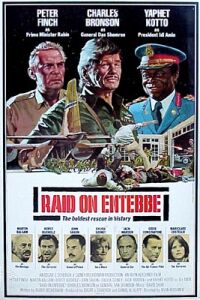
A Movie A Day #338: Raid on Entebbe (1977, directed by Irvin Kershner)


On June 27th, 1976, four terrorists hijacked an Air France flight and diverted it to Entebbe Airport in Uganda.  With the blessing of dictator Idi Amin and with the help of a deployment of Ugandan soldiers, the terrorists held all of the Israeli passengers hostage while allowing the non-Jewish passengers to leave.  The terrorists issued the usual set of demands.  The Israelis responded with Operation Thunderbolt, a daring July 4th raid on the airport that led to death of all the terrorists and the rescue of the hostages.  Three hostages were killed in the firefight and a fourth — Dora Bloch — was subsequently murdered in a Ugandan hospital by Idi Amin’s secret police.  Only one commando — Yonatan Netanyahu — was lost during the raid.  His younger brother, Benjamin, would later become Prime Minister of Israel.

Raid on Entebbe, a docudrama about the operation, was originally produced for NBC though it subsequently received an overseas theatrical release as well.  It’s an exciting tribute to the bravery of both the hostages and the commandos who rescued them.  Director Irvin Kershner directs in a documentary fashion and gets good performances from a cast full of familiar faces.  Charles Bronson, James Woods, Peter Finch, Martin Balsam, Stephen Macht, Horst Buchholz, Sylvia Sidney, Allan Arbus, Jack Warden, John Saxon, and Robert Loggia show up as politicians, commandos, terrorists, and hostages and all of them bring a sense of reality and humanity to their roles.

The film’s best performance comes from Yaphet Kotto, who plays Idi Amin as a strutting buffoon, quick to smile but always watching out for himself.  In the film, Amin often pays unannounced visits to the airport, where he lies and tells the hostages that he is doing his best to broker an agreement between the terrorists and Israel.  The hostages are forced to applaud Amin’s empty promises and Amin soaks it all up with a huge grin on his face.  Forest Whitaker may have won the Oscar for Last King of Scotland but, for me, Yaphet Kotto will always be the definitive Idi Amin.

A Movie A Day #155: Out of the Fog (1941, directed by Anatole Litvak)


When two aging fishermen (Thomas Mitchell and John Qualen) attempt to buy a new boat, they run into a problem with local mobster, Harold Goff (John Garfield).  As Goff explains, if they do not pay him $5.00 a week, something bad could happen to their boat.  When one of the fisherman’s daughter (Ida Lupino) falls in love with Goff, she makes the mistake of letting him know that her father is planning on giving her $190 so that she can take a trip to Cuba.  When Goff demands the money for himself, the fishermen attempt to go to the police, just to be told that there is nothing that the authorities can do.  Goff tricked them into signing an “insurance” contract that allows him to demand whatever he wants.  The two fishermen are forced to consider taking drastic measures on their own.  Out of the Fog is an effective, early film noir, distinguished mostly be John Garfield’s sinister performance as Harold Goff.
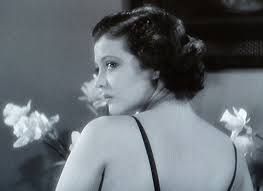
Out of the Fog is also memorable as an example of how Hollywood dealt with adapting work with political content during the production code era.  Out of the Fog was based on The Gentle People, a play by Irwin Shaw.  In the play, which was staged by The Group Theater in 1939, Harold Goff was obviously meant to be a symbol of both European fascism and American capitalism.  In the play, the two fisherman had Jewish names and were meant to symbolize those being persecuted by the Third Reich and its allies.  In the transition for stage to film, Jonah Goodman became Jonah Goodwin and he was played by the very talented but definitely not Jewish Thomas Mitchell.   The play ended with Harold triumphant and apparently unstoppable.  Under the production code, all criminals had to be punished, which meant the ending had to be changed.  Out of the Fog is an effective 1940s crime thriller but, without any political subtext, it lacks the play’s bight.

One final note: while Out of the Fog had a good cast, with up and comer John Garfield squaring against old vets Thomas Mitchell and John Qualen, the original Broadway play’s cast was also distinguished.  Along with contemporary film stars Sylvia Sidney and Franchot Tone, the play’s cast was a who’s who of actors and directors who would go on to be prominent in the 1950 and 60s: Lee J. Cobb, Sam Jaffe, Karl Malden, Martin Ritt, and Elia Kazan all had roles.


Horror Film Review: Damien: Omen II (dir by Don Taylor)


DamienomenII

The first sequel to The Omen was 1978’s Damien: Omen II.  Damien: Omen II is an odd film, one that is not very good but yet remains very watchable.

Damien: Omen II takes place 7 years after the end of the original Omen.  Antichrist Damien Thorn (now played by Jonathan Scott-Taylor) is now 12 years old.  He lives with his uncle Richard (William Holden) and Richard’s 2nd wife, Ann (Lee Grant).  His best friend is his cousin Mark (Lucas Donat).  In fact, the only problem that Damien has is that his great-aunt Marion (Sylvia Sidney) can’t stand him and views him as a bad influence.  Fortunately, as usually seems to happen whenever someone puts an obstacle in Damien’s life, there’s always either a black dog or a black crow around to help out.

Damien and Mark are cadets at a local military academy where Damien deals with a bully by glaring at him until he falls to the ground, grabbing at his head.  In history class, Damien shocks his teacher by revealing that he knows the date of every battle ever fought.  Damien’s new commander, Sgt. Neff (Lance Henriksen), pulls Damien to the side and tells him to stop showing off and to quietly bide his time.

Meanwhile, Richard is busy running Thorn Industries.  One of his executives, Paul Buhler (Robert Foxworth), wants to expand Thorn’s operations into agriculture but his plans are opposed by Richard’s executive vice president, Bill Atherton (Lew Ayres), who considers Paul to be unethical.  However, during an ice hockey game, Bill falls through the ice and, despite the efforts of everyone to break through the ice and save him, ends up floating away.  Paul is promoted and pursues his plans to make money off of world famine.  In between all of this, Paul finds the time to speak to Damien and tell him that he has a great future ahead of him.

Along with Thorn Industries, Richard also owns the Thorn Museum in Chicago.  The museum’s curator is Dr. Charles Warren (Nicholas Pryor) who was a friend of the archeologist Karl Bugenhagen (Leo McKern) who, in the first film, revealed that not only was Damien the antichrist but that the only way to kill him was by stabbing him with the Seven Daggers of Meggido.  Dr. Warren is also friends with Joan Hart (Elizabeth Shepherd), a reporter who both knows the truth behind Bugenhagen’s death and who has also seen an ancient cave painting that reveals that the Antichrist looks exactly like a 12 year-old Damien Thorn.

Much as in the first film, just about everyone who comes into contact with Damien ends up getting killed in some odd and grotesque way.  Crows peck out eyes.  Trucks run over heads.  One unfortunate victim is crushed between two trains.  Another is chopped in half by an elevator cable.  At times, Damien: Omen II feels less like a sequel to The Omen and more like a forerunner to Final Destination.

Damien: Omen II is one of those films that I like despite myself.  It’s bad but it’s bad in a way that only a film from the 1970s could be and, as such, it has some definite historical value.  The script is full of red herrings, the acting is inconsistent, and the film can never seem to make up its mind whether Damien is pure evil or if he’s conflicted about his role as Antichrist.  As I watched the film, I wondered why the devil could so easily kill some people but not others.

And yet, Damien: Omen II is so ludicrous and silly that it’s undeniably watchable.  If the first film was distinguished by Gregory Peck’s defiant underplaying, the second film is distinguished by the way that William Holden delivers every line through manfully clenched teeth.  Everyone else in the cast follows Holden’s lead and everyone goes so far over-the-top that even the most mundane of scenes become oddly fascinating.

For me, the film is defined by poor Lew Ayres floating underneath that sheet of ice while everyone else tries to rescue him.  On the one hand, it’s absolutely horrific to watch.  I’m terrified of drowning and, whenever the camera focused on Ayres desperately pounding on the ice above him, I could barely bring myself to look at the screen.  But, at the same time, we also had William Holden screaming, “OH GOD!” and Nicholas Pryror enthusiastically chopping at the ice with a big axe and dozens of extras awkwardly skating across the ice.  Somehow, the scene ended up being both horrifying and humorous.  It should not have worked but somehow, it did.

And that’s pretty much the perfect description of Damien: Omen II.  It shouldn’t work but, in its own way, it does.

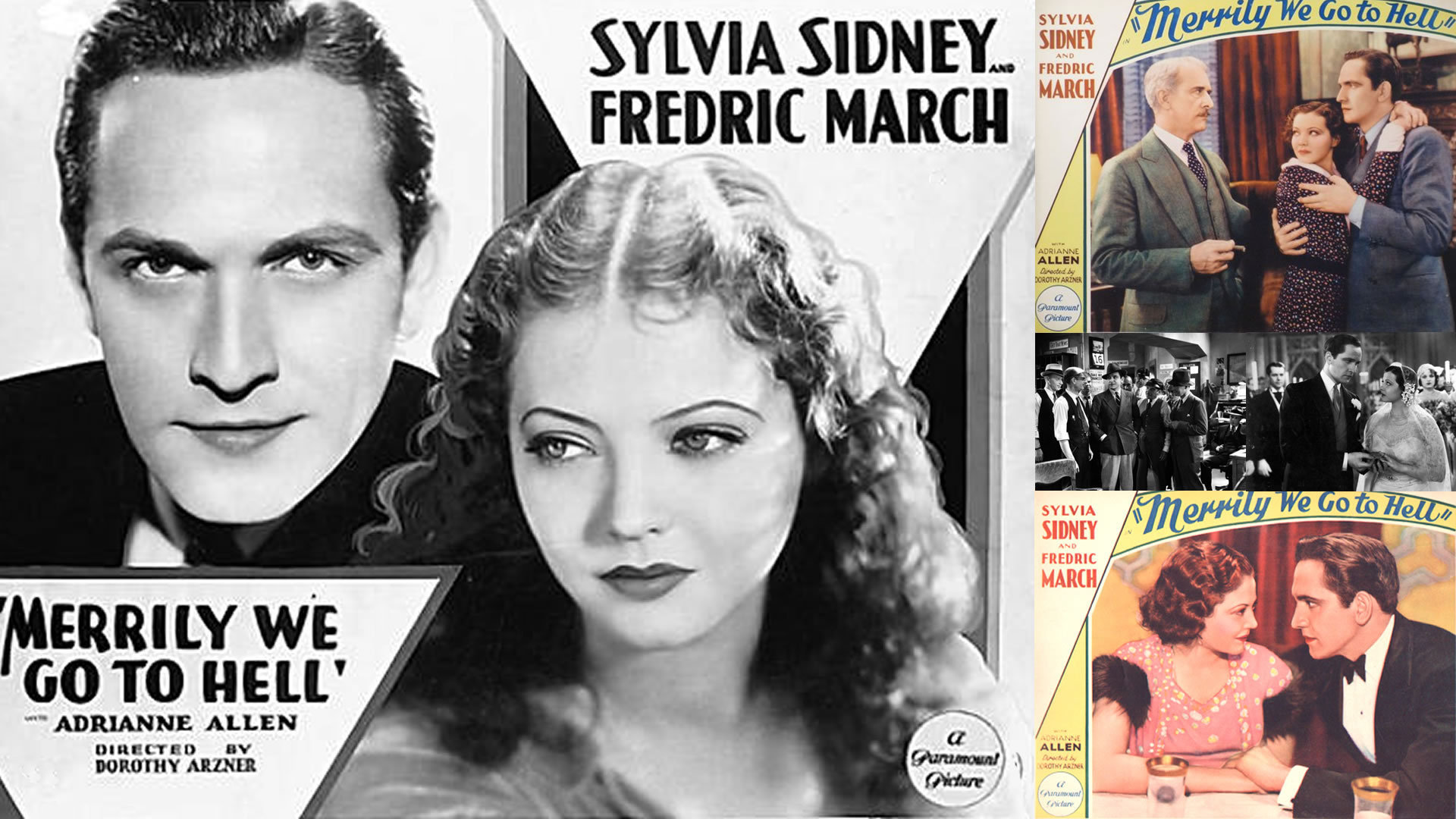
Embracing The Melodrama #5: Merrily We Go To Hell (dir by Dorothy Arzner)


Merrily We Go To Hel

We conclude today’s melodramatic embrace by taking a look at another Pre-Code film.  Released in 1932, Merrily We Go To Hell takes a look at one of the institutions that the Production Code was meant to save: marriage.  It also takes a look at alcoholism, overprotective fathers, and what goes on backstage during a Broadway production.  In many ways, this movie is a comedy but, at heart, it’s a melodrama through and through.

Everyone should have a catchphrase.  Myself, for example, I tend to say “Stay Supple” a lot.  It drives some people crazy but I like the way it sounds and I also happen to think that it’s a pretty good expression of how I view life.  Alcoholic newspaper reporter Jerry Corbett (Fredric March) has a catch phrase of his own.  Every time he takes a drink, he toasts with, “Merrily, we go to Hell.”  Jerry has been haunted ever since he was dumped by his beautiful girlfriend, actress Claire Hempstead (Adrienne Ames), and he now spends all of his time drinking and dreaming of being a playwright.

However, things start to look up for Jerry when, at one of those decadent rooftop parties that always seem to show up in pre-Code films, he meets an innocent young heiress named Joan (Sylvia Sidney).  Jerry and Joan fall in love and, despite the reservations of Joan’s disapproving father (George Irving), they marry.  With Joan’s help, Jerry stops drinking and writes his play.  It’s called “When Women Say No” and despite the creepy and misogynistic title, it becomes a huge success.   Oh, did I say despite?  I meant to say because of.

(For those you sitting at home, I am currently dramatically rolling my eyes and shaking my head.)

However, there’s a problem.  Guess who is cast as the play’s leading lady?  That’s right — Claire!  Jerry may love Joan but he’s obsessed with Claire.  Having again fallen under her spell, Jerry is soon drinking again and neglecting his wife.  However — and this is what distinguishes Merrily We Go To Hell from even most films made today — Joan doesn’t just silently accept Jerry’s infidelity or sit around obsessing on how she can get her husband back.  Instead, she decides that if he can do it, she can do it.  And who can blame her when Charlie Baxter is around?  Not only is Charlie suave and handsome but he’s played by none other than Cary Grant!

Merrily we go to Hell indeed!

Merrily We Go To Hell is available as a part of the Pre-Code Hollywood Collection and I think it makes for a good double feature with The Cheat.  (The people who put together the Pre-Code Hollywood Collection obviously agreed with me because they put both films on the same disc.)  While Merrily We Go To Hell is, at heart, a very serious movie, it begins with a deceptively light touch.  Fredric March was such a charming actor and seems to be having so much fun playing Jerry as a charming and well-meaning fuckup, that you actually are surprised when the film reveals just how desperate a character he really is.  This is the epitome of the type of film that makes you laugh at the start just so it can make you cry at the end.

Incidentally, Merrily We Go To Hell was directed by Dorothy Arzner, one of the only female directors to work in Hollywood during the studio era.  As a director, she understands that, at heart, Merrily We Go To Hell is Joan’s story.  Whereas a male director would probably have focused almost exclusively on Jerry and used Joan as a mere plot device, Arzner is more interested in exploring why Joan marries Jerry in the first place and how she deals with the inevitable discovery that there’s actually less to Jerry than first met the eye.  It’s that perspective that ultimately elevates Merrily We Go To Hell above the level of being a mere domestic dramedy and makes it worth watching 82 years after it was first released.

Sylvia Sidney

44 Days of Paranoia #15: God Told Me To (dir by Larry Cohen)


For today’s entry in the 44 Days of Paranoia, I want to take a look at the underrated horror/sci-fi/paranoia film, God Told Me To.

This film was first released in 1976. At the time of that initial theatrical run, the film was called God Told Me To Kill. That title proved to be rather controversial and the film was promptly pulled from circulation and then re-released under the new title of Demon. However, since Demon was such a painfully generic title, the name change didn’t do much to help the movie at the box office and, again, it was yanked from circulation and the title was changed for a third time.  Under the name God Told Me To, the film was once again re-released.

Not surprisingly, given this chaotic release history, God Told Me To never quite got the attention that it deserved. Over the years, the film has developed a cult following among those (like me) who have discovered the film on DVD or Blu-ray.  But God Told Me To still remains something of an unknown film.

In God Told Me To, Tony LoBianco gives an excellent performance as Peter Nicholas, a tough New York police detective and devout Catholic.  As the film starts, Nicolas is burned out on his job. He’s separated from his mentally unstable wife (played by Sandy Dennis) but can’t bring himself to divorce her and marry his girlfriend (Deborah Raffin) because it would go against his religious beliefs.

Nicholas finds himself investigating a serious of seemingly random murders that all have two things in common.  First, the murderers are all “average” people, the types who would you never expect to commit such terrible crimes.  Secondly, when captured, each murderer dismisses his crimes by explaining, “God told me to.”  As Nicholas investigates, he discovers that every murderer can be linked with a mysterious figure named Bernard Phillips (played the late, great Richard Lynch).

Nicholas’ investigation leads him to discover that Phillips was the product of a virgin birth, causing Nicholas to both question his own religious faith and to wonder wither or not Phillips is just another crazy cult leader or if he might be God himself…

And that’s about all I can tell you without running the risk of totally spoiling the film.  Let’s just say that God Told Me To is one of those films where nothing is quite as it seems.  Since the film establishes early on that literally anyone could be a potential killer, the viewer is forced to watch every character who wanders through the scene, looking for any hint that he or she is about to snap.  This is a film that keeps you off-balance and, unlike a lot of horror films, it  features a twist that’s both plausible and unexpected.

God Told Me To was directed by Larry Cohen, an exploitation veteran who has been responsible for some of the most thought-provoking B-movies in cinematic history. Like many of Cohen’s films, God Told Me To is something of a mess but it’s a fascinating mess.  Both Peter Nicholas and Bernard Phillips prove to be fascinating characters and, during the film’s final third, Cohen takes both of them in unexpected directions.

God Told Me To is one of those films that every fan of horror and cult cinema should see at least once. If you haven’t seen it, now is the perfect time for you to discover it for yourself.

Other entries in the 44 Days Of Paranoia:

  1. Clonus
  2. Executive Action
  3. Winter Kills
  4. Interview With The Assassin
  5. The Trial of Lee Harvey Oswald
  6. JFK
  7. Beyond The Doors
  8. Three Days of the Condor
  9. They Saved Hitler’s Brain
  10. The Intruder
  11. Police, Adjective
  12. Burn After Reading
  13. Quiz Show
  14. Flying Blind

Film Review: Dead End (dir. by William Wyler)


Originally released in 1937, Dead End is a gangster film with social conscience.  Based on a Broadway play and featuring a screenplay by the iconic progressive writer Lillian Hellman, Dead End is a crime film that’s more interested in the root causes of crime than in crime itself.

Dead End takes place over the course of one day in the slums of New York City.  While tenement children spend their time swimming in the East River and idealizing gangsters, wealthy people live in high-rise apartments and depend on the police and their doorman (played, naturally enough, by Ward Bond) to keep them protected from the poor people living next door.

Among the poor is Drina (Sylvia Sidney), who divides her time between marching on a picket line and trying to keep her younger brother Tommy (Billy Halop) from hanging out with the local street gang, the Dead End Kids (Huntz Hall, Bernard Punsly, Leo Gorcey, and Gabriel Dell).  Drina’s childhood friend is Dave (Joel McCrea), an idealistic architect who is having an affair with a rich man’s mistress (Wendy Barrie).

Complicating things is the arrival of Baby Face Martin (Humphrey Bogart).  Like Dave, Martin grew up in the slums.  However, while Dave is trying to escape by making an honest living, Martin has already escaped by choosing a life of crime.  Now, he’s viewed as a hero by Tommy and his friends and with wariness by Dave and Drina who know that Martin’s presence will eventually lead to the police invading their home.  Martin, however, is more concerned with seeing his mother (Marjorie Main) and his ex-girlfriend (Clare Trevor), who has become a prostitute and is suffering from syphilis.

For a film that was made close to 80 years ago, Dead End holds up pretty well.  Is this because it’s a brilliant film or just because the connection between poverty and crime has remained one of the constants of human history?  It’s probably a combination of both.  Considering that Dead End was filmed on a Hollywood backlot, it’s a surprisingly gritty and realistic film that only occasionally feels a bit stagey.  The film’s entire cast does a good job of bringing this particular dead end to life, though the obvious star of the film is Humphrey Bogart.  As played by Bogart, Baby Face Martin is both sympathetic and despicable, the epitome of the potential that can be found and wasted in any American city.

Dead End was nominated for best picture but lost to The Life of Emile Zola.  The film also received a much deserved nomination for best art design but lost to Lost Horizon while Clare Trevor lost the race for best supporting actress to Alice Brady, who won for In Old Chicago.  Perhaps most surprisingly of all, Humphrey Bogart did not even receive a nomination for his excellent work in Dead End.  Meanwhile, the film’s tough gang of street kids proved to be so popular that they, as a group, were cast in several other films.  Originally credited as the Dead End Kids (and later known as the Bowery Boys), they ended up making a total of 89 films together.  With the possible exception of Angels With Dirty Faces, none of those films are as highly regarded as Dead End.

A Quickie Horror Review: Snowbeast (dir. by Herb Wallerstein)


Since I previously reviewed two classic horror films from Mario Bava, it now seems like the perfect time to watch a film from Herb Wallerstein, called Snowbeast.  Well, no, not really.  In fact, to be honest, Snowbeast seems to exist on a totally different planet from either Black Sabbath or Planet of the Vampires.  The two latter films are classics of cinema that should be seen by everyone, regardless of the season.  Snowbeast, on the other hand, is the epitome of the perfect movie to turn on for background noise.  Snowbeast is fun, unthreatening, likable, and ultimately rather forgettable.  But sometimes, especially when it comes to finding something safe but appropriate to watch during the Halloween season, that is exactly what’s needed.

Snowbeast was originally made in 1977 and wow, does it show.  According to Wikipedia (see, I do to research my claims occasionally), Snowbeast was originally a made-for-tv movie and it has retained a “cult following.”  Well, I don’t know if I quite see the film’s cult appeal though it’s certainly better than any 82-minute tv show has any right to be.  The film has also entered into the public domain, which, of course, means that it’s been released in a few thousand different Mill Creek box sets.  Last time I counted, I actually had four different box sets that featured Snowbeast.  So, if nothing else, I’ll always have Snowbeast.

(Incidentally, the version I watched came from the 50 Chilling Classics box set.  This is the same box set that featured Cathy’s Curse, The Alpha Incident, The Demons of Ludlow, and my beloved Drive-In Massacre.)

Snowbeast takes place at a ski resort.  An unseen monster is killing tourists.  The sheriff (Clint Walker) thinks the monster is a yeti.  Nobody believes him and the owner of the ski resort — Sylvia Sidney, who once starred in films directed by Josef Von Sternberg — is more interested in making money off of vacationers than in protecting the public safety.  Now, if this happened today, I’d imagine there would be an OccupySnowBeast demonstration or something.  However, since this film was made in the 70s, this instead just leads to Walker and Bo Svenson going off into the mountains to track down and kill the snowbeast.

Now, the plot of Snowbeast may sound a little familiar and that’s because it’s basically the exact same plot as Jaws except the water has been replaced with snow-capped mountains and the shark is now a Yeti.  But otherwise, it’s pretty much the exact same story, right down to the greedy businesspeople going, “Shut down the mountain!?  That’ll be bad for tourism!” and the film’s 3 heroes all giving each other knowing looks when the wrong bear is killed and paraded in front of the cheering townspeople.  (That said, I have to say that if you love spotting overreacting extras in crowd scenes, this is the film for you.)

So, Snowbeast doesn’t win any points for originality but I’m willing to cut it some slack.  Even though it’s a bit before my time, I’ll bet that Snowbeast wasn’t the only low-budget B-movie to rip off Jaws in the 70s and you don’t really watch a movie called Snowbeast for the plot anyway.  You watch a movie called Snowbeast because you’re looking for something silly that won’t require too much thought.  And that’s a perfect description of Snowbeast.  It’s a film that’s done well enough that you won’t hate yourself for watching but, at the same time, is so predictable that you can do about a hundred other things while it’s playing without running the risk of missing anything important.  It is literally a movie that you can start watching at any point after it’s started. 

Ironically enough, Snowbeast is actually more effective because it was made for television.  Yes, you don’t get the gore, sex, or profanity that you would typically expect from one of these films but it also means that you don’t get to see the killer Yeti except for one very brief shot.  Otherwise, the Snowbeast of the title is represented by point-of-view shots of the monster about to attack some unsuspecting skier.  As I’ve mentioned in other horror reviews, our imaginations will always come up with something scarier than even the most effective of special effects and Snowbeast‘s low budget origins force us to use our imagination more than the typical monster film would.  As well, the snowy setting is beautiful to look at and if you’re a fan of watching people ski (and ski and ski and ski) this is the film for you.  Seriously.