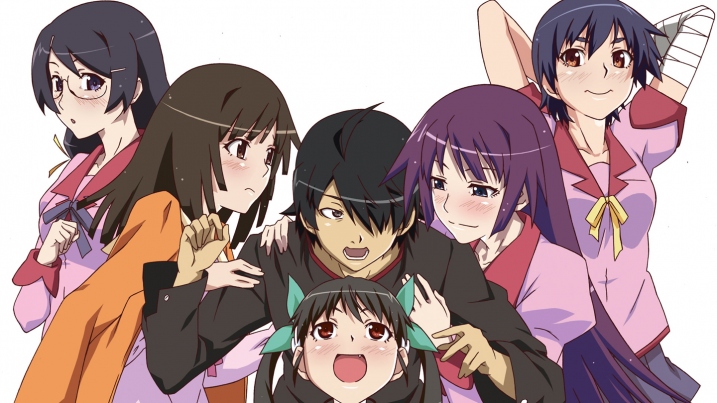
Anime You Should Be Watching: Bakemonogatari


Honestly, I try to keep this column a surprise to Arleigh.  I hate when the owner of this site knows exactly what I’m going to post.  However, with the recent announcement from Aniplex USA that they will be releasing this title on BluRay, I can’t very well ignore this awesome title any longer.

The problem with this title is, it’s very hard to talk about without spoiling things.  Every girl here has a very important story to tell.  The overarching story here is how our protagonist, Koyomi Araragi, interacts with the various girls in the series.  The thing is, every girl has her own problem that he must solve.  Since I hate spoilers as much as the next guy or girl I’ll refrain from going too in depth to what everyone has to overcome.  The best parts would have to be Mayoi Hachikuji and Suruga Kanbaru.  Luckily for all, the BluRay of this series will be available later on this year from Aniplex America.  Really, nothing else could do this series justice than a BluRay release, so I cannot help but be thrilled for this.  What I can say about this is that you need to be prepared to do a lot of reading.  People say that this is a very wordy title, and while I don’t necessarily agree with them in the fact that they think the dialog comes fast and furious, I do agree that the dialog is the most important aspect of the show.  There is a lot of Japanese puns and wordplay involved, and this title is not for the newly initiated to the anime scene.  Those that are used to reading subtitles won’t have too much trouble keeping up, but this is certainly not a title one can passively watch and expect to fully understand.

The thing to keep in mind is that if this show seems strange, by anime standards, it probably has a lot to do with the director.  It’s directed by Akiyuki Shinbo, who also directed the very unconventional Puella Magi Madoka Magica, and his influence is easily seen in both.  There’s not a lot of action in Bakemonogatari but the visual imagery is classic Shinbo.  He makes full use of a lot of surreal backgrounds during long conversations, so instead of letting things get stale with long stretches of just the characters standing around talking, which as I said before they do a lot, he’ll at least have the background flashing by and changing often during those times.  On one hand, it’s certainly a cost saving measure since they didn’t have to animate the characters, but more importantly it makes it seem like something is actually happening, even when it’s really not.  In a visual medium like anime, nothing bores people more than just staring at the same thing for long periods of time, so this helps keep any feelings of boredom from setting in.  For a show without a lot of action, to be able to keep it from feeling dull is where you need a talented director, and Shinbo truly shines in this case.

So what worked with this anime?  Well, it has attractive and interesting characters.  Each story draws you in and makes you want to see what happens next.  While you assume that each girl will have her problem solved, this is a Shinbo show, so there are no guarantees that the problem will be solved, or even if it is that it won’t create further problems.  And that’s part of the fun of this series, expecting the unexpected.

What didn’t work?  Well, if you want lots of action and explosions in your anime, you’ll find little to none of that here.  This is a very character driven show, so if you find you dislike or don’t care about some or even all of the characters, then you won’t find much here of value.

All in all this was a pleasant surprise to me when I watched it.  The light novels it was based on have been very popular, but since I don’t follow the light novel scene very closely, this was unexpectedly good.  If you want an anime that draws you in and keeps you hooked with a compelling story, then look no further than Bakemonogatari.

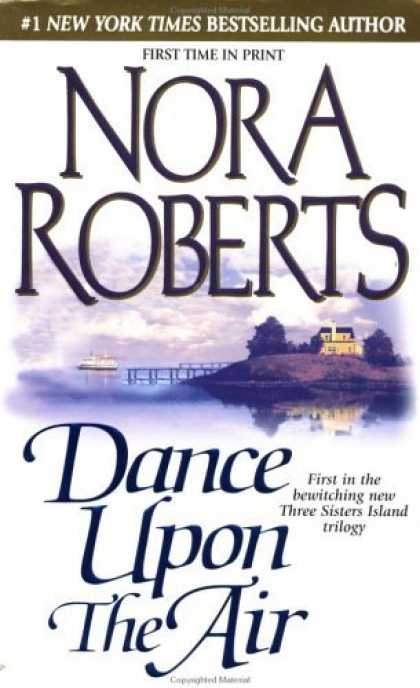
Review: Three Sisters Island Trilogy (by Nora Roberts)


[guilty pleasure]

My taste in entertainment tends to be on the darker, violent and existential side of things. Horror, action and sci-fi tend to perk up my attention when looking for something to read, watch and/or play. This particular guilty pleasure I came across by accident. I think most people’s guilty pleasure were discovered by accident or happenstance. I would be the first to admit that romance novels would be the last thing I would consider my type of entertainment. Not saying romance novels have no place, but it definitely doesn’t fill the criteria of what I like and listed above.

Ten or so years ago I would never have picked up these books, but I have since found them to be much to my liking. I’m still not sold on a majority of romance-themed novels, but I have been sold on the one’s written by that queen of the romance novels: Nora Roberts (and to a larger degree the one’s she writes under the pseudonym J.D Robb). The novels which sold me on her type of writing was her Three Sisters Island Trilogy.

1. Dance Upon the Air

Dance Upon the Air was a surprise find for me as a reader. My initial introduction to Nora Roberts’ writing was through a mystery-romance series of hers written by her under the pseudonym, J.D. Robb. Her In Death series had just the right balance of mystery, police procedural, humor and romance to make this male not feel all weird reading was really was a romance novel. On the prodding of a friend who is a voracious reader of all things Nora Roberts, I picked up Dance Upon the Air. From the moment I began to read the exciting introduction of the Three Sisters Island being born, I was hooked line and sinker on this book.

The Three Sisters Island is a small and quaint little island community off the coast of Massachusetts whose origins, legend has it, was due to a powerful spell weaved by three sister witches. Their spell ripped a portion of the Massachusetts coastline from the earth and floated off to just off the coast to form a sort of haven for their descendants. A haven from the puritanical witchhunts which have taken the lives of both real witches and those falsely accused as one. It’s through the later generations and their descendants that the story for this trilogy is played out through.

Dance Upon the Air deals with one of the descendants of the Three Sisters. The books tale concentrates on the trials and tribulations of one Nell Channing whose a direct descendant of the Sister whose powers were of the element of Air. A delicate woman whose life has been a living hell due to a very abusive and powerfully connected husband, Nell finally escapes her abusive relationship through guile and trickery, but as the story progresses its not long before the husband she left behind finds out the truth about his wife’s apparent “death”. Nell makes it to Three Sisters Island and upon setting foot on its soil feels as if she’s returned home. Whether by fate or providence, Nell soon meets two other women on the island whose destinies have been preordained to entwine with hers.

Dance Upon the Air sounds a bit like the Julia Roberts thriller Sleeping with the Enemy. The similarities are pretty close, but Roberts’ tale of magic, fate and self-reliance was the better of the two. Nell’s experiences as she learns to live and love again on Three Sisters Island has a sense of hope and self-reawakening which the Julia Roberts film lacked. This book shares some of the thriller aspect of the film, but doesn’t rely on it to weave a beautiful tale. Instead, Dance Upon the Air reads more like the journey of a damaged woman whose realization that the place she has now decided to call home and those friends and lovers she’s met will be the anchor in finally realizing the life she’s always thought she should have lived.

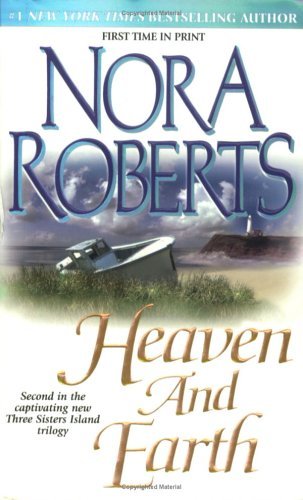
2. Heaven and Earth

Heaven and Earth marks the middle installment in Nora Roberts’ Three Sisters Island Trilogy. The first book in the series, Dance Upon the Air, started off the trilogy on a magical note with Ms. Roberts deftly combining romance, abit of the supernatural, and a nice thriller into an exciting tale of intertwined destinies and pasts, strong female characters, and passionate romance.

Heaven and Earth starts with the wedding and honeymoon of Nell Channing and Zack Todd (island town’s sheriff). This helps cement Nell’s full acceptance into the island town’s fabric. Her trials and tribulations which led her to Three Sisters Island and the test she had to pass to finally begin her life anew seem less of a coincidence and more fate and predestiny. Nell is very open to such a possibility and helps explain to her just why she felt so at home upon her arrival on the island. She thinks its the magic in her past and blood that she now has learned she has. Her new sister-in-law and fellow “sister witch” Ripley Todd thinks its all crapola and would rather not dwell on such things. Ripley Todd knows of the island’s magical history and her own role in it, but her fear and stubborn reluctance to accept her magical heritage makes up the meat of the novel.

Ripley’s attitude towards the magic that permeates the island and the two other women supposedly tied to her, Nell Channing and Mia Devlin (the resident island witch and seemingly its most desired woman on the island), run from tolerance to outright restrained hostility. Ripley’s willing to tolerate her new sister-in-law’s acceptance of her magical heritage. Mia Devlin on the other hand she avoids and ridicules in equal amount. Mia takes it all in stride but at the same time drops comments in an attempt to remind Ripley of her past and future. Ripley doesn’t like this at all and does all she can to avoid the fire-haired Mia. But soon a new factor drops into her life which would lead to her finally confronting her fear of her heritage and her role in what could be the survival of Three Sisters Island.

This factor comes in the guise of Dr. MacAllister Brooke. Mac, as he likes to be called, is a professor whose main call in life is the hunt of the so-called supernatural. His travels and research leads him to the island. He plans on researching the island and determining as to the veracity of the island’s supernatural past and origins. For some reason he and Ripley are set on a course to deal with each other. Mac sees Ripley as a challenge and an attraction forms. Ripley on the other hand sees Mac’s research and choice of profession as being something close to being worthless, but as they continue to stay in close proximity she too cannot deny the growing attraction between them.

As the story moves along, Ripley and Mac must contend not just with each other’s prickly and stubborn natures, but an outside force threatens to destroy the peaceful lives of the original Three Sisters’ descendants and the idyllic island home they and the other townspeople call home. Ripley will have to decide in the end whether to accept that which she has feared for so long, or close herself off from it forever and thus dooming her and everyone close to her. In the end, Ripley will not be alone in her own confrontation with the darkness looming over the Three Sisters Island, Mac, Nell, Mia, Zack and many others will be there to help and support her.

All in all, Heaven and Earth is a great continuation of the epic tale began with Dance Upon the Air. Ripley and Mac’s relationship is a source of both humor and heat. It’s amusing to see polar opposites, yet with so much in common personality-wise, fight tooth and nail not to give in to what is definitely two halves of the same coin finally finding each other.

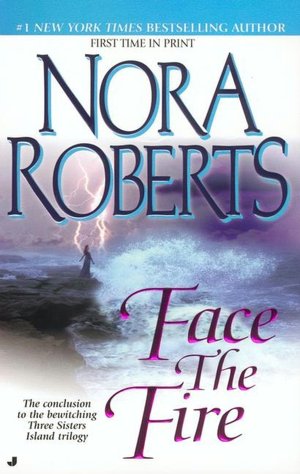
3. Face the Fire

Face the Fire is the third and climactic installment to Nora Roberts’ entertaining and fun Three Sisters Island Trilogy. The first two books dealt with the first two “sisters” whose powers were tied with the elements of Air and Earth. In this third book, Mia Devlin, the third so-called sister of the title takes her power from the element of Fire. Like the element itself, Mia mirrors it in her stunning look, with her flowing fiery-red hair and even fiery demeanor. In the previous two books in the trilogy it was always Mia who guided and helped both Nell and Ripley to finding their true path in life and in finally accepting their magical heritage.

Face the Fire now has Mia becoming the center of all the magical happenings on the titular Three Sisters Island. The previous two books gradually gave its readers more and more information concerning the original Three Sisters and the prophecy/curse which befall them and which still hangs over their descendants and the island refuge their created. Nell and Ripley have done their part in trying to prevent the darkness about to descend on their island home, but its all up to Mia and her own intertwined destiny with a man who broke her heart many years past that must find a way to head off disaster and break the curse that has plagued their line through the generations. Will Mia succeed in breaking the chain of heartache which started with her ancestor? No matter what, Mia has her two “sisters” to help and assist her in her own trials.

Of the three books in the trilogy this one would lean heaviest on the supernatural aspect of the series. We learn even more of the back story of the Three Sisters Island which Mia has called home all her life and one she’s protected by herself against the evil her ancestors (also Nell’s and Ripley’s). Of all the three “sisters” who form the core of the trilogy it’s Mia who has fully embraced her heritage and her story also show’s that she is the most powerful of the three but no less damaged by a past relationship that she must acknowledge and repair if she, Nell and Ripley will succeed in preventing the age’s-old evil from returning to Three Sisters Island and finishing what it was preventing from doing so by the original three sisters.

In the end, Face the Fire is a worthy conclusion to what has been a magical trilogy. The novel continues where Dance Upon the Air and Heaven and Earth left off. It was nice to have Mia becoming the center of the story. In the previous two books she’s always been like the omnipresent powerful white witch who knew all. This time around we got to see her human side and know that she’s as damaged as her other sisters. Ms. Roberts did a great job with this trilogy and as great as the three books has been and why it continues to be a guilty pleasure of mine.

Supernatural: The Anime Series to be Released on DVD/Blu-Ray


Ever since it was announced in around Fall of 2010 that an anime series was going to be made based on the first two seasons of the popular CW drama series, Supernatural, I knew I had to get the DVD and/or Blu-Ray release of this series.

Like most Japanese anime series they rarely got shown in the US unless it was part of a video set. It’s rare to find newly shown episodes in Japan shown in the US at the same time. Lately, a new practice of streaming new episodes on-line through official anime streaming sites has given American anime fans the same access to new episodes as their Japanese counterparts. A fine example of this recent practice was the simultaneous airing of each new episode for the horror-ecchi series, Highschool of the Dead. Unfortunately, this wasn’t the case for the Supernatural anime series.

So, it was a relief to read the news release earlier this week about the anime series being released in the US through DVD and Blu-Ray sets of Supernatural the Animation season 1.

The DVD and Blu-Ray Season 1 sets will be released by Warner Home Video on July 26, 2011.

If there was ever a series that belongs to be redone in anime fashion it was, and is, Eric Kripke’s Supernatural. As I joked with people about this news once it was confirmed, the Supernatural slashfic community will now have to deal with an equally rabid yaoi community which has already sprouted since Supernatural the Animation premiered on Japanese TV earlier this year.

One thing that should please both subbed and dubbed warring camps is that the DVD and Blu-Ray release should have both original Japanese voice cast (which includes the very Japanese voice actors who dub the Dean and Sam Winchester characters in the live-action showing of the series in Japan) and the stars of the series itself, Jensen Ackles and Jared Padelecki dubbing the anime series in English (though it would seem Padelecki will be voicing all 22-episodes while Ackles only select episodes).

People I know who have seen the series while it aired in Japan have spoken nothing but positive things about the first season. So, far the announcement hasn’t been followed up with the items being put up for pre-orders on Amazon.com or any of the online video retailers. I’m sure that will change once more details about the DVD and Blu-Ray release come down in the coming weeks.

Source: Anime News Network

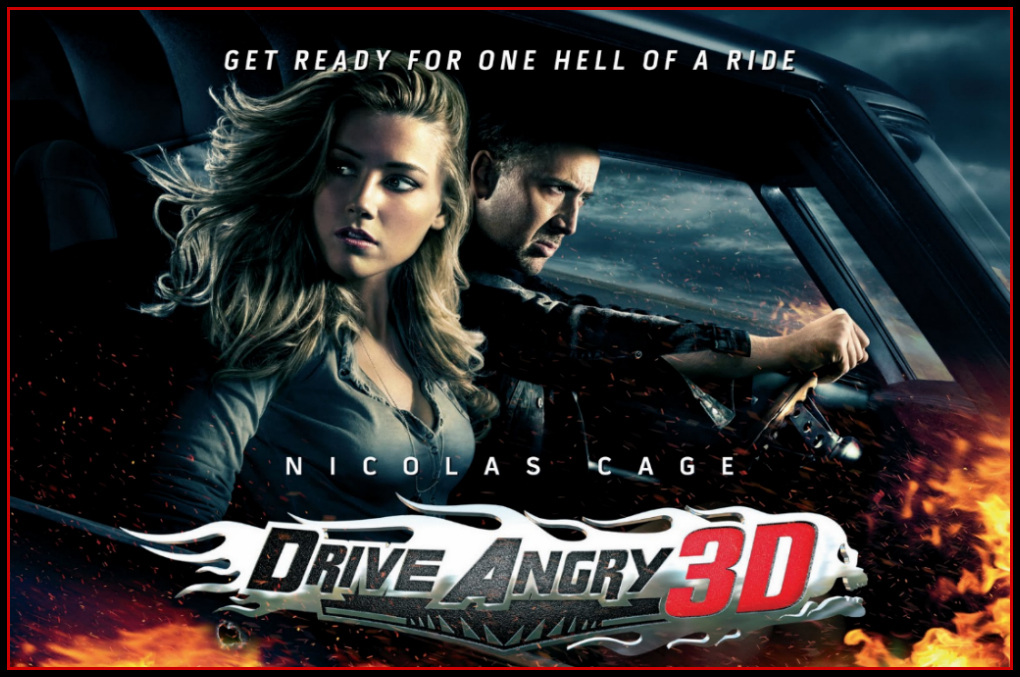
Review: Drive Angry 3D (dir. by Patrick Lussier)


Every year there’s always a handful of films which gets little to no love from both critics and audiences. These are titles that for one reason or another get left by the wayside. Some say these films are awful. Some say they’re weren’t in the theaters long enough for people (or even critics) to notice. Yet, these films will get it’s vocal and ardent supporters and fans who sees through all the flaws and warts and find a rough gem that really entertains. One such film for 2011 is the supernatural-action film from filmmaker Patrick Lussier simply titled, Drive Angry 3D. Yes, it’s a 3D film and not one of those post-conversion deals but shot from start to finish in 3D.

Drive Angry 3D harkens back to the good, dirty era of grindhouse films. Films with simple storylines and even simpler dialogue. They were made on the cheap (though with a budget of 35-40million this film definitely not low-budget) and cramed full of everything that could be exploited to bring in the audience: sex, violence and lots of nudity. Lussier’s film definitely has all three in abundance. With Nicolas Cage headlining a cast of veteran genre actors and a spitfire of a female sidekick, Drive Angry 3D was a grindhouse film at its very core.

The story could’ve come from any number of revenge films of the 1970’s. Cage plays John Milton (I kid you not) who escapes Hell itself to seek vengeance on the Satanic cult and their leader Jonah King (Billy Burke sporting a slithery Southern accent that’s one step over excessive but oh so fun to hear) for killing his daughter and kidnapping his baby granddaughter. A baby to be sacrificed by Jonah King and his followers to usher in an era of Hell on Earth. Just going over that brief synopsis one could just imagine this film being made in the 1970’s with country rock playing in the background.

Along the way in his quest for vengeance and redemption, Milton comes across Piper (played with crackling gusto by the lovely Amber Heard in the shortest Daisy Dukes I’ve ever seen on film) who becomes his partner in his quest through some shared encounters which shows Piper not as a damsel-in-distress but a young woman who can kick ass as much as Milton does. The fact that she didn’t appear in any form of nakedness throughout the film was a sign that she wasn’t a woman to be messed with.

While it Milton and Piper going after King and his Satanic-cult inbreds wasn’t enough action for one film Lussier and screenwriter Todd Farmer (he also played the role of Piper’s philandering fiancee who gets knocked around a bit by almost everyone) decided to bring in the character of the Accountant (played with an almost childish glee by William Fichtner) who has followed Milton from Hell to bring him back and an item that was taken from Lucifer’s own stash of goodies. Watching the Accountant play someone not used to being human play-act as one definitely became some of the funnier scenes in the film. That’s also why this film was such a fun ride to sit through. Everyone in the cast seemed to be having a blast playing their characters to the hilt. Even David Morse in the role of a Webster as the aging sidekick of Milton’s before his trip to Hell looked to be into his role.

But enough of trying to explain the story and how the actors performed. Drive Angry 3D is all about action and action of every kind. This film oozed action from its very being. We had car chases with some of the most beautiful classic muscle cars in existence. We first get to witness Piper and her 1969 Dodge Charger 440 R/T then for the last third of the film twin 1971 Chevrolet Chevelle SS 454’s. This film is such a throwback to the car chase action films of the 70’s like Vanishing Point and Dirty Mary, Crazy Larry. It wasn’t just car chase action to be had and experienced. This film didn’t shy away from some very violent and up-close gunfights. One particular gunfight may just go down in history as one of the best as Cage’s character (still fully dressed) shoots it out with some of King’s thugs while having sex with the local waitress, smoking a cigar and a bottle of Jack Daniel’s in one hand. Milton was one multitasking badass.

This film was all about excess and it’s why it held such an appeal to those who have seen it and have raved about it. It didn’t pay homage to grindhouse, but ended up as being one of the very films it tried and succeeded to emulate. Forget the gloss veneer of the film. A film doesn’t have to be dated and cheap-looking to be grindhouse. Both Patrick Lussier and Todd Farmer wanted to make a badass film about a badass character doing badass shit and they succeeded.

Even the 3D used for this film actually worked. It helped that the crew actually used real 3D cameras to film every scene instead of doing post-conversion work of regular camera filmed scenes. Yes, there were scenes where things were made to come straight at the audience but it wasn’t so distracting as to ruin the experience. In fact, I would say that 3D added to this film’s appeal and fun. One reviewer had said that 3D should be reserved for use in films such as Drive Angry 3D. I won’t disagree.

Will this film be for everyone? I don’t think it is. Not everyone is ready for extreme excess of badassery from Cage, Heard and Fichtner.

Drive Angry 3D will be seen as a failure by those not involved in its production or by those who saw it and enjoyed it. There’s some truth in that, but I do think that this film succeeded in doing everything that was promised by its filmmakers and producers. It’s not an Oscar-baiting film or even one to be seen in the yearly film festivals and circuits. What this film has become was one hell of a ride that was all about kicking ass, taking names (screwing the local waitress while waiting for the ambush to come) and driving beautiful, fast cars. I do think that Lussier’s film looks like a cult-classic in the making as time passes and those who saw it while it was in the theaters should be proud to say that they saw it and liked it when most people couldn’t be bothered.

Now, where’s my pistol, cigar and bottle of Jack Daniels.

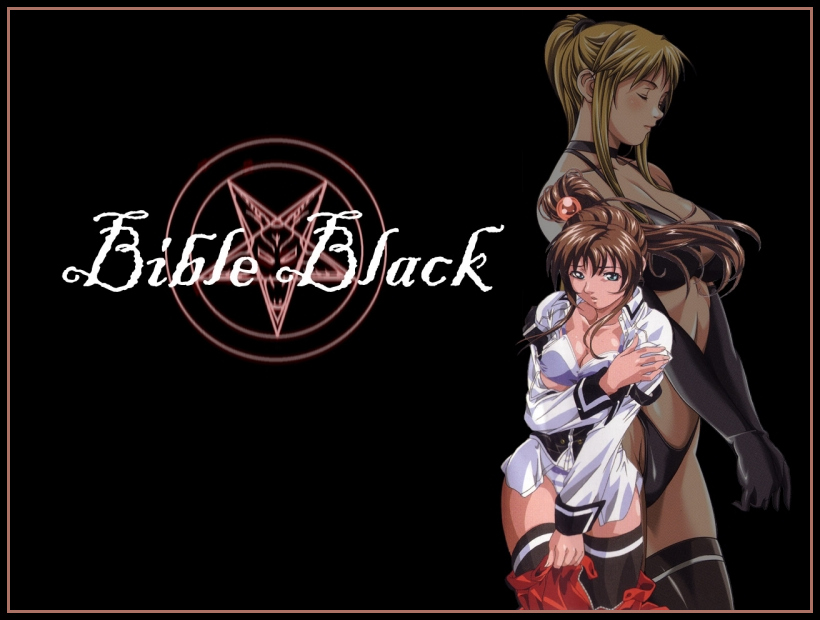
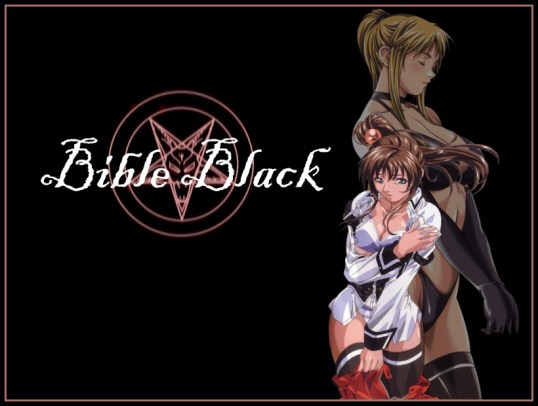
Anime You Should Be Watching: Bible Black (Baiburu Burakku)


eroge: is a portmanteau of erotic game. It is a Japanese video or computer game that featured erotic content (usually pornographic in nature) and used anime-style artwork in a visual novel format.

Hentai as a genre first reached wide recognition through the notorious Chōjin Densetsu Urotsukidōji, a 1980s OVA that fused graphic sexual imagery with apocalyptic horror and violent fantasy. That work established many of the conventions that would define adult anime for decades—its blend of mythology, grotesque excess, and surreal eroticism pushing the boundaries of animation’s narrative potential. Bible Black represents a later evolution of that tradition, taking the transgressive energy of Urotsukidōji and refining it through a more contained setting, structured storytelling, and psychological tension. Where its predecessor reveled in grandiose chaos, Bible Black turned inward, exploring horror through ritual, secrecy, and moral decay within familiar, everyday environments.

Originally developed as an eroge visual novel, Bible Black featured the artwork of its creator, Shoujo Sei. The game’s popularity within Japan’s adult gaming market grew rapidly, fueled by its striking blend of erotic storytelling, occult imagery, and a sinister undercurrent that set it apart from typical romantic visual novels of its time. Its success inevitably drew the attention of Milky Studio, an animation company already known for adapting adult-oriented games into OVAs. Within a few years, Milky Studio produced the first Bible Black anime series—a six-episode OVA that closely followed the storylines and choices from the original game.

The anime adaptation centers on a high school caught in a web of witchcraft and forbidden rituals. While the premise may sound familiar to fans of the supernatural or occult genres, Bible Black distinguished itself by merging sexual and mystical elements in a way that felt both deliberate and unsettling. The first OVA mirrors the game’s basic storyline, introducing viewers to a world where innocent facades collapse under the weight of temptation and corruption. Later sequels and prequels expanded on this mythology, delving into the origins of the dark book that drives the narrative and introducing new characters entangled in its influence. In doing so, the series built a continuity resembling a twisted mythos—an interconnected body of stories that deepened its immoral mystique.

To describe Bible Black merely as “popular” within its niche would be an understatement. Its reputation extends far beyond its target audience, circulated through anime forums, recommendation threads, and cultural commentary as a kind of benchmark for erotic horror. It is the title almost universally cited when discussing adult-oriented anime, whether out of reverence for its artistic boldness or infamy for its transgressive imagery. For many viewers—particularly Western audiences in the early 2000s—it represented their first exposure to Japanese erotic animation beyond parody or rumor, granting it a strange, almost legendary status within the genre’s history.

What separates Bible Black from lesser works is the precision with which it fuses its erotic and occult motifs. The narrative’s backbone—the pursuit and misuse of a magical grimoire—offers an allegory for unchecked desire and the cost of power. Rituals blend seamlessly with acts of seduction, and the visual motifs of pentagrams, candles, and bloodstained rites serve as metaphors for obsession and spiritual decay. This combination gives the anime an intensity uncharacteristic of typical adult fare, as every encounter is charged not only with physical desire but also with moral and supernatural consequence. Rather than treat sexuality as isolated spectacle, the series enfolds it within its darkly coherent world, ensuring that sin and pleasure remain inseparable.

The “harem” narrative structure, common to many eroge and visual novels, is used here with a more perverse edge. The typical male protagonist surrounded by female admirers becomes a focal point not of romantic fulfillment, but of temptation and corruption. In Bible Black, that dynamic is steeped in manipulation and control—sex as both a weapon and a spiritual act. This inversion of a familiar trope contributes to the series’ enduring fascination, as it refuses to comfort the viewer with the conventions of fantasy romance. Instead, it constructs an atmosphere of moral ambiguity and psychological pressure, leaving few characters untainted.

The setting amplifies the discomfort. By situating its story within the environment of a high school—a space symbolically associated with innocence and growth—Bible Black subverts expectations. The classrooms and corridors that should represent order and safety become arenas for forbidden rites and hidden depravity. This juxtaposition between the mundane and the macabre intensifies the sense of violation that defines the series. It’s not only a story of erotic ambition but of how institutional and moral structures collapse when confronted by unchecked desire and occult power.

Visually, the anime reflects its early-2000s production values with surprising sophistication. Milky Studio preserved the visual style of Shoujo Sei’s original artwork—marked by angular features, bold contrasts, and expressive eyes—while enriching the material with atmospheric lighting and strong sense of color. The palette alternates between the sterile brightness of school life and the dim, saturated tones of ritualistic scenes, crafting a visual rhythm that heightens tension between two worlds. Despite the limited resources typical of an OVA, the series achieved a memorable aesthetic identity, merging the glossy surfaces of contemporary anime with the raw suggestiveness of eroge art.

As Bible Black expanded into sequels like Bible Black: New Testament and various side stories, its universe deepened both narratively and tonally. The newer installments explored different perspectives and timeframes, revealing the long shadow of the original events. This serial approach—rare for hentai productions—allowed the franchise to form a loose continuity, almost like a dark fantasy saga built around erotic and esoteric principles. The cumulative effect was that Bible Black ceased to be a one-off novelty and became a defining thread in the history of animated erotic horror.

Its cultural impact extends further still. Bible Black served as one of the first major adult anime titles to gain substantial attention outside Japan during the rise of online fan communities. Through fan distribution and unofficial translations, it became many Western viewers’ first encounter with themes such as futanari—depictions involving gender transformation or dual sexual anatomy—which had previously remained obscure outside Japan. The OVA thus became not only a product of its domestic industry but also a cultural export that introduced global audiences to the specialized lexicon and aesthetics of Japanese hentai.

Critically, Bible Black remains an object of contention. Its explicitness renders it indefensible to some, yet others recognize within it a degree of thematic intent that surpasses mere sexual provocation. It approaches the occult not with romantic mysticism, but as an allegory for moral erosion and human vulnerability. Erotic acts in the series often parallel spiritual corruption, suggesting that the boundary between pleasure and damnation is perilously thin. The result is an anime that provokes both physical and intellectual reactions—equally discomforting in its carnality and symbolism.

Even after more than two decades, Bible Black maintains relevance and recognition. Later works have tried to replicate its formula—mixing fetishes with supernatural dread—but few possess its coherence or audacity. Its imagery, tone, and structure continue to influence adult creators seeking to merge explicit content with narrative ambition. Moreover, the series exemplifies a moment in anime history when the medium’s adult side dared to pursue storytelling complexity rather than rely solely on erotic novelty.

Viewed today, Bible Black endures as both time capsule and touchstone. It captures an era when the boundaries between mainstream anime and adult experimentation briefly blurred, and when eroge culture translated successfully to animation with both narrative depth and artistic conviction. Whether judged as an expression of taboo horror, a stylistic artifact of its generation, or a benchmark for the fusion of sex and the supernatural, Bible Black stands as one of the most distinctive and controversial works in anime’s underground lineage. Its lasting infamy, like its allure, lies in its refusal to separate desire from darkness—a union as seductive as it is terrifying.
Supernatural the Animation – Preview Trailer


A couple weeks back I posted an article about Warner Home Video and Madhouse (anime studio) collaborating to adapt the very popular CW supernatural series Supernatural into anime. The series will comprise of 22-episodes and has a tentative release date in Japan around January 2011. More news has since come down the pipeline that the 22-episode season will see a DVD release with English-subtitles a couple months later.

From the preview trailer which has come out since it looks like the anime keeps the core theme of the show with the two Winchester Brothers fighting not just through demons, monsters-of-the-week and other supernatural problems, but also their own familial issues. The animation by Madhouse should appeal to non-anime fans since it skews more towards a realistic style instead of the hyper-kinetic wide-eyed animation style many non-fans think all anime looks like. I like to compare the animation to this series to a classic supernatural action anime which came out during the early 1990’s, Ninja Scroll.

The use of deep blacks to shade the character animations and give some definition to their faces gives the whole animation style quite the fleshy, rounded look instead of the angular, almost mechanical style of current anime. The incorporation of typical anime-style monsters was a nice touch. That was definitely tentacles coming out of that monster/demon. Though I must say that I’d be surprised if this series used said tentacles in other ways other than to be an instrument of destruction and bloodletting. I don’t think Supernatural the Animation will have much hentai qualities in it.

Anime horror usually don’t come out as often and when they do they’re usually of the hentai variety. If the folks at Madhouse even do half a good job in adapting the original tv series then this is one anime series I will have on my must-see list.

….And yes, that is a Japanese band cover of Kansas’ classic rock song, “Carry On Wayward Son, which has become the tv series’ unofficial theme song.

Supernatural the Animation


CW Network’s very popular tv series Supernatural looks to expand into a new media as Warner Home Video plans to release a 22-episode anime adaptation of the tv series. The series will come out in Japan this January of 2011 with acclaimed anime studio Madhouse doing the animation. The series’ first season will encompass the breadth of the original series’ first two season, but will have room for new content which explore and expand of the two Winchester Brothers’ early childhood as Hunters. Some secondary characters from the original show will also get a much more expanded role within the anime series.

I, for one, was quite excited when I first learned of this development. The original show has been a favorite of mine since it first debuted in the Fall of 2005. While for some the idea of an American TV series getting an anime adaptation might seem farfetched, but I think Supernatural‘s aesthetics lends itself well to the hyper-realistic conventions of anime. Madhouse has already shown it could do straight up horror with its very popular zombie anime series Gakuen Mokushiroku (Highschool of the Dead), so creating a series out of a show based on the supernatural and monsters and demons wouldn’t be too much of a stretch for the studio.

The Winchester Brothers in the anime will be voiced by the two same actors who dub the original series for airing in Japan: Yuya Uchida and Hiroki Touchi. There’s no word on whether the series will get an American dub version when the dvd/Blu-Ray comes out in the US so fans hoping to hear Jared Padelecki and Jensen Ackles voicing their anime counterparts may have to temper their hopes.

Time will tell if this anime adaptation will catch on in the US, but with Supernatural having such a huge and vocal fan-base there’s a chance it may just and allow a second season to be made.