Welcome to Retro Television Reviews, a feature where we review some of our favorite and least favorite shows of the past! On Thursdays, I will be reviewing Decoy, which aired in Syndication in 1957 and 1958. The show can be viewed on Tubi!
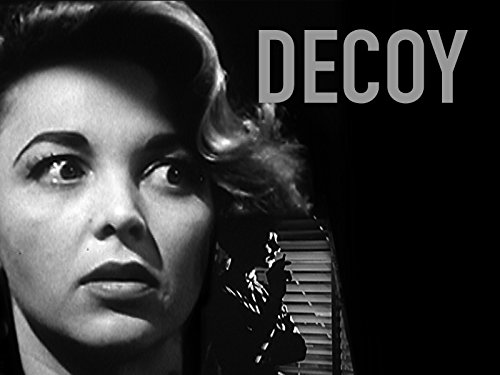
Episode 1.13 “My Brother’s Killer”
(Dir by Stuart Rosenberg, originally aired on January 6th, 1958)
Anne (Barbara Barrie) goes to the police because her boyfriend, Victor Bernard (Bernard Kates), has been acting strangely and refuses to let her into his apartment. At first, the police point out that there’s nothing they can do about this but then Casey, in what can only be described as a miraculous feat of deductive reasoning, guesses that Victor Bernard’s last name might have originally been Bernardino and he might be the brother of wanted robber, Frank Bernardino.
A look at a picture of Victor reveals that he does look a lot like Frank. However, as Casey discovers when she goes over to Victor’s apartment, Frank is dead. But his partner, Hal Bishop (Sy Travers), is still alive. Hal promptly takes Casey and Victor hostage and heads for the Canadian border.
Once you accept that Casey’s miracle hunch (and, seriously, it takes some effort), this is an intense episode. I’m not really a fan of shows in which people are held hostage — the confined narrative tends to get tedious pretty quickly — but this episode featured a typically good performance from Beverly Garland and an absolutely terrifying one from Sy Travers. It also features what seems like a surprising amount of violence for a 1950s television show. Imagine gathering the family in front of the television in 1958 and being immediately confronted by Sy Travers as Hal Bishop pointing a gun at an innocent man’s head and pulling the trigger. A lot of people get shot over the course of this episode, including Hal Bishop himself. Casey survives but there are no smiles or celebrations. There’s just the weary look of someone who has been confronted with the worst that humanity has to offer.
Welcome to Retro Television Reviews, a feature where we review some of our favorite and least favorite shows of the past! On Thursdays, I will be reviewing Decoy, which aired in Syndication in 1957 and 1958. The show can be viewed on Tubi!
This week’s episode is really, really good!
Episode 1.11 “Two Days To Kill”
(Dir by Stuart Rosenberg, originally aired on December 23rd, 1957)
Selma Richmond (played by a young Diane Ladd!) is the girlfriend of gangster Johnny Troy (Michael Strong). Johnny is about to go on trial and Selma’s testimony about his crimes is the key piece of evidence against him. Knowing that Johnny wants Selma dead, the police put her up in an apartment. Casey is assigned to protect her.
At first, Casey and Selma seem to become unlikely friends. Selma is flighty and obsessed with Hollywood. Even though she’s testifying against him, she claims that Johnny is just misunderstood. Casey, taking some sympathy on her, tells Selma about the man that she loved. For the first time, we learn something about Casey’s background. We learn that her husband was a cop and he died in a shoot out. It’s a surprising moment and one that’s poignantly played by Beverly Garland. (The camera closes in on her face while she slowly smokes a cigarette.) Not only does it help us understand why Casey sometimes to seems to be emotionally detached but it also shows the friendship between the two women. Casey doesn’t open up for many people but she does for Selma.
However, that friendship ends when Selma realizes that Johnny will be facing the death penalty. Selma manages to sneak a letter Johnny, letting him know where she’s being held. Johnny shows up at the apartment, carrying a knife. Casey is waiting for him with her gun drawn. During the stand-off, Johnny tells Selma that he loves her and Selma believes it. The Johnny uses his foot to unplug the apartment’s lamp. In the darkness, he lunges at Selma and Casey opens fire, killing Johnny. Selma’s response is to shout, “I bet you’re glad you killed him!”
This was an outstanding episode. Director Stuart Rosenberg, taking over from Teddy Sallis, makes good use of the gritty New York locations. Each scene is lit like a film noir, with Johnny literally emerging from the shadows at one point. Rosenberg also gets excellent performances from both Ladd and Garland. This was a strong episode and the best of the series so far.
Today would have been director Stuart Rosenberg’s 98th birthday. Our scene of the day come from one of Rosenberg’s best-known and best-remembered films, 1967’s Cool Hand Luke.
This is a scene that featured the line that’s been kept alive by cops, drill sergeants, and angry teachers to this day.
Charles Bronson is an Arizona cop who goes to Switzerland to bring back a gangster’s girlfriend (Jill Ireland). The gangster (Rod Steiger) sends a hitman (Henry Silva) to kill her so she can’t tell his crime secrets to the authorities.
This isn’t one of Bronson’s best films, but it’s still a fun movie to watch on a chilly, rainy day. There are some good action scenes set in various cold & snowy European locations. This is Bronson in “Bond” mode which is kind of fun and different. And what can you say about a stuttering Rod Steiger screaming at his advisors about the meaning of “love.” It’s fun stuff when you like Steiger as much as I do. I do deduct half a star because Steiger gets so mad at one point that he turns over a table with some of the biggest, most scrumptious looking shrimp I’ve ever seen. That was completely uncalled for and wasteful, but not quite as wasteful as Bronson and Henry Silva in the same movie without an epic battle of some sort. The fact that they didn’t fight it out on the Matterhorn itself can only be described as a missed opportunity.
4 Shots from 4 Films is just what it says it is, 4 shots from 4 of our favorite films. As opposed to the reviews and recaps that we usually post, 4 Shots from 4 Films lets the visuals do the talking!
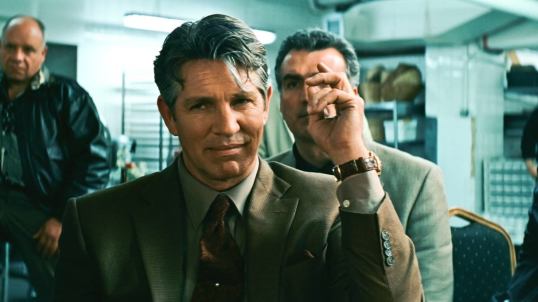
Happy birthday, Eric Roberts!
4 Shots From 4 Eric Roberts Films
Star 80 (1983, dir by Bob Fosse, DP: Sven Nyvkist)
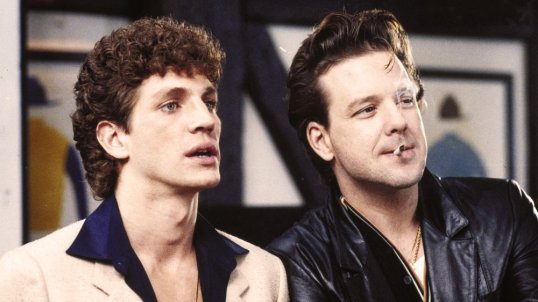
The Pope of Greenwich Village (1984, dir by Stuart Rosenberg, DP: John Bailey)
Runaway Train (1985, dir by Andrei Konchalovsky, DP: Alan Hume)
The Dark Knight (2008, dir by Christopher Nolan, DP: Wally Pfister)
In 1939, an ocean liner named the MS St. Louis set sail from Hamburg. Along with the crew, the ship carried 937 passengers, all of whom were Jewish and leaving Germany to escape Nazi persecution. The ship was meant to go to Havana, where the passengers had been told that they would be given asylum. Many were hoping to reunite with family members who had already taken the voyage.
What neither the passengers nor Captain Gustav Schroeder knew was that the entire voyage was merely a propaganda operation. No sooner had the St. Louis left Hamburg than German agents and Nazi sympathizers started to rile up anti-Semitic feelings in Cuba. The plan was to prevent the passengers from disembarking in Cuba and to force the St. Louis to then return to Germany. The Nazis would be able to claim that they had given the Jews a chance to leave but that the rest of the world would not take them in. Not only would the Jews be cast as pariahs but the Germans would be able to use the world’s actions as a way to defend their own crimes.
Captain Schroeder, however, refused to play along. After he was refused permission to dock in Cuba, he then attempted to take the ship to both America and Canada. When both of those countries refused to allow him to dock, Schroeder turned the St. Louis toward England, where he planned to stage a shipwreck so that the passengers could be rescued at sea. Before that happened, Belgium, France, the Netherlands, and the United Kingdom jointly announced that they would accept the refugees.
Tragically, just a few days after the passengers disembarked, World War II officially began and Belgium, France, and the Netherlands all fell to the Nazi war machine. It is estimated that, of the 937 passengers on the St. Louis, more than 600 of them subsequently died in the Nazi concentration camps.
The journey of the St. Louis was recreated in the 1976 film, Voyage of the Damned, with Max von Sydow as Captain Schroeder and a collection of familiar faces playing not only the ship’s passengers and crew but also the men and women in Cuba who all played a role in the fate of the ship. In fact, one could argue that there’s a few too many familiar faces in Voyage of the Damned. One cannot fault the performances of Max von Sydow, Malcolm McDowell, and Helmut Griem as members of the crew. And, amongst the passengers, Lee Grant, Jonathan Pryce, Paul Koslo, Sam Wanamaker, and Julie Harris all make a good impression. Even the glamorous Faye Dunaway doesn’t seem to be too out-of-place on the ship. But then, in Havana, actors like Orson Welles and James Mason are awkwardly cast as Cubans and the fact that they are very obviously not Cuban serves to take the viewer out of the story. It reminds the viewer that, as heart-breaking as the story of the St. Louis may be, they’re still just watching a movie.
That said, Voyage of the Damned still tells an important true story, one that deserves to be better-known. In its best moments, the film captures the helplessness of having nowhere to go. With Cuba corrupt and the rest of the world more interested in maintaining the illusion of peace than seriously confronting what was happening in Germany, the Jewish passengers of the St. Louis truly find themselves as a people without a home. They also discover that they cannot depend on leaders the other nations of the world to defend them.
Defending the passengers falls to a few people who are willing to defy the leaders of their own country. At the start of the film, Nazi Intelligence Chief Wilhelm Canaris (Denholm Elliott) explains that Captain Schroeder was selected specifically because he wasn’t a member of the Nazi Party and could not be accused of having ulterior motives for ultimately returning the passengers to Germany. Canaris and his fellow Nazis assume that anti-Semitism is so natural that even a non-Nazi will not care what happens to the Jewish passengers. Instead, Schroeder and his crew take it upon themselves to save the lives of the passengers. It is not Franklin Roosevelt who tries to save the passengers of St. Louis. Instead, it’s just a handful of people who, despite unrelenting pressure to do otherwise, step up to do the right thing. Max von Sydow, who was so often cast in villainous roles, gives a strong performance as the captain who is willing to sacrifice his ship to save his passengers.
Flaws and all, Voyage of the Damned is a powerful film about a moment in history that must never be forgotten.
This 1979 film tells the story of George and Kathy Lutz (James Brolin and Margot Kidder), a young married couple who move into a big house in Amityville, New York. George and Kathy are having financial trouble so it’s good thing that they were able to find such a nice house at such a low price. Of course, it’s possible that the house was cheap because it was built on a native burial ground. Plus, the previous owners were murdered by their son, who later claimed that he was possessed by evil spirits. The house has a less than savory history but then again, what house doesn’t?
Anyway, strange things start to happen as soon as the Lutzes move in. Noxious black liquid floods the plumbing. Crosses are turned upside down. Their priest (Rod Steiger) gets violently ill when he attempts to bless the house. George starts to act weird, getting angry at strange moments and walking around with an ax. Kathy’s daughter from a previous marriage says that she’s made a new imaginary friend named Jodie and, apparently, Jodie doesn’t like George or her babysitter. Flies swarm through the house and weird noises are heard in the middle of the night. Kathy has nightmares. George screams, “I’m coming apart!” Even the family dog seems to be worried about the house, especially after a secret room is discovered in the basement.
Could the house be possessed!? Is a terrible, other worldly evil trying to destroy the George and Kathy? Will the Lutzes be able to escape and hopefully make a lot of money by selling their story? Watch the film and find out. And, if for some reason, you can’t watch this film, you can watch one of the dozen or sequels or maybe even the remake…
The original Amityville Horror was based on a book that claimed to tell the true story of the Lutzes. For the record, it is generally agreed that Ronald DeFeo murdered his family in Amityville, New York and that George and Kathy Lutz later moved into the DeFeo house. It’s also known that the Lutzes left the house after 30 days. The Lutzes claimed that the house was possessed. Others said that the Lutzes left because they couldn’t afford the house payments. Regardless of why the Lutzes actually left, the book that claimed to tell their story was a best seller.
As for the film adaptation, The Amityville Horror is frequently described as being a classic of horror cinema. However, I have to admit that, whenever I’ve tried to watch it, I’ve always ended up giggling after the first ten minutes or so. Some of that is because the film is such a blatant rip-off of The Exorcist, right down to including a bratty child with a invisible friend and a troubled priest who struggles with his faith. Just as The Exorcist featured Linda Blair throwing up on Max von Sydow and Jason Miller, The Amityville Horror seems to take a good deal of unsavory delight in tormenting Rod Steiger. From the minute he first shows up, the house really has it out for him. He gets swarmed by flies. He gets physically ill. His car stops working on him. It’s like, seriously, just leave Rod Steiger alone!
(Interestingly, Don Stroud plays Steiger’s protegee and their relationship is largely reminiscent of the relationship between Father Merrin and Father Karras in The Exorcist. Later, a police detective shows up and acts exactly like Lee J. Cobb’s Detective Kinderman. Val Avery, who plays the detective, even bears a resemblance to Lee J. Cobb. Considering just how successful The Exorcist was, it’s not surprising that the Amityville Horror would be influenced by it but, again, it’s still hard not to be a little bit amazed at just how blatant a rip-off Amityville really is.)
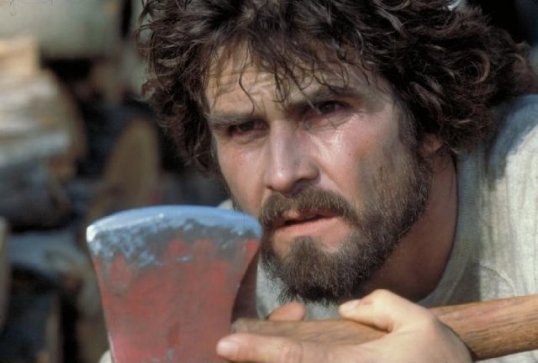
When the film isn’t tormenting Steiger, it’s concentrating on George going crazy. Unfortunately, as played by James Brolin, George seems to be in a permanently cranky mood even before he and Kathy move into their new home. Once the Lutzes movie into the house you find yourself wondering if George is possessed or if he’s just a jerk? Sometimes, it’s hard to tell. One thing is for sure: shortly after moving into the house, George becomes absolutely obsessed with chopping firewood and polishing his ax. I know the sight of Brolin with that axe is supposed to be ominous and scary but I have to admit that I started to laugh every time he started chopping away. Far more convincing was Margot Kidder in the role of Kathy but the film really didn’t give her much to do other than scream and worry about why her husband was always in such a sour mod.
Anyway, the most interesting thing about The Amityville Horror is that this rather slow and derivative film was such a box office success that it’s been followed by 20 sequels and one remake! Someday, when I’m feeling really, really brave, I’ll get around to reviewing all of the Amityville films. Until then, I leave you with George Lutz and his beloved ax.
As some of our regular readers undoubtedly know, I am involved in a few weekly live tweets on twitter. I host #FridayNightFlix every Friday, I co-host #ScarySocial on Saturday, and I am one of the five hosts of #MondayActionMovie! Every week, we get together. We watch a movie. We tweet our way through it.
Tonight, at 10 pm et, I will be hosting #FridayNightFlix! The movie? 1986’s Let’s Get Harry!
When Mark Harmon is taken hostage, the U.S. Government proves that it was just as worthless in 1986 as it is in 2022! Fortunately, Harmon’s friends are going to let him be forgotten. Enter Robert Duvall as a soldier of fortune! This film also features Glenn Frey, Rick Rossovich, Thomas F. Wilson, Gary Busey, and David Hess! Director Stuart Rosenberg requested to be credited as Alan Smithee. That’s always a good sign, right?
If you want to join us this Friday, just hop onto twitter, start the movie at 10 pm et, and use the #FridayNightFlix hashtag! I’ll be there tweeting and I imagine some other members of the TSL Crew will be there as well. It’s a friendly group and welcoming of newcomers so don’t be shy.
We all know the famous line from The Godfather. “I’m going to make him an offer he can’t refuse.” Of course, everyone also knows that “It’s not personal. It’s strictly business.” There’s another line that’s almost as famous: “One lawyer with his briefcase can steal more than a hundred men with guns.” That line comes from Mario Puzo’s novel. It’s never actually used in the film though it’s certainly present as a theme.
The idea of organized crime essentially being a huge corporation is hardly a new one. In fact, it’s become a bit of a cliche. Nearly every gangster film ever made has featured at least one scene where someone specifically compares their illegal activities to the day-to-day business of politicians and CEOs. However, just because it’s a familiar analogy, that doesn’t make it any less important. It’s hard not to think of organized crime as being big business when you consider that, in the 30s and the 40s, the mafia’s assassination squad was actually known as Murder, Inc.
Murder, Inc. was formed in Brooklyn, in the 30s. It was founded and initially led by a man named Lepke Buchalter. Lepke was a gangster but, because he was Jewish, he couldn’t actually become a made man. However, he used that to his advantage when he created Murder, Inc. The organization was largely made up of non-Italians who couldn’t actually become official members of the Mob. The major mafia families would hire Murder, Inc. to carry out hits because they knew that, since none of the members were made men, they wouldn’t be able to implicate any of the families if they were caught by the police.
It was a good idea and Lepke and his band of killers made a lot of money. Of course, eventually, the police did catch on. A member of the organization by the name Abe Reles was eventually arrested and agreed to be a rat. Lepke went to the electric chair. Reles ended up falling out of a window. Did he jump or was he thrown? It depends on who you ask.
19 years after Reles plunged from that window and 16 years after Lepke was executed, their story was told in the 1960 film, Murder, Inc. Lepke was played by David J. Stewart while Reles was played by Peter Falk. The film is told in a documentary style, complete with a narrator who delivers his lines in a rat-a-tat-tat style. We follow Reles as he goes to work with Lepke and as he harasses a singer (Stuart Whitman) and his wife (May Britt), forcing them help him carry out a murder and then allowing them to live in a luxury apartment on the condition that they also let Lepke hide out there. (It’s probably not a surprise that a professional killer wouldn’t turn out to be the best houseguest.) Eventually, a crusading DA (Henry Morgan) and an honest cop (Simon Oakland) take it upon themselves to take down Murder, Inc.
To be honest, there’s not a whole lot that’s surprising about this film but it’s still an entertaining B-movie. The black-and-white cinematography and the on-location filming give the film an authentically gritty feel. The action moves quickly and there’s enough tough talk and violent deaths to keep most gangster aficionados happy. The best thing about the film is, without a doubt, Peter Falk’s portrayal of Abe Reles. Falk is magnetically evil in the role, playing Reles as a man without a soul. Even when Reles finally cooperates with the police, the film leaves no doubt that he’s only doing it to try to save himself. Falk plays Reles like a tough guy who secretly knows that his days are numbered but who has convinced himself that, as long as he keeps sneering and threatening people, the rest of the world will never figure out that he’s been doomed all the time. The more people he kills, the higher Reles moves up in the corporation and the more he tries to take on the look of a respectable member of society. But, no mater how hard he tries, Reles always remains just another violent thug. Falk was deservedly Oscar-nominated for his performance in this film, though he ultimately lost the award to Spartacus‘s Peter Ustinov.
Murder, Inc. may be a low-budget, B-movie but it’s also a classic of gangster cinema. It’s an offer you can’t refuse.
4 Shots From 4 Films is just what it says it is, 4 shots from 4 of our favorite films. As opposed to the reviews and recaps that we usually post, 4 Shots From 4 Films lets the visuals do the talking!
95 years ago today, Paul Newman was born in Shaker Heights, Ohio. He would go on, of course, to become one of America’s greatest film stars, an acclaimed actor who was active from the mid-part of the 20th century to the beginning of our current century. He made his film debut in 1954 with The Silver Chalice(and subsequently paid for an ad in which he apologized for his performance in the film, which I think was a bit unnecessary as he wasn’t really that bad in the film) and he made his final onscreen appearance in 2005 in Empire Falls. (He did, however, subsequently provide the voice of Doc Hudson in Cars, along with narrating a few documentaries.) Time and again, he proved himself to be one of the best actors around. According to most report, he was also one of the nicest. When he died in 2008, the world mourned.
In honor of his cinematic legacy, here are….
4 Shots From 4 Paul Newman Films
Cat On A Hot Tin Roof (1958, dir by Richard Brooks)
Cool Hand Luke (1967, dir by Stuart Rosenberg)
The Verdict (1981, dir by Sidney Lumet)
The Hudsucker Proxy (1994, dir by the Coen Brothers)