4 Shots From 4 Films: The Star, The Oscar, In & Out, Tropic Thunder


4 Shots From 4 Films is just what it says it is, 4 shots from 4 of our favorite films. As opposed to the reviews and recaps that we usually post, 4 Shots From 4 Films is all about letting the visuals do the talking.

4 Shots From 4 Films

The Star (1952, dir by Stuart Heisler)

The Star (1952, dir by Stuart Heisler)

The Oscar (1966, dir by Russell Rouse)

The Oscar (1966, dir by Russell Rouse)

In & Out (1997, dir by Frank Oz)

In & Out (1997, dir by Frank Oz)

Tropic Thunder (2008, dir by Ben Stiller)

Tropic Thunder (2008, dir by Ben Stiller)

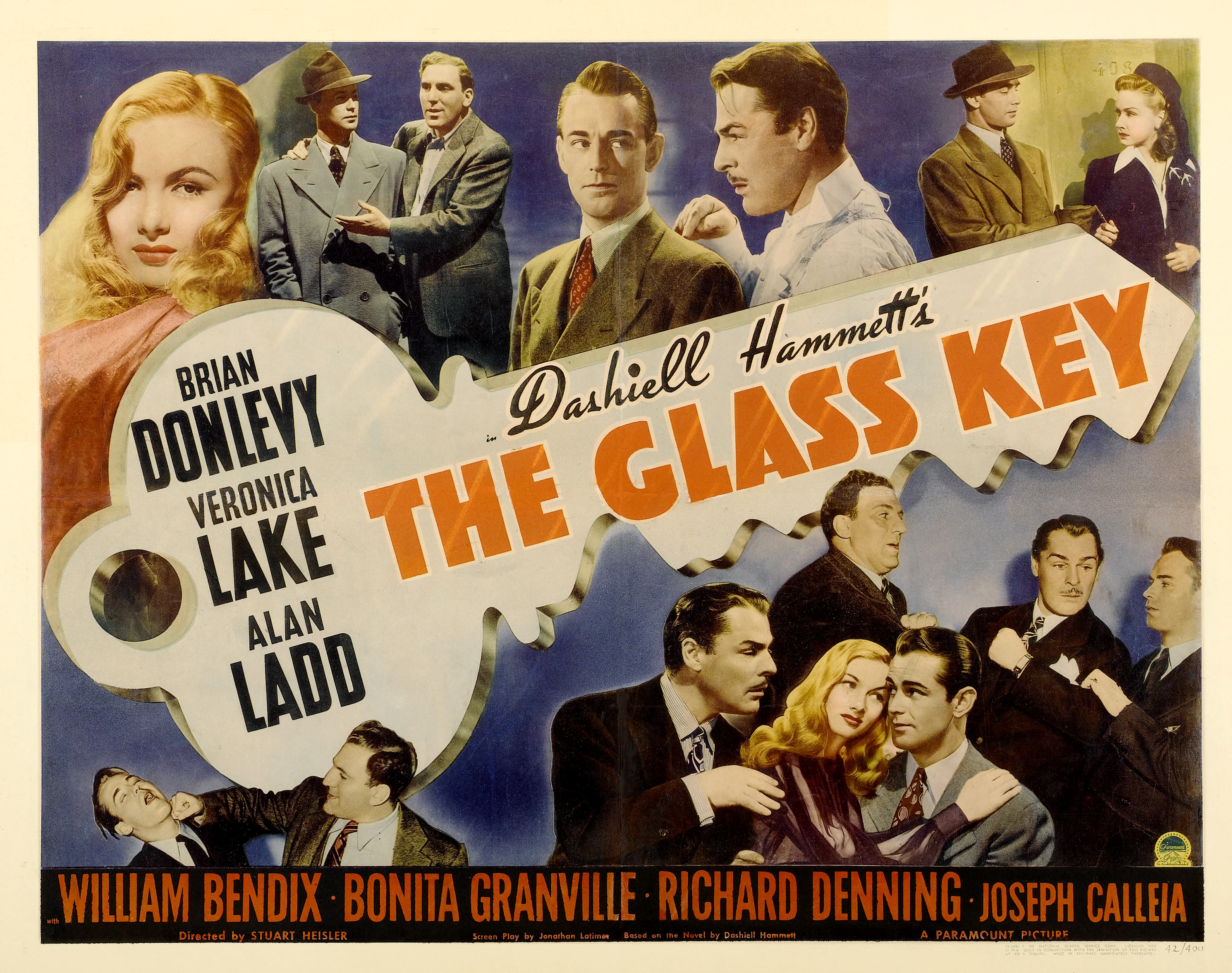
Strange Bedfellows: THE GLASS KEY (Paramount 1942)


gary loggins's avatarcracked rear viewer

glass1

Anyone who watches television, reads a newspaper, or surfs the Internet today knows the axiom “Politics is a dirty business” is dead on point. The mudslinging and brickbats are being tossed at record rates, and it just keeps escalating. Here at Cracked Rear Viewer, we’re just plain tired of all the nonsense. Ah, for the old days, when politics was much more genteel and civil, right? Wrong! Politics has always been a dirty business, proving another old adage, “There’s nothing new under the sun”. Case in point: the 1942 film THE GLASS KEY.

glass2

The story’s based on a novel by Dashiell Hammett, and was filmed once before in 1935 with George Raft, Edward Arnold, and Claire Dodd. In this version, Paramount chose to star their red-hot team of Alan Ladd and Veronica Lake, fresh off their hit THIS GUN FOR HIRE. Brian Donlevy takes the Arnold role as Paul Madvig, a…

View original post 909 more words

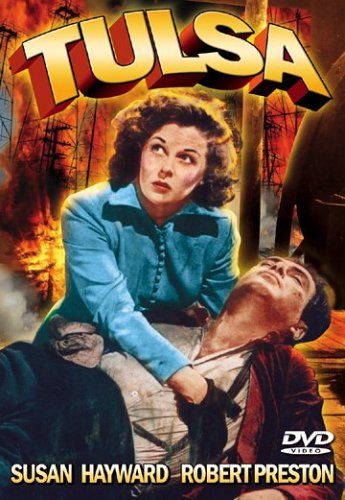
The Fabulous Forties #49: Tulsa (dir by Stuart Heisler)


Tulsa_DVD_Cover

The 49th film in Mill Creek’s Fabulous Forties box set was the 1949 “epic” Tulsa!

I put epic in quotation marks because Tulsa is only 90 minutes long and I personally don’t think you can really have an epic unless you also have epic length.  Giant is an epic, whereas Tulsa is an “epic.”  That said, Tulsa does have a goal worthy of an epic.  Tulsa is about oil and the men and women who sacrifice so much to get that oil out of the ground.  Some of them lose their lives, some of them lose their happiness, and some of them make a lot of money.  I know that makes this film sound a lot like There Will Be Blood but it’s really not.  There Will Be Blood is an epic.  Tulsa is an “epic.”

I have to admit that I was intrigued by this film, just because my family lived in Tulsa for a handful of months, way back when I was 9 years old.  That said, I did groan a little bit when the film opened with a folksy guy named Pinky Jimpson (Chill Wills) standing in front of a white fence and staring straight at the camera.  “Howdy, cousins,” Pinky says, before launching into a monologue about how Oklahoma is the greatest place on Earth.  As a Texan, I was legally required to roll my eyes at Pinky’s claims but, to be honest, Oklahoma’s a pretty nice place.  It’s certainly better than Vermont.

(Take that, Vermont!)

Anyway, once the story gets started, we discover that it’s about Cherokee Lansing (Susan Hayward).  After Cherokee’s rancher father is killed when an oil derrick falls over on him, she decides to get her revenge by entering the oil business herself.  At first, everyone is doubtful that a woman — especially a woman whose only apparent friend is a Native American named Jim Redbird (Pedro Armendariz) — can succeed in a man’s world.  But she proves them wrong by befriending eccentric oilman John Brady (Ed Begley).  After Johnny is killed in a bar fight (because Tulsa is a dangerous place), he leaves all of his land and drilling rights to Cherokee.  He also leaves behind a far more sober-minded son, Brad (Robert Preston), who goes into business with Cherokee.

Soon, Cherokee and Jim Redbird are rich and powerful.  But, as often happens, they are in danger of losing sight of why they wanted to become rich and powerful in the first place.  Jim, in particular, turns out to be a big ol’ sellout.  Brad is disgusted with all of them but then, fortunately, there’s a big oil fire which leads to a lot of stuff blowing up and everyone learning an important lesson…

Or, at the very least, Pinky assures us that they all learned a lesson.  He also talks about how everything in the world now runs on oil.  He mentions that you can get oil from other parts of the world but the best oil comes from Tulsa.

(And again, as a Texan, I am contractually obligated to roll my eyes while noting that people from Oklahoma are some of the nicest folks that you’ll ever meet…)

Anyway, as a film, Tulsa never quite works.  90 minutes isn’t enough time to tell the story that it’s trying to tell and some of the acting is rather inconsistent.  However, the fire at the end is still impressive (Tulsa’s special effects received an Oscar nomination.) and I enjoyed watching Susan Hayward go totally over-the-top in role of Cherokee.  Compared to her subtle and kind of depressing performance in Smash-Up, Hayward actually appears to be having fun in Tulsa and good for her!

Tulsa was the 2nd to last film in the Fabulous Forties box set.  In my next review, I will conclude this series by taking a look at Lady of Burlesque!

The Fabulous Forties #40: Smash-Up, The Story of a Woman (dir by Stuart Heisler)


Smash-Up_(1947)

The 39th film in the Fabulous Forties box set was 1947’s Smash-Up, the Story of a Woman.  I have to say it was a little bit strange going from watching the hilarious and life-affirming My Man Godfrey to watching the very serious and rather depressing Smash-Up.

Smash-Up is pure, tear-jerking Hollywood melodrama.  When the film starts, Angie Evans (Susan Hayward) is in a hospital, with her face totally covered in bandages.  Just by looking at her, we already know that her story is not going to be a happy one.

Flash back time!  Angie was a nightclub singer and a pretty good one at that.  The audiences loved her and she loved performing but she loved one thing more.  (See how overwrought my prose was there?  That’s a reflection of Smash-Up’s style.)  She loved Ken Conway (Lee Bowman, who may be related to me but probably isn’t).  Ken was a singer himself, though he was nowhere near as successful as Angie.  However, after Ken and Angie married, Angie put her career on hold while Ken went on to become a huge success.

Angie was already a drinker before she met Ken.  Having a few drinks before going out on stage helped to calm her nerves.  It helped her to relax and become the performer that the audiences loved.  However, once Ken became a star and Angie found herself continually alone in their home, she started to drink because it was the only thing that made her happy.  Whenever she started to regret giving up her career, she drank.  When she was worried that Ken was having an affair with his secretary (Marsha Hunt), Angie drank.  Ken’s best friend and songwriter, Steve (Eddie Albert), could see that Angie was losing control.  However, Ken refused to accept that his wife had a drinking problem.  Accepting that Angie was drinking to be happy would mean accepting that she wasn’t happy in the first place.

Trapped in the middle of all this was their daughter, Angel (Sharyn Payne).  When Ken, finally admitting that his wife could not control her drinking, demanded custody of Angel, Angie was determined to get back her daughter.

But, even though she wanted to, Angie could not stop drinking.  Or smoking.  And the smoking, the drinking, and the kidnapping did not make for a particularly good combination.

According to Wikipedia, Smash-Up was a failure at the box office and I can actually see why.  1940s American cinema can basically be divided between the earnest, patriotic, and optimistic films that were released during World War II and the dark and pessimistic films that came out after the war ended and the world realized just how evil and dangerous human beings could be.  Smash-Up is one of those dark films.  It’s not a happy film, nor is it at all subtle.  In fact, as much as I love a good melodrama, Smash-Up occasionally seems like a bit much.  Absolutely every bad thing that could happen does happen and it’s typical of the approach of Hollywood in the 40s that, for all the trouble Angie suffers as a result of her drinking, the film still has to find an excuse to send her to hospital with her face in bandages.  The film is often very empathetic in its treatment of Angie but, in the 1940s, mistakes still had to be punished.

Fortunately, Susan Hayward gives a great performance in the role of Angie, capturing the aching sadness that leads her to drink in the first place.  She saves the entire film and, quite justifiably, she received a nomination for best actress for her performance here.  She didn’t win but she still made Smash-Up worth seeing.