A Pre-empted Late Night Retro Television Review: CHiPs 3.17 “Return of the Supercycle”


Welcome to Late Night Retro Television Reviews, a feature where we review some of our favorite and least favorite shows of the past!  On Mondays, I will be reviewing CHiPs, which ran on NBC from 1977 to 1983.  The entire show is currently streaming on Prime!
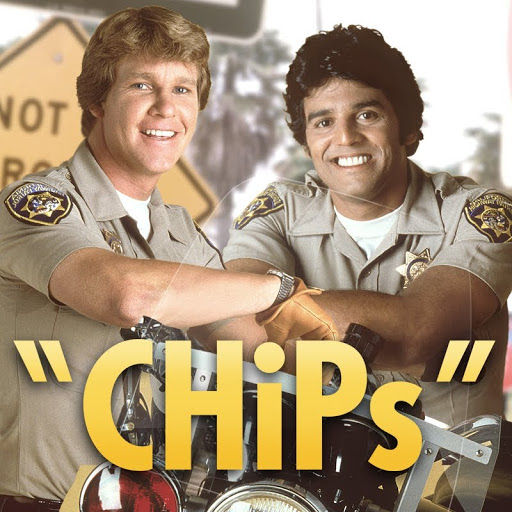
Sorry, last night’s review of CHiPs was pre-empted by my own need to get some rest after spending the previous few days dealing with the worst sinus pain ever.  (Well, maybe not ever but it was still pretty bad….)  Here’s last night’s episode of CHiPs, just a few hours late!  Regularly scheduled programming will resume soon.

Episode 3.17 “Return of the Supercycle”

(Dir by Bruce Kessler, originally aired on October 27th, 1979)

The Supercycle is back!  A thief on a supercharged motorcycle is robbing jewelry storefronts.  Baker takes the old Highway Patrol Supercycle out of storage so that he can go after the new Supercycle.  Baker suspects that the Roy Yarnell (George O’Hanlon, Jr) might be up to his old Supercycle tricks again but it turns out that Roy is innocent.  Instead, it’s his mechanic.

In other words: SUPERCYCLE SUPERCYCLE SUPERCYCLE!

Ponch spends the majority of this episode in a hospital bed.  Early on in the episode, Ponch crashes his motorcycle while chasing the new Supercycle and seriously injures himself.  Apparently, the crash was real and Estrada actually did injure himself.  Watching the episode, it’s easy to see that the show dealt with Estrada’s injuries by just giving all of Ponch’s lines to Baker.  For once, Baker is the one who bends the rules and gets to do all the cool stuff.  He even gets to romance a visiting member of the Highway Patrol, Kathy Mulligan (Anne Lockhart).  In any other episode, Ponch would have been the one doing all of that so it’s interesting to get to see Baker actually get to have a life for once.  And yes, before anyone asks, Estrada finds an excuse to remove his shirt even when he’s relaxing in a hospital bed.  No hospital gowns for Estrada!

The sad thing is that Larry Wilcox was definitely a better actor than Erik Estrada and he also looked a lot more believable on a motorcycle.  But, this episode shows that Estrada just had more screen presence.  As easy as it is to make fun of Ponch, Estrada’s over-the-top displays of vanity were often just what CHiPs needed.  Estrada may not have been a great actor but he amusing to watch.  Wilcox has a much more laid back presence.  He’s a believable cop but he’s just not as much fun to watch as Estrada.

Probably the most amusing thing about this episode is that, when Estrada (or his stuntman pretending to be Estrada) is lying on the pavement, Wilcox cannot bring himself to really act convincingly concerned or worried.  CHiPs is a bit infamous for the fact that Larry Wilcox and Erik Estrada did not have a great working relationship.  That’s all I could think about as I watched Baker casually step over Ponch’s prone form on the street.

Anyway, this episode has some spectacular motorcycle jumps and some good chase footage.  There was an occasionally amusing subplot where the men of the Highway Patrol worried that Kathy was reporting their behavior to Sacramento.  (Grossman, played by the invaluable Paul Linke, made me laugh with his sudden emphasis on doing everything by the book.)  The Supercycle was cool.  Everyone should have one.

Horror Film Review: Butcher, Baker, Nightmare Maker (by William Asher)


http://www.youtube.com/watch?v=jO8Djh7gk7I

This is an unexpectedly odd psychological thriller from 1981.

Okay, well, actually, I guess the technical term for this film would be “slasher” because it does feature a dark secret from the past and a series of gruesome murders and some 20-something teenagers getting naked.  That said, calling this movie a slasher brings to mind thoughts of Friday the 13th and Halloween and, as much as I’ve defended those films in the past, it’s hard to compare them to a film like Butcher, Baker, Nightmare Maker.  Nor is the film comparable to more giallo-influenced slashers that came out in the late 70s and the early 80s.  The identity of the murderer is revealed too early for that.

The murderer is Cheryl Roberts (Susan Tyrrell), who may seem like a perfectly normal suburban widow but who has some bad habits.  For instance, when she’s sexually rejected by television repairman Phil Brody (Caskey Swaim), she reacts by grabbing a knife and stabbing him to death in the kitchen.  When the police arrive, she says that he attempted to rape her.  When it’s later revealed to her that Phil was gay and in a committed relationship with the local high school basketball coach, she snaps that “Homosexuals are very sick people!”  Cheryl goes on to murder several more people, all because she views them as a threat to her relationship with her nephew, Billy (Jimmy McNichol).

Billy is a senior in high school.  His parents died in a mysterious car crash when he was an infant and he’s been raised by his aunt Cheryl.  Billy has an opportunity to go away to college on a basketball scholarship but Cheryl isn’t happy about that.  Cheryl never wants Billy to leave and she’s not above drugging his milk to make sure that he has a bad game while the college scouts are watching.  Cheryl is also not happy that Billy has a girlfriend, Julia (Julia Duffy).  When she finds out that Billy and Julie are sexually active, Cheryl’s response is to trap Julia in the basement.

Aunt Cheryl is not Billy’s only problem.  There’s also Detective Joe Carlson (Bo Svenson).  Carlson has been assigned to investigate the murder of Phil and he quickly becomes fixated on the fact that Phil was gay and that he was in a relationship with Billy’s coach, Tom Landers (Steve Eastin).  Despite all of the evidence that Cheryl’s killing people left and right, Carlson becomes obsessed with proving that Billy’s gay and that he murdered Phil as the result of a love triangle.  It quickly becomes clear that Carlson, who brags about his own military service, is incapable of going for more than five minutes without accusing someone of being gay.  (Of course, Carlson never says “gay.” Instead, he uses a slur that begins with the letter F and he uses it a lot.)

What sets this film apart from other horror films of the era is that the rampant homophobia is not played for laughs or for shock value.  Traditionally, being gay in a 1980s horror film meant that the character was either going to be held up as an object of ridicule or, in many cases, turn out to be the murderer.  Instead, in Butcher, Baker, Nightmare Maker, the gay characters are literally the only fully sympathetic people in the entire film.  Instead, the film’s villains are homophobes like Carlson, Cheryl, and Eddie (Bill Paxton!), a bully who gives Billy a hard time over his friendship with the coach.  As many people as Cheryl kills over the course of the film, the bigger monster is Carlson, who is so determined to indulge his prejudices that he’s blind to everything that’s happening in front of him.

It makes for an unexpectedly thoughtful slasher film.  Butcher, Baker, Nightmare Maker has its flaws, to be sure.  I wish, for instance, that Julia and Billy weren’t such bland characters.  (They’re well-acted but neither is written with much depth.)  There’s some pacing issues as well.  But overall, this is an unexpectedly good thriller which features two horrifyingly plausible performances from Susan Tyrrell and Bo Svenson.


Quickie Review: Field of Dreams (dir. by Phil Alden Robinson)


“The one constant through all the years, Ray, has been baseball. America has rolled by like an army of steamrollers. It has been erased like a blackboard, rebuilt and erased again. But baseball has marked the time.” — Terence Mann

I have always been a fan of baseball. I would say that baseball has been the one thing which has always remained constant for me throughout the years. Other sports may be flashier, faster and more violent, but baseball I’ve always equated as part of America’s national identity. This is why 1989’s Field Of Dreams by Phil Alden Robinson continues to resonate for me and for legions of baseball fans everywhere.

The film is based off of the W.P. Kinsella’s novel, Shoeless Joe, and tells the story of one Ray Kinsella and his titular field of dreams. It’s a film which sees Ray not just building a baseball field in his field of corn despite financial problems bringing him and his family closer to losing everything, but it also sees him traveling across the country to find a reclusive writer in Terence Mann (J.D. Salinger in the novel). It’s afilm which offers an insight to what makes baseball and the American identity so intertwined as the film finally offers Ray a chance to finally realize that the very baseball field he has built in his cornfield has granted many a second chance to realize their dream. For this film that dream is to be able to play baseball once more and this second chance becomes important to the ghosts of baseball’s past who have fallen from baseball’s grace through a scandal which had them banned from the game they love.

I’ve never been a big Kevin Costner fan, but his work in this film as Ray Kinsella showed me why people saw in him talent as an actor and not just a pretty face up on the screen. His real-life love for baseball shows in his performance as Ray whose own love for baseball becomes a personal journey for redemption and reunion with a father who also shared his love for the sport. The performances by Amy Madigan as Ray’s supportive wife was quite good and allowed the character not to be eclipsed by Costner’s excellent work as Ray. Even James Earl Jones as the writer Terence Mann gives the film a level of gravitas which just added to the film’s intimate yet epic nature. But it’s the breakout performance by Ray Liotta as the ghost of baseball great Shoeless Joe Jackson. Liotta’s screentime was limited to mostly in the latter part of the film, but his presence dominated every moment he was on the screen.

Field of Dreams has been called just a good baseball film by some, but for many people who have seen and loved it see it as more than just a film about baseball. It’s a film that shows Americana at it’s best and most nostalgic. Shows how one sport has become such a positive influence on the relationship between children and their fathers. It’s a film that dares to show genuine affection and love to the idea of letting someone follow their dream despite many outside influences and obstacles trying to get in their way. There’s a reason the film was nominated for an Oscar Best Picture. Even voters who are so used to rewarding films that look at the darker and more depressing side of the human condition could see the inherent quality in a film which looks at the brighter and more hopeful side of the equation.