Late Night Retro Television Review: CHiPs 2.5 “Neighborhood Watch”


Welcome to Late Night Retro Television Reviews, a feature where we review some of our favorite and least favorite shows of the past!  On Mondays, I will be reviewing CHiPs, which ran on NBC from 1977 to 1983.  The entire show is currently streaming on Freevee!
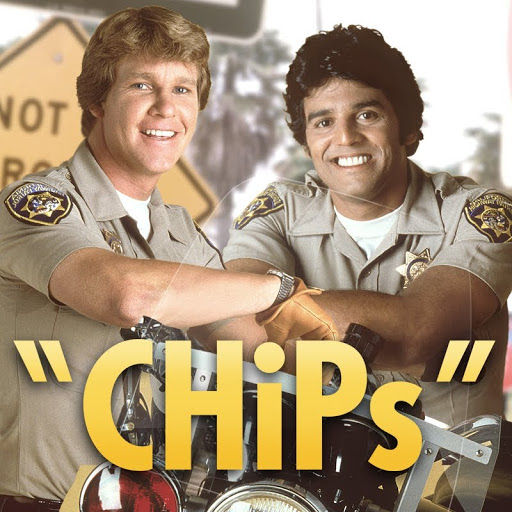
This week, Ponch and Baker abandon the highways and keep watch over a neighborhood.

Episode 2.5 “Neighborhood Watch”

(Dir by Phil Bondelli, originally aired on October 14th, 1978)

After a series of near-accidents and speeding violations occur in an upper class neighborhood, Getraer decides to take his people off the highways and instead assign then to keep an eye on one residential street.  Ponch is happy because it means he gets to sit on his bike and watch all of the women who jog throughout the day.  Baker is happy for presumably the same reason, though he’s noticeably less obvious about it than Ponch.  To be honest, I’m surprised that Ponch hasn’t been in more accidents because he can never keep his eyes on the road.

Unfortunately, even a quiet neighborhood street has its problems.  Gerald Billings (Stephen Young) is struggling, with both his marriage and with his attempts to find a new job.  The first time that Baker pulls him over, it’s because Gerald is speeding and shaving in his car.  The second time, it’s because Gerald is driving drunk after finding out that he has been turned down for yet another job.  It’s after the second arrest that Gerald files a formal complaint against Baker.

What’s interesting is that this is the same thing that often happens to Ponch but Getraer is instantly sympathetic to Baker whereas he’s never that way when it comes to anyone trying to get Ponch in trouble.  Indeed, Getraer often comes across as if he can’t wait for the day when he’ll have an excuse to fire Ponch.  Don’t get me wrong.  Ponch is pretty obnoxious and his behavior while on the job is often rather gauche.  But it’s still pretty obvious that, for all of Ponch’s flaws, the tension between him and Getraer is personal in nature.  Getraer just doesn’t like him.

As for Baker, he gets off the hook when he arrests Gerald a third time.  After a drunk Gerald accidentally runs over a pedestrian and crashes his car, Gerald takes off on foot.  Baker catches him and it’s pretty obvious that Gerald’s going to be heading off to jail.  His complaint will be forgotten.  Even if Gerald wasn’t going to jail, I’m sure Getraer would have pulled some string for his favorite motorcycle cop.

This episode’s other plotline revolved around some mischievous kids who had too much free time on their hands and almost always seemed to be doing something reckless on their skateboards.  The most prominent of them was Brian (played by Robbie Rist, who previously gained infamy as Cousin Oliver on The Brady Bunch).  Brian even buzzed Ponch and Jon with a model airplane.  Realizing the kids weren’t really that bad, Ponch took them to a skate park and showed off a few of his own skateboard moves.  Let’s just say that Erik Estrada was no Tony Hawk.

This episode was kind of boring.  I get that the episode was showing that the Highway Patrol does good work even off the highways but the highway — and more importantly, the chance to see a fast-paced chase or a spectacular crash on the highway — is the main reason anyone would have for watching this show.  Taking Ponch and Baker off the highway just feels wrong.  Hopefully, they’ll be back where they belong next week!
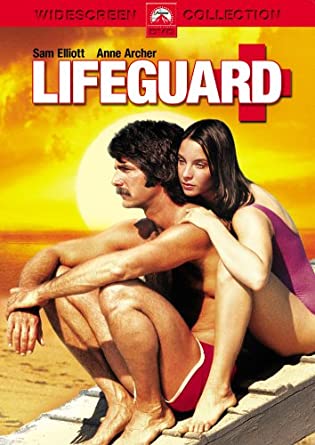
Cleaning Out The DVR: Lifeguard (dir by Daniel Petrie)


I had a long day on Wednesday so I unwound the only way that seemed appropriate.  I watched Road House, the classic film in which Patrick Swayze plays Dalton.  Dalton is the second-greatest bouncer of all time.  Who is the greatest?  None other than Dalton’s mentor, Wade Garrett!

Now, there’s a lot of reasons to love Road House but the performance of Sam Elliott in the role of Wade Garrett is definitely one of them.  If you don’t cry a little when Ben Gazzara’s goons murder old Wade, you just don’t have a heart.  In the end, of course, Wade’s bloody corpse gets left on top of the bar and, honestly, I think that’s the way Wade would want to go.

Anyway, watching Road House reminded me of just how awesome Sam Elliott is so I decided to follow it up by watching another Sam Elliott film, one that I had previously DVR’d off of TMC last week.  Filmed in 1975 and released in ’76, Lifeguard features a youngish Sam Elliott as the title character.  Even though the lifeguard in question might be named Rick Carlson, it’s hard not to think of this film as essentially being Wade Garrett: The Early Years.

When Lifeguardopens, Rick Carlson is 32 years old.  He’s been a lifeguard since he graduated high school.  In his youth, he was a championship-winning surfer.  Now, he’s an aging beach bum who is content to spend both the summer and the winter sitting in his lifeguard tower, watching life on the beach and occasionally saving someone from drowning.  Rick has a small apartment, several girlfriends, and a legion of adoring fans.  Younger lifeguards like Chris (Parker Stevenson, who would later co-star on Baywatch) view him as being a mentor.  Beachgoers view him as being an authority figure, the type that can go to if the surfers are being obnoxious or if some old perv is wandering around exposing himself.  17 year-old Wendy (Kathleen Quinlan) flirts with him and, against his better instincts and common sense, Rick often flirts back.  Despite a bit of gray in his hair and the fact that he gets winded a bit easier, Rick is still living the same life that he was living when he first graduated high school and he’s happy with that.

Or, at least, he is until he gets an invitation to his 15 year high school reunion and he discovers that everyone else is actually living a real life with real responsibilities.  When he discovers that his former girlfriend, Cathy (Anne Archer), is now divorced, Rick starts to think about what could have been.  When another former high school friend, Larry (Stephen Young), offers Rick a high-paying job selling cars, Rick finds himself wondering if it’s time to leave the beach and finally get a “real” job.

Lifeguard is an episodic film, a mix of comedy and drama that has an unexpectedly melancholy feel to it.  For the most part, the film asks us to sympathize with Rick’s desire to spend the rest of his life on the beach but, at the same time, it also doesn’t deny that there are drawbacks to Rick’s lifestyle.  Rick’s living the life he wants but he’s largely doing so alone, unable to build up any sort of personal connection with anyone who isn’t 16 years younger than him.  Interestingly enough, for a film called Lifeguard, we really don’t see Rick rescuing many people or doing anything else that you might expect to see a lifeguard doing.  Modern viewers will probably spend the entire movie waiting for Rick to give a speech about why being a lifeguard is a holy calling but that moment never happens.  Instead, it’s pretty clear that Rick mostly just enjoys hanging out at the beach and being a lifeguard allows him to get paid to do just that.  Watching the film, I could not help but compare Rick’s laid back attitude to the overly earnest lifeguards who populated Baywatch.  Mitch Buchannon would have kicked Rick off the beach for not taking the job seriously enough.  As well, as opposed to the vibrant cinematography that we’ve come to expect from beach movies, the visual style of Lifeguard is often moody and underlit.  At times, the beach itself looks like it’s suffering from an existential crisis.  The sand looks dull.  The skies above the water often appear to be gray and full of clouds.  Rick has apparently decided to spend the rest of his life on the ugliest beach in California.

It’s a flawed film, to be sure.  The attempts to mix drama and comedy often lead to uneven results and Anne Archer, Parker Stevenson, and Stephen Young are stuck with underwritten characters.  (The film’s script especially lets Young down, making Larry such an obnoxious character that it’s hard to believe that he and Rick would have ever been friends in the firs place.)  When the film does work, it’s due to the performances of Kathleen Quinlan and Sam Elliot.  Though her character is a cliché (the rebellious teenager who isn’t as worldly as she thinks she is), Quinlan does a good job of giving the character a personality that makes her more than just a stock temptation.  

The film belongs, of course, to Sam Elliott and he is perfectly cast.  As he would do decades later in The Hero, Elliott does a wonderful job of suggesting the little doubts that lurk underneath the laid back surface of his character.  His strongest moment occurs not on the beach but when Rick goes to his high school reunion and realizes that he no longer fits in with his former classmates, all of whom have careers and families.  Rick goes from being cocky to insecure in a matter of minutes and Elliott captures Rick’s emotions beautifully.  At that moment, it’s hard not to feel sorry for Rick.  One can understand why he’s tempted to leave the beach for the real world but, at the same time, one can also see that Rick understands that it might be too late for him to do so.  He’s spent the last 15 years in a perpetual adolescence and the rest of the world has moved on.  Elliott perfectly captures the moment when Rick realizes that his happiness has come with a price.  Rick is a flawed (if ultimately good) person but Sam Elliott gives a flawless performance in the role.  Just as surely was Wade Garrett rescued Dalton when Wesley’s men tried to stop the beer delivery, Sam Elliott saves Lifeguard.

A Movie A Day #221: Scorned (1994, directed by Andrew Stevens)


“In an hour, I promise, you’ll be able to beg in two languages.” — Patricia (Shannon Tweed) in Scorned
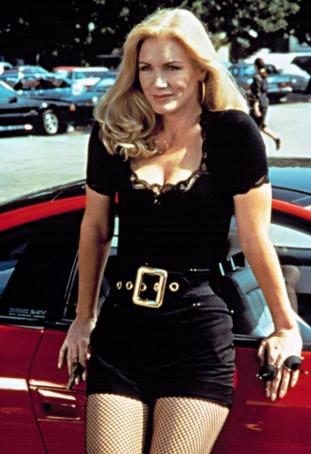
If anyone could pull that line off, it would be Shannon Tweed at the height of her Skinemax stardom!

In Scorned, Shannon plays Patricia, the beautiful wife of executive Truman Langley (Daniel McVicar).  Truman is desperate to land the Wainwright account, thinking it could be the key to getting a huge promotion.  To help him out, Patricia sleeps with Mason Wainwright (Stephen Young).  Truman gets the account but Alex Weston (Andrew Stevens, who also directed) gets the promotion.  After Truman kills himself, Patricia shows up at the Weston house, disguised as a tutor for their son, Robey (Michael D. Arenz).  Like clockwork, Patricia seduces not just Alex and Robey but Marina Weston (Kim Morgan Greene) as well.

Of the many direct-to-video films that Andrew Stevens and Shannon Tweed made together in the 90s, Scorned is one of the best.  Of course, Shannon Tweed looks good.  Of all the regular 90s direct-to-video vixens, Shannon was the sexiest.  What is often forgotten is that Shannon could also actually act and she shows that here with her ferocious performance.  Andrew Stevens does a good job too, giving an above average performance and, as a director, staying out of Shannon’s way.  He knows that everyone watching the movie is watching to see Shannon and this film does not disappoint.

It does stretch credibility that no one in the household realizes that Shannon is trying to destroy them but, then again, what parents would actually hire their hormonal, teenage son a live-in tutor who looks like this?

It is all about maintaining a healthy suspension of disbelief.