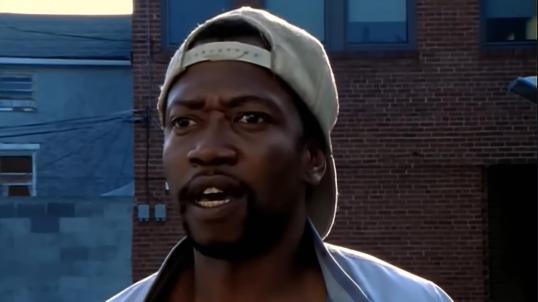
Actor T.K. Carter died on January 9th. He was 69 years old and his passing really didn’t get the notice that he deserved.
T.K. Carter may not have been a household name but I imagine that most people would recognize him if they saw him. He appeared on a lot of television shows. He did his share of movies. He was usually cast in comedic roles, often playing the best friend who would inevitably provide some sort of gentle commentary on the problems of his friends or coworkers. I just recently finished reviewing Good Morning, Miss Bliss, which featured Carter as Milo. I’m not really sure what Milo did at John F. Kennedy Junior High but he was certainly more likable than Miss Bliss.
Carter appeared in some films as well. Ironically, his two best-known films were not comedic at all. He plays Nauls in John Carpenter’s The Thing, a film that pretty much ends with Kurt Russell and Keith David freezing to death while wondering whether or not one of them is actually a killer alien. And he also played Cribbs, a pot-smoking member of the National Guard who finds himself lost in the Louisiana bayou in Walter Hill’s Southern Comfort. I have to admit that, after having watched both of those films more than once, it was a bit strange to see Carter exchanging jokes with Hayley Mills and Dennis Haskins on Good Morning Miss Bliss.
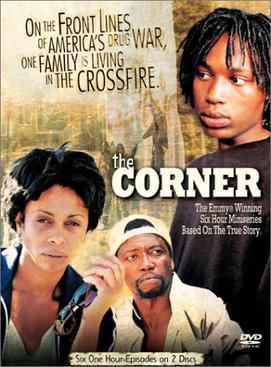
That said, if I had to pick Carter’s best performance, I would probably go with his work in the 2000 HBO miniseries, The Corner. Based on a nonfiction book by David Simon, The Corner follows several characters over the course of one year in Baltimore. Almost all of the characters are involved in the drug trade in some way or another. DeAndre McCullough (Sean Nelson) is a fifteen year-old drug dealer who, despite his obvious intelligence, seems to be destined to become yet another statistic. DeAndre’s parents are Fran (Khandi Alexander) and Gary (T.K. Carter). At the start of the miniseries, both Fran and Gary are drug addicts and both of them make the effort to get clean. Both have moments where their lives appear to be improving. They both have moments where they relapse and have to start all over again. Tragedy follows both of them.
The Corner is often described as being a forerunner to The Wire and indeed, there are definite similarities. Like The Wire, The Corner was shot on location in Baltimore. Like The Wire, The Corner emphasizes that futility of trying to wage a war on drugs. As well, several members of The Corner‘s cast also appeared on The Wire. Clarke Peters, Lance Reddick, Reg E. Cathey, Corey Parker Robinson, Delaney Williams, and Robert F. Chew are among the many Wire actors who appear in The Corner. Interestingly enough, many of The Wire‘s cops and politicians appear as addicts in The Corner. Clarke Peters and Reg E. Cathey play two long-time drug addicts who serve as a bit of a chorus for the neighborhood. Lane Reddick appears as a recovering addict who tries to take advantage of Fran.
That said, The Corner doesn’t trust its audience in the same way that The Wire did. That’s largely because The Corner was directed by Charles S. Dutton, who has never been a particularly subtle actor or director. Dutton does a good job capturing the grit of Baltimore but he also includes “interviews” with various characters in which he asks questions while off-camera. It feels a bit too on-the-nose, as if each episode of The Wire opened with a dramatic monologue from McNulty or Stringer Bell. We don’t need the characters to look straight at the camera and tell us that things are bad. We can see that for ourselves.
The entire cast does a good job but the best performance undoubtedly comes from T.K. Carter, who plays Gary as being an intelligent man, a good man, a hopeful man, but also a man who cannot escape his addiction. With his gentle smile, his pleading eyes, and the almost shy way that he asks people to help him when he needs a fix, Carter gives a heart-breaking performance and one that shows that Gary truly is a prisoner of his addiction. He doesn’t want to be an addict. He wants to get clean. But he also lives in a world where drugs are not only everywhere but they’re also the only escape that he and so many other people have from their oppressive existence. With the government and the police treating the drug crisis as a war as opposed to a public health emergency, Gary’s two options really are either prison or the basement of his mother’s home. The police view Gary as being nothing more than an criminal as opposed to someone with a sickness. The dealers, meanwhile, view Gary as being a marketing opportunity. T.K. Carter captures both Gary’s desperation and his sadness. It’s a great performance and one that deserves to be remembered. As played by T.K. Carter, Gary is the battered heart of The Corner.
T.K. Carter, RIP.
 Through the Shattered Lens