Norman Mailer was better-known as a writer than a filmmaker but, over the course of his limited directorial career, he did come up with one scene that will never be forgotten. That scene is a scene that I love from 1987’s Tough Guys Don’t Dance.
Today, we wish a happy 95th birthday to the great actor-turned-writer Gene Hackman!
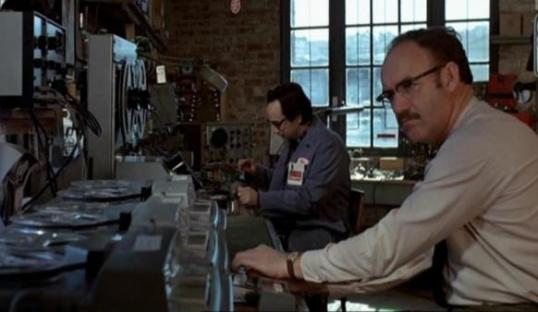
Today’s scene that I love comes from one of Hackman’s best films, 1974’s The Conversation. In this scene, Hackman’s surveillance expert has a nightmare inspired by his fear that his latest job may cause two people to be murdered. Hackman won two Oscars over the course of his career and was nominated several times. The fact that he was not nominated for The Conversation was a huge oversight on the part of the Academy.
Continuing our theme of dystopian noir, today’s scene of the day comes from 1982’s Blade Runner. In this scene, we not only meet Rick Deckard (Harrison Ford) but we also get a look at the future of Los Angeles, from both the sky and the ground.
(Of course, the film takes place in 2019 so its future is our past!)
This is one of the best world-building scenes that I’ve ever seen, one that works because it takes place in a world we can recognize but which has obviously developed and changed over the years. Plus, I just like Harrison Ford wearing a trench coat and looking grumpy. He should have done more noirs.
Today is Mozart’s birthday so, of course, today’s scene from the day comes from 1984’s Amadeus. In this scene, the Emperor (Jeffrey Jones) delivers his critique to Mozart (Tom Hulce) and anyone who has ever had to deal with an idiotic critic will be able to relate.
“There’s too many notes!”
What really makes this scene work, along with Hulce’s reaction, is Jones’s blandly cheerful manner. The Emperor really thinks he’s being helpful!
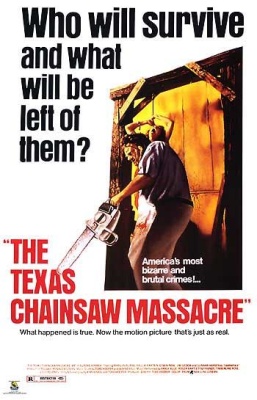
Since today is Tobe Hooper’s birthday, it seems fitting that today’s scene of the day should come from his best-known film. The opening of 1974’s The Texas Chainsaw Massacre is genuinely unsettling, from the opening narration to the scene of the body being dug up to the news reports of grave robbery. Even the opening credits feel ominous!
The narration was, of course, provided by a young John Larroquette, who has since said that he was “paid in marijuana” for what would become his first feature film credit.
Today would have been the 76th birthday of actor John Belushi.
Today’s scene that I love comes from Belushi’s first film, 1978’s Animal House. In the scene, Belushi (playing Bluto) gives the greatest motivational speech of all time. My father was quite a fan of Mr. Belushi’s. I’d like to think that this speech was the reason why.
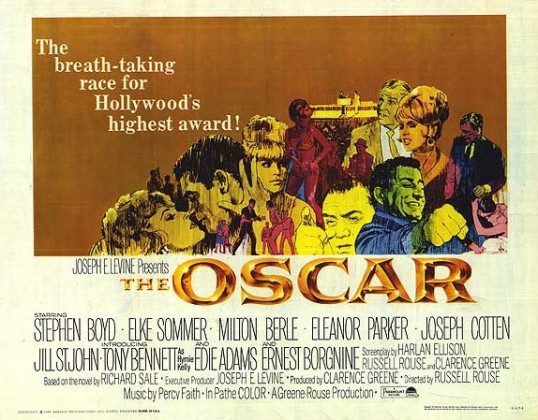
Have you ever wondered what it takes to win an Oscar? The 1966 film, The Oscar, revealed to audiences just how sleazy a world Hollywood can be. Frankie Fane (Stephen Boyd) does everything he can to win an Oscar and he doesn’t care who he hurts! But fear not — Hollywood may not be perfect but it has no room for someone like Frankie Fane! At the end of the movie, a man named Frank does win the Oscar but his last name is Sinatra and Frankie Fane is left humiliated. That’ll teach him to try to pull one over on the Academy!
The Oscar is an incredibly silly film but it’s also a lot of fun. In this scene that I love, Frankie’s best friend — played by Tony Bennett, in both his first and final film — confronts Frankie about the type of star that he’s become.
Today, we wish a happy birthday to actress Geena Davis. Today’s scene that I love comes from 1996’s The Long Kiss Goodnight and features Geena Davis as a badass action movie star!
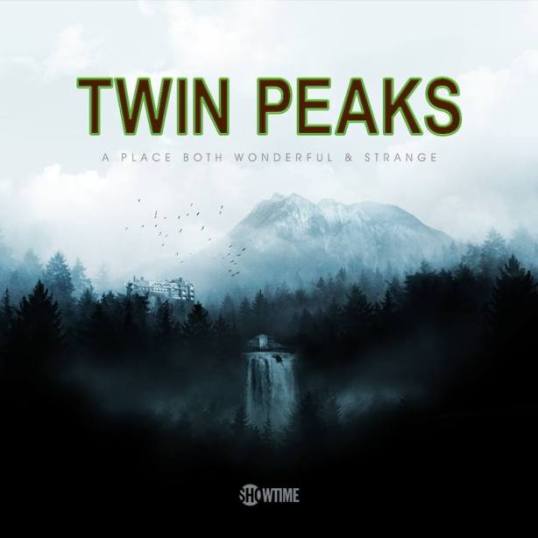
The final scene of Twin Peaks: The Return has haunted me ever since I first watched it 2017. I’m still not sure what the ending meant or where Cooper and Laura were but somehow, as enigmatic as it all was, it felt like the only proper way to end the saga of Twin Peaks.
And really, this is a scene that only Lynch could have made work. Another director would have tried too hard to tell the audience what to think or how to react. Of course, many directors probably wouldn’t have had the guts to end things on such on open-ended note. But Lynch not only had the courage to stick to his vision but he also had the faith to trust his audience to figure it out for themselves. Courage and faith are two of the main reasons why David Lynch was one of the greatest directors of his time.

 Through the Shattered Lens