So, you want to be a rock and roll star? Then listen now to what I say: just get an electric guitar and take some time and learn how to play. And when your hair’s combed right and your pants fit tight, it’s gonna be all right.
If you need any more help, try watching these four films:
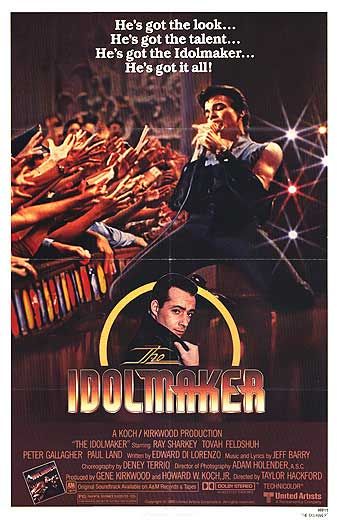
The Idolmaker (1980, directed by Taylor Hackford)
The Idolmaker is a movie that asks the question, “What does it take to be a star? Who is more interesting, the Svengalis or the Trilbys?” The year is 1959 and Vinny Vacari (Ray Sharkey, who won a Golden Globe for his performance but don’t let that dissuade you from seeing the movie) is a local kid from New Jersey who dreams of being a star. He has got the talent. He has got the ambition and he has got the media savvy. He also has a receding hairline and a face like a porcupine.
Realizing that someone who looks like him is never going to make hundreds of teenage girls all scream at once, Vinny instead becomes a starmaker. With the help of his girlfriend, teen mag editor Brenda (Tovah Feldshuh) and a little payola, he turns saxophone player Tomaso DeLorussa into teen idol Tommy Dee. When Tommy Dee becomes a star and leaves his mentor, Vinny takes a shy waiter named Guido (Peter Gallagher) and turns him into a Neil Diamond-style crooner named Cesare. Destined to always be abandoned by the stars that he creates, Vinny continually ends up back in the same Jersey dive, performing his own songs with piano accompaniment.
The Idolmaker is a nostalgic look at rock and roll in the years between Elvis’s induction into the Army and the British invasion. The Idolmaker has some slow spots but Ray Sharkey is great in the role of Vinny and the film’s look at what goes on behind the scenes of stardom is always interesting. In the movie’s best scene, Tommy performs in front of an audience of screaming teenagers while Vinny mimics his exact moments backstage.
Vinny was based on real-life rock promoter and manager, Bob Marcucci. Marcucci was responsible for launching the careers of both Frankie Avalon and Fabian Forte. Marcucci served as an executive producer on The Idolmaker, which probably explains why this is the rare rock film in which the manager is more sympathetic than the musicians.
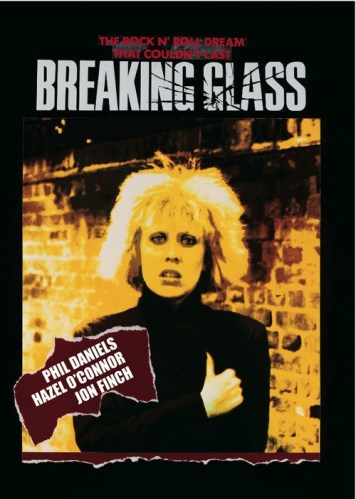
Breaking Glass (1980, directed by Brian Gibson)
At the same time that The Idolmaker was providing American audiences with a look at life behind-the-scenes of music stardom, Breaking Glass was doing the same thing for British audiences.
In Breaking Glass, the idolmaker is Danny (Phil Daniels, who also starred in Quadrophenia) and his star is an angry New Wave singer named Kate (Hazel O’Connor). Danny first spots Kate while she is putting up flyers promoting herself and her band and talks her into allowing him to mange her. At first, Kate refuses to compromise either her beliefs or her lyrics but that is before she starts to get famous. The bigger a star she becomes, the more distant she becomes from Danny and her old life and the less control she has over what her music says. While her new fans scare her by all trying to dress and look like her, Kate’s old fans accuse her of selling out.
As a performer, Hazel O’Connor can be an acquired taste and how you feel about Breaking Glass will depend on how much tolerance you have for her and her music. (She wrote and composed all of the songs here.) Breaking Glass does provide an interesting look at post-punk London and Jonathan Pryce gives a good performance as a sax player with a heroin addiction.
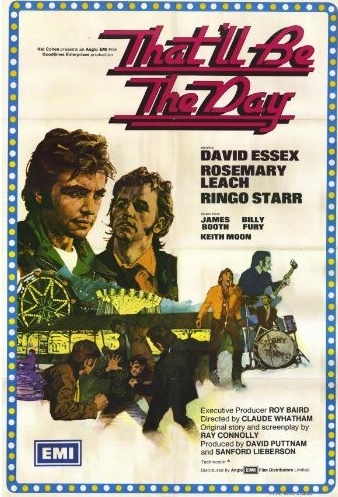
That’ll Be The Day (1973, directed by Claude Whatham)
Real-life teen idol David Essex plays Jim MacClaine, a teenager in 1958 who blows off his university exams and runs away to the Isle of Wright. He goes from renting deckchairs at a resort to being a barman to working as a carny. He lives in squalor, has lots of sex, and constantly listens to rock and roll. Eventually, when he has no other choice, he does return home and works in his mother’s shop. He gets married and has a son but still finds himself tempted to abandon his family (just as his father previously abandoned him) and pursue his dreams of stardom.
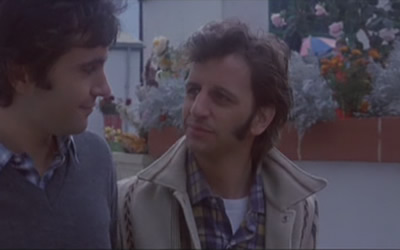
Based loosely on the early life of John Lennon, the tough and gritty That’ll Be The Day is more of a British kitchen sink character study than a traditional rock and roll film but rock fans will still find the film interesting because of its great soundtrack of late 50s rock and roll and a cast that is full of musical luminaries who actually lived through and survived the era. Billy Fury and the Who’s Keith Moon both appear in small roles. Mike, Jim’s mentor and best friend, is played by Ringo Starr who, of all the Beatles, was always the best actor.
That’ll Be The Day ends on a downbeat note but it does leave the story open for a sequel.
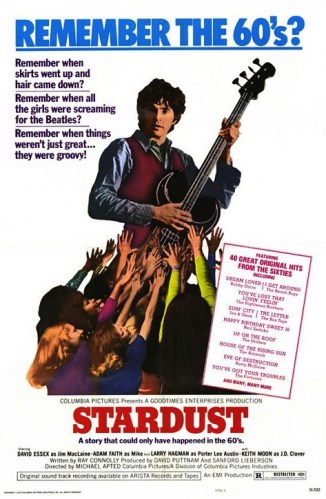
Stardust (1974, directed by Michael Apted)
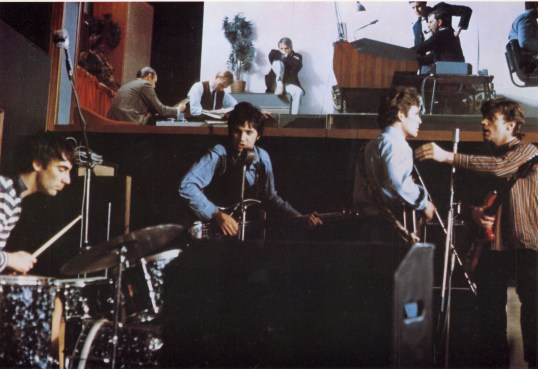
Stardust continues the story of Jim MacClaine. Jim hires his old friend Mike (Adam Faith, replacing Ringo Starr) to manage a band that he is in, The Straycats (which includes Keith Moon, playing a far more prominent role here than in That’ll Be the Day). With the help of Mike’s business savvy, The Stray Cats find early success and are signed to a record deal by eccentric Texas millionaire, Porter Lee Austin (Larry Hagman, playing an early version of J.R. Ewing).
When he becomes the breakout star of the group, Jim starts to overindulge in drugs, groupies, and everything that goes with being a superstar. Having alienated both Mike and the rest of the group, Jim ends up as a recluse living in a Spanish castle. Even worse, he gives into his own ego and writes a rock opera, Dea Sancta, which is reminiscent of the absolute worst of progressive rock. Watching Jim perform Dea Sancta, you understand why, just a few years later, Johnny Rotten would be wearing a homemade “Pink Floyd Sucks” t-shirt.
Stardust works best as a sad-eyed look back at the lost promise of the 1960s and its music. Watch the movie and then ask yourself, “So, do you really want to be a rock and roll star?”

 Through the Shattered Lens