Music Film Review: Tommy (dir by Ken Russell)


“Tommy, can you hear me?”

That’s a question that’s asked frequently in the 1975 film, Tommy.  An adaptation of the famous rock opera by the Who (though Pete Townshend apparently felt that the film’s vision was more director Ken Russell’s than anything that he had meant to say), Tommy tells the story of a “deaf, dumb, and blind kid” who grows up to play a mean pinball and then become a cult leader.  Why pinball?  Who knows?  Townshend’s the one who wrote Pinball Wizard but Ken Russell is the one who decided to have Elton John sing it while wearing giant platform shoes.

Tommy opens, like so many British films of the 70s, with the blitz.  With London in ruins, Captain Walker (the almost beatifically handsome Robert Powell) leaves his wife behind as he fights for his country.  When Walker is believed to be dead, Nora (Ann-Margaret) takes Tommy to a holiday camp run by Frank (Oliver Reed).  Oliver Reed might not be the first person you would expect to see in a musical and it is true that he wasn’t much of a singer.  However, it’s also true that he was Oliver Reed and, as such, he was impossible to look away from.  Even his tuneless warbling is somehow charmingly dangerous.  Nora falls for Frank but — uh oh! — Captain Walker’s not dead.  When the scarred captain surprises Frank in bed with Nora, Frank hits him over the head and kills him.  Young Tommy witnesses the crime and is told that he didn’t see anything and he didn’t hear anything and that he’s not going to say anything.

And so, as played by Roger Daltrey, Tommy grows up to be “deaf, dumb, and blind.”  Various cures — from drugs to religion to therapy — are pursued to no avail.  As the Acid Queen, Tina Turner sings and dances as if she’s stealing Tommy’s soul.  As the Therapist, Jack Nicholson is all smarmy charm as he gently croons to Ann-Margaret.  Eric Clapton performs in front of a statue of Marilyn Monroe.  Ann-Margaret dances in a pool of beans and chocolate and rides a phallic shaped pillow. As for Tommy, he eventually becomes the Pinball Wizard and also a new age messiah.  But it turns out that his new followers are just as destructive as the people who exploited him when he was younger.   It’s very much a Ken Russell film, full of imagery that is shocking and occasionally campy but always memorable.

I love Tommy.  It’s just so over-the-top and absurd that there’s no way you can ignore it.  Ann-Margaret sings and dances as if the fate of the world depends upon it while Oliver Reed drinks and glowers with the type of dangerous charisma that makes it clear why he was apparently seriously considered as Sean Connery’s replacement in the roles of James Bond.  As every scene is surreal and every line of dialogue is sung, it’s probably easy to read too much into the film.  It could very well be Ken Russell’s commentary on the New Age movement and the dangers of false messiahs.  It could also just be that Ken Russell enjoyed confusing people and 1975 was a year when directors could still get away with doing that.  With each subsequent viewing of Tommy, I become more convinced that some of the film’s most enigmatic moments are just Russell having a bit of fun.  The scenes of Tommy running underwater are so crudely put together that you can’t help but feel that Russell was having a laugh at the expense of people looking for some sort of deeper meaning in Tommy’s journey.  In the end, Tommy is a true masterpiece of pop art, an explosion of style and mystery.

Tommy may seem like a strange film for me to review in October.  It’s not a horror film, though it does contain elements of the genre, from the scarred face of the returned to Captain Walker to the Acid Queen sequence to a memorable side story that features a singer who looks like a junior Frankenstein.  To me, though, Tommy is a great Halloween film.  Halloween is about costumes and Tommy is ultimately about the costumes that people wear and the personas that they assume as they go through their lives.  Oliver Reed goes from wearing the polo shirt of a holiday camp owner to the monocle of a tycoon to the drab jumpsuits of a communist cult leader.  Ann-Margaret’s wardrobe is literally a character of its own.  Everyone in the film is looking for meaning and identity and the ultimate message (if there is one) appears to be that the search never ends.


Vampirella (1996, directed by Jim Wynorski)


Intergalactic vampire Vlad Tepes (The Who’s Roger Daltrey) has come to Earth and is performing in Las Vegas under the name Jamie Blood.  Though most vampires now drink synthetic blood, Vlad is a purist who prefers to drink straight from the veins of others.  Vlad wants to unleash a horde of vampires on Earth.  Trying to stop him is Vampirella (Talisa Soto), another intergalactic vampire who wears a revealing red bodysuit and little else.

Jim Wynorski says this is the only film that he regrets directing.  Think about that.  This is a film that even Jim Wynorski regrets!  It’s easy to understand why.  Talisa Soto is attractive and convincing in the action scenes but she’s still miscast of Vampirella, a character who was as known for her voluptuous figure as for her status as one of the first vampire super heroes.  The movie has none of the subversive humor of the original Vampirella comic book and the special effects look cheap even by 1996 standards.  With the exception of Roger Daltrey’s devilish portrayal of Vlad,  Vampirella is an anemic take on a vampire legend.

Of course, in 1996, almost all comic book movies were as bad as Vampirella.  While there were exceptions like the Batman movies, most comic book films were low-budget affairs that were made for nice audiences and which no one put much effort into.  Comic books movies were not expected to be blockbusters or huge cultural events and most of them, like Vampirella, were released with very little fanfare.  Things have certainly changed.

Song of the Day: Baba O’Riley by The Who


Today is the 80th birthday of Who vocalist Roger Daltrey so it seems only appropriate to pick one of The Who’s most recognized songs for today’s song of the day.  Enjoy Teenage Wasteland!

Okay, just kidding.  I know the name of the song is Baba O’Riley.  But seriously, there are thousands of people out there who think that this song is called Teenage Wasteland and, when I first wrote the first draft of my review of Summer of Sam, I may have actually been so exhausted that I actually referred to it as being Teenage Wasteland but, fortunately, if that did indeed happen, Jeff pointed out my mistake before I hit that publish button.  Pete Townshend, who wrote the song, later said that the reference to a “teenage wasteland” was inspired by the audience Woodstock and it was not meant to be complimentary.

This performance, featuring Daltrey’s amazing vocals, is taken from the 1979 concert film, The Kids Are Alright.

Music Video Of The Day: After The Fire by Roger Daltrey (1985, directed by ????)


In 1985, After The Fire was a minor hit for The Who’s lead singer, Roger Daltrey.  It appeared on Daltrey’s sixth solo album, Under A Raging Moon, and it was helped, on its way up the charts, by a music video that was put into heavy rotation on MTV.

After The Fire was written by Pete Townshend and it was originally meant to be a Who song.  The plan was originally to debut After The Fire at Live Aid but, because of a scheduling mishap, the band did not get a chance to rehearse the new song before performing and so After The Fire was dropped from the band’s set list.  It was instead given to Daltrey, who included it on his solo album.

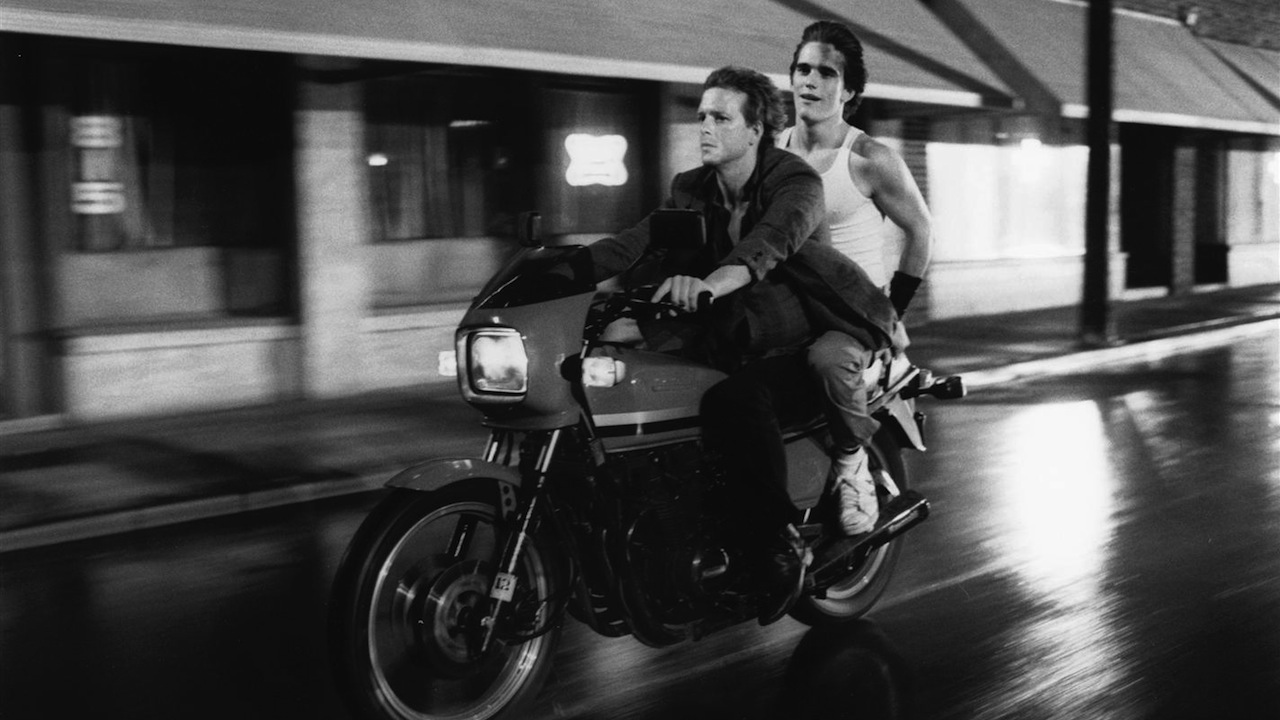
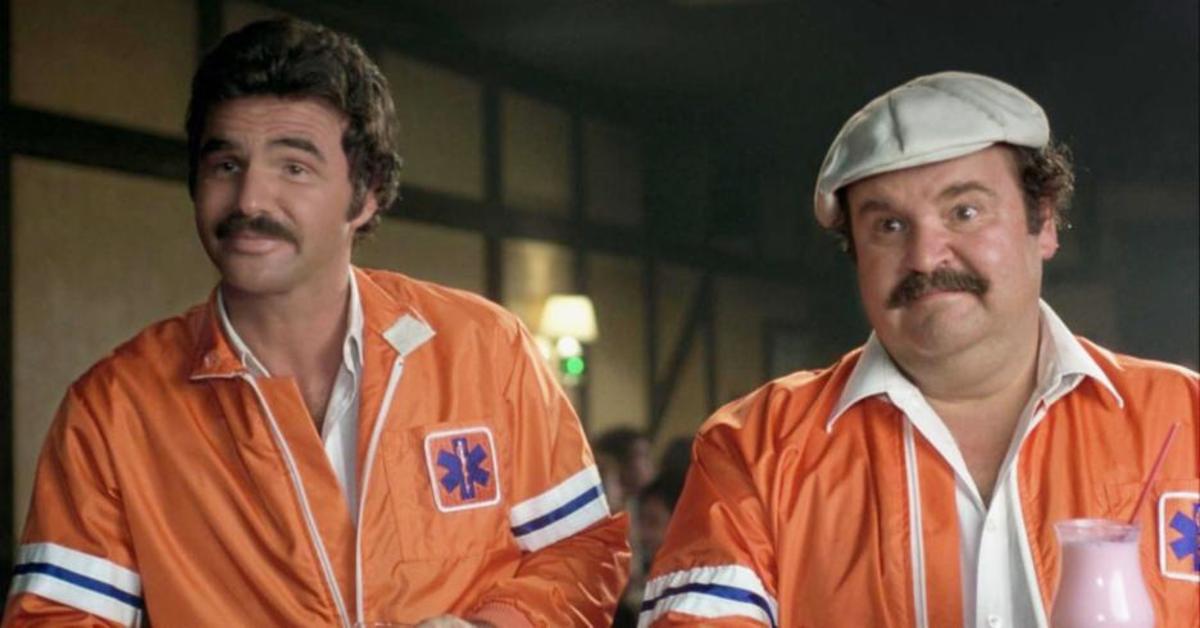
This is perhaps the only song to name drop both Dom DeLuise and Matt Dillon.  Judging from the lyrics about Dillon riding “his brother’s motorcycle” in black-and-white, the lyrics were probably referring to his performance in Rumble Fish.  The reference to Dom DeLuise is a little more cryptic.  Was Pete Townshend a fan of The Cannonball Run?  Or was he watching The Best Little Whorehouse in Texas while writing the song?  We may never know.

Enjoy!

Book Review: Thanks A Lot Mr. Kibblewhite: My Story by Roger Daltrey


On March 1st, 1959, a 15 year-old student at Acton County Grammar School brought an air gun to school.  Years later, the student would write about how he and a friend were “in the changing room, mucking about after football,” when someone fired the gun.  The pellet ricocheted off a wall and struck another student in the eye.

The student who brought the air gun was taken down to see Mr. Kibblewhite, the headmaster.  Mr. Kibblewhite announced, “We can’t control you, Daltrey.  You’re out.”  As the now-expelled student left the office, Mr. Kibblewhite added, “You’ll never make anything out of your life, Daltrey.”

Roger Daltrey, of course, went on to become the lead singer of The Who and is considered to be the epitome of a charismatic rock and roll frontman.  As for Mr. Kibblewhite, he went on to lend his name to the title of Daltrey’s autobiography.

As befits someone who, has a reputation for being one of the most down-to-Earth people in rock and roll, Thanks A Lot, Mr. Kibblewhite is a short and straight-forward account of Roger Daltrey’s life, from his youth in war-scarred London to his time as the frontman for one of the loudest bands in rock and roll to his current life as one of rock’s elder statesmen.  If it’s not as salacious as some other rock-and-roll tell-alls, that’s because Daltrey never gave into the excessive behavior that proved to be the downfall of many of his contemporaries (including, of course, his former Who bandmates, Keith Moon and Jon Entwistle).  As Daltrey tells it, he avoided hard drugs to such an extent that he was briefly kicked out of the band for flushing Moon’s stash of pills.

As is true with The Who’s best albums, the heart of Thanks A Lot, Mr. Kibblewhite is found in Daltrey’s close but often difficult collaboration with Pete Townshend.  Even after performing with Townshend for over fifty years, Daltrey still seems to be struggling with how he feels about his legendary bandmate.  Daltrey’s admiration for Townshend’s talent is obvious but he also writes that Townshend could be like “a scorpion with a good heart.”  Daltrey recounts not only the numerous times that Townshend was dismissive of the rest of the band in the press but he also tells the full story of the infamous fist fight in which Daltrey knocked Townshend out with one punch.  And yet, when Townshend is falsely accused of downloading child pornography, Daltrey is just as passionate about explaining how he knew his bandmate was innocent.

Daltrey also writes extensively about Keith Moon.  In Daltrey’s telling, Moon comes across as a unique, one-of-a-kind talent who was ultimately destroyed by his need to keep up with his own wild reputation.  Daltrey is open about often becoming exasperated with Moon but he also writes that, for him, The Who ceased to be The Who after Moon died.  Without Moon, Daltrey writes that The Who’s anthems were “now just songs.”

Thanks A Lot, Mr. Kibblewhite is a short book and Daltrey is such a straight-forward and no frills storyteller that it makes for good airport and airplane reading.  For fans of The Who, this book is essential.

Rockin’ in the Film World #18: The Who’s TOMMY (Columbia 1975)


gary loggins's avatarcracked rear viewer


Before MTV ever hit the airwaves, there was TOMMY, Ken Russell’s stylized cinematic vision of The Who’s 1969 ‘rock opera’. It was a match made in heaven, teaming Britain’s Wild Man of Cinema with the anarchic rock and roll of Pete Townshend, Roger Daltrey, John Entwistle, and Keith Moon (not to mention England’s own enfant terrible,Oliver Reed ). Russell both captures the spirit of Townsend’s hard rock opus and expands on it visually with an all-out assault-on-the-senses musical featuring an all-star cast that includes an Oscar-nominated performance by Ann-Margret as the mother of “that deaf, dumb, and blind kid” who “sure plays a mean pinball”!

The Who’s original album cover

Townshend, the group’s primary songwriter, had been experimenting with long-form rock’n’roll since the beginning, notably the nine minute suite “A Quick One While He’s Away” on their second album A QUICK ONE (retitled in America HAPPY JACK). TOMMY was…

View original post 467 more words

Horror on The Lens: Dark Prince: The True Story of Dracula (dir by Joe Chappelle)


So right now, if you wanted to, you could go down to your local theater and you could watch Dracula Untold and maybe learn about the origin of Count Dracula.

Or you could just sit here and watch the 2000 film Dark Prince: The True Story of Dracula below!  As directed by Joe Chappelle, this film is definitely low-budget but undeniably effective.  Rudolph Martin does a good job playing the title character and it’s always fun to see Peter Weller in a film like this.