Welcome to Retro Television Reviews, a feature where we review some of our favorite and least favorite shows of the past! On Sundays, I will be reviewing the made-for-television movies that used to be a primetime mainstay. Today’s film is 1972’s Playmates! It can be viewed on YouTube.
Playmates tells the story of two divorces.
Marshall Barnett (Alan Alda) is an attorney. He went to Yale and Harvard. He has a successful career. He has rich and educated friends. He has a nice bachelor pad. He also pays hundreds of dollars in alimony. He and Lois (Barbara Feldon) got divorced 3 years ago and Marshall is still bitter. He’s bitter that he has to pay her so much money. He’s bitter that he only gets to see his son on the weekends. He’s bitter that he can’t seem to start a new, meaningful relationship with anyone. He’s bitter that his wife still asks him to critique her modernist paintings.
Kermit Holvey (Doug McClure) is a blue collar welder. He has only been divorced for a few months and his relationship with ex-wife Patti (Connie Stevens) is nowhere near as contentious as Marshall’s relationship with Lois. Still, Kermit is struggling to adjust to being single and to only seeing his son on the weekends.
Marshall and Kermit meet one weekend while they are both taking their sons to the Kiddieland Amusement Park. Marshall is so overjoyed to meet someone else who is dealing with divorce that he comes on a bit strong in trying to get to know Kermit. Kermit, however, does eventually get over his initial weariness and soon, he and Marshall are best friends. It doesn’t matter that Marshall has a tendency to be a little bit condescending and that Kermit often can’t follow what Marshall is talking about. They spend most of their time talking about their ex-wives.
But then Kermit meets Lois and he discovers that her paintings really aren’t as bad as Marshall made them out to be. And Marshall meets Patti and he discovers that she’s not as dumb as Kermit made her out to be. Soon, Kermit is secretly dating Lois and Marshall is secretly dating Patti and anyone who has ever watched a comedy before knows that there is a big mess waiting in the future.
Playmates was one of those films that pretended to be a lot naughtier than it actually was. For all the winking and the occasional sly smiles, all that happens is that Kermit and Marshall both end up going out with women with whom they really don’t have much in common. And while it’s tempting to read a lot into how quickly Kermit and Marshall become friends and how they both end up dating the other’s female equivalent, I think that might be giving this film too much credit. (If it were made today, things might be different.) In the end, the film really has more to say about class than it does marriage, as both Marshall and Lois obviously view spending time with Kermit and Patti as being a way of slumming and building up some working class bona fides without actually having to be working class. Patti, to her credit, calls Marshall out on this. Marshall admits that she has a point but he still come across as if he’s talking down to her, largely because he’s played by Alan Alda, an actor who is a master at being somehow both likable and condescending at the same time.
Playmates is a well-acted film and there are some funny lines. The four main characters are all ultimately likable, even if they all have their moments where you can tell why they would be difficult to live with. It deserves some credit for following its story through to its natural conclusion, with one couple realizing that they still love each other while the other realize that they are better off divorced. The film may not be as radical as it pretends to be but it still doesn’t cop out on the ending. In the end, Playmates is probably best watched as a time capsule. It’s here if you ever want to experience 1972 firsthand.
With the Cannes Film Festival underway, I have been watching some of the past winners of the prestigious Palme d’Or. On Thursday night, Jeff and I watched the winner of the 1970 winner of the Grand Prix (as the Palme was known at the time), Robert Altman’s M*A*S*H.
There are, of course, three versions of M*A*S*H. All three of them deal with the same basic story of Dr. Hawkeye Pierce and his attempts to maintain his sanity while serving as a combat surgeon at the 4077th Mobile Army Surgical Hospital during the Korean war. All three of them mix comedy with the tragedy of war. However, each one of them takes their own unique approach to the material.
The one that everyone immediately thinks of is the old television series, which ran for 11 seasons and which can be found on Hulu and on several of the retro stations. The television series starred Alan Alda as Hawkeye. I’ve watched a handful of episodes and, while the episodes that I’ve seen were undeniably well-acted and well-written and they all had their heart in the right place, the show’s deification of Hawkeye can get to be a bit much. Not only is Hawkeye the best surgeon at the 4077th, he’s apparently the best surgeon in all of Korea. In fact, he may be the best surgeon on the entire planet. Not a single thing happens in the camp unless Hawkeye is somehow involved. When a nurse is killed by a landmine in one episode, the focus is not on the other nurses but instead on how Hawkeye feels about it. When bombs are falling too close to the camp, the focus is again only on Hawkeye and how much he hates the war. If you didn’t already know that he hated the war, Hawkeye will let you know. Wish Hawkeye a good morning and he’ll yell at you about how many people are going to be wounder by the end of the day. Even when one agrees with Hawkeye, the character’s self-righteousness can be a bit much.
Less well-known is the first version of M*A*S*H, a short and episodic novel that was published in 1968. The novel was written by Dr. Richard Hornberger, who actually had served in Korea at a M*A*S*H unit and who reportedly based Hawkeye on himself. The book is a rather breezy affair. Reading it, one can definitely tell that it was inspired by someone telling Hornberger, “Your stories about Korea are so funny and interesting, you should write them down!” The book avoids politics, reserving most of its ire for military red tape. Hornberger was a Republican who so disliked Alan Alda’s interpretation of Hawkeye that, when he wrote a sequel to M*A*S*H, he included a scene in which Hawkeye talked about how much he enjoyed beating up hippies.
And then there’s the version that came in between the book and the television series, the 1970 film from Robert Altman. The film retains the book’s episodic structure while also throwing in the anti-war politics that would define the television series. (Though the film was set in the 50s, Altman purposefully made no attempt to be historically accurate because he wanted it to be clear that this film was more about Vietnam than Korea.) From its opening, the film announces its outlook, with shots of helicopters carrying severely wounded (possibly dead) soldiers to the camp while a song called Suicide is Painless plays on the soundtrack. The song was written by director Robert Altman’s fourteen year-old son, Mike. Reportedly, it took Mike five minutes to come up with the lyrics. When the instrumental version of the song was later used as the theme song for the television series, Mike Altman made over a million dollars in royalties.
The film opens with Hawkeye Pierce (Donald Sutherland) and Duke Forrest (Tom Skerritt) arriving at the 4077th MASH in a stolen jeep and it ends with them getting sent home in the same jeep. Though Duke is set up to be a major character, he soon takes a backseat to another surgeon, the unfortunately nicknamed Trapper John (Elliott Gould). Much as with the television series, the movie centers around Hawkeye and Trapper John’s antics. When they’re not in the operating room, they’re drinking, carousing, and playing pranks that are far more mean-spirited than anything the television versions of the characters would have ever done. (Indeed, the book and movie versions of Hawkeye probably would have hated Alan Alda’s Hawkeye.) Unlike the television version of Hawkeye, the film’s Hawkeye is not the best surgeon in Korea. In fact, he’s not even the best surgeon at the 4077th. (That honor goes to Trapper.) Instead, he’s just one of many doctors on staff. They’re rotated in and then, at the end of their tour, they’re rotated out. Hawkeye loses as many patients as he saves. The film’s doctors are not miracle workers, nor are they crusaders. Instead, they are overworked, neurotic, often exhausted, and frequently bored whenever there aren’t any wounded to deal with. The film emphasizes that the doctors are as professional inside the Operating Room as they’re rambunctious outside of it. Unlike the television series, Hawkeye doesn’t joke while working. He’s usually too busy trying to stop his patients from bleeding to death to tell jokes or to complain about the war that brought them to the OR.
Indeed, the film version of M*A*S*H communicates its anti-war message not through indignant speeches but instead through bloody imagery. The operating room scenes don’t shy away from showing the ugliness of war and they are occasionally so visceral that they almost seem to shame the audience for have laughed just a few minutes earlier. One of the film’s more famous (and controversial) sequences features Hawkeye driving Frank Burns (Robert Duvall) to insanity by crudely taunting him about his affair with head nurse Margaret Houlihan (Sally Kellerman). Burns attacks Hawkeye, a response that actually seems rather justified even if it is played for laughs. A scene of Burns being driven out of the camp in straitjacket is followed by a close-up of a geyser of blood erupting from a wounded soldier’s throat. It’s a jarring transition but one that makes a stronger anti-war statement than any self-righteous monologue would have. While Hawkeye and Trapper are taunting Burns and Margaret, soldiers are still being sent off to die.
The humor in M*A*S*H is often brutally misogynistic. Margaret is described as being “a damn good nurse” but is continually humiliated because she believes in maintaining military discipline. One can disagree with her emphasis on following all of the proper regulations while also realizing the Hawkeye and Trapper’s treatment of her is unreasonably cruel. The scene where Trapper and Hawkeye expose her while she’s taking a shower is especially difficult to watch and there’s no way to justify their actions. It’s frat boy humor, the type of stuff that you would expect from a bunch of former college football players, which is what we’re told Hawkeye and Trapper are. (That, of course, is another huge difference between the film and television versions of the characters.) That said, it’s debatable whether or not were supposed to find either Hawkeye or Trapper to be heroic or even likable. As a director, Robert Altman shied away from making films with unambiguous heroes or villains. Just as Margaret could be a “damn good nurse” and a “regular army clown” at the same time, Hawkeye can be both a dedicated doctor and a bit of a jerk.
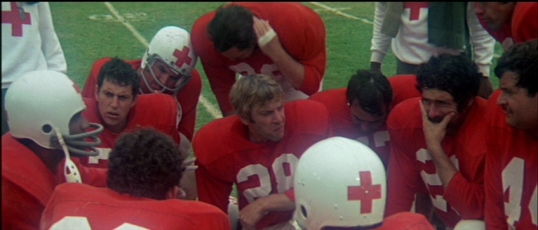
After 90 minutes of bloody operating room scenes and Trapper and Hawkeye making crude jokes, M*A*S*H suddenly becomes a sports film as the the 4077th plays a football game against their rivals, the 325th Evac Hospital. The change of tone can be a bit jarring but it’s perhaps the most important sequence in the film. For a few hours, the doctors bring “the American way of life” to Korea and the end result is a game that’s played for money and which is only won through cheating and deception. (Future blaxploitation star Fred Williamson made his film debut as the ringer who the 4077th recruits for the game.) For all of the broad comedy of the game, it’s followed by a shot of the doctors playing poker while a dead soldier is transported out of the camp, wrapped in a white sheet. Football may provided a distraction. The money may have provided an incentive. But the war continued and people still died.
Much of M*A*S*H‘s humor has aged terribly but the performances still hold up and the anti-war message is potent today. Though Sutherland and Gould are undeniably the stars of the film, M*A*S*H is a true ensemble film, full of the overlapping dialogue and the small character performances that Robert Altman’s films were known for. One reason why the film works is because it is an immersive experience, the viewer truly does feel as if they’ve been dropped in the middle of an operating field hospital. Though Hawkeye and Trapper may be at the center of the action, every character, from the camp’s colonel to the lowliest private, seems to have their own story playing out. This a film where paying attention to the little things happening in the background is often more rewarding than paying attention to the main action. I particularly liked the performances of David Arkin as the obsequies Staff Sergeant Vollmer and Bud Cort as Pvt. Warren Boone. Boone, especially, seems to have an interesting story going on in the background. The viewer just has to keep an eye out for him. Also be sure to keep an eye out for Rene Auberjonois, who reportedly improvised one of the film’s best-known lines when, after Margaret demands to know how Hawkeye reached a position of authority in the army medical corps, he deadpanned, “He was drafted.”
One of the first major studio films to be openly critical of the military and the war in Vietnam, M*A*S*H won the Palme d’Or, defeating films like Investigation of a Citizen Above Suspicion and The Strawberry Statement. Unlike many Palme winners, it was also a box office success in the United States. Though controversial, it received an Oscar nomination for Best Picture. However, unlike the Cannes jury, the Academy decided to honor a different film about war, Patton.
In this painfully dumb high school comedy, Scott Baio is Barney, a teen scientist who experiments on lab mice and grows specially modified orchids for his high school’s principal, Walter Coolidge (Robert Mandan, who played a lot of high school principals back in the day). When there’s an accident in the lab, Barney develops telekinetic powers. Barney then falls in love with the class president, Bernadette (Felice Schachter), while his best friend Peyton (Willie Aames) pursues the beautiful but vain Jane (Heather Thomas). Barney uses his powers to make a ventriloquist act as if it’s possessed and to help Peyton rig a casino-themed frat party. Meanwhile, Scatman Crothers plays the school’s baseball coach and has a long scene where he gets high and imagines that he’s riding a bicycle with Albert Einstein. That’s actually kind of cool.
Zapped! is a movie where Scott Baio magically gains the power to move things with his mind and yet the most implausible part of the movie is the idea of Willie Aames being the most popular student at the high school. Heather Thomas is believable as a cheerleader and Felice Schachter is perfectly cast as the brainy class president. Even Scott Baio is not terrible as Barney. But then Willie Aames shows up and we find out that he’s supposed to be a chick magnet and it becomes impossible for those watching to continue to suspend their disbelief.
Not much really happens in Zapped! Even after he gets his powers, Barney is frustratingly passive character who just does whatever Peyton tells him to do. Barney uses his powers to help Peyton show up Jane’s college boyfriend and he uses his powers to help Peyton win games at the school carnival and then Barney uses his powers to help out Peyton when Jane’s boyfriend tries to beat him up. Maybe Barney needs to get new friends. The only time Barney uses his powers for himself is when he’s playing baseball and he makes the ball stop in mid-air so that he can hit it. Somehow, no one watching the game seems to find it strange that the baseball stops in mid-air. The movie ends with a take on Carrie. Barney uses his powers to blow off everyone’s clothes at prom. It’s all to help Peyton, of course.
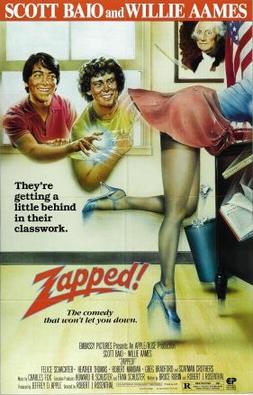
Zapped! supposedly has a cult following, probably composed of people who were 13 when they first saw it and who only remember the sweater scene with Heather Thomas and the final prom scene. (Or they’re remembering the famous poster, which is a lot more fun than anything that actually happens in the movie.) Other than that, this is one of the most boring films ever made. Perhaps the only interesting thing about the movie is that Heather Thomas sued the production when they failed to acknowledge that a body double was used for Jane’s nude scenes.
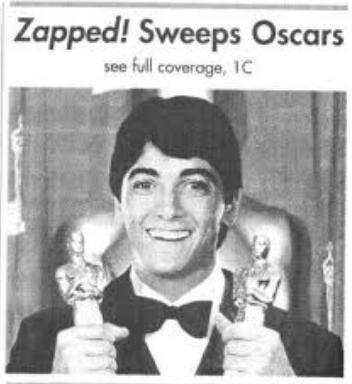
On a positive note, Zapped! did give us this classic Onion headline:
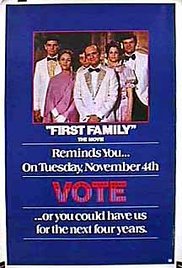
Like any newly inaugurated President, Manfred Link (Bob Newhart) faces many new challenges. The biggest challenge, though, is keeping control of his family and his White House staff. His wife (Madeline Kahn) is an alcoholic. His 28 year-old daughter (Gilda Radner) is so desperate to finally lose her virginity that she is constantly trying to sneak out of the White House. General Dumpson (Rip Torn) wants to start a war. Press Secretary Bunthorne (Richard Benjamin), Ambassador Spender (Harvey Korman), and Presidential Assistant Feebleman (Fred Willard) struggle and often fail to convince everyone that all is well.
President Link needs to form an alliance with the African country of Upper Gorm, a country that speaks a language that only one man in America, Prof. Alexaner Grade (Austin Pendleton), can understand. The President of Upper Gorm (John Hancock) orders that the kidnapping of Link’s daughter. Holding her hostage, he demands that Link send him several white Americans so that the citizens of Upper Gorm can know what it is like to have a minority to oppress.
First Family not only featured a cast of comedy all-stars but it was also directed by one of the funniest men in history, Buck Henry. So, why isn’t First Family funnier? There are a few amusing scenes and Newhart can make a pause hilarious but, for the most part, First Family feels like an episode from one of Saturday Night Live‘s lesser seasons. Reportedly, Henry’s first cut of First Family tested badly and Warner Bros. demanded that certain scenes, including the ending, be reshot. Perhaps that explains why First Family feels more like a sitcom than a satire conceived by the man who wrote the script for The Graduate and whose off-center perspective made him one of the most popular hosts during Saturday Night Live‘s first five seasons. Famously, during one SNL hosting gig, Henry’s head was accidentally sliced open by John Belushi’s samurai sword. Without missing a beat, Henry finished up the sketch and performed the rest of the show with a band-aid prominently displayed on his forehead. Unfortunately, there’s little sign of that Buck Henry in First Family.


 Like any newly inaugurated President, Manfred Link (Bob Newhart) faces many new challenges. The biggest challenge, though, is keeping control of his family and his White House staff. His wife (Madeline Kahn) is an alcoholic. His 28 year-old daughter (Gilda Radner) is so desperate to finally lose her virginity that she is constantly trying to sneak out of the White House. General Dumpson (Rip Torn) wants to start a war. Press Secretary Bunthorne (Richard Benjamin), Ambassador Spender (Harvey Korman), and Presidential Assistant Feebleman (Fred Willard) struggle and often fail to convince everyone that all is well.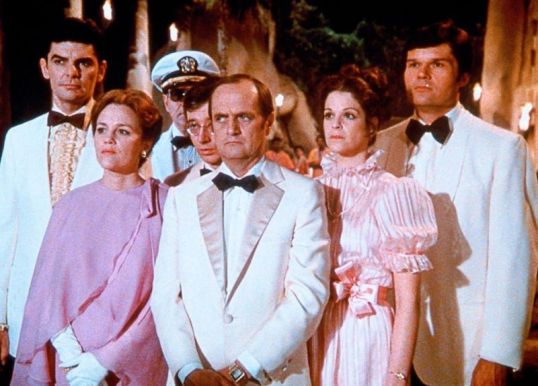
 Through the Shattered Lens