Doctor Who — The Leisure Hive, Meglos, Full Circle, State of Decay, Warrior’s Gate, The Keeper of Traken, Logopolis


The 18th season of Doctor Who started with the show getting a new producer, John Nathan-Turner.  Depending on who you ask, Nathan-Turner was either the best or the worst thing that ever happened to Doctor Who.  He pushed the series away from what he felt was the “silliness” of the previous season and, in doing so, he alienated both Tom Baker and Lalla Ward.  (Ward was close friends with Douglas Adams, whom Nathan-Turner blamed for turning the show silly.)  Nathan-Turner pushed for more serious stories and for better production values.  He also hated K-9, which upset a lot of younger viewers.  My personal feeling is that Nathan-Turner was not a good producer for Tom Baker’s Doctor but he was a great producer for Peter Davison’s interpretation of the character.  As for the Colin Baker and Sylvester McCoy years, let’s keep things cheery and not go there.

By the end of the 18th season, Tom Baker, Lalla Ward, and John Leeson (the voice of K-9) had left the show.  Completing my look back at Doctor Who, here are Tom Baker’s final serials.

The Leisure Hive (1980, directed by Lovett Bickford)

John Nathan-Turner hated K-9.  If there was any doubt about that, consider that his first serial as the show’s producer opens with the Doctor and Romana on holiday Brighton.  K-9, for some reason, rolls out to the ocean and explodes, taking him out of commission until the Doctor can rebuild him.

Personally, I would have been happy if this entire serial had just been Tom Baker and Lalla Ward on that beach in Brighton.  Nathan-Turner may not have been a fan of the Doctor and Romana working together by Baker and Ward but viewers like me definitely disagreed.  Alas, it is not to be.  Romana wants a real holiday (Brighton, in a reminder of just how British Doctor Who really was, doesn’t count) so she and the Doctor and the remains of K-9 go to the leisure planet of Argolis.  Unfortunately, Argolis is having financial problems and is at risk of being taken over by the Foamai.  When the Doctor is framed for a strangulation murder that was committed with a scarf, he is forced to stand trial and become an experimental test subject.

It’s an okay start for Season 18, though Tom Baker, for the first time since taking over the role of the Doctor, was starting to look disinterested.  John Nathan-Turner was eager to get away from the “silliness” of the previous season but, ironically, a story set on a leisure planet and featuring an intergalactic crime syndicate would have very much benefitted by Douglas Adams’s sense of humor.

Meglos (1980, directed by Terence Dudley)

The Doctor is asked to help broker a peace between two warring planets.  Unfortunately, Meglos — a sentient cactus — traps the TARDIS in a time loop and then plots to thwart the peace.

When viewers think of this serial, they usually remember Meglos taking on the form of the Doctor and Tom Baker wearing makeup that made him look like a humanoid cactus.  That’s because the plot is nothing special, though I do appreciate that we finally got to see what it’s like to be stuck in a time loop.  Jacqueline Hill, who played Barbara when the serial first began, appears as Lexa, a high priestess of the planet Tigella.

Full Circle (1980, directed by Peter Grimwade)

Having been ordered to return Romana to Gallifrey, the Doctor instead materializes on a swampy plant that is located where Gallifrey should be.  The TARDIS has slipped into E-Space, a small pocket universe.  As for the planet that they’ve landed on, it’s inhabited by swamp monsters, a group a humans who live around a crashed starliner, and a mad scientist.

The idea of E-Space was an interesting one and Lalla Ward gives one of her strongest performances of the series, as Romana is briefly possessed in this episode.  Unfortunately, this episode also introduced Adric (Matthew Waterhouse), an annoying child genius who became the Doctor’s newest companion.  Adric was one of the least popular of John Nathan-Turner’s additions to Doctor Who.  A few seasons later, Adric would be blown up while fighting the Cybermen and there would not be a dry eye in the house.

Tom Baker, unhappy with Nathan-Turner’s ideas and annoyed with Waterhouse decided to leave the role while filming this serial.  Waterhouse reportedly cursed at Baker while filming one scene.  They should have left the little punk behind just for doing that.

State of Decay (1980, directed by Peter Moffatt)

Still trapped in E-Space, The TARDIS materializes on a planet where the villagers live under the shadow of a dark tower. Ruled over by three cruel lords, Zargo, Camilla, and Aukon, the villagers are forced to regularly sacrifice their young to appease their rulers. The Doctor, Romana, K-9, and Adric investigate and discover that Zargo, Camilla, and Aukon are vampires! After being defeated by the Time Lords, the vampires retreated into E-Space, where they found a new planet to rule. Of course, that little tosser Adric wants to become a vampire. Why Romana and the Doctor didn’t leave Adric behind on the vampire planet, I’ll never understand.

Even the weaker seasons of Doctor Who usually featured at least one classic serial and, in the case of Season 18, it was State of Decay.  For all of the justified criticisms of John Nathan-Turner time as producer, he did make an attempt to improve the show’s production design and it paid off with this atmospheric serial that paid homage to the great vampire films while also retaining its Doctor Who identity.  Tom Baker seems to be rejuvenated by the clever script and he and Lalla Ward’s chemistry is allowed to shine.  K-9 even gets to do something other than getting kicked around.  State of Decay is a Doctor Who classic.

Warrior’s Gate (1981, directed by Paul Joyce and Graeme Haper)

Still trying to escape E-space, the TARDIS materializes on a similarly trapped spaceship that is run by Captain Rorvik (Clifford Rose).  Learning that the ship is carrying an enslaved race known as the Tharils, the Doctor set them free.  The Tharils help the Doctor reenter N-Space.  However, Romana decides to stay behind to help the Tharils.  The Doctor gives her K-9 and then leaves with Adric.  The Doctor should have left Adric behind too.

This was Lalla Ward’s final episode and both she and Romana deserved a better send-off.  Romana deciding to disobey the Time Lords, I can understand.  Leaving the Doctor, even to help the Tharils, doesn’t seem like something Romana would have done.  John Nathan-Turner finally got his wish, though.  K-9 stayed with Romana.  What are Romana and K-9 going to do in an alternative universe?  They don’t even have a TARDIS.

The only highlight of this episode was Clifford Rose’s manic performance as Captain Rorvik.  Otherwise, it was a forgettable send-off for two great companions.

The Keeper of Traken (1981, directed by John Black)

The Doctor and annoying Adric are summoned to the planet Traken, where the Master (Geoffrey Beevers) is attempting to capture a power source that will give him a new set of regenerations.  (The Master doesn’t look as badly decayed here as he did during The Deadly Assassin.)  With the help of the Keeper of Traken, Tremas (Anthony Ainley), and Tremas’s lovely daughter Nyssa (Sarah Sutton), the Doctor is able to stop the Master.  However, as soon as the Doctor leaves, the Master emerges from a long clock and somehow merges with Tremas’s body, giving him a new set of regenerations.

Despite the presence of Adric, this is not a bad story.  The Master makes his return and, in the final minutes of the serial, Anthony Ainley takes over the role.  Ainley would play The Master for the rest of the original show’s run.  While Ainley’s Master was always more cartoonishly evil than Roger Delgado’s, he still proved to be a worthy adversary for the Fourth, Fifth, Sixth, and Seventh Doctors.

Logopolis (1981, directed by Peter Grimwade)

This is it.  This is final serial to feature Tom Baker as the Doctor.  Things start with the Doctor materializing the Tardis around an actual police box in an effort to fix his chameleon circuit.  The Master then materializes his TARDIS around the Doctor’s.  It all fun and games until the universe starts to unravel and the Doctor sacrifices his life while literally holding space and time together.  Along the way, the Doctor gets two new companions, Nyssa (who has been traveling with the Master under the impression that he’s her father) and Teagan (Janet Fielding), an outspoken Australian flight attendant who entered the TARDIS thinking that it was a police call box.

Whatever else you might want to say about season 18, it gave Tom Baker a fitting send-off.  After seven years of saving civilizations and planets, the Fourth Doctor finally saved the entire universe.  Perhaps knowing how traumatized viewers would be to see the Fourth Doctor die, this episode featured Peter Davison (familiar to viewers as Tristan Sebring from All Creatures Great And Small) as the Watcher, a mysterious figure who merged with the Doctor at the end of the serial and turned out to be his Fifth Incarnation.

I had hoped to discuss some of the Fifth Doctor’s adventures this October but time has caught up with me.  (It’s a pity because Peter Davison more than made the role of the Doctor his own and several of his serials — Kinda, Snakedance, and Enlightenment to name just three — are worthy of being considered classics.)  For me, as someone who to watch Tom Baker’s Doctor on PBS while growing up, this does seem like the right place to stop.

For now.

Playing Catch-Up With Four Biopics From 2017: All Eyez On Me, Maudie, A Quiet Passion, and Victoria and Abdul


Continuing with my efforts to get caught up on the major films that I saw in 2017, here are my reviews of four biopics!  Two of them are very good.  One of them is so-so.  And the other one … well, let’s just get to it…

http://www.youtube.com/watch?v=uFttQtY_AVM

All Eyez on Me (dir by Benny Boon)

All Eyez On Me is a movie that I think a lot of people had high hopes for.  It was a biopic about Tupac Shakur, who died over 20 years ago but remains one of the most influential artists of all time.  Starring Demetrius Shipp, Jr. (who, if nothing else, bore a strong physical resemblance to Tupac), All Eyez on Me followed Shakur from his youth as the son of activist Afeni Shakur (Danai Gurira), through his early stardom, his political awakening, his time in prison, his eventual association with Suge Knight (Dominic L. Santana), and his still unsolved murder in Las Vegas.  Along the way all of the expected people pop up.  Kat Graham plays Jada Pinkett and tells Tupac that he’s wasting his talent.  Someone who looks nothing like Dr. Dre is introduced as being Dr. Dre.  Another actor wanders through a scene and says his name is Snoop Dogg.  The film last 2 hours and 20 minutes, with some scenes feeling oddly rushed while other drag on interminably.

The main reason why All Eyez On Me fails is that, unlike Straight Outta Compton, All Eyez on Me never figures out how translate Tupac’s legacy into cinematic form.  For instance, when I watched Straight Outta Compton, I probably knew less about NWA than I knew about Tupac Shakur when I watched All Eyez On Me.  But then there was that scene where NWA performed “Fuck That Police” while surrounded by the police and, at that moment, I understood why NWA deserved their own movie.  There’s no comparable scene in All Eyez On Me, which gets so bogged down in going through the usual biopic motions that it never really comes to grips with why Tupac is such an iconic figure.  Combine that with some less than stellar performances and some amazingly awkward dialogue and the end result is a film that is massively disappointing.

Maudie (dir by Aisling Walsh)

Maudie tells the story of Maud Lewis, a Canadian woman who found fame as a painter despite suffering from crippling arthritis.  Working and living in a one-room house with her husband, a fisherman named Everett (Ethan Hawke), Maud Lewis’s paintings of flowers and birds eventually became so popular that one was even purchased by then-Vice President Richard Nixon.

Maudie is a very special movie, largely because of the incredibly moving performance of Sally Hawkins in the role of Maud.  As played by Hawkins, Maud may occasionally be meek but she never surrenders her dream to create something beautiful out the often harsh circumstances of her life.  Hawkins not only captures Maud’s physical struggles but she also captures (and makes compelling) the inner strength of this remarkable artist.  Ethan Hawke also gives a remarkable performance as the gruff Everett.  When you Everett first appears, you hate him.  But, as the film progresses, Hawke starts to show hints of a sensitive soul that’d hiding underneath all of his gruffnes.  In the end, Everett is as saved by Maud’s art as is Maud.

Directed by Aisling Walsh, this is a low-key but all together remarkable and touching film.  If Sally Hawkins wasn’t already certain to get an Oscar nomination for Shape of the Water, she would definitely deserve one for Maudie.

http://www.youtube.com/watch?v=gh-XATkaRl0

A Quiet Passion (dir by Terrence Davies)

You would be totally justified in assuming that this film, a biopic of poet Emily Dickinson, would have absolutely nothing in common with The Last Jedi.  However, believe it or not, they actually do have something very much in common.  They are both films that, on Rotten Tomatoes, scored high with critics and not so high with audiences.  When last I checked, it had a 93% critical score and a 51% audience score.

Well, you know what?  Who cares?  The idea that you can judge a film’s worth based on an arbitrary number is pure evil, anyway.

Personally, I’m not surprised to hear that audiences struggled with A Quiet Passion.  It’s a very challenging film, one that is more concerned with mood than with traditional narrative.  The film is much like Dickinson herself: dark, uncompromising, sharply funny, and, on the surface, unconcerned with what people might think.  Much as how Dickinson retreated into her Amherst home, the film retreats into Dickinson’s head.  It’s not always the most pleasant place to hide out but, at the same time, it’s so alive with creativity and filled with such a sharp wit that it’s tempting never to leave.

In the role of Emily, Cynthia Nixon gave one of the best performance of the year, bringing Emily to uncompromising life.  Neither the film not Nixon ever make the mistake of sentimentalizing Dickinson.  Her pain is just as real as her genius.  Ultimately, though, both Nixon’s performance and A Quiet Passion stands as a tribute to Emily’s own quiet passion.

Much like Emily Dickinson’s poetry, A Quiet Passion will be appreciated with time.

Victoria & Abdul (dir by Stephen Frears)

If there’s ever been a film that deserves to be known as “generic Oscar bait,” it’s Victoria & Abdul.

Don’t get me wrong.  It’s not a bad movie or anything like that.  Instead, it’s a very respectable film about Queen Victoria (Judi Dench) and her servant, Abdul Karim (Ali Fazal), an Indian Muslim.  While the rest of the royal court is scandalized by Victoria’s close relationship with the foreigner, Karim teaches the Queen about the Koran and encourages her to enjoy life.  The royal court is played by the usual collection of distinguished actors who always appear in movies like this: Simon Callow, Tom Pigott-Smith, and Michael Gambon.  Victoria’s heir is played by Eddie Izzard, which should tell you all you need to know about how the future Edward VII is portrayed.

As I said, it’s not a bad movie as much as it’s just not a very interesting one.  You know that Abdul and Victoria are going to become close.  You know that the Royal Court is going to be a bunch of snobs.  You know that Victoria is going to get a chance to express anti-colonial sentiments that she must surely never actually possessed.  Indeed, whenever the film tries to make any sort of larger statement, all of the characters suddenly start talking as if they’re from 2017 as opposed to the late 1800s.

This is the second time that Judi Dench has played Victoria.  Previously, she played the Queen in a film called Mrs. Brown, which was about Victoria’s friendship with a Scottish servant.  Apparently, Victoria got along well with servants.


Embracing the Melodrama Part II #106: The Queen (dir by Stephen Frears)


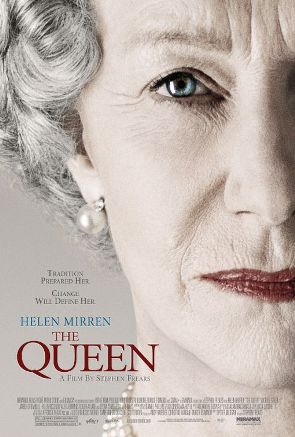
The_Queen_movieIt recently occurred to me that, if you were so inclined, you could reconstruct the entire history of the British royal family by watching movies that have been nominated for best picture.

You would start, of course, by watching Becket.  Then you’d move on to The Lion In Winter.  After The Lion in Winter, you’ll enjoy a double feature of Ivanhoe and The Adventures of Robin Hood.  After that, it’s time to watch Henry V.   When it comes to Henry VIII, you’ve actually got three films to choose from: The Private Life of Henry VIII, A Man For All Seasons, or Anne of The Thousand Days.  I suggest that you go with the Private Life of Henry VIII and then follow it up with a double feature of Elizabeth and Shakespeare in Love.  After that, you’ll jump forward in time a bit.  You’ll watch The Madness of King George and Mrs. Brown because, even though neither was nominated for best picture, they both feature Oscar-nominated royal performances.  Finally, you’ll watch Chariots of Fire and The King’s Speech.  And, after all of that, you’ll end things by watching the 2006 Best Picture nominee The Queen.

And what a way to end!  The Queen is perhaps the best of the many Oscar-nominated films to be made about British royalty.  While the Queen is rightly known for being the film that finally won the great Helen Mirren an Oscar, it’s also a witty and frequently poignant look at how a group of entrenched people are forced to adapt to a changing world.  It’s a film that works not just because Helen Mirren gives a good performance in the role of Queen Elizabeth II but also because she humanizes Elizabeth, turning her into a character to whom viewers can relate.

The film opens with the death of Princess Diana in Paris.  As the world mourns, the British royal family struggles with how to deal with the tragedy.  Prince Charles (Alex Jennings) worries about the well-being of his sons.  Prince Philip (James Cromwell) is rather haughtily unconcerned with how the general public feels about Diana or the rest of the royal family.  The Queen Mother (Syliva Syms) continues to insist that the Royal Family is just as important as it has always been.  Only Queen Elizabeth (Helen Mirren) seems to truly understand that the Royal Family cannot continue to cut itself off from the rest of the world.  Even though Elizabeth understands that the world outside of Buckingham Palace has changed, she’s still unsure about what her place in this new world will be.

Of course, not only does Elizabeth have to adjust with the changing values of the British public but she also has to deal with a new prime minister.  Tony Blair (Michael Sheen) has been swept into office, pledging that he’s going to “modernize” British society.  While the politically savvy Blair is determined to treat Elizabeth with respect, some of his closest advisers do little to disguise the contempt with which they view the royal family.  This include Tony’s own wife, Cherie (Helen McCrory).

And so, while self-styled reformer Blair finds himself in the strange position of defending tradition, Elizabeth tries to figure whether those traditions still matter in changing times.

The Queen is a film that demands an intelligent audience, one that is capable of enjoying a film based solely on the basis of good acting and intelligent dialogue.  The Queen‘s triumph is that it humanizes an iconic figure and reminds us that even the biggest events are both historical and personal.  I have no idea whether the real Elizabeth is anything like the character played by Helen Mirren but I certainly hope she is.