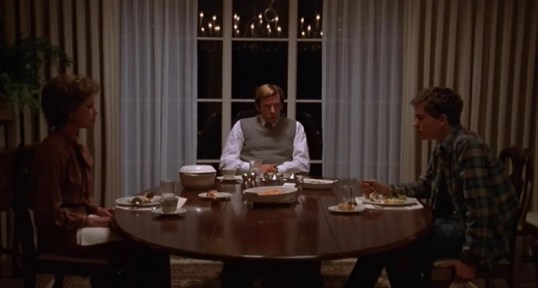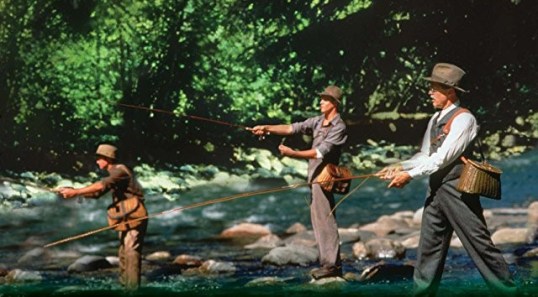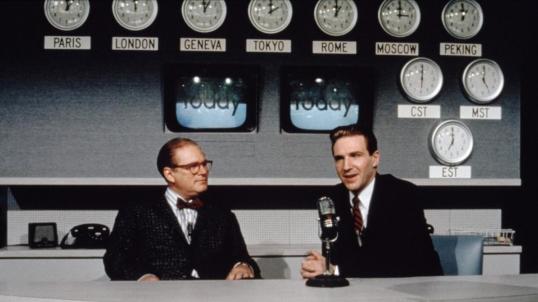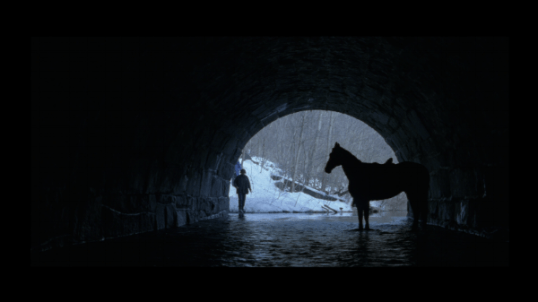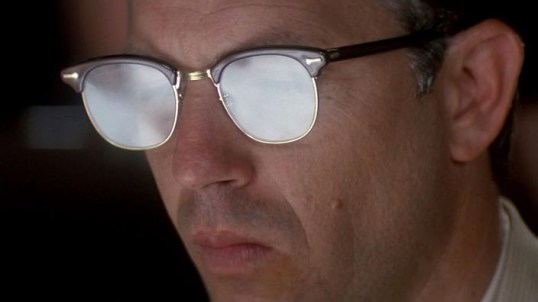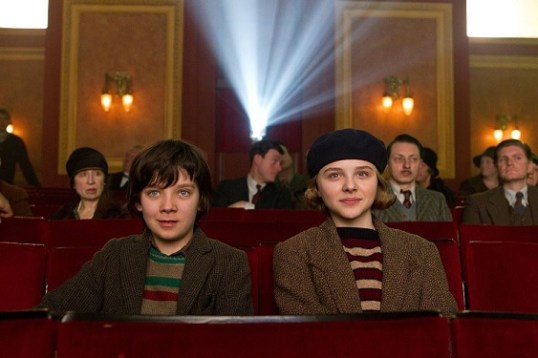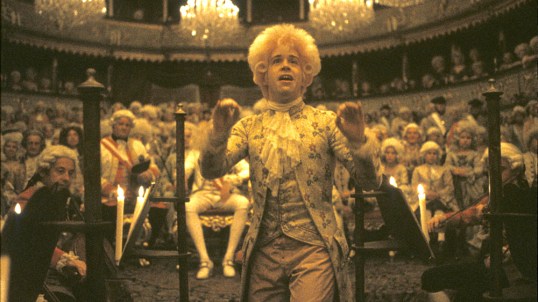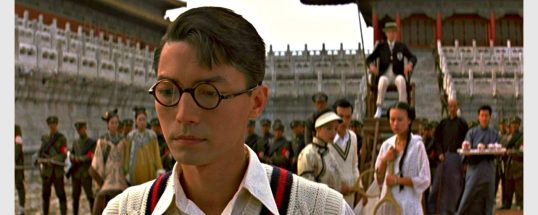
In this scene from 1967’s Barefoot in the Park, Robert Redford and Jane Fonda show us how to enjoy a honeymoon.
Tag Archives: Robert Redford
4 Shots From 4 Films: Special Robert Redford Edition
4 Shots From 4 Films is just what it says it is, 4 shots from 4 of our favorite films. As opposed to the reviews and recaps that we usually post, 4 Shots From 4 Films lets the visuals do the talking!
RIP, Robert Redford. He was not just an actor but a director as well.
4 Shots From 4 Robert Redford Films
4 Shots From 4 Films: Special Robert Richardson Edition
4 Shots From 4 Films is just what it says it is, 4 shots from 4 of our favorite films. As opposed to the reviews and recaps that we usually post, 4 Shots From 4 Films lets the visuals do the talking!
Today, TSL wishes a happy birthday to cinematographer Robert Richardson. It’s time for….
4 Shots From 4 Robert Richardson Films
4 Shots From 4 Best Picture Winners: The 1980s
4 Shots From 4 Films is just what it says it is, 4 shots from 4 of our favorite films. As opposed to the reviews and recaps that we usually post, 4 Shots From 4 Films lets the visuals do the talking!
Today, I’m using this feature to take a look at the history of the Academy Award for Best Picture. Decade by decade, I’m going to highlight my picks for best of the winning films. To start with, here are 4 shots from 4 Films that won Best Picture during the 1980s! Here are….
4 Shots From 4 Best Picture Winners: The 1980s
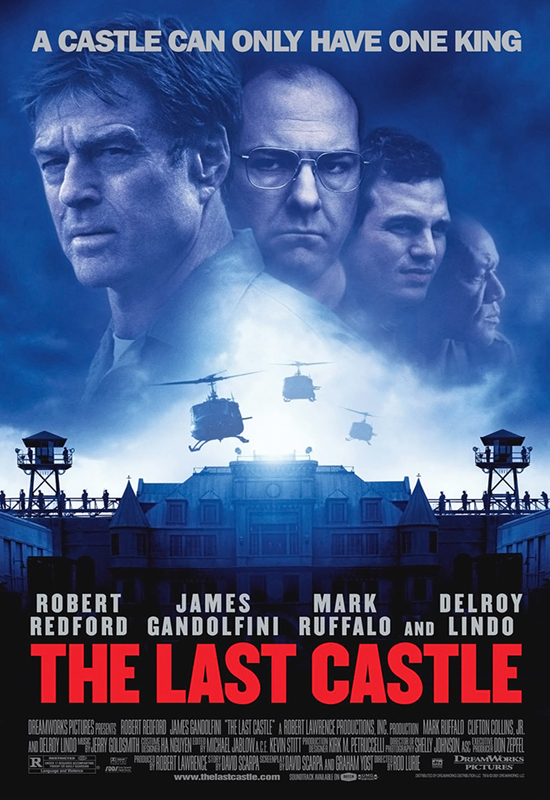
The Last Castle (2001, directed by Rod Lurie)

It’s Redford vs. Gandolfini in The Last Castle!
The last castle of the title is a United States Military Prison, one that was originally constructed during the Civil War and which resembles a castle, but with one big difference. Castles were originally designed to keep people from entering. The purpose of this castle is to keep people from leaving.
Colonel Ed Winter (James Gandolfini) is the prison’s commandant, a martinet who has never served in war but who keeps a collection of bullets and weapons in his office. Eugene Irwin (Robert Redford) is the newest inmate. Irwin was a highly respected general until he disobeyed a presidential order and eight of his men died as a result. Irwin has been stripped of his rank and sentenced to ten years. He tells Winter that he just wants to do his time and then go home. That’s fine with Winter, until he overhears Irwin disparaging his collection of battlefield memorabilia.
At first, Irwin tries to lay low. Even when he sees firsthand that Winter is a sadist who manipulates the inmates and who isn’t above ordering his guards to kill an inmate in order to make a point, Irwin tries to stay uninvolved. But eventually, Irwin’s natural military instincts kick in and he leads the prisoners in a revolt against Col. Winter.
The Last Castle requires a healthy suspension of disbelief. Irwin brings the inmates together by reminding them that they were once soldiers and that, even when serving time in a military prison, they’re apart of a grand tradition of soldiers who have been court-martialed. He soon has them saluting and standing at attention and walking in formation. The movie overlooks the fact that most of the prisoners were sentenced to the prison by men much like General Irwin. The idea that all of them are just waiting for someone to once again start barking orders at them just doesn’t seem plausible. Instead, it seems more likely the Irwin, as a former general, would be the least popular inmate in a prison that’s full of enlisted men who feel that they were screwed over the army. In the end, Irwin asks the prisoners to sacrifice a lot but, in the end, it doesn’t matter how heroically he’s framed in each scene or how much the music swells on the soundtrack, Iwin’s rebellion seems like its more about ego than anything else. Even if it means getting rid of Col. Winter, would any of the inmates realistically be willing to die for Eugene Irwin?
At the same time, The Last Castle is worth watching just to see James Gandolfini face off against Robert Redford. Gandolfini plays his role with the type of neurotic energy that only a method actor is capable of capturing while Redford is his typical move star self. The contrast between their two styles of acting translates well into the contrast between Winter and Irwin’s philosophy of leadership. Among the inmates, Mark Ruffalo and Clifton Collins, Jr. both have early roles. Of the two, Ruffalo gets to play the only character in the film with a hint of moral ambiguity and he runs with it. Clifton Collins, Jr., meanwhile, plays a character whose fate will be obvious to anyone who has ever seen a film before. The Last Castle has its moment but it’s never a surprising movie.
The Last Castle ends with a spontaneous display of patriotism, one that is effective but also feels implausible and out-of-place. It’s the perfect way to sum up this frustrating but occasionally diverting film.
Film Review: The Chase (dir by Arthur Penn)
The Chase, a small-town Texas melodrama from 1966, opens with Robert Redford escaping from prison.
Redford is playing Bubber Reeves. Bubber, we’re told, has spent the last few years in a tough Texas prison, convicted of a murder that he didn’t commit. Now, he’s on the run and he’s probably returning to his hometown. His wife, Anna (Jane Fonda), still lives there, though Anna is now having an affair with Jake Rogers (James Fox). Jake is the son of the most powerful man in town, Val Rogers (E.G. Marshall). Jake also used to be Bubber’s best friend but now, he’s wracked with guilt about his affair with Anna.
Meanwhile, the townspeople are all worried that Bubber is going to seek revenge on the people who were responsible for him going to prison. Some of them know that he was actually innocent and some of them think that he’s actually the killer that he’s been made out to be but what they all have in common is that they’re worried about what Bubber’s gong to do when he shows up. Maybe they should have thought about the possibility of him getting mad and vengeful before they gave him a nickname like Bubber.
Anyway, Sheriff Calder (Marlon Brando) is convinced that Bubber is innocent but the townspeople still want him to allow them to gun Bubber down as soon as they see him. Sheriff Calder, however, is determined to keep the peace and make sure that the law prevails. He’s a man of unimpeachable integrity, working in a town full of people who are too cowardly to concern themselves with doing the right thing.
As everyone waits for Bubber to arrive. tempers come to the surface, a good deal of alcohol is consumed, and secrets are revealed. It all ends in tragedy, of course. One of the final scenes clumsily recreates the assassination of Lee Harvey Oswald. The Chase wouldn’t be an achingly self-serious film from 1966 if it didn’t.
There’s a few obvious problems with The Chase, the main one being that Robert Redford, who was 30 years-old when The Chase was released, looks surprisingly good for someone who has spent the last few years locked away in a tough Texas prison. Redford manage to escape from prison and run through a swamp without getting one single hair out of place. There’s nothing particularly dangerous about Redford in this film, which is surprising when you consider that The Chase was made just three years before Redford’s convincing turn as a laconic (if charming) killer in Butch Cassidy and the Sundance Kid. For The Chase to work, Bubber Reeves would have to be a force of nature but, whenever Redford’s on screen, you just find yourself wondering how someone who looks that good got stuck with a nickname like Bubber. The townspeople talk about Bubber like he’s a wild outlaw but Redford is just too laid back to pull it off. He comes across less like a wanted criminal and more like a California surfer who has somehow found himself in rural Texas.
As for the rest of the cast — well, there’s a lot of them. It’s a big ensemble film and good luck to anyone trying to keep track of who is related to who. Surprisingly enough, Marlon Brando is very convincing as a Texas sheriff, never allowing Sheriff Calder to turn into a stereotype. Less surprising is the fact that Robert Duvall, playing an frustrated husband, is also convincing in his role. Brando and Duvall, of course, would both go on to co-star in The Godfather. (Supposedly, when shooting of The Godfather began, Duvall was the only member of the cast with no fear of joking around with Brando, largely because they had bonded while working on The Chase.) Unfortunately, as good as Brando and Duvall are, they’re both let down in the hair department. Brando gets stuck with a hairpiece while Duvall is forced to go with a comb-over.
Some of the other performers are good and some of them are bad but none of them are particularly convincing as the residents of a small Texas town. James Fox, for instance, is very British. Jane Fonda and Angie Dickinson (cast as Calder’s wife) seem to be bored. E.G. Marshall is believably rich but never believably Southern. The other performers all tend to overact, especially once the people in town start drinking, shooting, hitting, and, in some cases, dancing. Somehow, Shelley Winters is not in the film, even though it seems like she should be.
The Chase was directed by Arthur Penn and written by Lillian Hellman. (The screenplay was based on a play and novel by Horton Foote.) Penn would follow up The Chase with Bonnie and Clyde and Alice’s Restaurant, two films that also dealt, for more successfully, with The Chase‘s themes of violence, community hypocrisy, and outlaw romanticism. Jane Fonda would go on to play Lillian Hellman in the 1977 film, Julia. For Julia, Fonda was nominated for an Oscar. For The Chase, she was not.
The Chase is one of those films that wants to say something important but doesn’t seem to be quite sure what. It’s a long and dramatic movie that doesn’t really add up to much. In the end, I think the main lesson to be learned here is not to allow your children to get a nickname like Bubber. There’s just no escape from a bad nickname.

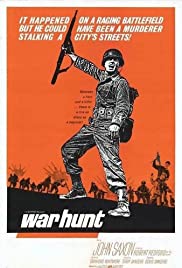
War Hunt (1962, directed by Denis Sanders)
In the last days of the Korean War, Pvt. Roy Loomis (Robert Redford) is assigned to an infantry unit that’s serving on the front lines. Loomis is an idealist who believes in always doing the right thing and who believes that he’s truly fighting for the American way of life in Korea. The company’s commander (Charles Aidman) is more cynical. As he explains it, the job of the soldiers is not to win the war. Their job is to stall the advance of the enemy long enough to let the politicians and the diplomats get what they want out of a peace settlement. The soldiers are merely there to be sacrificed.
Loomis soon finds himself in conflict with Pvt. Endore (John Saxon). Endore spends his night sneaking around behind enemy lines, killing soldiers, and gathering intelligence. No one goes with Endore on these missions and Endore makes it clear that he doesn’t want to have anything to do with the other solders in the unit. Because Endore usually returns with valuable intelligence, he’s allowed to do what he wants but it becomes clear that gathering intelligence is not what motivates Endore. Endore loves war and killing. In the United States, he would probably be on death row. In Korea, at the height of the war, he’s a valuable asset.
Charlie (Tommy Matsuda) is an orphan boy who has been adopted as the company’s mascot. Both Loomis and Endore have a bond with Charlie. Loomis wants Charlie to go to an orphanage after the war so that he can hopefully be adopted and maybe brought over the United States. Endore, however, plans to stay in Korea even after the war ends and he wants to keep Charlie with him. He wants to turn Charlie into as efficient a killing machine as he is.
This low-budget but effective anti-war film may be best known for featuring Robert Redford in his first starring role but the film is stolen by John Saxon, who is frighteningly intense as Endore. Endore is so in love with war that he continues to fight it even after the Armistice is declared. Saxon plays him like a cool and calculating predator, a natural born killer. He’s an introvert who rarely speaks to the other members of the company. Even though he helps them by killing the enemy before the enemy can kill them, it’s clear that Endore doesn’t really care about the other members of the unit. He just cares about killing. He’s close to Charlie because Charlie is too young to realize just how dangerous Endore actually is.
Along with Saxon and Redford, War Hunt also features early performances from Tom Skerritt, Sydney Pollack, and Francis Ford Coppola. (Coppola, who goes uncredited, plays an ambulance driver.) Pollack and Redford met while they were both acting in this film and Pollack would go on to direct Redford in several more films. One of those films, The Electric Horseman, would reunite Redford and Saxon. Again, they would play adversaries.
Last night, when I heard John Saxon had died, I tried to pick his best performance. I know that most people know him from his horror work and his role in Enter the Dragon. Those are all good performances but, for me, Saxon was at his absolute best in War Hunt.
Love on the Shattered Lens: Barefoot In The Park (dir by Gene Saks)
The 1967 film, Barefoot in the Park, tells the story of two newlyweds.
Paul Bratter (Robert Redford) may have a terrible last name (seriously, Bratter?) but he’s an up-and-coming lawyer with a bright future. He’s a little bit uptight and doesn’t seem to have the greatest understanding of human nature but he’s handsome and he’s charming and he means well. Paul has just recently married Corie (Jane Fonda). Corie is a free spirit who cringes at the idea of conformity. Having been raised by a judgmental mother who has always told her that she will never be good enough to make it on her own, Corie has decided to murder Paul and steal all of his money by insisting that they live in a drafty apartment that’s on the fifth floor of an New York apartment building that doesn’t have an elevator. If climbing up the stairs doesn’t kill Paul, the fact that the skylight has hole in it probably will. Helping Corie with her plan is her eccentric neighbor, Victor Velasco (Charles Boyer). When Paul comes home one day to discover Victor lifting up his lingerie-clad wife, Victor says, “We are heating up the apartment.” Corie assures Paul that they’re just trying to get the radiator to start working but we know the truth….
Okay, that’s actually the Lifetime version of Barefoot in the Park. The real Barefoot in the Park is a charming, lighter-than-light adaptation of Neil Simon’s famous play. (If I’m biased towards the play, it’s because I once played Corie in a heavily edited version of the play that we put on in high school. I was the perfect Corie, if I may say so myself.) As played by Robert Redford, Paul is charming but uptight and, as played by Jane Fonda, Corie is a free spirit who doesn’t really seem to have much common sense about the realities of living in New York City. (Running barefoot in Central Park? Probably not a good idea in 1967.) They do end up living on the fifth floor and there are a lot of jokes (in fact, there’s probably too many jokes) about people getting out of breath from having to climb all of the stairs. There’s also a broken skylight, which is a problem since it snows in New York. However, Corie never deliberately plots to kill Paul. Instead, she tries to set her mom (played, in an Oscar-nominated performance, by Mildred Natwick) up with Victor.
Barefoot in the Park is probably one of those films that seemed semi-daring when it was originally released in 1967 (“Look! A honeymoon sex joke! Look! Corie’s walking around in Paul’s shirt! Look! Paul looks like he’s about to say a forbidden word!”) but today, it seems like an old-fashioned but likable fantasy about what’s like to be a newlywed in New York. The city’s beautiful and full of romance. The dialogue is witty and zippy. (Zippy’s a word, isn’t it?) Charles Boyer overacts in the most charming way possible and Mildred Natwick has some good moments as Corie’s mom. (To appreciate Natwick’s peformance, it helps to imagine what the film would have been like if Shelley Winters had played the role.) Most importantly, Robert Redford and Jane Fonda have got an amazing chemistry and, as they were both young in 1967 and considerably less weather-beaten than they are today, it’s hard to imagine a more beautiful couple. Though Gene Saks’s direction is visually flat and, cinematically, the film never quite breaks out of its stage-bound origins, the chemistry of Redford and Fonda and Boyer and Natwick carry you through the occasional rough patch.
Seriously, I kind of love this movie!
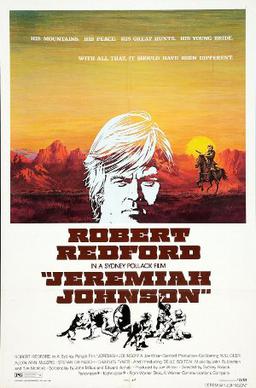
Jeremiah Johnson (1972, directed by Sydney Pollack)
In the 1840s, Jeremiah Johnson (Robert Redford) is a veteran of the Mexican War who wants to get away from civilization. He sets up an isolated life for himself in the Rocky Mountains and looks to support himself by working as a trapper. At first, he struggles but eventually he gets some much-needed help from a veteran trapped named Chris Lapp (Will Geer). Along the way, Johnson discovers that life in the mountains can be harsh and violent. He adopts a mute boy named Caleb, whose family has been killed by Blackfoot warriors. Later, the chief of the local Flathead tribe “gives” Jeremiah his daughter. Despite the language barrier between him and his new wife, Jeremiah is soon the head of a happy family.
One day, when the U.S. Calvary shows up and requests that Jeremiah guide them through the mountains so that they can rescue some starving missionaries, Jeremiah reluctantly leaves behind his family and helps them. However, Lt. Mulvey (Jack Colvin) insists that Jeremiah lead them through a sacred Crow burial ground. The Crow retaliate by killing Jeremiah’s family. Driven mad by grief, Jeremiah sets out to kill every Crow that he can find.
Jeremiah Johnson is really two movies in one. The story starts out with Jeremiah as a proto-hippie who wants to get away from the hypocrisy and violence of modern society. Jeremiah takes care of the land, makes friends with other outcasts, and makes a good life for himself. After Jeremiah’s family is killed, the movie turns into a Death Wish-style revenge thriller, with Jeremiah losing himself in his rage and killing almost everyone that he sees. Redford is surprisingly convincing as the insane, murderous Jeremiah and the sudden outbursts of violence provide a strong contrast to the relatively peaceful first half of the film.
Jeremiah is a like a lot of the early American settlers. He wants to get away from the world and start an entirely new life for himself. He’s seen what the civilization has to offer and he would rather just build a cabin in the mountains and pretend that the rest of the world doesn’t exist. If Jeremiah had been born earlier, he probably could have pulled it off. But, by the time Jeremiah tries to go off the grid, it’s already too late. Society is growing too fast for him to escape from it. Jeremiah discovers that it’s impossible to truly cut yourself off from humanity. In the end, he’s much like the Crow Indians that he’s declared war upon. His way of life is ending, whether he’s ready for it or not. When he and the Crow chief greet each other with a raised open hand (meaning that they come in peace), they are both acknowledging that they are bonded as men whose time is coming to an end.
Jeremiah Johnson was the second of Robert Redford’s many collaborations with director Sydney Pollack and it’s one of their best. This may be an epic film but it never loses its humanity and, for once, Redford plays someone who isn’t a cut-and-dried hero. Jeremiah Johnson has recently been rediscovered because of a popular meme of a bearded Redford looking at the camera and nodding but people should know that it’s also a damn fine film on its own.
Tell Them Willie Boy Is Here (1969, directed by Abraham Polonsky)
In 1908, a Paiute Indian named Willie (Robert Blake) has fallen in love with a white woman named Lola (Katharine Ross). After Lola’s father discovers Willie and Lola together, Willie shoots him. Willie claims that the shooting was in self-defense while the white citizens of California insist that it was cold-blooded murder, motivated by a tribal custom that would allow Willie to claim Lola as his wife upon the death of her father. Willie and Lola go on the run, trying to escape through the Morongo Valley.
Because President Taft is scheduled to make a trip to the area, the locals are eager for Willie Boy to either be captured or killed. Several posses form, all intent on tracking Willie down. A humane deputy sheriff named Cooper (Robert Redford) reluctantly leads the search for Willie. Cooper’s occasional lover is a school teacher named Elizabeth (Susan Clark) who insists that Cooper rescue Lola from Willie. The only problem is that Lola doesn’t want to be rescued and Willie would rather die than surrender to the white men.
Tell Them Willie Boy Is Here is one of those revisionist westerns that were all the rage in the late 60s and the early 70s. (The same year that he led a posse in Tell Them Willie Boy Is Here, Robert Redford also tried to outrun a posse in Butch Cassidy and the Sundance Kid.) Willie Boy gets off to a good start, showing how Willie has to spend almost every hour of the day dealing with prejudice and racism. The film does a good job of showing that even “liberal” whites, like Elizabeth, are capable of being prejudiced. There are hints that Cooper and Willie share a mutual respect and both Blake and Redford do a good job portraying the weary respect that the lawman and the outlaw have for each other.
Things start to fall apart when Willie shoots Lola’s father. The scene is shot so confusingly that it’s hard to know what exactly happened and it feels like a cop out. Rather than definitely saying whether Willie had no choice but to shoot Lola’s father or that Willie intentionally committed murder, the scene tries to have it both ways and it doesn’t work. Once the chase begins, the movie is equally split between Cooper and the posse and Willie and Lola and the end result is that the two main characters end up getting short changed.
Tell Them Willie Boy Is Here was directed by Abraham Polonsky, a screenwriter who was blacklisted during the McCarthy era. While this is definitely a film made from a left-wing perspective, its actual message still feels muddled. Willie is the driving force behind the plot but the film seems to be more interested in the less intriguing Cooper. The film ends on a note of ambiguity, which perhaps felt daring in 1969 but today, just feels like another cop out. Despite a great performance from Blake and a better-than-usual one from Redford, Tell Them Willie Boy Is Here is an unfortunate misfire.