4 Shots From 4 Films is just what it says it is, 4 shots from 4 of our favorite films. As opposed to the reviews and recaps that we usually post, 4 Shots From 4 Films lets the visuals do the talking!
Today is Jack Nicholson’s 88th birthday!
Though he has pretty much retired from acting, Jack Nicholson remains a screen icon with a filmography that is a cinema lover’s dream. He’s worked with everyone from Roger Corman to Stanley Kubrick to Milos Forman to Martin Scorsese and, along the way, he’s become a symbol of a very American-type of rebel. Though often associated with the counter-culture, his style has always been too aggressive and idiosyncratic for him to be a believable hippie. Instead, he’s one of the last of the beats, an outsider searching for meaning in Americana.
Over the course of his career, Nicholson has won three Oscars and been nominated for a total of 12. He’s the only actor to have been nominated in every decade from the 1960s to the 2000s. He is an actor who epitomizes an era in filmmaking, actually several eras. It’s been 15 years since he last appeared in a movie but Jack Nicholson will never be forgotten.
4 Shots From 4 Jack Nicholson Films
Psych-Out (1968, dir by Richard Rush, DP: Laszlo Kovacs)
Carnal Knowledge (1971, dir by Mike Nichols, DP: Giuseppe Rotunno)
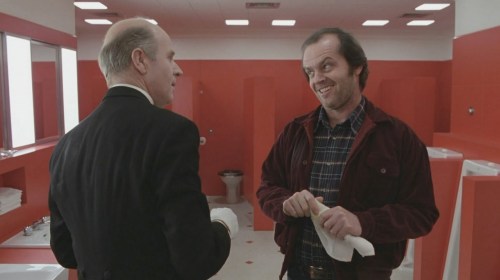
The Shining (1980, dir by Stanley Kubrick, DP: John Alcott)
The Departed (2006, dir by Martin Scorsese, DP: Michael Ballhaus)
6 Shots From 6 Films is just what it says it is, 6 shots from 6 of our favorite films. As opposed to the reviews and recaps that we usually post, 6 Shots From 6 Films lets the visuals do the talking!
Today, we pay tribute to the year 1968! It’s time for….
6 Shots From 6 1968 Films
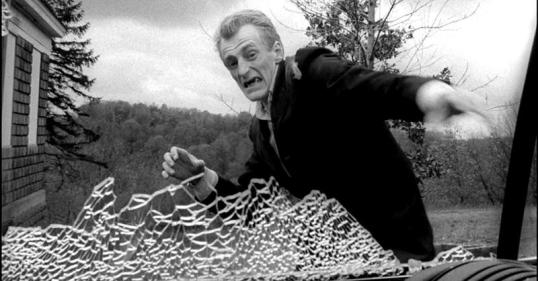
Night of the Living Dead (1968, dir by George Romero, DP: George Romero)
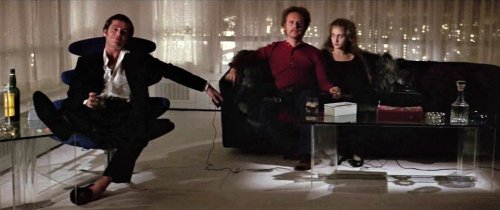
Petulia (1968, dir by Richard Lester, DP: Nicolas Roeg)
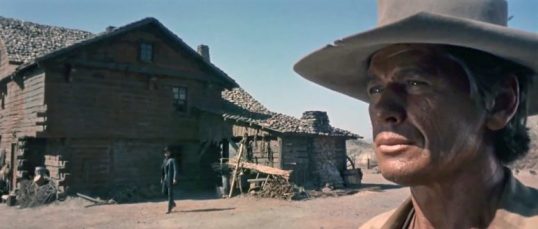
Once Upon A Time In The West (1968, dir by Sergio Leone, DP: Tonino Delli Colli)
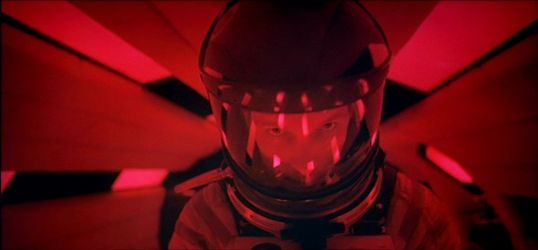
2001: A Space Odyssey (1968, dir by Stanley Kubrick, DP: Geoffrey Unsworth)
Psych-Out (1968, dir by Richard Rush, DP; Laszlo Kovacs)
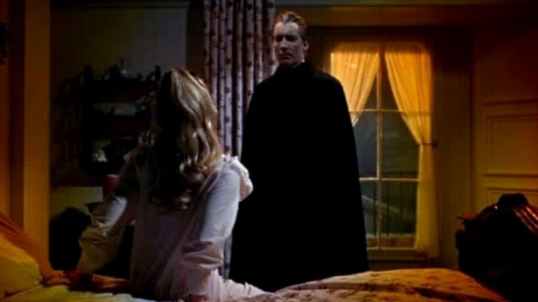
Dracula Has Risen The Grave (1968, dir by Freddie Francis, DP: Arthur Grant)
There’s a scene in the 1968 film, Psych-Out, in which a group of hippies are talking to be a liberal-minded minister, asking him if a mysterious figure known as “The Seeker” has even come by his church. The minister tells them that he has not seen the Seeker, though he has heard of him. As the hippies politely leave the church, one of them accidentally brushes past a middle-aged woman. Though the hippie politely apologizes, the woman is still obviously disgusted by his presence in the church. She asks her companion how the minister can possibly allow people who “dress like that” into the church.
As the woman complains, the camera focuses in on the stained glass window directly over her shadow. There’s Jesus and the disciples. They’ve all got beards. They all have long hair. They’re all wearing simple clothing …. oh my God, they’re hippies!
That’s actually one of the more subtle moments to be found in Psych-Out, an entertainingly heavy-handed film about hippies and wanderers in California. Psych-Out was made at the height of the counter culture. It was filmed on location in the San Francisco neighborhood of Haight-Ashbury, where both the love and the clothes are free and no one is about judging anyone else’s thing. Into this neighborhood comes Jenny Davis (Susan Strasberg), who has run away from home and who is looking for her brother, Steve (Bruce Dern). Jenny may have been raised in a conservative household but she’s eager to embrace the counter-culture. Jenny is also deaf but she can read lips. She also has the police looking for her but fear not! The residents of Haight-Ashbury look after one another! They have to, considering that there are still cops and even a few rednecks hanging out around the neighborhood.
No sooner has Jenny arrived in San Francisco than she falls in with a 30-something hippie named Stoney (Jack Nicholson, with a pony tail). Stoney is a member of a band, along with Elwood (Max Julien) and Ben (Adam Roarke). Even though Stoney says that he doesn’t care about material goods, he’s still eager to become a rock star. Stoney also says that he doesn’t want to get tied down by any commitments. He wants to do his own thing. He may sleep with Jenny but that doesn’t mean that either one belongs to the other. Stoney may say that but he certainly gets jealous when he sees Jenny talking to the local guru, Dave (Dean Stockwell). Dave calls Stoney for being a phony. “You may be righteous but you’re not hip,” Dave tells him. Can Stoney become both righteous and hip before the film ends? Can Jenny find her brother? Will the band get signed to a recording contract and will the menacing junkyard rednecks ever see the errors of their fascist ways?
Today, of course, Jack Nicholson is probably the main reason why most people would want to see Psych-Out. Ironically, for a figure who is so identified with the counter-culture, Jack Nicholson did not make for a very convincing hippie. A lot of that is because Nicholson’s trademark sarcasm (which is on full display in Psych-Out, as this is a far more typical Nicholson performance than the one that would make him a star a year later in Easy Rider) owed more to the beats than to the hippies. Nicolson’s persona always had more in common with Jack Kerouac than Abbie Hoffman. In Psych-Out, he comes across as being too much of a natural skeptic to fit in with the free-spirited hippies all around him. Nicholson is fun to watch because he’s Jack Nicholson but you never buy him as someone who would really want to live in a commune where no one has any possessions and money is frowned upon.
Dean Stockwell, on the other hand, is a totally believable hippie guru though, to his credit, his still brings some welcome wit to his role. The script may call for him to recite some fairly shallow platitudes but he does so with just enough of a smile to let use know that not even Dave takes himself that seriously. As for the rest of the cast, Bruce Dern gets to do his spaced-out routine and Henry Jaglom, who would later become an insufferably self-important director, plays an artist with huge sideburns who tries to chop off his hand while having a bad trip. Jenny is horrified but everyone tells her not to judge. Susan Strasberg is sympathetic as Jenny and is convincing as a deaf character. Unfortunately, the film doesn’t give her much to do other than walk around San Francisco with a dazed expression on her face and stare lovingly up at Jack Nicholson.
Psych-Out‘s greatest value is probably as a time capsule. It was filmed on location and it features actual hippies. Watching it is like getting a chance to step into a time machine and go back to San Francisco in 1968. Of course, judging from this film, San Francisco in 1968 wasn’t that appealing of a place but still, Psych-Out remains an entertainingly silly historical document. Just a year after the release of Psych-Out,Charles Manson and his followers would come out of the canyons and the Altamont Free Concert would end in murder and the 60s would come to an abrupt end. Watching Psych-Out, it’s hard to believe all of that was right around the corner.
4 Shots From 4 Films is just what it says it is, 4 shots from 4 of our favorite films. As opposed to the reviews and recaps that we usually post, 4 Shots From 4 Films lets the visuals do the talking!
Today is Jack Nicholson’s 83rd birthday!
It’s been ten years since Jack Nicholson last appeared in a movie, the forgettable How Do You Know. Rumor has it that he’s basically retired from acting, though it’s said that Nicholson himself has denied it. However, whether he’s working or not, he remains a screen icon with a filmography that is a cinema lover’s dream. He’s worked with everyone from Roger Corman to Stanley Kubrick to Milos Forman to Martin Scorsese and, along the way, he’s become a symbol of a very American-type of rebel. Though often associated with the counter-culture, his style has always been too aggressive and idiosyncratic for him to be a believable hippie. Instead, he’s one of the last of the beats, an outsider searching for meaning in Americana.
Over the course of his career, Nicholson has won three Oscars and been nominated for a total of 12. He’s the only actor to have been nominated in every decade from the 1960s to the 2000s. If he ever writes his autobiography, you know that we’ll all run out and buy a copy. When the day comes that Jack Nicholson is no longer with us, it will truly be the end of an era.
Happy birthday, Jack Nicholson. May you have many happy returns!
4 Shots From 4 Films is just what it says it is, 4 shots from 4 of our favorite films. As opposed to the reviews and recaps that we usually post, 4 Shots From 4 Films lets the visuals do the talking!
Today’s edition of 4 Shots from 4 Films is dedicated to four of the best films that I’ve ever seen about Hollywood! I mean, it is Oscar Sunday after all!
4 Shots From 4 Films About Hollywood
The Bad and the Beautiful (1952, dir by Vincente Minnelli)
The Stunt Man (1980, dir by Richard Rush)
Mulholland Drive (2000, dir by David Lynch)
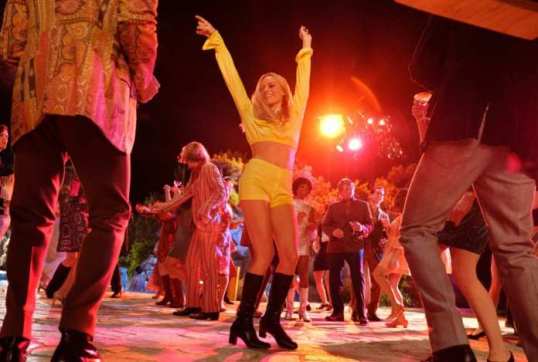
Once Upon A Time In Hollywood (2019, dir by Quentin Tarantino)
Am I too young to start feeling nostalgic for the past?
It’s been 6 years since I graduated from the University of North Texas and, as much as I enjoy officially being an adult and all that good stuff, I have to admit that there’s a part of me that misses being in college. Even though I know that I will be returning to school to work on my master’s, there’s a part of me that really regrets that I’ll never again get to be an undergrad with the rest of my life in front of me.
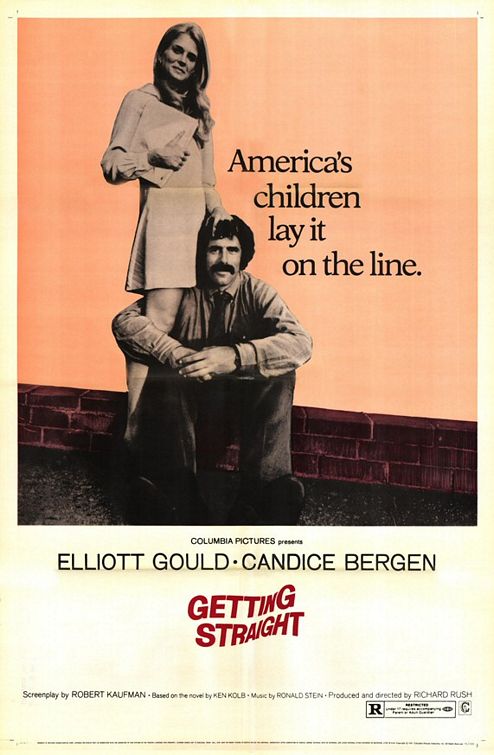
Fortunately, I review movies so, whenever I start to feel nostalgic for the past, I can just watch and review a movie. Last week, I was missing college. So, I watched a few films about college. The first film that I watched was from 1970 and it was called Getting Straight.
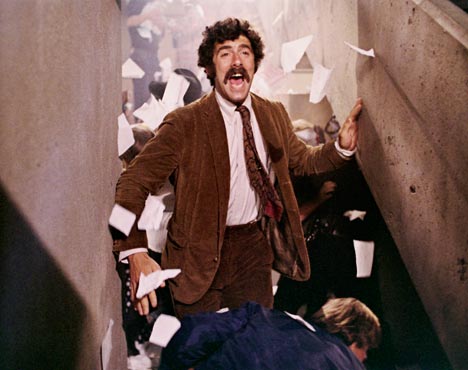
One of the first things that you notice while watching Getting Straight is that director Richard Rush apparently made the decision to film nearly the entire movie in extreme close-ups. When Nick, a spaced-out hippie played by Robert F. Lyons, steps into a room and starts laughing, the camera zooms in so close that you can practically see down the back of his throat. When Jan (played by a very young Candice Bergen) breaks down into tears after getting beaten up at a political demonstration, the camera so obsessively lingers over her tear-stained face that the viewer is left with little choice but to consider just how terrible a performance Bergen is actually giving. When Harrison Ford shows up in an early role, the camera zooms into his face, as if to force us to say, “Hey, that’s Harrison Ford!” Meanwhile, the star of the film, Elliott Gould, is in almost every scene and, thanks to Rush’s love of extreme close-ups, it’s hard not to focus on the fact that his thick sideburns and his walrus mustache looks like they are threatening to devour his entire face.
Elliott Gould plays Harry Bailey, a grad student at an unnamed California university. In his undergraduate days, Harry was a political activist who, we’re told, marched for civil right as Selma. Then he served in Viet Nam and not as some conscientious objector either (though that would have made sense, considering his political beliefs). No, Harry saw combat. And, while doing all of that, Harry also somehow found time to be in Paris during the 1968 student strike. However, Harry is now back in America and all he wants to do is get his master’s in education so that he can teach the underprivileged.
Along with his prominent facial hair and his colorful past, the main thing that you notice about Harry is that he yells. A lot.
Harry yells because his professors expect him to show up for classes that he doesn’t care about. When those same out-of-touch professors expect Harry to take a test that he doesn’t consider to be important, he gets his friend Nick to take it for him. Nick, being an idiot, signs his name to the test but then marks it out and writes down Harry’s name instead.
Harry yells because a bunch of student activists expect him to join their protests. Harry tells them that they’re shallow and the only reason they care about politics is because “protests are sexy.” Despite his condescending attitude, the rest of the student body continues to look up to Harry. I imagine it has something to do with the hypnotic power of his mustache.
Harry yells because a professor suggests that F. Scott Fitzgerald might be gay. Harry also says that Arizona is the best state of the union because it has the lowest occurrence of homosexuality. If nothing else, all of this serves to remind us that this film was made in 1970.
Mostly, however, Harry just yells at his girlfriend, Jan. Jan lies about being pregnant and Harry yells. Jan says that she’s thinking about getting married. Harry yells that she is a “dumb broad.” Jan says she’s on her period. Harry yells that she’s lying and that he’ll be over later that night. Harry yells when Jan breaks up with him. Harry yells when Jan introduces him to her new boyfriend, despite the fact that Harry has been screwing — in extreme close-up — every other undergrad on campus. Harry yells at her that she might as well just be a “man with a hole.”
In other words, Harry is a self-righteous jerk. Harry is a misogynist. Harry is a hypocrite. Harry is an asshole. And yet — probably because this film was made in 1970 — Harry is also supposed to be the film’s hero. Harry is supposed to be the character that we sympathize with and, indeed, every other character in the film is totally charmed by Harry and his behavior. Even poor abused Jan continues to come to Harry, despite the fact that her next door neighbor is Harrison Ford!
Harrison Ford in Getting Straight
Yes, there are many very valid criticisms to be made about Getting Straight. Harry is unlikable. Candice Bergen gives an amazingly bad performance. Richard Rush’s direction shows an overdependence on close-ups and rack focus shots, techniques that he uses so frequently that they eventually lose all meaning but instead simply come across as being nervous tics. Like so many of the counter cultural films of the early 70s, Getting Straight is an excruciatingly sexist film. That’s one thing that the films of both the counter-culture and the establishment had in common, a deep disdain and fear of women in general. Harry may claim that the student protestors are only into politics because they want to get laid but it’s hard to see how he’s any better. The middle stretch of Getting Straight could have just as easily have been called Harry Must Get Laid.
However, Getting Straight does get one thing right. It perfectly captures the atmosphere of college. From the pompous and out-of-touch professors to the creepy old grad students (that would be Harry) to the portentous seriousness of the student activists, Getting Straight captures all of that perfectly. As such, Getting Straight might not really work as a dramatic film but it’s definitely worthwhile as a record of a specific time and place. Much of what today seems annoying about a film like Getting Straight is really nothing more than a recording of what was once considered to be culturally acceptable.
Getting Straight is a portrait of 1970 that makes me glad that I was born in 1985.
Apparently, as I sit here in my underwear and glasses, the Earth is about as close to the moon as it will ever get. Because of that, the moon is huge out in the night sky. Or at least that’s what I’m hearing. It looks pretty normal to me but anyway, this is being referred to as being “Supermoon.” I’m not sure why. If I stood less than an inch from your face, would that suddenly make me Super Lisa?
Of course, a gigantic full moon would bring a werewolf film with it. This is one of the thousand or so biker films to come out in the late 60s and early 70s. These films were interesting mostly from the point of view of how they mixed other genres with the biker conventions. Werewolves on Wheels did it with lycanthrophy.
Actually, since it’s a supermoon, we better include two werewolf-themed trailers. This is for the Werewolf of Washington, starring Dean Stockwell. For some reason, I’ve actually got several copies of this on DVD (I think this is one of those films that somehow found its way into the public domain) but I’ve yet to actually sit down and watch it. I think my hesitation has to do with the fact that it appears to be a political satire and it was made in the 70s. That sounds like a combination for boredom, to be honest.
But before Jack Nicholson could become a hippie, he was a sinister gunman in Monte Hellman’s existential grindhouse western, The Shooting. The Shooting, which co-stars Warren Oates and Millie Perkins, is an unacknowledged classic and a movie that I’m going to have to review one of these days. Perkins, by the way, was married to none other than Dean Stockwell.
And then, 7 years later, Hellman, Oates, and Perkins reunited to make an odd little film called Cockfighter. This is another film I have to review though I also have to say that, as a former country girl who has actually seen a few cockfights, cockfighting is right up there with dogfighting as far as sickening sadism is concerned.*
And, of course, while some people in the south were going to cockfights, others were apparently getting killed by redneck lawmen in films like the ’74 classic, Macon County Line.
In honor of Supermoon, I’m going to include two extra trailers. Seriously, don’t ever doubt that Lisa loves you.
While rural audiences (probably made up of people I’m distantly related to) spent 1974 cheering police brutality and animal cruelty, urban grindhouse audiences were enjoying films like this one.
Finally, since we’re under a supermoon, here’s the trailer for Jesus Franco’s infamous (and frequently banned) slasher Bloody Moon. I haven’t seen Bloody Moon (copies aren’t that easy to find) but seriously, the involvement of Jesus Franco tells me all I probably need to know.**
—–
*If you’ve got a cock, use it to spread love, not hate.
** Well, we’ll see about that. I just ordered a copy off of Amazon.







 Through the Shattered Lens