
Today, Chuck Norris celebrates his 86th birthday and it only feels appropriate that today’s scene that I love should come from one of his greatest films. From 1985’s Invasion U.S.A., watch as Chuck Norris saves America from Richard Lynch!
Today, Chuck Norris celebrates his 86th birthday and it only feels appropriate that today’s scene that I love should come from one of his greatest films. From 1985’s Invasion U.S.A., watch as Chuck Norris saves America from Richard Lynch!

Sally Kirkland stars as Monica Martel, a sexy but aging Hollywood actress who’s in lust for, and obsessed with, her boy toy, Eric Cline (Andrew Stevens). When Monica is given a chance for a big comeback, she uses her pull to get Eric the leading man role. Still, the producer Crocker Scott (Anthony Franciosa) insists that the film contain a lot of sexy scenes and Monica isn’t exactly in her prime anymore. Needing this big break, director Stephen Ross (Chick Vennera) hires a model of visual perfection, the lovely Lisa Shane (Sherrie Rose), to serve as a body double for Monica on the production. Soon Eric and Lisa are having a hot affair while Monica is being left out in the cold. Not one to accept being the odd woman out, Monica hires a private investigator to track the oversexed young lovers. When Lisa’s car blows up, luckily for us viewers she isn’t in it at the time, you can’t help but wonder if Monica has decided nobody will make a fool of her again. Not so fast though when Detective Robert Fenich (Richard Lynch) shows up on the scene carrying a serious grudge against Eric… something to do with a murderous event that occurred in San Francisco a few years earlier. It’s not easy to determine who’s hateful and who’s just horny in this sizzler from Director David A. Prior.
This was my first viewing of the 1992 erotic thriller, DOUBLE THREAT, but I’ve seen plenty of movies like it before. I was a teenager when the erotic thriller became a staple at the video store. Actor Andrew Stevens, who had starred with my hero Charles Bronson in the films DEATH HUNT (1981) and TEN TO MIDNIGHT (1983) became a star of the genre with his roles in the NIGHT EYES and SCORNED series. I remember talking my mom into letting me rent NIGHT EYES (1990) because “the guy from 10 TO MIDNIGHT is in it.” Needless to say, she wasn’t happy when the “erotic” part of the erotic thriller started, and we never finished the film. To be completely honest, outside of the budget differences and the overall talent on display, a film like DOUBLE THREAT isn’t that much different than a movie like BASIC INSTINCT (1992), which I’m sure served as an inspiration when you consider that both films came out in 1992. There is a scene where Andrew Stevens walks into a club and sees Sherrie Rose dancing provocatively that reminded me of the corresponding scene in BASIC INSTINCT with Michael Douglas and Sharon Stone. And when it’s all said and done, the plots of these types of films are all pretty ridiculous. This one’s a real doozy, and looking back there are ample clues, but I somehow didn’t figure out the big twist at the end.
I must say that Sally Kirkland and Sherrie Rose, separated in age by 25 years, are both extremely appealing in DOUBLE THREAT as the actress on the comeback trail and her beautiful young body double. This is the first time I’ve watched one of these straight-to-video erotic thrillers in a long, long, time, so I may just need to revisit a few more just for old times’ sake! Besides the sexy ladies, this specific film intrigues me due to the presence of Andrew Stevens as the ladies’ man whose motives aren’t completely clear until later in the film. A consistent presence in Charles Bronson films of the early 80’s, Stevens has had quite the career as an actor, director, and producer, almost exclusively in low budget fare like this. He’s a good-looking guy and a pretty good actor, and I’m always glad to see him involved in a production. He’s recently written and directed a documentary about his mother called STELLA STEVENS: THE LAST STARLET (2025) that I have on my watch-list. Honestly, the full cast of DOUBLE THREAT is pretty stacked, with actors like Rychard Lynch (INVASION USA), Gary Swanson (VICE SQUAD), and Anthony Franciosa (TENEBRAE) all bringing some additional class to the proceedings in their various roles.
At the end of the day, you fall in one of three categories when it comes to a movie like DOUBLE THREAT: you’re the kind of person who wants to watch a low budget erotic thriller; you’re the kind of person who says that you don’t want to watch a low budget erotic thriller, but then you watch one anyway; or you’re the kind of person who truly doesn’t want to watch a low budget erotic thriller. In my case, there’s a certain nostalgia that I associate with these types of video store genre films that were a dime a dozen in my youth. As silly as it all is, I must admit that I enjoyed DOUBLE THREAT and proudly fall in the first category!
Rest in peace, Sally Kirkland.
 An foul-tempered man named Yuri (Jorge Riverso) gets his hands on the skeleton of a werewolf that was discovered out in the middle of the Arizona desert. Anyone who gets scratched by the werewolf’s skeleton is destined to transform into a werewolf themselves.
That’s not much of a plot. This is the first time that I’ve come across the idea that touching a werewolf’s skeleton will also turn you into a werewolf. It doesn’t make much sense but it does lead to a lot of scenes of Yuri creeping around and hitting people with pieces of the werewolf skeleton. He’s working with an archeologist (Richard Lynch) who wants to capture a werewolf and then make money by displaying it in a freak show. Unfortunately, almost everyone who gets touched by the werewolf skeleton dies shortly afterwards.
Other than Richard Lynch and Jorge Rivero, the only “name” actor in this movie is Joe Estevez, Martin Sheen’s look-alike brother. Joe Estevez has the role that I guess would go to Daniel Baldwin if the movie were made today. He stands around and yells. Overall the acting is so poor that it’s often laugh-out-loud funny. Adriana Stastny mutters, “This is absolutely fascinating,” in the dullest voice possible when she’s first told about how the skeleton can turn someone into a werewolf. As for the werewolf, it’s appearance changes from scene-to-scene, making it next to impossible to actually follow the plot.
There’s a reason why this movie is best-known for being used in an episode of Mystery Science Theater 3000. Without Mike and the bots, it’s almost unbearably dull. There’s nothing absolutely fascinating about it.

The 1977 made-for-TV movie Good Against Evil opens with a woman giving birth in a hospital. Her baby daughter is forcefully taken from her and given to her father, the sinister Mr. Rimmin (Richard Lynch).
Two decades later, Jessica Gordon (Elyssa Davalos) has grown up and is working at a boutique in San Francisco. When her car is rear-ended by a free-spirited, van-driven single guy named Andy Stuart (Dack Rambo), it’s love at first sight. Jessica and Andy are so caught up in their whirlwind romance that they don’t even notice that there’s a schlubby guy following them everywhere that they go and that strangers are giving them dirty looks. Someone does not want Jessica and Andy to end up together.
How could anyone object to two young people falling in love, you may ask. Well, it turns out that Jessica is meant to be a bride of Satan and the plan is for her to eventually give birth to the Antichrist. Everyone in Jessica’s life works for Mr. Rimmin …. or, at least, everyone but Andy. Andy suddenly showing up and falling in love with Jessica throws a big old monkey wrench into Rimmin’s carefully crafted scheme. Mr. Rimmin reacts by sending an army of adorable cats to harass Andy.
This might sound like it has the makings for a good made-for-TV horror film and, in fairness to Good Against Evil, the first 50 minutes or so are pretty well-done. The movie does a good job of building up and maintaining an atmosphere of paranoia and I enjoyed watching all of the people attempting to discreetly keep an eye on Andy and Jessica whenever they went out. When Mr. Rimmin finally abducted Jessica and took her back to his mansion, I was prepared to see Andy risk his life to rescue her….
That didn’t happen, though. Instead, Andy got involved with the case of a little girl who was possessed. (Again, in all fairness, he got involved because he read a news story about the girl drawing a pentagram while in a coma and he assumed that meant she was a victim of the same cult that abducted Jessica.) Andy meets the girl’s mother (played by Kim Cattrall) and then helps an exorcist (Dan O’Herlihy) perform an exorcism. The movie ends with Jessica, still in the clutches of Mr. Rimmin.
Good Against Evil was apparently a pilot for a television series that wasn’t picked up. I assume the plan was that Andy would have a weekly supernatural adventure while trying to recuse Jessica from Mr. Rimmin. The idea had some potential. As always, Richard Lynch is a wonderfully sinister villain. But the pilot shoots itself in the foot by getting distracted with the whole exorcism storyline. It’s wonderful to see the great Dan O’Herlihy as a priest but the exorcism storyline really does come out of nowhere and the exorcism scene itself so blatantly copies The Exorcist that they really should have given William Peter Blatty an onscreen credit. Sadly, because this was a pilot, the movie ends with the main storyline unresolved. The joke is on us for caring about two people in love.
Good Against Evil is one of those films that can be found in a dozen Mill Creek box sets. Ultimately, it’s as forgettable as its generic name.
 In a magical land of dragons and fierce warriors, the evil sorcerer Kadar (Richard Lynch) attacks a peaceful group of traveling entertainers, slaughtering the majority of them and kidnapping their queen, Canary (Virginia Bryant). Canary has a magical ruby that Kadar hopes will increase his power. Canary also has two sons who are each sold separately into slavery. Years later, these muscle-bound twins, Kutchek (Peter Paul) and Gore (David Paul), will be reunited and will team up to save their mother, fight a dragon, and free the kingdom from Kadar.
An Italian-American co-production that was directed by Ruggero Deodato and distributed by Cannon, The Barbarians was a starring vehicle for the so-called Barbarian Brothers. Peter and David Paul were twin bodybuilders who appeared in a handful of films and who are today best-known for getting cut out of Oliver Stone’s Natural Born Killers. (In his director’s commentary, when explaining why their scene didn’t work, Stone said, “It was my fault.”) Peter and David Paul were not natural-born actors. They’re both pretty stiff in The Barbarians but their natural chemistry as brothers made up for a lot. They spend most of their screentime in The Barbarians bickering and yelling at each other and you get the feeling that was something they had a lot of experience with.
The Barbarians starts slow. It takes a while to get going and the plot has the ramshackle feel of many Cannon productions. Richard Lynch, as always, is a great villain and familiar faces like Michael Berryman and George Eastman have small roles. Trying to keep track of who is betraying who can require keeping a scorecard while watching the movie but The Barbarians does a good job of creating its fantasy world (and it looks really good for a film that was probably not made for much money) and once the action finally does get started, there’s enough of it to keep things entertaining. The Barbarians battle not only Kadar’s sorcery but a dragon as well and they do it all while trash talking each other. The film feels like a cross between Dungeons and Dragons and a regional wrestling production. It’s entertainingly dumb.
Though the Academy of Motion Picture Arts and Sciences claim that the Oscars honor the best of the year, we all know that there are always worthy films and performances that end up getting overlooked. Sometimes, it’s because the competition too fierce. Sometimes, it’s because the film itself was too controversial. Often, it’s just a case of a film’s quality not being fully recognized until years after its initial released. This series of reviews takes a look at the films and performances that should have been nominated but were, for whatever reason, overlooked. These are the Unnominated.
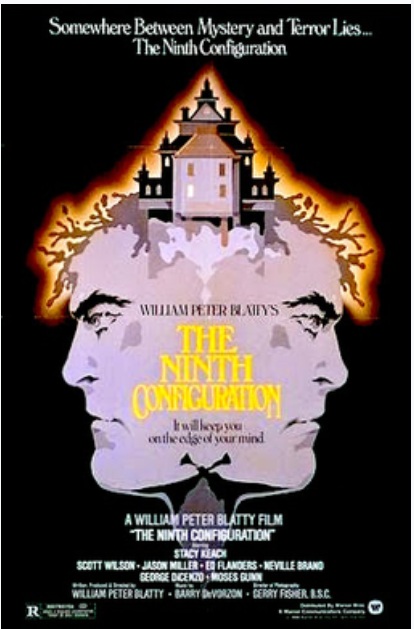
Some films defy easy description and that’s certainly the case with 1980’s The Ninth Configuration.
The film opens with a shot of a castle sitting atop of a fog-shrouded mountain. A voice over tells us that, in the early 70s, the castle was used by the U.S. government to house military personnel who were suffering from mental illness. Inside the castle, the patients appear to be left to their own devices. Lt. Reno (Jason Miller) is trying to teach dog how to perform Shakespeare. Astronaut Billy Cutshaw (Scott Wilson) is haunted by the thought of being alone in space and refuses to reveal why he, at the last minute, refused to go to the moon. The men are watched over by weary and somewhat sinister-look guards, who are played by actors like Joe Spinell and Neville Brand.
Colonel Kane (Stacy Keach) shows up as the new commandant of the the castle. From the first minute that we see Kane, we get the feeling that there might be something off about him. Though he says that his main concern is to help the patients, the man himself seems to be holding back secrets of his own. With the help of Colonel Fell (Ed Flanders, giving an excellent performance), Kane gets to know the patients and the guards. (Despite the objections of the guards, Kane says that his office must always be unlocked and open to anyone who want to see him.) He takes a special interest in Cutsaw and the two frequently debate the existence of God. The formerly religious Cutshaw believes the universe is empty and that leaving Earth means being alone. Kane disagrees and promises that, should he die, he will send proof of the afterlife. At night, though, Kane is haunted by dreams of a soldier who went on a murderous rampage in Vietnam.
The film start out as a broad comedy, with Keach’s smoldering intensity being matched with things like Jason Miller trying to get the dogs to perform Hamlet. As things progress, the film becomes a seriously and thoughtful meditation on belief and faith, with characters like Kane, Billy, and Colonel Fell revealing themselves to be quite different from who the viewer originally assumed them to be. By the time Kane and Cutshaw meet a group of villainous bikers (including Richard Lynch), the film becomes a horror film as we learn what one character is truly capable of doing. The film then ends with a simple and emotional scene, one that is so well-done that it’ll bring tears to the eyes of those who are willing to stick with the entire movie.
Considering all of the tonal shifts, it’s not surprising that the Hollywood studios didn’t know what to make of The Ninth Configuration. The film was written and directed by William Peter Blatty, the man who wrote the novel and the script for The Exorcist. (The Ninth Configuration was itself based on a novel that Blatty wrote before The Exorcist.) By most reports, the studio execs to whom Blatty pitched the project were hoping for another work of shocking horror. Instead, what they got was an enigmatic meditation on belief and redemption. The Ninth Configuration had the same themes as The Exorcist but it dealt with them far differently. (Because he wrote genre fiction, it’s often overlooked that Blatty was one of the best Catholic writers of his time.) In the end, Blatty ended up funding and producing the film himself. That allowed him complete creative control and it also allowed him to make a truly unique and thought-provoking film.
The Ninth Configuration was probably too weird for the Academy. Though it received some Golden Globe nomination, The Ninth Configuration was ignored by the Oscars. Admittedly, 1980 was a strong year and it’s hard to really look at the films that were nominated for Best Picture and say, “That one should be dropped.” Still, one can very much argue that both Blatty’s script and the atmospheric cinematography were unfairly snubbed. As well, it’s a shame that there was no room for either Stacy Keach or Scott Wilson amongst the acting nominee. Keach, to date, has never received an Oscar nomination. Scott Wilson died in 2018, beloved from film lovers but never nominated by the Academy. Both of them give career-best performances in The Ninth Configuration and it’s a shame that there apparently wasn’t any room to honor either one of them.
The Ninth Configuration is not a film for everyone but, if you have the patience, it’s an unforgettable viewing experience.
Previous Entries In The Unnominated:
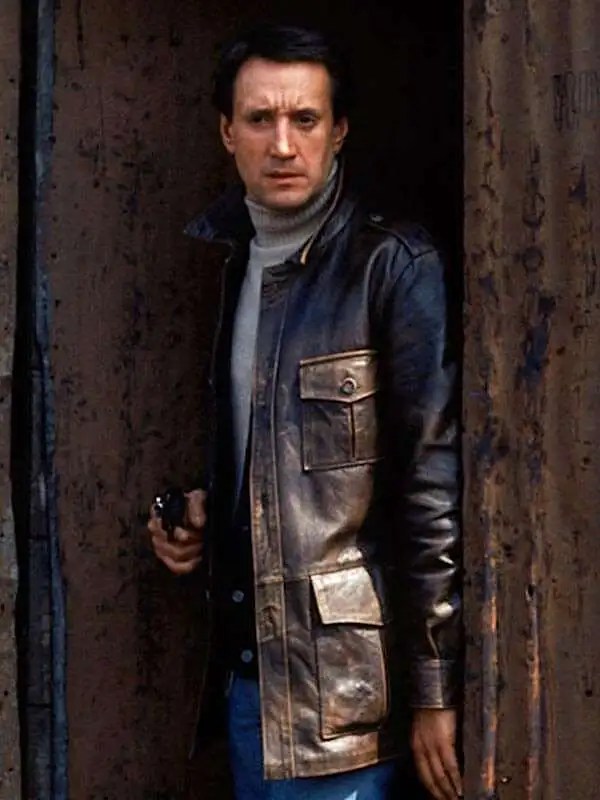
I’m guessing it started with JAWS (1975) and JAWS 2 (1978) since they played often on Fox-16 out of Little Rock when I was a kid, but I’ve been a fan of actor Roy Scheider for as long as I can remember. He’s one of those actors who has his own section in my massive collection of physical movie media. I’ve read about every film he’s ever made, and I’ve watched most of them. Surprisingly, THE SEVEN-UPS is the first Roy Scheider film I’ve written about on The Shattered Lens.
NYPD detective Buddy Manucci (Roy Scheider) leads a team of elite cops, known as the “seven-ups.” They’ve acquired this nickname because most of the criminals they arrest receive sentences that are 7 years and longer, which makes their superiors on the force very happy. Granted, the team does use a variety of unorthodox methods to find and arrest the criminals, which can also rub their superiors and some of their fellow cops the wrong way. Buddy’s childhood friend Vito Lucia (Tony Lo Bianco), an undertaker by trade who has his finger on the pulse of the criminal activities in his community, serves as an important snitch for the team, with his information often leading to major busts. Unbeknownst to Buddy, prominent members of various organized crime families and other white-collar criminals start getting kidnapped and held for ransom in the community. Buddy’s unaware of the full extent of the kidnappings, but he asks his old friend / snitch Vito about this when he actually witnesses the abduction of a crooked bail bondsman he’s following named Festa. We know that Vito is the mastermind behind all of the kidnappings, and his two main henchmen, Moon (Richard Lynch) and Bo (Bill Hickman), are impersonating cops just long enough to confuse and abduct the various criminals. When the Seven-Ups stake out a funeral meeting of various mobsters in the area, squad member Ansel (Ken Kercheval) is killed as part of a screwed-up abduction attempt. Buddy spots Moon and Bo trying to flee the area and tries to chase them down in an incredible car chase that ends when Buddy is almost decapitated in a violent collision with a parked 18-wheeler. With one of their own dead and with the wild chases through the streets, the members of the team are placed on suspension and even investigated as suspects for the kidnappings. Not content to just lay low during their suspensions, the seven-ups continue to try to figure out what’s going on, doing whatever it takes to get the information they need. When Buddy and his group start applying incredible pressure to some of the local mobsters about who shot Ansel, he gets information that ties the killing and the kidnappings to his friend Vito. This time when he meets with Vito, Buddy feeds him false information, thus setting a trap to bring the whole operation down.
After viewing THE SEVEN-UPS again for the first time in a while, it continues to be my opinion that this movie is severely underrated. It’s a great cop film from the early 70’s, anchored by an excellent lead performance from Roy Scheider, who’s wearing one of the coolest leather jackets in the history of cinema. Coming in hot off the heels of THE FRENCH CONNECTION (1971), and with many connections to the Oscar winner, it seems that somehow this great film has fallen through the cracks over the years. I mean, how often do you hear people talk about this movie? THE SEVEN-UPS is directed by Philip D’Antoni, his only directorial credit, although he did serve as the Producer for both BULLITT (1968) and THE FRENCH CONNECTION. D’Antoni clearly values a good car chase sequence. THE SEVEN-UPS contains a thrilling car chase, which really isn’t that big of a surprise when you learn that stunt coordinator Bill Hickman, who plays the bad guy Bo in this film, coordinated the car chase sequences in BULLITT and THE FRENCH CONNECTION. This film features my personal favorite car chase sequence from any film that I’ve seen to date. Don Ellis composed the memorable musical score, a service that he also provided in THE FRENCH CONNECTION. I point out all of these ties to THE FRENCH CONNECTION because, in my humble opinion, the talent behind that film created another classic in THE SEVEN-UPS.
Complimenting Roy Scheider’s lead performance, THE SEVEN-UPS has a strong supporting cast. Tony Lo Bianco, Ken Kercheval (of DALLAS fame), Bill Hickman, and Richard Lynch are all quite memorable in their respective roles. I also like the 1973 New York City setting for the film. In movies like this and the following year’s DEATH WISH, we get to see a New York that no longer exists. To me, this only adds to the gritty realism of the film.
Overall, THE SEVEN-UPS is a movie I recommend without any reservations. If you’re a fan of 70’s cop thrillers, you simply can’t go wrong with this one.
I share the trailer for THE SEVEN-UPS below:
 It’s the future and society has collapsed. America is now controlled by the evil Commander Eastern (Richard Lynch) who, with the help of a propagandist known as Big Sister and a paramilitary leader named Oliver Queen (John Saxon), rules with an iron hand. Colonel Slater (Christopher Mitchum) is the leader of the revolution that threaten to overthrow Eastern’s regime.
Two revolutionaries, Wille (Jay Roberts, Jr.) and Danny (Chuck Jeffreys), are stuck in one of Eastern’s prison. Every day, they fight for their lives and they wait for a chance to escape. That chances come in the form of Sabrina (the beautiful Elizabeth Kaitan), an alien who lands on our planet under the mistaken assumption that Earth is an utopia.
When Sabrina, Willie, and Danny finally manage to escape, they have to make it to Slater’s headquarters while avoiding the bounty hunter (Chris DeRose) who Queen has been sent to capture them.
A fairly standard rip-off of the Mad Max films, the most interesting thing about Aftershock is the cast. I already mentioned Mitchum, Saxon, Lynch, and Elizabeth Kaitan but there are also appearances from Russ Tamblyn, Michael Berryman, Matthias Hues, and Deanna Oliver. For a movie that looks cheap and doesn’t really bring anything new to the postapocalyptic genre, there are a lot of very talented people in this movie. (Even talented people have to pay the bills.) Most of them are only on for a few minutes. The instantly forgettable Jay Roberts, Jr. and Chuck Jeffreys are the actual stars here. Jeffreys was a stunt man who was famous for his resemblance to Eddie Murphy. He looks good in the action scenes but otherwise, he and Roberts don’t make much of an impression.
At least Elizabeth Kaitan gets a decent amount of screentime. Kaitan appeared in a lot of movies in the 80s and 90s. None of the movies were very good. She got stuck with roles like the girlfriend in Silent Night Deadly Night Part 2 and a victim in Friday The 13th Part VII. Kaitan got roles primarily because she was beautiful but she had a likable screen presence and more than a little talent. In Aftershock, she gives a convincing performance as a stranger in a strange land, one who has her own eccentric way of viewing things. Her performance is the best thing about Aftershock and the main reason to watch.
As some of our regular readers undoubtedly know, I am involved in a few weekly live tweets on Twitter and Mastodon. I host #FridayNightFlix every Friday, I co-host #ScarySocial on Saturday, and I am one of the five hosts of #MondayActionMovie! Every week, we get together. We watch a movie. We tweet our way through it.
Tonight, at 10 pm et, Chuck Norris and Richard Lynch star in 1985’s Invasion USA!
If you want to join us this Friday, just hop onto twitter, start the movie at 10 pm et, and use the #FridayNightFlix hashtag! It’s a friendly group and welcoming of newcomers so don’t be shy.
Invasion USA is available on Prime, Tubi, and a host of other streaming sites! See you there!

Today, Chuck Norris celebrates his 83rd birthday and it only feels appropriate that today’s scene that I love should come from one of his greatest films. From 1985’s Invasion U.S.A., watch as Chuck Norris saves America from Richard Lynch!
 Through the Shattered Lens