The Human Duplicators (1965, directed by Hugo Grimaldi)


Who’s an android and who’s not!?

It’s hard to keep track in The Human Duplicators.  Dr. Kolos (Richard Kiel) is an alien who is sent down to Earth.  He thinks that he’s not an android but how can he be sure?  He goes to the laboratory of Dr. Vaughan Dornheimer (George Macready) and tells Donheimer that they will be working together to create androids that are perfect duplicates for humans and that Kolos will be the “master.”  But then an android is built of Dornheimer himself and android Dornhiemer declares that he is the master.  Kolos is distracted because he’s fallen in love with Dornhiemer’s daughter, a blind pianist named Lisa (Dolores Faith).

Glenn Martin (George Nader) of the National Intelligence Agency is assigned to figure out what is happening at the Dornhiemer mansion and, wouldn’t you know it, there’s already an android version of Glenn.  Glenn’s girlfriend is played the brassy Barbara Nichols, a comedic actress who was briefly groomed to be the next Marilyn Monroe and who comes on like the star of a burlesque show.  Glenn’s boss is Austin Wells and he’s played by Hugh Beaumont, which makes this film feel like a weird episode of Leave It To Beaver where Wally has to save the world.  I don’t think the bad guys ever duplicate Hugh Beaumont and that’s good because real trouble could be created by an evil version of Ward Cleaver.

The presence of Richard Kiel and Hugh Beaumont is really the only thing that The Human Duplicators have going for it.  There are plenty of fights between Glenn and the androids but it turns out that the androids are easy to beat into oblivion so there’s not much suspense or excitement to be found.  At times, it feels as if it’s trying to be an episode of The Avengers just without the wit of Patrick Macnee or the charm of Diana Rigg.  The Human Duplicators seems to take itself very seriously and I’m not sure why.

After The Human Duplicators, Richard Kiel later went on to play Jaws in The Spy Who Loved Me and Moonraker.  Hugh Beaumont retired from the movies.
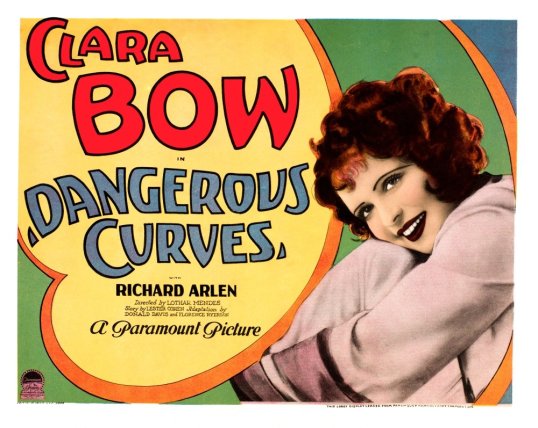
Love On The Shattered Lens: Dangerous Curves (dir by Lothar Mendes)


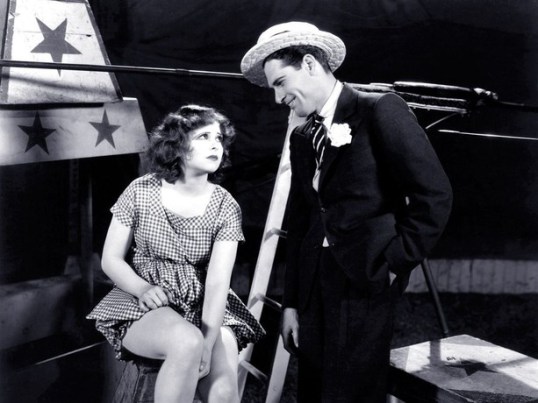
The 1929 film, Dangerous Curves, takes place at the circus.

Larry Lee (Richard Arlen) is a tightrope walker and, when we first meet him, he’s a bit of a cad.  He knows he’s the best and he knows that the crowds are specifically showing up to watch him risk his life on a nightly basis.  Every woman at the circus is crushing on him but Larry hardly notices because he’s used to being desired.  He’s in love with his tightrope-walking partner, Zara (Kay Francis).  Everyone can tell that Zara is manipulative and not even loyal to her relationship with Larry.  She wastes his money and Larry sometimes spends so much time thinking about her that it breaks his concentration on the tight rope.

Eventually, Larry discovers that Zara has been cheating on him!  When Larry finds out about Zara and Tony (David Newell), he cannot get the image of them kissing out of his head.  When he tries to walk across the tight rope, he loses his focus and, as the audience gasps, Larry falls to the ground below.  (In an impressively-edited sequence, we see Larry falling from about five different angles before we finally see him hitting the ground.)  Larry recovers but his confidence has been broken.  Instead of returning to the circus, he just wants to drink and obsess on Zara and Tony.

Can bareback rider Patricia Delaney (Clara Bow) convince him to return to the circus?  Can she give him the confidence to once again walk across the tightrope?  Will Larry then teach Pat how do the tightrope act herself?  Will Larry finally realize that Pat loves him and that he loves her?  And how will Pat react when, after all she’s done for Larry, he suddenly decides that he wants to bring Zara back into the act?

Dangerous Curves is a mix of melodrama and romance, all taking place at the circus.  It’s also a pre-code film, which means it’s a bit more honest about the relationships between the characters and Larry’s subsequent drinking problem than it would have been if the film had been made just a few years later.  As a result, this is a melodrama with an edge.  The members of the circus community are living on the fringes of polite society and they’ve built their own community, one that is based on their unique talents.  Larry’s sin isn’t so much that he’s arrogant and tempermental.  It’s that he doesn’t properly respect the community of which he’s a part.  He thinks he’s above the rest of the circus.  His fall from the high wire humbles him.  His relationship with Patricia eventually redeems him.

That said, the main appeal of this film is that it features Clara Bow in one of her early sound-era performances.  Bow became a star during the silent era but, unlike many of her contemporaries, she was able to make the transition to sound.  I absolutely love Clara Bow and this film features one of her best performances.  She’s determined and energetic and she plays the stereotypical “good” girl with just enough of a mischievous glint in her eye to make her compelling.  She may be willing to help Larry get back on the tightrope and then subsequently learn how to walk the tightrope herself but she also shows that she’s not going to put up with him taking her for granted.  As well, both Clara and Kay Francis get to wear a lot of cute outfits, which is always one of the pleasures of a pre-code film.

Dangerous Curves is worth watching for the chance to see Clara Bow at her best.


30 More Days of Noir #8: Accomplice (dir by Walter Colmes)


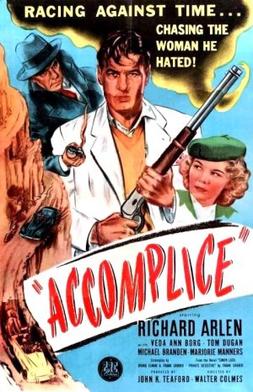
The 1946 film noir, Accomplice, tells the story of Simon Lash (Richard Arlen).

Now, I guess if you have a name like Simon Lash, you’re pretty much destined to become a private detective.  In this case, Lash is both a detective and an attorney.  I did some research — which is a fancy way of saying that I checked with Wikipedia — and what I discovered is that there was apparently quite a few stories written about Simon Lash.  He was a pulp hero created by Frank Gruber.  Gruber went on to write the screenplay for Accomplice, which was based on the novel Simon Lash, Private Investigator.  I don’t know if this was the only Simon Lash film or not.  If there were more Simon Lash films, let’s hope they found a more interesting actor than Richard Arlen to play him.

Yes, indeed, Richard Arlen makes for a rather dull hero in Accomplice.  Physically, he seems like he’s right for the role.  You look at Richard Arlen and you can imagine him beating someone up.  But, in this film at least, he has a boring screen presence that makes it difficult to really get invested in Simon as a character.  He doesn’t have the wounded cynicism of Humphrey Bogart or the killer eyes of Alan Ladd.  He’s just kind of there.

Simon Lash is hired by his ex-fiancée, Joyce (Veda Ann Borg), to track down here husband.  Joyce claims that her husband is president of a huge bank and that he’s suffering from amnesia.  Simon doesn’t quite trust Joyce and he worries that she’s actually using him to dig up dirt for a divorce.  Simon doesn’t work divorce cases.  Apparently, it’s a matter of honor for him.  Not surprisingly, it does turn out that Joyce hasn’t been totally honest with Simon.  Of course, it also turns out that Joyce’s husband has some secrets and tricks of his own.

Indeed, it’s a very complex story, which is something I appreciated.  I always love all the twists and turns of a typical California noir and this one had several.  It all eventually led to a shoot out at a castle in the desert and again, that’s exactly what you want a film like this to lead to.  Accomplice is only 66 minutes long and, as such, it never drags and the double and triple-crosses all come quickly.  That’s definitely a good thing.

Unfortunately, despite all of that, the film itself falls flat.  The main problem is one that I already pointed out.  Richard Arlen is just not a very compelling hero.  While Veda Ann Borg has the right look to play a femme fatale, she still has a strangely bland screen presence in this film.  It’s easy to imagine her trying to fool someone but it’s next to impossible to believe that she could actually do it.  She’s just a bit too boring for the role.  With different actors in the lead roles, Accomplice could have been a classic low-budget noir.  (Seriously, just imagine the film if it had reunited Detour’s Tom Neal and Anna Savage as Simon and Joyce.)  As it is, Accomplice is a bit of a disappointment.  The possibilities are more fun than the execution.

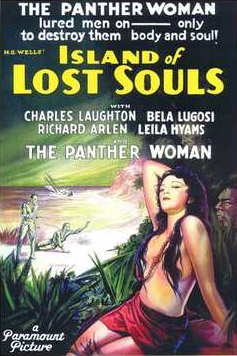
Halloween Havoc!: ISLAND OF LOST SOULS (Paramount 1932)


gary loggins's avatarcracked rear viewer

Universal Pictures kicked off the horror trend of the early 30’s with DRACULA and FRANKENSTEIN , and soon every studio in Hollywood, both major and minor, jumped on the terror train. Paramount was the first to hop on board with an adaptation of Stevenson’s DR. JEKYLL & MR. HYDE , earning Fredric March an Oscar for his dual role. Soon there was DR. X (Warners), THE MOST DANGEROUS GAME (RKO), FREAKS and THE MASK OF FU MANCHU (both MGM), and THE MONSTER WALKS and WHITE ZOMBIE from the indies. Paramount released ISLAND OF LOST SOULS at the end of 1932, a film so shocking and perverse it was banned in Britain for over a quarter century, and still manages to frighten even the most jaded of horror fans today.

Based on the novel The Island of Dr. Moreau by H.G. Wells, the film begins with shipwrecked Edward Parker being rescued…

View original post 818 more words

Horror Film Review: Island of Lost Souls (dir by Erle C. Kenton)


islandoflostsouls

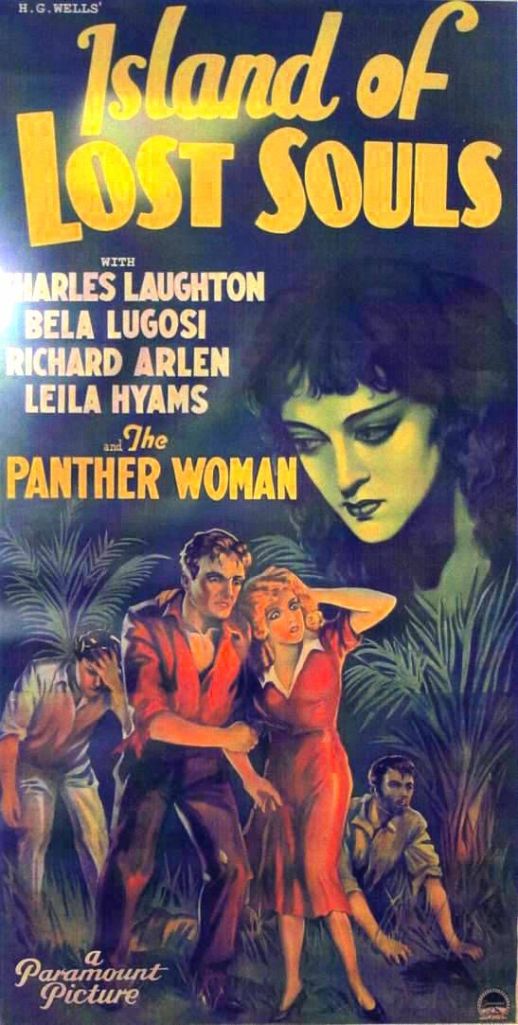
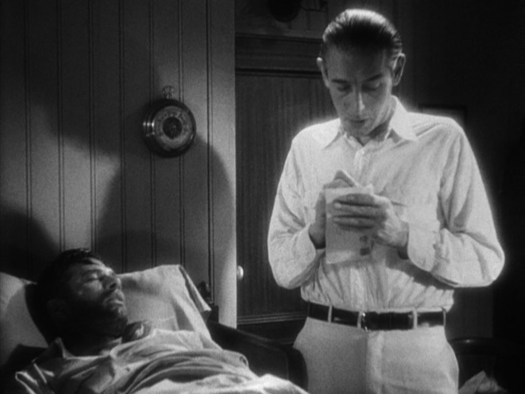
In the 1932 film Island of Lost Souls, Ruth Thomas (Leila Hyams) has reason to be concerned.  She’s on the island of Samoa, awaiting the arrival of her fiancée, Edward Parker (Richard Arlen).  When Parker’s boat doesn’t show up, it can only mean one thing.  He’s been shipwrecked!  Did he survive or was he lost at sea?

Well, Ruth need not worry.  Parker did survive being shipwrecked.  He was picked up by a freighter carrying a wide selection of animals to an isolated island.  Unfortunately, when Parker complained about the way that Parker was abusing some of his admittedly odd-looking passengers, the captain responded by dumping Parker on that island as well.

On the island, Parker becomes the guest of Dr. Moreau (Charles Laughton) and his assistant, Montgomery (Arthur Hohl).  Parker also meets and finds himself becoming attractive to the seemingly naive Lota (Kathleen Burke).  Though Moreau seems to be a good host, Parker grows suspicious of him.  It turns out that there’s a room in Moreau’s compound, a room that Lota calls “the house of pain.”  At night, Parker can hear horrifying screams coming from the room.

Initially believing the Moreau is torturing the island’s natives, Parker soon discovers an even more disturbing truth.  Moreau has been experimenting with trying to transform animals into humans.  Lota, it turns out, was once a panther and the woods surrounding the compound are full of other Moreau creations.  Though Moreau claims that his intentions are benevolent, he rules his island like a dictator.  The animal-men are kept in line by the Sayer of the Law (Bela Lugosi) and any transgressions are punished in the House of Pain…

The Island of Lost Souls was the first cinematic adaptation of H.G. Wells’s The Island of Dr. Moreau.  (Perhaps the most famous adaptation came out in 1996 and is the subject of Lost Souls, a fascinating documentary that, I believe, can still be found on Netflix.)  I watched it last night on TCM and I have to admit that I had a mixed reaction to it.  On the one hand, the film’s atmosphere of mystery and danger is palpable and Charles Laughton’s performance definitely set a standard for all misguided scientists to follow.  The human-animals are fantastic creations and  the film’s ending still has some power.  Bela Lugosi’s performance of the Sayer of the Law was superior to his work as Dracula.  (As shown by both this film and Ninotchka, Lugosi was an outstanding character actor.)  Kathleen Burke also does a great job as Lota, which makes it all the more interesting that she was apparently cast as a result of winning a contest that was sponsored by Paramount Pictures.

(On a personal note, I always find it amusing that pre-code films always feature at least one scene of an actress removing her stockings, even if the scene itself has next to nothing to do with the rest of the film.  In this case, the legs belong to Leila Hyams.)

On the negative side, Richard Arlen is not a particularly interesting hero and, from a contemporary point of view, Island of Lost Souls is a rather slow-moving film.  Watching it today requires modern audiences to make a bit of an adjustment to their expectations.

With all that in mind, I still recommend Island of Lost Souls.  Watch it for Charles Laughton and Bela Lugosi.  Watch it as a valuable piece of cinematic history.

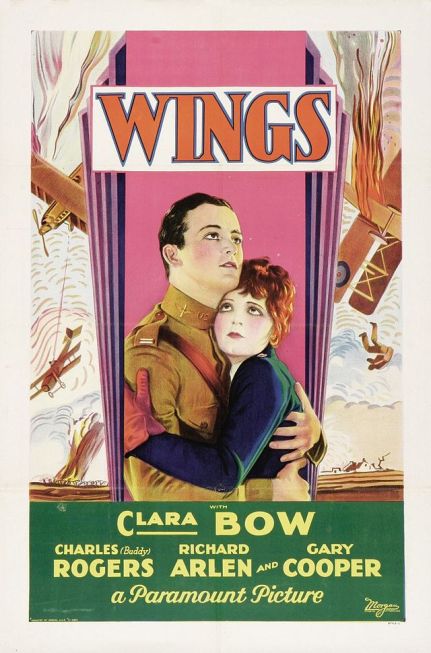
Embracing the Melodrama, Part II: Wings (dir by William Wellman)


Wings

As I mentioned in my previous review, Sunrise may have won the 1927 Oscar for Unique and Artistic Production but the official winner of the first Academy Award for Best Picture was the silent World War I romantic melodrama, Wings.  Wings is one of those films that doesn’t seem to get much respect from contemporary critics, many of whom are quick to dismiss the film as being corny and clichéd.  It’s not unusual to see Wings cited as being the first example of the Academy honoring the wrong film.

Wings tells the story of David Armstrong (Richard Arlen) and Jack Powell (Charles “Buddy” Rogers), who both live in the same small town and who are both in love with the pretty but self-centered Sylvia (Jobyna Ralston).  Sylvia, meanwhile, is in love with the wealthy David but, when Jack asks for a picture of her, she gives him one that she had been planning to eventually give to David.  Meanwhile, Mary (Clara Bow), who is literally the girl next door, pines for Jack.

When World War I breaks out, both Jack and David join the Air Force.  At first they’re rivals but, under the pressure of combat and the threat of constant death, they become friends.  When David flies, he has a tiny teddy bear to bring him luck.  Jack, meanwhile, has Sylvia’s picture.  Meanwhile, their tentmate — Cadet White (Gary Cooper) — insists that he doesn’t need any good luck charms and promptly suffers the consequences for upsetting God.

Meanwhile, Mary has joined the war effort and is driving an ambulance around Europe.  Will Mary ever be able to convince Jack that they belong together?  Will David ever catch the legendary German pilot, Kessler?  Perhaps most importantly, will this new bromance be able to survive both war and the charms of Clara Bow?  And finally, will anyone be surprised when all of this leads to a tragic conclusion with an ironic twist?

Wings has got such a bad reputation and is so frequently dismissed as being the first case of the Academy picking spectacle over quality that I was actually shocked when I watched it and discovered that Wings is actually a pretty good movie.  Yes, it is totally predictable.  Every possible war film cliche can be found in Wings.  (From the minute that handsome and confident Gary Cooper announced that he didn’t need any lucky charms, I knew he was doomed.)  And yes, the film does run long and it does feature a totally out-of-place subplot involving a character played by someone named El Brendel (who was apparently a popular comedian at the time).  This is all true but, still, Wings works when taken on its own terms.

Here’s the thing with Wings: the aerial footage is still impressive (all the more so for being filmed without the benefit of CGI) and both Charles “Buddy” Rogers and Richard Arlen are handsome and appealing in a 1927 silent film sort of way.  In fact, the entire film is appealing in a 1927 silent film sort of way.  This is a time capsule, one that shows what films were like in the 20s and, as a result of the combat scenes, also provides a hint of what lay in the future for the film industry.  Most importantly, Wings features Clara Bow, who has been my silent film girl crush ever since I first saw It.  Whether she’s attempting to flirt with the clueless Rogers or hiding underneath her ambulance and shouting curses at the Germans flying above her, Clara brings a lot of life to every scene in which she appears.

If you’re a film historian, Wings is one of those films that you simply have to see and, fortunately for you, it’s actually better than you may have been led to think.

It’s currently available on Netflix.

http://www.youtube.com/watch?v=EqOqXj2biG0


Shattered Politics #20: The Best Man (dir by Franklin J. Schaffner)


Best_man22234

“Does The Best Man Always Get To The White House?” asks the poster for the 1964 film, The Best Man.

Of course, nowadays, that question seems incredibly naive.  Of course the best man doesn’t always get to the White House!  Some of my friends are Republicans and some of my friends are Democrats and a lot of my friends are Libertarians but they all have one thing in common: the belief that at least half of the past 4 elections were won by the wrong man.

But, as anyone who has done their research can tell you, 1964 was a far different time from 2015.  In general, people had greater faith in both government and their elected leaders.  Ineffective leaders and corrupt authority figures were viewed as being the exception as opposed to the rule.  We’re a lot more cynical now and, when we see political movies from the early 60s, all of that optimism and idealism often make them feel very dated.

Another big difference between the middle of the 20th Century and today is that, when it came to presidential nominating conventions, there was actually the potential for some suspense regarding who would win the nomination.  Occasionally, it took more than one ballot for a candidate to be nominated.  Last minute deals often had to be made and convention delegates were actually selecting an ideology along with a candidate.  Political conventions were contests and not coronations.

Again, it’s obvious that times have changed and, as a result, a film like The Best Man, which may have seemed very provocative and shocking in 1964, feels a bit like an antique today.  That doesn’t mean that it’s a bad film.  In fact, The Best Man is an interesting time capsule of the way things used to be.

The Best Man takes place at a presidential nominating convention.  The party is not specified but it feels like a Democratic convention.  There are several candidates competing for the nomination but the two front-runners are former Secretary of State William Russell (Henry Fonda) and Senator Joe Cantwell (Cliff Robertson).

Much like the character that Fonda played in Advise & Consent, Russell is an intellectual, a calm and rational liberal. Much like Spencer Tracy in State of the Union, Russell is separated from his wife (Margaret Leighton) but the two of them are pretending to be a happy couple for the sake of the campaign.

Meanwhile, Joe Cantwell is a paranoid and ruthless opportunist, a former war hero who will do anything to win.  The only person more ruthless than Joe Cantwell is his brother and campaign manager, Don (Gene Raymond).

(For those who enjoy history, it’s interesting to note that John F. Kennedy was a war hero-turned-senator who had a ruthless brother who doubled as his campaign manager.)

Both Cantwell and Russell come to the convention hoping to get the endorsement of former President Art Hockstader (Lee Tracy).  While the pragmatic Hockstader cannot stand Cantwell personally, he also views Russell as being weak and indecisive.

However, both Russell and Cantwell have secrets of their own.  When Cantwell discovers Russell’s secret and threatens to leak it, Russell has to decide whether or not to reveal Cantwell’s secret.

The Best Man was based on a stage play by Gore Vidal and the actual film never quite escapes its theatrical origins.  And, in many ways, it feels undeniably dated.  But it’s still a well-acted film, one that will probably be best enjoyed by political junkies and students of history.  Before watching the movie, be sure to read up on the 1960 presidential election and then see if you can guess who everyone is supposed to be.