Retro Television Review: Miami Vice 2.16 “Little Miss Dangerous”


Welcome to Retro Television Reviews, a feature where we review some of our favorite and least favorite shows of the past!  On Mondays, I will be reviewing Miami Vice, which ran on NBC from 1984 to 1989.  The entire show can be purchased on Prime!

The power has returned, my mood is better, and my wrist has healed.  It’s time to get back to the reviews!

Episode 2.16 “Little Miss Dangerous”

(Dir by Leon Ichaso, originally aired on January 31st, 1986)

There’s a serial killer stalking the red light district of Miami, haunting cheap motels, dark alleys, and neon-lit sex clubs.  Men are turning up dead all over the place, brutally stabbed and then set on fire.  Occasionally, a crude drawing is left behind.  Castillo announces that every member of the Squad will be working a 12-hour shift until the killer is brought to justice.  He says that they may be looking for a pimp or a prostitute who is looking for revenge.

Of course, every prostitute knows and likes Sonny Crockett.  And again, this leads to the question of how exactly Sonny is able to work undercover when everyone in Miami knows who he is.  For that matter, all of the prostitutes also seem to know that Gina and Trudy are working Vice as well, despite the fact that Gina and Trudy’s regular gig to go undercover as high-priced escorts.  How do these people ever succeed at going undercover?  Everyone knows them!  I guess that’s to be expected, though, when you’ve only got 6 detectives working Vice in a city as big as Miami.

Tubbs meets a Jackie (played by singer Fiona), a young runaway who swears that she’s 18 and who says that she’s happy working as a prostitute because her body is just a commodity.  Tubbs becomes obsessed with protecting the spacey but seemingly innocent Jackie, especially after he becomes convinced that Jackie’s pimp, Cat (Larry Joshua), is the murderer.  Except, of course, Cat isn’t the killer.  Jackie is!  When Tubbs takes Jackie to a safehouse (which, of course, is also an art deco mansion), she snaps.  As Crockett tries to break down the locked front door and Cat crashes into the house on his motorcycle, Jackie starts a fire and approaches Tubbs.  But, instead of killing the only man who hasn’t tried to use her body, Jackie instead holds a gun to her head.  This is another episode that ends with an off-screen gunshot.  Interestingly, we never see Crockett actually get into the safehouse to rescue Tubbs from the fire.  Instead, the ending is abrupt and the viewer, while having no doubt that Tubbs will escape the fire, knows that Tubbs will now carry Jackie’s scars as his own.

What an unsettling episode.  This was Miami Vice at its most surreal and dream-like, with almost all of the action taking place at night and both Fiona and Larry Joshua giving edgy performances as two self-destructive people who live in the shadows of a wealthy American city.  For once, the entire Vice Squad gets in on the action, though Tubbs is clearly the one at the center of the story.  This episode reminds us that Tubbs is not quite as cynical and emotionally closed-off as Crockett but maybe, for the sake of his sanity, he should be.  Little Miss Dangerous is a journey into the heart of Miami darkness.

Music Video of the Day: Spiral by SOFI TUKKER (2024, dir by Aerin Moreno)


Sometimes, you’re just hanging out with your best friend Heidi Klum and a party breaks out.  Sofi and Heidi reminded me of myself and my BFF, Evelyn, which I think is why I enjoyed this video.

Plus, you never know when the pizza delivery guy might turn out to be a kickass DJ!

Enjoy!

Retro Television Review: If Tomorrow Comes (dir by George McCowan)


Welcome to Retro Television Reviews, a feature where we review some of our favorite and least favorite shows of the past!  On Sundays, I will be reviewing the made-for-television movies that used to be a primetime mainstay.  Today’s film is 1971’s If Tomorrow Comes!  It  can be viewed on YouTube.

If Tomorrow Comes tells the story of a forbidden marriage.

In 1941, Eileen Phillips (Patty Duke) meets David Tayanaka (Frank Liu) and the two of them quickly fall in love.  David asks Eileen to marry him and Eileen says yes, even though they both know that it won’t be easy.  Eileen’s father (James Whitmore) and her brother, Harlan (Michael McGreevey), are both prejudiced against the Japanese and David’s parents (played by Mako and Buelah Quo) would both rather than David marry someone of Japanese descent.  Eileen and David decide to elope first and tell their parents afterwards.

On December 7th, Eileen sneaks out of the house and joins David at his church.  They are married by Father Miller (John McLiam), who agrees to keep their secret.  Eileen and David then drive over to the church attended by Eileen’s family but no sooner have they arrived than the local sheriff (Pat Hingle) pulls up and announces that the Japanese have bombed Pearl Harbor.  The sheriff instructs everyone to return home and to listen to their radios.  David slips his wedding ring off his finger.  Telling the parents will have to wait.

Eileen’s father and brother are convinced that every Japanese person in town, even though the majority of them were born in America and have never even been to Japan, is a subversive.  David and his family are harassed by government agents like the oily Coslow (Bert Remsen).  One morning, they discover that all of their farm animals have been killed and someone has written “REMEMBER PEARL HARBOR” with their blood.  When Franklin D. Roosevelt orders the internment of the Japanese, David’s father is among those taken away.  When Harlan continues to harass David, it eventually leads to not just one but two tragedies.

If Tomorrow Comes is a real tear-jerker, one that features a great performance from Frank Liu and a good one from Patty Duke.  Though it may seem a tad implausible that David and Eileen would get married just an hour before Japan attacked Pearl Harbor (and considering the attack occurred on a Sunday morning, I’m a little curious how they found a priest who was free to secretly marry them), the film does a good job of showing how fear can lead to otherwise good people doing terrible things.  One of the film’s strongest moments comes as David’s father is taken away to an internment camp and the Japanese prisoners try to prove their loyalty by spontaneously singing America, The Beautiful.  It’s a moment that reminds us of the danger of letting our fear destroy our humanity.

It’s a film that still feels relevant today, with its portrayal of heavy-handed government agents searching for subversives and ignoring the Constitution in order to save it.  When David visited his father at the internment camp, I thought about how, at the heigh of the COVID pandemic, it was not unusual to see people demanding that the unmasked and the unvaccinated by interned away from the rest of the world.  If Tomorrow Comes is a love story and a melodrama and tear-jerker but, above all else, it’s a warning about the destructive power of fear and prejudice.

Lisa Marie’s Week In Television: 6/9/24 — 6/15/24


Dancing For The Devil (Netflix)

I watched this 3-part docuseries on Tuesday.  It was yet another show about a cult, in this case one that’s led by a pastor named Robert Shinn and which is known for promoting dancers on TikTok.  Much like HBO’s The Vow, it started strong but it ultimately felt a bit too padded for its own good.  Two episodes worth of material was stretched out to three.  As always, cult documentaries are odd to watch because they never quite get around to answering the question of how someone could be stupid enough to join a cult in the first place.  I guess that some things are unknowable.

Dr. Phil (YouTube)

I watched a few old episodes on Wednesday and Thursday.  Dysfunction was everywhere!

Inmate to Roommate (Thursday, A&E)

On Thursday’s episode, the inmates and the roommates continued to try to adjust to each other.  I don’t think any of this is going to turn out well for anyone.

Intervention (Monday Night, A&E)

I watched two episodes of Intervention on Monday night.  The first featured one of the most annoying addicts that I’ve ever seen, a sarcastic 19 year-old who spent the entire intervention making snarky remarks and then suddenly agreed to get help, showing that she didn’t even have the courage to stand by her snarkiness.  She did get sober, which is good.  She also apparently replaced drugs with food as she gained a ton of weight in rehab.

The second episode featured model Amber Rose searching Philadelphia for a childhood friend who had fallen into drug addiction.  It felt more like an extended commercial for Amber Rose than a serious look at drug addiction.

I’m kind of amazed that people apparently still fall for the “she thinks she’s appearing in a documentary about addiction.  Little does she know she’ll soon be facing an intervention” line.  It’s been like what?  20 years since this show started?

Miami Vice (Amazon Prime)

On Saturday, I finally got back to watching Miami Vice!  Look for my review on Monday.

Night Flight (Night Flight Plus)

I watched two episodes on Friday.  The first one was about Australian bands.  The second featured the best music of 1987.

60 Days In (Thursday Night, A&E)

Everyone’s favorite true crime jail docudrama is back.  This time, the jail is in Utah and, for all the talk about how the Utah jail is as dangerous as any jail, it was hard not to notice that both the guards and the prisoners seemed to be far more polite than usual 60 Days In crowd.  I watched the first two episodes on Tuesday.  The sheriff said that he didn’t want anyone tapping out but I don’t know  …. I get the feeling that Corey is about to say, “Get me out of here!”

I watched the latest episode on Thursday and my suspicions about Corey turned out to be totally justified as he revealed that spending less-than-a-week in jail had apparently driven him to the verge of a paranoia-fueled mental breakdown.  Corey hasn’t tapped out yet but it feels like it’s only a matter of time.  I also have to say that I totally related Nina and her decision to get dressed up for jail.  I mean, why not?

What Lisa Watched Last Night #227: Roommate Regret (dir by Peter Foldy)


On Sunday, I turned the channel to the Lifetime Movie Network and I watched Roommate Regret!

Why Was I Watching It?

Because it was on the Lifetime Move Network!  It’s been a while since I’ve gotten to sit down and watch a Lifetime film and that’s a shame because my Lifetime reviews used to be a staple of this site.  After a rough two weeks, I figured it was time to start once again embracing the melodrama.

What Was It About?

Jessica (Maryana Dvorska) has just purchased her first house in Florida!  To help pay the mortgage, she is planning on renting out the spare bedroom.  A series of odd people come by the house and check out the room.  Jessica wants to rent the room to an eccentric lawyer but her best friend, Louisa (Veronica Long), insists that Jessica take a chance on Alec (Josh Cole), an English music producer who doesn’t have any credit but who swears that he’ll be able to pay her five months rent upfront as soon as his latest deal goes through.  Jessica is reluctant but Alec charms both her and Louisa by claiming to be an associate of rock star Preston Black (Sam Benjamin).

Jessica gives the room to Alec and …. well, not surprisingly, that turns out to be a mistake.  Alec is a terrible tenant who plays loud music and who regularly fights with the mysterious woman who comes to visit him.  Alec is also late with the rent and when he does pay, Jessica ends up getting arrested for passing counterfeit bills!  Jessica wants Alec out but complicating matters is that 1) Alec is now dating Louisa and 2) Alec does not want to leave.

What Worked?

This was actually a lot of fun, with an enjoyably melodramatic plot and a collection of quirky supporting characters.  Jessica was a likable enough character that I was willing to overlook the fact that she made some truly questionable decisions over the course of the film.  (Hey, who hasn’t made a questionable decision or two?)  My favorite character, however, was Louisa, who was just a pure force of nature and chaos.  She was the perfect best friend, the type who would support you while also encouraging you to live a little.

I appreciated the fact that, while Alec was definitely a bad guy, the film didn’t turn him into some sort of diabolic criminal mastermind.  For the most part, he was just a very bad and very sleazy tenant and an all-around dorky guy.  That was all that he really needed to be.  As a veteran Lifetime watcher, I spent the entire film waiting for him to murder someone and it was kind of a nice change-of-pace that he didn’t.

What Did Not Work?

Through no fault of actor Sam Benjamin, Preston Black was perhaps the world’s least convincing rock star.  Maybe if the film had been taking place 20 years in the past, I would have bought the character.

“OH MY GOD!  Just like me!” Moments

Beyond a shared appreciation for generic college sweatshirts and old movies, I can’t say that I had that much in common with Jessica.  She was much more practical-minded than I tend to be.  However, I did totally relate to Jessica’s fun-loving best friend, Louisa.  Even after learning she had been sleeping with a potentially violent criminal, Louisa remained enthusiastic about the prospect of meeting (or at least hearing the voice of) Preston Black.  Like me, Louisa was an optimist!

Lessons Learned

Just because someone has a cute accent, that doesn’t mean you should live with them.

Retro Television Review: The Glass House (dir by Tom Gries)


Welcome to Retro Television Reviews, a feature where we review some of our favorite and least favorite shows of the past!  On Sundays, I will be reviewing the made-for-television movies that used to be a primetime mainstay.  Today’s film is 1972’s The Glass House!  It  can be viewed on YouTube.

The Glass House starts with three men arriving at a location that will define the next few months of their lives.

Brian Courtland (Clu Gulager) is a veteran of the Vietnam War.  He spent part of his service working as a guard in the brig.  Now that he’s back in the United States and in need of a regular paycheck, he has gotten a job working as a prison guard.  Courtland is not naive about where he’s going to be working or who he is going to be working with.  But he is an idealist, one who tries to treat everyone fairly and who hopes that he will be able to do some sort of good in his new position.

Alan (Kristoffer Tabori) is a young man who has been arrested for selling marijuana.  He is quiet and just hoping to serve his time and then get on with his life.  His fellow prisoners have different plans for him.

Finally, Jonathan Paige (Alan Alda) is a liberal professor who, in a moment of rage, accidentally killed a man in a fight.  Convicted of manslaughter, Paige enters the prison in a daze and cannot stop flashing back to the one moment that changed his life forever.  Paige is assigned to work in the pharmacy, where he meets a prisoner-turned-activist named Lennox (Billy Dee Williams).  Paige struggles to retain his humanity despite the harsh conditions.

All three of the men find themselves having to deal with the attentions of Hugo Slocum (Vic Morrow), the predatory “king” of the prison.  Slocum expects Paige to help him run drugs though the the pharmacy.  Slocum preys on Alan and sends his gang to punish him when Alan refuses Slocum’s advances.  And Slocum expects that Courtland will just be another corrupt guard who agrees to look the other way when it comes to Slocum’s activities.  Courtland, however, turns out to have more integrity than anyone was expecting.

The Glass House opens with a title card, informing the viewer that the film was shot at an actual prison and that the majority of the people in the film were actual prisoners.  Not surprisingly, The Glass House does feel authentic in a way that a lot of other films about incarceration does not.  The prison is claustrophobic and dirty, with every crack in the wall reminding the prisoners and the viewer that no one cares about what happens there.  The extras have the blank look of men who understand that showing any emotion will be taken a sign of a weakness.  Made in 1972, at a time when America was still struggling to integrate, The Glass House takes place in an almost totally segregated world.  The black prisoners stick together.  The white prisoners stick together.  Everyone understands that’s the way that it will always be and, as we see by the end of the film, that’s the way the guards and the warden (Dean Jagger) prefer it because that means almost any incident can be written off as a being “a race riot.”

The real actors amongst the population do a good job of blending into the surroundings.  Alda, Williams, and Tabori all give good performance while Vic Morrow is truly menacing in the role of the vicious Slocum.  Slocum may not be particularly bright but, because he has no conscience, he is uniquely suited to thrive in a world with no morality.  The film’s best performance comes from Clu Gulager, who does a great job of portraying Courtland’s growing disgust with how the system works.

Though it’s over 50 years old, The Glass House is a still a powerful look at life on the fringes.  Society, for the most part, doesn’t really care much about what happens to the incarcerated.  This film makes a strong case that we probably should.  One is left with little doubt that, even if relatively harmless prisoners like Paige and Campbell survive being locked up with men like Slocum, they’ll still be incapable of returning to the “real world” afterwards.  The viewer, like Brian Courtland, is left to wonder how much corruption can be tolerated before enough is enough.

Lisa Marie’s Week In Television: 6/2/24 — 6/8/24


Ugh.  We got our power back on Sunday but this week still kind of sucked for me.  I’ve just been in a funk, as you can probably tell by how little I’ve posted over the past few days.  Going a week without power really threw me off of my rhythm.  Even with the return of the lights, there’s been a lot of cleaning up to do, around both the house and the neighborhood.  For that reason, I’ve put a lot of my regular posts on a temporary hiatus.  My regular Retro Television Reviews, for instance, will return on June 17th.

So, I guess my point is — don’t give up on me!  I’m in a funk right now but it happens and I’ll snap out of it, definitely sooner than later.

As far what I watched on television this week:

Degrassi: The Next Generation (Pluto TV)

I’ve watched only one show this week but I also watched 14 seasons of it.  It takes a total of 7 and a half days to binge the entirety of Degrassi: The Next Generation.  When the lights came on, Pluto was showing the very first episode, in which Emma ran afoul an online stalker and, as I write this, Pluto is approaching the final episodes, in which Tristan and Miles took the title of the worst Degrassi couple ever.

For the last seven days, I have been binging Degrassi.  I haven’t rewatched every episode, of course.  I’ve had to sleep.  I’ve had to take care of my day-to-day responsibilities.  But, when I needed to relax, I sat down on the living room couch and watched Degrassi.  I reexperienced everything from Manny’s pregnancy to Craig’s breakdown to Ellie’s cutting to Jimmy’s shooting to Spinner …. well, acting like Spinner.  Unfortunately, the show itself became a bit less interesting as the old cast left and the new students enrolled.  (I’ve never been able to bring myself to care about Connor.)  Later seasons of the show got a bit preachy and it was hard not to get annoyed by the fact that everyone was apparently in a band.  (House arrest …. house arrest…. really gets stuck in your head.)

Still, revisiting this show helped to call my nerves during an otherwise stressful week.  Thank you, Degrassi and Pluto!

From Inmate to Roommate (A&E)

I watched two episodes of this new reality show on Saturday.  The show follows ex-cons as they leave prison and move in with people who have never been to prison.  The two episodes were actually interesting, just because of the contrast between the former prisoners and their new roommates.  None of the convicts really seem like they benefitted from being in prison.  My personal favorite moment was when the leftist, justice reform activist discovered that his new former inmate roommate had no interest spending his first day of freedom at a political protest.

Happy Hour (YouTube)

I watched an episode of this silly 90s game show on Saturday.  Dweezil and Ahmet Zappa hosted.  Among the celebrities in the competition: Adam West, Vivica A. Fox, Kathy Griffin, Diedrich Bader, and Taylor Dane.  The show provided several excuses for Dweezil and Ahmet to perform.  Dweezil was (and is) obviously a great guitarist, even when performing on a show as silly as this one.  As a vocalist, Ahmet …. well, Ahmet tried really hard.

Midnight Special (YouTube)

I watched an episode of this old variety show on Friday night.  The episode was from 1973 and featured some mellow music and the comedy stylings of Fred Willard (amongst others).  In fact, the whole thing was almost too mellow for me.  I like loud music to which you can dance.  Paul Williams showed up and talked about his role in the upcoming film, Battle for the Planet of the Apes.  He really didn’t do a very good job selling the movie.

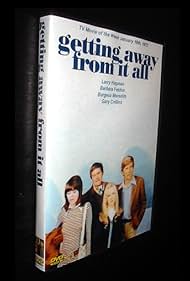
Retro Television Review: Getting Away From It All (dir by Lee Philips)


Welcome to Retro Television Reviews, a feature where we review some of our favorite and least favorite shows of the past!  On Sundays, I will be reviewing the made-for-television movies that used to be a primetime mainstay.  Today’s film is 1972’s Getting Away From It All!  It  can be viewed on YouTube.

For Fred Clark (Larry Hagman) and Mark Selby (Gary Collins), life is New York City just isn’t that much fun anymore.  The weather is terrible.  The traffic cannot be navigated.  The only people ruder than the cabbies are the doormen.  Fred and Mark have come up with the perfect plan.  They’ve decided to move to a small country town and purchase a house on a small island.  In fact, they’re going to buy the entire island!  It’s surprisingly cheap.  Fred and Mark don’t ever really stop to wonder why the island is available for so little money.  Seriously, if you’re buying an island, you should probably ask yourself those questions.

Mark’s wife, Alice (E.J. Peaker), is enthusiastic about the idea.  Less excited is Fred’s wife, Helen (Barbara Feldon).  Helen enjoys living in the city and having a nice job in an office building.  She gets along with her boss (played by Jim Backus, one of many veteran actors to show up in a small role in this film).  Perhaps hoping that Fred will change his mind once he’s confronted with the reality of actually living in the country, Helen finally gives in.

It does turn out that the island is not quite the paradise that Fred and Mark were expecting.  The only way to get out to the island is in a leaky rowboat.  The house is falling apart and, as Helen is disgusted to learn, it also doesn’t have indoor plumbing.  There’s no electricity either but fortunately, the local handyman is working on it.  His name is Herbie and he’s played by a very young and thin Randy Quaid.  If you’ve ever wanted to hear Randy Quaid speak with an exaggerated New England accent, this is the film for you.  There’s nothing convincing about Quaid’s accent but it still seems only fair, considering all of the Yankee actors who have butchered the Southern accent over the years.

Just when it looks like Fred and Mark have managed to make the Island livable, they get a disturbing letter.  As the new owners of the Island, they owe 20 years worth of back taxes.  As Fred puts it, the tax bill is more than either of them can afford.  If they can’t raise the money, the town will take back the Island.   Fred and Mark consider trying to get jobs but it turns out that neither one of them knows much about being fisherman.  They then decide to charm the town into nullifying the tax bill.  That turns out to be more difficult than either man imagines.

Getting Away From It All is a comedy that deals with a universal theme, the desire to escape from the harshness of everyday life and find a perfect place to which to escape.  That said, the film’s main reason for existing is a parade of comedic cameos.  Jim Backus, Vivian Vance, Joe E. Ross, Burgess Meredith, Paul Hartman, and J. Pat O’Malley all appear in small roles, appearing just long enough for 1972 viewers to say, “Hey, I recognize that person!”  The end result is a rather shallow film that has a few chuckle-worthy moments.  (Again, Randy Quaid pretending to be from Maine has to be worth something.)

In the end, for all of the film’s celebration of getting away from it all, it’s hard not to feel that Gary, Mark, Alice, and Helen will all end up back in Manhattan sooner than later.  Some people are just city folks.

Retro Television Reviews Will Return On Sunday, June 2nd


Hi, everyone!

Because of my sprained wrist, I’m going to take a few days off from doing my retro television reviews.  (My wrist is definitely healing but it still hurts a bit to type.)  So, this feature will return at the end of the week, on Sunday, June 2nd!

Thank you for your patience! — LMB

Retro Television Review: Indict & Convict (dir by Boris Sagal)


Welcome to Retro Television Reviews, a feature where we review some of our favorite and least favorite shows of the past!  On Sundays, I will be reviewing the made-for-television movies that used to be a primetime mainstay.  Today’s film is 1974’s Indict & Convict!  It  can be viewed on YouTube.

There’s been a murder!

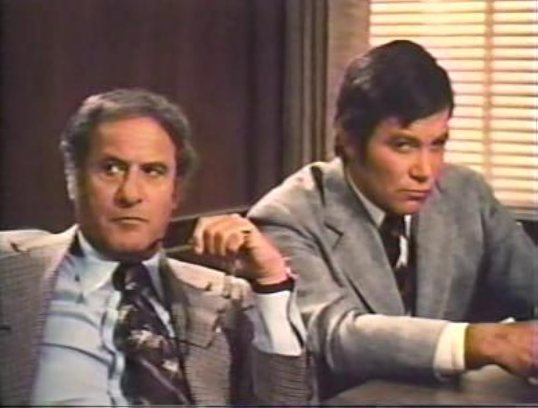
The wife of Assistant District Attorney Sam Belden (William Shatner) has been found, shot to death.  Making things especially awkward is that the body of her lover is found next to her.  Though Belden is the obvious suspect, he has an alibi for the time of the murders.  He claims that he was in Las Vegas, attending a convention.  Two gas station attendants remember seeing him filling up his car with gas at around the same time that his wife and her lover was being shot.

Attorney General Timothy Fitzgerald (Ed Flanders) is not so sure that Belden is innocent.  He instructs two of his top prosecutors to check out Belden’s story and to see if there’s enough evidence to not only indict but also to convict.  Bob Matthews (George Grizzard) is a veteran prosecutor and he’s the one who narrates the story for us.  Assisting him is Mike Belano, who is played by the always likable Reni Santoni.  Just three years before this movie aired, Santoni played Harry Callahan’s partner in Dirty Harry.  There was just something about Santoni’s friendly but determined demeanor that made him perfect the role of the supportive partner or assistant.

The film is very much a legal procedural, with the emphasis on not only the investigation but also on the strategies and the techniques that are used in the courtroom by Matthews and defense attorney DeWitt Foster (Eli Wallach).  In many ways, it feels like a forerunner to Law & Order.  Usually, I love court procedurals but Indict & Convict was a bit too slow and high-minded for its own good.  Maybe it’s because I’ve been spoiled by all of the legal shows that I’ve seen but I have to admit that I spent a good deal of Indict & Convict wanting the prosecutors to get on with it.  Flanders, Grizzard, Santoni, and Wallach were all ideally cast but the film itself sometimes got bogged down with all the debate about the best way to win a conviction.  It’s a shame because the story itself is an intriguing one and I actually enjoyed the movie’s use of spinning newspaper headlines to let us know what had happened in between scenes.  Also, as a classic film fan, I enjoyed seeing Myrna Loy as the judge.  She didn’t get to do much other than say, “Sustained” and “Overruled,” but still …. Myrna Loy!

Most people who watch this film will probably do so out of the hope of seeing some trademark Shatner overacting.  William Shatner doesn’t actually get to say much in this film.  He spends most of the running time sitting silently at the defense table.  Towards the end, he does finally get a chance to deliver a brief speech and it’s everything you could hope for.  Shatner takes dramatic pauses.  Shatner emphasizes random words.  Every line is delivered with the subtext of, “Pay attention, Emmy voters!”  Eventually, Shatner would learn the value of laughing at oneself but apparently, that lesson had not yet been learned when he did Indict & Convict.