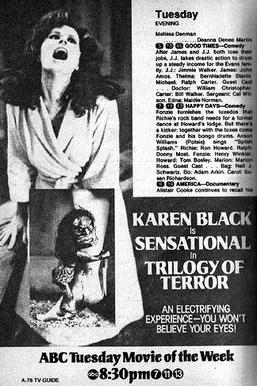
For today’s horror on the Lens we have a made-for-TV movie that was produced and directed by Dan Curtis.
Trilogy of Terror, which aired in 1975, is an anthology film, featuring three segments that were each based on a short story from Richard Matheson. What makes this particular film special is that each segment features Karen Black playing a radically different character from the previous segment. The film really is a showcase for this underrated actress, though Black herself later said that the film ruined her career because it typecast her as a horror actress.
The third segment is the one that gets all the attention. That’s the one with the killer doll. I like all of the segments, though. The first one is often considered to be the weakest but anyone who has ever been through a similar situation will appreciate it as tale of revenge. The second segment has a playful vibe that I liked. And yes, the third segment is genuinely frightening.
Today’s song of the day is Something Wicked This Way Comes, by Barry Adamson.
This instrumental work appeared on the soundtrack for David Lynch’s 1997 film, Lost Highway, and its one of my favorite pieces of music. It’s amongst the songs that I tend to play whenever I’m dealing with writer’s block or if I just need an extra boost of energy to finish up a project. This song also seems like the perfect way to kick off the second half of October and our annual horrorthon!
I also have to say that the video below, which was put together by Jessie Essex, is amazingly cool.
A sincere and heartfelt faith-based film that works largely due to a sensitive and likable performance from Joey Lawrence?
Well, stranger things have happened.
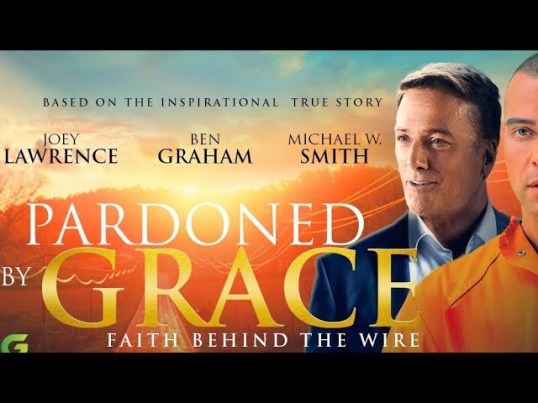
2022’s Pardoned By Grace tells the story of Scott Highberger (portrayed by Joey Lawrence). Scott is a screw-up. From the first time we see him until roughly until about an hour into this film, Scott is always doing something wrong. He starts out the film as a small town drug addict and dealer and, throughout the course of Pardoned By Grace, he is consistently tempted to retuning to that lifestyle. He’s someone who has spent his entire life being told that he’s never going to amount to anything and that he’s destined to be a failure so it kind of makes sense that he wouldn’t be worried too much about following the laws of conventional society.
The film follows Scott as he goes in and out of prison. The warden, the guards, and even the other prisoners all know that Scott is capable of being more than just a convict but Scott himself cannot find the faith to keep from getting into trouble. Whenever he’s released, he messes up and he’s sent back to jail. At one point, he even gets a good job and he starts making a lot of money and that’s all it takes for him to start using cocaine again.
Finally, after having alienated every member of his family and committed one too many crimes, Scott finds himself in a church, where he listens to a sermon from Pastor Dave (Michael W. Smith). Dave instinctively hires Scott to handle odd jobs at the church. While Scott cleans up the place and stacks chair and tries to live an honest life, Dave makes plans for his prison ministry. Scott is excited when he’s invited to take part in the ministry but then he learns that he won’t be allowed to enter any prisons to preach because he still has a years-old warrant out for his arrest. Scott heads to Florida, where he turns himself into the police, even though he knows that, as a repeat offender, he is looking at a potential life sentence as a result.
Pardoned by Grace works surprisingly well. Joey Lawrence is not exactly the first person who comes to mind when you think of an actor with tremendous dramatic range but he is still likable and earnest as Scott, a man who is determined to atone for his past mistakes and to take responsibility for his actions, even if it means losing his freedom. If anything, Lawrence’s limited range actually makes him a good pick for Scott, who is initially portrayed as being someone who does whatever he feels has to be done in the moment with very little consideration given to what his actions could mean in the future. As well, one doesn’t have to be religious to appreciate the film’s portrait of a justice system that is so obsessed with punishment that it’s forgotten that one of the purposes of prison is rehabilitation. Scott is not someone who wants to be a criminal but it’s not prison that helps him to move on from his old ways. Instead, it’s the faith of someone who is willing to give him a second chance.
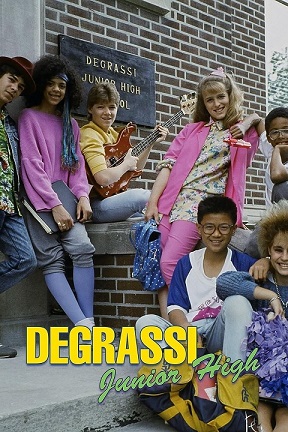
Welcome to Late Night Retro Television Reviews, a feature where we review some of our favorite and least favorite shows of the past! On Sunday, I will be reviewing the Canadian series, Degrassi Junior High, which aired on CBC and PBS from 1987 to 1989! The series can be streamed on YouTube!
This week, Degrassi goes there again!
Episode 3.12 “Taking Off: Part Two”
(Dir by Kit Hood, originally aired on February 20th, 1989)
When last we checked in with the students at Degrassi Junior High, Shane was missing and Wheels, having been sexually assaulted by a man who picked him up while he was hitchhiking, was walking towards Port Hope in search of his biological father.
Shane is discovered underneath a bridge. As the police tell his friend Luke, it appears that Shane either jumped or he fell. Shane is alive, but he’s in a coma and there’s no guarantee that he’s going to survive. When asked whether or not Shane had done any drugs at the Gourmet Scum concert, Luke finally admits that Shane did drop acid right before the show began.
As for Wheels, he manages to make it to Port Hope and he even finds the cheap hotel where his father, Mike (Dave James), is playing with his band. Wheels imagines knocking on the hotel room door and his father happily greeting him and inviting him to join the band. Instead, when Wheels knocks on the door, Mike is shocked and not particularly happy to see him. Though Mike forces Wheels to call his grandmother and let her know that he’s okay, Mike does agree to let Wheels spend the day at the hotel. Mike then promptly abandons Wheels.
When Mike eventually returns, a few things become obvious.
First off, Mike didn’t even know that Wheels’s adoptive parents had died.
Secondly, Mike doesn’t want anything to do with his biological son.
Third, Mike’s new girlfriend is pregnant and, as she explains it, they can’t afford to have Wheels around.
I mean, goddamn! Poor Wheels! First, he gets sexually assaulted while hitchhiking. Then, his father rejects him. Wheels, after yelling at his father for abandoning him, is prepared to run away again but suddenly, his grandmother shows up. She was finally able to convince Joey to tell her where Wheels had run of to and she shows up to take him home. Wheels is adamant that he’s going to run away again but when his grandmother starts to cry and calls him out for being a “selfish, selfish boy,” Wheels reconsiders.
At the end of the episode, Shane is still in his coma and it’s still up in the air whether he accidentally fell or if he was trying to commit suicide when he plunged from that bridge. Wheels, however, returns to school and is greeted by Joey and Snake. Joey apologizes for telling Wheels’s grandmother about Port Hope but Wheels says it’s okay. He’s ready to give school another try. Everyone smiles as the end credits roll on a well-acted and classic episode of Degrassi Junior High.
YAY! It’s a happy ending, as long as you haven’t seen Degrassi: The Next Generation. If you have seen The Next Generation, you know that Wheels has alcoholism and prison in his future. And, for that matter, Shane is going to end up spending the rest of his life in an institution. So, it’s not really that happy of an ending.
If tonight’s episode of One Step Beyond seems familiar, that’s because it’s a remake of a story that was originally filmed as an episode of The Veil.
This time, instead of witnessing a murder occurring in another apartment, it’s a suicide that is witnessed by artist Anthony March (Michael Higgins). Of course, when he investigates, he discovers that the apartment in empty. Is Anthony hallucinating or has he gone one step beyond and is he seeing the future? Watch to find out!
By the way, that’s future Oscar winner Louise Fletcher playing Anthony’s model.
Welcome to Retro Television Reviews, a feature where we review some of our favorite and least favorite shows of the past! On Sundays, I will be reviewing Homicide: Life On The Street, which aired from 1993 to 1999, on NBC! It can be viewed on Peacock.
This week, the search for Adeena Watson’s murderer begins.
Episode 1.2 “Ghost of a Chance”
(Dir by Martin Campbell, originally aired on February 3rd, 1993)
There’s been a murder in Baltimore. That, in itself, is not news. The pilot firmly established that murder is a fact of life in Baltimore. But, the victim of this crime is an 11 year-old girl named Adeena Watson, who left her home to go to the library and who never returned. The press is covering every detail. The police brass want an arrest and they want an arrest quickly. And the primary detective on the case is rookie Tim Bayliss, who has never even worked a murder case on his own before. Giardello refuses to replace Bayliss but he also makes it clear that he needs Bayliss to bring him something.
As for Bayliss, he spends most of this episode struggling. Not only does he not have the respect of his fellow detective but he also, as a rookie, doesn’t even have a desk until Giardello, in a fit of anger, knocks everything off an unoccupied desk and awards it to Bayliss. (So, was that desk just sitting there the whole time? I thought they didn’t have any available desks.) Because this crime is what is known as a “red ball,” (i.e., a murder that has attracted the attention of the media and the public), every detective is looking for Adeena’s murderer. While Bayliss obsesses on who Adeena was before she was killed, the rest of the squad does the practical things, like talking to neighbors and bringing in all of the city’s sex offenders for interrogation.
My heart broke for Bayliss while watching this episode. Kyle Secor did a good job of capturing both Bayliss’s outrage over the crime and his fear of failing to solve his first case as a primary. While Bayliss stared at Adeena’s body in the alley, Munch, Lewis, and Crosetti debated sports. And while their attitude may have seemed callous, this episode established that disconnecting is the only way to handle working Homicide. Bayliss, having not learned how to disconnect, grows more and more obsessed with Adeena. I cheered a little when Bayliss finally stood up for himself and even won the grudging respect of Frank Pembleton. That said, the change in Bayliss happened almost too quickly to be credible. Apparently, all it took was for Giardello to give him a desk for Bayliss to go from being meek and overwhelmed to being a confident and take-charge detective.
While Bayliss searched for Adeena’s killer, Much and Bolander dealt with a murder that happened in a wealthy neighborhood. The killer (Gwen Verdon) was a wife who snapped after 60 years of marriage. As she explained to Bolander and Munch, she and her husband had earlier promised each other that they wouldn’t get a divorce until the children died. Bolander has a crush on the coroner, Dr. Blythe (Wendy Hughes), but he’s worried about getting back in the dating game after his own divorce. When Munch asks Bolander how old he is, Bolander replies, “48.” Ned Beatty was a great actor and I’ve never seen a bad Ned Beatty performance. That said, it’s also hard for me to think of any film where he looked a day under 50.
Meanwhile, Kay tries to get a confession from a guy who is about to go on trial for murder. Felton laughs when Kay says that she was visited by the ghost of the guy’s victim. However, Felton makes up for being a jerk by helping Kay find the murder weapon. This whole subplot was odd to me, largely because Kay really doesn’t come across as the type to believe in ghosts. But whatever works, I guess! Melissa Leo and Daniel Baldwin did a good job in this episode, selling a storyline that had the potential to be a little bit too cute for its own good.
As the episode ended, the killer of Adeena Watson had yet to be captured. While the other detective drank at a wharf bar, Bayliss went to Adeena’s memorial service and stared at her coffin, haunted. It was a powerful moment but one that left the viewer worried about Bayliss’s sanity. Earlier in this episode, Pembleton said that a murder that goes 72 hours without being solved will never be solved. Bayliss is running out of time.
1957’s Final Curtain is a short, 22-minute film in which a mysterious man (Duke Moore) wanders around a creepy and seemingly abandoned theater. While Dudley Manlove (who played Eros the Alien in Plan Nine From Outer Space) provides narration, the man sees many strange things in the theater. What is real and what is merely a hallucination? Watch to find out!
Final Curtain was envisioned, by director Edward D. Wood, as being the pilot for a horror anthology series. Though none of the networks were interested in buying Wood’s proposed series, Wood considered Final Curtain to be his finest film and it certainly is a bit more atmospheric than the typical Wood film. The role of the mysterious man was written for Bela Lugosi but, after Lugosi passed away, Duke Moore was cast in the role instead.
Today’s Horror on the Lens is The Norliss Tapes, a 1973 made-for-TV movie that was also a pilot for a television series that, unfortunately, was never put into production.
Reporter David Norliss (Roy Thinnes) has disappeared. His friend and publisher, Stanford Evans (Don Porter), listens to the tapes that Norliss recorded before vanishing. (Stanford Evans, it must be said, is a great name for an editor.) Each tape details yet another paranormal investigation. (Presumably, had the series been picked up, each tape would have been a different episode.) The first tape tells how Norliss investigated the mysterious death of an artist who apparently returned from the grave.
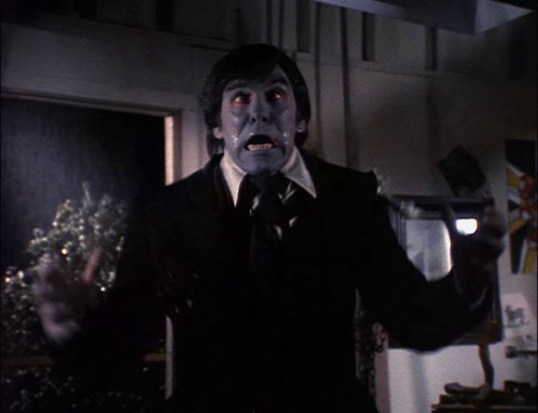
For a made-for-TV movie, The Norliss Tapes is pretty good. It’s full of atmosphere and features a genuinely menaching yellow-eyed zombie monster. The film was directed by Dan Curtis, who was responsible for several made-for-TV horror films and who also created the deathless TV show, Dark Shadows. Curtis also directed a few feature films. Burnt Offerings,for instance, will be forever beloved for its scene of annoying little Lee Montgomery getting crushed by a chimney. If you ever get a chance to listen to the director’s commentary that Dan Curtis recorded for the Burnt Offerings DVD release, you must do so. Curtis comes across as the crankiest man on the planet and it’s actually kind of fascinating to listen to. His irritation when Karen Black keeps asking him if he knows the name of the actor who played the ghostly chauffeur is truly an amazing thing to here. (For the record, the actor’s name was Anthony James, he also had important supporting roles in two best picture winners — In The Heat of the Night and Unforgiven — and yes, he was one of the best things about Burnt Offerings. Karen Black knew what she was talking about.)
But back to The Norliss Tapes!
Admittedly, this is not the first Halloween in which I’ve shared The Norliss Tapes with our readers. Back in both 2015 and 2021, The Norliss Tapes was one of our “horrors on the lens.” Unfortunately, there’s only so many good quality, public domain horror films available on YouTube so, occasionally, a movie is going to show up more than once over the years. But, as long as it’s good film, who cares?
Technically, this isn’t a Halloween or a horror video, unless you live in California and you really hate the rain. But the foggy imagery and the deserted streets and the nighttime cinematography are definitely appropriate for the season.
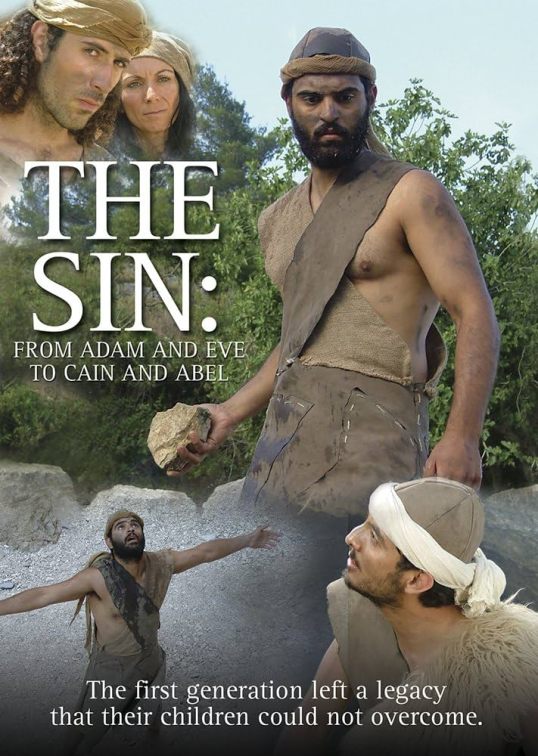
Shortly after creating the world and the first people, God allows Adam (Ayman Nahas) and Eve (Khawlah Hag-Debsy) to live in the Garden of Eden. He only gives them one major rule to follow. They can eat from any tree except for the Tree of Knowledge. They’ve got all the food that they could possibly want, as long as they don’t break that one very simple rule. Eve promptly breaks that rule, taking the advice of a serpent and eating an apple. She then convinces Adam to do the same. When God asks Adam whether or not he ate from the tree, he lies. Then he tries to put all the blame on Eve. God responds by kicking them out of the Garden and cursing them to suffer on Earth.
Adam and Eve wander the Earth, arguing nonstop about who is to blame. Finally, they stop arguing long enough for Eve to get pregnant. In the film, they are depicted as having two sons, Cain (Shredi Jabarin) and Abel (Nahed Bashir). Abel is the gentle sheep herder. Cain is the farmer who sees everything as a competition. When God prefers Abel’s offering of a lamb to Cain’s offering of some nuts and berries, Cain murders his brother and then lies about it.
And, needless to say, everything’s been going downhill ever since.
This is a short film, barely clocking in at 50 minutes. It tells the story faithfully enough, though it leaves out Seth and Adam and Eve’s other children. (Perhaps that’s to avoid discussing the possibility that Cain and Seth ended up marrying their own sisters. I mean, they had to populate the Earth somehow) The main problem with the film is the acting. The actors playing Adam and Eve both come across as being rather goofy and the scenes of them arguing about who is to blame feel more like petulant nagging than an actual discussion about who is to blame for bringing sin into the world. As for Cain and Abel, Abel is kind of wimpy while Cain comes across as being the worst dumbass teenager ever. The scene were Cain start to shout “competition” over and over again made me smile a bit too much, considering that I knew this was going to lead to the first murder.
On the plus side, the film refrains from putting all the blame on Eve. While Eve may have been the first to bite into the forbidden fruit, Adam made his choice and then he not only lied about it but tried to put all the blame on Eve. If anything, this film suggests that Adam was punished less for what he did and more because he refused to accept responsibility for his actions. By that same token, Cain’s murder was bad but his refusal to take responsibility for his actions showed that he was beyond redemption.
As a final note, let me just say that it’s always amazing to me the odd and obscure things that you can find on Tubi if you just spend a few minutes scrolling through your list of recommendations.
 Through the Shattered Lens