Film Review: Notorious (dir by Alfred Hitchcock)


Today is the 121st birthday of one of the great actors of Hollywood’s Golden Age, the one and only Cary Grant.  For those of us who love to watch older films, Grant is usually the epitome of old-fashioned movie star charisma.  He was an actor who could do it all, from screwball comedy to tear-jerking melodrama to exciting thrillers.  What one usually hears about Cary Grant is that he was an actor who was taken for granted because he made everything seem so effortless.

And yet, there was a darkness to Grant’s best performances.  Like Jimmy Stewart, he was an actor whose affable screen presence often hinted at inner turmoil.  And, much as in the case of Stewart, Alfred Hitchcock was a director who immediately understood that.  He cast Grant in some of his best films, usually playing a character with a secret or two to hide.  One of my favorite “darker” Grant performances and films is 1946’s Notorious.

Directed by Alfred Hitchcock, Notorious opens with T.R. Devlin (Cary Grant) meeting and, it is implied, seducing Alicia Huberman (Ingrid Bergman).  Alicia, at the time, was attempting to drink away her sorrow over her father being convicted of treason for his pro-Nazi activities during World War II.  As the daughter of an American Nazi with a reputation for drinking too much and being promiscuous, Alicia is indeed notorious.  That’s something that Devlin uses to his advantage the next morning when he informs that hangover Alicia that he is an American intelligence agent and that he is investigating the activities of a group of Nazi sympathizers who fled to South America at the end of the war.  He wants Alicia, as the daughter of a known sympathizer, to infiltrate their operations.

Reluctantly, Alicia agrees and, while they wait for to learn the exact details of her assignment, they fall in love.  Devlin is not happy when his superiors inform him that they want Alicia to approach and seduce Alex Sebastian (Claude Rains), a friend of her father’s who now lives in Brazil with his domineering mother (Leopoldine Konstantin).  Alicia is even less happy when Devlin tells her of the assignment, especially as she knows that the weak-willed Sebastian has always been in love with her.  She assumes that Devlin only pretended to love her.

After Devlin arranges for Alicia to be at the local riding club at the same time as Alex, Alex meets her and immediately brings her to the mansion that he shares with his mother.  Alex is an interesting character.  When we first meet him, he hardly seems like a Nazi sympathizer.  His happiness when he sees Alicia and the apparent sincerity of his love for her stands in contrast to the often cold, manipulative, and harsh Devlin.  Sebastian invites Alicia to move into his mansion and soon, Alicia tells Devlin that he can add Sebastian to “my list of playmates.”  When Sebastian asks Alicia to marry him, Devlin tells Alicia to do what she wants.  Alicia married Sebastian though she loves Devlin but she soon discovers just how for Sebastian and his mother will go to protect themselves and their Nazi conspirators.

Notorious is famous for its 2 and a half kissing scene between Devlin and Alicia, filmed at a time when the production code specifically stated that kisses could only last for three seconds.  Hitchcock handled this by interrupting the kiss every three seconds and then having his two stars get back to it.  Both Cary Grant and Ingrid Bergman said the scene was awkward to shoot, specifically because they had to keep finding reasons to split apart without splitting too far apart but the effect onscreen is amazingly romantic and probably about as erotic as 1940s studio production could be.  In that scene, you have no doubt that Devlin and Alicia share a passion that Alex, even though he is in love with Alicia, could never understand.  Grant and Bergman have an amazing chemistry in this scene and really the entire film.

As played by Cary Grant, Devlin is not always likable in Notorious.  He can be cold and manipulative and judgmental but, in the end, we never doubt his love for Alicia.  Alex also loves Alicia but he ultimately puts himself (and his mother) first.  As for Alicia, she is someone who has been unfairly branded by both the activities of her father and her past reputation and anyone who has ever come to work or gone to school on a Monday morning and heard the snickering that goes along with the rumors about what she did during the weekend will immediately relate to Alicia.  Alicia is told that the mission is a way to redeem herself but the film suggests that no redemption is necessary.  If anything, it’s Devlin who needs to redeem himself for the way he previously manipulated and judged her.  Devlin and his superiors are trying to stop a group of Nazi sympathizers from graining power in South America and their mission is an important one.  (That sentiment would be even more true from audience watching in 1946, just a year after the end of World War II).  But the important of their mission doesn’t change the fact that the people involved are human beings with very real and very fragile emotions.

Notorious features some of Hitchcock’s best set pieces, from the famous kissing scene to another scene involving the key to a wine cellar.  Grant, Bergman, and Rains give three of their best performances in this intelligent thriller.  (Watching, one can see why Ian Fleming suggested Cary Grant as a possible James Bond.)  I first saw Notorious in a film class in college.  At first, the class was a bit hesitant about a black-and-white movie from 1946 but, by the end, there were cheers as Devlin rushed to save Alicia.  Notorious is a timeless classic.

Notorious (1946, dir by Alfred Hitchcock, DP: Ted Tetzlaff)
THE UNTOUCHABLES (1987) – Happy 70th Birthday, Kevin Costner!


There was a time in my life, before I could drive, when I would beg my parents to stop at the video store every time we went to the neighboring town of Conway, Arkansas. The town I grew up in was too small to have more than just a gas station, so this movie buff had to take advantage of every trip to town. One night when we were headed home, my parents relented to my repeated requests, so we stopped off at Budget Video. I wanted to choose all the movies, but unfortunately mom and dad would also let my brother and sister choose movies from time to time as well. On this particular night, my brother wanted to rent THE UNTOUCHABLES (1987). I don’t remember what I was wanting, but I do remember that it was not THE UNTOUCHABLES. I probably pouted a little bit, but we ended up taking THE UNTOUCHABLES home with us. We turned it on that night, and I’ll gladly admit that I was 100% wrong. THE UNTOUCHABLES immediately became one of my favorite films. Great job, bro!

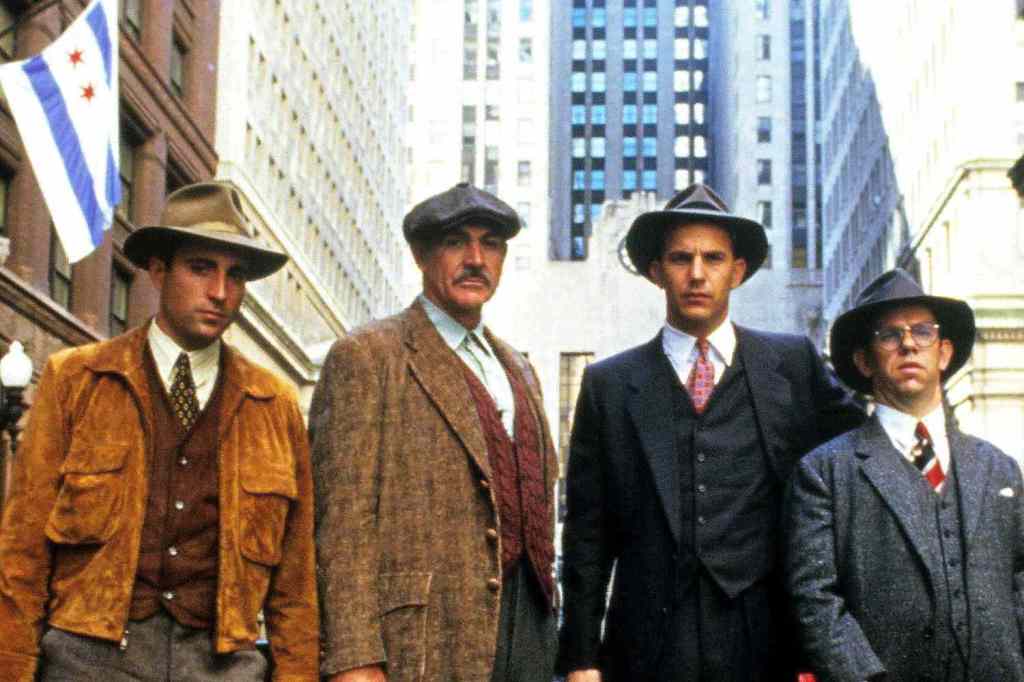
It’s 1930 and Prohibition is the law of the land in the United States of America. Treasury agent Eliot Ness (Kevin Costner) has been given the seemingly impossible task of bringing down notorious gangster Al Capone (Robert De Niro), who supplies booze to nearly all of Chicago. Capone doesn’t just supply the booze, he rules Chicago with an iron fist; and if you’re a local business who doesn’t want to buy his product, he just may blow your ass up! Ness’ job is made especially difficult due to the rampant corruption in Chicago, where everyone from the Mayor, to the judges, lawyers, and law enforcement officers are all on Capone’s payroll, making it pretty much impossible to trust anyone. In a complete stroke of luck, Ness encounters the honest Irish American policeman James Malone (Sean Connery) and asks him to join him in bringing down Capone. With Malone, Ness has found that honest and badass cop who’s not afraid to go up against Capone and his goons. Knowing that most of the police force is already compromised, the two men head to the police academy to try to find another honest cop. This turns out to be another great move as they come upon an Italian American trainee named George Stone (Andy Garcia), who’s a prodigy with a gun. Their last, and greatest move in this humble CPA’s opinion, comes when they accept accountant Oscar Wallace (Charles Martin Smith) to their team. Wallace is convinced that the key to bringing down Capone is trying to build a tax evasion case against him. He’s initially laughed at, but it’s soon apparent that this accountant knows his debits and credits, and his expertise may be just what’s needed to end Capone’s reign of terror once and for all.

I’ve always considered THE UNTOUCHABLES to be a near perfect film. One of the main reasons I find the film so perfect is the direction of Brian De Palma. I’ve been a fan of his “style” for so long, with films like DRESSED TO KILL (1980) and BLOW OUT (1981), but I think he just nails the material here. There are so many great scenes, but the “Union Station” sequence has to be one of the most perfectly choreographed sequences of all time. The building of the tension, the slow-motion shootout when the bad guys arrive, and finally the badass resolution all prove what an absolute master De Palma could be with the right material. De Palma claims that he made up the series of shots as he was filming the scenes at the train station, making the final product that much more impressive. And this all plays out against the background of a “lullaby theme” composed by the legendary Ennio Morricone (THE GOOD, THE BAD, AND THE UGLY). This is what “cinema” is all about.

THE UNTOUCHABLES has an amazing cast of actors to bring its “based on real events” story to life. Kevin Costner was just beginning to emerge as a movie star when this movie was made back in 1987. Especially as a younger actor, Costner was good at projecting both a certain innocence, tempered with the willingness to do what it takes to get the job done once his family and friends are put in danger. And what can you say about actors like Sean Connery and Robert De Niro?!! Connery is so charismatic, wise, and tough as the beat cop who shows Eliot Ness how to beat Capone… ”he sends one of yours to the hospital, you send one of his to the morgue!” He’s a beat cop because he’s incorruptible, and Connery projects that stubborn honesty perfectly. I’m so glad that Connery won an Oscar for this performance, as it would be the only time he would ever be nominated for an Academy Award. He’s amazing in this role, even if his accent is Scottish rather than Irish (a notable controversy at the time). Connery may have won the Oscar, but Robert De Niro matches him scene for scene. His ability to make Capone both charismatic and evil in equal measure is an example of what makes De Niro special as an actor. So many actors phone in these types of broad performances, but not De Niro. I also just think it’s cool that De Niro admitted that his performance was heavily influenced by Rod Steiger’s in 1959’s AL CAPONE. I love Steiger and consider this a wonderful tribute. Throw in a young Andy Garcia, the always underrated Charles Martin Smith, and a creepy Billy Drago as Frank Nitti, and you have one of the better casts ever assembled. I especially became a fan of Garcia based on his performance in THE UNTOUCHABLES.

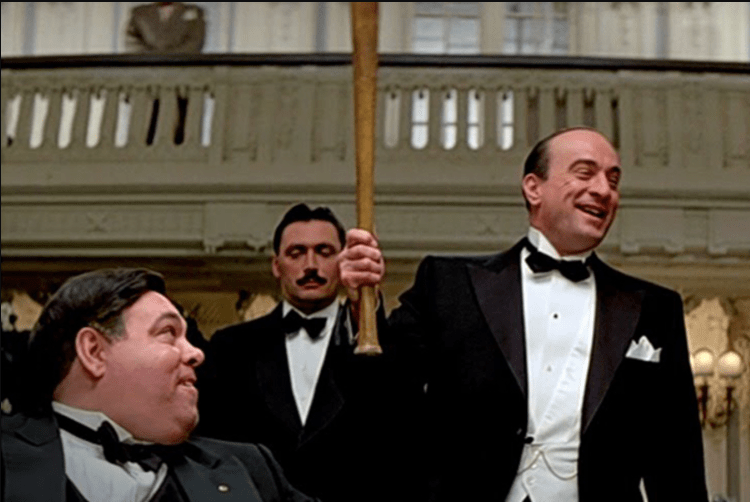
The last person I want to mention is the screenwriter, David Mamet. His screenplay is another perfect element of THE UNTOUCHABLES. The same man who has directed his own films like HOUSE OF GAMES (1987), HOMICIDE (1991), THE SPANISH PRISONER (1997), and SPARTAN (2004) knows how to write a great screenplay. There are so many amazing moments, from the “baseball bat” sequence to the “Stone recruitment” scene, and even Ness’ “he’s in the car” line about Frank Nitti, it’s a muscular screenplay full of big-time moments of audience satisfaction.

At the end of the day, THE UNTOUCHABLES is just a great movie. I still periodically thank my brother for picking it out that fateful day in the late 80’s, and it will always be one of my very favorites. It’s one of those movies that I recommend with zero reservations!

Check out the trailer below, and if you’re smart, you’ll watch one of the great movies of the 1980’s, Brian De Palma’s THE UNTOUCHABLES.

Music Video of the Day: Delta 88 Nightmare by X (2019, dir by Henry Mortensen)


How about starting the long weekend with X?

This video stars and was directed by Exene’s son, Henry Mortensen and co-stars her niece, Carolyn Allen.  The video was shot in Cannery Row in Monterey, California.

Enjoy!

Lisa Marie Review An Oscar Nominee: Here Comes Mr. Jordan (dir by Alexander Hall)


1941’s Here Comes Mr. Jordan tells the story of Joe Pendelton (Robert Montgomery).

Joe’s a boxer, an honest and kind-hearted guy who is in training for the big title fight.  Despite the concerns of his trainer, Max (James Gleason), Joe decides to take his own private airplane out for a flight.  A freak accident causes the plane to go into a nosedive and Joe suddenly finds himself standing amongst the clouds with a bunch of other people who are waiting for their chance to enter Heaven.

7013 (Edward Everett Horton), an angel, explains that he took Joe’s soul up to heaven when he saw that the plane was about to crash.  Joe is not happy about this.  He wants his title fight!  7013’s superior, Mr. Jordan (Claude Rains), checks his records and discovers that a mistake has been made.  Joe was supposed to live until 1991 and he was also supposed to win the boxing championship.  Unfortunately, Max has had Joe’s body cremated.  Mr. Jordan decides to put Joe’s soul into the body of someone else who is scheduled to die.  Joe asks to be put in the body of an athlete so that he can pursue his boxing career.

Instead, Joe ends up in the body of a middle-aged banker named Bruce Farnsworth.  Farnsworth has been poisoned by his wife (Rita Johnson) and her lover (John Emery).  At first, Joe refuses to become Farnsworth but when he sees his murderers taunting Bette (Evelyn Keyes), whose father was defrauded by Farnsworth, Joe changes his mind.  His murderers are shocked when Farnsworth turns out to be alive.  Bette is shocked when the previously cold Farnsworth helps her get back the money that her father lost.  And Max is shocked when Farnsworth calls him to the mansion and explains that he’s really Joe Pendleton.  Only with Joe/Farnsworth plays the saxophone badly does Max believe what Joe says.  Joe asks Max to train him for the boxing match that he was scheduled to fight while alive.  Max agrees but Mr. Jordan warns Joe that, if he’s going to fulfill his destiny and become champ, it’s not going to be as Bruce Farnsworth, regardless of the fact that Joe/Farnsworth and Bette have now fallen in love.

A romantic comedy that is blessed with two likable performances from Robert Montgomery and Evelyn Keyes and a great one from Claude Rains, Here Comes Mr. Jordan was nominated for Best Picture of 1941.  It lost to How Green Was My Valley.  While Here Comes Mr. Jordan really can’t compare to some of the other films that lost (amongst the other nominees were Citizen Kane and The Maltese Falcon), it’s still a wonderfully charming film that holds up well today.  Everyone should be as lucky as to have a guardian who is as charming and urbane as Claude Rains is as Mr. Jordan.

In 1978, Here Comes Mr. Jordan was remade by Warren Beatty, who named his version of the story Heaven Can Wait.  That version of the story was also nominated for Best Picture, though it lost to The Deer Hunter.

Retro Television Review: St. Elsewhere 1.8 “Tweety and Ralph”


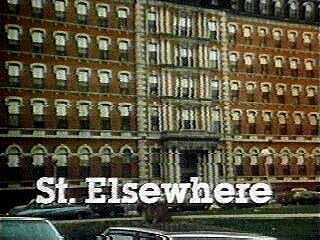
Welcome to Retro Television Reviews, a feature where we review some of our favorite and least favorite shows of the past! On Fridays, I will be reviewing St. Elsewhere, a medical show which ran on NBC from 1982 to 1988.  The show can be found on Hulu and, for purchase, on Prime!

Oddly enough, this week’s episode is not available on Hulu.  I had to purchase it on Prime.  I’m not really sure why this episode — and apparently this episode alone — wouldn’t be on Hulu.  The world of Streaming is a strange and arbitrary place.

Episode 1.8 “Tweety and Ralph”

(Dir by Mark Tinker, originally aired on December 20th, 1982)

Dr. Craig is still trying to track down the mysterious Dr. Barnum, the man who says that he’s interested in Craig’s convertible.  Dr. Craig is constantly getting messages from Barnum.  He’s constantly hearing Barnum being paged on the PA.  Craig has become obsessed with tracking down the elusive Dr. Barnum.

Of course, Dr. Barnum does not exist.  What started as a practical joke on the part of Dr. Samuels has grown into a hospital-wide conspiracy of people playing with the emotions of the pompous and prickly Dr. Craig.  Craig is so obsessed with selling his car that he even cuts his hand while working on the engine.  Finally, Dr. Craig’s wife, Ellen (played by William Daniels’s real-life wife, Bonnie Bartlett), confronts Samuels and tells him that she knows what he’s doing.  When Samuels hears that Craig cut his hand, he feels guilty.  He knows how important a surgeon’s hands are.  Samuels finally works up the courage to tell Craig the truth.  Craig laughs.  And then he punches out Dr. Samuels.

And you know what?  Dr. Samuels totally deserved it.  Good for you, Dr. Craig!

(Everyone seems to have forgiven Dr. Samuels for causing a VD break-out during the pilot.  They’re very forgiving at St. Eligius.)

Meanwhile, the Legionnaire’s outbreak is finally contained, with the culprit being one dirty shower head.  Ward 5 is re-opened!  Yay!  Dr. Westphall celebrates his victory but still comes across as being the most depressed man on the planet.  While that goes on, Dr. Fiscus reveals that he now carries a gun so he won’t get mugged in the ER again and Dr. Cavanero considers her decision to devote her life to her career when a friend check into the hospital for hysterectomy.

That said, the majority of the episode centered around Ralph (Richard Marcus) and Jane (Laraine Newman), two psychiatric patients.  Jane is pregnant and Ralph is the father.  Ralph is a genius who graduated at the top of his class from MIT and who invented his own personal computer.  Unfortunately, he also thinks that he’s a bird and has been stealing medical supplies to build a giant nest in one of the supply closets.  Jane wants to marry Ralph but, when she and Ralph go out to dinner with Dr. Beale, Jane can only watch in horror as Ralph panics at the sight of a cat.  “Caw!  Caw!” Ralph shouts as he jumps up on  a chair.  The cat, for its part, just looks confused.

In other words, the marriage is off.  Jane tells Ralph that she’ll always love him but that she can’t be with him anymore.  The episode ends with a close-up of Ralph intensely staring at the camera.  Uh-oh, that doesn’t look good….

This was a weird but ultimately effective episode.  I really shouldn’t have been as emotionally moved as I was by Ralph and Jane’s story.  Ralph’s behavior was more than a little cartoonish.  But, I have to admit that I felt really sad as Jane said goodbye to Ralph.  Richard Marcus and Laraine Newman did such a good job playing the characters that I couldn’t help but be sad that things weren’t working out for them.

Oh well.  I guess that’s just another day at St. Eligius….

Starring James Earl Jones: The Man (dir by Joseph Sargent)


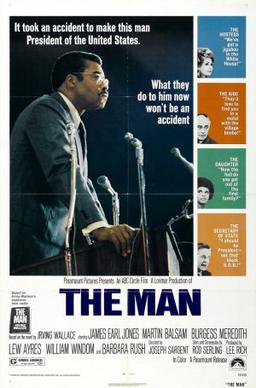
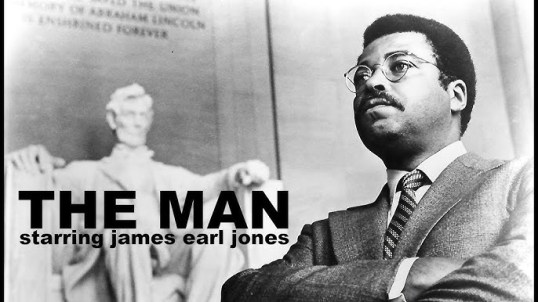
In 1972’s The Man, James Earl Jones stares as Douglass Dilman.

Dilman is a black college professor and a U.S. Senator.  To his friends, he’s a symbol of progress.  To his enemies, he’s a sell-out who is viewed as being improperly radical.  The U.S. Senate, eager to prove that it’s not a racist institution, has elected Dilman as the President Pro Tempore.  He is now fourth in line for the presidency but that doesn’t concern racist senators like Senator Watson (Burgess Meredith).  A lot would have to happen before Dilman would ever become President.

Needless to say, a lot does happen.

The President and the third-in-line Speaker of the House are attending a conference at a historic building in Frankfort when the roof collapses on them.  We don’t actually see this happen.  We just hear the people in the White House talk about how it’s happened.  We also don’t really learn many details about why the roof collapsed.  Someone nonchalantly says, “It’s an old building.”  Myself, I spent the entire movie waiting for some sort of big revelation of a conspiracy behind the roof collapse but it didn’t happen.  Apparently, in 1972, the Secret Service just let the President go anywhere without checking the place out first.  That said, it’s not a good thing when a serious movie opens with a dramatic plot development that, at the very least, draws a chuckle from the audience.  Seriously, we lost our President because a roof fell on him?  How is America ever going to live that down>

Vice President Noah Calvin (Lew Ayres) is wheeled into the White House cabinet room.  This was not the first time that a Ayres played a Vice President called upon to succeed the President.  Unlike in Advice and Consent, the Vice President announced that he cannot accept the honor of being sworn in because he’s too sick.  (Since when does the Vice President have the option to refuse to do his Constitutional duty?)  With Calvin putting the country ahead of his own ambition, Senator Watson announces that Secretary of State Eaton (William Windom) will be the new President.  No, Eaton says, Dilman will be the new president.  But once Dilman screws up and is either impeached or resigns, fifth-in-line Eaton will be sworn in.

Except …. it wouldn’t work that way.  Excuse me while I put my history/political nerd hat on….

First off, Calvin is apparently still Vice President so if Dilman did step down, Calvin would once again be the successor.  What if Calvin refused a second time?  As soon as the Speaker of the House died, the House of Representatives would elect a new Speaker and that person would be third-in-line.  And, as soon as Dilman became President, the Senate would elect a new President Pro Tempore and that person would be fourth-in-line.  In other words, Eaton is no closer to being President than he was before.

My reason for going  into all of this is to illustrate that The Man is a film about American politics that doesn’t really seem to know much about American politics.  That said, it does feature the great James Earl Jones as Douglass Dilman and Jones gives such a good and thoughtful performance that it almost doesn’t matter that no one else in the film seems to be taking it all that seriously.  Jones plays Dilman as being a careful and cautious man, one who understands that he occupies a huge place in history (Barack Obama was only 11 years old when this film came out) but whose main concern is just doing a good job as President.  Dilman finds himself in the middle.  On one side, he has advisors warning him not to scare America by being too radical.  On the other side, his activist daughter (Janet MacLachlan) brands Dilman a sell-out.  When a black student named Robert Wheeler  (Georg Stanford Brown) is arrested for assassinating a South African government official, Dilman’s first instinct is to believe Wheeler’s been framed but, as the film progresses, doubts start to develop and Dilman must decide whether or not to risk an international incident.  It’s an interesting story, well-played by James Earl Jones and Georg Stanford Brown.

It was originally mean to be a made-for-TV movie but, in order to capitalize on the excitement on the 1972 presidential election, it was released into theaters.  As a result, the film often has the cheap look of a made-for-TV movie and quite a few members of the cast give performances that feel more appropriate for television than the big screen,  (Some members of the cast, like Burgess Meredith, just overact with ferocious abandon.)  In the end, The Man is mostly of interest from a historical point of view.  (In 1972, the idea of a black man being elected President seemed so unrealistic that the movie actually had to drop the roof on 50% of the government just to get Dilman into the Oval Office.)  James Earl Jones, who would have turned 94 today, is the main reason to watch.

Late Night Retro Television Review: Highway to Heaven 3.9 “Code Name: FREAK”


Welcome to Late Night Retro Television Reviews, a feature where we review some of our favorite and least favorite shows of the past!  On Thursdays, I will be reviewing Highway to Heaven, which aired on NBC from 1984 to 1989.  The entire show is currently streaming on Freevee and several other services!

This week, the highway leads to college and R-rated movies!

Episode 3.9 “Code Name: FREAK”

(Dir by Michael Landon, originally aired on November 19th, 1986)

Jonathan and Mark have been assigned to work on a college campus.  While Jonathan gets to teach a computer class, Mark is assigned to be the resident assistant of a rowdy bunch of jocks who all live in the same dorm.  This episode continues the Highway to Heaven tradition of Mark always being humiliated by the assignment.  If I was Mark, I would be wondering why “the boss” always gives me the worst possible jobs.

Chris Gunn (Jeff Bryan Davis) is starting his first semester at the college.  He’s smart, he’s well-read, and he’s desperate to make friends with everyone.  Unfortunately, Chris is also only 13 years old and, even if he did graduate from high school, there’s no way he should be away from home at the college.  He has no friends.  No one invites him to any parties.  Chris is refused entry to an R-rated movie because he is not accompanied by an adult.

Chris’s roommate is Danny (Gary Hershberger), a football player who  is not quite as shallow as his fellow jocks.  When it looks like Danny might flunk his computer class, Danny’s frat brothers offer to accept Chris into the frat if Chris agrees to hack into Jonathan’s commercial and get the answers for the next big test. Chris does so but then double-crosses Danny by giving him all the wrong answers.  Chris’s not as naive as everyone thought!

Danny flunks the test and loses his spot on the football team.  When its learned that he cheated, Danny loses his scholarship and is expelled for refusing to reveal how he got the answers for the test.  Danny, knowing what happens to narcs, refuses to sell out and lit appears that he’s going to lose his scholarship as a result.  Stunned that Danny didn’t want to get him in trouble, Chris tells the truth to the school’s dean.  Danny is allowed to stay and after some prodding from Jonathan, the dean decides to allow Chris to stay as well.

Chris and Danny are both super-excited and have a new found respect for each other.  They celebrate by….

GOING TO AN R-RATED MOVIE!  Danny accompanies Chris so Chris gets to see a movie that’s he’s probably too young for!  Yay!

This is a prototypical episode of Highway to Heaven.  It’s unapologetically sentimental and rather predictable but it’s also so incredibly earnest and sincere that it doesn’t really matter.  We want to see everything work out for everyone and fortunately, it does.

Myself, it will never not amuse me that, after learning that he won’t be expelled and neither will Danny, Chris’s firth thought is that they should go catch an R-rated picture while they still have time.  And Danny agrees!  I always want to know what type of film are they watching.  Is it a slasher film or a mindless high school comedy or maybe something featuring a bunch of fast cars and occasionally juvenile behavior?

This was a classic episode.  I assume Danny and Chris are still best friends.

Film Review: Starman (dir by John Carpenter)


John Carpenter has directed 18 features film, from 1974’s Dark Star to 2010’s The Ward.  Some of his films have been huge box office successes.  Some of his films, like The Thing, were box office flops that were later retroactive recognized as being classics.  Carpenter has made mainstream films and he’s made cult favorites and, as he’s always the first to admit, he’s made a few films that just didn’t work.  When it comes to evaluating his own work, Carpenter has always been one of the most honest directors around.

Amazingly, Carpenter has only directed one film that received an Oscar nomination.

That film was 1984’s Starman and the nomination was for Jeff Bridges, who was one of the five contenders for Best Actor.  (The Oscar went to F. Murray Abraham for Amadeus.)  Bridges played the title character, an alien who is sent to Earth to investigate the population and who takes on the form of the late husband of Jenny Hayden (Karen Allen).  The Starman takes Jenny hostage, though its debatable whether or not he really understands what it means when he picks up her husband’s gun and points it at her.  He and Jenny drive across the country, heading to Arizona so that he can return to his ship.  Pursued by the government (represented by the sympathetic Charles Martin Smith and the far less sympathetic Richard Jaeckel), the Starman learns about emotions, eating, love, and more from Jenny.  Jenny goes from being fearful of the Starman to loving him.  Carpenter described the film as being It Happened One Night with an alien and it’s not a bad description.

After Jenny and the alien visitor make love in a boxcar, the Starman says, “I gave you a baby tonight,” and that would be an incredibly creepy line coming from a human but it’s oddly charming when uttered by an alien who looks like a youngish Jeff Bridges.  Bridges definitely deserved his Oscar nomination for his role here.  Speaking with an odd accent and moving like a bird who is searching for food, Bridges convincingly plays a being who is quickly learning how to be human.  The Starman is constantly asking Jenny why she says, does, and feels certain things and it’s the sort of thing that would be annoying if not for the way that Bridges captures the Starman’s total innocence.  He doesn’t mean to be a pest.  He’s simply curious about everything.

Bridges deserved his nomination and I would say that Karen Allen deserved a nomination as well.  In fact, it could be argued that Allen deserved a nomination even more than Bridges.  It’s through Allen’s eyes that we see and eventually come to trust and then to love the Starman.  Almost her entire performance is reactive but she makes those reactions compelling.  I would say that Bridges and Allen deserved an Oscar for the “Yellow light …. go much faster” scene alone.

Carpenter agreed to make Starman because, believe it or not, The Thing had been such a critical and commercial flop that it had actually damaged his career.  (If ever you need proof that its best to revisit even the films that don’t seem to work on first viewing, just consider Carpenter’s history of making films that were initially dismissed but later positively reevaluated.  Today, The Thing, They Live, Prince of Darkness, and In The Mouth of Madness are all recognized as being brilliant films.  When they were first released, they all got mixed reviews.)  Carpenter did Starman because he wanted to show that he could do something other than grisly horror.  Starman is one of Carpenter’s most heartfelt and heartwarming films.  That said, it also features Carpenter’s trademark independent streak.  Starman not only learns how to be human but, as a result of the government’s heavy-handed response to his arrival, one can only assume that he learns to be an anti-authoritarian as well.

Starman is one of Carpenter’s best films and also a wonderful showcase for both Karen Allen and Jeff Bridges.

Film Review: Dark Star (dir by John Carpenter)


Dark Star (1974, dir by John Carpenter, DP: Douglas Knapp)

What’s it like to live in outer space?

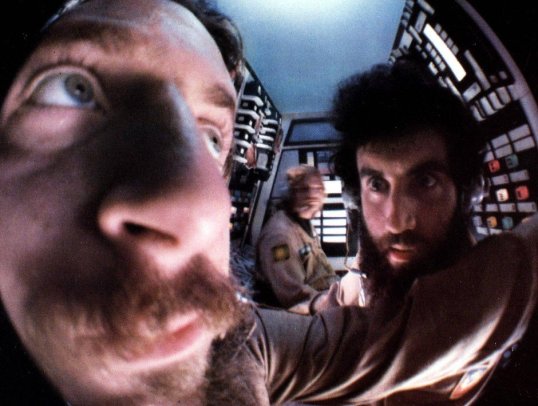
That’s the question posed by 1974’s Dark Star and the answer seems to be that it’s boring as Hell.  Lt. Doolittle (Brian Narelle), Sgt. Pinback (future director and screenwriter Dan O’Bannon), Boiler (Cal Kuniholm), and Talby (Andreijah “Dre” Pahich) have been floating in their spaceship for over twenty years.  (Because of the vagaries of the space-time continuum, they’ve only aged three years in all that time.)  The leader of their mission, Commander Powell (Joe Saunders) was killed when he was accidentally electrocuted at the start of the mission.  The crew put his body in suspended animation so that they could still ask him question despite the fact that he’s not quite alive.  (When they do talk to Powell, Powell is very resentful about the whole situation.)  Doolittle, a former surfer, has taken over as commander of the ship though no one seems to be quite sure what their mission is.

The men struggle to find ways to pass the time as they float endlessly through space.  Some of them watch the asteroids in the distance.  Doolittle fantasizes about surfing.  Pinback plays jokes on people and claims to be an imposter who killed the real Pinback before the start of the mission.  The spaceship is a cluttered mess and the crew looks more like a collection of long-haired hippies than a group of rigorously trained astronauts.  They spend their time getting on each other’s nerves.

They do have a few things that they have to deal with over the course of the film.  The men aren’t particularly smart and whatever discipline they had was abandoned long ago.  As a result, their ship constantly seems to be on the verge of literally falling apart.  A dangerous alien that looks like a beach ball gets loose on the ship.  Even worse, one of the ship’s talking bomb is having an existential crisis.  It’s been over 20 years and it has yet to be used to blow anything up.  What, the bomb wonders, is the purpose of being a bomb if you can’t blow anything up?  Then again, what is the purpose of being in space if there’s nothing left to explore or to discover?

Dark Star is a film that requires a bit of patience.  It moves at its own deliberate pace and a lot of the humor comes from the contrast between the shabbiness of the film’s crew and Stanley Kubrick’s far sleeker vision of space travel in 2001: A Space Odyssey.  Both Dark Star and 2001 are existential films about man’s search for meaning in the stars.  In 2001, Dave Bowman finds that meaning, even if he doesn’t realize it.  The crew of the Dark Star however have to deal with very real possibility that there is no meaning.  Dark Star‘s comedy comes from poking fun at the concept that going into space would make people any less frustrated than they already are on Earth.

Essentially a stoner comedy set in space, Dark Star was John Carpenter’s feature debut.  It started out as a student film but Carpenter and Dan O’Bannon were able to raise an extra $10,ooo  to extend it to feature length.  Largely overlooked when it was first released, it was re-released in 1979.  By that point, Carpenter had directed Halloween and O’Bannon had written Alien, a film that had more than a little in common with Dark Star’s shabby future and its dangerous alien.  While Dark Star definitely shows its origins as a student film, I’ve always enjoyed it.  It’s hard not appreciate the film’s ambition.  And, in its way, it’s probably one of the most realistic vision of life in space ever captured on film.  Humans, the film says, will always be humans.  They’ll always screw things up but occasionally, if they’re lucky, they’ll also get to surf amongst the stars.