Today is Star Wars Day. (It’s May 4th. May the Fourth Be With You! I’ll stop now.) Five years ago, I ranked all of the Star Wars feature films that had been released up until that point from best to worst. Here’s how I ranked them:
- The Empire Strikes Back
- Rogue One
- New Hope
- The Force Awakens
- Revenge of the Sith
- Return of the Jedi
- Solo
- The Rise of Skywalker
- The Last Jedi
- Attack of the Clones
- The Phantom Menace
Since that was a while ago, I decided to take a look back and see if I still felt the same way. Here are my brief thoughts on each film, in order of release.
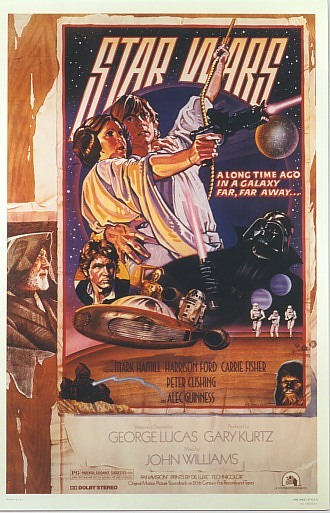
Star Wars: Episode IV — A New Hope (1977, directed by George Lucas) — A New Hope may not be the best Star Wars film but it’s still the most entertaining, even if George Lucas doesn’t seem to realize that. A tribute to the serials and space operas that Lucas grew up with, A New Hope features great action scenes, special effects that hold up well despite not being as slick as modern CGI, and great performances from Alec Guinness and Harrison Ford. Mark Hamill would eventually become a much better actor, though you might not guess just from his performance here. Watching New Hope today, I really appreciate that the movie doesn’t get bogged down in overexplaining things. We don’t need to know what the Clone Wars were specifically about or what the Kessel Run actually was. They sound cool and that’s all that was really required. Despite what some claim, there is absolutely no evidence that Darth Vader was meant to be Luke’s father in this move.
Star Wars Holiday Special (1978, directed by Steve Binder) — Only aired once, I debated whether to include it here or not. I eventually did just because it features the debut of Boba Fett. It’s as bad as you’ve heard but the special’s real since is that it’s incredibly boring. Harrison Ford still looks happier here than he did in Return of the Jedi.
Star Wars: Episode V — The Empire Strikes Back (1980, directed by Irvin Kershner) — The best of the original trilogy, this installment was surprisingly dark, downbeat, and violent. Mark Hamill finally started to show some signs of growth as an actor while Harrison Ford’s Han Solo continued to be the coolest rebel in the universe. Combining the more thoughtful scenes with Yoda with the action-orientated scenes on Cloud City made this the most intelligent of the Star Wars films. The battle on Hoth remains one of the best action scenes ever. I think every kid who saw this movie wanted an AT-AT Walker. I know I did.
Star Wars: Episode VI — Return of the Jedi (1983, directed by Richard Marquand) — It’s not quite as bad as its reputation, largely due to the opening with Jabba the Hutt’s court. Jabba is so grotesque and evil in this movie that it’s hard not to regret that the subsequent films made him into more of buffoon than a crime lord. Brining back the Death Star made this film feel like a retread. The Ewoks were created to sell toys but so was everything else in this movie. Harrison Ford looks particularly grouchy at the end.
The Ewok Adventure (1984, directed by John Korty) and Ewoks: The Battle For Endor (1985, directed by Jim and Ken Wheat) — I guess if these had been successful, there would have been an Ewok television show. The Ewok Adventure feels childish and features a narrator. Battle for Endor is surprisingly violent for a movie about teddy bears. Both films are more bland than truly bad.
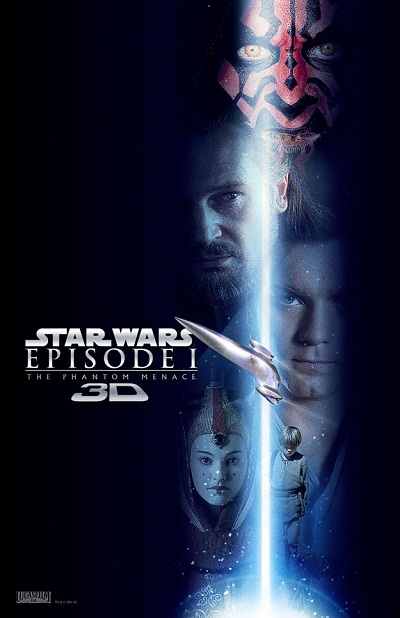
Star Wars: Episode I — The Phantom Menace (1999, directed by George Lucas) — There’s been some revisionism about this film. Some people actually defend it now. Not me. It’s still pointless. This movie started the trend of every popular film having to have an in-depth “mythology” behind it. It turns out that the Evil Empire was all about trade routes and tariffs. Jake Lloyd gets more blame than he deserves. Overexplaining the Force was a sign of things to come. This movie would feature Natalie Portman’s worst performance if not for…
Star Wars: Episode II — Attack of the Clones (2o02, directed by George Lucas) — As painfully generic as its title, this movie was responsible for Hayden Christensen having an undeserved reputation for being a bad actor. I doubt any actor, no matter how talented, could make Lucas’s dialogue feel natural.
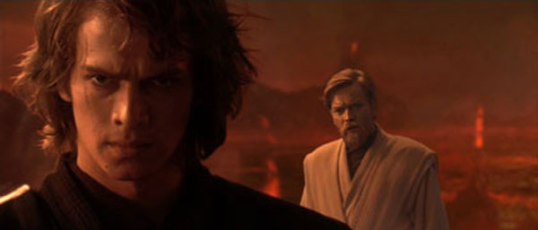
Star Wars: Episode III — Revenge of the Sith (2005, directed by George Lucas) — The only one of the prequels that actually added anything to what we already knew, Revenge of the Sith is dark, violent, and it doesn’t have as many slow spots as the other prequels. Ewan McGregor finally gets a chance to act and Hayden Christensen and Natalie Portman are finally given actual characters to play. Today, some people say it’s the best of the Star Wars films. They’re wrong but it’s still pretty good.
The Clone Wars (2008, directed by Dave Filoni) — The only animated Star Wars film doesn’t get much attention and it does get bogged down in the mythology of the of the prequels. No one really cares about the specifics of the Clone Wars. The fact that it’s animated and clearly marketed at kids makes the dialogue easier to tolerate.
Star Wars: Episode VII — The Force Awakens (2015, directed by J.J. Abrams) — When this first came out, a lot of people (including myself) were so happy to have a new Star Wars film that we overrated it. It’s hard to watch today without thinking about how bad things got after it was released but it does still hold up well as a space adventure, though Daisy Ridley’s blandness is more apparent on subsequent viewings. The performances of Adam Driver and John Boyega still hold up. The main attraction, though, is Harrison Ford returning as Han Solo.
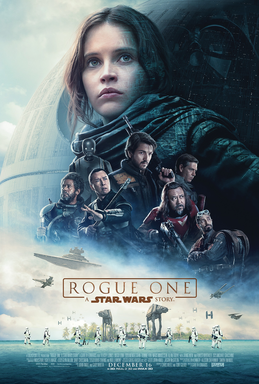
Rogue One: A Star Wars Story (2016, directed by Gareth Edwards) — The first stand-alone live action Star Wars feature film is a thrilling space adventures that holds up on subsequent viewings and works because the stakes actually feel real. For the first time since New Hope, the Death Star is actually frightening. This remains one of the best films in the franchise and it’s not surprising that it led to the best of the Star Wars television shows.
Star Wars: Episode VIII — The Last Jedi (2017, directed by Rian Johnson) — The haters are right about much of this film. For all the complaints about Disney not allowing their Marvel directors much freedom, the Star Wars sequels shows what happens when a franchise isn’t sure where it wants to go. Rian Johnson tries to bring Star Wars down to Earth but that’s not where we want Star Wars. Rose Tico was an annoying character and her line about saving what we love deserves all of the mockery it received but Kelly Marie Tran still didn’t deserve to be run off of social media. Turning Luke into a bitter old man was this film’s greatest sin.
Solo: A Star Wars Story (2018, directed by Ron Howard) — That this wasn’t a box office hit was the a clear warning sign that audiences were getting bored with Star Wars. This Han Solo origin story isn’t bad. Ron Howard could direct a film like this in his sleep. It just feels unnecessary. Alden Ehrenreich does his best but no one can replace Harrison Ford as Han Solo.
Star Wars: Episode IX — The Rise of Skywalker (2019, directed by J.J. Abrams) — J.J. Abrams tries to undo everything that Rian Johnson did in his film. I don’t blame Abrams because Johnson’s film wasn’t great but just shrugging it all off doesn’t really work either. The sequel trilogy, which started with such high hopes, ends with a whimper. Daisy Ridley’s boring performance doesn’t help.
My rankings, as of 2025, are below:
- The Empire Strikes Back
- Rogue One
- New Hope
- Revenge of the Sith
- Return of the Jedi
- Force Awakens
- Solo
- Rise of Skywalker
- The Last Jedi
- Ewoks: Battle for Endor
- The Clone Wars
- The Ewok Adventure
- Holiday Special
- Phantom Menace
- Attack of the Clones
 The year 2005 was a dark time to be a fan of Star Wars.

 Through the Shattered Lens