In the days of the Old West, Griff Atkins (Stanley Blystone) manages a Pony Express station but, because of his gambling debts, he actually encourages the Indians and the outlaw Richard brothers (John Rockwell and Ray Teal) to attack the Pony Express riders and steal their horses. Major Goodwin (Tom Chatterton) tries to put a stop to all this by firing Griff and putting Cal Sheridan (Johnny Mack Brown) in charge. Griff and the Richard brothers continue their outlaw ways and eventually, the head of one of the relay stations is killed in one of their raids. While the dead man’s daughter, Norma (Nell O’Day), investigates the murder, Cal works to bring peace the line and falls in love with Goodwin’s daughter, Alice (Dorothy Short). Meanwhile, aspiring Pony Express rider Shorty (Fuzzy Knight) tries to invent a trampoline system that will help him to mount a horse.
No matter how bad things get in the west, you can always count on Johnny Mack Brown to bring some order and to get it done in less than an hour. Johnny Mack Brown was always a good hero and that’s the case here. Eventually this film has all of the horse riding and tough fighting that fans of the genre expect from these westerns but, for a short movie (it only runs for 59 minutes), it still seems to take a while for it to really get going. The first half of the movie is more about Fuzzy Knight singing songs and trying to become a rider than it is about anything else. I usually enjoy Fuzzy’s antics but, like the B-western themselves, they are definitely an acquired taste for most viewers.
Rio (Marlon Brando), a young outlaw in the Old West, is betrayed by his partner and mentor Dad Longworth (Karl Malden) and ends up spending five years in a Mexican prison. When Rio escapes, he gets together a new gang and heads for Monterey, California. He wants to both get his revenge on Longworth and also rob the local bank. Things get complicated when Rio actually confronts Longworth and suddenly realizes that he can’t bring himself just to gun the man down in cold blood. Rio is not as ruthless of an outlaw as he thought he was.
However, Rio then meets and falls in love with Louisa (Pina Pellicer), Longworth’s stepdaughter Longworth is willing to do whatever he has to keep Rio away from Louisa and, when Rio starts to think about going straight in an effort to win Louisa’s love, his new gang turn out to be even less trustworthy than his old partners.
A teenage rebellion film disguised as a western (and it’s not a coincidence that the main bad guy is named Dad), One-Eyed Jacks was Marlon Brando’s only film as a director. The film was originally meant to be directed by Stanley Kubrick, who was working from a script written by a once-in-a-lifetime combination of Rod Serling and Sam Peckinpah. Kubrick and Brando worked together to develop the film, with Brando insisting on Karl Malden as Dad. (Kubrick wanted to cast Spencer Tracy.) Ultimately realizing that working on One-Eyed Jacks would mean essentially taking orders from his star, Kubrick stepped down from directing so he could focus on Lolita and Brando took over as director. The film finally went into production in 1958 and would not be released until 1961. Brando’s perfectionism was blamed for the film going massively overbudget and, when it was finally released, One-Eyed Jacks was the first of Brando’s films to lose money. The combined box office failures of One-Eyed Jacks and the remake of Mutiny on the Bounty left Brando in the cinematic wilderness for much of the 60s.
As for the film itself, One-Eyed Jacks takes what should have been a simple story and attempts to turn into an epic. Rio spends a good deal of time brooding and the film seems to brood right along with him. What starts out as a western becomes a forbidden love story as Rio and Louisa fall for each other. Dad Longworth may be an outlaw-turned-sheriff but Malden plays him more as a possessive father who can’t handle that his two stepchildren — Rio and Louisa — are both turning against him and his strict rules. Brando obviously viewed the film as being something bigger than a standard western. Sometimes, his direction works and he does manage to get the epic feel that he was going for. Other times, the film itself seems to be unsure what direction it wants to go in telling its story. This is method directing.
Ultimately, One-Eyed Jacks is an interesting experiment, one that doesn’t really work but which still features Charles Lang’s outstanding cinematography and one of Karl Malden’s best performances. As Brando’s only directorial effort, the film is a curiosity piece, one that will be best enjoyed by western fans who have the patience for something a little different. And, for what it’s worth, based on the film’s visual beauty and the performances that he gets from the cat, I think Brando could have developed into a fine director with a little more experience. However, it was not to be.
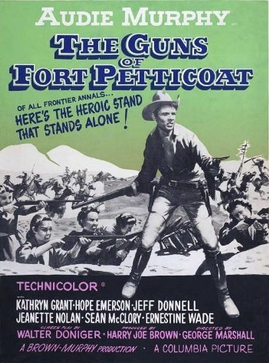
During the waning days of the Civil War, Lt. Frank Hewitt (Audie Murphy) is a man without a country. A Texan, he joined the Union Army even as his home state was voting to secede from the United States. In the Army, Hewitt is viewed with distrust by his autocratic superior, Col. John Chivington (Ainslie Pryor). When Hewitt learns that Chivington has ordered a surprise attack on an unarmed local Indian tribe in order to drive them into Texas where they will attack the nearest settlement for revenge, Hewitt deserts the Army to warn the people left in his hometown.
When Hewitt arrives, he discovers that all of the men in town have left to join the Confederate Army. Only their wives, mothers, and sisters remain. Though Hewitt is, at first, accused of being a traitor, he sticks around and trains the women on how to fight not only the incoming Comanches but also any outlaws who ride into town looking to take advantage of the situation.
The Guns of Fort Petticoat is an interesting B-western that holds up well today. Even though the film ends with a Comanche attack, it’s made clear that the attack would not have happened if not for the actions Col. Chivington. Chivington, who doesn’t care that the victims of his actions would not be Confederate soldiers but instead just helpless woman and children, is the film’s true villain, even if he only appears in the first and final scenes. Audie Murphy, who was America’s most decorated World War II veteran, not only starred in but produced the movie. Murphy was a stiff actor but he looked believable in uniform and obviously knew how to convincingly shoot a rifle and that’s all this role really demands of him. Kathryn Grant plays the woman who goes from distrusting Hewitt to falling in love with him and she and Murphy work well together. The final battle between the women and the Comanches is exciting and well-shot by veteran western director George Marshall. The movie’s final scene may not be totally believable but it’s still very satisfying.
Fans of the western genre and Audie Murphy will find much to enjoy about The Guns of Fort Petticoat.
In this made-for-TV western, Steve Forrest stars as James Devlin. A hired killer and a notorious outlaw, Devlin has finally been captured and is sent to the gallows. At first, it seems as if the hanging’s been a success and Devlin’s life has been extinguished at the end of the rope. But then, while his body is at the funeral home and is being prepared for burial, Devlin suddenly opens his eyes and reveals that he’s alive.
No one can figure out how Devlin manage to survive being hung, especially not Devlin. However, Devlin is now alive and free to leave town. Has Devlin been sent back to Earth to serve God or did he just get lucky? Devlin may not be sure himself but he is determined to turn around his old ways. That starts with protecting a widow (Sharon Acker) and her son (Bobby Eilbacher) from Lew Halleck (Cameron Mitchell), a greedy businessman who wants their land and is prepared to go to any lengths to get it. Devlin is not only still as good with a gun as he was before his execution but, having survived his hanging, he can now read minds!
The Hanged Man was designed to be a pilot for a weekly TV series and watching it, it’s easy to imagine how the show would have developed. Devlin would have traveled around the old west, helping out a new guest star every episode and presumably trying to discover why he had been returned to life. It’s not a bad idea for a show, though the pilot film doesn’t do enough with it. Despite the fact that Devlin might be undead and that he now has the power to read minds, it really is just a conventional western, featuring the saintly widow and the evil land baron and all of the other familiar tropes of the genre. It may begin with Devlin coming back to life but it ends with a shoot-out that could have been lifted from any number of old TV shows.
Still, as far as made-for-TV westerns are concerned, this one is entertaining enough. Steve Forrest is a good hero and, as always, Cameron Mitchell is a good villain. I wish they had done more with the supernatural aspects of the story but The Hanged Man is good enough for undemanding fans of the genre.
Motorcycles have always been unbelievably sexy and, in 1953, so was Marlon Brando.
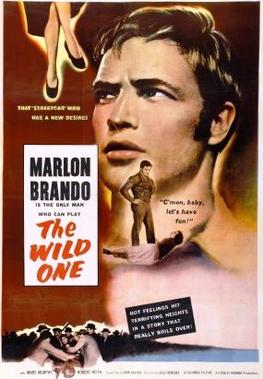
1953 was the year that Brando played Johnny Strabler in The Wild One. Johnny’s the leader of the Black Rebels Motorcycle Club. He wears a leather jacket and always has a cap tilted rakishly on his head. When Johnny moves, he makes it a point to take his time. He doesn’t run from anyone and, perhaps most importantly, he doesn’t run to anyone. Johnny’s a rebel and he doesn’t care who knows it. “What are you rebelling against?” Johnny is asked. “Whaddya got?” Johnny replies and, when he says it, you not only believe him but you want to join him in his rebellion.
And yet, from the minute that we see Johnny, it’s obvious that there’s more to him than just his jacket and his attitude. He speaks softly and when he smiles, there’s something almost shy about the expression. You look into his brooding, soulful eyes and you know that Johnny isn’t just about making trouble. He’s searching for something that society alone can’t deliver. Johnny’s a bad boy, the type who you fool yourself into thinking that you — and only you — can reach and help heal.
At least, that’s the way that Kathie (Mary Murphy) feels about him, even though she’s way too smart to accept his invitation to go to a dance with him. Kathie works at a diner in a small California town. When Johnny and his gang ride into the town, all of the boring, responsible citizens want to force him to leave. Kathie, alone, sees that Johnny’s not as bad as everyone assumes he is. And if there’s any doubt about the fact that Johnny’s got a good soul despite his brooding nature, Chino (Lee Marvin) shows up to remind everyone of what a truly bad biker is like.
Chino and Johnny may both love their motorcycles but otherwise, they’re opposites. If Johnny has the soul of a poet, Chino has no soul at all. Johnny’s searching for freedom while Chino is merely searching for power. Chino and Johnny were once friends, all part of the same gang. However, Johnny eventually went off on his own and took the younger gang members with him. Chino, in many ways, represents America’s destructive and wild path. He’s an old west outlaw who rides a motorcycle instead of a horse. Johnny, meanwhile, is a wanderer who represents the part of America that created Kerouac and Dylan.
(Interestingly enough, both Brando and Marvin were 29 years old when they made The Wild One. However, Brando looked much younger and Marvin looked considerably older, which only added to the film’s theme of generational conflict. Brando, himself, has never rode a motorcycle before making The Wild One and reportedly avoided the actual bikers who were hired to act as extras. Lee Marvin, on the other hand, was an experienced rider and fit right in with the film’s cast. To be honest, Lee Marvin is actually more convincing than Brando but Brando had the eyes and the wounded way of speaking whereas Marvin was every single guy who needlessly revs his motorcycle’s engine in the middle of the night.)
Anyway, needless to say, the townspeople are even less happy once Chino’s gang shows up. Unfortunately, few of them understand the difference between Johnny and Chino. In fact, the majority of the upright citizens prove themselves to be just as and, in some cases, more violent than the bikers that they’re trying to run out of town. It all leads to violence, tragedy, and, ultimately, understanding. This was a 50s film after all. Director Laszlo Benedek may have played up the more sordid aspects of the story but the film was produced by the reliably and safely liberal Stanley Kramer and the film concludes on a very Krameresque note.
If you only know Marlon Brando from the latter half of his career, when he was best known for his weight, his eccentricities, and his personal tragedies, than watching The Wild One is quite a revelation. It’s a well-directed film with a host of effective supporting turns but it’s Brando who makes the film unforgettable. Watching the film, you understand why Brando became a star and you also see just how much he inspired so many of the actors who came after him. James Dean’s performance in Rebel Without A Cause owes a huge debt to Brando’s work here. In fact, every rebel owes a debt to The Wild One. In the role of Johnny, Brando invites and inspires us all to ride down the road and see what we find.
The Wild One was a huge hit in 1953, leaving teenagers excited and parents concerned. That same year, Brando also played Mark Anthony in Julius Caesar and received an Oscar nomination for the performance. The Wild One was ignored at the Oscars but lives on whenever anyone hit the road and goes searching for America.
For tonight’s televised horror, we have The Purple Room, an episode of Thriller! This was an anthology series, which was hosted by Boris Karloff. Admittedly, Thriller was not always a horror show. Several of the episodes were crime stories that had a diabolical twist. But anything hosted by Boris Karloff is perfect for October viewing.
The Purple Room is the story of what happens when a skeptic (played by a young Rip Torn) learns that he must spend a year living in a house that may or may not be haunted. This episode is enjoyably creepy and, of course, it has a twist.
This episode originally aired on October 25th, 1960.
I’ve seen The Best Years Of Our Lives on TCM a few times. There’s a part of me that always wishes that this film was dull, in the way that many best picture winners can be when watched through modern eyes, or in any other way overrated. The Best Years Of Our Lives won the Academy Award for Best Picture of 1946 and in doing so, it defeated one of my favorite films of all time, It’s A Wonderful Life. A part of me would love to be able to say that this was one of the greatest injustices of cinematic history but, honestly, I can’t. The Best Years Of Our Lives is an excellent film, one that remains more than worthy of every award that it won.
The film deals with veterans returning home from World War II and struggling to adjust to life in peacetime. That’s a topic that’s as relevant today as it was back in 1946. If there’s anything that remains consistent about human history it’s that there is always a war being fought somewhere and the man and women who fight those wars are often forgotten and abandoned after the final shot has been fired. The returning veterans in The Best Years Of Our Lives deal with the same issues that our soldiers have to deal with today as they return from serving in Iraq and Afghanistan.
The Best Years Of Our Lives follows three veterans as they return home to Boone City, Ohio. As they try to adjust to civilian life, their loved ones struggle to adjust to them.
Teresa Wright and Dana Andrews
Fred Derry (played by Dana Andrews) is a self-described former soda jerk. (To be honest, I’m really not sure what a soda jerk was but it doesn’t sound like a very fun job.) During the war, he was a captain in the air force. He returns home with several decorations and few marketable skills. During the war, he was good at bombing cities but there’s not much that can be done with that skill during peacetime. Nearly penniless, Fred takes a job selling perfume at a department store. He spends his days trying to control her temper and not give into his frustration. At night, he’s haunted by nightmares of combat.
Teresa Wright and Virginia Mayo
Meanwhile, his wife, Marie (Virginia Mayo), finds herself resenting the fact that Fred has come home. She married him while he was in flight training and, as quickly becomes obvious, she’s less enamored of Fred now that he’s just another civilian with a low-paying job. (She continually begs him to wear the uniform that he can’t wait to take off.) The Best Years Of Our Lives is a film full of great performances but Virginia Mayo really stands out. I have to admit that, whenever I watch this film, I find myself envious of her ability to both snarl and smile at the same time.
Teresa Wright, Myrna Loy, Fredric March, and Michael Hall
Al Stephenson (Fredric March) was a bank loan officer who served as an infantry sergeant. (It’s interesting to note that the educated and successful Al was outranked by Fred during the war.) Al returns home to his loving wife, Milly (Myrna Loy), his daughter Peggy (the beautiful Teresa Wright), and his son, Rob (Michael Hall). At first, Al struggles to reconnect with his family and he deals with the tension by drinking too much. Rehired by the bank, he approves a risky loan to a fellow veteran. After the bank president (Ray Collins, a.k.a. Boss Jim Gettys from Citizen Kane) admonishes Al, Al gives a speech about what America owes to its returning veterans.
Meanwhile, Peggy has fallen in love with Fred. When Milly and Al remind her that Fred is (unhappily) married, Peggy announces, “I am going to break that marriage up!” It’s a wonderful line, brilliantly delivered by the great Teresa Wright.
Harold Russell
Marriage is also on the mind of Homer Parrish (Harold Russell). A former high school quarterback, Homer was planning on marrying Wilma (Cathy O’Donnell) as soon as he finished serving in the Navy. During the war, he lost both his hands and now he’s returned home with metal hooks. Homer locks himself away from the world. When he finally does talk to Wilma, it’s to show her how difficult life with him will be. Wilma doesn’t care but Homer does.
Harold Russell won an Academy Award for his performance here. Russell was not a professional actor. Instead he was a veteran and a real-life amputee. Watching his performance today, it’s obvious that Russell was not an experienced actor but the natural charm that enchanted the Academy still shines through.
Harold Russell, Dana Andrews, and Fredric March
It’s been nearly 70 years since The Best Years Of Our Lives was first released but it remains a powerfully honest and surprisingly dark film. All three of the veterans deal with very real issues and, somewhat surprisingly, the film refuses to provide any of them with the type of conventional happy ending that we tend to take for granted when it comes to movies made before 1967. As the film concludes, Fred is still struggling financially. Homer is still adjusting to life as an amputee. Al is still drinking. All three have a long road ahead of them but they’re all making progress. None of them will ever be the same as they were before the war but, at the same time, they’re all working on making new lives for themselves. They haven’t given up. They haven’t surrendered to despair and, the film suggests, that is triumph enough.
The Best Years Of Our Lives is a great film and a great best picture winner. It’s just a shame that it had to be released the same year as It’s A Wonderful Life.
In this episode of The Twilight Zone, Robert Sterling plays the editor of a failing newspaper. After being forced to fire all of his employees, Sterling prepares to commit suicide. However, before going through with it, Sterling is approached by a friendly old man (Burgess Meredith) who offers to both pay off Sterling’s debts and to work for him as the newspaper’s only reporter. Sterling agrees and…
Well, just the fact that this episode is entitled Printer’s Devil probably gives you a clue about what’s really going on with that nice old man…
Printer’s Devil is one of the rare hour-long episodes of The Twilight Zone. If nothing else, it’s worth watching just to compare Meredith’s performance here with his far different performance in Time Enough At Last.
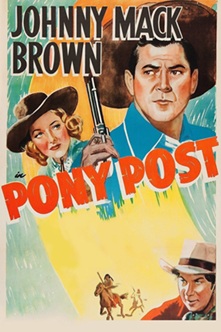 In the days of the Old West, Griff Atkins (Stanley Blystone) manages a Pony Express station but, because of his gambling debts, he actually encourages the Indians and the outlaw Richard brothers (John Rockwell and Ray Teal) to attack the Pony Express riders and steal their horses. Major Goodwin (Tom Chatterton) tries to put a stop to all this by firing Griff and putting Cal Sheridan (Johnny Mack Brown) in charge. Griff and the Richard brothers continue their outlaw ways and eventually, the head of one of the relay stations is killed in one of their raids. While the dead man’s daughter, Norma (Nell O’Day), investigates the murder, Cal works to bring peace the line and falls in love with Goodwin’s daughter, Alice (Dorothy Short). Meanwhile, aspiring Pony Express rider Shorty (Fuzzy Knight) tries to invent a trampoline system that will help him to mount a horse.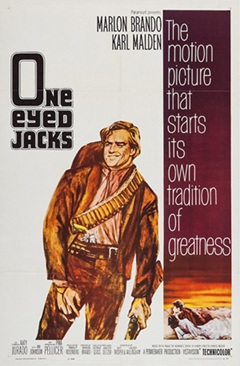



 Through the Shattered Lens