In 1948’s White Heat, James Cagney plays Cody Jarrett, a gangster who loves his mother and goes out like a raging inferno. Here, for those who don’t mind a spoiler or two, is the end of Raoul Walsh’s White Heat.
4 Shots From 4 Films is just what it says it is, 4 shots from 4 of our favorite films. As opposed to the reviews and recaps that we usually post, 4 Shots From 4 Films lets the visuals do the talking!
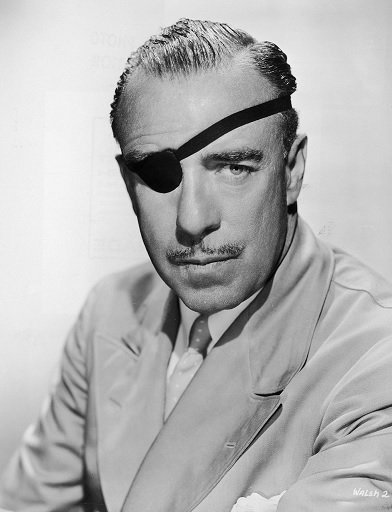
129 years ago today, film director Raoul Walsh was born in New York City. He started out as an actor and a second unit director, learning how to make films under the tutelage of D.W. Griffith. He made his directorial debut in 1915 with Regeneration, which is considered to be the first gangster film. Refusing to sidelined after losing an eye in an auto accident, Walsh continued to direct and his career stretched from the silent era all the way to the mid-60s. Walsh directed westerns, war films, and gangster films. He was a master of tough but sometimes quirky action films. Martin Scorsese continues to cite Walsh as being an influence on his own work.
Today. we pay tribute to Raoul Walsh with….
4 Shots From 4 Raoul Walsh Films
The Roaring Twenties (1939, dir by Raoul Walsh, DP: Ernest Haller)
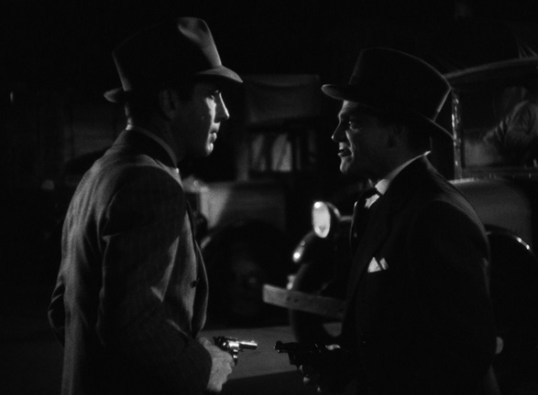
They Drive By Night (1940, dir by Raoul Walsh, DP: Arthur Edeson)
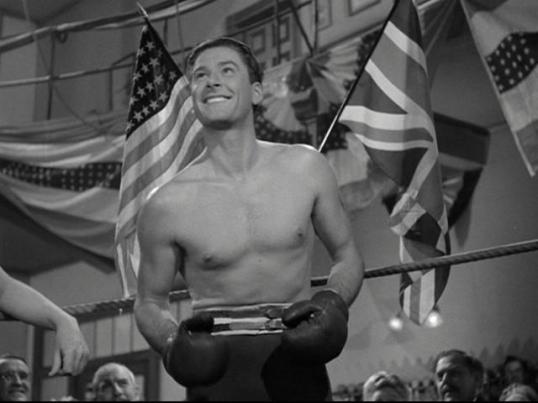
Gentleman Jim (1942, dir by Raoul Walsh, DP: Sidney Hickox)
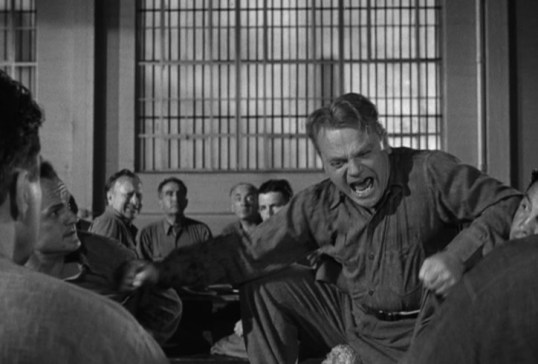
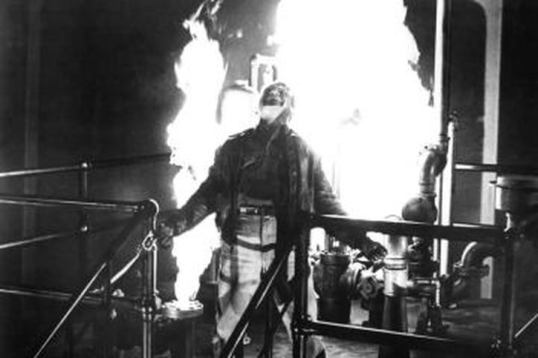
White Heat (1949, dir by Raoul Walsh, DP: Sidney Hickox)
In 1948’s White Heat, James Cagney plays Cody Jarrett, a gangster who loves his mother and goes out like a raging inferno. Here, for those who don’t mind a spoiler or two, is the end of Raoul Walsh’s White Heat.
4 Shots From 4 Films is just what it says it is, 4 shots from 4 of our favorite films. As opposed to the reviews and recaps that we usually post, 4 Shots From 4 Films lets the visuals do the talking!
128 years ago today, film director Raoul Walsh was born in New York City. He started out as an actor and a second unit director, learning how to make films under the tutelage of D.W. Griffith. He made his directorial debut in 1915 with Regeneration, which is considered to be the first gangster film. Refusing to sidelined after losing an eye in an auto accident, Walsh continued to direct and his career stretched from the silent era all the way to the mid-60s. Walsh directed westerns, war films, and gangster films. He was a master of tough but sometimes quirky action films. Martin Scorsese continues to cite Walsh as being an influence on his own work.
Today. we pay tribute to Raoul Walsh with….
4 Shots From 4 Raoul Walsh Films
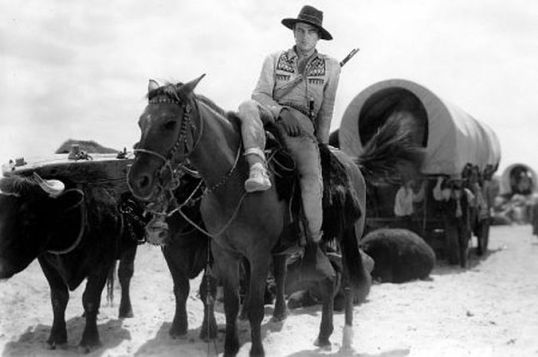
The Big Trail (1930, dir by Raoul Walsh, DP: Lucian Andriot and Arthur Edeson)
The Roaring Twenties (1939, dir by Raoul Walsh, DP: Ernest Haller)
Gentleman Jim (1942, dir by Raoul Walsh, DP: Sidney Hickox)
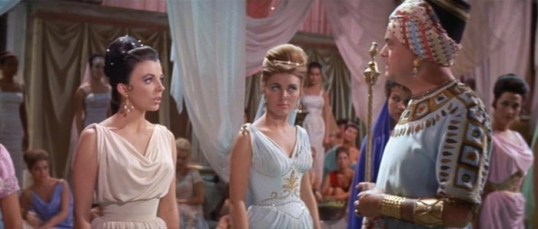
Esther and the King (1960, dir by Raoul Walsh and Mario Bava, DP: Mario Bava)
4 Or More Shots From 4 Or More Films is just what it says it is, 4 shots from 4 of our favorite films. As opposed to the reviews and recaps that we usually post, 4 Shots From 4 Films lets the visuals do the talking!
Today is National Bootleggers Day so remember to speak easy! In honor of everyone’s favorite entrepreneurs, it’s time for….
4 Shots From 4 Films About Bootleggers
The Roaring Twenties (1939, dir by Raoul Walsh, DP: Ernest Haller)
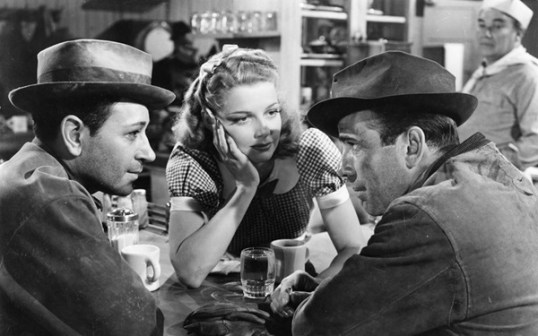
Thunder Road (1958, dir by Arthur Ripley, DP: David Ettenson and Alan Stensvoid)
Once Upon A Time In America (1984, dir by Sergio Leone, DP: Tonino Delli Colli)
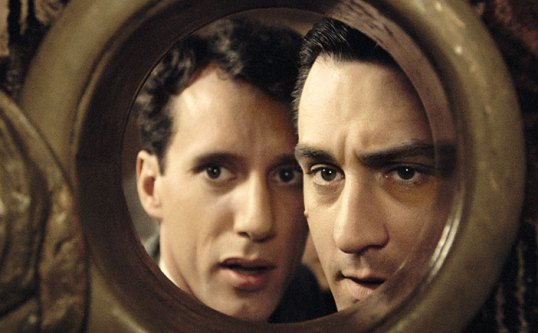
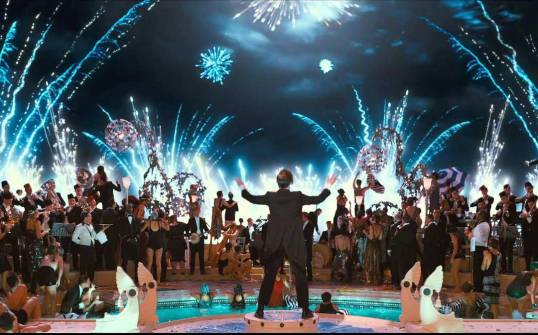
The Great Gatsby (2013, dir by Baz Luhrmann, DP: Simon Duggan)
4 Shots From 4 Films is just what it says it is, 4 shots from 4 of our favorite films. As opposed to the reviews and recaps that we usually post, 4 Shots From 4 Films lets the visuals do the talking!
127 years ago today, film director Raoul Walsh was born in New York City. He started out as an actor and a second unit director, learning how to make films under the tutelage of D.W. Griffith. He made his directorial debut in 1915 with Regeneration, which is considered to be the first gangster film. Refusing to sidelined after losing an eye in an auto accident, Walsh continued to direct and his career stretched from the silent era all the way to the mid-60s. Walsh directed westerns, war films, and gangster films. He was a master of tough but sometimes quirky action films. Martin Scorsese continues to cite Walsh as being an influence on his own work.
Today. we pay tribute to Raoul Walsh with….
4 Shots From 4 Raoul Walsh Films
The Roaring Twenties (1939, dir by Raoul Walsh, DP: Ernest Haller)
They Drive By Night (1940, dir by Raoul Walsh, DP: Arthur Edeson)
White Heat (1949, dir by Raoul Walsh, DP: Sidney Hickox)
Esther and the King (1960, dir by Raoul Walsh and Mario Bava, DP: Mario Bava)
4 Shots From 4 Films is just what it says it is, 4 shots from 4 of our favorite films. As opposed to the reviews and recaps that we usually post, 4 Shots From 4 Films lets the visuals do the talking!
126 years ago today, film director Raoul Walsh was born in New York City. He started out as an actor and a second unit director, learning how to make films under the tutelage of D.W. Griffith. He made his directorial debut in 1915 with Regeneration, which is considered to be the first gangster film. Refusing to sidelined after losing an eye in an auto accident, Walsh continued to direct and his career stretched from the silent era all the way to the mid-60s. Walsh directed westerns, war films, and gangster films. He was a master of tough but sometimes quirky action films. Martin Scorsese continues to cite Walsh as being an influence on his own work.
Today. we pay tribute to Raoul Walsh with….
4 Shots From 4 Raoul Walsh Films
The Big Trail (1930, dir by Raoul Walsh, DP: Lucian Andriot and Arthur Edeson)
The Roaring Twenties (1939, dir by Raoul Walsh, DP: Ernest Haller)
Gentleman Jim (1942, dir by Raoul Walsh, DP: Sidney Hickox)
White Heat (1949, dir by Raoul Walsh, DP: Sidney Hickox)
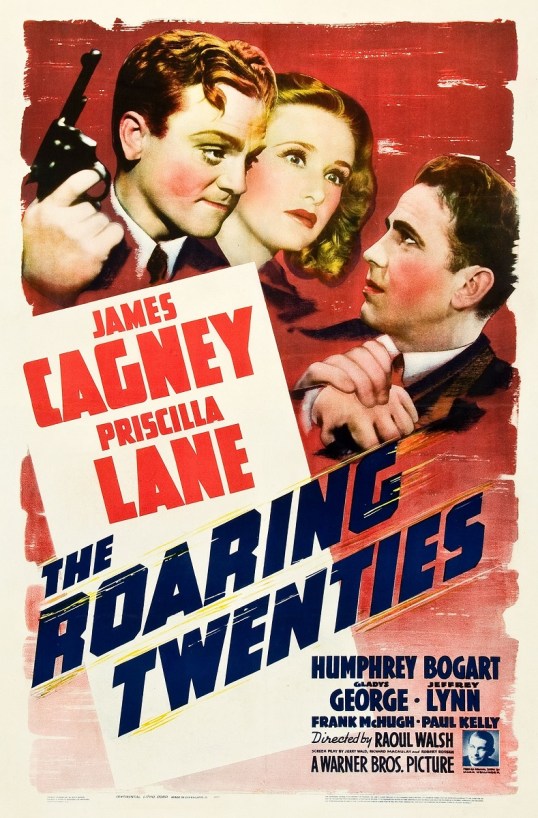
The 1939 gangster epic, The Roaring Twenties opens with newsreel footage of men like Franklin D. Roosevelt, Winston Churchill, and Adolf Hitler. We watch as they give speeches and as armed soldiers march across Europe. For those of us watching in the present, these are figures from the past. For audiences in 1939, though, these were the men who were shaping both their present and their future.
A narrator informs us that the world has changed much over the past few years and that it’s on the verge of changing again. The world is preparing for war and who knows what society is going to look like afterwards. (Interestingly enough, at the time that The Roaring Twenties was released, the U.S. was officially neutral when it came to the war in Europe, with many politicians arguing that the U.S. should pursue an isolationist foreign policy. Though the film seems to be speaking to a nation that was already committed to war but that was actually not the case.) The narrator goes on to say that it’s easy to forget what America was like just 20 years ago. World War I was ending. Soldiers were returning home. Prohibition has just become the law of the land and, as a result, there was now a whole new way to make illicit cash. It was a different era, the narrator tells us, one that is running the risk of being forgotten.
With that narration, it’s made obvious that The Roaring Twenties is designed to be more than just a gangster film. It’s also a history lesson. With Americans aware that another war might be coming, perhaps they needed to be reminded of what happened during and after the previous one. By that same token, with people across the world already dying in the fight for freedom, perhaps Americans needed to be reminded of what happened the last time they allowed the government to take those freedoms away.
The Roaring Twenties tells the story of three men who first met in 1918, while they were all hiding out in a foxhole while a bloody and violent war rages all around them. (The narrator somewhat archly notes that the three men — like all the men who fought and died in World War I — had been told that they were making “the world safe for democracy.”) The three of them become friend while under fire and they remain friends when they return home to a war-weary nation that refuses to take care of its veterans. Unfortunately, that friendship doesn’t survive the roaring 20s.
George Holly (Humphrey Bogart) is a former saloon keeper who becomes a major bootlegger after the passage of prohibition. George is the type who takes pleasure in gunning down a 15 year-old during World War I. (“He’ll never make 16,” George says after pulling the trigger.) He doesn’t improve once he returns home but he does find a lot of success as a bootlegger. Soon, he’s got a mansion. He’s got bodyguards. He goes to the best clubs and owns the best clothes. Prohibition may have been meant to put George Holly out-of-business but instead it’s made him a rich and influential man.
Lloyd Hart (Jeffrey Lynn) is a college-educated idealist, one who becomes a lawyer once he returns home. Even the most successful of bootleggers needs a good lawyer but Lloyd refuses to compromise his belief in the law, even when it comes to helping out his friends. Lloyd will eventually end up working out of the district attorney’s office, where he builds cases against men like George Holly.
And finally, there’s Eddie Bartlett (James Cagney). Eddie is the film’s main character. He’s a criminal but, unlike George, he’s not totally corrupt. In many ways, he’s an idealist but he’s never as self-righteous as Lloyd. While his friends worry about their place and their role in society, Eddie is just trying to survive. Before he went off to war, Eddie was a mechanic but, once he returns, he discovers that his job has been filled. With no other work available, Eddie is finally hired to drive a cab. What is those cabs could be used to smuggle alcohol? Eddie finds himself working with Panama Smith (Gladys George) while, at the same time, going to war with Nick Brown (Paul Kelly). In between making and losing a fortune (due to both the end of prohibition and the 1929 stock market crash), Eddie falls in love with singer Jean Sherman (Priscilla Lane). Because Eddie can’t leave the rackets, Jean ends up married to Lloyd instead.
The film follows these characters, from 1918 to 1933. Along the way, it also provides a critique of prohibition. Prohibition is presented as being a bad law, one that led to men like George Holly getting rich and which destroyed the lives of countless people. By making liquor illegal, the film argues, it also made it appealing to people who would have otherwise never had a drink. There’s a definite appeal to the forbidden. Interestingly enough, Eddie never takes a drink while he’s getting rich smuggling the stuff. It’s only after prohibition is repealed and Eddie finds himself once again reduced to driving a cab for a living that he becomes a drunk. Rich George and educated Lloyd might survive the end of prohibition by Eddie — who was as much a foot soldier during prohibition as he was during World War I — against finds himself cast out by a society that wants to forget about the national trauma that it’s just gone through. Eddie, however, isn’t going to go down without a fight. He’s played by James Cagney, after all.
The Roaring Twenties is a true classic. It works as a gangster movie, a historical epic, and a portrait of the side effects of out-of-control regulation. It tells the story about what happens when society becomes more interested in governing people than in helping them. Indeed, the film asks, what were men like Eddie Bartlett supposed to do when, after risking their lives for their country, they returned home to discover that their jobs were gone, rent had gone up, and the government wouldn’t even allow them to commiserate their sorrows over a cold beer? Who can blame America for rebelling? Who can blame the Eddie Barletts of the world for doing what they had to do to survive?
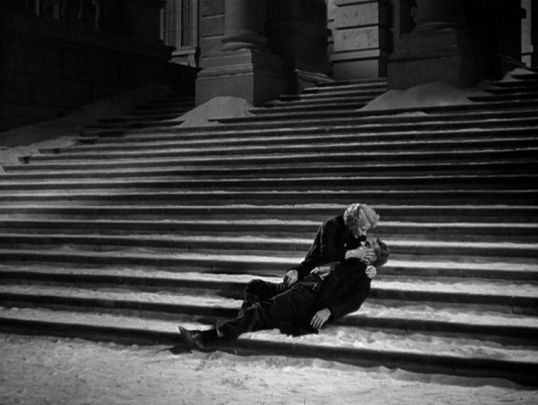
Finally, not only does The Roaring Twenties feature brilliant performances from genre veterans like Bogart and Cagney (in fact, this is a probably Cagney’s best gangster performance) but it also recreates the 20s with such skill that you can’t help but wish that you could have been a part of it. It all ends with a brilliant final scene on the steps of a church. “He used to be a big shot!” Yes, he was.
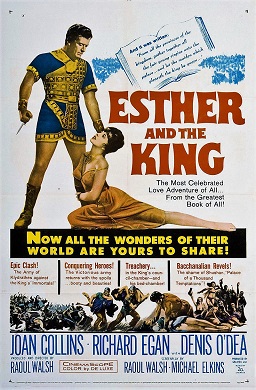
The 1960 Italian-American co-production, Esther and the King, opens in ancient Persia. King Ahasuerus (Richard Egan) has just returned from conquering Egypt and he is angered to discover that his wife, Vashti (Daneila Rocca), has been cheating on him with not just his main advisor, Haman (Sergio Fantoni), but also with the entire palace guard as well. After the Queen shows her further displeasure with the King by doing a topless dance in front of the entire royal court, the King banishes her from his life.
Since the king now needs a new wife, every attractive woman in the land is dragged off to the palace so that she can audition for the role. Among those forcibly recruited is the strong-willed Esther (Joan Collins), who was previously engaged to a rebel named Simon (Rick Battaglia). What the king doesn’t know is that Esther is both Jewish and the cousin of Mordecai (Denis O’Dea), who has recently offended Haman by refusing to bow down before him. Haman and his wife (Rosalba Neri) are now plotting to execute all of the Jews is Persia. Despite her love for Simon, Esther remains in the competition to become the Queen so that she can save her people….
There are a few things that you immediately notice about Esther and the King.
First off, it’s an extremely loose adaptation of the story of Esther, one that is designed to make the King out to be a far more sympathetic figure than he actually was. Whereas the King actually banished his wife after refused to attend a banquet where the drunken King wanted her to pose naked, Esther and the King presents the King as being the wronged party as his wife is literally cheating with every available man in the kingdom. (Ironically, the film actually presents the King as being forced to banish his wife after she removes her top during a banquet whereas, in actuality, it was her refusal to do so that led to be her being exiled.) The film also adds in considerably more battles and a lot more court intrigue as all of the king’s potential wives compete for his attention. And, of course, then there’s Esther’s fiancee, Simon, who does not appear anywhere in the original text.
The other thing that you immediately notice about Esther and the King is that ancient Persia apparently looked a lot like ancient Rome. That’s not surprising when you consider that this was an Italian co-production and that Esther and the King is as much of an old school peplum film as a biblical adaptation. This is a biblical adaptation that is as concerned with sword fights and banquets as it is with prayer and religion.
Regardless of whether it’s historically accurate or not, it’s an entertaining film. Admittedly, Richard Egan is a bit of a stiff as the King and Joan Collins really doesn’t bring much beyond beauty to the role of Esther. But the sets are properly ornate and the costume are to die for. Mario Bava was the film’s cinematographer (and some sites credit him as being the film’s co-director as well) and Esther and the King is gorgeous to look at. This is one of those historical epics where almost everything feels appropriately big, from the palaces to the emotions to the melodrama. The supporting cast is largely made up of Italian actors who all appear to be having a great time playing up the drama of it all. Sergio Fantoni is wonderfully hissable as the evil Haman. (Boo! Haman! Boo!) Rosabla Neri also has some memorably manipulative moments as Zeresh, the wife of Haman (boo!) For those of us who like big and not necessarily historical accurate epics about the ancient world, Esther and the King is a lot of fun.
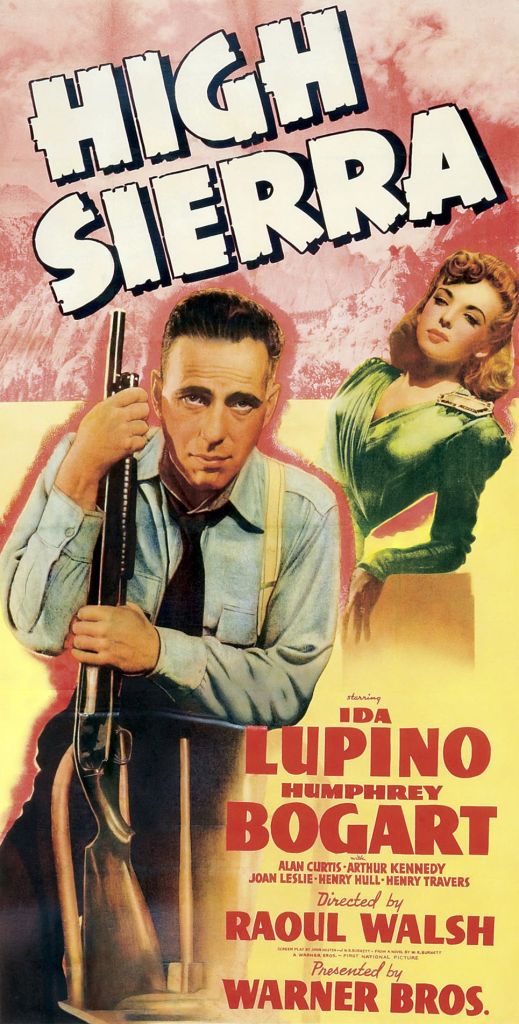
Humphrey Bogart played yet another gangster in Raoul Walsh’s HIGH SIERRA, but this time things were different. Bogie had spent the past five years at Warner Brothers mired in supporting gangster parts and leads in ‘B’ movies, but when he read John Huston and W.R. Burnett’s screenplay, he knew this role would put him over the top. James Cagney and Paul Muni both turned it down, and George Raft was penciled in to star, until Bogie put a bug in his ear and Raft also refused it. Bogart lobbied hard for the role of Roy Earle, and his instincts were right: not only did HIGH SIERRA make him a star at last, it led to him getting the lead in his next picture THE MALTESE FALCON , the directorial debut of his good friend Huston.
Roy Earle is an old-school criminal pardoned from an Indiana prison thanks to the machinations…




 Through the Shattered Lens