“It don’t mean nothing, man. Not a thing.” — Motown
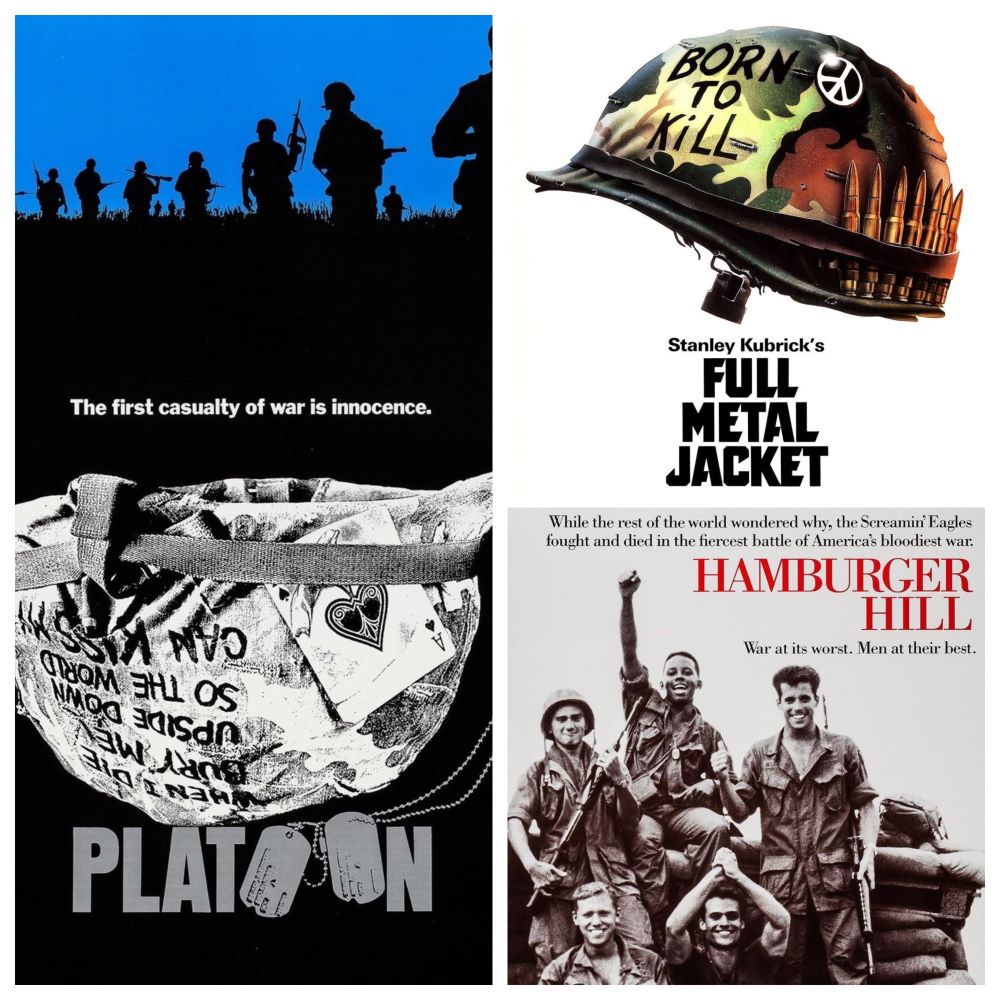
Between 1986 and 1987, American cinema gave us three tightly packed visions of the Vietnam War: Platoon, Full Metal Jacket, and Hamburger Hill. Released in rapid succession, these films all wrestle with the same historical trauma, but they do so in wildly different voices, rhythms, and moral registers. Together, they form a kind of triptych: one film leans into psychological moral chaos, another into ironic, machine‑like detachment, and the third into a quietly punishing realism that refuses to dress up the slaughter in metaphors. More than just their content, the way each film moves through its story is shaped entirely by the director’s fingerprint—Oliver Stone, Stanley Kubrick, and John Irvin—so the narrative flow of each movie becomes a direct extension of its directorial worldview.
The timing and the directorial context
The dates matter, because they show how a single era of pop culture could generate such divergent treatments of the same war. Platoon hit in 1986, right when Hollywood was trying to reframe Vietnam as a moral and psychological disaster, not just a geopolitical blunder. Then, almost as if the studios had hit “play” on a three‑channel experiment, Full Metal Jacket and Hamburger Hill both arrived in 1987. That tight window turns the comparison into something richer: same war, same decade, but three very different directors reordering the same raw material into different cinematic engines.
What’s even more interesting is that the three directors arrive with fully formed styles already in place. Stone, the veteran turned auteur; Kubrick, the perfectionist ironist; Irvin, the no‑frills dramatist—each brings his own choreography to the war, so the way each story unfolds matches the way each director thinks about power, systems, and the human body under pressure. That’s why, when you watch them back‑to‑back, the transitions feel organic: the emotional spiral of Platoon slides into the clinical detachment of Full Metal Jacket, which then hardens into the attritional grind of Hamburger Hill.
Oliver Stone and Platoon: an emotional spiral
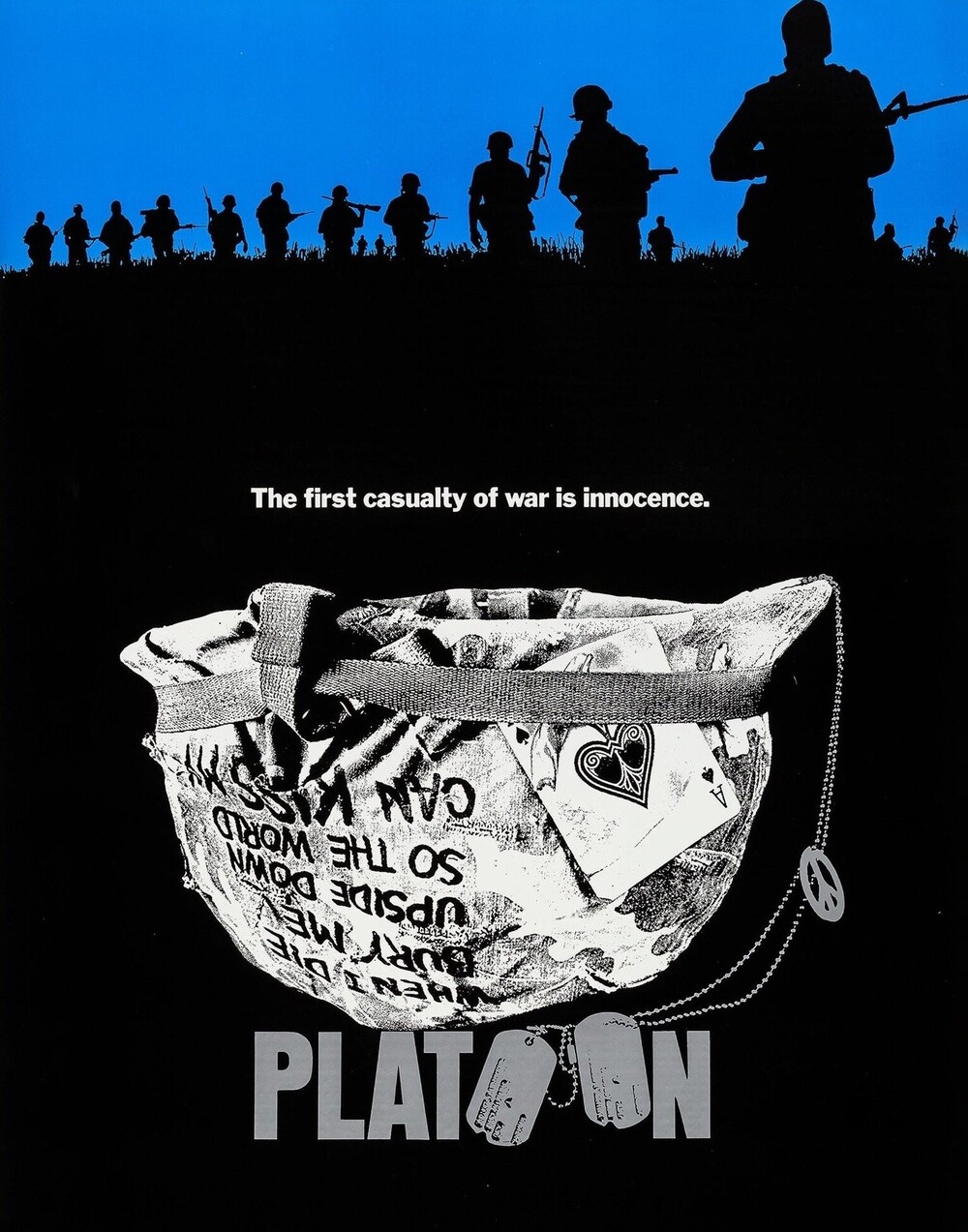
Oliver Stone’s background as a Vietnam veteran inflects Platoon with a semi‑autobiographical, almost fever‑dream energy. The film doesn’t just tell a story; it feels like a memory returning in fragments, haunted by shock, guilt, and moral erosion. The narrative is built around Chris Taylor’s voice‑over, which acts less like exposition and more like a confessional diary. That choice gives the film a lyrical, almost jagged rhythm: quiet jungle moments bleed into sudden night attacks, tenderness collapses into atrocity, and moral clarity dissolves into confusion.
Because Stone thinks of war as a kind of moral purgatory, the story doesn’t march steadily toward a clear climax. Instead, it spirals. The Barnes–Elias conflict—brutal, pragmatic Barnes versus idealistic, wounded Elias—functions as a kind of internal compass for Chris, and the film’s pacing keeps snapping back to that moral tug‑of‑war. Action sequences are often disorienting, with overlapping sound, quick cuts, and long stretches of jungle unease, so the narrative feels less like a linear plot and more like a psychological collapse happening in real time. The whole movie feels like a descent that only slows down long enough for Chris to realize how far he’s fallen.
In aesthetic terms, Stone leans into handheld camerawork, natural light, and a gritty, almost documentary‑like texture, which makes the violence feel unfiltered and immediate. But it’s the emotional rhythm that’s most Stone‑ian: the film is never neutral. It wants you to feel the weight of each decision, each atrocity, and that emotional burden is coded into the editing and the pacing. So when the narrative moves from boot‑camp–like introduction to jungle chaos, it’s not just a setting change; it’s a shift into a darker, more volatile psychological state.
Stanley Kubrick and Full Metal Jacket: geometry and detachment
If Stone’s Platoon feels like a pressure cooker of emotions, Kubrick’s Full Metal Jacket feels like a cold, geometric diorama. The film’s narrative is famously bipartite: the first half is boot camp, the second half is Vietnam, and the shift between them is as abrupt as a switchblade. This structure doesn’t just happen to be there; it reflects Kubrick’s obsession with systems, control, and the way institutions prepare men for violence. The story doesn’t so much build as it compartmentalizes: each section is a discrete unit of dehumanization.
Kubrick’s directorial signature—tight symmetry, precise framing, and a wry, almost clinical camera—means that the narrative never settles into the raw, unsteady rhythm of Platoon. Instead, events feel staged, rehearsed, and ritualized. The drill‑instructor sequences play like a grotesque performance, where brutality is delivered in rhythm and repetition. Even when the film moves to Vietnam, it keeps cutting back to Joker’s voice‑over and to moments of ironic distance, so the story feels controlled, almost surgical. The famous “I am the Monster” line doesn’t land as a catharsis so much as a rehearsed line in a larger script, and that’s very Kubrick: the narrative refuses to offer a neat emotional arc. There’s no gradual hero’s journey, no tidy redemption.
The sniper sequence at the end may feel like a climax, but it’s really more of a microcosm: it condenses the film’s themes into one tight, brutal encounter. Conceptually, the narrative is more like a diagram than a journey, and that’s why it feels so natural that Full Metal Jacket follows Platoon in any viewing order. Where Stone’s film is all about internal collapse, Kubrick’s is about systemized violence, so the transition from spiral to schema feels logical. The aesthetics and the narrative are perfectly aligned: every composition and every cut reinforces the idea that war is a machine, and the men are its interchangeable parts.
John Irvin and Hamburger Hill: attrition as narrative
If Platoon spirals inward and Full Metal Jacket diagrams the machinery, Hamburger Hill simply grinds. John Irvin’s directing style is lean and actor‑driven, which means the film’s narrative is built around one real‑life battle—the assault on Hill 937 in the A Shau Valley—and the story basically becomes a relay race without a finish line. Irvin doesn’t reach for mythic symbolism the way Stone does, nor does he sculpt the war into a cold diagram the way Kubrick does; he just lets the hill devour the men, assault after assault.
The pacing is deliberately slow and physical, so the narrative feels less like a progression and more like an accumulation. The film lingers on the weight of the packs, the mud, the smoke, and the bodies stacked around the soldiers. There’s little in the way of elaborate visual flourishes or philosophical monologues; instead, the story keeps returning to the climb, the push, the retreat, and the regrouping. That repetition is the core of its storytelling: the film isn’t about a big reveal, but about the slow erosion of morale and the body’s limits.
In aesthetic terms, Irvin’s Hamburger Hill is stripped‑down: handheld shots, naturalistic lighting, and a focus on small, believable interactions between soldiers. There’s no overt symbolism hovering over the hill; just a convergence of stubborn orders, exhausted bodies, and the slow wearing‑down of the unit. The narrative feels like it’s being pulled forward by physical exhaustion rather than by psychological revelation, so the film’s rhythm is the one you’d expect from a unit that’s been told to “take it again” one too many times. In this sense, the director’s hand is most visible in the absence of embellishment: the story isn’t dressed up, it’s simply put through a meat grinder.
How the narrators shape the story
Each film also has its own kind of narrator, which alters the way the story flows. In Platoon, Chris Taylor’s voice‑over is the bloodstream of the film: it stitches together the chaotic action into a kind of moral confession. The narrative feels like it’s being filtered through his memory, so the pacing isn’t about strict chronology; it’s about emotional emphasis. In Full Metal Jacket, Joker’s voice‑over is cooler and more ironic, functioning less as confession and more as commentary. The film’s over‑voice creates distance, so the narrative feels like it’s being watched from the outside, even as it moves through intimate scenes. In Hamburger Hill, there’s no guiding voice‑over at all; the story is driven by the unit itself, by group dynamics and shared experience rather than a single pair of eyes.
That absence of a narrator makes the film feel more “collective,” so the narrative flows like a shared burden rather than a private reckoning. If you line up the three films, you can see how the narration evolves: Platoon gives you one man’s haunted monologue, Full Metal Jacket gives you a dead‑pan reporter’s voice, and Hamburger Hill gives you silence broken only by commands and gunfire. Each mode of narration pulls the story in a different psychic direction.
Structure, tone, and psychological design
Beyond the directorial fingerprints, each film’s structure gives it a different kind of spine. Platoon is the most traditionally dramatic of the three, even though it still feels raw and unstable. The story follows Chris Taylor’s descent into Vietnam and uses the Barnes–Elias conflict as a moral engine, giving the film a clear emotional axis. Even when the film feels episodic—raids, patrols, drug‑fueled downtime—it keeps snapping back to that central tension, so the narrative never fully loses its dramatic center.
Full Metal Jacket breaks free from that kind of unified arc altogether. The boot‑camp half is about the making of soldiers, while the Vietnam half is about the disintegration of everything those soldiers were taught. The film’s structure feels like a diptych because Kubrick wants you to see how the two halves talk to each other: the drills, the chants, the dehumanizing rituals all come back to haunt the men once they’re in combat. The sniper sequence condenses all of that into a single, brutal encounter, so the narrative feels like a series of boxes that, when opened, reveal the same underlying machinery.
Hamburger Hill has the most straightforwardly procedural structure. It doesn’t really spiral inward like Platoon’s moral descent, nor does it fracture into symbolic set‑pieces like Full Metal Jacket; it just keeps going. The story is anchored to a single objective—the hill—and the narrative returns to it over and over, each pass costing more lives and more sanity. That repetition is the core of its storytelling: the film isn’t about a big reveal, but about the slow wearing‑down of the unit as a collective body.
All of this shows up in how each film handles tone and psychological design. Platoon behaves like a psychological tragedy, where violence is an ethical test and every atrocity marks a turning point in Chris’s moral collapse. Full Metal Jacket operates more like a satire with a pulse, where violence is part of a system that has already turned people into functions. Hamburger Hill doesn’t really ask whether the soldiers are good or bad, enlightened or corrupted; it asks why they keep climbing the same damn hill. Thematically, the movie is about shared suffering, endurance, and the absurdity of trying to locate meaning inside a slaughterhouse mission. The narrative doesn’t privilege any one character’s epiphany; it spreads the weight of the experience across the unit, so the moral landscape feels diffuse and worn‑down rather than dramatically concentrated.
Violence, realism, and the final arc
Each director also decides what violence means in the story, which shapes the final arc. In Platoon, violence is moral theater: night raids, village atrocities, and the final confrontation between Barnes and Elias are framed as defining moments. The film behaves like a tragedy, where action reveals character and character collapses under pressure. The narrative circles back to these scenes, so the emotional arc feels like it’s being built on top of a foundation of shock and guilt.
In Full Metal Jacket, violence is more alienated and ironic. The first half turns cruelty into institutional theater, while the second half turns combat into fragmentation and shock. The sniper sequence is the film’s most intense set‑piece, but it’s also one of its coldest, because it’s framed as a ritual: the men perform their roles, repeat their lines, and then disengage. The narrative doesn’t really resolve; it just stops, which feels right for a film that treats war as a never‑ending system.
Hamburger Hill treats violence as exhaustion made visible. The hill itself is a passive, almost indifferent character: it keeps taking bodies without offering any higher meaning. Each assault costs more than it gains, and the film steadily strips away any illusion that heroism or sacrifice will redeem the effort. The narrative doesn’t pause to moralize; it just shows the cost in bodies, bandages, and broken faces, so the film’s tone feels more like a grim balance sheet than a philosophical treatise.
Final round‑up: one war, three cinematic engines
If you line them up in a viewing order that makes sense narratively, the sequence feels almost organic. Platoon introduces you to the war as a psychological and moral descent, with Stone’s direction bending the narrative into a jagged, emotionally charged spiral. Full Metal Jacket then reframes that same war as a machine, where Kubrick’s clinical distance and formal structure turn the story into a diagram of dehumanization. Finally, Hamburger Hill strips away both the myth and the diagram, leaving only the physical, grinding reality of a hill that keeps eating men.
In the end, these three films don’t just show different angles on the Vietnam War; they show how three very different directors—Stone, Kubrick, and Irvin—can reorder the same raw material into entirely different cinematic engines. Stone’s Platoon gives you the wounded soul of the genre, Kubrick’s Full Metal Jacket gives you the machine, and Irvin’s Hamburger Hill gives you the mud, blood, and repetition underneath both. Together, they form a kind of trilogy of approaches: spiral, schema, and slog. And that’s why, when you watch them in sequence, the transition from one to the next feels less like a jump and more like a steady, grim evolution of how war cinema learned to talk about the same nightmare.

 Through the Shattered Lens