The 2012 film Christmas Twister tells the story of what happens when several twisters hit North Texas on Christmas Day. For a film taking place in the DFW area (a region that is called the flatlands for a reason), there’s a surprisingly large amount of mountains around.
I mean check out the road leading to Fort Worth:
Check out the town of Gransbury!
Guess which movie was definitely not filmed in Texas!
That said, Casper Van Dien manfully drives across the city, saving his children from the tornado and encouraging folks to stay inside. Plus, the film features a perfect shot that shows that the filmmakers did understand at least one thing about Texas:
Hell yeah! The flag of Texas and some other country!
Today, we present to you 2015’s The Flight Before Christmas!
Mayim Bialik and Ryan McPartin are both on the same Christmas Eve flight. Bialik plays a woman who has given up on romance. McPartin plays a man who is flying to Boston to ask his girlfriend to marry him, even though it’s obvious that they’re not right for each other. At first, our two main characters don’t get along but then their flight is temporarily diverted to the most romantic place on Earth …. Bozeman, Montana!
You can guess what happens. You’ve probably already guessed that it occurs at a quaint Bed & Breakfast. But did you guess that Brian Doyle-Murray plays a jolly man named Noel Nichols and that …. oh, you did? Well, good for you.
It’s a cute movie, nonetheless. If there is a Santa Claus, I hope he’s played by Brian Doyle-Murray.
In 2016’s Broadcasting Christmas, Melissa Joan Hart (who will always be Sabrina to me) plays Emily Morgan.
Emily is a television news journalist in Connecticut. She specializes in doing human interest stories. Years ago, Emily was up for a job with a station in New York but she lost out to her then-boyfriend, Charlie Fisher (Dean Cain). Charlie went to New York and Emily has never really forgiven him. As the Christmas season approaches, Emily finds herself reporting about the fact that America’s top morning show, Rise & Shine, is looking for a new co-host. Being considered are a basketball player, a reality TV star, and …. CHARLIE! Emily has a meltdown on air and says that she feels that she should be the new cohost of Rise and Shine. Emily’s rant goes viral and, soon enough, she’s invited to come audition for the spot.
Emily, Charlie, Abby (Krista Braun), and Jimmy Eubanks (Todd Litzinger) will be auditioning over the holiday season. They’ll take turns co-hosting with Veronika Daniels (Jackee Harry) and they will also be expected to come up with human interest stories. Emily and Charlie immediately start working hard, trying to make a good impression while also trying to resist the fact that they’re clearly both still in love with each other. Jimmy Eubanks doesn’t work at all. And Abby — well, Abby knows that she’s going to get the job and the auditions are all just for show.
Except, Abby doesn’t get the job. She gets a chance to plan a celebrity wedding and abandons the show. Now, it’s just between Emily and Charlie. Will they be able to balance falling in love with competing for the same job? Will Emily find her confidence? Will Charlie make peace with the fact that his famous father was instrumental in getting New York to select him over Emily? And how does a hundred year-old fruitcake fit into it all?
Okay, I know what you’re thinking. Yes, it’s a Hallmark holiday film and, as soon as you see their names in the credits, you immediately know that Melissa Joan Hart and Dean Cain are going to end up back together. It’s the type of film where New York is safe and beautiful and the snow falls constantly without anyone ever getting a red nose or a scratchy throat. The film’s portrayal of the behind-the-scenes shenanigans at a network show feel especially false. One doesn’t necessarily watch a film like this expecting to see anything reflecting reality but the whole idea that Veronika would have four people on her show without fully knowing what they’re planning on doing when they appear requires a huge suspension of disbelief.
That said, it’s a sweet-natured movie. Melissa Joan Hart and Dean Cain make for a cute couple and I have to say that, between her Hallmark films and her Lifetime films, Hart has shown herself to be one of the stronger performers appearing in these type of films. That’s the holiday spirit for you. Any other time of the year, I would probably roll my eyes at this film. But, watching it in December, I was just happy that Emily and Charlie realized that they still loved each other.
“We will not sterilize every Jew and wait for them to die. We will not sterilize every Jew and then exterminate the race. That’s farcical.” — Reinhardt Heydrich
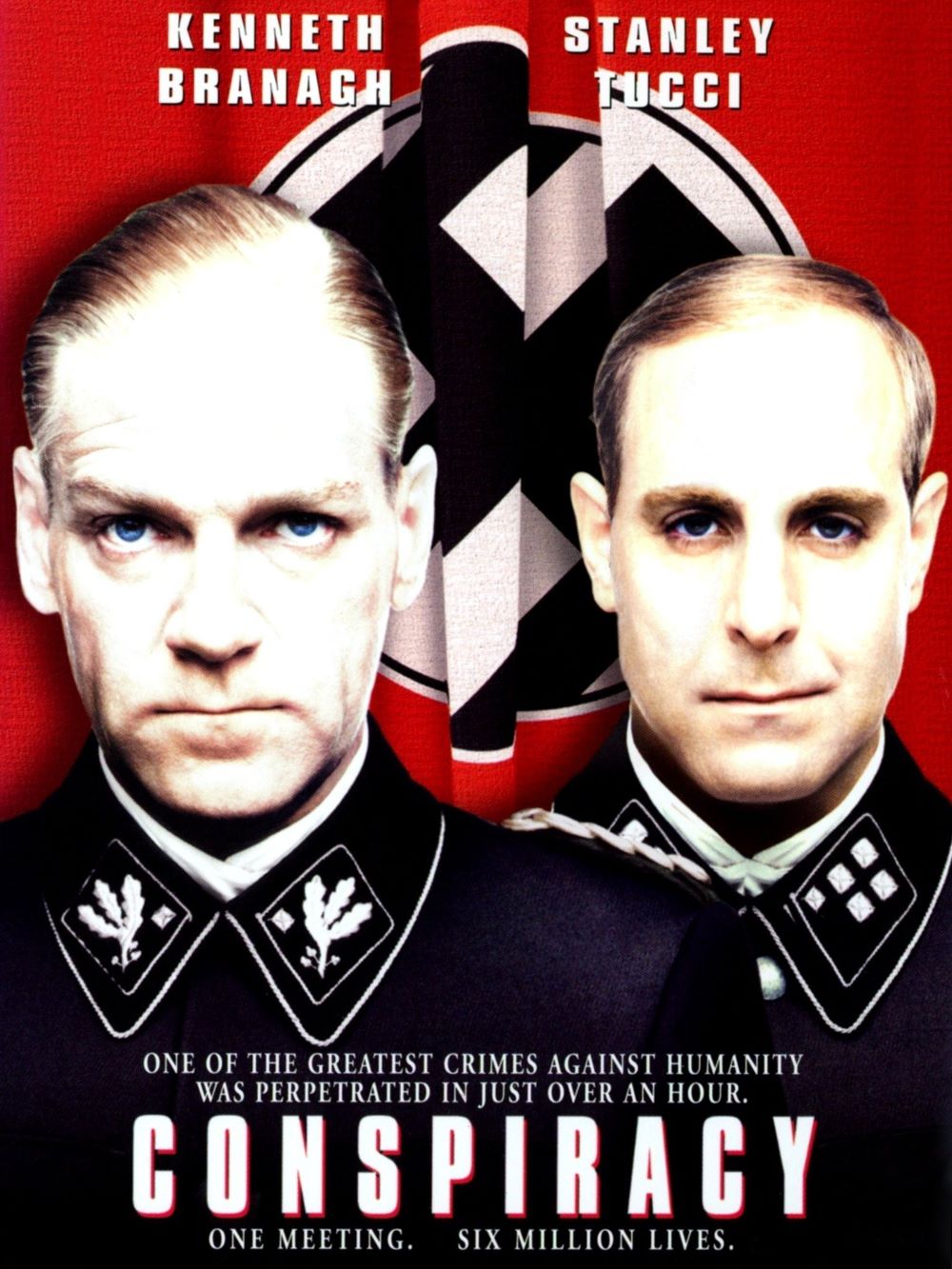
HBO’s Conspiracy (2001) masterfully dramatizes the infamous Wannsee Conference, held on January 20, 1942, where high-ranking Nazi officials orchestrated the Final Solution. The film’s running time mirrors the historical meeting itself, distilling one of the darkest moments in history into a single, chilling sitting that balances historical fidelity, psychological insight, and dramatic restraint. The premise is stark and deceptively simple: a group of men, most of whom had never previously met, gather in a sun-drenched villa outside Berlin to discuss systematic mass murder while enjoying fine food and polite conversation. This contrasting setting, rendered with careful attention to period detail, powerfully underscores what Hannah Arendt called the “banality of evil.” In Conspiracy, evil is not the property of villainous caricatures, but of functionaries and technocrats—chillingly rational and disturbingly mundane.
Much of the film unfolds in real time, utilizing dialogue taken from the sole surviving minutes of the Wannsee Conference. Screenwriter Loring Mandel and director Frank Pierson avoid unnecessary embellishments, allowing the facts and the conversations themselves to carry the full, horrifying weight. Kenneth Branagh gives an Emmy-winning performance as Reinhard Heydrich, the orchestrator and presiding presence at the conference. Branagh’s portrayal is both urbane and authoritative, presenting Heydrich as a figure whose affable composure thinly veils his unwavering commitment to genocide. There is no soaring rhetoric or overt menace; Heydrich’s evil is presented with administrative casualness, making it all the more chilling.
Stanley Tucci is equally compelling as Adolf Eichmann, Heydrich’s logistical right hand and the architect of the machinery of death. Tucci infuses Eichmann with a quiet efficiency and bureaucratic pride—a portrait of a man more attached to process than morality, disturbingly bland in his demeanor. The supporting cast is no less impressive. Colin Firth, as Dr. Wilhelm Stuckart, portrays a legal architect of Nazi race law who appears increasingly unsettled as the agenda shifts from disenfranchisement to extermination. Each attendee is rendered with psychological nuance. Some are disturbingly enthusiastic about their roles, while others are quietly apprehensive, yet ultimately complicit. These subtle gradations of doubt, ambition, and opportunism animate the film’s psychological landscape.
The dialogue, rooted in the actual transcript and skillful dramatic writing, eschews melodrama. The horror emerges not through spectacle, but in analytic exchanges about logistics, quotas, and definitions—the cold calculus of genocide. The men’s debates around how to classify mixed-race Jews, whether sterilization is preferable to extermination, and who should be spared create a bureaucratic puzzle as vile as its intent. Their discussions are delivered in a neutral, even mundane tone, which heightens the chilling reality of what they are planning. Pierson’s direction is restrained; the film never leaves its confined setting, emphasizing the claustrophobic mood of collective complicity. The camera lingers on faces rather than violence, building tension through small gestures—a glance, a pause, the clinking of glassware. The impact of what is said is matched only by the weight of what goes unsaid, until Heydrich, in a quietly devastating moment, makes the true purpose explicit.
More than a simple history lesson, Conspiracy meditates on themes of collective guilt, moral responsibility, and the terrifying ease with which ordinary people become accessories to atrocity. The film is haunted by bureaucracy; if everyone is “just following orders” or “simply doing their job,” the boundaries of blame blur and diffuse. The characters’ debates skillfully skirt the language of murder, favoring euphemisms such as “evacuation” or “resettlement.” This allows viewers to witness, in real time, the kind of moral erosion that enables atrocity on a massive scale. The dry, matter-of-fact tone of the film deepens its emotional impact, forcing the audience to comprehend that such horrors were conjured not in a frenzy, but in calm administrative exchanges over lunch.
For both historians and general audiences, Conspiracy earns praise for its meticulous adherence to historical detail. The screenplay closely follows the Wannsee minutes, and the film’s design choices—muted score, period-accurate costumes, and careful pacing—all serve to render bureaucratic evil as mundane and unremarkable. This unwavering restraint, however, does impose certain limits. The film’s dramatic arc is inherently subdued; the absence of conventional action or narrative tension makes it unfold like an extended negotiation rather than a traditional drama. Some viewers may find this lack of overt conflict stifling or static, resulting in a work that feels more “important” than “entertaining,” but this is clearly by design.
Conspiracy received widespread acclaim for both its historical gravity and psychological depth. Branagh and Tucci, in particular, were celebrated for their nuanced performances. The film is often cited as a model example of how the “banality of evil” operates—not through monsters, but through functionaries in tailored uniforms, sipping wine and rationalizing extermination. For those unfamiliar with the events, the manner in which these men discuss matters of life and death with casual detachment is shocking. As one critic noted, “Most people believe they know what evil looks like… But in Conspiracy, men of true evil met in pristine, gorgeous surroundings… and go about their business leisurely… with a smile and barely a hint of remorse.”
Within the canon of Holocaust cinema, Conspiracy stands apart from films like Schindler’s List or The Pianist, which focus on the suffering and survival of victims. Instead, it occupies a space similar to Downfall and the earlier Die Wannseekonferenz, dramatizing not the machinery of genocide but the mindsets of its architects. By confining itself to dialogue and implication, the film compels viewers to reflect on how civilization’s facades both enable and obscure horror.
The film’s lingering effect is not found in dramatic catharsis or tears, but in an enduring sense of discomfort. Conspiracy dramatizes not just a choice among evil options, but the ease with which those choices become rote procedure and social negotiation. The silence in the final act, as the men calmly disperse after codifying genocide, lands with a cold, almost procedural finality. The closing captions, briefly summarizing the fates of those present, deliver a sobering message: accountability was sporadic, often delayed, and never guaranteed.
Conspiracy is not casual entertainment, nor is it meant to be. Instead, it is essential viewing for anyone interested in the psychology of atrocity, the peril of bureaucratic amorality, and the enduring question of how ordinary people become complicit in extraordinary evil. With a screenplay of surgical precision, outstanding ensemble cast (especially Branagh and Tucci), and a director committed to understatement, HBO’s film demonstrates how history’s darkest decisions are forged not in chaos, but in chilling consensus. To those seeking to understand not only what happened at Wannsee, but how, Conspiracy offers an unblinking and quietly devastating answer.
The 2001 film, Conspiracy, takes place at a villa on the outskirts of Berlin. It’s a lovely villa and, as we can see during the film’s opening moments, it’s about to play host to a meeting of very important people.
The date is January 20th and the year is 1942. Having conquered much of Europe, Nazi Germany is now at war with the Allies. Reinhard Heydrich (Kenneth Branagh), the young chief of the Reich Security Main Office and the man who many feel will eventually succeed Adolf Hitler as the leader of the Third Reich, has been directed to call a conference so that he and his deputy, Adolf Eichmann (Stanley Tucci), can “discuss” ways to solve “the Jewish question.” One-by-one, representatives of the Reich’s bureaucracy show up at the villa.
At the start of the meeting, the men discuss various ways to force the Jews out of Germany and all of the occupied territories. The men chose their words carefully, speaking in euphemisms and doing their best to sound like concerned government officials. The men know what they’re talking about but they still seem to feel the need to avoid coming right and saying it. As they talk, it becomes clear that everyone is trying to stay in Heydrich’s good graces while, at the same time, avoiding the fact that they understand the truth about what Germany is doing. It’s not until halfway through the meeting that Heydrich and Eichmann reveal that Germany’s policy has already been determined and that concentration camps with gas chambers have already been designed and built. The meeting is less about discussing the policy and more about getting each man at the meeting to sign off on it. The unspoken subtext is that each man is being tested to determine who will support (and, if need be, help to cover up) the Final Solution and who will have to be otherwise dealt with.
Based on the actual minutes of the meeting, Conspiracy is film that is perhaps even more important now than when it was first released. It’s a film that explores not only the banality of evil but also seeks to answer the question of why no one in Hitler’s government forcefully objected to the Final Solution. (Many, of course, claimed not to know what was going on. This film reveals just how little credibility that claim had.) Some of the men go along because they understand not going along would mean the end of their careers and maybe their lives. Some of the men agree because, as members of the military, they believe in supporting their country’s leadership, regardless of what that leadership represents. Some of the men agree because they want to stay in Heydrich’s good graces. These men represent a society where anti-Semitism is so normalized that it is accepted as a given and, while some of the men are not as outspoken in their prejudice as the others, it’s clear that all of them view the Jewish people as being a unique problem. Those who do raise concerns do so only out of worry of what will happen to them if the rest of the world discovers what Germany is planning. Heydrich insists that there is no need to worry because Germany will win the war. Some of the men at the Conference are clearly not convinced of Germany’s pre-destined victory but not a single one has either the morality or the courage to refuse to endorse the Final Solution. The film ends with a series of title cards, letting us know what became of the men who attended the Wannsee Conference. Heydrich was assassinated during the war. Eichmann fled to South America and hid there until he was captured by Israel in 1960. Many of the men were executed for war crimes but a surprising number of them were either acquitted or never put on trial and went to live peacefully after the war.
Well-directed by Frank Pierson, Conspiracy has a distinguished cast who brings the historical characters to terrible life. It’s one thing to read about what was said and planned at the Conference. It’s another thing to actually hear those words spoken aloud and it’s a reminder that the evil of the Holocaust was not an accident nor was it something that took its perpetrators by surprise. It was something that meticulously planned by human beings who were fully aware of what they were doing. Kenneth Branagh makes for an arrogant and intimidating Heydrich while Stanley Tucci plays Eichmann as being the type of bureaucratic robot who is incapable of seeing human beings as anything more than just dwindling numbers on a report. Colin Firth and David Threlfall make strong impressions as two of the more weary members of the Conference, as does Ian McNeice in the role of the type of crude, career-driven government functionary who has survived by pretending to be dumb.
At a time when anti-Semitism is on the upswing and Holocaust denialism is being mainstreamed, Conspiracy is an important film. When others say that the Holocaust didn’t happen or that it doesn’t matter, Conspiracy defiantly says, “Yes, it did and yes, it does.”
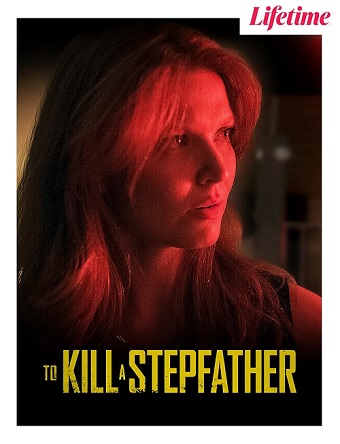
As with so many Lifetime films, To Kill A Stepfather opens with a murder.
Matthew (Dan Golden) is a pillar of his small town’s community. He’s well-liked by all and he’s renowned for the way his voice sounds whenever he sings with the choir. His wife, Kate (Elyse Mirto), is a bit less popular with the community but everyone agrees that Matthew has been good as stepfather to her daughter, Riley (Kelly McCart).
Of course, Riley is not Kate’s only daughter. Nicole (Alex Camacho) is a high-priced defense attorney who left home a long time ago and who has never really made peace with her memories of her mother being an alcoholic. Nicole barely knows Matthew. She’s been too busy pursuing her career to keep up with what’s happening at her former home. Nicole is one of those lawyers who gets yelled at by strangers because so many of her clients are guilty. Now, of course, Nicole’s job is to defend her clients. Guilty or not, anyone accused of a crime is entitled to representation and the job of a defense attorney is to serve as their client’s advocate and help them make their way through the complexities of the American legal system. In other words, Nicole is doing her job. Get off her back, people!
One night, Matthew and Kate’s neighbors hear an argument coming from their house. Inside the house, someone shoves Matthew down a flight of stairs and kills him. When the police arrest Kate for the crime, Riley calls the only attorney that she knows, her older sister Nicole. Nicole returns to her hometown and discovers that, even in jail and desperately needing an attorney, her mother still isn’t happy to see her. Indeed, Kate even says that she would prefer a different lawyer but Nicole takes one look at the ambulance chaser who has been assigned to the case and declares that she’s taking over her mother’s defense.
Apparently, this film was inspired by a true story but it plays out like a typical Lifetime courtroom drama. That’s not a complaint, of course. The familiarity is one of the things that people love about Lifetime movies. From the minute that Nicole meets Kate in prison, the viewer will suspect that they know where the story is heading but that’s okay. The destination is less important than the journey and the journey is enjoyably melodramatic. Alex Camacho and Kelly McCart are instantly believable as sisters and Elyse Mirto gives a good performance as the mother who wants to hold onto her secrets, even if they mean possibly going to prison. In the end, the important thing is that the film embraces the melodrama. That’s really the main thing that we ask from our Lifetime films.
That said, I was kind of amused by how “slick” all of the attorneys in the film were. I’ve worked as an administrative assistant in a law office. I’ve known a few lawyers. I’ve been to the courthouses. Attorneys are usually the most shabbily-dressed people in the courthouse and, usually, they’re juggling way too much to have time to stand around and exchange snarky bon mots. But again, one doesn’t watch a legal drama on Lifetime because they’re looking for a realistic portrait of the American legal system. On Lifetime, all lawyers are perfectly dressed and have not a hair out of place and that’s more than alright.
The 2012 film, Christmas Twister, is about an outbreak of tornadoes that hit Fort Worth two days before Christmas. We’re told that, normally, there aren’t any tornadoes in December but that’s been changing due to …. wait for it …. climate change! Now, with tornado after tornado hitting Granbury, Fort Worth, Lake Worth, Stephenville, Dublin, and a lot of towns in Texas, Casper Van Dein is on a mission to save his family and make sure that everyone knows that the threat of tornadoes is real!
Because, you know, if there’s anything that Texas is famous for, it’s for blowing off the threat of tornadoes….
There’s an actual scene in Christmas Twister in which Victoria Pratt, playing a TV newswoman who is married to Van Dien, tries to convince her station manager to allow her to interrupt regular programming to announce that there might be a tornado on the way. That station manager says that interrupting programming could cause a panic and, since there’s already been three tornadoes that day, people are probably tired of hearing about them. As a result, no one leaves the mall when the tornadoes hit.
Of course, anyone who lives in North Texas knows that there’s little that our local stations enjoy more than interrupting regular programming to talk about the weather. Seriously, our meteorologists live for the chance to get on TV, talk about the storm systems that they’re watching, and tell everyone that, “You don’t need to be out in this, folks.” Our local stations would happily interrupt the President himself if a wall cloud appeared anywhere near I-35.
Biden: “I was wearing an onion on my belt, as was the style at the time….”
Dallas anchorman Steve Eagar: “Folks, we’re interrupting the State of the Union address to keep you informed about a storm system that we’ve been watching….”
It doesn’t even have to be a tornado for our newspeople to interrupt regularly scheduled programming. It can just be hail. It could just a hint of snow. You know that King of the Hill episode where it barely snows and Hank announces, “Texas isn’t ready for this!” Well, that’s pretty close to reality….
And, to be honest, I imagine that’s the way it is in the rest of country as well. The only that changes is the type of weather even that everyone worries about. The idea of Texas newspeople not reporting on a tornado threat would be like a Fort Worth weatherman refusing to talk about a hurricane or maybe a New York meteorologist deciding that it would be best not to report on a blizzard. Imagine a California station manager saying, “People don’t want to hear about the earthquake.” It just wouldn’t happen.
The other thing that I noticed about Christmas Twister is that, for a film that was supposedly taking place in North Texas, there sure were a lot of mountains around. As far as DFW is concerned, we don’t have mountains. I guess if you really went out and searched, you might find a very small hill somewhere but I can guarantee you it would be a manmade hill. This region is called the flatlands for a reason. North Texas is flat. That’s actually one of our trademarks. The land seems to stretch on forever.
However, in Christmas Twister, this is what the area outside of Forth Worth looks like:
This is what Granbury looks like right before the tornado hits:
This is what Granbury looks immediately after the tornado hits:
Yes, the film is not entirely accurate. But, on the plus side, Casper Van Dien manfully drives across the city, saving his children from the tornado and encouraging folks to stay inside. Plus, the film features a perfect shot that shows that the filmmakers did understand at least one thing about Texas:
Yep, the flag of Texas and the flag of some other country. Not even a tornado could take it down!
When I first started high school, quite a few people told me that I needed to follow my sister Erin’s example and try out for cheerleader and I have to admit that I was occasionally tempted to do so. I never did because I already had ballet and drama club, I wanted to establish my own identity, and Erin told me that being cheerleader meant that I had to be perky all the time and, quite frankly, I’ve always needed my time to sulk. Add to that, I’ve always been a natural contrarian so my usual response to several people telling me that I need to do something is to do the exact opposite. (That was perhaps even more true in high school than it is today.)
On the one hand, I can honestly say that I have never regretted not trying out for cheerleading. On the other hand, it’s only natural to occasionally wonder, “What if?” Would I have been the nice, responsible cheerleader like the type that Kirsten Dunst played in Bring It On? Would I have been the bitchy cheerleader who cruelly maintained the school’s status quo? Or would I have been the one trying to make fetch happen? Personally, I like to think that I would have been the cheerleader who dressed in all black and who came up with snarky cheers that sarcastically commented on modern culture.
That question of “What If?” is one of the reasons why I always make sure to catch all of the Lifetime cheerleading films. The other reason is that I enjoy making Erin watch them with me so I can ask her if they’re a realistic depiction of what it was like to be a cheerleader. For instance, earlier today, I made Erin watch The Secret Lives of Cheerleaders with me and I asked her, “Is this an accurate portrayal of cheerleading?”
“Maybe if you were a cheerleader in Hell,” she replied.
In The Secret Lives of Cheerleaders, Savannah May plays Ava. Ava and her mother, Candice (Denise Richards), have just moved to a new town and that means that Ava is going to be starting at a new high school. With her mother’s very strong (some might say too strong) encouragement, Ava tries out for cheerleading and makes the squad. Soon, Ava is not only a hit with the other cheerleaders but she’s also on her way to becoming the most popular girl at school! That doesn’t sit well with Katrina (Alexandria DeBerry), the cheer captain and homecoming queen who is all about three things: trying to control everyone’s lives, hazing the Hell out of all the new recruits, and being more popular than everyone else. When Ava makes it clear that she’s going to date whoever she wants (even if he isn’t a starter on the football team) and that she’s not really that happy with all the hazing either, Katrina plots to take down her only potential rival.
There’s not a subtle moment to be found in The Secret Lives of Cheerleaders, which is why it’s perhaps the best Lifetime cheerleader film ever made. From the minute that Katrina gives Ava the side eye, we know that we’re in store for an epic battle between two differing philosophies of high school popularity, with Ava representing the way we wish things could be while Katrina represents what we secretly suspect the world to be like. The film’s signature scene is perhaps the moment when Katrina and Ava get into an impromptu dance-off on the football field. It’s so thoroughly and unashamedly over-the-top that it’s also more than a little brilliant.
I mean, seriously, this is a Lifetime cheerleader film. You don’t watch a film like this for a subtlety. You watch a film like this for scenes of Katrina live-streaming a hazing and forcing her rival to stand on edge of the roof of the school. We watch a film like this for the moment that the entire high school breaks into applause as they watch one of their classmates get led away in handcuffs. Savannah May and Alexandria DeBerry are well-cast as the rival cheerleaders and DeBerry especially deserves credit for making Katrina the most joyfully evil cheerleader in recent memory.
Whether it’s an accurate portrayal of high school cheerleading or not, The Secret Lives of Cheerleaders is an undeniably entertaining Lifetime film. It fully embraces the melodrama and we’re all better for it.
As our longtime readers know, I’ve never been one for false modesty. I know that there are things that I do well and I don’t see any reason not to brag about my natural talents. On occasion, I’ve been told that it can be a little off-putting but so what? As long as its justified, what’s wrong with a little arrogance?
That said, part of knowing what I can do means being honest about what I can’t do. And if there’s any job that I would absolutely suck at, it would be writing advertising jingles. I mean, there’s a reason why none of my poems ever rhyme. Coming up with pithy one-liners that will make you want to “buy! buy! buy!,” just isn’t my specialty. Fortunately, jingles themselves are no longer as important as they were back in the Mad Men era. In fact, off the top of my head, I can only think of one current jingle and that’s the “Liberty Liberty Liberty Lib-er-ty!” song.
(And everyone hates that!)
Fortunately, Belle Williams (Tatyana Ali), the main protagonist of Jingle Belle, doesn’t have that problem. Long ago, she abandoned New York for Ohio and she’s established herself as one of the best jingle writers around. Unfortunately, it appears that she might be losing that magic touch. As this film begins, she’s suffering from a terrible case of writer’s block. In fact, when the mayor of her hometown calls and asks her to return home and help write the annual Christmas pageant, her initial reaction is to say no. However, her boss (Loretta Devine) insists that Belle take the assignment. Perhaps a trip back home is just what Belle needs to break through her writer’s block.
Belle returns home, planning on helping the town out. What she doesn’t know is that the Christmas pageant is being directed by her ex-boyfriend and former performing partner, Michael Hill (Cornelius Smith, Jr). Can Belle and Michael set aside their differences and their complicated personal history long enough to put on a successful Christmas pageant? And how will Michael the purist react when Belle’s boss tries to turn one of their songs into an advertising jingle?
Of course, you already know the answer to all those questions. Jingle Belle is predictable even by the standards of a Lifetime Christmas movie. As I’ve said quite a bit this month, how much you enjoy this film will depend on how much tolerance you have for Lifetime and Hallmark Christmas films in general. (That’s kind of become my mantra this month.) Anyway, there’s no surprises to be found in this one but Cornelius Smith, Jr. is appropriately charismatic as Michael and the great Loretta Devine mines a lot of humor out of the role of the demanding boss.
The film’s final message is that small towns are better than big cities and you can write jingles anywhere. It’s a nice little message but, then again, it does seem like, if you work in advertising, it would be a good idea to live near the hub of the advertising industry. That said, I’ve never written a jingle in my life so I could be wrong. All I know is that, wherever Belle lives, she’ll come up with something better than the Liberty Mutual jingle and really, that’s the most important thing of all.
(Hi there! So, as you may know because I’ve been talking about it on this site all year, I have got way too much stuff on my DVR. Seriously, I currently have 189 things recorded! I’ve decided that, on January 15th, I am going to erase everything on the DVR, regardless of whether I’ve watched it or not. So, that means that I’ve now have only have a month to clean out the DVR! Will I make it? Keep checking this site to find out! I recorded The Sandman off of the SyFy on October 14th!)
Madison (Shae Smolik) is a little girl who appears to have some issues.
For instance, her father just died under the most mysterious of circumstances. One of the last things that he did before he died was get paranoid when a police car drove by him. He was carrying a gun when he died, as well. Also, he died right in front of Madison.
Madison ends up at the hospital, where she has violent nightmares and struggles so much with the doctors and the orderlies that she has to be strapped down. Since both of her parents are dead, a call is made to her Aunt Claire (Haylie Duff). Claire is willing to adopt Madison but Child Protective Services is a bit less enthusiastic. Claire is unmarried and hasn’t always been the most responsible adult. She currently works as a photographer, taking pictures of aspiring Bettie Pages in her garage. Can Claire not only prove herself to be a good mother but also solve the mystery of what happened to Madison’s father?
You probably read that plot description and thought to yourself, “That sounds like a typical Lifetime film.” And certainly, there is a bit of Lifetime to be found in this SyFy movie. Peter Sullivan has produced, written, and directed several films that have appeared on both SyFy and Lifetime. Haylie Duff is a regular Lifetime actress. For a financially struggling photographer, Claire certainly does live in a nice, big house, which is one of the most familiar signs that you might be watching Lifetime film.
However, make no doubt about it, this is definitely not a Lifetime film.
You see, the reason why Madison is a nightmare to deal with it is because she’s linked to a monster. The reason why Madison is an orphan is because the monster killed her father. And now that Madison is living with Claire, the monster is coming for both of them.
And what a monster! Seriously, the Sandman is about as frightening as a SyFy monster can get. As you can probably guess from the name, he’s made of sand. The best way to avoid him, of course, would be to go some place where there is no sand but good luck with that. SAND IS EVERYWHERE! The Sandman pops up whenever Madison is in danger.
Nosy neighbor wants to know about Madison’s father? Here comes the Sandman, pouring in through the kitchen faucet!
Hospital doctor planning on recommending that Madison be institutionalized? Sandman!
In fact, anyone who poses a threat to Madison, whether real or perceived, can expect a visit from the Sandman.
Tobin Bell plays Valentine, a government agent who thinks that Madison could be weaponized. He’s probably right but seriously, everyone should know better than to mess with the Sandman. That said, it’s always fun when Tobin Bell is in one of these movies. He’s just such a good villain.
The Sandman was a good mix of Lifetime family melodrama and SyFy horror. As the aunt and the seriously disturbed niece, Haylie Duff and Shae Smolik were believable and sympathetic and the Sandman made for a memorable monster. Watch this movie the next time you’re planning on spending a weekend at the beach.











 Through the Shattered Lens