The sixth Police Academy film opens with another crime wave. Considering that the Police Academy Class of 1984 was supposedly the best to ever graduate, they don’t seem to have done much to clean up the city. This time, a series of robberies are being committed in the Wilson Heights neighborhood. Since Captain Harris (G.W. Bailey) and Lt. Proctor (Lance Kinsey) don’t seem to be capable of upholding the law in their precinct, the Mayor (Kenneth Mars) orders Harris to work with Commandant Lassard (George Gaynes) and the usual gang of Police Academy graduates.
Carey Mahoney is still missing in action but Nick Lassard (Matt McCoy) has transferred up from Miami and has taken Mahoney’s place as the resident smartass. Also returning are Sound Effects Man (Michael Winslow), Hightower (Bubba Smith), Hooks (Marion Ramsey), Callahan (Leslie Easterbrook), Tackleberry (David Graf), and, after having been absent for the previous two films, Sgt. Fackler (Bruce Mahler)!
I cannot believe I’m saying this but Police Academy 6 turned out to be better than I remembered. It’s just as stupid as all of the other Police Academy films but everyone seems to be having a good time and Matt McCoy no longer feels out of place as Mahoney’s replacement. Bruce Mahler’s return as Fackler also means a return to the physical comedy that he excelled at in the first two films and the total incompetence of Harris and Proctor is handled better here than it was in the previous few films. A welcome addition to the cast is Gerrit Graham, as the childish head of the robbers. (Whereas the previous few films at least tried to pretend like the criminals were a potentially serious threat, City Under Siege presents them as being as clownish as everyone else in the film. It’s a better approach because it’s not as if anyone watches a Police Academy film expecting to see something like The French Connection or Fort Apache, The Bronx.) Police Academy 6 is a stupid, stupid movie and the jokes are as juvenile as ever but, along with Part 3, it’s still one of the better sequels.
Police Academy 6 was the first Police Academy film to not be a box office hit. It would be followed by one final sequel, Mission to Moscow, which I’ll take a look at on Saturday.
Detective Eileen McHenry (Raquel Welch) has just been given her new assignment and she is about to find out that there is never a dull day in the 87th Precinct. How could there be when the precinct’s top detectives are played by Burt Reynolds, Tom Skerritt, and Jack Weston? Or when Boston’s top criminal mastermind is played by Yul Brynner? There is always something happening in the 8th Precinct. Someone is stealing stuff from the precinct house. Someone else is attacking the city’s homeless. Even worse, Brynner is assassinating public officials and will not stop until he is paid a hefty ransom!
Based on the famous 87th Precinct novels that Evan Hunter wrote under the name Ed McBain, Fuzz has more in common with Robert Altman’s MASH than The French Connection. (Skerritt and Bert Remsen, who plays a policeman in Fuzz, were both members of Altman’s stock company.) Much like Altman’s best-regarded films, Fuzz is an ensemble piece, one that mixes comedy with tragedy and which features several different storylines playing out at once. Scenes of homeless men being set on fire are mixed with scenes of Reynolds and Weston going undercover as nuns. (Of course, Burt does not shave his mustache.) Since it was written by Hunter, the film’s script comes close to duplicating the feel of the 87th Precinct novels. Unfortunately, Richard A. Colla was a television director and Fuzz feels more like an extended episode of Police Story or Hill Street Blues than a movie. Unlike Altman’s best films, Fuzz‘s constantly shifting tone and the mix of comedy and drama often feels awkward. Fortunately, Fuzz does feature good performances from Reynolds, Westin, Skerritt, and Brynner, along with a great 70s score from Dave Grusin. Raquel Welch is never believable as cop but she’s Raquel Welch so who cares?
The 1971 film Jennifer On My Mind opens with a lengthy montage of black-and-white photographs of immigrants arriving at Ellis Island. These, the film tells us, are the men and women who came to America with nothing and who fought and struggled to have something. The film itself deals with the grandchildren of those immigrants, who, as opposed to their ancestors, now have everything and who seem to be determined to reduce it all down to nothing.
24 year-old Marcus Rottner (Michael Brandon) would appear to have everything. Following the death of his father, Marcus has inherited the fortune that his immigrant grandfather earned. (The ghost of his grandfather shows up at one point and smokes a joint.) Marcus will never have to work a day in his life, owns a nice apartment, and can go to Europe whenever he feels like it. However, Marcus does have one problem: his girlfriend Jennifer (Tally Walker) just died of a heroin overdose in his living room. Now, Marcus has to try to dispose of the body without anyone discovering what has happened.
The film alternates between showing Marcus’s attempts to get ride of Jennifer’s body and flashbacks to his romance with her. We see how he first met Jennifer in Venice and how he fell in love with her. Like Marcus, Jennifer comes from a rich family. Her parents are alive but we never see them. (Reportedly, scenes were filmed that featured Kim Hunter as Jennifer’s mother but they were cut after a disastrous preview.) As she leaves Venice, Jennifer tells Marcus to visit her back in the states.
Which is just what Marcus does. Marcus and Jennifer’s relationship plays out like a romantic comedy, except for the fact that Jennifer doesn’t really seem to care that much for Marcus. After Jennifer jumps off a roof, Marcus takes her back to Venice and tries to recreate their earlier romance. However, Jennifer just wants to go back to New York…
About ten minutes into the film, I nearly stopped watching Jennifer On My Mind. Both Marcus and Jennifer seemed like such unlikable characters that I couldn’t imagine spending a full 90 minutes with them. The fact that they were both rich and spoiled didn’t help.
But I kept watching because the first part of the film was set in Venice and I love Venice! Watching those scenes reminded me of visiting Italy the summer after I graduated from high school. It was a great time and, despite how I felt about Marcus and Jennifer, the film still brought back some nice memories.
However, then Marcus and Jennifer returned to New York and, since I don’t really care about New York the way that I care about Venice, I again found myself tempted to stop watching. However, it was around this time that I started to realize that Michael Brandon was actually giving a pretty good performance in the role of Marcus. So, I decided to keep giving the film a chance.
And then the ghost of Marcus’s grandfather showed up. And then, the film gave us a scene of Jennifer hanging out with the two traveling “minstrels.” And I thought to myself, “This is getting unbearably cutesy…”
But then, Robert De Niro showed up! That’s right — Jennifer On My Mind is an early De Niro movie. When Marcus hails a cab and asks for a ride to Long Island, the taxi driver is played by none other than Robert De Niro. And while De Niro is only in the film for a few minutes, he totally steals those few minutes. He plays a “gypsy” cab driver in this film and, as he drives Marcus to Long Island, he rambles about his sister, his drugs, and his fear of driving Marcus to see a bunch of “squares.” De Niro is such an eccentric and energetic presence that he brings the whole film to life.
After De Niro’s scene, there was only 30 minutes left in the film and I thought to myself, “Okay, I can give this another 30 minutes…”
Written by Love Story‘s Erich Segal and directed by Pretty Poison‘s Noel Black, Jennifer On My Mind is an uneven but oddly watchable film. If you’re looking for quirky love story … well, I really can’t recommend Jennifer On My Mind because it never really convinces you that Marcus and Jennifer are in love. For the most part, their relationship seems to be one of convenience. Jennifer wants drugs and Marcus can afford them. Marcus wants a girlfriend and Jennifer is willing to pretend. Instead, Jennifer On My Mind is more like a parody of true romance. Marcus spends the entire film wanting Jennifer’s body and now that he has it, he has to find a way to get rid of it.
It’s undeniably uneven; for every scene that works, there’s another one that doesn’t. But, at the same time, it’s undeniably watchable. Plus, you get an early performance from Robert De Niro!
Jennifer On My Mind is currently available to viewed on Netflix.
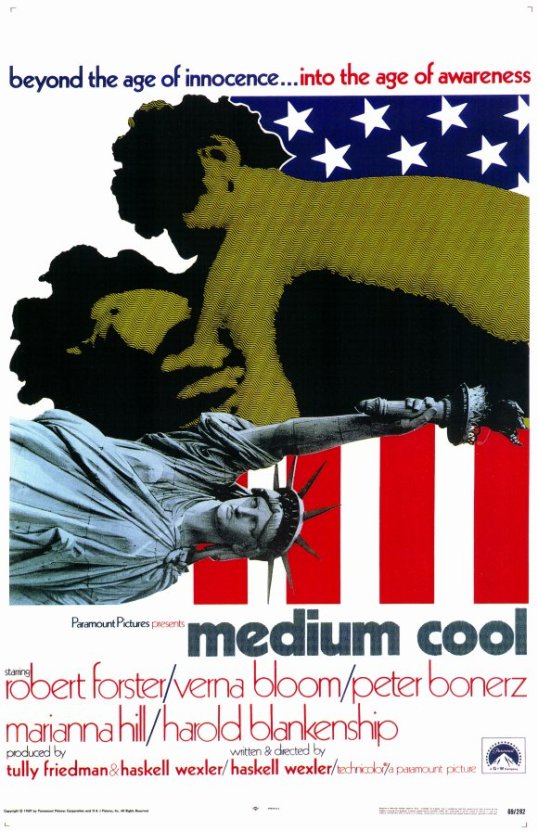
For the past few days, I’ve been chronologically reviewing 94 films about politicians and, to a lesser extent, politics. Four days ago, I started in on the 60s by taking a look at Sunrise at Campobello, one of the most traditional-minded and pro-American movies ever made. And now, I’m closing out the decade by taking a look at 1969’s Medium Cool, a film that is — in style, ideology, and content — the exact opposite of Sunrise at Campobello.
I should admit that I’m cheating a bit by including Medium Cool in this series of reviews. When I first started Shattered Politics, I said that I would be reviewing films about politicians. While Medium Cool is a fiercely political film, there are few elected officials to be seen on screen. That said, it was shot during the infamous 1968 Democratic National Convention and, as such, the politicians are present regardless of whether or not they’re seen.
Plotwise, the film follows a news cameraman, John (Robert Forster), and his sound guy (Peter Bonerz) as they go around Chicago, searching for stories. Along the way, they interview the disturbingly cheerful owner of a gun club (played, in his film debut, by Peter Boyle), several people who volunteered on Robert Kennedy’s presidential campaign, and, in one of the film’s best and most awkward scenes, a group of Black Panthers.
Throughout the first half of the film, John remains detached from the stories that he covers. He’s more concerned with getting the footage and getting a good soundbite than in really listening to what anyone is saying. (In many ways, he’s like a less sociopathic version of the character played by Jake Gyllenhaal in Nightcrawler.) It’s not until John discovers that his station is sharing his footage with the FBI that John finally starts to show some political awareness. Unfortunately, he also shows some anger and ends up losing his job as a result.
Now unemployed, John meets Eileen (Verna Bloom), a single mother who has recently moved to Chicago from West Virginia. Now that he’s free from the detachment of his job, John actually starts to develop feelings for both Eileen and her son, Harold (Harold Blankenship). When Harold runs away, Eileen and John search Chicago for him. Unfortunately, their search happens at the same time as the 1968 Democratic Convention. While John and Eileen search, the Chicago police are busy beating protestors in the street.
(The video below is long, but worth watching, as is the entire film.)
Now, I know that, in the past, I’ve been critical of many of the counter culture films of the late 60s and early 70s, describing their politics as being shallow, trendy, and faux Leftist. (And if you doubt me, read my reviews of Getting Straight, Zabriskie Point, and R.P.M.) However, Medium Cool is an exception to those films, in that it actually works. Medium Cool was directed by famed cinematographer, Haskell Wexler. Wexler began his career shooting documentaries and, in many ways, that’s exactly what Medium Cool is. Though Robert Forster may be an actor, many of the people that he interviewed in the film were not. When he talks to the former Kennedy campaign workers, he’s talking to actual volunteers and getting their true feelings, as opposed to something written for them by an out-of-touch screenwriter. When we see John and Eileen trying to survive the violence outside the Democratic Convention, we’re also seeing Robert Forster and Verna Bloom attempting to do the same thing. The protestors being attacked were real. The cops doing the attacking were real. The violence was real.
And, considering that Medium Cool was released 46 years ago, the issues raised by the film are still real. When the Black Panthers suspiciously view John and his sound guy, we’re reminded of the protestors in Ferguson demanding that the national media get out of their way. When we see the protests outside the 1968 Democratic Convention, how can we not compare them to the protests that we still see every day? When the cops line up in military precision and we hear that orders must be followed, are we watching Medium Cool or are we watching CNN?
During one of Medium Cool‘s better known moments, an off-screen voice is heard to shout, “Look out, Haskell! It’s real!,” warning director Haskell Wexler that the violence he’s filming is actually happening. And that’s a warning that’s still appropriate and relevant today. We may be watching from the safety of our homes but it’s still real.
(Of course, it should be mentioned that, according to Wexler himself, “Look out, Haskell! It’s real!” was actually added to the scene in post production.)
It’s perhaps indicative of how much American culture changed in the 60s that a decade that started with Ralph Bellamy playing Franklin D. Roosevelt would end with Medium Cool. Fortunately, Medium Cool gives us plenty of evidence about how that change happened.
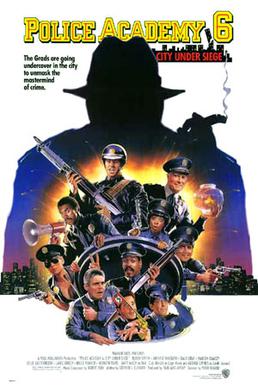 The sixth Police Academy film opens with another crime wave. Considering that the Police Academy Class of 1984 was supposedly the best to ever graduate, they don’t seem to have done much to clean up the city. This time, a series of robberies are being committed in the Wilson Heights neighborhood. Since Captain Harris (G.W. Bailey) and Lt. Proctor (Lance Kinsey) don’t seem to be capable of upholding the law in their precinct, the Mayor (Kenneth Mars) orders Harris to work with Commandant Lassard (George Gaynes) and the usual gang of Police Academy graduates.
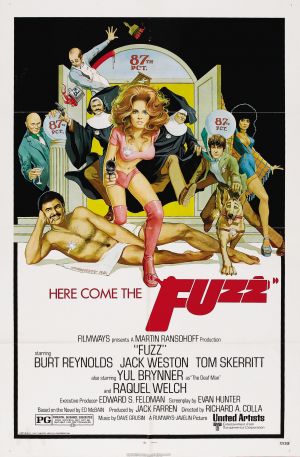 Detective Eileen McHenry (Raquel Welch) has just been given her new assignment and she is about to find out that there is never a dull day in the 87th Precinct. How could there be when the precinct’s top detectives are played by Burt Reynolds, Tom Skerritt, and Jack Weston? Or when Boston’s top criminal mastermind is played by Yul Brynner? There is always something happening in the 8th Precinct. Someone is stealing stuff from the precinct house. Someone else is attacking the city’s homeless. Even worse, Brynner is assassinating public officials and will not stop until he is paid a hefty ransom!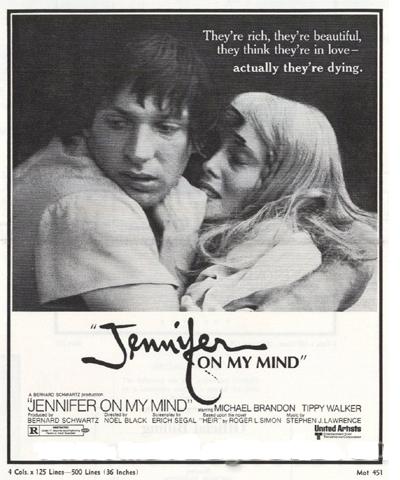
 Through the Shattered Lens