Retro Television Review: St. Elsewhere 2.8 “All About Eve”


Welcome to Retro Television Reviews, a feature where we review some of our favorite and least favorite shows of the past! On Fridays, I will be reviewing St. Elsewhere, a medical show which ran on NBC from 1982 to 1988.  The show can be found on Hulu and, for purchase, on Prime!
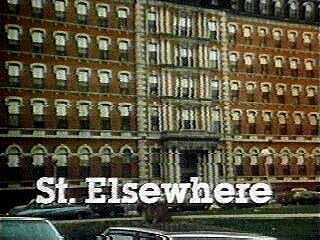
This week, everyone’s got the blues.

Episode 2.8 “All About Eve”

(Dir by David Anspaugh, originally aired on December 14th, 1983)

What a depressing episode!

With tension rising between Boston’s Catholics and its Protestants, threats are being called into the hospital because young Protestant Eddie Carson (Eric Stoltz) is still a patient.  (Last week, I assumed Eddie was Catholic but apparently, he’s supposed to be a Protestant.  I also assumed his parents were blown up in the pub bombing.  In this episode, it was made clear that the victims were his aunt and uncle.)  A group of masked, IRA-style terrorists break into Joan Halloran’s home.  Joan’s gone at the time but Bobby Caldwell is in the shower and he ends up getting beaten into unconsciousness.

(Wow, did someone on the writing staff have an issue with Irish Catholics?)

Meanwhile, Dr. Westphall has to explain to his several autistic son Tommy (Chad Allen) that their beloved housekeeper has quit and moved away.  Westphall’s daughter says she’s going to skip college and stay home to help take care of her brother.  While I’ve always known that the widowed Westphall had an autistic son, this was the first episode to actually show us Westphall interacting with Tommy.  And, with no disrespect meant to the autistic community, I can understand why Westphall always seems so depressed.  Tommy runs and hides in a corner.  Tommy hits his father.  Tommy demands to know if everyone is going to leave him.  By the end of the episode, Westphall was exhausted and I was even more exhausted from watching him.

But Westphall’s angst was not the most depressing thing about this episode.  On top of everything else, Eve Leighton died!  She didn’t die as a result of the heart that Dr. Craig transplanted into her.  The heart was working fine.  Instead, the rest of Eve’s body gave out.  Being in the hospital initially saved her life but it also shut her off from everything that inspired her to keep living.  Dr. Craig was in surgery when Eve coded.  By the time he was able to get to her room, she was already gone.  And with Eve’s death, that also means that the heart that once belonged to Morrison’s wife is gone as well.

I mean, seriously …. GOOD LORD!  It was a well-acted episode.  Both William Daniels and Ed Flanders broke my heart.  But I seriously had to rewatch Happy Gilmore after watching this show.  That’s how depressed it left me!

But that’s life and death in a hospital.  Every hospital is home to hundreds of different stories and the majority of them do not have happy endings.

Retro Television Reviews: The Last Angry Man (dir by Jerrold Freedman)


Welcome to Retro Television Reviews, a feature where we review some of our favorite and least favorite shows of the past!  On Sundays, I will be reviewing the made-for-television movies that used to be a primetime mainstay.  Today’s film is 1974’s The Last Angry Man!  It  can be viewed on YouTube.

During the Great Depression, Dr. Sam Abelman (Pat Hingle) is a doctor who works in the slums of Brooklyn.  Dr. Abelman can be gruff.  Dr. Abelman can be crotchety.  Dr. Abelman can be, as the title suggests, a little bit angry.  He can’t help but get annoyed at how difficult it is to get his patients to pay him.  He gets easily annoyed with red tape and bureaucracy.  Dr. Abelman is an angry man.  In his eyes, he’s the last angry man.

But that doesn’t mean that Dr. Abelman doesn’t care about his patients or the community in which he lives.  Underneath his gruff exterior, Dr. Abelman is truly a man who wants to make the world a better place.  Sam Abelman is especially angry at the doctors who have abandoned the neighborhood that once supported them and who now work at hospitals that have little room for the poor.

The film focuses on Dr. Abelman’s attempts to help Frankie Parelli (Michael Margotta), a troubled teenager who has a reputation for being a bully and a petty criminal.  When Frankie starts to suffer from frequent seizures, Dr. Abelman comes to be convinced that Frankie is suffering from a brain tumor.  Dr. Abelman wants to get Frankie seen by a specialist and a surgeon but it’s difficult because of Frankie’s own bad reputation and also the fact that Frankie’s family doesn’t have much money.  Dr. Abelman uses a combination of shaming and outrage to finally get Frankie examined.  But, when it become apparent that Frankie is going to need an operation, is Dr. Abelman going to be able to get him under the knife?

The Last Angry Man was loosely based on a novel by Gerald Green.  The novel was previously adapted into a 1959 film, which starred the great actor Paul Muni in his final role.  (Muni received an Oscar nomination for his performance.)  If the novel and the 1959 film emphasized the grittiness of the neighborhood in which Dr. Abelman worked, the 1974 made-for-TV version takes place in a remarkably clean version of Brooklyn.  It’s a very pleasant slum.  There’s no trash to be seen.  The apartment buildings and the streets have the crisp look that only comes from shooting on a studio backlot.  Everyone in the neighborhood is remarkably friendly.  Even Frankie is a rather mild-mannered delinquent.  Dr. Abelman may be angry but everyone’s so nice that it sometimes seems like he’s going a little bit overboard.

The Last Angry Man was clearly meant to be a pilot for a television series and, as such, the movie’s action doesn’t really seem to build up to any sort of grand climax.  Instead, the film is more about introducing Dr. Abelman and all the quirky people in the neighborhood.  Pat Hingle was a good actor but, as Dr. Abelman, he’s all bluster with little depth.  It’s hard not to feel that both the film and the potential show would have been well-served by having Pat Hingle and Sorrell Brooke (who plays Abelman’s best friend, Dr. Vogel) switch roles.  When Sorrell Brooke gets annoyed and angry in this film, you have no doubt that the feeling is genuine.

Unfortunately, The Last Angry Man just isn’t angry enough.

Embracing the Melodrama Part II #25: West Side Story (dir by Robert Wise and Jerome Robbins)


West_Side_Story_poster

Nearly two weeks ago, I started on something that I call Embracing the Melodrama, Part II.  For the next month or so, I will be reviewing, in chronological order, 126 examples of cinematic melodrama.  I started things off by reviewing the 1927 classic Sunrise and now, 24 reviews later, we’re ready to start in on one of my favorite decades, the 1960s!

And what better way to start the 60s than be taking a look at the 1961 best picture winner, West Side Story?

Being a lifelong dancer, I have to admit that I’ve lost track of how many times I’ve seen West Side Story.  If you love to dance, this is one of those films that you simply have to see.  Of the various musicals that have won best picture, West Side Story is arguably the best.  Based on a hit Broadway show (which was itself rather famously based on William Shakespeare’s Romeo and Juliet), West Side Story was co-directed by the great choreographer Jerome Robbins and it features some of the greatest dance numbers ever filmed.  If you don’t get excited while watching the Sharks and the Shark Girls arguing about America, then there’s really no hope for you.  Tonight Quintet, Somewhere, A Boy Like That, Maria … even Gee, Officer Krupke, has there ever been another musical score that just leaves you wanting to sing as much as West Side Story does?

(I mean, I’ll be the first admit that I absolutely love the theme song from Santa Claus Conquers The Martians but it can’t even compare to West Side Story!)

What’s funny is that, in between viewings of the film, I always seem to forget just how good West Side Story actually is.  (Fortunately, this also means that I’m pleasantly surprised every time I watch the movie.)  In theory, this is an easy film to joke about.  It tells the story of street gangs who are apparently just as good at dancing as they are at fighting.  The all-white Jets snap their fingers and tell us that when you’re a jet, you’re the best.  The Puerto Rican Sharks are moving in on the Jets’s territory.  The two leaders of the gangs — Riff (Russ Tamblyn) and Bernardo (George Chakiris) — want to settle thing with a “rumble.”  And it’s easy for contemporary audiences to laugh because “rumble” is such an old-fashioned way of saying things that it’s now one of those terms that’s only used when one is trying to be ironic or snarky.

(For instance, I was with some friends at the movies and the people sitting behind us kept talking.  One of my friends told them to shut up.  One of the loud people replied that we were the ones who need to shut up.  As the insults escalated, I finally said, “Y’all — do we really have to have a rumble right now?”  Unfortunately, everyone was too busy arguing to appreciate my pitch perfect delivery.)

Riff’s best friend is Tony (Richard Beymer).  Tony was a co-founder of the Jets but now, he wants to move on from the gang.  He meets a girl named Maria (Natalie Wood) and the two of them fall in love.  However, Maria is Bernardo’s younger sister.  Her best friend, Anita (Rita Moreno), is Bernardo’s girlfriend.  Loving Tony, in other words, is prohibido.

And, since West Side Story is based on Romeo and Juliet, you can probably guess to what type of tragedy all of this leads.

Now, before I heap too much praise of West Side Story, I do need to admit that, in the role of Tony, Richard Beymer does not exactly radiate charisma.  He’s handsome enough but you never quite buy that he was former member of the Jets.  Since Tony’s singing voice was dubbed by Jimmy Bryant, you do believe everything that he sings.  But otherwise, Richard Beymer comes across as being stiff and rather awkward.

And it doesn’t help, of course, that he’s acting opposite Russ Tamblyn who, in the role of Riff, is a whirlwind of unstoppable energy.  Tamblyn is the one who you remember at the end of the film, followed by George Chakiris.  Compared to those two, Richard Beymer’s performance is just dull.

Fortunately, there’s Maria (played by Natalie Wood with Marni Nixon doing the singing).  Natalie Wood is one of my favorite of the classic Hollywood actresses.  She’s certainly one of the actresses with whom I most idenitfy.  With Richard Beymer sleepwalking through the role of Tony, it falls on Natalie to provide some true emotion to the film’s love story and that’s exactly what she does.  Every time I see West Side Story, I want to be Natalie Wood and I want to have a best friend like Rita Moreno and I want to meet someone like Riff…

Sorry, Tony.

West Side Story is one of the best musicals ever made.  If you’re not dancing and then crying and then dancing while crying as you watch West Side Story, then you’re doing it wrong.

http://www.youtube.com/watch?v=yA_aFprGzyc