Film Review: Save The Tiger (dir by John G. Avildsen)


1973’s Save The Tiger tells the story of Harry Stoner (Jack Lemmon).

When Harry was a young man, he loved baseball and he felt like he could conquer the world.  He saw combat in World War II and spent the final part of the war on the Island of Capri, recuperating after being wounded in battle.  Harry went on to partner up with Phil Greene (Jack Gilford) and they started a clothing company in Los Angeles, Capri Casuals.

Now, Harry is a middle-aged man who is still haunted by nightmares about the war.  He’s married.  He has a daughter attending school in Switzerland.  He’s respected in the industry.  He lives in a nice house in Beverly Hills.  And he’s totally miserable.  He wakes up every day and wonders what is happening to the country.  He talks about witnessing a wild pitch at a baseball game, missing the days when something like that could seem like the most important thing in his life.  He spends all of his time at work, cheating to balance the books and keeping clients happy by setting them up with a sophisticated prostitute named Margo (played, with a weary cynicism, by Lara Parker).

Save The Tiger covers just a few days in the life of Harry Stoner, as he searches for some sort of meaning in his life.  He gives a ride to a free-spirited hippie (Laurie Heineman) who offers to have sex with him.  (Harry replies that he’s late for work.)  He accepts an award at an industry dinner and, as he tries to give his acceptance speech, he is haunted by the sight of dead soldiers sitting in the audience.  With Phil, he debates whether or not to balance the books by setting fire to one of their warehouses in order to collect the insurance.  Harry sees a poster imploring him to “Save the Tigers.”  Who can save Harry as he finds himself increasingly overwhelmed by the realities of his life?

As I watched Save the Tiger, I found myself thinking about two other films of the era that featured a middle-aged man dealing with a midlife crisis while searching for meaning in the counterculture.  In Petulia and Breezy, George C. Scott and William Holden each found meaning in a relationship with a younger woman.  And while Petulia and Breezy are both good films, Save The Tiger is far more realistic in its portrayal of Harry’s ennui.  There is no easy solution for Harry.  Even if he accepted the hippie’s offer to “ball” or if he acted on the obvious attraction between himself and Margo, one gets the feeling that Harry would still feel lost.  Harry’s problem isn’t that he’s merely bored with his life.  Harry’s problem is that he yearns for a past that can never be recaptured and which may only exist in his imagination.  If George C. Scott and William Holden were two actors who excelled at playing characters who refused to yield to the world’s demands, Jack Lemmon was an actor who played characters who often seemed to be desperate in their search for happiness.  Save The Tiger features Lemmon at his most desperate, playing a character who has yielded so often and compromised so much that he now has nowhere left to go.

It’s not exactly a cheerful film but it is one that sticks with you.  Jack Lemmon won his second Oscar for his performance as Harry and he certainly deserved it.  Lemmon does a wonderful job generating some sympathy for a character who is not always particularly likable.  Many of Harry’s problems are due to his own bad decisions.  No one forced him to use “ballet with the books” to keep his business open and no one is forcing him to hire arsonist Charlie Robbins (Thayer David, giving a performance that is both witty and sinister at the same time) to burn down not only his warehouse but also an adjoining business that belongs to an acquaintance.  Harry could admit the truth and shut down his business but then how would he afford the home in Beverly Hills and all the other symbols of his success?  Harry yearns for a time when he was young and his decisions didn’t have consequences but that time has passed.

This isn’t exactly the type of film that many would expect from the director of Rocky but director John G. Avildsen does a good job of putting the viewer into Harry’s seedy world.  I especially liked Avilden’s handling of the scene where Harry hallucinates a platoon of wounded soldiers listening to his awards speech.  Instead of lingering on the soldiers, Avildsen instead uses a series of a quick cuts that initially leave the audience as confused as Harry as to what Harry is seeing.  Both Rocky and Save The Tiger are about a man who refuses to give up.  The difference is that perhaps Harry Stoner should.

“You can’t play with us, mister!” a kid yells at Harry when he attempts to recreate the wild pitch that so impressed him as a youth.  In the end, Harry is a man trapped by his memories of the past and his dissatisfaction with the present.  He’s made his decisions and he’ll have to live with the consequences but one is left with the knowledge that, no matter what happens, Harry will be never find the happiness or the satisfaction that he desires.  The tigers can be saved but Harry might be a lost cause.
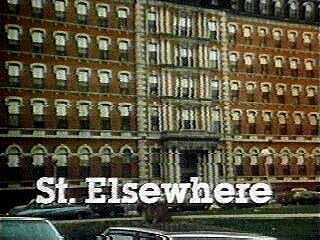
Retro Television Review: St. Elsewhere 1.1 “Pilot”


Welcome to Retro Television Reviews, a new feature where we review some of our favorite and least favorite shows of the past! On Fridays, I will be reviewing St. Elsewhere, a medical show which ran on NBC from 1982 to 1988.  The show can be found on Hulu!

When I started reviewing Homicide, Jeff suggested that I should also review St. Elsewhere because the two shows shared a similar sensibility and a lot of behind-the-scenes personnel.  (Homicide showrunner Tom Fontana started out as a writer on St. Elsewhere.)  Apparently. a few characters from St. Elsewhere would eventually cross-over to Homicide.  Since I’m planning on soon reviewing two shows that were descended from HomicideOz and The Wire — it only seemed right to also review a show that was Homicide’s ancestor.

Though the show aired largely before my time, St. Elsewhere is definitely a show that I have heard about.  Everyone who follows American pop culture has either read about or seen the show’s infamous final episode and knows about the Tommy Westphall Universe Hypothesis.  Obviously, I can’t get into it now because that would be a spoiler but we’ll discuss it when the time comes!

For now, let’s start at the beginning, with the pilot!

Episode 1.1 “Pilot”

(Dir by Thomas Carter, originally aired on October 26th, 1982)

St. Eligius is a hospital in Boston that has obviously seen better days.  From the outside, it looks old.  On the inside, the hallways have the dim and dull look of a building that hasn’t been renovated in over ten years.  As Dr. Mark Craig (William Daniels, long before he played Mr. Feeney on Boy Meets World) angrily puts it, the hospital gets no respect in Boston.  It’s seen as being a “dumping ground” for patients who can’t afford anything better.  Dr. Craig is world-renowned heart surgeon whose wealthy patients have donated what few improvements the hospital has seen over the past few years.  (“All of our clocks now read the same time!” Dr. Craig brags at one point.)  But not even Dr. Craig can change the hospital’s reputation as being secondary to Boston General.

There are actually a few good things about St. Eligius.  For one thing, a young Denzel Washington is on staff, playing resident Phillip Chandler.  Denzel doesn’t get to do much in the pilot but still, his presence fills the viewer with confidence.  St. Eligius is also home to a world-renowned liver specialist, Dr. Daniel Auschlander (played by Norman Lloyd, who also worked with Hitchcock and Orson Welles).  Auschlander has liver cancer but the hospital chief-of-staff, Dr. Donald Westphall (Ed Flanders), assures everyone that Auschlander will probably “out live us all.”  (And he was right, to an extent.  Norman Lloyd lived to be 106 years old before passing away in 2021.  Ed Flanders died, tragically by suicide, in 1995.)  St. Eligius is a teaching hospital and the residents want to make a good impression by keeping their patients alive.  That’s always a good thing.

At the same time, how secure can you feel when Howie Mandel is one of the residents?  Mandel plays Dr. Wayne Fiscus, who wears a baseball cap and acts …. well, he acts a lot like Howie Mandel.  Like Washington, Mandel doesn’t do a lot in the pilot.  He does get a subplot where he apparently has sex in the morgue with goth pathologist Cathy Martin (Barbara Whinnery) but otherwise, we don’t see him treating a patient or anything like that.  Still, it’s a bit jarring to see Howie Mandel as a doctor.  I would not necessarily want him for my doctor because he’s to be easily distracted.  Maybe he’ll change my mind as the series progresses.

Speaking of sex, Dr. Ben Samuels (David Birney) has gonorrhea and spends most of the pilot approaching doctors and nurses and informing them of his conditions and suggesting that they might want to get tested themselves.  That’s not exactly the best way to be introduced to a character but it also lets us know that this show is not just going to be about dedicated doctors who spend all of their time worrying about their patients and making amazing medical discoveries.  Instead, this show is also about doctors who get venereal diseases.  Has anyone checked on Fiscus in the morgue?

(That said, Dr. Samuels does get a scene where he saves the life of a woman who was injured in a terrorist bombing, as if the show does want to make sure that we know that he can do his job, even if he is spreading VD through the hospital.)

The majority of the episode follows Dr. Jack Morrison (David Morse), a first-year resident who has been working several 24-hour shifts and who complains, at one point, that he hasn’t seen his wife for days.  Dr. Morrison gets upset when a surgeon wants to operate on one of his patients, a 15 year-old girl named Sandy (Heather McAdams).  Morrison believes that surgeons always want to cut into somebody.  Morrison gets even more upset when Sandy’s mother requests that Sandy be transferred to Boston General, which has a reputation for being a better, more modern hospital.  In fact, Morrison is so upset and exhausted that he forgets to file a death certificate for a patient who dies during the night.  As a result, it’s believed that the patient, who has a reputation for being violent, has gone missing and is stalking the hospital.  Dr. Annie Cavanero (Cynthia Sikes) spends the entire episode looking for a dead man, which at least gives her an excuse to visit every ward and introduce the viewers to the members of the show’s ensemble cast.

Having lost my mom to cancer and now my Dad to Parkinson’s, I was hesitant about reviewing St. Elsewhere.  (Actually, I was hesitant about reviewing any medical show.)  When my Dad was in the hospital, I felt like I couldn’t get anyone to give me a straight answer about his condition and I often felt the doctors were talking down to me.  To be honest, my worst conflicts were with the nurses, one of whom told me that I would have to “lose the attitude” before she would explain why my father had been moved to the Delirium Ward.  (It didn’t help that, at the same time my Dad was in the hospital, there was a huge storm that left us without power for a week.)  At the same time, there were other doctors who were helpful.  The staff at the rehab center that my dad was sent to were also wonderful.  I have my regrets about agreeing to hospice care but the nurse who was assigned to my Dad was very empathetic and totally understanding whenever I asked her for a cigarette.  (Under normal circumstances, I don’t smoke because I have asthma but seriously, the stress was killing me.)  I’m bitter and angry about a lot of what happened but I’m also thankful for the small moments of kindness.

Watching a show set in a hospital was not easy for me but the pilot of St. Elsewhere appealed to me with its mix of melodrama and humor.  There was a quirkiness to it that I appreciated.  William Daniels made me laugh with his annoyed rant about how little respect the hospital received.  Most of all, I cared about whether or not Dr. Morrison would still be alive at the end of his shift.  David Morse’s performance won me over.  He’s the type of doctor that I would want to have.  Well, actually, I’d probably want Denzel to my doctor but Dr, Morrison could assist.  Just keep Dr. Howie Mandel away from me.  Nothing against him but he seemed to be having way too much fun at the hospital….

Most importantly, the show ended with a cat.

Next week, the drama continues at St. Elsewhere!

Late Night Retro Television Reviews: CHiPs 1.11 “Name Your Price”


Welcome to Late Night Retro Television Reviews, a feature where we review some of our favorite and least favorite shows of the past!  On Mondays, I will be reviewing CHiPs, which ran on NBC from 1977 to 1983.  The entire show is currently streaming on Freevee!

This week, Ponch again fails to get rich.

Episode 1.11 “Name Your Price”

(Dir by Ric Rondell, originally aired on December 8th, 1977)

This week’s episode opens on an unusually somber note for CHiPs.  It begins in a cemetery.  A woman (Jaime Lynn Bauer) is dressed in chic funeral black and appears to be attending a service.  But it soon turns out that she’s actually just making sure that everyone is so distracted by mourning that they won’t notice her stealing a Rolls Royce!

It turns out that a Rolls is not quite as easy to steal as she thought and soon, she finds herself being pursued by Ponch and Baker.  It’s a chase that leads from the highway and into the city and, to Ponch and Baker’s shock, they lose sight of the stolen car.

“How does a Rolls Royce vanish!?” Ponch asks, in shock.

Ponch is a bit distracted himself this episode.  He has been accepted as a contestant on a game show called Name Your PriceName Your Price is obviously meant to be The Price Is Right and Ponch spends the majority of the episode memorizing the price tags on appliances.  Unfortunately, Ponch does not memorize the price tag of a motorcycle and therefore, he turns out to be a bit of a bust when he appears on the show.  As Baker and his date sneak out of the studio, Ponch is humiliated as the show’s host wonders how a motorcycle cop could not know how much a motorcycle costs.

Oh, Ponch — will you ever win!?

It’s not all bad for Ponch.  He and Baker pull over a car and Ponch is excited to discover that it’s occupied by the two stars of his favorite soap opera.  (Does Ponch do anything other than watch television?)  And Ponch also gets to help out when a chicken truck is involved in a minor accident and dozens of chickens end up running around the highway.  As usual, the main emphasis of this episode is on the idea of the members of the highway patrol working together and keeping the streets safe for chickens and humans.  Yes, this episode says, the CHiPs do chase car thieves and arrest criminals.  But usually, they’re just taking care of mundane tasks and getting little thanks and little pay.

This episode was entertaining.  I enjoyed looking at the cars that were stolen.  If you’re going to commit a crime, you might as well commit it for a Rolls Royce.  And the ending with the game show was a lot more effective than the typical CHiPs ending.  Ponch has spent the first 11 episodes of this show destroying motorcycles so it’s a nice bit of humor that a motorcycle would destroy his chance to get rich.  That’s karma!

Next week, Baker and Ponch continue to keep L.A. safe!