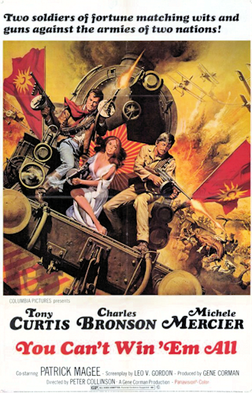
You Can’t Win ‘Em All (1970, directed by Peter Collinson)


Two Americans meet up in Turkey in 1922.  Josh Corey (Charles Bronson) is a cynical soldier-of-fortune who, along with his mercenary crew, is hoping to make money out of the ruins of the Ottoman Empire.  Adam Dyer (Tony Curtis) is the heir to a shipping company and is hoping to get his last remaining boat out of the Turkish dock where it’s been interned since World War I.  Osman Bey (Gregorie Aslan), one of the local powerbrokers who has risen to power since the Turkish Revolution, hires Josh and Adam to escort his daughters and their protector, Alia (Michele Mercier), to Mecca.  Actually, the plan is for them to instead go to Cairo to recover a priceless treasure.  The journey to Cairo is filled with action and betrayal as Josh and Adam try to navigate the upheaval of the post-war Middle East.

You Can’t Win ‘Em All is a mix of action and comedy, an adventure that owes more than a little to the other big budget heist films of the 60s and 70s.  (Director Peter Collinson was hired due to his work on The Italian Job.)  The film’s humor comes from the partnership of the stoic Bronson with the talkative Tony Curtis.  In fact, the film’s main flaw is that Tony Curtis talks too much.  Curtis simply will not shut up.  After about fifteen minutes, I was tired of listening to him.  Curtis’s acting limitations really come through the more that he talks and, as a result, Bronson walks away with the entire movie by saying next to nothing.  Bronson keeps largely quiet because he doesn’t have to speak to make an impression.  His stare says everything that needs to be said.

You Can’t Win ‘Em All is uneven but it has a few good action sequences and Bronson doing what Bronson did best.  Watching this movie made me appreciate Charles Bronson all the more.  Even when working with a less-than-great script and a miscast co-star, Bronson still had the undefinable quality that made him a star.
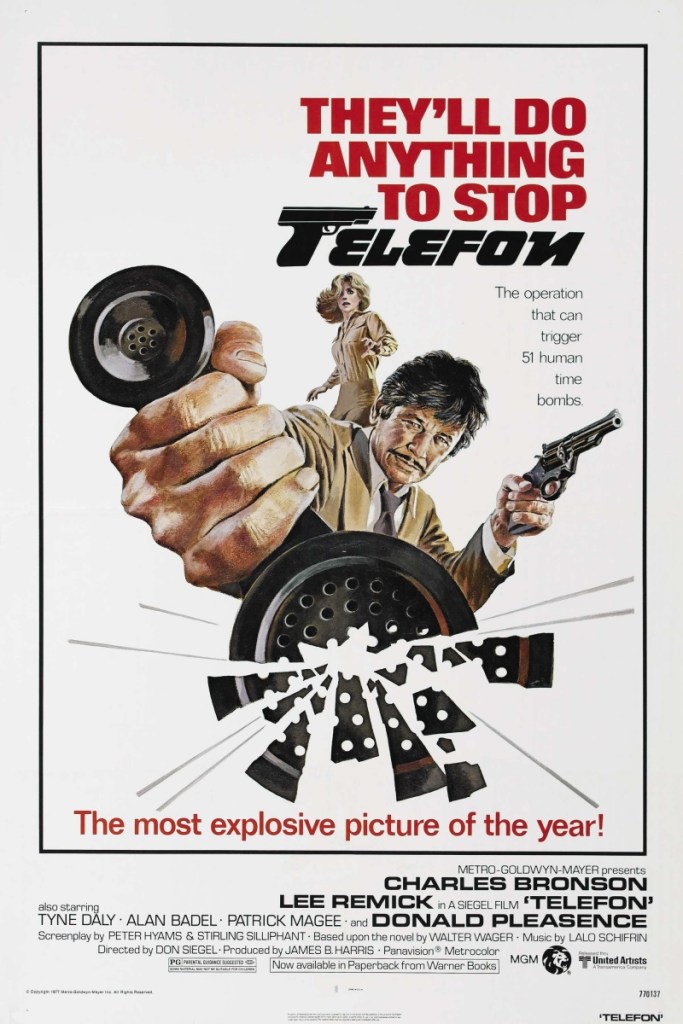
TELEFON – Charles Bronson plays a KGB agent in a movie that inspired The Naked Gun and Tarantino’s Death Proof!


When I was a kid, FOX-16 out of Little Rock, Arkansas would have “Charles Bronson weeks” where every night they’d show a different Bronson film.  I saw several of his films for the first time during those weeks and TELEFON was one of those movies.  I remember really enjoying it that first time I saw it, and I’ve always carried that positive feeling with me.  

The plot of TELEFON is pretty interesting.  In a nutshell, Charles Bronson is Russian KGB agent, Grigori Borsov, who’s been sent to the United States to stop radical Russian Nicolai Dalchimsky (Donald Pleasance), before he can set off more hypnotized human time bombs.  Lee Remick is a beautiful Russian agent (double agent?) who helps him with his mission.  

I personally think TELEFON is an underrated Charles Bronson film, and it seems like a movie that has almost been forgotten.  This is strange to me because it had quite the pedigree at the time of production.  Bronson was a huge star at the time, and the director was Don Siegel, the man behind such classics as DIRTY HARRY, ESCAPE FROM ALCATRAZ, and THE SHOOTIST.  The cast is exceptional as well, with Bronson being joined by the likes of Donald Pleasance, Lee Remick, Tyne Daly, Sheree North and Patrick Magee. The screenplay was co-written by Peter Hyams, who would go on to direct such excellent films as OUTLAND, THE STAR CHAMBER, and RUNNING SCARED.  My point of sharing all of this is that true professionals were at work in front of, and behind the camera, and they created a damn fine Cold War thriller.  I was glad that Shout Factory put out a nice blu ray of the film in January of 2024.  Hopefully film enthusiasts will begin discovering the film again.  

With that said, TELEFON isn’t a perfect film and I do have a few small complaints.  First, Charles Bronson doesn’t appear in the film until we’re already 21 minutes deep.  That’s a long time for me to have to wait for the man!  Second, Bronson and Remick don’t have a lot of sexual chemistry.  She’s beautiful and he oozes masculinity, but somehow it doesn’t really extend to a real connection between their characters.  That’s one of the reasons I like it when Bronson works with his wife Jill Ireland.  That chemistry is usually there between them.  Third, Donald Pleasance wears several wigs and looks kind of dorky at times.  Fourth, Sheree North wears a housecoat during her section of the film.  If you’ve seen her in BREAKOUT with Bronson from a couple of years earlier, you understand just what a missed opportunity that was.  Finally, Tyne Daly is so good in her small role, but she ultimately just kind of exits the film.  I’d have liked even more of her.  These are small complaints, with the exception of Bronson’s entrance & North’s wardrobe choice, that I don’t really hold against the movie.  

The last thing that I want to mention is that there are a couple interesting pop culture references to TELEFON in movies that came out later.  First, the writers of THE NAKED GUN borrowed the plot about hypnotized human time bombs in their own plot to assassinate the visiting Queen of England.  Certain scenes are taken directly from TELEFON.  I remember watching THE NAKED GUN in theaters in the late 80’s and wondering if I was the only person who realized this fact.  Second, in DEATH PROOF, Quentin Tarantino used the major plot device of quoting the Robert Frost poem “Stopping by Woods on a Snowy Evening” in order to trigger something. In TELEFON, it was human time bombs.  In DEATH PROOF, it was human lap dances.  God bless Quentin Tarantino!

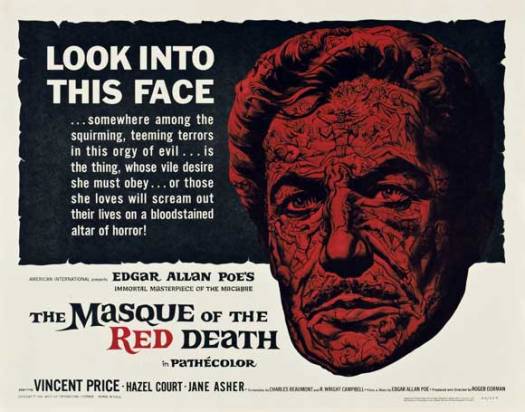
Horror Film Review: The Masque of the Red Death (dir by Roger Corman)


In 1964’s The Masque of the Red Death, Vincent Price stars as Prospero.

Prospero is a nobleman in medieval Italy, a decadent tyrant who rules his villages with an iron hand and who proudly and openly worships Satan.  When an old woman in one of the villages dies of the plague, Prospero orders the village to be burned to the ground.  He returns to his castle where, with his mistress (Hazel Court), he plans to throw a masquerade for the local nobility.  His plan is for everyone to hide out in the castle until Death has passed.  The problem, of course, is keeping Death from sneaking into the castle and claiming everyone within.

Prospero also abducts three villagers, Ludovico (Nigel Green), his daughter Francesca (Jane Asher), and Francesca’s boyfriend, Gino (David Weston).  The three villagers find themselves in a decadent world, where Prospero and his attendants are motivated by their own greed and petty jealousies.  Keeping Death from entering the castle would probably be a lot easier if the people in the castle would stop trying to kill each other.  It’s an odd atmosphere within the castle.  Everyone fears Death and yet, everyone seems to be doing all that they can do invite it in with them.  Can anyone, even a worshipper of the Damned liked Prospero, truly escape Death?

The Masque of the Red Death is not only the best of Roger Corman’s Edgar Allan Poe adaptations but it’s also the best film that Corman ever directed.  Working with cinematographer Nicolas Roeg (who was himself destined to have quite a career as a director of enigmatic films), Corman fills the screen with vivid colors and scenes of medieval decadence.  Price gives one of his best performances, playing Prospero as someone who is in love with his own amoral nature but whose arrogance quickly gives way to fear when he starts to suspect the Death has somehow managed to enter the castle.  The inhabitants of the castle are all memorably eccentric and, in many cases, evil.  A man in an ape costume is burned to death and hardly anyone seems to notice or care.  Prospero and his nobles think that they’re above death because of their wealth and their place in society but, of course, no one can escape Death.

David Weston and Jane Asher are both well-cast as the two lovers, though Asher is clearly more a product of the swinging sixties than medieval Italy.  Patrick Magee and Skip Martin are both memorable as members of Prospero’s court, with Skip Martin giving an especially diabolical performance as a murderous court jester.  In the end, though, this film truly belongs to Price, Corman, and Roeg.  Roeg’s cinematography is dazzling, with the use of red foreshadowing his later film, Don’t Look Now.  Corman’s direction puts the viewer right in the center of Prospero’s court.  And Vincent Price gives one of his best performances as the self-amused but unashamedly evil Prospero.  The Masque of the Red Death remains a classic of 60s pop art and the best of Corman’s many films.

Horror on the Lens: Dementia 13 (dir by Francis Ford Coppola)


(I originally shared this film back in 2011, 2019, 2022, and 2023 — can you believe we’ve been doing this for that long? — but the YouTube upload keeps getting taken down!  So, I’m resharing it today!)

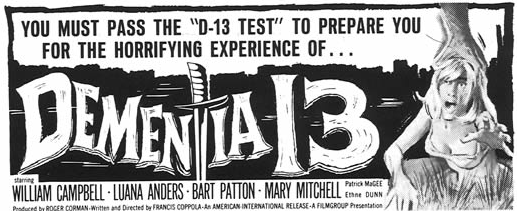
For today’s excursion into the world of public domain horror, I offer up the film debut of Francis Ford Coppola.  Before Coppola directed the Godfather and Apocalypse Now, he directed a low-budget, black-and-white thriller that was called Dementia 13.  In a possible sign of things to come, producer Roger Corman and Coppola ended up disagreeing on the film’s final cut and Corman reportedly brought in director Jack Hill to film and, in some cases, re-film additional scenes.

Regardless of whether the credit should go to Coppola, Corman, or Hill, Dementia 13 is a brutally effective little film that is full of moody photography and which clearly served as an influence on the slasher films that would follow it in the future.  Speaking of influence, Dementia 13 itself is obviously influenced by the Italian giallo films that, in 1963, were just now starting to make their way into the drive-ins and grindhouses of America.

Speaking of giallo films, keep an eye out for Patrick Magee, who gave a memorable performance in Lucio Fulci’s The Black Cat.  Luana Anders, who plays the duplicitous wife in this film, showed up in just about every other exploitation film made in the 60s and yes, the scene where she’s swimming freaks me out to no end.  Other films featuring Luana Anders include Night Tide and Easy Rider, in which she played one of the hippies who unsuccessfully enticed Peter Fonda and Dennis Hopper to stay at the commune.

As for Francis Ford Coppola, well, he’s gone on to have quite a career, hasn’t he?  It’s been quite a journey from Dementia 13 to Megalopolis!

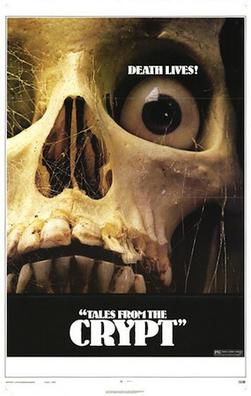
Horror On The Lens: Tales From The Crypt (dir by Freddie Francis)


For today’s Horror on the Lens, we have 1972’s Tales From The Crypt, a British anthology film which features The Crypt Keeper (Ralph Richardson) informing five strangers of how they will die.  This classic, all-star film was based on stories that originally appeared in the Tales From The Crypt comic book.

In general, I’m not a huge fan of anthology films but Tales From The Crypt is an exception to that role.  It’s an entertaining collection of macabre stories and the cast is to die for …. maybe literally!

This Amicus-produced movie is probably best remembered for the segment in which Joan Collins is menaced by an evil Santa but the whole thing is good.

Horror on the Lens: Dementia 13 (dir by Francis Ford Coppola)


(I originally shared this film back in 2011, 2019, and 2022 — can you believe we’ve been doing this for that long? — but the YouTube upload keeps getting taken down!  So, I’m resharing it today!)

For today’s excursion into the world of public domain horror, I offer up the film debut of Francis Ford Coppola.  Before Coppola directed the Godfather and Apocalypse Now, he directed a low-budget, black-and-white thriller that was called Dementia 13.  In a possible sign of things to come, producer Roger Corman and Coppola ended up disagreeing on the film’s final cut and Corman reportedly brought in director Jack Hill to film and, in some cases, re-film additional scenes.

Regardless of whether the credit should go to Coppola, Corman, or Hill, Dementia 13 is a brutally effective little film that is full of moody photography and which clearly served as an influence on the slasher films that would follow it in the future.  Speaking of influence, Dementia 13 itself is obviously influenced by the Italian giallo films that, in 1963, were just now starting to make their way into the drive-ins and grindhouses of America.

Speaking of giallo films, keep an eye out for Patrick Magee, who gave a memorable performance in Lucio Fulci’s The Black Cat.  Luana Anders, who plays the duplicitous wife in this film, showed up in just about every other exploitation film made in the 60s and yes, the scene where she’s swimming freaks me out to no end.  Other films featuring Luana Anders include Night Tide and Easy Rider, in which she played one of the hippies who unsuccessfully enticed Peter Fonda and Dennis Hopper to stay at the commune.

As for Francis Ford Coppola, his career has had its up and downs but he’s a beloved figured on the pop cultural landscape and a director whose best films continue to inspire and influence.  He is currently filming Megalopolis.

Horror on the Lens: Dementia 13 (dir by Francis Ford Coppola)


(I originally shared this film back in 2011 and 2019 — can you believe we’ve been doing this for that long? — but the YouTube vid was taken down both times!  So, I’m resharing it today!)

For today’s excursion into the world of public domain horror, I offer up the film debut of Francis Ford Coppola.  Before Coppola directed the Godfather and Apocalypse Now, he directed a low-budget, black-and-white thriller that was called Dementia 13.  (Though, in a sign of things to come, producer Roger Corman and Coppola ended up disagreeing on the film’s final cut and Corman reportedly brought in director Jack Hill to film and, in some cases, re-film additional scenes.)

Regardless of whether the credit should go to Coppola, Corman, or Hill, Dementia 13 is a brutally effective little film that is full of moody photography and which clearly served as an influence on the slasher films that would follow it in the future.  Speaking of influence,Dementia 13 itself is obviously influenced by the Italian giallo films that, in 1963, were just now starting to make their way into the drive-ins and grindhouses of America.

In the cast, keep an eye out for Patrick Magee, who later appeared as Mr. Alexander in A Clockwork Orange as well as giving a memorable performance in Lucio Fulci’s The Black Cat.  Luana Anders, who plays the duplicitous wife in this film, showed up in just about every other exploitation film made in the 60s and yes, the scene where she’s swimming freaks me out to no end.

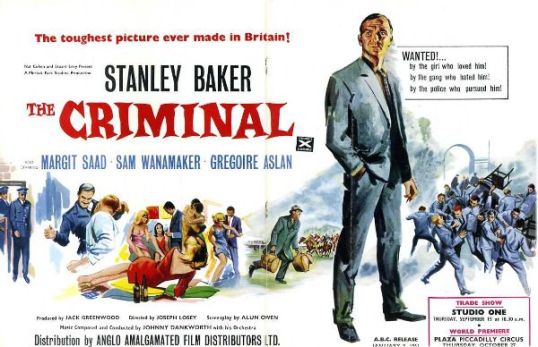
30 More Days of Noir #5: The Criminal (dir by Joseph Losey)


https://www.youtube.com/watch?v=dggj09TY_pY

From 1960, it’s British noir!

Johnny Bannion (Stanley Baker) is a career criminal, one who divides his time between long stretches in prison and short visits to the real world.  He’s handsome, he’s charming, he’s clever, and he’s totally trapped.  Baker moves through the film like a natural-born predator, waiting for the moment to strike.  When he’s in prison, he’s as defiant as a caged tiger.  When he’s out of prison, he’s always stalking the next prize.

Johnny has a hard time staying out of prison.  When we first meet him, he’s in prison and it quickly becomes clear that he’s quite a respected figure behind bars.  When he gets out, the first thing that he does is team up with his old associate, Mike Carter (Sam Wanamaker), and make plans to rob a racetrack.  Mike and Johnny have an interesting relationship.  On the one hand, Mike kept Johnny’s apartment for him while he was locked away and Johnny obviously has enough faith in Mike to work him.  On the other hand, neither man seems to truly trust the other.  That’s the world of criminals, I suppose.  Never trust anyone.

Of course, it quickly turns out that there’s actually a good reason to never trust anyone when you’re living a life of crime.  As soon as Johnny, Mike, and the gang pull of the racetrack robbery, Johnny’s betrayed.  Johnny ends up locked away once again, all thanks to Mike.  However, it turns out that Mike may have acted too soon because Johnny hid all the money before he was sent back to prison.  Now, Mike has to figure out a way to pressure Johnny into revealing where the money’s buried while Johnny has to try to survive in a world of ruthless prisoners and guards who are ineffectual at best and crooked at worst.  Mike’s not the only one who is interested in where Johnny put all that cash….

I have to admit that I’m probably a bit biased when it come to The Criminal because it’s a British crime film that I actually saw while in the UK.  It’s one thing to watch a tough British crime film from the safety of Texas.  It’s another thing to watch it at 2 in the morning while in a hotel room with a nice view of the Thames.  As opposed to the watered down British-American co-productions that we tend to get used to here in the United States, The Criminal was British through-and-through, from the tough working class accents to the harsh urban landscape to the stylish suits that were worn even inside the prison.

It’s a dense movie.  Though Stanley Baker is undoubtedly the star, director Joseph Losey is just as interested in the other people who come within Johnny’s orbit and, as a result, we get to know not just Mike but also the guards and the other prisoners.  Partrick Magee, who was a favorite of Kubrick’s, makes a strong impression as Barrows, the prison guard who may be a manipulative sadist or who may just be a man who is doing what he has to do to maintain some sort of order in the prison.  The film’s portrayal of Barrows is ambiguous but the same can be said for almost everyone in the movie.  In classic noir fashion, there are no traditional heroes.  Johnny’s bad but he’s a little bit less bad than the men who betrayed him and who are willing to go to extreme lengths to discover where Johnny hid that money.

Directed by Joseph Losey, The Criminal alternates between scenes of hard-edged reality and scenes that feel as if they could have been lifted from some sort of Boschian nightmare.  The scenes outside the prison are harshly realistic while the inside of the prison feels almost like some sort of surrealistic dreamscape where demons take human form.  The Criminal is an effective and violent British noir, one that will encourage you to keep your eyes on the shadows.

Horror on the Lens: Dementia 13 (dir by Francis Ford Coppola)


(I originally shared this film back in 2011 — can you believe we’ve been doing this for that long? — but the YouTube vid was taken down.  So, I’m resharing it today!)

For today’s excursion into the world of public domain horror, I offer up the film debut of Francis Ford Coppola.  Before Coppola directed the Godfathers and Apocalypse Now, he directed a low-budget, black-and-white thriller that was called Dementia 13.  (Though, in a sign of things to come, producer Roger Corman and Coppola ended up disagreeing on the film’s final cut and Corman reportedly brought in director Jack Hill to film and, in some cases, re-film additional scenes.)

Regardless of whether the credit should go to Coppola, Corman, or Hill, Dementia 13 is a brutally effective little film that is full of moody photography and which clearly served as an influence on the slasher films that would follow it in the future.  Speaking of influence,Dementia 13 itself is obviously influenced by the Italian giallo films that, in 1963, were just now starting to make their way into the drive-ins and grindhouses of America.

In the cast, keep an eye out for Patrick Magee, who later appeared as Mr. Alexander in A Clockwork Orange as well as giving a memorable performance in Lucio Fulci’s The Black Cat.  Luana Anders, who plays the duplicitous wife in this film, showed up in just about every other exploitation film made in the 60s and yes, the scene where she’s swimming freaks me out to no end.

(One final note: I just love the title Dementia 13.  Seriously, is that a great one or what?)

http://www.youtube.com/watch?v=v4jGHmplB0s

Creature Double Feature 5: THE MASQUE OF THE RED DEATH (AIP 1964) and THE TOMB OF LIGEIA (AIP 1965)


gary loggins's avatarcracked rear viewer

Boston’s WLVI-TV 56 ran it’s ‘Creature Double Feature’ series from 1972 to 1983. Though fans remember it mostly for those fabulous giant monster movies starring Godzilla and friends, CDF occasionally featured some monsters of a different kind… 

Roger Corman and Vincent Price had teamed to make five successful Edgar Allan Poe adaptations for American-International Pictures, beginning with 1960’s HOUSE OF USHER (there was a sixth, THE PREMATURE BURIAL, that starred Ray Milland rather than Price). Studio execs James Nicholson and Sam Arkoff, always on the lookout for ways to cut costs, joined forces with Britain’s Anglo-Amalgamated Productions (makers of the CARRY ON comedies) and shipped Corman and company to jolly ol’ England for the final two, THE MASQUE OF THE RED DEATH and THE TOMB OF LIGEIA. Both turned out to be high points in the Corman/Price/Poe series.

1964’s MASQUE OF THE RED DEATH is a sadistic, psychedelic nightmare of…

View original post 878 more words