Retro Television Review: The Love Boat 6.27 and 28 “Country Music Jamboree”


Welcome to Retro Television Reviews, a feature where we review some of our favorite and least favorite shows of the past!  On Wednesdays, I will be reviewing the original Love Boat, which aired on ABC from 1977 to 1986!  The series can be streamed on Paramount Plus!
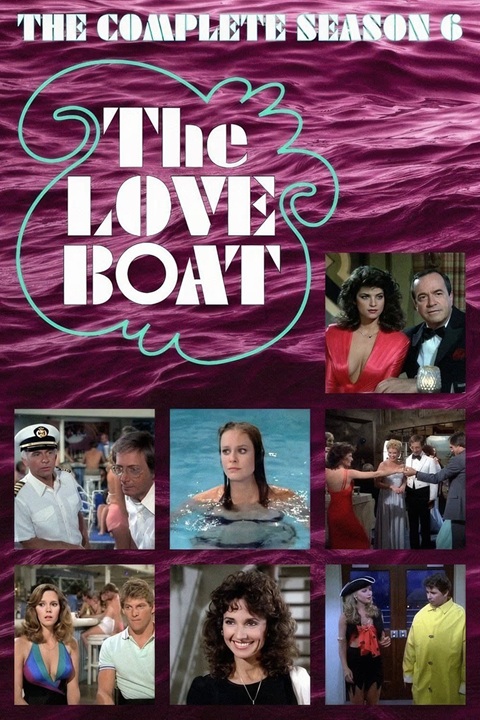
This week, the Love Boat goes a little bit country.

Episodes 6.27 and 6.28 “Country Music Jamboree”

(Dir by Richard Kinon, originally aired on April 30th, 1983)

It’s the special, two-hour country music cruise!

I have to admit that I lost interest in this episode as soon as I saw the banner in the Love Boat lobby that read “County Music Jamboree.”  Country music’s not my thing.  I lost even more interest when Florence Henderson showed up as country singer Annabelle Folker.  Florence Henderson was a frequent guest on both Fantasy Island and The Love Boat and I can’t think of a single time that I was ever happy to see her name in the credits.  Whenever she appeared, she almost always seemed like she was trying too hard.  Her performances always brought to mind dinner theater and holiday special guest spots.

Annabelle was traveling with her boyfriend (Bert Convy) and the three orphans (Michael Evans, Angela Lee Sloan, and Neil Billingsley) that she was planning on adopting.  The problem was that her boyfriend didn’t want to adopt the kids.  But then, he changed his mind because the show was nearly over and the storyline needed a happy ending.  Seriously, the kids were obnoxious as Hell.

While that went on, singer Holly Hartmann (Jessica Walter) was upset to discover that her husband (Mel Tillis) was secretly writing songs for an up-and-coming singer named C.G. Thomas (Tanya Tucker).  Holly was not happy when she found out but then she sang Stand By Your Man and that solved everything.

The Love Boat chef (Pat Buttram) was upset that his kitchen implements kept disappearing.  That’s because Isaac, Doc, Gopher, and Julie were stealing them so that they could form a country-western band.  Meanwhile, two fat people (Kenny Price and Lulu Roman)  boarded the boat and never stopped eating.

(Don’t give me that look, I didn’t write the script.)

Effie Skaggs (Minnie Pearl) sold homemade elixirs from her cabin while Doc attempted to romance her granddaughter (Misty Rowe).  When Effie got sick, she refused to accept any of Doc’s strange modern medicine.  No antibiotics for Effie Skaggs!

Jeannie Davis (Beth Howland) feared that her husband (Steve Kanaly) would learn that her latest piece of jewelry was given to her by a man with whom she had an affair.  A jewelry appraiser (Sherman Hemsley) insisted on finding out how much the jewelry was worth.  Jeannie feared that her husband would suspect something was amiss when he discovered how expensive it really was.  She begged the appraiser to lie about how much it was worth.  The appraiser said that he could not risk damaging his reputation but then he decided to lie anyway.

Gopher and Isaac tried to get a picture with Dottie West (a singer who played herself) but Dottie just wanted to rest.

Is that it?  Is that all of the storylines or is that just all my exhausted mind can remember?  Seriously, this was a busy two-hour episode.  It was an annoying episode too.  Maybe I’d feel differently if I was into country music.  Of the guest stars, Mel Tillis and Jessica Walter gave the best performances.  Of the Love Boat crew, no one came out of this episode with their dignity intact.

This was a cruise to miss.

This cruise?  This cruise was a perfect 10 out of 10 on the How Coked Up Was Julie Scale.
The Gatling Gun (1971, directed by Robert Gordon)


In the post-civil war west, two Calvary troopers steal a Gatling Gun, the weapon that was invented to be such a powerful instrument of death that people would stop fighting wars just to avoid finding themselves in front of its barrel.  (It didn’t work out that way, of course.)  With the help of a pacifist reverend named Harper (John Carradine), they smuggle the gun into Apache territory.  Rev. Harper thinks that the gun is going to be destroyed and, thus, another instrument death will be eliminated. from the world  Instead, the greedy troopers are planning on selling the gun to Apache Chief Two Knife (Carlos Rivas).  Two Knife has promised a fortune’s worth of gold to anyone who can deliver to him the deadliest weapon in the west.

Before the gun can be exchanged, the reverend, his daughter, and the two deserters are intercepted by a group of Calvary troops led by Lt. Wayne Malcolm (Guy Stockwell).  One of the deserters is killed while the other, Pvt. Sneed (Robert Fuller) is captured.

However, Chief Two Knife still wants what he calls “the king gun.”  Malcolm and his troops find themselves pinned down by the Apaches.  Can Malcolm, with the help of a rancher (Phil Harris), a scout (Woody Strode), and a cook (Pat Buttram), keep both the gun and the all important firing pin from falling into the hands of Two Knife?

The Gatling Gun is a low-budget western that would probably be today forgotten except that it has fallen into the public domain and has been included in several DVD box sets.  It has the flat, generic look of a Western television show and Guy Stockwell’s stiff performance may be believable for a 19th century Calvary captain but it’s still doesn’t exactly make for compelling viewing.  The main problem is that the most exciting and interesting part of the story, the two deserters stealing the gun and tricking the Reverend into helping them, occurs off-screen and the movie instead begins with Malcolm capturing Sneed.

Western fans will mostly want to watch this one to see John Carradine and Woody Strode, two very different actors who were both favorites of John Ford’s and who appeared in several other, better westerns.  (Strode and Carradine had both previously appeared in The Man Who Shot Liberty Valance, to name just one example.)  Carradine is typically theatrical, delivering his lines like the old Shakespearean that he was.  Strode, as usual, is stoic but his imposing screen presence makes him the most memorable of the film’s heroes.  Also keep an eye out for Patrick “son of John” Wayne, playing the rancher’s son.

Though The Gatling Gun has the look of a film that was shot on a studio backlot in Hollywood, it was actually filmed, on location, in New Mexico.  The state’s then-governor, David Cargo, has a small role as Corporal Benton and is listed in the credits as “Honorable Governor David Cargo.”  A look at his imdb page reveals that David Cargo appeared in four films while he was governor.  All of them were filmed in New Mexico so I guess casting the governor was a requirement for filming in that state.  When Cargo left office in 1971, his movie career ended.

Embracing the Melodrama Part II #30: The Sweet Ride (dir by Harvey Hart)


The_Sweet_Ride_FilmPosterThe 1968 film The Sweet Ride takes the audience on a ride through Malibu and reminds us all that, in many ways, the 1960s sucked.

The Sweet Ride opens with actress Vicki Cartwright (Jacqueline Bisset) losing her top while swimming in the ocean.  While Vicki panics and tries to figure out how to get back to the beach without anyone seeing her breasts, she’s spotted by a surfer named Denny McGuire (Michael Sarrazin).  Denny hands her a towel and then leads her back to the beach house that he shares with aging tennis player Collie (Anthony Franciosa) and stoned musician Choo-Choo (Bob Denver).

The rest of the film is a 90 minute tour of California beach life in the late 60s.  Despite Collie’s cynical warning against falling in love, Denny does just that, despite the fact that Vicki refuses to tell him anything about her past or even where she lives.  Meanwhile, Collie spends his time hustling on the tennis court and the married Choo-Choo pretends to be gay in an attempt to get out of being drafted.  (Choo-Choo probably could have gotten out of the draft by pointing out that he appears to be 40 years old but the filmmakers decided to have him walk around with a poodle and speak in falsetto.  Just in case you had any doubt that this film was made in 1968…)  It’s a mix of comedy, romance, and drama and it’s features footage of some real bands performing in actual Malibu nightclubs and that’s a good thing for all of us history nerds.

And, since The Sweet Ride was made in 1968, the whole film gets progressively darker as it reaches its conclusion.  Choo-Choo does get drafted and it’s hard to believe he’ll survive a day in Viet Nam.  Collie’s perfect life is revealed to be an empty facade.  Denny realizes that his friends are all immature losers.  And Vicki ends up getting assaulted by a high-power studio executive (Warren Stevens).  It all leads to more violence, disillusionment, and general ennui.

For some reason, The Sweet Ride shows up on FXM fairly regularly.  It’s a strange film because it doesn’t really work and yet it’s also compulsively watchable.  It tries to be about everything and, as a result, it often feels like it’s about absolutely nothing.  And yet, somehow, it remains compelling…

Why is the film compelling despite itself?  It’s not because of the main characters, that’s for sure.  The boys in the beach house are probably some of the least likable film protagonists in cinematic history.  Anthony Franciosa gave some great performances in his career (check him out in A Face in the Crowd and Tenebrae) but Collie is such a smug jerk that you find yourself hoping that someone will just punch him in the face.  Meanwhile, Denny tends to come across like a weak-willed and obsessive stalker and Choo-Choo — well, Choo-Choo often seems to be a character in a totally different movie.  As for Vicki, her character pretty much exclusively exists to be victimized.

Ultimately, I think The Sweet Ride is watchable because it is such an imperfect time capsule.  If I wanted to know what it was like to be alive in the 60s, The Sweet Ride is one of the films that I would watch.  It’s not the best film ever made but it is a chance to look into the past.

(Incidentally, The Sweet Ride was directed by Harvey Hart, who also directed the underrated Shoot.)