One Hit Wonders #18: “Lies” by The Knickerbockers (Challenge Records 1965)


gary loggins's avatarcracked rear viewer

“Hey, did you hear the new Beatles song?”, screamed virtually every teenybopper in 1965, only it wasn’t The Beatles , but New Jersey’s own The Knickerbockers singing the Top Twenty smash “Lies”:

http://www.youtube.com/watch?v=1n03a7cLf0M

The Knickerbockers consisted of brothers Beau (vocals, guitars) and John Charles (vocals, bass), Jimmy Walker (vocals, drums), and ex-Royal Teen Bobby Randell (vocals, sax), who scored a hit in 1958 with “Short Shorts” (also featuring future Four Season Bob Gaudio and future Blues Project/Blood, Sweat, & Tears/solo artist Al Kooper):

The tight-knit harmonies and John Lennon-sounding lead vocals had many people fooled into thinking The Beatles had recorded “Lies” under an alias, but the world soon found out it was just a bunch of Jersey kids doing an incredible facsimile. The Knickerbockers became featured regulars on Dick Clark’s five-days-a-week ABC-TV teen dance show WHERE THE ACTION IS (1965-67), along with Paul Revere & The Raiders, Keith Allison…

View original post 183 more words

One Hit Wonders #17: “The Safety Dance” by Men Without Hats (Backstreet Records 1982)


gary loggins's avatarcracked rear viewer

When this song came on my car radio last week, I immediately knew I had to do a “One Hit Wonders” post on it, so without any further ado, here’s Canadian New Wave pop rockers Men Without Hats doing their #3 smash dance hit “The Safety Dance”:

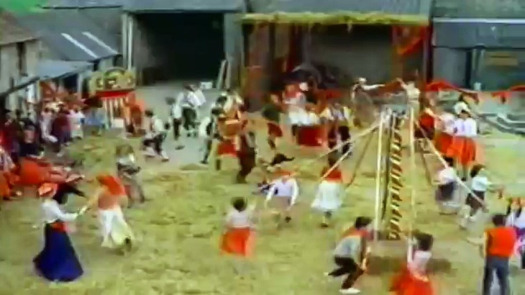
The band was led by singer/songwriter Ivan Doroschuck, who claimed he penned the bouncy tune in response to nightclubs banning pogo dancing, then a hot thing. At the time of recording the song and others for the album “Rhythm of Youth”, the group consisted of Ivan’s brothers Colin (guitars) and Stefan (bass), Allen McCarthy (keyboards/electronics), and Martin Cartier (percussion). The silly, Renaissance Fair-looking video got in heavy rotation on MTV (remember when they actually played music all day?), which aided it’s rise to the top of the pop charts.

Men Without Hats have gone through multiple personell changes over the years, with Ivan…

View original post 48 more words

One Hit Wonders #16: “In The Summertime” by Mungo Jerry (Pye Records 1970)


gary loggins's avatarcracked rear viewer

British band Mungo Jerry soared to Number One on the pop charts not just here in America, but all over the world with their joyous skiffle-rock ode to summer fun “In The Summertime”:

Mungo Jerry at the time of their smash success were Ray Dorset (vocals, guitar), Colin Earl (piano), Mike Cole (bass), and Paul King (banjo, jug). Members came and went rapidly, but Dorset was always the one constant. The huge international success of “In The Summertime” led to a U.S. tour, and though the Jerries never scored another hit, “In The Summertime” remains a perennial on Classic Rock radio, especially at this time of year.

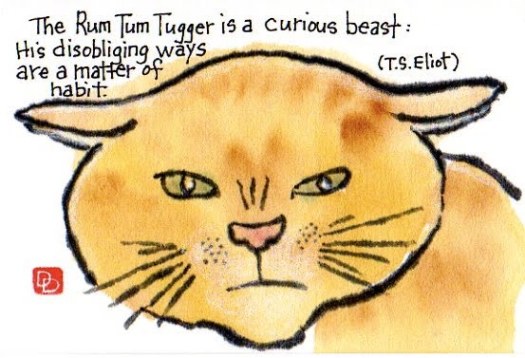
Something I always wondered was where on Earth did they come up with the name Mungo Jerry. So I did some intense research (ok, I looked it up on their Wikipedia page) and discovered the band was named after a poem in T.S…

View original post 38 more words

One Hit Wonders #15: “Smell of Incense” by Southwest FOB (HIP Records 1968)


gary loggins's avatarcracked rear viewer

The obscure Southwest FOB climbed to #56 on the pop charts with their psychedelic hit “Smell of Incense”:

This cover of the West Coast Pop Art Experimental Band tune by five high school pals from Dallas, Texas gained national exposure, and the kids released one album. They even opened some shows for a group that soon became much bigger – Led Zeppelin! But the band broke up, and Southwest FOB (which stood for ‘Free On Board’, don’t ask me why) was relegated to the Bargain Bins of rock history… almost. Two of the group’s members later became prominent in the 1970’s as one of that decade’s most boring soft-rock duos, England Dan and John Ford Coley:

Yes, the pair behind such snoozers as “Nights Are Forever Without You”, “We’ll Never Have to Say Goodbye Again”, and “Love Is the Answer” first hit it big with Southwest FOB. Should’ve stuck to…

View original post 2 more words

One Hit Wonders #13 “I Had Too Much to Dream (Last Night)” by The Electric Prunes (Reprise Records 1966)


gary loggins's avatarcracked rear viewer

Los Angeles psychedelic rockers The Electric Prunes rose to #11 on the Billboard charts with their 1966 hit, “I Had Too Much to Dream (Last Night)”:

The band were noted for their early use of fuzz-tone guitars, wah-wah pedals, and other studio tricks to add an eerie ambience to their rock’n’roll noise. Though they never had another hit, their 1968 album “Mass in F Minor” has become a psychedelia collector’s Holy Grail, a complex, baroque rock concept LP composed and arranged by David Axelrod (the jazz producer, not the political pundit) sung entirely in Greek and Latin. The record was so complex, in fact, The Prunes had difficulty playing the songs, and studio musicians were brought in to fill in the gaps. A song from “Mass in F Minor” called “Kyrie Elieson” gained some notoriety when it was used in Dennis Hopper’s 1969 biker classic EASY RIDER:

As for The…

View original post 52 more words

One Hit Wonders #12: “(We Ain’t Got) Nothin’ Yet” by The Blues Magoos (Mercury Records 1966)


gary loggins's avatarcracked rear viewer

The very first concert I saw was… er, a very long time ago! Teenybop pop rockers Herman’s Hermits headlined the show, and the opening act was The Blues Magoos, performing their #5 Billboard hit, “(We Ain’t Got) Nothin’ Yet”:

The Blues Magoos, from The Bronx, were early practitioners of psychedelic rock’n’roll, going so far as to name their debut album “Psychedelic Lollipop”. They were loud, heavy, and wore these electric suits that blinked on and off during their rendition of the classic “Tobacco Road”:

http://www.youtube.com/watch?v=IzG3z9cXJvg

Even without the suits, they were pretty far out, man! The lineup consisted of Emil “Peppy Castro” Theilheim (vocals, rhythm guitar), Mike Esposito (lead guitar), Ralph Scala (organ), Ron Gilbert (bass), and Geoff Daking (drums). They made the rounds of all the TV shows, like AMERICAN BANDSTAND, THE SMOTHERS BROTHERS COMEDY HOUR , and the above clip from a Jack Benny-hosted episode of THE KRAFT…

View original post 84 more words

One Hit Wonders #11: “LITTLE GIRL” by The Syndicate of Sound (Bell Records 1966)


gary loggins's avatarcracked rear viewer

San Jose’s The Syndicate of Sound reached #8 on the Billboard Hot 100 in 1966 with their proto-punk hit, “Little Girl”:

http://www.youtube.com/watch?v=xA8tUUrSTIw

The band was formed in 1964 by members of Lenny Lee and the Nightmen and The Pharaohs as a San Jose supergroup: Don Baskin (lead singer/guitars), Larry Ray (lead guitar), Bob Gonzalez (bass), John Sharkey (keys), and John Duckworth (drums). Two years later, “Little Girl” became a local radio smash,  and Bell Records picked it up for national distribution. Baskin’s snarling vocals and the speed-freak jangling guitar sounds got teens movin’ and groovin’, and the song today is considered one of the progenitors of the punk movement of the 1970’s.

Bell demanded an album from the boys, and after Ray was replaced by Jim Sawyers, the Syndicate cranked one out in three weeks that’s a garage rock classic. Besides their hit and five other originals, the group performed…

View original post 90 more words

One Hit Wonders #10: “Summertime Blues” by Blue Cheer (Philips Records 1968)


gary loggins's avatarcracked rear viewer

Direct from Haight-Ashbury, psychedelic hard rockers Blue Cheer ushered in the Age of Heavy Metal with “Summertime Blues”, reaching #14 on the Billboard charts in 1968 (Crank It Up LOUD!):

http://www.youtube.com/watch?v=nU5uDozoSSM

Singer/bassist Dickie Peterson, who lived on San Francisco’s Haight Street during the “Summer of Love” days, originally formed the band as a five-piece group, but stripped down to the power trio model popularized by Cream and The Jimi Hendrix Experience, with Leigh Stephens on guitar and Paul Whaley on drums. Blue Cheer’s hair was longer, and their sound more ear-splitting, than anyone around, and the band’s thundering heavy metal noise made both the single and their debut album “Vincebus Eruptum” into classics of early metal then and collector’s items today.

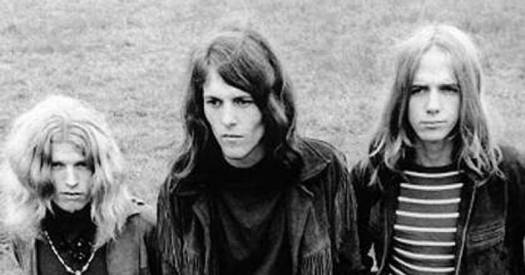
Blue Cheer’s classic lineup: Dickie Peterson, Leigh Stephens, and Paul Whaley

The band went through numerous personnel changes before breaking up in 1970. Peterson reformed the group in the…

View original post 257 more words

One Hit Wonders #9: “In the Year 2525” by Zager & Evans (RCA 1969)


gary loggins's avatarcracked rear viewer

A futuristic ballad about the danger of technological advancement and dehumanization spent 6 weeks at the top of the Billboard charts in 1969. Properly titled “In the Year 2525 (Exordium & Terminus)”, this was the first and only hit for folk-rock duo Denny Zager and Rick Evans:

1969 had been a banner year for science fiction themes, with the films PLANET OF THE APES and 2001: A SPACE ODYSSEY becoming box office hits a year earlier, popular novels from Kurt Vonnegut (SLAUGHTERHOUSE FIVE), Michael Crichton (THE ANDROMEDA STRAIN), and Ursula K. LeGuin (LEFT HAND OF DARKNESS) being published, and a young Brit named David Bowie releasing his LP “Space Oddity”. Of course, that was also the year Neil Armstrong and Buzz Aldrin walked on the moon, and the possibilities for space exploration seemed endless. But some doomsayers warned of the impending takeover by machines, where mankind would become a slave…

View original post 160 more words

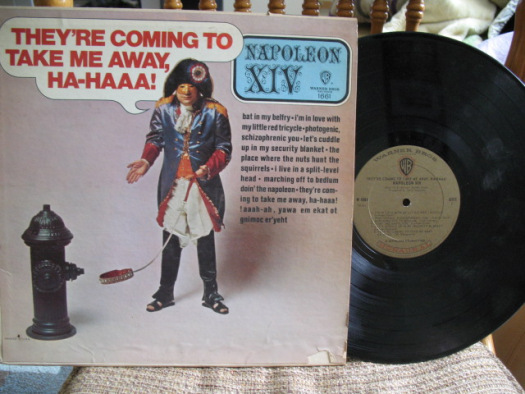
One Hit Wonders #8: THEY’RE COMING TO TAKE ME AWAY HA-HAAA! by Napoleon XIV (Warner Bros Records, 1966)


gary loggins's avatarcracked rear viewer

Back when AM Radio ruled the airwaves, before the onset of polarization, you could hear everything from rock and pop, to soul and jazz, to country and folk all on your favorite local station. Frequently sandwiched in with the hits were novelty tunes, like “They’re Coming to Take Me Away, Ha-Haaa!” by Napoleon XIV, which reached #3 on the Billboard Top 100:

Napoleon XIV didn’t really exist. The record was the brainchild of one Jerry Samuels, a recording engineer who used a Variable-Frequency Oscillator to create the vocal effects and manipulated the tape speeds to get his desired results. Samuels didn’t exactly sing the ditty as much as use a poetic cadence, which makes him a pioneer of early rap music!

“They’re Coming to Take Me Away, Ha-Haaa!” plummeted down the charts as quickly as it rose. A controversy had ensued regarding the song making fun of the mentally ill, and the…

View original post 52 more words