So, I Finally Watched Grace of Monaco…


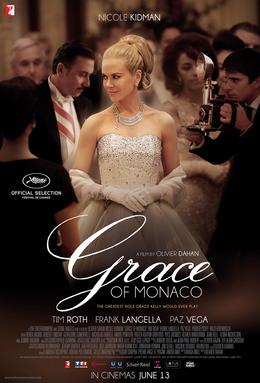
Grace_of_Monaco_PosterWell, I finally saw Grace of Monaco and…

Oh God.

Seriously, I am sitting here right now and I am just thinking to myself, “Oh God, do I really have to try to think up something interesting to say about this movie?”  Grace of Monaco is not a good movie but, at the same time, it’s bad in the worst way possible.  It’s not so bad-that-its-entertaining.  Instead, it’s just a dull misfire.

In fact, probably the only really interesting thing about Grace of Monaco is that it is the first film to go from opening Cannes to premiering on Lifetime.  Though it may seem impossible to believe now, there was a time in 2013 when everyone was expecting Grace of Monaco to be a major Oscar contender.  It seemed like everyone was saying that Nicole Kidman was a lock for a best actress nomination and maybe more!

Then the film’s American release date was moved from November of 2013 to June of 2014.  Rumor had it that the infamous Harvey Weinstein was chopping up the film and destroying the vision of director Olivier Dahan.  “Bad Harvey!” we all said.  (Of course, having now seen the film, I can understand why Harvey may have had some concerns…)

Okay, we told ourselves, Grace of Monaco probably won’t be a best picture contender.  But surely Nicole Kidman can get a nomination.  Surely the costumes and the production design will be honored…

And then the film played opening night at the Cannes Film Festival and it was greeted with less than appreciate reviews.  In fact, the reaction to the film was so negative that it has since become somewhat legendary.

And so, the American premiere was canceled.  The film opened in Europe, where it made little money and received scathing reviews.  But it was destined to never play in an American theater.  Instead, Grace of Monaco was sold to the Lifetime network.

And, after all of the drama and the waiting, I finally got to see Grace of Monaco tonight and … well, bleh.

Don’t get me wrong.  It’s a pretty movie.  I loved looking at what everyone was wearing.  I enjoyed looking at the ornate settings.  Whenever Grace Kelly stopped to look out at the view from the palace, I appreciated it because it was a beautiful view.  If I had hit mute and simply enjoyed the film as a look at beautiful people wearing beautiful clothes and living in beautiful houses, I probably would have enjoyed it a lot more.

But, unfortunately, Grace of Monaco has a plot that gets in the way.  The evil French, led by Charles De Gualle (played by Andre Penvern, who gives a performance that would probably be more appropriate for a James Bond film), want to take over Monaco because the citizens of Monaco don’t pay any income tax.  (I was totally Team Monaco as far as this was concerned.  Everyone should stop paying their taxes.  If we all do it, we’ll be fine.  They can’t prosecute all of us!)  Only Princess Grace Kelly can stop them but first, she has to convince her headstrong husband, Prince Rainier (Tim Roth), to listen to her opinions.  She has to convince her subjects that she’s more than just an opinionated American.

But Grace doesn’t just want to keep the French out of Monaco!  She also wants to return to her film career.  Alfred Hitchcock (Roger Ashton-Griffiths) wants her to star in Marnie.  (Hitchcock is always filmed as being slightly out-of-focus.)  Rainier doesn’t want her to return to acting.  And neither does a priest played by Frank Langella…

What was Frank Langella doing in this movie?  I have no idea.  He was some sort of advisor.  I understand that he’s based on a historical figure but honestly, the film was so boring that I can’t even bring myself to go on Wikipedia to find out who exactly he was.

But really, the main issue with Grace of Monaco is that it tells us absolutely nothing about Grace Kelly.  The film doesn’t seem to know who she was or what it wants to say about her.  And Nicole Kidman is a good actress and I hope that I look as good as she does when I’m 47 and after I’ve given birth to two children but seriously, she seems to be totally lost in this film.  Olivier Dahan fills the film with close-ups of Kidman’s face but for what reason?  Never for a minute do we believe we’re looking at the face of the star of High Noon, Rear Window, or To Catch A Thief.  Instead, we’re always aware that we’re looking at Nicole Kidman and she doesn’t seem to be sure just what exactly she’s supposed to be doing.  We learn nothing about Grace, Monaco, France, royalty, or movies.

And it’s a shame really.  Because the story of Grace Kelly would make a great film.  But Grace of Monaco doesn’t really tell you anything about her life.

It’s just boring and a film about an actress like Grace Kelly has absolutely no right to be boring.

Review: Taken (dir. by Pierre Morel)


In 2009 a little film coming out of France gained a buzz from on-line film bloggers. The film wasn’t the latest arthouse attempt to relive the glory days of French New Wave. It wasn’t a film that’s become part of the extreme French horror that’s becme all the rage in the horror circles in the past decade or so. This film was an action-thriller starring Irish actor Liam Neeson with an ensemble cast of actors from the US, UK, France and Albania. The film I am talking about is Taken by French filmmaker Pierre Morel (his previous film, District 13 with it’s parkour action scenes would make it a cult hit) and produced by his mentor Luc Besson.

Taken at its most basic core is a film about a father’s love for his daughter who has gotten herself kidnapped by Albanian sex-traffickers while on vacation in Paris, France. Liam Neeson’s character gets introduced as a retired government worker and divorcee whose attempt to reconnect with Kim his teenage daughter (played by Maggie Grace of Lost). His attempts to impress his daughter and make her happy gets upstaged by his ex-wife’s richer husband and stepfather to his daughter. It doesn’t help that Neeson’s character Bryan Mills has skillsets not easily translated to the civilian sector. He’d take an offer of a bodyguard gig from one of his former co-workers and it’s during this security job that we get a clue as to what sort of government employee Bryan Mills was before his decision to retire.

Moving forward we finally get past the introductions of the characters (Famke Janssen as Mills’ ex-wife really comes across as a major harridan who seems intent on punishing Mills for selfish reasons). Mills learns of a trip Kim will be taking with her friend Amanda (Katie Cassidy) to follow U2’s European concert tour. Mills, the clearheaded parent, doesn’t like this plan to have his daughter galavanting across Europe without adult supervision, but his guilt for having neglected Kim while he was working for the government plus his ex-wife’s insistence that Kim take the trip makes him relent, but not without giving her some advice to stay safe.

To say that Kim and Amanda get into a heap of trouble right as soon as they arrive in Paris would be an understatement. The two get kidnapped while staying at the luxury apartment of Amanda’s cousin. Before Kim is taken by the masked intruders (who’ve already taken Amanda) she’s able to make a desperate phone call to her father. Calm, collected and knowing that her daughter’s abduction was an inevitability, Mills instructs his daughter to relay to him as much information as possible about those abducting her. With that information in hand Mills heads to Paris to find his daughter (and to punish those who dare kidnap her).

From then on Taken becomes an action-thriller which barely gives the audience a chance to take a breather. Mills knows his time frame when it comes to finding his daughter gets shorter and shorter thus goes about his job searching for her in a deadly efficient manner. Mills becomes Jack Bauer and Jason Bourne rolled into one. There’s no witty, debonair Bond in this character. Mills goes about his business of interrogating, killing and gathering information with cold, calculating efficiency which leaves no room for Bondesque dialogue. The story moving forward once Mills arrive in Paris becomes almost an extension of Mills’ character. Writers Besson and fellow collaborator Robert Mark Kamen keep the dialogue to the barest minimum. We learn more about Neeson’s character through his actions more than we do during character interactions with other players in the film.

The film hinges on the audience buying Liam Neeson as a deadly, ex-CIA operative who manages to survive every violent encounter throughout the film (some by his own doing and others just trying to survive through it). From how people have reacted to this film and Neeson’s character I would say that it’s a big definitive yes that we buy Neeson as someone akin to Bauer and Bourne. In fact, I would say that Neeson’s Bryan Mills would be the more dangerous of the three. He has no compunction about using torture to gather information and barely breaks a sweat when killing those involved in some way in his daughter’s abduction. He has no bouts of guilt about what he has done in the past (probably killing as a secret agent) , what he’s doing in the present (killing to find his daughter) and what he’ll be doing in the future (probably thinking killing thoughts about anyone who will look at his daughter funny). Neeson’s Bryan Mills is a cold, efficient killing machine who doesn’t use fancy moves to take out his opponents and willing to shoot them in the back if it ends the fight in his favor.

The action sequences in Taken has some parkour influences, but not enough to make it distracting. There were no Michael Bay-style skewed camera angles, slo-mo shots and ADHD-style editing. Morel actually keeps the frenetic editing that made the Jason Bourne fight scenes so dynamic to a minimum. There’s just enough of it to make the fight scenes look brutal and painful, but not enough to make people nauseous. The climactic action sequence on the yacht of a rich buyer of sex-slaves goes by so quickly yet was more entertaining than half the prolonged action scenes from Bay’s Transformers sequel.

The rest of the cast barely keep up with Neeson in the film. They become tertiary characters whose job were to give Neeson’s character the motivations he needs to get the job done. I will say that Maggie Grace as Kim was believable as a teenager even down to the spoiled teen she starts off in the beginning. But again her character was just there to motivate Neeson’s character to go back to doing what he did well and that’s kick ass (he’d probably do it just as well while chewing bubble gum).

In the end, Taken was an action-thriller which more than surprised many people. It cemented Liam Neeson as one badass dude in the same league as Kiefer Sutherland’s Bauer and Matt Damon’s Jason Bourne. The film became a showcase for people to witness Neeson kickass and do it believably while Morel does just enough to keep the film from becoming too ridiculous. While Taken won’t herald the coming of another era of French New Wave, it does succeed in doing what it set out to do and that’s entertain, thrill and just give the audience some kickass escapist fare that some big-budgeted Hollywood studio titles never seem to do.