Review: Hellfire (dir. by Isaac Florentine)


“What you started here today? About to get a whole lot worse.” — Nomada

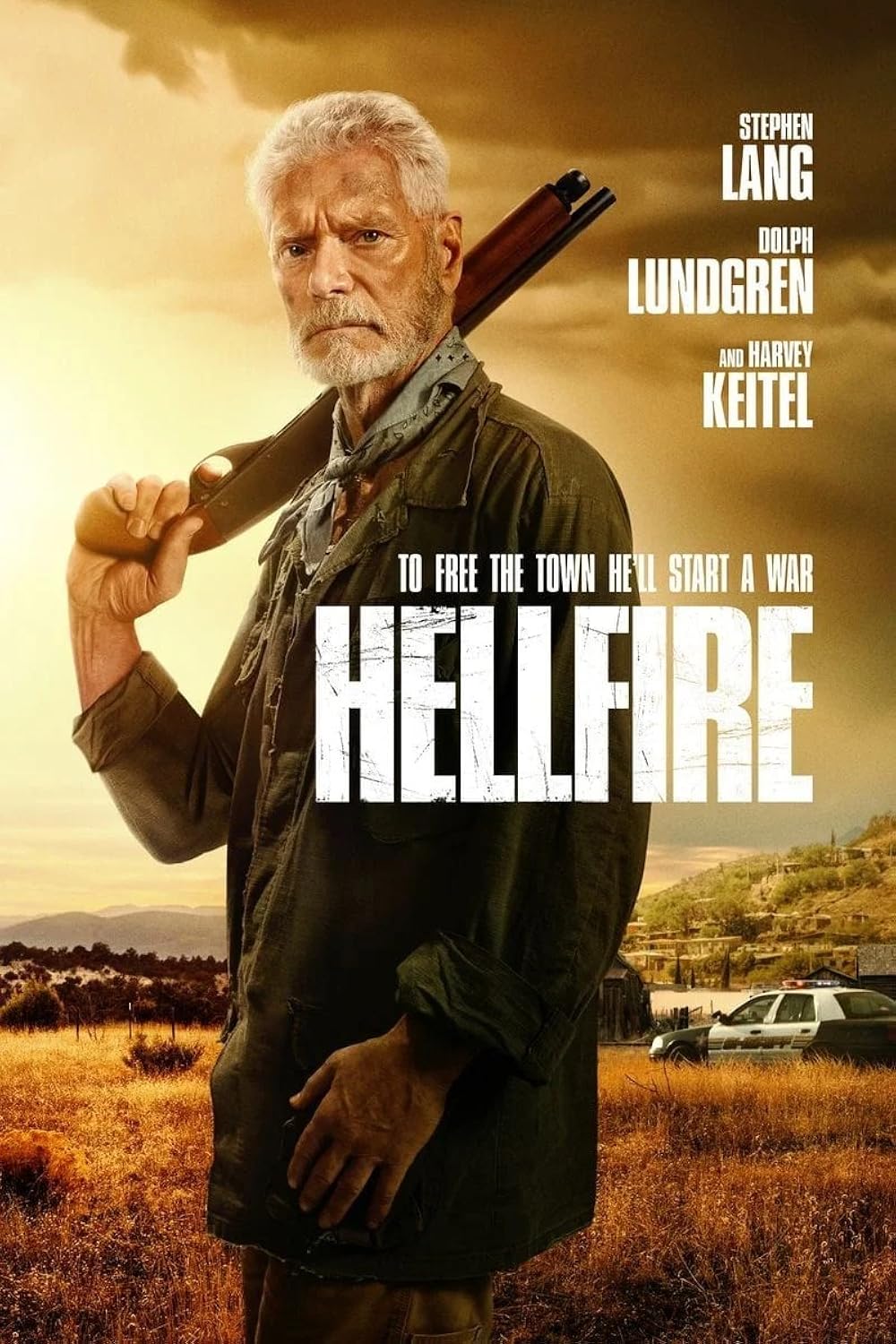
Hellfire is the kind of mid-budget, throwback action-thriller that knows exactly which bar it’s aiming for—and then mostly clears it with room to spare. Set in 1988 and built around a classic “mysterious drifter wanders into a rotten town” premise, it leans hard into familiar tropes but finds some personality in its cast, pacing, and sense of place. It’s not a game-changer for the genre, but if you’re in the mood for a lean, old-school small-town showdown, it gets the job done more often than not.

The setup is comfort food for action fans. A nameless drifter, played by Stephen Lang, rolls into the dying Southern town of Rondo, where the locals are quietly suffocating under the control of drug boss Jeremiah Whitfield, a politician-connected crime lord who pretty much owns the place. The bar owner Owen gives the drifter some work and a meal, the sheriff shows up to strongly suggest he move along, and you can basically feel the town holding its breath, waiting for somebody—anybody—to push back. That somebody, obviously, is this guy, who’s soon nicknamed Nomada and revealed to be an ex–Green Beret with a messy past and a higher capacity for violence than his weathered demeanor suggests. The story is straightforward to the point of being telegraphed, but that simplicity is part of its appeal; you always know what lane Hellfire is driving in.

Performance-wise, the movie’s biggest asset is Lang. At this point, watching him settle into the “old guy you really shouldn’t mess with” archetype is half the fun, and Hellfire plays that card well. He doesn’t oversell the trauma angle, but the film gives him just enough flashbacks and quiet beats—like those bath-time war memories—to suggest a guy who’s been stuck in fight mode for decades and doesn’t know what to do with peace. His physicality is still convincing, and director Isaac Florentine is smart about staging the action around what Lang does well, letting him move with purpose instead of pretending he’s 30 years younger. He’s not reinventing the “wandering warrior” type, but he grounds Nomada enough that you buy people trusting him even when they’re terrified. There’s a warmth under the stubble and scars that gives the character a little more dimension than the script strictly requires.

The supporting cast is a mixed bag, but the core players are solid. Harvey Keitel’s Jeremiah Whitfield is exactly the kind of villain you expect in this setup: soft-spoken, smug, and insulated by money and enforcers. He doesn’t get a ton of screen time, but there’s something appropriately gross about how casual he is with other people’s lives, like he’s already factored their suffering into his monthly budget. Dolph Lundgren shows up as the corrupt sheriff Wiley, playing the heavy who’s technically the law but functionally just another thug with a badge. Lundgren brings some weary menace to the role, and there’s a nice little tension in how much he’s genuinely bought into Jeremiah’s world versus how much he’s just too compromised to get out. Scottie Thompson’s Lena, Owen’s daughter, is the emotional anchor; she’s the one with something real to lose, and while the film doesn’t push her arc especially far, she’s likable enough that you care when things go sideways.

On the weaker end, Michael Sirow turns in a caricature performance as Spencer, the entitled and whiny son of Jeremiah, all sneers and petulance that feels like it stepped straight out of a ’80s cartoon villain playbook without any nuance to back it up. Similarly, Johnny Yong Bosch as enforcer Zeke sleepwalks through every scene that isn’t action, delivering a by-the-numbers performance for a character supposed to be the crime boss’ dangerous right-hand man; even in the fights, it’s rote and uninspired, missing the edge that could’ve made Zeke a real threat.

On the character side, Hellfire actually does a bit more groundwork than you might expect from what is essentially a B-movie revenge Western in modern dress. The early stretch spends time letting you feel the town’s exhaustion and fear—bars that are half-empty, people looking over their shoulders, everyone resigned to Jeremiah’s stranglehold. That world-building pays off once the violence kicks in, because it’s clear what’s at stake beyond simple body count or spectacle. The film also tries to deepen Nomada’s backstory, hinting at survivor’s guilt and a lingering sense that he’s been wandering from one moral debt to another, but it never quite connects those dots in a satisfying way. By the time the movie starts circling around for a full-circle emotional payoff, you can see what it’s going for, yet the groundwork feels a little thin, like pages were cut or ideas left half-developed.

Pacing-wise, Hellfire is tighter than its 95-ish-minute runtime might imply, and that’s mostly a compliment. The first half is surprisingly light on action, preferring to simmer instead of boil; you get a few scuffles and tense stand-offs, but Florentine holds back on the big fireworks. When things finally explode—hostages, ambushes, warehouses, the works—the film shifts into a mode that feels like controlled chaos, mixing gunfights, hand-to-hand scraps, and vehicle beats with a clarity that’s increasingly rare in this budget range. The trade-off is that the final act feels a bit rushed, like the movie suddenly remembered it had to tie off multiple arcs and body the main villains within a fairly strict time limit. The last stretch does what you expect it to do, including Jeremiah’s fiery fate, but it doesn’t linger long enough to fully earn the emotional weight it’s shooting for.

The action itself sits in that “serviceable to occasionally inspired” space. Florentine, coming from a background in stunt-heavy genre work, keeps things clean and legible; you always know who’s shooting at whom and from where. The shootouts can get cheesy—there’s a bit of that “nobody can hit anyone until the plot needs it” energy—but there are also flashes where staging and geography line up to deliver genuinely satisfying beats. A warehouse sequence where Nomada protects Lena while taking out multiple attackers is a standout, capturing both his tactical skill and the desperation of the situation. The film clearly favors quality over volume; genre die-hards who want wall-to-wall mayhem might wish for more set pieces, but the ones you get mostly land. If anything, some of the tonal shifts—bouncing from grim brutality to borderline goofy machismo—don’t always mesh perfectly, though that’s also kind of baked into the retro B-movie DNA.

Visually, Hellfire doesn’t reinvent the wheel, but it looks better than a lot of its DTV-adjacent peers. Shot in Arkansas and set in the late ’80s, it leans into dusty small-town Americana: sun-faded storefronts, weathered bars, lonely roads. Ross W. Clarkson’s cinematography keeps things grounded, with an emphasis on practical locations and natural light that makes the town feel like an actual lived-in place rather than a backlot abstraction. The period setting isn’t showy—you’re not constantly being smacked with nostalgia props—but it subtly shapes the world, especially in how isolated and cut-off Rondo feels without modern communication and surveillance everywhere. The score by Stephen Edwards does what it needs to do, nudging tension along without ever becoming a character in its own right.

Where the film stumbles is mostly in how predictable and occasionally clumsy it can be. You can see many of the beats coming from miles away: the town’s breaking point, the betrayals, who will die to motivate whom. There is one darker turn that genuinely catches you off guard, and it helps shake the movie out of its comfort zone for a bit, but the script overall is content to color inside the genre lines. Some dialogue leans on cliché, and a few supporting characters feel like they wandered in from a rougher first draft—the kind of broad sketches you’ve seen a dozen times before. It’s never bad enough to sink things, but it does cap how high Hellfire can climb; this is a movie that’s satisfied with solid rather than special.

Still, taken on its own terms, Hellfire works. It gives Stephen Lang a solid platform to do what he does best, surrounds him with a fun mix of seasoned character actors, and delivers enough muscular, clearly shot action to justify the ticket or rental. The town feels real enough that you actually care whether Nomada cleans it up, and the film respects the basics: clear stakes, likable underdogs, villains you’re happy to see go down in flames. If you go in expecting a tight, modest, R-rated throwback with a few rough edges and a couple of standout moments rather than a new genre benchmark, you’ll probably come away satisfied. It’s generic, sure—but it’s the kind of generic that remembers to give you characters to root for, action you can actually see, and just enough personality to make the ride worth taking.

SLING BLADE (1996) – #ArkansasMovies, my celebration of movies filmed in the Natural State!


I love watching movies that are filmed in my home state of Arkansas. We’ve had our share of big stars show up in the Natural State. Burt Reynolds, Billy Bob Thornton, Bill Paxton, Robert De Niro, Dennis Quaid, Matthew McConaughey, Tom Cruise and Andy Griffith have all filmed really good movies here. Martin Scorsese directed one of his very first movies in southern Arkansas. It’s going to be fun revisiting some of my favorite Arkansas movies and sharing them with you!

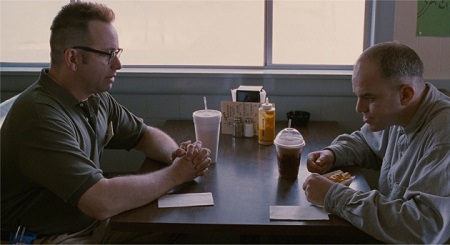
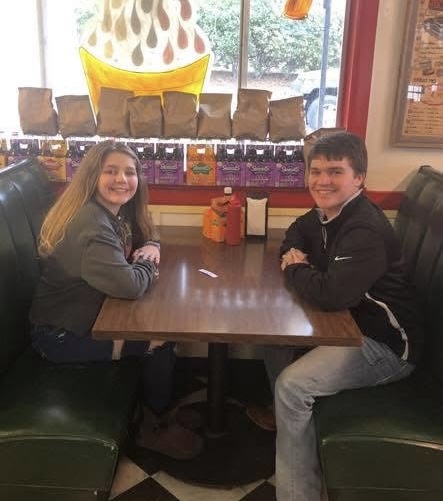
I live out in the country in Saline County, Arkansas. Back in 1996, Billy Bob Thornton wrote, directed and starred in a little film made right here called SLING BLADE (1996). It’s one of my favorite movies. Here’s a picture of our son and daughter sitting at the same table at Garry’s Drive-In Diner where Billy Bob Thornton and John Ritter sat in the movie. 

Thornton stars as Karl Childers, a developmentally disabled man who was abused as a child by his parents and the other children in the community. At the age of 12, he murdered his mom and her teenage lover Jessie Dixon with a sling blade. After 30 years in the mental hospital, the state decides he’s no longer dangerous, so they give him his stack of books and send him on his way. Karl has no clue of how to get on with his life, but the administrator of the hospital (James Hampton) helps him get a job as a small engine mechanic in his hometown. Hanging out at the laundromat one day, Karl meets a boy named Frank (Lucas Black) and helps him carry his bags of clothes back to his house. The two become friends and start hanging out a lot together. Frank introduces Karl to his mom, Linda (Natalie Canerday), and her gay best friend and boss, Vaughan (John Ritter). Karl also meets Linda’s abusive and alcoholic boyfriend, Doyle (Dwight Yoakam). Karl grows to love Frank and Linda. When he witnesses a drunk Doyle’s abusive and threatening behavior towards Frank and Linda one night, Karl starts thinking that Doyle may really hurt his friends someday. He decides he’s going to make sure that can never happen. 

First and foremost, I love SLING BLADE because of Billy Bob Thornton’s performance as Karl Childers. He had been developing the character of Karl for many years before the movie was made. He loved pulling “Karl” out when he was just hanging out and goofing around with his friends. He based his character on bits and pieces of so many different people in his life. As a native Arkansan, many of the words he says and the way he says them reminds me of different people I’ve known over the years. His opening monologue where he describes the murders of his mother and the young Jessie Dixon is a masterpiece in and of itself. Thornton created a truly unique character, and that’s extremely rare these days. It’s a performance for the ages and continues to inspire terrible imitations to this day!

The remainder of the cast in SLING BLADE is so good and natural. Lucas Black is phenomenal as Frank. Billy Bob Thornton has been asked how he got such a great performance from the then 12-year-old boy from Alabama. He says he didn’t get that performance; that’s just the kind of actor Lucas Black is. The relationship between Karl and Frank is the key to the film working, and Black is perfect. Natalie Canerday is excellent as Frank’s mom, Linda. She’s from Russellville, Arkansas, so her accent is authentic, and she just blends perfectly into the film. John Ritter provides a very solid supporting performance as Linda’s gay friend who cares deeply for her and Frank. Thornton was part of the cast of Ritter’s early 90’s sitcom with Markie Post called HEARTS AFIRE. He actually wrote this screenplay while working on the show. The two were great friends off camera and Ritter actually worried that he wouldn’t be able to give a serious performance opposite Thornton’s portrayal of Karl. And then there’s country music superstar Dwight Yoakam as the abusive bully Doyle Hargraves. He’s simply great in the film. He doesn’t just portray Doyle as a monster either. There are many people in this world like Doyle Hargraves, and Yoakam is able to capture that. Director Jim Jarmusch has a memorable cameo in the film. He sells Karl his “french fried potaters.” And the great Robert Duvall even makes a short appearance in the film as Karl’s dad. Duvall was over in the Memphis area filming his own movie A FAMILY THING, which was written by Thornton. He just made the 2 hour drive over for the day and filmed his scene.

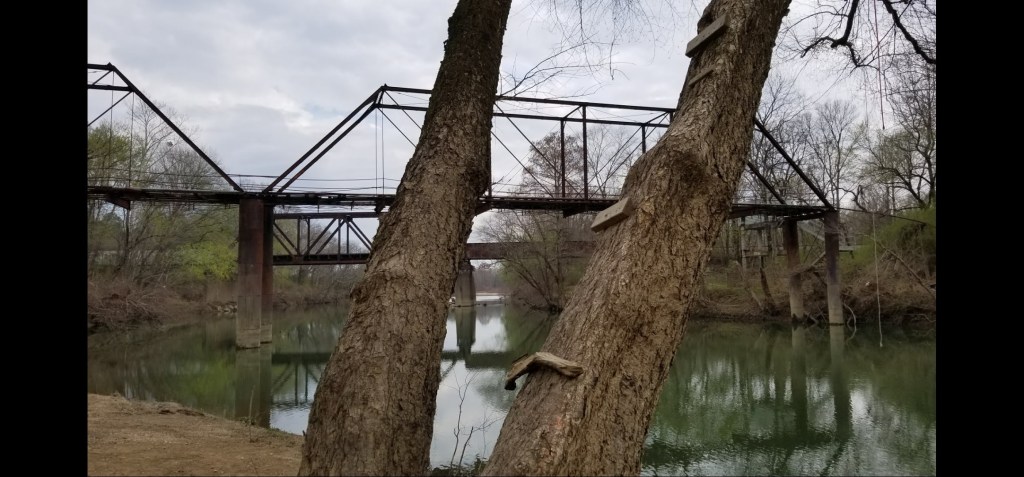
Every scene filmed in SLING BLADE is filmed here in Benton and Saline County. The opening and closing scenes between Thornton and actor J.T. Walsh at the “nervous hospital” were filmed at the old Benton Services Center, which is now a psychiatric nursing home just outside of Benton. I’ve driven by the location of the home where Linda and Frank lived. I drive by the laundromat where Karl meets Frank every time I go eat at Garry’s Sling Blade Drive-in. I’ve driven out to the bridge over the Saline River that is prominently featured in the film (see picture below). Heck, I even went to college at the University of Central Arkansas with one of the young ladies who interview Karl at the beginning of the film. I love this movie, and I’m so proud that it was filmed in my backyard. 

SLING BLADE is an incredible film with a truly unique character at its center. The film is at times funny, heartbreaking, violent, slow, awkward, dramatic, and thrilling. It’s a resounding success for Billy Bob Thornton as a director, actor, and writer, even winning him an Oscar for his screenplay. I give this film my highest recommendation. 

I’ve included the trailer for SLING BLADE below:

Past reviews in the #ArkansasMovies series include:

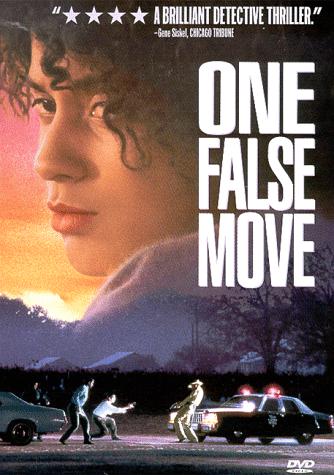
Embracing the Melodrama Part II #87: One False Move (dir by Carl Franklin)


One_false_moveWho doesn’t love Bill Paxton?

Seriously, he’s just one of those actors.  He’s appeared in a countless number of films and he’s played a lot of different characters.  He was a psycho vampire in Near Dark.  He was the underwater explorer who got stuck with all of the worst lines in Titanic.  In Frailty, he was a father who was driven to murder by heavenly visions.  He was the sleaziest of sleazes in Nightcrawler.  And, of course, in Big Love, he was an unrepentant polygamist.  In all of these roles, Paxton showed the quirkiness that has made him so beloved to film lovers like me.  Much like Kevin Bacon, it doesn’t matter what role Bill Paxton is playing.  You’re going to like him and you’re going to be happy to see him onscreen.

And yet, considering just how many popular films that he’s appeared in, it’s interesting to note that Bill Paxton’s best performance can be found in a film about which not many people seem to have heard.  That film is the 1992 Southern crime drama, One False Move.

Actually, it does the film a disservice to refer to it as merely being a crime drama.  I mean, it is a drama and it even has a properly dark ending to prove that fact.  And it is about criminals and police officers.  But ultimately, the film’s plot is just a starting point that the film uses to examine issues of culture, race, and guilt.  In the end, One False Movie is an unexpectedly poignant and penatrating character study of 5 very different people.

We start out with three criminals.  Ray (played by Billy Bob Thornton, who also co-wrote the script) is a career criminal, a white trash redneck who is not particularly smart but who is dangerous because he’s ruthless and he’s willing to whatever he need to do to survive.  (If you’ve lived in the country, you will recognize Ray’s type as soon as you see him.)  Ray’s girlfriend is Fantasia (Cynda Williams), a beautiful but insecure woman.  And finally, there’s Ray’s partner and former cellmate, Pluto (Michael Beach).  Of the three of them, Pluto is the most menacing, a knife-wielding sociopath with an IQ of 150.  Even though he’s working with Ray and Fantasia, Pluto always makes it clear that he considers himself to be both separate from and better than both of them.

Ray, Pluto, and Fantasia have just brutally murdered 6 people in Los Angeles, all of whom were friends of Fantasia’s.  Now, they’re making their way to Houston, planning on selling stolen cocaine.  Pursuing them are two LAPD detective, Cole (Jim Metzler) and McFeeley (Earl Billings).  When Cole and McFeeley come across evidence that the three criminals might have a connection with the tiny town of Star City, Arkansas, they call up the local sheriff.

And that’s where Bill Paxton shows up.

Paxton plays Sheriff Dale Dixon.  Dale’s nickname is Hurricane and it’s soon obvious why.  Like a hurricane, Dale never stops moving.  He’s a well-meaning but hyperactive good old boy who has a talent for saying exactly the wrong thing.  When he first talks to Cole and McFeeley over the phone, he amuses them with his enthusiastic bragging and briefly offends them with his casual racism.

Cole and McFeeley eventually end up taking a trip to Star City, so that they can investigate how the three criminals are connected to this tiny town.  When Dixon meets up with them, he asks them if they could help him get a job with the LAPD.  The two cops initially humor Dixon and laugh at him behind his back.  When Dixon’s wife (a wonderful performance from Natalie Canerday) asks Cole to keep Dixon safe, Cole assures her that Ray, Fantasia, and Pluto are probably not even going to come anywhere near Star City.

However, Dixon soon reveals to the two cops that Fantasia’s name is Lila and that her family lives in Star City.  What he doesn’t tell them, however, is that he and Lila have a personal connection of their own…

One False Move is a twisty and intense thriller, one that’s distinguished by strong performances from the entire cast.  (Even Metzler and Billings bring unexpected shadings to Cole and McFeeley, who, in any other film, would have been portrayed as being stock characters.)  But the film is truly dominated by Bill Paxton.  When we first meet Dixon, he seems like a joke.  We’re sure that he’ll somehow end up being the film’s hero (because that’s what happens in movies about small town sheriffs being underestimated by big city cops) but what we’re not expecting is that Dale is going to turn out to be such a multi-layered and fascinating character.  Just as Dale eventually starts to lower his defenses and reveal who he truly is, Paxton also starts to reign in his initially overwhelming performance and reveals himself to be a subtle and perceptive actor.  It’s a great performance that elevates the entire film.  Al Pacino won the 1992 Oscar for Best Actor for his performance in Scent of a Woman.  That award should have gone to the unnominated Bill Paxton.

It wouldn’t be fair to reveal One False Move‘s secrets.  It’s a film that you really should see for yourself.