Welcome to Retro Television Reviews, a feature where we review some of our favorite and least favorite shows of the past! On Wednesdays, I will be reviewing the original Love Boat, which aired on ABC from 1977 to 1986! The series can be streamed on Paramount Plus!
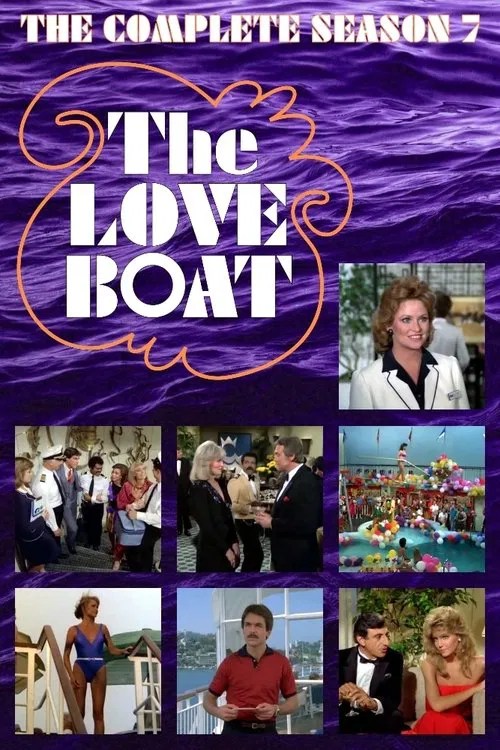
This week, it’s a very special cruise of The Love Boat!
Episodes 7.7 and 7.8 “When Worlds Collide/The Captain and the Geisha/The Lotter Winners/The Emperor’s Fortune”
(Dir by Jerome Courtland, originally aired on November 5th, 1983)
The Love Boat is sailing to Japan!
Lila (Heather Thomas) is a photographer whose father is in a wheelchair due to the injuries that he received during World War II. She meets and falls for Bud O’Hara (Tony Danza). It seems like love at first sight but how will she react when they arrive in Japan and she discovers that Bud’s father (James Shigeta) is Japanese!? At first, Lila cannot get over her prejudice but then Bud’s father reveals that his own parents were killed at Hiroshima and that he has also struggled with forgiveness. “I am proud to be Japanese,” Tony Danza declares.
Martha Chambers (Mariette Hartley) is a professor in Asian studies who has a crush on the Captain. When she finds out that the Captain is fascinated by the culture of Japan, Martha pretends to be a geisha.
Barney (Ted Knight) and his wife (Rita Moreno) have just won five million dollars in the lottery and they spend almost the entire cruise showing off how much money they have. The crew isn’t comfortable dealing with the nouveau riche. Myself, I’m just happy that this storyline didn’t feature Ted Knight or Rita Moreno pretending to be Japanese.
Celia (Jean Hoffman) and her daughter, Joanie (Nancy Morgan), own one piece of an embroidered silk artwork. Ben Cummins (John Ritter) owns another piece. They’ve all been invited to Japan by a businessman named Yamamoto. Yamamoto claims to have the third piece and says that, when all the pieces are together, they will form a treasure map. Ben falls for Joanie. Celia falls for Harvey (Harvey Korman), a businessman who happens to be on the cruise. When the other two silk pieces are stolen, it doesn’t take long for Ben to figure out that Harvey is the one who took them. Harvey explains that he is Yamamoto and that he’s a career criminal. However, because he’s fallen in love with Celia, he returns all three of the silk pieces to her.
This two-hour episode was a travelogue. The Love Boat did one or two of these type of episodes every season. The show would leave the sound stages of Los Angeles and instead be filmed on an actual boat during an actual cruise. With these two hour episodes, the storylines were usually just an excuse for the Love Boat crew and their guest stars to see the sights. That’s certainly the case here. Captain Stubing gets a full tour of Japan. (Captain Stubing also has a lengthy fantasy sequence where he imagines himself as a shogun. It’s definitely not the show’s finest moment.)
It’s a good thing that the scenery is lovely in this episode because the stories themselves are nothing special and, in some cases, they’re actually difficult to watch. The Love Boat attempted to make a plea for tolerance and forgiveness and that’s definitely a good thing. But then the show cast Tony Danza as a half-Japanese man named Bud O’Hara and that was more than a bit cringey. There’s nothing about Tony Danza that is the least bit Japanese. For that matter, there’s nothing particularly Irish about him either.
This was not the best cruise of the Love Boat.
 The year is 1998 and America is flat broke. Paper currency is now worthless and, to the joy of Ron Paul supporters everywhere, all transactions are done in gold. After the country ran out of oil, people started using skateboards and bicycles for transportation and many turned their cars into homes. While the citizenry spends their time consuming a steady diet of sitcoms and reality television, the government tries to figure out how to pay back the loan that it took from Sam Birdwater (Chief Dan George), a Native American who made billions after buying Nike. Birdwater wants his money back and he is prepared to foreclose on the entire country.
 Through the Shattered Lens