Bob Randall (John Wayne) is a coast guard boatswain, headquartered in Alaska where he and the members of his crew battle evil seal poachers like oily Phil Morgan (Russell Hicks). When Randall returns to port after his latest patrol, he has to deal with two disappointments. First off, he is passed over for a promotion to commanding officer, even though everyone knows that he deserves it. Instead, the promotion goes Lt. Commander Mays (William Blakewell), the son of a commander (George Irving). Mays doesn’t even want the job. He’s scared of the water and he’d rather fly airplane as a part of the Coast Guard’s aviation force. Bob is disappointed but he’s a professional and he’s going to support Mays. Secondly, Bob’s girlfriend (Nan Grey) witnesses a murder and is kidnapped by Phil Morgan. Bob and his sidekick (dependable western mainstay Fuzzy Knight) go undercover as fisherman to try to find her.
The Sea Spoilers was the first of six B-movies that John Wayne did for Universal. Wayne, who had been stuck in the B’s for a while, was trying to prove that he was more than just a singing cowboy so, in this one, he plays a tough and ready sailor. Wayne is convincing in the role, even if the movie is really just a western set in what was then modern day Alaska. Though only 30, Wayne shows the no-nonsense professionalism that would become his trademark once he became one of the world’s biggest movie stars. Unlike some of Wayne’s early films, it’s possible to see the icon that John Wayne would eventually become while watching him here. The Sea Spoilers is only 66 minutes long but fans of the Duke should enjoy it.
Finally, The Sea Spoilers was written by George Waggner. Waggner would later go on to direct the original Wolf Man.
1940’s The Invisible Man Returns opens with Sir Geoffrey Radcliffe (Vincent Price) sitting on Death Row. Convicted of the murder of his brother, Radcliffe is due to soon be executed. Radcliffe claims that he was framed and his girlfriend, Helen Manson (Nan Grey), has spent the past week of her life begging for someone to order a stay on the execution. However, with the home secretary out of the country, there is no hope of a reprieve.
Dr. Frank Griffin (John Sutton), brother of the original Invisible Man, visits Radcliffe in prison and gives him the same serum that his brother previously developed. Now invisible, Radcliffe is able to escape from the prison. Radcliffe is determined to prove his innocence but Dr. Griffin is more concerned with developing a way to reverse the serum’s effects before Radcliffe is driven insane, just as the original Invisible Man was. Radcliffe becomes convinced that his brother was murdered by their cousin, Ricard Cobb (Sir Cedric Hardwicke) but is Radcliffe correct or is the serum just making him paranoid? With Inspector Sampson (Cecil Kellaway) searching for Radcliffe and fully aware of what effects the serum are going to have on his mind, can Radcliffe clear his name before he loses his sanity?
The Invisible Man Returns went into production after the success of Son of Frankenstein proved that there was a market for sequels to previously successful horror films. (Yes, there was a time when sequels were not an automatic thing.) This was also one of the first horror films in which Vincent Price made an appearance. (Today, we’re so used to the image of Vincent Price as a somewhat campy horror icon that it’s easy to forget that he originally started his career as a romantic leading man and was even seriously considered for the role of Ashley Wilkes in Gone With The Wind.) As he spends the majority of the film wearing the same tight bandages that hid Claude Rain in the first film, Price’s actual face is only visible for slightly less than a minute and, without his famous mustache, it’s actually rather difficult to recognize him. That said, there’s no mistaking Price’s voice, heard as the invisible Radcliffe bitterly complains about everything from a barking dog to other people’s doubts about Cobb being the murderer. While this film does find Price in a slightly more subtle mood than many of us horror fans are used to, it still features plenty of hints of what the future would hold.
I enjoyed The Invisible Man Returns, which featured some witty invisibility sequences (watch invisible Vincent Price toss off those clothes!) and also managed to take the story’s violence about as far as it could without violating the production code. While it’s always a pleasure to watch any film featuring Vincent Price, I also liked the performance of Cecil Kellaway, who played the inspector as being the epitome of the the upstanding but dryly humorous British policeman. One gets the feeling that absolutely nothing could ever take the Inspector by surprise …. not even an Invisible Man!
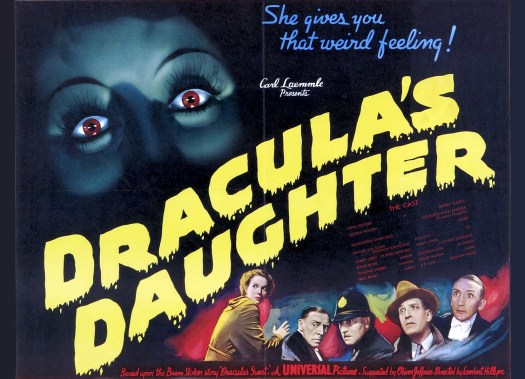
After the success of BRIDE OF FRANKENSTEIN , Universal decided it was time for a sequel to everybody’s favorite vampire, Dracula , with James Whale scheduled to direct. Whale opted out, putting DRACULA’S DAUGHTER in the hands of Lambert Hillyer , an old pro who dated back to silent William S. Hart Westerns, and was more comfortable with sagebrush sagas than Gothic horror. The result was an uneven film saved by Gloria Holden’s performance as the title character, Countess Marya Zaleska.
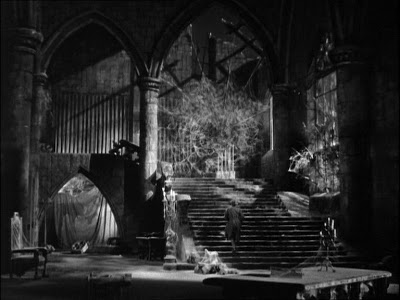
I’ll give Hillyer credit for some atmospheric scenes scattered throughout the movie. The opening scene at Carfax Abbey, cobwebbed as ever, picks up where DRACULA left off, with Edward Van Sloan’s Van Helsing (inexplicably renamed Von Helsing here) caught by constables shortly after staking the undead Count. The Countess burning the body of her vampiric father, hoping to free herself of her curse, is spooky, as is the return…
Well, Bram Stoker might disagree but, according to Universal Studios, he did. Her name was Countess Marya Zaleska and, as played by Gloria Holden, she is the title character in 1936’s Dracula’s Daughter! Like her father, the Countess was also a vampire. The film never gets into just how she became a vampire. Was she born a vampire or, far more disturbingly, was she once a mortal who turned into a vampire by her own father? The film doesn’t tell us but it does establish early on that she hates being one of the undead. Unlike her father, she struggles with her urge to drink blood. When she discovers that Dracula has been staked, she and her servant, Sandor (Irving Pichel), steal the body from the morgue and burn it. The Countess thinks that this will cure her of her urges.
Sadly, it does no such thing.
So, what’s a reluctant, 20th century vampire to do? Well, she can always go to a psychiatrist and hope that science can somehow break the curse. She ends up as a patient of Dr. Jeffrey Garth (Otto Kruger). By coincidence, Dr. Garth has another famous patient — Dr. Edward Von Helsing. (That’s right, they changed the “van” to a “von” in Dracula’s Daughter. Despite the name change, Edward van Sloan returns to play the veteran vampire hunter.)
Von Helsing in on trial, accused of murdering Dracula in the previous film. Oddly enough, nobody mentions Renfield who, seeing as how we’re told Dracula’s Daughter starts exactly where Dracula left off, would have been found dead in the crypt as well. Even stranger, no one steps forward to defend Von Helsing. Dr. Seward, Mina, Johnathan Harker? Forget about them. Not a single one is to be found while Von Helsing is accused of murder.
Bastards.
Fortunately, Von Helsing has a defense! Since Dracula was already dead and had been for 500 years, Von Helsing could not have killed him. Helping him out with this defense is Dr. Garth…
Meanwhile, the Countess tries to resist the urge to attack every woman that she sees. She pours her frustrations out into painting. One night, Sandor brings the Countess a new model, a beautiful young woman named Lil (Nan Grey). The Countess orders Lil to undress and then, after staring at her, gives into her urges and attacks…
If you’re thinking that there’s a subtext here, that’s because there is. (In fact, Universal’s tagline for the film was, “Save the women of London from Dracula’s Daughter!”) Perhaps even more so than in Dracula,Dracula’s Daughter uses vampirism as a metaphor for forbidden sex. When the Countess stares at Lil and, later, when she prepares to bite the neck of Dr. Garth’s fiancée, she is embodying the hysterical fears of a puritanical society. When she unsuccessfully seeks a cure for her vampirism, we’re reminded that, in the 1930s, psychiatry classified homosexuality as being a mental illness. When the Countess struggles with her urge to drink blood, she is a stand-in for everyone who has struggled with their sexuality.
Gloria Holden plays the Countess as being as much a victim as a victimizer. Whereas Bela Lugosi turned Dracula into the epitome of evil, Gloria Holden gives a performance that is full of ambiguity. In fact, she at times seems to be so tortured by her vampiric state that, when she finally fully embraces the fact that she’s a vampire, you have to cheer a little. At least she’s finally being honest with herself! At least she’s no longer making apologies or allowing society to punish her for being who she is. Was Countess Zaleska the first reluctant vampire in film history? I’m not sure but Holden’s performance undoubtedly set the bar by which all other self-loathing vampires should be judged.
Dracula’s Daughter holds up surprisingly well. It’s definitely one to look for during this Halloween season.
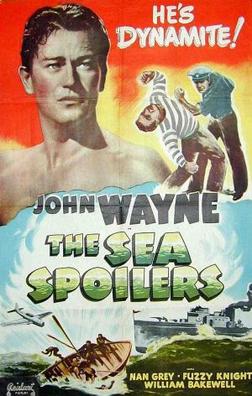 Bob Randall (John Wayne) is a coast guard boatswain, headquartered in Alaska where he and the members of his crew battle evil seal poachers like oily Phil Morgan (Russell Hicks). When Randall returns to port after his latest patrol, he has to deal with two disappointments. First off, he is passed over for a promotion to commanding officer, even though everyone knows that he deserves it. Instead, the promotion goes Lt. Commander Mays (William Blakewell), the son of a commander (George Irving). Mays doesn’t even want the job. He’s scared of the water and he’d rather fly airplane as a part of the Coast Guard’s aviation force. Bob is disappointed but he’s a professional and he’s going to support Mays. Secondly, Bob’s girlfriend (Nan Grey) witnesses a murder and is kidnapped by Phil Morgan. Bob and his sidekick (dependable western mainstay Fuzzy Knight) go undercover as fisherman to try to find her.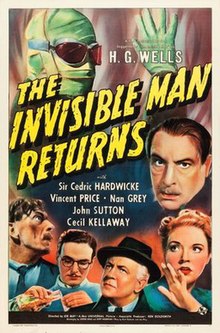


 Through the Shattered Lens