Horror Song of the Day: Threnody to the Victims of Hiroshima (by Krzysztof Penderecki)


Have you ever heard Penderecki’s Threnody to the Victims of Hiroshima? It’s definitely not your typical kind of music. When I first listened to it, I wasn’t really sure what was happening—it’s loud, chaotic, and incredibly intense. There’s no melody or rhythm that you can follow; instead, it feels like a massive wave of sound crashing over you, full of raw emotion and tension.

One of the things that makes it so striking is that Penderecki wrote it for 52 string instruments. Now, usually, when you think of that many strings playing together, you imagine something rich, smooth, and harmonious. But this is completely different. Those violins, violas, cellos, and basses don’t blend into a melody; instead, they create layers of dissonant sounds—like dozens of voices crying out all at once. It’s less about making “music” in the traditional sense and more about creating an intense atmosphere you can almost feel physically.


What’s really interesting is that Penderecki wasn’t initially trying to compose a tribute. The piece was simply titled 8 minutes and 37 seconds, just the length of the piece. But when he heard it performed, he realized something powerful was happening. The sound conveyed devastation and sorrow in a way words couldn’t. That’s when he dedicated it to the victims of Hiroshima, giving all that chaotic noise a heartbreaking context.

Listening to Threnody is like being caught in a storm made of sound. It opens with a blast of high-pitched, almost screaming tones, then moves between moments of total chaos and eerie silence. Instead of a neat ending, the piece slowly fades away, leaving you with a heavy, unsettling quiet—like the echo of a tragedy that never really ends.

What’s especially notable is how much this piece challenges what we usually expect from music. It doesn’t have melodies, harmonies, or rhythms in the way most music does. Penderecki broke all those rules to focus purely on emotion through sound itself. That approach not only made Threnody groundbreaking in classical music but also opened the door for its huge influence on horror film music. Filmmakers recognized how those sharp, dissonant strings create tension and fear on a gut level. You can hear Penderecki’s influence in iconic horror scores like those in Kubrick’s The Shining or Lynch’s Twin Peaks. Those creepy, screeching string sounds that make your skin crawl? That’s Penderecki’s legacy.

For me, what makes Threnody unforgettable is how honest it feels. It doesn’t try to comfort or please the listener. Instead, it’s a raw cry of grief made real through fifty-two instruments playing together but refusing to blend smoothly. It’s a reminder that music doesn’t always have to be beautiful to be powerful and that sometimes the most intense emotions are best expressed through sound that challenges everything we think music should be. Once you’ve listened, it sticks with you—an echo of sorrow that doesn’t fade.
Horror Song of the Day: Kanon For Orchestra and Tape (by Krzysztof Penderecki)


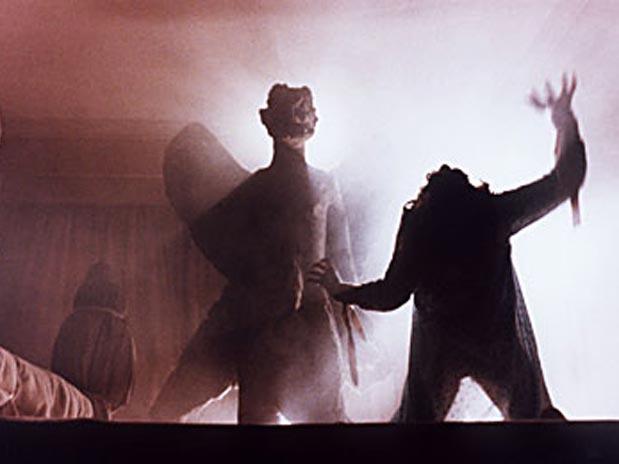
TheExorcist

The previous “Song of the Day” was Polymorphia and comes courtesy of one Krzystof Penderecki. Why stop a good thing and go with someone else for the latest one when Penderecki continues to bring in the horror.

“Kanon For Orchestra and Tape” was also used in William Friedkin’s The Exorcist and one could tell just from listening to it that it fit perfectly. Like Polymorphia, this particular piece uses the string section to help create that encroaching dread and horror while adding some nontraditional sounds to keep the listener off-balance.

Just listening to this piece one could be made to believe that there is a Hell and the Devil’s just waiting to get out and play.

Horror Song of the Day: Polymorphia (by Krzysztof Penderecki)


PolymorphiaA couple weeks ago site music writer necromoonyeti wrote up quite an article about what just makes a piece of music a “horror music”.

Using some of what necromoonyeti wrote about I decided to look at some horror and non-horror films with music that evokes that sense of terror and horror that sometimes come from music that we wouldn’t associate with such emotions. It’s a much more difficult task than one would think. Yet, while I didn’t find one of those non-traditional pieces of horror music I did come across one that I should’ve used in this segment a long time ago.

The latest “Song of the Day” is a piece of disturbing music titled “Polymorphia” by Polish composer Krzysztof Penderecki.

This musical composition has been used in two classic horror films (some would say some of the best in their genre) to help build the sense of horror and dread for the audience. The two films in question would be William Friedkin’s The Exorcist and Stanley Kubrick’s The Shining. I know that in the former it more than added to that film’s creeping dread from the moment the song came on. It made one feel like Hell itself was about to break through the screen. It’s that sense that one’s skin was sensing something evil was afoot.

I found a particular youtube video that used this song and the chosen imagery to great effect. I dare anyone to watch the video, listen to the music in a dark room and in the middle of the night while alone.

Horror Songs of the Day: Hellraiser Theme (Christopher Young and Coil)


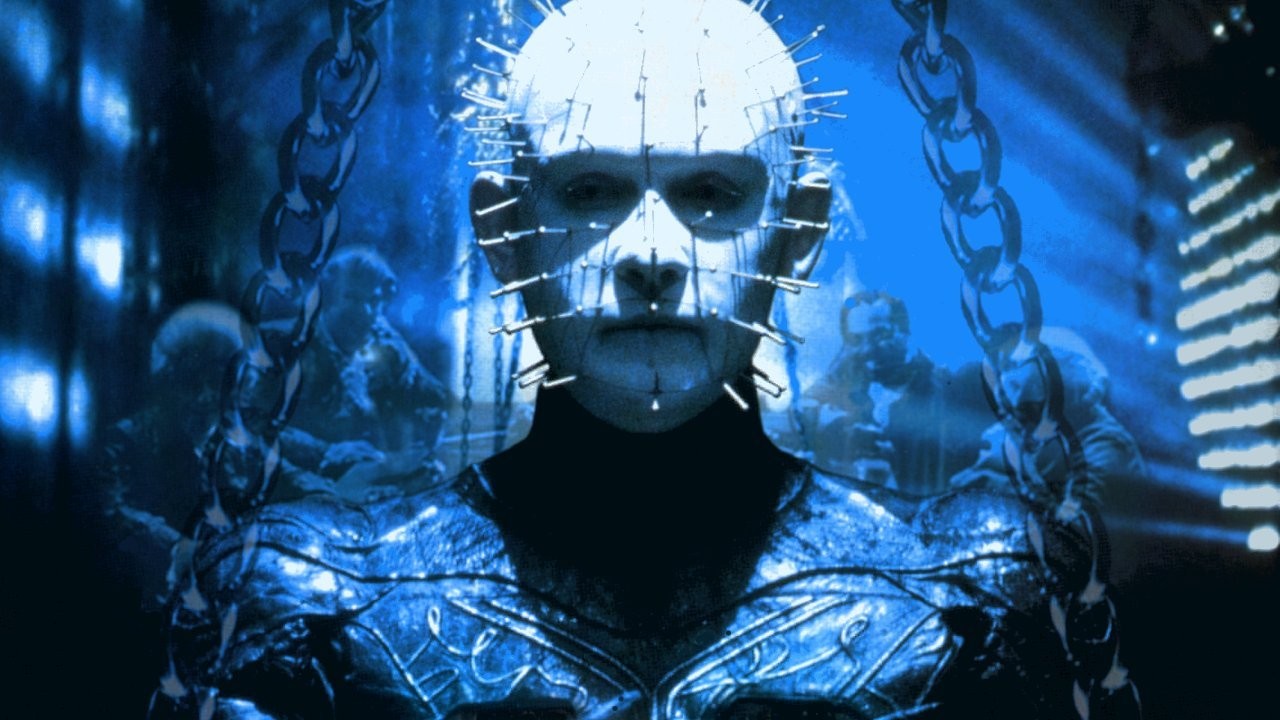
HellraiserPinhead

For the first horror “Song of the Day” I couldn’t decide on which theme from Clive Barker’s Hellraiser I should use.

Fans of the film should know well the original theme composed by Christopher Young for the film. It’s a more orchestral theme that gives the film a sort of grand guignol grandeur. It’s an epic piece that would get used time and time again for each successive sequel. There might be some minute changes to the theme with each new film, but the basic composition remains. It’s a theme that helps one visualize forbidden texts and grimoires laying in wait for the ones brave or foolish enough to turn the page.

Then there’s the unreleased and unused theme that Barker had originally wanted to use from the industrial band Coil. This theme for the film was more about discordant melodies that harkens back to the more disturbing musical composition used for The Exorcist. It’s a theme that brings up images of the sublime and exquisite pain that Pinhead promises to those solve the Lament Configuration.

Some fans prefer the original Christopher Young suite while others have grown to love and prefer the more disturbing piece from Coil. I, for one, think both could’ve been used in the film though if I had to pick one to use as the main theme then I would go with Christopher Young’s composition.

Christopher Young Hellraiser theme

Coil Hellraiser theme