October Positivity: Survival (dir by Donald W. Thompson)


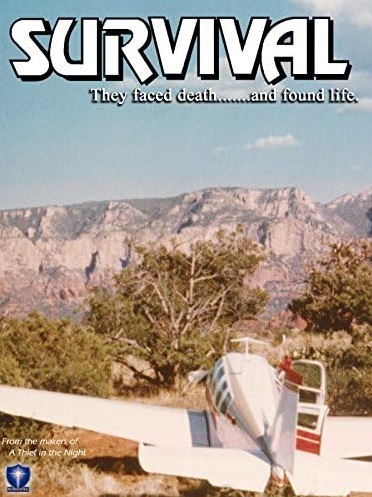
First released in 1975 and looking even older, Survival opens with a shot of a cougar stalking through the desert.  As a narrator rambles on about the Bible and King Solomon, the cougar snarls.  “How long will God tolerate us?” the narrator asks, right before the cougar mauls and kills a man holding a rifle.

The cougar was my favorite character in Survival, even though it only had limited screen time.  My second favorite character was the narrator, who kept talking about how everything on Earth was destined to eventually die, regardless of how they lived their lives.  Yes, the narrator was a bit judgmental but, at the same time, the narrator was right.

While two policemen search the desert for the cougar, a private airplane crashes atop a mesa.  Everyone in the plane survives the impact but will they be able to survive the desert?  The narrators seems to have his doubts.  Mom and Dad are both upset about being stranded in the desert.  The pilot, who is dating the daughter of the family, says that they better pray before they do anything else.  Finally, the family’s 12 year-old son decides to run off and try to reach a nearby town on his own.  It’s a two-day walk and his parents are not happy when they discover that he’s run off.  It’s a pretty good thing that they don’t know that the small town is actually a ghost town and that the desert is not only home to the cougar but also plenty of rattlesnakes!  While Mom and Dad worry about their son, the pilot and their daughter encourages them to keep praying.  If their son dies, that’s all a part of God’s plan and it’s probably their fault for not going to church more often.  To be honest, I wouldn’t want to be trapped in the desert with any of these people.  The incredibly judgmental narrator seems to agree.

Survival was directed by Donald W. Thompson, who is better-known for directing the Thief In The Night films.  As a director, Thompson knew how to frame a shot, which sets his work apart from a lot of other independent religious films.  Watching this film, one can feel the oppressive heat rising up from the desert.  That said, the heavy-handed dialogue is often stiffly-delivered.  (At one point, the son worries that he has lost his wilderness survival pamphlet, just for someone to announce that they got him a new one before handing him a copy of the Bible.  The lines are delivered so flatly that it almost feels like a parody of a church film.)  It’s never a good sign when the cougar has more personality than the humans.

As I watched this film, I thought about how much I hate the desert.  Would I have been able to survive as well as the characters in this film?  Probably not.  When I was 19, I dated a guy who owned his own private airplane.  It was fun because he would fly me halfway across the state on a date.  He would pick me up in Denton and then we’d fly down to San Antonio for dinner.  Watching this film made me realize how lucky I was that we never crashed because I don’t think I would have been much help if we had.  So, if nothing else, this film convinced me not to buy an airplane.  That’s the important thing.
Retro Television Reviews: Cabin By The Lake (dir by Po-Chih Leong)


Welcome to Retro Television Reviews, a feature where we review some of our favorite and least favorite shows of the past!  On Sundays, I will be reviewing the made-for-television movies that used to be a primetime mainstay.  Today’s film is 2000’s Cabin By The Lake!  It  can be viewed on YouTube.

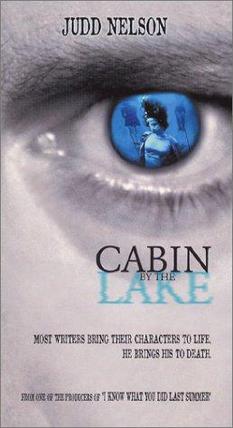
Screenwriter Stanley Caldwell (Judd Nelson) has been hired to write a slasher film and, to the concern of both the film’s director (Bernie Coulson) and Stanley’s agent (Susan Gibney), Stanley is taking his time to write the script.  Stanley says that he’s determined to write something more than just a typical “dead teenager” film.  His script is about a murderer who kills his victims and then dumps them into a nearby lake.  The killer spends his time tending his underwater garden.

What is taking Stanley so long?  Stanley is doing research, which means that he’s kidnapping women, holding them prisoner in his cabin, and then dumping their bodies into the lake.  Along the way, he’s observing how the victims act and he’s incorporating his research into his script.  Though Stanley tells himself that he’s just doing research, it’s obvious that the script is no longer his main concern.  Now, Stanley is just enjoying working in his garden.

Stanley’s latest victim is Mallory (Hedy Burress), a young woman who works at the town’s movie theater and who has a long-standing fear of the water.  While Stanley is holding Mallory captive and studying both her and her fear of water, Deputy Boone Preston (Michael Weatherly) is searching for Mallory.  And, of course, Stanley is running out of time to finish his script.

Cabin In The Lake was produced by and originally aired on the USA Network and, as a result, it has a much darker sense of humor than one might otherwise expect to find in a made-for-tv horror movie from 2000.  Most of the humor centers around the pretensions of the film industry, with both Stanley and his film’s director trying to turn their little slasher movie into something more than just another dead teenager film.  A good deal of the film centers around a group of special effects and makeup artists, who are recruited to help capture the killer and they’re all likable in their dorky way.  The scenes of Stanley’s underwater garden achieve a certain dream-like grandeur and, as someone who has a morbid fear of drowning, I could certainly relate to Mallory’s fear of the water.

That said, this is one of those films where the parts are definitely greater than the whole.  I think the film’s biggest problem was that Judd Nelson was a bit bland in the role of Stanley, flatly delivering his lines and barely bothering to show a hint of emotion.  If anything, Nelson appears to be a bit bored with the film.  Hedy Burress is sympathetic as Mallory and Michael Weatherly is believable as the upstanding deputy but a film like this lives or dies based on its villain and Nelson sleepwalks through the role.  As well, for all the humorous moments that do work, it soon becomes obvious that this is a one-joke film and portraying Hollywood as being a place full of shallow people is not creative enough a joke to sustain an entire film.  The end result is a film that is ultimately frustratingly uneven.

Horror Scenes That I Love: Jack Nicholson in The Shining


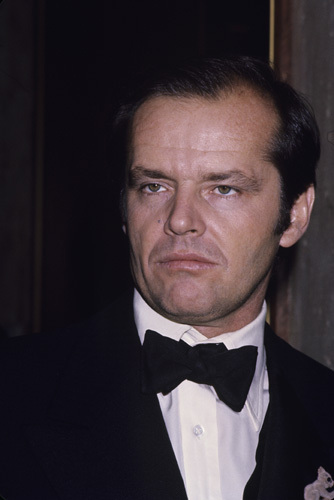
Today’s actor really needs no introduction.  While Jack Nicholson started his career as a part of the Roger Corman stock company and appeared in the original Little Shop of Horrors while also being strongly considered for the role of Guy Woodhouse in Rosemary’s Baby, Nicholson has not appeared in many horror movies.

But the horror movie in which he did appear is such a classic that it’s made Nicholson a horror icon, even if he didn’t appear in as many horror films as a Christopher Lee or a Boris Karloff.

In this scene from 1980’s The Shining, Nicholson’s Jack Torrance has a drink with a ghost.  Nicholson does a wonderful job in this scene, especially when he’s playing off the wonderfully sinister Joe Turkel.

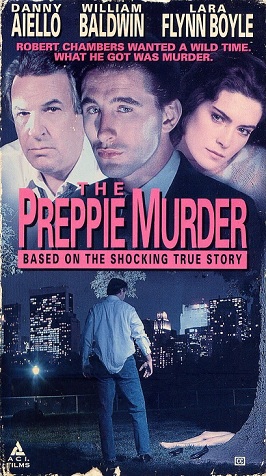
October True Crime: The Preppie Murder (dir by John Herzfield)


The 1989 film, The Preppie Murder, tells the story of the murder of Jennifer Levin (played by Lara Flynn Boyle), an 18 year-old teenager from an affluent family, who was found dead in Central Park on August 26,1986.

The man who was accused of murdering her was Robert Chambers (played by William Baldwin).  Tall, handsome, and popular, Robert Chambers was a former prep school student who had spent one semester at Boston University before being asked to leave because of a series of petty crimes.  Though Chambers and Levin were both a part of the same social circle, Chambers did not come from a wealthy family.  Instead, his background was working class.  (That said, his mother did once serve as a private nurse to John F. Kennedy, Jr. and Robert Chambers even met the presidential scion once.)  Chambers supported himself through stealing his girlfriend’s jewelry and selling drugs.  At the time that he started dating Jennifer Levin, he had just gotten out of rehab.  As shown in the early part of the film, Jennifer’s friends warned her that Chambers had a bad reputation but Jennifer felt that he was just someone who had made mistakes and who was trying to take advantage of his second chance.  To be honest, it’s a sentiment to which I could relate.  I think every woman has had at least one Robert Chambers in their life, the bad boy who could melt hearts with calculated moments of vulnerability but who, in the end, turned out to be an empty shell of a human being.

In the film, the murder occurs off-screen.  We watch as Robert and Jennifer leave a bar together and then we cut to the next morning, with Robert watching from a distance as a homicide detective (Danny Aiello, bringing his trademark, no-nonsense New York style to the role) investigates the scene of Jennifer’s murder.  When the police learn that Robert was the last person to see Jennifer alive, Robert is brought in for questioning.  The cocky Robert attempts to explain away the scratches on his face and body by saying that his cat scratched him.  (“Do you own a tiger?” Aiello’s detective asks him.)  When Robert finally confesses to having killed Jennifer, he claims that he Jennifer was assaulting him and that he only struck her in self-defense.  It’s a ridiculous and offensive story but it’s one that the press loves.  Robert may be the one charged with a crime but it soon becomes clear that, despite not being able to defend herself, Jennifer is the one being put on trial.

It’s an infuriating film, all the more so because it was based on a true story and stuck close to the facts of both the case and the trial.  William Baldwin is well-cast as Robert Chambers, playing him as a handsome and superficially charming man who secretly knows that he’s empty on the inside.  William Devane plays Chambers’s high-priced attorney, who puts Jennifer on trial and only briefly allows himself any feelings of guilt about his actions.  Lara Flynn Boyle wins the viewer’s sympathy in her limited screen time and Danny Aiello is, of course, the perfect New York cop.

What was particularly disturbing about the film was its portrayal of Jennifer and Robert’s friends, many of whom chose to support Robert even though they knew he had murdered Jennifer.  The film ends with clips of Robert at a party that was thrown by his friends after he got out on bail.  While Robert pretends to twist off a doll’s heads, his friends laugh in the background, either unaware or unconcerned that Robert is recreating his murder of Jennifer while they watch.

The real-life Robert Chambers eventually pled guilty to manslaughter and spent 15 years in prison.  He was released in 2003 and promptly returned to his old life of petty crime and drug dealing.  He was sent back in prison, convicted of selling $2800 worth of heroin to an undercover cop.  He was released in July of this year.

4 Shots From 4 Horror Films: Special Tobe Hooper Edition


4 (or more) Shots From 4 (or more) Films is just what it says it is, 4 (or more) shots from 4 (or more) of our favorite films. As opposed to the reviews and recaps that we usually post, 4 (or more) Shots From 4 (or more) Films lets the visuals do the talking.

Today, I am proud to pay homage to a director from my home state, a man who changed the face of horror and the movies but who was treated terribly by a jealous film industry.  I am talking, of course, about Texas’s own Tobe Hooper.  Hooper redefined horror with The Texas Chainsaw Massacre.  Though his later films were never quite as critically or financially successful as that classic, many of them have since been rediscovered by audiences who now better appreciate Hooper’s quirky sensibility.  Hollywood may not have known how to handle Tobe Hooper but horror fans like me will always appreciate him.

It’s time for….

4 Shots From 4 Tobe Hooper Films

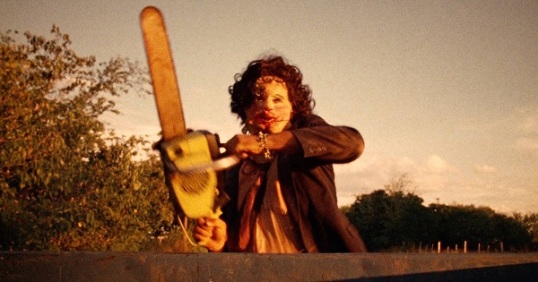
The Texas Chainsaw Massacre (1974, dir by Tobe Hooper, DP: Daniel Pearl)

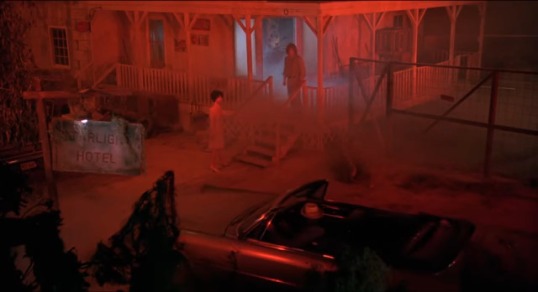
Eaten Alive (1976, dir by Tobe Hooper, DP: Robert Caramico)

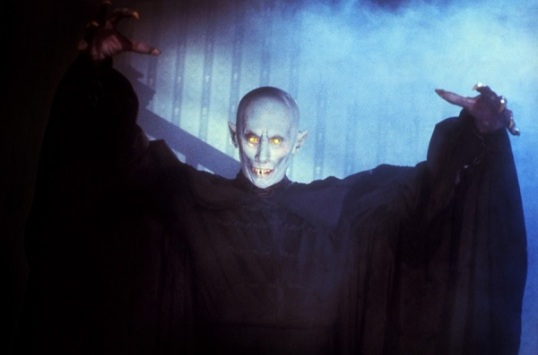
Salem’s Lot (1978, dir by Tobe Hooper, DP: Jules Bremmer)

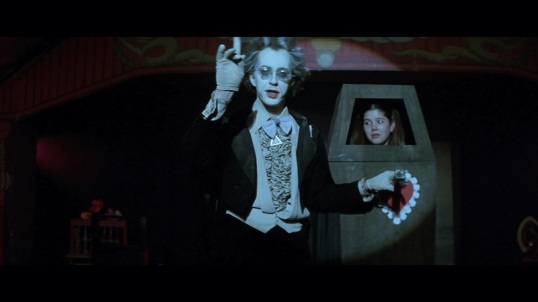
The Funhouse (1981, dir by Tobe Hooper. DP: Andrew Laszlo)

Horror on the Lens: Island of the Burning Damned (dir by Terence Fisher)


Today’s horror on the lens is a British 1967 science fiction film, featuring the team of Christopher Lee and Peter Cushing and directed by Terence Fisher!

This film is based on a novel that came out in 1959.  It was originally meant to be a movie for British television but, after the script was written, it was decided to instead turn it into a theatrical film.  The film was originally called Night of the Big Heat but, when it was subsequently released in the United States, the title was changed to Island of the Burning Damned.

It’s not October without Peter Cushing and Christopher Lee!

6 Trailers For The End Of The Third Week Of Horrorthon


With the third week of Horrorthon coming to a close and the final week about to start, I have to really ask myself, “Where does the time go!?”

Well, as I consider that, why not check out this special Horrorthon edition of Lisa Marie’s Favorite Grindhouse and Exploitation Film trailers!

  1. Ruby (1977)

In this film from 1977, the great Piper Laurie plays Ruby, a former gun moll who owns her own haunted drive-in theater!

2. Drive-In Massacre (1976)

Ruby was not the only 70s horror film to be sent at a drive-in.  There was also 1976’s Drive-In Massacre!

3. The Texas Chainsaw Massacre (1974)

And what were they all watching at the drive-in?  Depending on the year, they could have very well have been watching the original Texas Chainsaw Massacre!

4. The Legend of Boggy Creek (1972)

Another drive-in of the 70s was this documentary about the search for the Fouke Monster.

5. The Town That Dreaded Sundown (1976)

The Legend of Boggy Creek was such a hit that director Charles B. Pierce was able to follow up with The Town That Dreaded Sundown.

6. The Evictors (1979)

The Town That Dreaded Sundown was a bit enough hit that Charles B. Pierce was able to follow it up with The Evictors.

Such is the power of the drive-in!

October Positivity: The War Within (dir by Brett Varvel and Drew Varvel)


2014’s The War Within takes place in two worlds, one on the outside and one in the inside.

The film opens with Michael Sinclair (Brett Vavrel), a cartoonist who is struggling to deal with both the death of his daughter and the subsequent collapse of his marriage.  Though he still has his good memories of when he first met and fell in love with Amy (Rebecca Reid), those are running the risk of fading and disappearing as neither one can forgive themselves for the accident that took away their daughter.  Michael has even found himself questioning his once firm faith in religion.  Amy, meanwhile, was never particularly religious, something that worried her daughter in the days before her death.  When Michael gets a phone call informing him that his syndicated comic strip has been cancelled due to him missing too many deadlines, Michael trashes his studio and wonders why he is being so punished.

The film takes us inside of Michael’s head, where Heart (Brett Vavrel, in a duo role), Will (Gary Vavrel), Conscience (Daron Day), Mind (Terry Vavrel), Emotion (Drew Vavrel), and Memory (Bruce Crum) all battle for control of Michael’s decisions and his future.  At first, it appears that only Emotion wants to reject both Amy and his faith.  But then Heart starts to realize that both Mind and Will are slipping over to Emotion’s side.  Heart and Conscience have to work together to search the realms of Michael’s mind so that they can retrieve the memory orbs that have been stolen by the other traits.  Otherwise, Michael will never find peace and he’ll lose his wife….

Okay, this probably sounds a bit weird and I guess it kind of is.  I mean, on the one hand, you’ve got Michael and Amy trying to come to terms and find some sort of meaning in the worst tragedy that a parent can experience.  There are frequent flashbacks, finally explaining the heartbreaking reason why Michael blames himself for their daughter’s death.  And there’s a moment of incredible coincidence, in which Amy discovers how the accident that took her daughter’s life also effected one of the new students in her class.  I mean, it’s an amazing coincidence but it’s still a rather sweet plot development and it’s well-acted by Rebecca Reid.

While that’s going on, you have a bunch of people wearing vaguely medieval costumes battling in a shadowy realm that is meant to represent Michael’s subconscious.  There’s some crudely effective CGI, in which Emotion attacks the other traits with …. well, emotions.  There’s a lot of talk about memory orbs and hidden realms and it’s all a bit corny but it’s also all so earnest that it’s hard not to get some enjoyment out of it.  I especially liked the fact that Emotion looked and sounded like the type of emo kid that I would have had a crush on back when I was 16 years old.  Watching those scenes made me think about the type of war that’s probably going on in my own mind right now.  Heart says to stay up for a month straight just watching and reviewing movies.  Mind says, “Get some sleep and stay healthy!”  Emotion has yet to chime in.

Anyway, this was one of those film that was so weird that it was pretty much impossible not to enjoy it.  Count that as a victory for Heart.

The TSL Horror Grindhouse: Lord Shango (dir by Ray Marsh)


The 1975 film, Lord Shango, takes place in a small, rural town in the Deep South, where the population appears to be firmly divided between those who worship at an evangelical Christian church and those who follow the Yoruba religion.

(To answer the obvious question, I have no idea how faithful this film is to the realities of the Yoruba religion.)

Jenny (Marlene Clark), who is a waitress at a local restaurant, is a member of the evangelical church, largely because her boyfriend is a member and he thinks that her attending the church will help her to get pregnant.  Her daughter, Billie (Avis McCarther), is in love with Femi (Bill Overton), who is a follower of the Yoruba religion.  One Sunday morning, while all the church people sings hymns, a series of baptisms are held in a nearby river.  When it is time for Billie to baptized, Femi rushes into the water and objects.  After he shoves her out of the river, the men of the church grab Femi and announce that the evil must be taken out of him through what appears to be a forced baptism.  They force him under the water but, with Femi struggling, the end up holding him down for too long and Femi drowns.

Traumatized, Billie sinks into depression and Jenny grows disillusioned with the church, especially when the men who held Femi down refuse to take any responsibility for their actions.  She also learns that her boyfriend, Memphis (Wally Taylor), had sex with Billie after Billie mistook him for being the spirit of Femi.  When she finds Memphis praying in the church, she proceeds to yell and curse at him while he pathetically apologizes.

The next morning, Jenny wakes up to discover that Billie has run away, leaving behind a note that simply reads, “I can no longer live in your house.”  When the men of the church again prove to be insensitive and ineffectual when it comes to finding out where Billie has gone (and instead are more concerned about why Jenny and Memphis has not been coming to the prayer meetings), Jenny turns to Femi’s friend, Jabo (Lawrence Cook).  Under Jabo’s guidance, Jenny offers up a series of sacrifices to the local Yoruba priest (Maurice Woods) and asks for her daughter to return home.

The sacrifices appear to work.  Billie returns home and reveals that she’s pregnant with a baby that she believes to be Femi’s and which Jenny believes to be Memphis’s.  Jenny, now firmly under the control of Jabo, continues to make sacrifices and bad things continue to befall the men that she holds responsible for Femi’s death….

A frequently surreal film, Lord Shango is an interesting, if not always easy-to-decipher, portrayal of the battle of two different belief systems.  While the evangelical Christianity that Jenny first followed could only promise an eventual reward, Jabo’s tribal religion offers her immediate reward and revenge.  (Significantly, even though Billie was in love with Femi and wants to have his child, she has no interest in following his religion.)  The film is often edited to provide a direct contrast between the staged cermonies of evangelical Christianity and the sensuality of the Yoruba religion.  The film is full of Southern gothic atmosphere and is well-acted, particularly by Lawrence Cook and Marlene Clark.  That said, the film is also frequently very difficult to follow.  At times, one gets the feeling that the film is being surreal simply to be surreal and it’s hard to find a coherent message in the film’s collection of odd scenes and strange dialogue.

Lord Shango is a frequently intriguing film, as long as you’re willing to accept a little incoherence.

Horror Scenes That I Love: Dick Miller In The Howling


A true scene stealer, the character actor Dick Miller was a Navy veteran who went to City College of New York, Columbia University, and New York University and eventually earned a Phd in psychology.  Even as Miller was earning his degree, he was already appearing on stage.  In 1952, he moved to California to pursue a career as a writer and ended up becoming one of the most beloved members of Roger Corman’s stock company.  Famously, in 1952’s Apache Woman, he played both a Native American and the townsperson who shot him.

The many directors who started their careers under Roger Corman continued to cast Dick Miller in their own films, keeping Miller busy as a character actor.  Miller worked with everyone from Martin Scorsese to Joe Dante to James Cameron to Steven Spielberg to Jim Wynorski.  Miller often played characters named Walter Paisley, a reference to his first starring role in Corman’s A Bucket of Blood.

In this scene from 1981’s The Howling, Dick Miller lets us know what’s truly going on with the werewolves.