The Films of 2024: The Beautiful Game (dir by Thea Sharrock)


When we first see Vinny (Michael Ward), he is watching a group of children play soccer.  (Yes, I know that both this movie and the rest of the world calls it football.  I grew up calling it soccer.)  He looks at the jerseys of the players and provides a running commentary as they play.  “We’ve got David Beckham, we’ve got a big Messi, we’ve got a little Messi, we’ve got a classic Brazilian Messi….”  Finally, Vinny runs out onto the field and kicks the ball himself until the parents of the children tell him to go away.

Watching Vinny is a legendary scout named Mal Bradley (Bill Nighy).  Mal approaches Vinny and convinces to come meet his “dream team,” a collection of homeless men who all play soccer.  Mal explains that the men are going to be representing England at the annual Homeless World Cup tournament in Rome.  Teams made up of homeless from all over the world will be competing.  Mal explains that it’s not all about winning.  It’s about giving the players a chance to prove something to themselves.  Mal reveals that he wants Vinny to join the team.  Vinny announces that he’s not homeless.  He has a job.  He has a family.  Vinny then goes to the car in which he is currently living.

Eventually, Vinny changes his mind and agrees to accompany the team to Rome.  The team is welcoming but Vinny still struggles to open up to them.  Some of it is due to his pride.  Unlike his teammates, Vinny actually did once play professional soccer, though not for long.  Some of it is due to Vinny being in denial about his status as a homeless person.  When a teammate opens up about being a recovering heroin addict, Vinny leaves the room.  When one player reveals that he’s a compulsive gambler and another talks about his own failures as a father, Vinny tries to change the subject.  What Vinny doesn’t know is that he and Mal have a past connection, one that has left Mal wracked with guilt.

There’s a lot going on in The Beautiful Game.  The film focuses on Vinny, Mal, and England’s team but it also finds room for subplots involving the Italian team, the South African team, the American team, and the Japanese team.  Adlar (Robin Nazari), a Kurdish refugee who plays for England, has to decide whether to play against a team led by a player who was on the opposite side of the Syrian Civil War.  Sister Protasia (Susan Wokoma), coach of the South African team, struggles to get a visa for one of her players.  Rosita (Christina Rodlo) of the American team hopes to play well enough to receive a college scholarship.  Mika (Aoi Okuyama), the young coach of the Japanese team, struggles to inspire her older players.  It can sometimes be difficult to keep track of it all but, at the same time, it does capture the idea of the Homeless World Cup being a truly international event, one that gives hope and opportunity to people across the world.  For Rosita and Vinny, the competition is a way to change the direction of their lives.  For the Japanese team, the competition is way to see the world and enjoy themselves.  And for Mal, the competition is a chance to give something back to the game that he loves.

The Beautiful Game is overlong and a bit overstuffed but it still occasionally brought tears to my mismatched eyes.  It’s a film with a big heart but enough of an edge that it avoids the trap of being overly sentimental.  It’s a well-acted film, especially by Michael Ward and Bill Nighy.  In the end, I think my favorite performances came from Aoi Okuyama and the members of the Japanese team.  Early on, they say that all they want to do is score one goal against another team.  When they do, their joy is infectious.  One might even say it’s beautiful.

Concert Film Review: Pink Floyd: Live in Venice (dir by Wayne Isham and Egbert van Hees)


I’m actually a bit embarrassed to say that Venice is my favorite city in Italy.

I mean, it’s such a cliché, isn’t it?  Tourists always fall in love with Venice, even though the majority of us really don’t know much about the city beyond the canals and the gondolas.  I spent a summer in Italy and Venice was definitely the city that had the most American visitors.  Sadly, the majority of them didn’t do a very good job representing the U.S. in Europe.  I’ll never forget the drunk frat boys who approached me one night, all wearing University of Texas t-shirts.  One of them asked, “Are you from Texas?”

“No, sweetie, ah’m from up north.” I lied.

“You sound like you’re from Texas!” his friend said.

“No, ah’m not from Texas,” I said, “Sorry, y’all.”

I mean, that’s not something that would have happened in Florence or even Naples!  In Rome, handsome men on motor scooters gave me flowers.  In Venice, on the other hand, I had to deal with the same jerks that I dealt with back home!

That said, I still fell in love with Venice.  And yes, it did happen while I was riding in a gondola.  At that moment, I felt like I was living in a work of art.  I can still remember looking over the side of the gondola and watching as a small crab ran across someone’s front porch.  That’s when I realized that, by its very existence, Venice proved that anything was possible.

I’ve often heard that Venice is slowly sinking.  That Venice has a reputation as being a dying city would probably have come to a surprise to the drunk Americans who were just looking for a girl from Texas that summer.  And it would certainly come as a surprise to anyone who watched the 1989 concert film, Pink Floyd Live In Venice.

Just as with last week’s Pink Floyd concert in Pompeii, this was something that I watched more because of where it took place than who was performing.  There are some very good Pink Floyd songs and there are others that are just silly and overly portentous.  As well, I’ll always have mixed feelings about Pink Floyd due to the fact that — bleh! — Roger Waters was a founding member.  Whenever I hear any of their songs, I automatically find myself looking for coded moments of anti-Semitism.  Fortunately, by the time the band played in Venice, Waters had left the group.  As a result, I didn’t feel quite as conflicted over watching the Venice concert as I did the Pompeii concert.

As for the show, the band performed while floating on a barge while some members of the audience sat in gondolas.  It was a lovely sight that captured the otherworldly romance of Venice.  The concert itself was a bit uneven, with the first half in particular dominated by songs that just seemed to go on and on and which often exposed the limits of lead singer David Gilmour’s vocal range.  The second half was a greatest hits collection and it was a notable improvement.  If Gilmour’s raspy vocals seemed limited during the first half of the concert, they were perfect for songs like Comfortably Numb and Money.  The highlight of the concert and the film was undoubtedly the performance of The Great Gig In The Sky, which created a feeling of the heavens descending upon Venice.

In the end, Venice was the true star of the concert.  For a dying city, it looked beautiful and vibrant.  I can’t wait to return.

Scenes That I Love: Albert Finney Hates People In Scrooge


Today would have been the 88th birthday of the great British actor, Albert Finney!

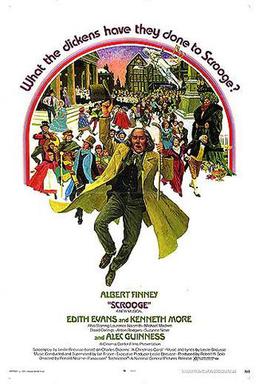
And today’s scene that I love features Albert Finney in the role of history’s most famous miser.  In 1970’s Scrooge, Finney played the title role and, early on, his worldview was perfectly captured by a song called I Hate People.  Finny was only 34 when he played Ebenezer Scrooge but he does a wonderful job of bringing the character to life and he’s just as convincing when he’s being good as he is when he’s being bad.  Finney is the main reason why Scrooge is my personal favorite of all of the versions of A Christmas Carol.

4 Shots From 4 Films: Special J.A. Bayona Edition


4 Shots From 4 Films is just what it says it is, 4 shots from 4 of our favorite films. As opposed to the reviews and recaps that we usually post, 4 Shots From 4 Films lets the visuals do the talking!

Today, we wish a happy birthday to the great Spanish director, J.A. Bayona!  It’s time for….

4 Shots From 4 J.A. Bayona Films

The Orphanage (2007, dir by J.A. Bayona, DP: Oscar Faura)

The Impossible (2012, dir by J.A. Bayona, DP: Oscar Faura)

A Monster Calls (2016, dir by J.A. Bayona, DP: Oscar Faura)

Society of the Snow (2023, dir by J.A. Bayona, DP: Pedro Luque)

The Films of 2024: One More Shot (dir by James Nunn)


It’s the night of the President’s State of the Union address and it appears that someone is planning to blow up the capital and spare everyone from having to sit through it.  (Personally, I’ve always found the pomp and circumstance surrounding the State of the Union address to be the opposite of what the Founding Fathers probably envisioned.  Presidents should go back to just sending Congress a note at the start of the year.)  Unfortunately, the bomb itself is radioactive so, though Americans will be spared the speech, Washington D.C. will still be reduced to an atomic wasteland.  Canceling the speech and the special Congressional session seems like an obvious solution but the President’s approval ratings are tanking and he’s hoping a good State of the Union will energize his reelection campaign.

Navy SEAL Jake Harris (Scott Adkins) has been tasked with escorting terrorist suspect Amin Mansur  (Waleed Elgadi) from Poland to Washington so that CIA director Mike Marshall (Tom Berenger, looking generally annoyed) can interrogate Mansur about the location of the bomb.  A Baltimore airport has been cleared out so that Mansur can be transferred to FBI custody with as little attention as possible.  Marshall takes a few minutes to yell at Jake, because this is an action film and action heroes always get yelled at by their superiors.  No sooner has Jake been yelled at then a bunch of mercenaries attack the airport.  It turns out that they also want Mansur and they’re willing to kill everyone in the airport to both get him and to make sure that the bomb is properly delivered.

Jake finds himself fighting for his life and also in the position of having to protect the terrorist that he brought to America.  However, as the night progresses, Jake discovers that Mansur is not the terrorist mastermind that he assumed and that the mercenaries are working for an enemy who is very close to home.

One More Shot is a sequel to 2021’s One Shot and, like that film, it’s shot and edited to make it appear as if the action is playing out in one continuous take.  The camera never seems to stop roaming through the airport, occasionally catching a mercenary or sometimes even Jake hiding in the shadows and waiting for a chance to attack.  It’s a gimmick but it’s an undeniably effective gimmick, one that is especially well-used in the film’s many battle scenes and which keeps the audience on its toes.  One More Shot has some of the most effective gunfights that I’ve recently seen and a lengthy sequence where Jake, Mansur, and a few others attempts to drive their way through a gauntlet of mercenaries is as genuinely exciting as anything you’d expect to find in an action film with bigger budget.

In the end, One More Shot feels like a video game come to life, with everything that implies.  One More Shot is an unapologetic action film, which is to say that this is not the film to watch if you’re looking for extensive character development or a nuanced debate about terrorism and American foreign policy.  We don’t really find out much about Jake Harris, other than the fact that he’s a good shot and he’s not easily intimidated.  Of course, that’s all we really need to know.  It’s an exiting 100 minutes and that’s all that it really needs to be.

The Eric Roberts Collection: The Rebels of PT-218 (dir by Nick Lyon)


The 2021 film, The Rebels of PT-218, takes place in 1943.

At the height of World War II, the Allies are on the verge of invading Italy and moving into Europe.  General Omar Bradley (played by William Baldwin, who looks like Alec but sounds like Stephen) orders the SS Lawton, a small torpedo boat to help secure the port of Solano.  It won’t be easy.  The Atlantic Ocean is full of German U-boats and the Lawton is built to move cargo, not fight battles.  But the Lawton is still the most powerful boat in the area and General Bradley believes in the abilities of the Lawton’s commander, Lt. William Snow (Eric Roberts).

However, Snow is eager to get into combat and defeat the Germans.  In fact, he’s so gung ho to fight that some of Bradley’s assistants feel that Lt. Snow’s judgment can’t be trusted.  Commander Barnes (Noah Blake) tells Ensign Kenneth Ford (Geoff Meed) to keep an eye on Snow and do everything he can to keep Lt. Snow on track.

The men of the SS Lawton, meanwhile, just want to man the guns, launch the torpedoes, and stop the Germans.  They’re from all over the United States but they’ll be familiar to anyone who has ever seen a war film.  Some of them are naive.  Some of them are cocky and streetwise.  One of them is played by Danny Trejo!  Trejo plays Cookie, a former gunner turned cook.  He delights in serving chorizos for dinner.  Cookie has a mustache and a pony tail, which definitely do not feel like they would be within Navy regulations.  After Cookie is wounded in action, a crewman tosses Cookie a machete and Trejo smiles like a man who has waited his entire life for that exact moment.

Historical accuracy?  Who needs historical accuracy when you’ve got Danny Trejo and Eric Roberts in the same movie?  Obviously, both Roberts and Trejo are a bit too old for their roles.  Cookie would have probably retired from the Navy long before the bombing of Pearl Harbor.  As for Roberts, one has to worry about any officer who is clearly in his 70s and still hasn’t achieved a rank higher than lieutenant.  When Snow expresses his ambition to be promoted, you have to wonder if he’s hoping to be the world’s oldest admiral.

This film is an attempt to do an epic war story on a budget and it doesn’t quite work.  One never feels that any of the characters are waking up everyday with the knowledge that this could be the day that they die.  The ship and all of the characters are remarkably clean and fresh-faced throughout the film, with none of the grime nor grit that would have given the story a realistic edge.  That said, Danny Trejo gets a few good lines and it’s always fun to watch Eric Roberts play an authority figure.  In the end, the important thing is that America won.

Previous Eric Roberts Films That We Have Reviewed:

  1. Star 80 (1983)
  2. Blood Red (1989)
  3. The Ambulance (1990)
  4. The Lost Capone (1990)
  5. Love, Cheat, & Steal (1993)
  6. Love Is A Gun (1994)
  7. Sensation (1994)
  8. Dark Angel (1996)
  9. Doctor Who (1996)
  10. Most Wanted (1997)
  11. Mr. Brightside (2004)
  12. Six: The Mark Unleased (2004)
  13. Hey You (2006)
  14. In The Blink of an Eye (2009)
  15. Enemies Among Us (2010)
  16. The Expendables (2010) 
  17. Sharktopus (2010)
  18. The Dead Want Women (2012)
  19. Deadline (2012)
  20. The Mark (2012)
  21. Miss Atomic Bomb (2012)
  22. Lovelace (2013)
  23. The Mark: Redemption (2013)
  24. Self-Storage (2013)
  25. This Is Our Time (2013)
  26. Inherent Vice (2014)
  27. Road to the Open (2014)
  28. Rumors of War (2014)
  29. Amityville Death House (2015)
  30. A Fatal Obsession (2015)
  31. Stalked By My Doctor (2015)
  32. Joker’s Poltergeist (2016)
  33. Prayer Never Fails (2016)
  34. Stalked By My Doctor: The Return (2016)
  35. The Wrong Roommate (2016)
  36. Dark Image (2017)
  37. Black Wake (2018)
  38. Stalked By My Doctor: Patient’s Revenge (2018)
  39. Clinton Island (2019)
  40. Monster Island (2019)
  41. The Savant (2019)
  42. Seven Deadly Sins (2019)
  43. Stalked By My Doctor: A Sleepwalker’s Nightmare (2019)
  44. The Wrong Mommy (2019)
  45. Exodus of a Prodigal Son (2020)
  46. Free Lunch Express (2020)
  47. Her Deadly Groom (2020)
  48. Top Gunner (2020)
  49. Deadly Nightshade (2021)
  50. Just What The Doctor Ordered (2021)
  51. Killer Advice (2021)
  52. The Poltergeist Diaries (2021)
  53. A Town Called Parable (2021)
  54. Bleach (2022)
  55. My Dinner With Eric (2022)
  56. Aftermath (2024)

A Powerful Scene From Roberto Rossellini’s Rome, Open City


Filmed in 1945, Roberto Rossellini’s Rome, Open City was one of the first films to be made about life under the Nazis.  Uniquely, it was a film made by and starring the people who had actually experienced, firsthand, the occupation of Rome by the Germans and much of the film was based on their real-life experiences.  The majority of the cast was made up of nonprofessionals and, largely because the city’s once-impressive studios and sound stages had been destroyed during the war, the film was shot on location, on the streets where many of the events depicted had actually occurred.

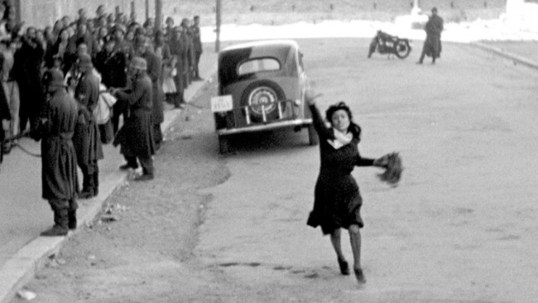
Rome, Open City follows a diverse group of characters who are all involved with the Resistance.  When the film begins, it appears that the pregnant Pina (Anna Magnani) is meant to be the main character.  However, in a scene that was considered quite shocking for the time, Pina is shot in the streets by the Nazis while chasing after a truck that is carrying away her fiancé.  The scene captures both the casual brutality of the Nazis and the reality of living under an occupation.  It’s a scene that reminds the viewer that evil is not sentimental, evil does not care that you are pregnant or that you’re planning on getting married, and that the forces of evil will do anything — including shooting an unarmed woman in the street — to maintain power.

The priest who tries to help Pina was based on Giuseppe Morosini, who was a member of the Italian Resistance and who was executed in 1944, shortly before the Nazis fled Rome and left the city to the Allies.  Originally, Rossellini planned to make a documentary about Morosini’s life.  When that project struggled to get off the ground, he instead incorporated Morosini’s story into Open City.

4 Shots From 4 Films: Special Roberto Rossellini Edition


4 Shots From 4 Films is just what it says it is, 4 shots from 4 of our favorite films. As opposed to the reviews and recaps that we usually post, 4 Shots From 4 Films lets the visuals do the talking!

118 years ago, on this date, the great Italian neorealist director (and husband of Ingrid Bergman and father of Isabella Rossellini), Roberto Rossellini was born in Rome.  It’s time for….

4 Shots From 4 Roberto Rossellini Films

Rome, Open City (1945, dir by Roberto Rossellini, DP: Ubaldo Arata)

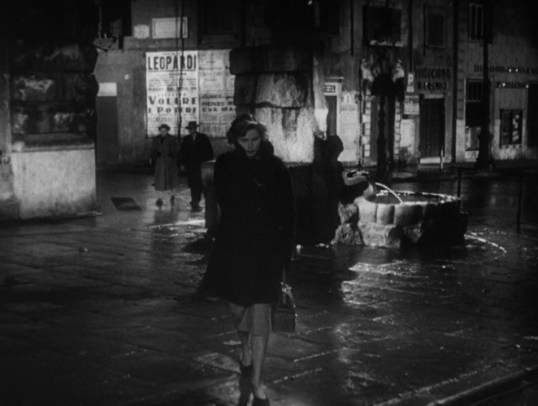
Europe ’51 (1952, dir by Roberto Rossellini, DP: Aldo Tonti)

Fear (1954, dir by Roberto Rossellini, DP: Carlo Carlini, DP: Heinz Schnackertz)

Journey to Italy, (1954, dir by Roberto Rossellini, DP: Enzo Serafin)

The Films of 2024: Lights Out (dir by Christian Sesma)


Duffy (Frank Grillo) is haunted by the past.  When he was serving in the U.S. military, he watched as his friends and fellow soldiers were killed in battle.  Now that he’s back in America, he’s haunted by the memories and the trauma has left him incapable of finding peace.  He’s angry and paranoid and restless.  He drifts around the country, making whatever money that he can as a gambler.  But when a poker game at a Los Angeles roadhouse leads to a physical confrontation, Duffy is offered a new opportunity.

Max (Mekhi Phifer) watches as Duffy defends himself and is impressed with what he sees.  Max is a ex-con who works as a recruiter for underground fight clubs.  Max recognizes the source of Duffy’s anger because Max’s brother was also a veteran who returned to America carrying the mental and physical scars of war.  Max feels that he failed his brother but maybe he can make up for it by saving Duffy’s life.  Max recruits Duffy as a fighter and gives him a place to live.  Duffy and Max soon find themselves in conflict with an evil gym owner (Dermot Mulroney, making the most of a rare villainous role) and a corrupt cop (Jaime King) who is secretly in charge of the town’s underground fight scene.

Lights Out is a fast-paced and occasionally self-aware B-movie.  I always find movies like this fascinating because they present a world where there’s an underground fight club located in every backroom and lumber yard.  Don’t get me wrong.  I’m not saying that there aren’t underground fight clubs.  I’m sure they’re out there and I’m sure that there are some dangerous people involved in promoting them.  I’m just saying that I kind of suspect that there might not be as many of them as there tends to be in the movies.  I always find it interesting that so many underground fight clubs seem to have a “fight until the death” rule.  I mean, it seems to me that would cause you to quickly run out of fighters.  I also wonder what people do when they want to start an underground fight club but they don’t have access to an abandoned warehouse or any acquaintances in the Russian Mafia.  I guess those people are just screwed.

While Mulroney and King definitely make an impression as the two over-the-top villains, Lights Out is dominated by Frank Grillo.  Grillo has been lucky enough to be blessed with a down-to-Earth screen presence that allows him to be likable while also leaving little doubt that he is someone who can handle himself in a fight.  He has the weathered good looks of some one who has seen some things but who hasn’t yet surrendered his humanity.  He’s like the modern day version of one of those wonderful character actors who used to populate the gangster movies of the 1930s.  Grillo’s tough sincerity and streetwise persona is well-used here.  John Garfield had his Body and Soul.  Frank Grillo has his Lights Out.

The TSL Grindhouse: Locked Up (dir by Jared Cohn)


The 2017 film Locked Up tells the story of Mallory (Kelly McCart).

Mallory is not having a great life.  Her wealthy father has relocated to an unnamed county in Southern Asia.  (The film was shot in Thailand but the uniforms that we see various officials wearing seem more appropriate for North Korea.)  Mallory lives with her Uncle Tommy (Jared Cohen), who is Mallory’s legal guardian while her father is off doing whatever it is that he does.  Mallory goes to a school where she is the only American and certainly the only redhead.  She is bullied to such an extent that she finally snaps and punches another student.  Mallory is promptly arrested and sentenced to the country’s version of reform school.

When Tommy and Mallory first arrive at the facility, it seems to be clean and welcoming.  The Warden (Maythavee Burapasing) appears to be friendly and compassionate.  It seems like the type of place that all of us bleeding hearts are always insisting that we need here in America.  It’s only after Tommy leaves that the truth is revealed.  The reform school is actually a prison and the Warden is a sadistic tyrant.  Mallory is tossed into a filthy cell with several other girls and ordered to strip while everyone watches.  One of Mallory’s cellmates, Kat (Katrina Grey), orders Mallory not to cry because Kat doesn’t want the sound of her tears keeping her awake at night.

After manipulating Mallory into signing a document that says she doesn’t want her uncle to visit her in prison, The Warden reveals that she enjoys watching the prisoners fight.  She informs Mallory that she has two weeks to prepare for her first fight and that, if Mallory doesn’t fight, she will be gang raped twice a week for as long as she remains in the prison.  Mallory, having no experience with fighting (despite having hit that one student hard enough to get sentenced to confinement), begs Kat to train her.  At first reluctant, Kat eventually agrees.  But can even Kat’s training prepare Mallory for a fight against the fearsome Riza (Anastasia Maslova)?

If this all sounds rather exploitive, that’s because it is.  The film hit every sordid women-in-prison cliche with the efficiency of well-wound clock.  In fact, it’s so dedicated to hitting all of the expected beats that it actually becomes a bit comical at times.  Less than a minute after she enters her cell, Mallory has another inmate talking about how cute she is and sniffing her neck.  Mallory and Kat’s fight training inevitably leads to a shower room sex scene and Kat talking about how she’s in prison because her boyfriend convinced her to be a drug smuggler.  Meanwhile, because she is determined to turn Riza into a killing machine, The Warden personally injects steroids into Riza’s neck.  It’s all so shameless that you can’t help but appreciate the film’s audacity, even if there are several scenes (most of which involve the Warden’s threat to have the guards rape Mallory) that cross the line from being merely tasteless to being actually offensive.

Locked Up is an Asylum Production.  Like most Asylum films, it makes no excuses or apologies for being what it is.  (Regardless of how you feel about their films, it’s hard not to appreciate The Asylum’s honesty.)  In most ways, Locked Up is a pretty dumb movie but director Jared Cohen keeps the action moving quickly and The Warden is a properly hissable villain.  The Warden tells Mallory that her problem is that Americans have allowed themselves to become weak and, even if the film’s portrayal of Asia makes Midnight Express‘s portrayal of Turkey seem fair and balanced, it’s hard not to feel that the Warden has a point.  Get out there and fight, America!