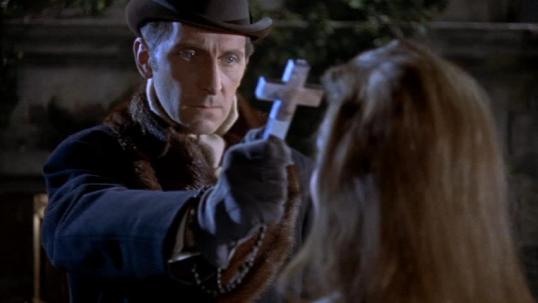
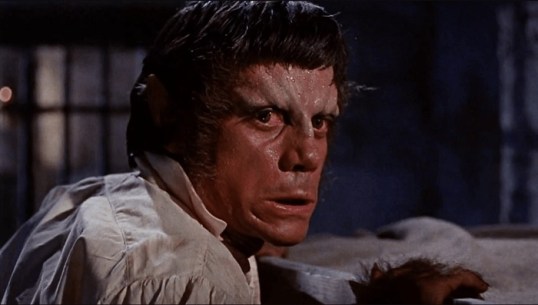
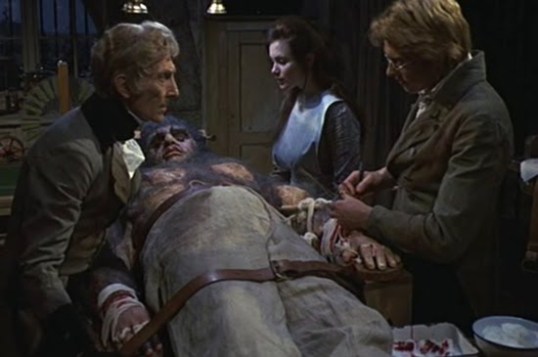
4 Shots From 4 Films is just what it says it is, 4 shots from 4 of our favorite films. As opposed to the reviews and recaps that we usually post, 4 Shots From 4 Films lets the visuals do the talking!
Today, we celebrate the 121st anniversary of the birth of the great British film director, Terence Fisher. Though Fisher worked in all genres, he is best remembered for the horror films that he directed for Hammer Studios. Along with proving that there was still an audience for horror, he also helped to make stars out of Peter Cushing and Christopher Lee.
It’s time for….
4 Shots From 4 Terence Fisher Films
The Curse of Frankenstein (1957, dir by Terence Fisher, DP: Jack Asher)
The Horror of Dracula (1958, dir by Terence Fisher, DP: Jack Asher)
The Curse of the Werewolf (1961, dir by Terence Fisher, DP: Arthur Grant)
Frankenstein and the Monster From Hell (1973, dir by Terence Fisher, DP: Brian Probyn)
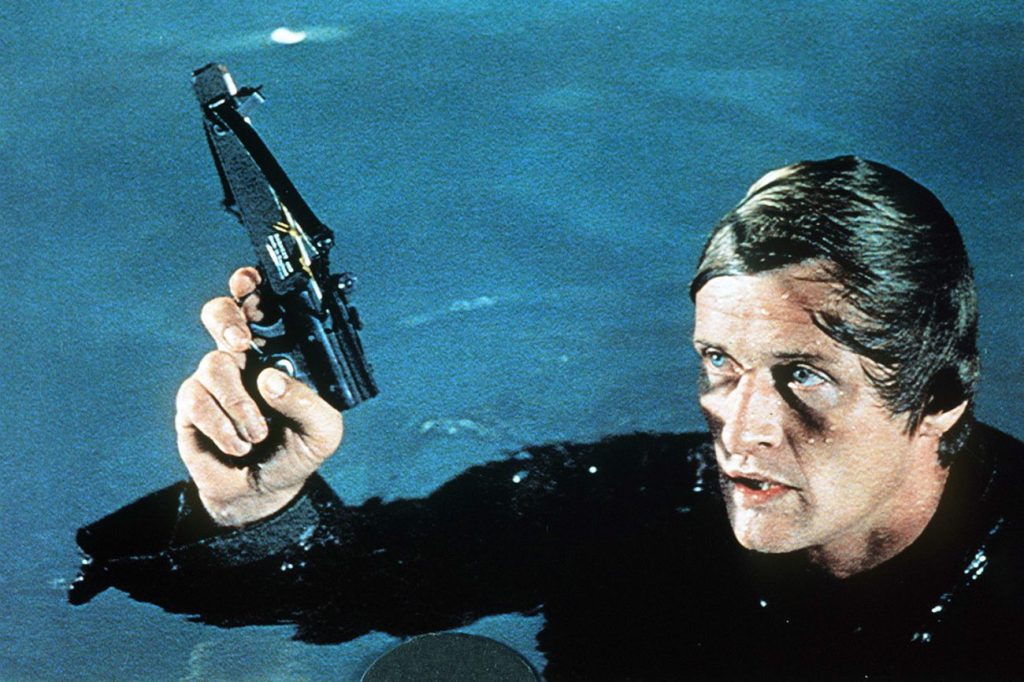
I’ve been having the best time reviewing Rutger Hauer films every Sunday. Today, I revisit THE OSTERMAN WEEKEND from 1983. Hauer made this film the year after BLADE RUNNER, so he was in the prime of his career. It also teams him up with an all-star supporting cast and master director Sam Peckinpah.
THE OSTERMAN WEEKEND opens with CIA Director Maxwell Danforth (Burt Lancaster) watching a recording of agent Laurence Fassett (John Hurt) making love to his wife. When Fassett hits the shower, two KGB assassins come in and kill her. Consumed by grief, Fassett hunts down the assassins and uncovers a Soviet spy network known as Omega. Fassett has identified three American men as top Omega agents… television producer Bernard Osterman (Craig T. Nelson with an awful, glued-on mustache), plastic surgeon Richard Tremayne (Dennis Hopper) and stock trader Joseph Cardone (Chris Sarandon). Rather than arrest the men and risk alarming the KGB, Fassett proposes to director Danforth that they try to turn one of the three men to the side of the West in hopes that this person will provide the information needed to bring down the Omega network.
Enter controversial television journalist John Tanner (Rutger Hauer). Fassett knows that Tanner has been close friends with Osterman, Tremayne, and Cardone since all four attended Berkeley together, and he believes that Tanner can successfully turn one of them. Although initially highly skeptical, the super patriotic Tanner begins to change his mind when Fassett shows him videotaped evidence of his old friends talking with a Russian agent in various capacities. Tanner reluctantly agrees to try turn one of his friends at their annual “Osterman Weekend” reunion which is coming up that week at Tanner’s house. He does have one condition… that Danforth, the CIA director will appear as a guest on his show. Danforth agrees to this condition. So that weekend, Tanner and his wife Ali (Meg Foster) welcome their old friends and their wives into their home, while Fassett has video camera equipment installed and hangs out in a van spying on the festivities. There’s no doubt it will turn out to be an awkward weekend, and you can’t help but wonder if Fassett may have more sinister motives than he’s letting on.
I’ll go ahead and say that I had a great time watching THE OSTERMAN WEEKEND for the first time in thirty-plus years. I’ve often read a criticism that the plot of this film is “incomprehensible.” Based on a book by Robert Ludlum, the story is purposely designed to keep you guessing up until its big reveal, but I didn’t have any trouble following it all. I’d say the biggest issue is that it doesn’t really stand up under close scrutiny. Some of the actions of the various characters don’t always make a lot of sense in light of the movie’s big twist near the end, but that didn’t take away from my personal enjoyment of the film. I just went along with the plot wherever it took me, and that was easy for me to do based on the cast that we have assembled. Any movie that includes Rutger Hauer, Burt Lancaster, John Hurt, Craig T. Nelson, Dennis Hopper, Chris Sarandon, Meg Foster, Helen Shaver, and Candy Yates will get a watch from me. Heck, Tim Thomerson even shows up as a motorcycle cop at one point. It’s a who’s who of excellent actors who always make their films watchable. In my opinion, it’s Hauer, Hurt, Foster and Nelson who do the most with their characters and take home the acting honors for their work here. Burt Lancaster is one of the all-time greats, and he does a good job, but it’s a one note character so there isn’t much he can do. Hopper and Sarandon are also fine, but their characters don’t really stand out. Their screen wives, Shaver and Yates, seem to be here mostly for eye candy because their tops are off for an abnormally large amount of their screen time! Speaking of eyes, the Hauer / Foster team up has to be on the list of the most striking combo pair of eyes in the history of cinema. Foster has the most noticeable eyes of any actress I’ve ever seen.
This is the great Sam Peckinpah’s final film, and I don’t agree with the people who complain that his career ended with a whimper. THE OSTERMAN WEEKEND is not in the same league as THE WILD BUNCH, RIDE THE HIGH COUNTRY, THE STRAW DOGS, or THE GETAWAY, but not many films are, including most of his own. And this movie is certainly visionary in one area, and that is found in its main theme about the damage that can be done with the manipulation of the media, including physical media, like videotape and audiotape. The primary driver of the film from the very beginning to the very end is the danger of false information that looks and sounds true. I can promise you that as I type this, and as you read it, there are people all over this world trying to make lies sound or appear true so they can share them on the news and on social media. I invite you to question everything you read, watch or hear on any outlet where you receive your news. Peckinpah’s final film beats this into our heads, just 40 years earlier.
Sam Peckinpah was known for his stylish and violent action sequences. THE OSTERMAN WEEKEND is more of a paranoid thriller, but it does feature some good action. There’s a chase sequence early in the film where Hauer’s wife and son are kidnapped, and he’s forced to commandeer the truck of honeymooners John Bryson (a Peckinpah regular) and Anne Haney (Greta from LIAR LIAR) to take off in hot pursuit. The scene features Peckinpah’s signature stunts, slow motion, and a myriad of cool tracking shots. There’s another fun scene where Hauer is using a baseball bat to defend himself against his pal Craig T. Nelson, who’s been shown to be a martial arts expert. It’s an exciting scene even if Hauer does get his ass kicked, in slow motion no less. And I always appreciate a movie with some good crossbow action, especially when it’s being wielded by a lady. The poster of the film prominently features a lady with a crossbow and we get to see Meg Foster step into that role in the actual film. She gets one especially gruesome, blood gurgling kill.
Overall, I think THE OSTERMAN WEEKEND is a good film. It is not nearly as bad as the critics of the time labeled it, and it’s not as good as Peckinpah’s best work, but you can certainly do a lot worse. It has a great cast, a timely message, a lot more sex and nudity than I remembered, and some cool action sequences. It’s definitely worth a watch!
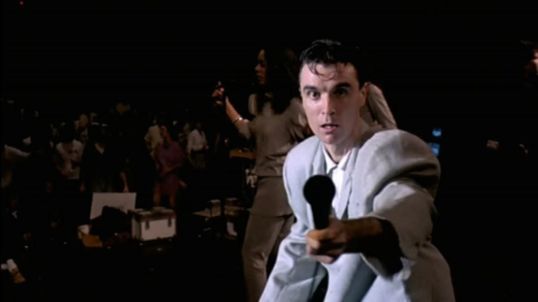
Today’s scene that I love comes from the Jonathan Demme-directed concert film, 1984’s Stop Making Sense. In this scene, brilliantly directed and edited by Demme, Talking Heads perform Life During Wartime. I love the energy in this performance. I’d love to be Tina Weymouth, able to play perfect bass and run in place at the same time.
4 Shots From 4 Films is just what it says it is, 4 shots from 4 of our favorite films. As opposed to the reviews and recaps that we usually post, 4 Shots From 4 Films lets the visuals do the talking!
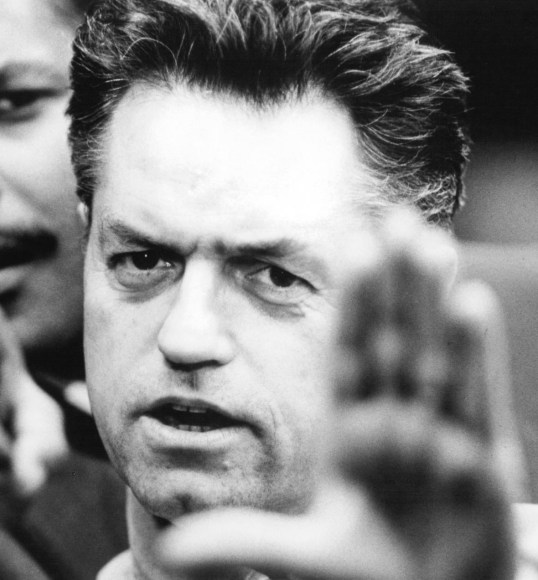
The late, great director Jonathan Demme was born 81 years ago today. It’s time for….
4 Shots From 4 Jonathan Demme Films
Stop Making Sense (1984, dir by Jonathan Demme, DP: Jordan Cronenweth)
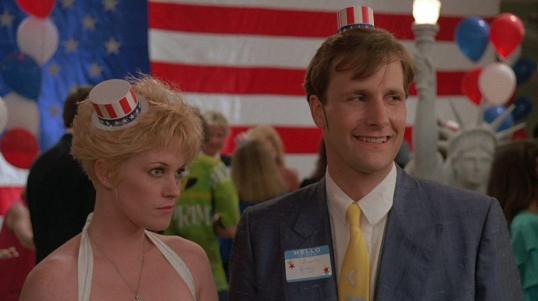
Something Wild (1986, dir by Jonathan Demme, DP: Tak Fujimoto)
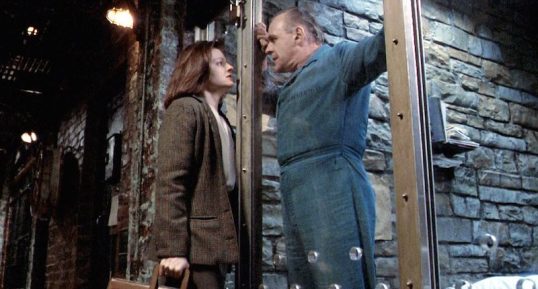
The Silence Of The Lambs (1991, dir by Jonathan Demme, DP: Tak Fujimoto)
Rachel Getting Married (2008, dir by Jonathan Demme, DP: Declan Quinn)
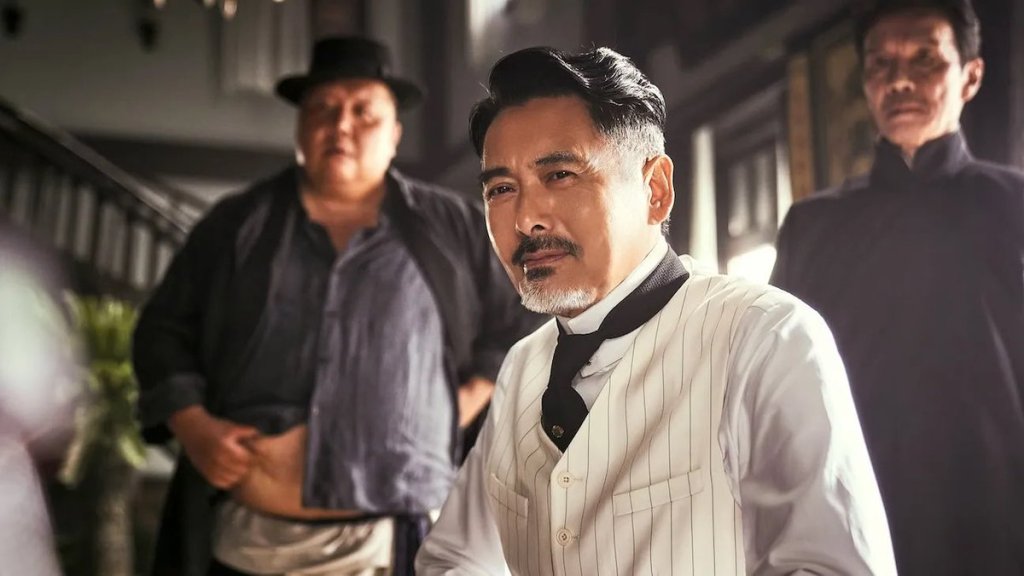
I was pleasantly surprised when I saw that a new movie co-starring Chow Yun-Fat was released in time for the Chinese New Year. Chow doesn’t work that much these days, so anytime he’s in a new movie, it’s an important event for me. And just look how cool he still looks in the picture above. The man is turning 70 on May 18th, for pete’s sake!
I was unaware of the DETECTIVE CHINATOWN franchise when I noticed Chow’s participation in this film on IMDB. It has been a huge box office hit as part of this year’s Chinese Lunar New Year festivities. DETECTIVE CHINATOWN 1900 is the 4th installment in the series that actually stars actors Baoqiang Wang and Liu Horan as Gui and Qin Fu, respectively. In this installment, the duo investigates the murder of a white woman in San Francisco’s Chinatown in 1900. Chow seems to be playing some sort of Chinatown boss in this film that also features John Cusack as the U.S. Congressman whose daughter is murdered. It looks kind of silly, but hopefully it’s also a lot of fun. I’ll definitely be checking this film out, and at least one of the other installments in preparation.
As some of our regular readers undoubtedly know, I am involved in a few weekly live tweets on twitter. I host #FridayNightFlix every Friday, I co-host #ScarySocial on Saturday, and I am one of the five hosts of #MondayActionMovie! Every week, we get together. We watch a movie. We tweet our way through it.
Tonight, at 9 pm et, Deanna Dawn will be hosting #ScarySocial! The movie? 2004’s The Grudge!
If you want to join us this Friday, just hop onto twitter, start the movie at 9 pm et, and use the #ScarySocial hashtag! I’ll be there tweeting and I imagine some other members of the TSL Crew will be there as well. It’s a friendly group and welcoming of newcomers so don’t be shy.
Today is Kesley Grammer’s 70th birthday. In order to celebrate this event, here is an amazing 8-second scene from one of my favorite films, 2020’s Money Plane!
Charles Bronson starred in four movies and one TV show in 1958. Two of those movies were produced by Harold Knox, written by Louis Vittes, and directed by Gene Fowler, Jr. The first of the two films was SHOWDOWN AT BOOT HILL, an excellent low budget western that featured Bronson as a bounty hunter with a chip on his shoulder and love in his heart. The second film was GANG WAR.
In GANG WAR, Charles Bronson plays Alan Avery, a high school teacher in Los Angeles who’s walking home one night and happens to witness a gangland killing. He calls the police to report the murder, but he doesn’t want to get any further involved so he doesn’t give them his name. Avery was on his way home from a trip to the pharmacy where he had picked up a prescription for his pregnant wife (Gloria Henry) who is suffering from migraines. In the stress of the moment, he left the pharmacy sack in the phone booth and the police are able to track him down to his home. After being pressed by the police, Avery reluctantly agrees to testify. He’s a great witness as he’s able to give the police a description of the car and its license plate number. His information leads to the arrest of Joe Reno, the second in command to mobster Maxie Meadows (John Doucette). Maxie sends his attorney Bryce Barker (Kent Taylor) over to the police station to see Captain Finch. Finch happens to be on Maxie’s payroll, and he immediately tells Barker about the witness. He even leaks it to the press so they can run a story revealing Avery’s name and address. Maxie would prefer to buy Avery’s silence, but he also wants a little insurance, so he sends his punch drunk henchman Chester over to slap around Avery’s wife. This order is akin to asking Lennie Small from OF MICE AND MEN to go play with some puppies. Simple-minded Chester proceeds to kill Mrs. Avery. When Avery comes home and finds his wife dead, he heads directly to Maxie’s house to kill him. The cab driver who took Avery to Maxie’s place just happened to see his gun, so he called the cops. Just before Avery can squeeze off a kill shot, the police show up and arrest him. Pissed that Avery was able to get so close to killing him, Meadows puts an actual hit out on him this time. Will the high school teacher be able to survive his battle against the mob?!!
(Note: The analysis below ventures into spoiler territory for both GANG WAR and SHOWDOWN AT BOOT HILL. You may want to watch these films prior to reading the rest of the review.)
As a lifelong fan of Charles Bronson, I really appreciate his work with director Gene Fowler, Jr. in 1958. Fowler recognized Bronson’s charismatic screen presence, but he also recognized something deeper in the legendary icon… his heart. SHOWDOWN AT BOOT HILL seemed to be giving us Bronson as a typical western hero, only to reverse course and turn Bronson into a romantic lead who would choose to throw down his guns so he could establish roots in a community and spend his life with the woman he loves. In a similar way, GANG WAR seems to be setting Bronson up to be a vigilante, not much different than the type of character he would be portraying throughout the 70’s and 80’s. But when 70’s and 80’s Bronson would be pulling his trigger, Fowler presents a more thoughtful Bronson who recognizes that the best revenge can sometimes be in letting someone live with the consequences of their own decisions. This allows him to lower his gun, walk away and continue his life free of the guilt and the legal consequences that would undoubtedly come with taking another person’s life. This decision honors his wife’s legacy much more than murder and a lifetime in jail ever would.
There are many good performances in this little gem. Bronson may not have been a “star” when this film was made, but there is no doubt that he was ready. He simply commands every frame that he appears in from the beginning to the end. John Doucette and Kent Taylor are also memorable as the gangster and his paid off lawyer, respectively. Doucette’s Maxie Meadows is certainly a stereotype of the gangsters in TV’s and movies at the time, but he plays the part well, saving his very best for his last moments of the film. Kent Taylor has the movie’s best story arc. When we meet him, he’s an alcoholic who can’t stand what he’s allowed himself to become, yet he continues to run every time Maxie calls. It’s a strong moment when he decides he won’t do it anymore. And Jennifer Holden is simply gorgeous as Marie, Maxie’s woman. Speaking of nice scenery, it was also fun seeing a Los Angeles that included landmarks like the Capitol Records Building and the old Nickodell Restaurant. So much of the action in GANG WAR takes place against these iconic backdrops, and for a guy who’s never been to LA, seeing these places again almost makes me feel like a resident.
Overall, while GANG WAR does feel like an old fashioned 50’s movie, it has plenty of things to recommend it, not the least of which is an excellent performance from a young Charles Bronson. At a 75 minute run time, it’s definitely worth a viewing.
As some of our regular readers undoubtedly know, I am involved in a few weekly live tweets on Twitter and Mastodon. I host #FridayNightFlix every Friday, I co-host #ScarySocial on Saturday, and I am one of the five hosts of #MondayActionMovie! Every week, we get together. We watch a movie. We tweet our way through it.
Tonight, at 10 pm et, #FridayNightFlix presents John Carpenter’s Big Trouble In Little China!
If you want to join us this Friday, just hop onto twitter, start the movie at 10 pm et, and use the #FridayNightFlix hashtag! It’s a friendly group and welcoming of newcomers so don’t be shy.
Big Trouble In Little China is available on Prime! See you there!
1992’s The Player tells the story of Griffin Mill (Tim Robbins).
It’s not easy being Griffin Mill. From the outside, of course, it looks like he has the perfect life. He’s a studio executive with a nice house in Hollywood. He’s young. He’s up-and-coming. Some people, especially Griffin, suspect that he’ll be the president of the studio some day. By day, he sits in his office and listens to pitches from respected screenwriters like Buck Henry. (Henry has a great idea for The Graduate II!) During the afternoon, he might attends dailies and watch endless takes of actors like Scott Glenn and Lily Tomlin arguing with each other. Or he might go to lunch and take a minute to say hello to Burt Reynolds. (“Asshole,” Burt says as Griffin walks away.) At night, he might go to a nice party in a big mansion and mingle with actors who are both young and old. He might even run into and share some sharp words with Malcolm McDowell.
But Griffin’s life isn’t as easy as it seems. He’s constantly worried about his position in the studio, knowing that one box office failure could end his career. He fears that a new executive named Larry Levy (Peter Gallagher) is after his job. Two new screenwriters (Richard E. Grant and Dean Stockwell) keep bugging him to produce their downbeat, no-stars anti-capitol punishment film. His girlfriend (Cynthia Stevenson) wants to make good movies that mean something. Even worse, someone is sending Griffin threatening notes.
It doesn’t take long for Griffin to decide that the notes are coming from a screenwriter named Dave Kahane (Vincent D’Onofrio). Griffin’s attempt to arrange a meeting with Dave at a bar so that Griffin can offer him a production deal instead leads to Griffin murdering Dave in a parking lot. While the other writers in Hollywood mourn Dave’s death, Griffin starts a relationship with Dave’s artist girlfriend (Great Scacchi) and tried to hide his guilt from two investigating detectives (Whoopi Goldberg and Lyle Lovett). Worst of all, the notes keep coming. The writer, whomever they may be, is now not only threatening Griffin but also seems to know what Griffin did.
After spend more than a decade in the industry wilderness, Robert Altman made a critical and commercial comeback with The Player. It’s a satire of Hollywood but it’s also a celebration of the film industry, featuring 60 celebrities cameoing as themselves. Everyone, it seems, wanted to appear in a movie that portrayed studio execs as being sociopathic and screenwriters as being whiny and kind of annoying. The Player both loves and ridicules Hollywood and the often anonymous men who run the industry. Largely motivated by greed and self-preservation, Griffin may not love movies but he certainly loves controlling what the public sees. In the end, only one character in The Player sticks to her values and her ideals and, by the end of the movie, she’s out of a job. At the same time, Griffin has a social life that those in the audience can’t help but envy. He can’t step out of his office without running into someone famous.
The Player is one Altman’s most entertaining films, with the camera continually tracking from one location to another and giving as a vision of Hollywood that feels very much alive. Tim Robbins gives one of his best performances as Griffin Mill and Altman surrounds him with a great supporting cast. I especially liked Fred Ward as the studio’s head of security. With The Player, Altman mixes melodrama with a sharp and sometimes bizarre comedy, with dialogue so snappy that the film is as much a joy to listen to as to watch. That said, the real attraction of the film is spotting all of the celebrity cameos. (That and cheering when Bruce Willis saves Julia Roberts from certain death.) Altman was a director who often used his films to explore eccentric communities. With The Player, he opened up his own home.