“Neverending Journey” by Nobuo Uematsu from Lost Odyssey is one of those tracks that just pulls you right into the game’s vibe without trying too hard. It kicks off super chill with soft strings and light woodwinds, creating this mellow, reflective mood like you’re wandering through old memories that won’t fade. The orchestral start feels patient and open, giving every note space to settle in before things pick up.
Then comes that smooth shift where the electric guitar riffs crash in — bold, distorted, and full of grit, but it flows naturally from the gentle opening. It’s like Uematsu’s flipping the switch from quiet nostalgia to raw determination, blending classical swells with rock edge in a way that screams the game’s themes of endless struggle. The guitar doesn’t steal the show; it amps up the emotion, turning introspection into something with real forward drive.
That mix is why the track sticks with you — Uematsu nails the immortal wanderer’s paradox, weary but unbreakable. From serene strings to guitar-fueled resolve, it captures Kaim’s story perfectly, making you feel the weight and hope of a journey with no end. It’s a standout that proves game music can hit as deep as any epic soundtrack.
“When people die, they just… go away. If there’s any place a soul would go… It’s in your memories. People you remember are with you forever.” – Kaim Argonar
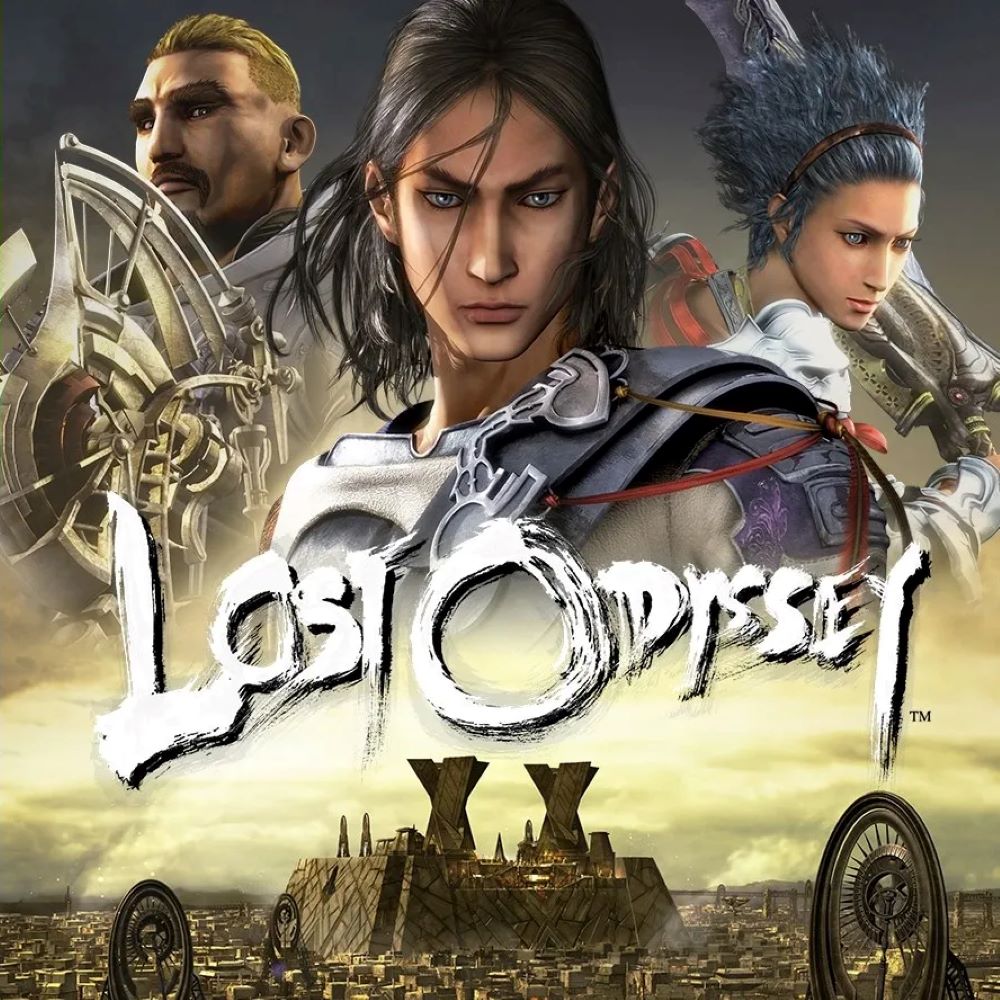
Lost Odyssey stands out as one of those RPGs from the late Xbox 360 era that doesn’t scream for attention with flashy mechanics or boundary-pushing innovations, but instead draws you in through its deeply introspective storytelling and a commitment to emotional depth that feels almost defiant in its restraint. Developed by Mistwalker’s Hironobu Sakaguchi—the mastermind behind the original Final Fantasy games—this title arrived in 2007 as a love letter to classic JRPG traditions, complete with turn-based combat, sprawling world exploration, and a narrative centered on immortality’s quiet horrors. It’s a game that rewards patience, asking players to linger in moments of melancholy rather than rushing toward bombastic climaxes, and in today’s landscape of hybrid action-RPGs like Clair Obscur: Expedition 33, it feels both timeless and a touch nostalgic.
The protagonist, Kaim Argonar, is an immortal wanderer who’s lived for over a thousand years, his memories eroded by time like sand slipping through fingers. This setup immediately sets Lost Odyssey apart, turning what could have been a rote hero’s journey into something far more personal and haunting. Kaim isn’t driven by prophecy or destiny in the typical sense; he’s haunted by fragments of lives long lost, piecing together his past while grappling with the present. Accompanied by a party of fellow immortals and mortals who bring their own baggage—Seth, a fierce queen-turned-revolutionary; Jansen, the wisecracking raconteur and black magic user; Mack, Cooke’s adventurous brother and a spirit magic specialist; Cooke, the earnest white mage sister; and others who evolve from archetypes into fully fleshed-out companions—the story unfolds across a world on the brink of magical and technological upheaval. Wars rage between nations like the Republic of Uhra and the Kingdom of Goht experimenting with dangerous “aether” energy, ancient gaia cults stir forgotten powers from the earth’s core, and a comically over-the-top villain named Gongora pulls strings from the shadows with his dream-manipulating sorcery. But it’s the immortals’ shared curse—living forever while everyone else fades—that grounds everything in raw, relatable humanity, forcing reflections on attachment, regret, and the passage of time.
What truly elevates the narrative are the “Thousand Years of Dreams,” a collection of over thirty short story interludes scattered throughout the game like hidden treasures, all penned by acclaimed Japanese author Kiyoshi Shigematsu. These vignettes replay key moments from Kaim’s (and later other immortals’) pasts: a father’s quiet desperation as his family starves during a harsh winter, a lover’s betrayal amid wartime chaos that shatters trust forever, a child’s innocent wonder abruptly ended by sudden violence in a peaceful village. They’re presented as dream sequences with minimal interactivity—just reading the poignant prose accompanied by subtle animations and ambient sounds—but their impact is profound, blending poetic introspection with raw emotional punches that make loss feel visceral and immediate. Shigematsu, known for his family-centered novels like Naifu and Bitamin F, infuses these tales with his signature themes of everyday struggles, parental love, and quiet resilience, drawing from his own life experiences such as overcoming a childhood stammering disorder. These aren’t mere filler; they mirror and deepen the main plot’s themes of memory, fleeting bonds, and the futility of outliving joy, often landing harder than the epic set pieces like airship chases or gaia temple collapses. In a fair assessment, though, not every dream hits the mark equally—some lean repetitive in their focus on tragedy and separation, and the heavy reliance on text-heavy exposition can test players who prefer more visual or interactive storytelling over contemplative reading.
Comparatively, the core plot treads more familiar JRPG ground, with globe-trotting quests to collect six magic seeds capable of restoring the world’s fading magic, infiltrate enemy strongholds like the White Citadel, and unravel a conspiracy involving dreamless immortals, experimental magic tech, and an impending apocalypse. It’s competently paced for its 40-60 hour runtime (longer for completionists), building to satisfying reveals about Kaim’s origins, the party’s interconnected fates, and the true nature of immortality in a world where magic is dying. Yet it lacks the moral ambiguity that makes contemporaries like Clair Obscur: Expedition 33 so gripping—that game thrives on tough choices where apparent triumphs often sow seeds of future doom, forcing players to question if their “expedition” against the Paintress is true heroism or just delayed hubris. Lost Odyssey flirts with similar existentialism—Kaim repeatedly forms bonds only to anticipate their inevitable fraying—but ultimately resolves in a more optimistic, collective salvation arc centered on hope and reunion. This makes it comforting for fans of straightforward fantasy epics with clear good-vs-evil lines, yet somewhat safe for a tale about eternal life, where deeper philosophical dives into immortality’s ethics, like the morality of intervening in mortal affairs, could have pushed boundaries further without alienating its audience.
The supporting cast shines as a counterbalance, with banter during airship travels and camp rests that humanizes even the most ancient immortals. Take Gongora, the flamboyant antagonist whose Shakespearean monologues, reality-warping sorcery, and personal grudge against his immortal brethren make him a delightfully theatrical foe worth rooting against. Or the mortal siblings Cooke and Mack, whose dynamic starts as lighthearted comic relief—pranks, inventions gone wrong, sibling squabbles—with Mack’s adventurous spirit driving bold escapades while Cooke provides steady white magic support, maturing into poignant growth arcs as they confront loss and responsibility together. Jansen brings levity as the wisecracking raconteur, spinning tales and unleashing black magic with reluctant flair that often steals scenes during downtime. Party chemistry fosters organic moments, like shared reflections on recent dreams or lighthearted ribbing during skill training, that deepen player investment over the long haul. Not all characters resonate equally; some, like the naive inventor Littleton or the initially whiny prince Tolten, lean into tropes without much subversion, leading to occasional eye-rolls amid the stronger portrayals from Seth’s fiery leadership. Still, the innovative “Immortal” skill-sharing system, where immortals permanently absorb abilities from fallen mortals via “Skill Link” beads, ingeniously reinforces the core theme: eternity doesn’t preclude learning, growth, or change through relationships with the temporary.
Combat embodies Lost Odyssey‘s old-school soul, sticking faithfully to turn-based roots with thoughtful layers that demand strategy over button-mashing reflexes. Battles unfold on a grid-like interface where positioning is crucial—front-row tanks like Kaim absorb hits for backline healers like Cooke and her white magic or mages like Jansen with his black magic arsenal, while the signature “Ring” system adds tension to every basic attack or spell: time your button presses precisely to hit colored rings for boosted damage, critical hits, or multi-hit combos. Condition management becomes key, as poison, sleep, paralysis, and weakness can derail even well-planned fights, encouraging thorough prep with items, protective spells, and the flexible “Skill Link” beads that let any character equip enemy-learned abilities like fire immunity or poison breath. Boss encounters ramp up dramatically with multi-phase patterns, status ailment spam, massive HP pools, and environmental hazards, rewarding exploitation of elemental weaknesses (fire vs. ice foes, etc.), party swaps, and layered buffs/debuffs for tense, chess-like victories.
Yet fairness demands noting the system’s notable flaws, which haven’t aged gracefully. Random encounters populate every screen with alarming density, leading to grindy slogs in weaker areas before you unlock enemy visibility via skills or items, and early-game pacing suffers from these constant interruptions amid tutorial-heavy chapters. Load times between battles and zone transitions feel archaic by modern standards—often 10-20 seconds on original hardware—and the lack of auto-battle, speed-up toggles, or robust fast travel exacerbates repetition for completionists chasing ultimate weapons, all 33 dreams, or optional gaia quests. Contrast this with Clair Obscur‘s slick hybrid combat, which fuses turn-based planning with real-time dodges, parries, and QTEs in a fluid “expedition” rhythm inspired partly by Lost Odyssey itself—every fight, from trash mobs to epic bosses, pulses with immediacy and the “dial of fate” mechanic that turns timing into life-or-death dance steps. Lost Odyssey prioritizes cerebral, menu-driven setups—buff-stacking, weakness chains, formation tweaks—over kinetic flair, appealing deeply to tacticians who savor the deliberate pace but alienating those craving Clair-style adrenaline and fluidity. It’s a classic strategic depth versus modern dynamic polish tradeoff, and your mileage will vary sharply based on tolerance for 2007-era JRPG rhythms.
Exploration weaves together standard JRPG fare with moments of quiet wonder—roaming a vast overworld via massive airship (the Nautilus), delving into multi-floor dungeons with hidden chests and switch puzzles, solving environmental riddles involving weight balances, light beams, or wind currents—but injects personality through diverse biomes: mist-shrouded ancient ruins teeming with spectral foes, frozen tundras where blizzards obscure paths, volcanic badlands with lava flows and ash-choked air. Sidequests expand the lore meaningfully, like aiding immortal Seth’s rebel faction in underground networks, delving into sacred gaia shrines for permanent power-ups, or hunting elusive immortal encounters for rare skills, though many lesser ones boil down to repetitive fetch tasks or escort missions. The world map’s sheer scale impresses, hiding optional superbosses like the immortal-hunting Black Knights, treasure troves in hard-to-reach ledges, and secret dream triggers, but frequent backtracking without comprehensive fast travel can drag, especially post-game. Presentation captures the Xbox 360’s graphical peak for its time: cinematic FMV cutscenes rival Hollywood trailers in scope and polish, character models boast fluid animations, expressive facial captures (rare for 2007), and detailed costumes, while environments blend stunning pre-rendered backgrounds with real-time lighting and particle effects for moody, immersive atmospheres. Draw distance limitations, occasional texture pop-in, and lower-res models show their age on HD displays, but the art direction—shadowy, desaturated palettes evoking faded memories and encroaching oblivion—holds up remarkably well.
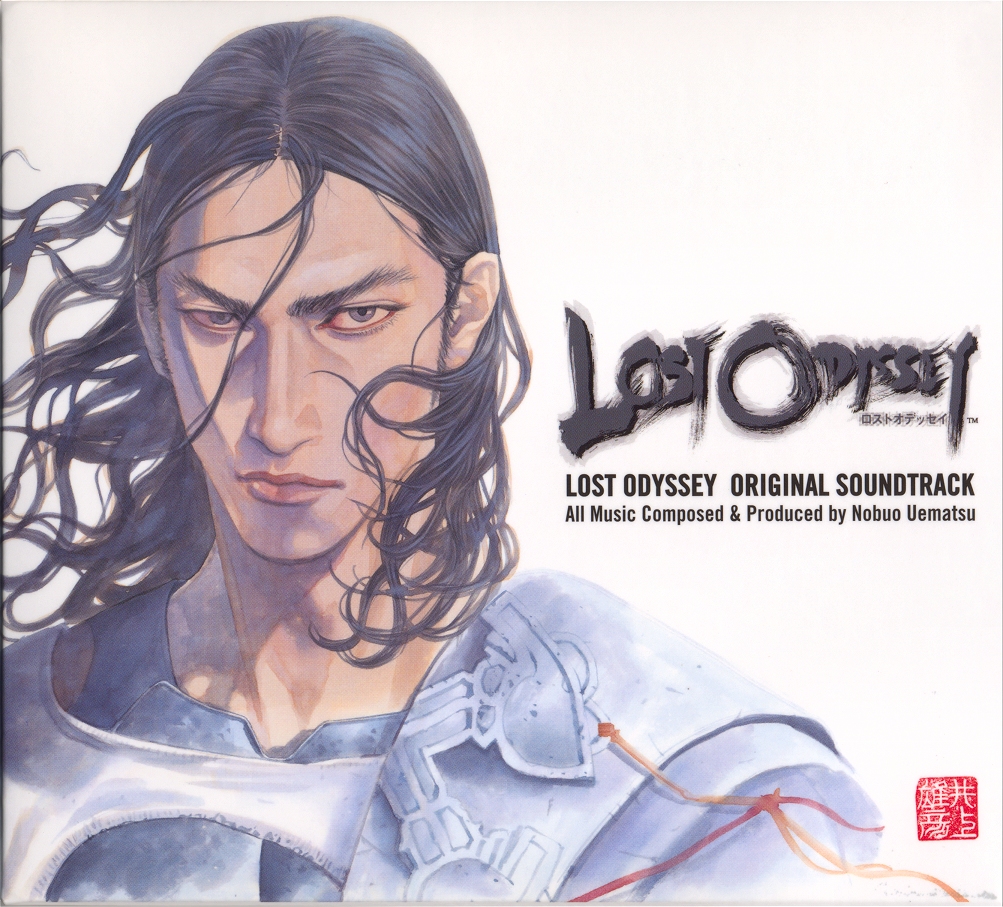
Nobuo Uematsu’s soundtrack remains the undisputed MVP, a masterclass in emotional orchestration blending sweeping orchestral swells with intimate piano solos and ethnic instrumentation. Battle themes like the pulse-pounding “Battle with Immortal” or tense “Boss Battle” drive adrenaline without overpowering, dream sequences float on delicate harpsichord, strings, and solo vocals for heartbreaking intimacy, and overworld motifs evoke vast, lonely skies over crumbling civilizations. It’s Uematsu post-Final Fantasy at his most evocative and personal, rivaling series highs and clearly influencing modern scores—direct echoes resonate in Clair Obscur‘s painterly OST, where swelling choirs and haunting flutes underscore expedition perils with a similar blend of grandeur, sorrow, and fragile hope. Voice acting offers a mixed bag: highs like Kaim’s gravelly, world-weary delivery from Jeff Kramer or Seth’s commanding fire from Sarah Tancer contrast with occasional stiff accents and wooden line reads in lesser roles. The English localization shines brightest in Shigematsu’s dreams—preserving nuanced melancholy and cultural subtlety—but occasionally clunks in casual banter or expository dumps.
Pacing represents Lost Odyssey‘s biggest double-edged sword, perfectly suiting its themes of slow erosion and reflection but testing modern attention spans. The game’s deliberate rhythm manifests in long linear chapters (Disc 1’s tutorial stretch, Disc 3’s sidequest marathon), mandatory backtracks to missed dreams or seeds, and optional hunts that balloon playtime to 70+ hours without always advancing the central plot. Mid-game lulls, particularly after major reveals like the immortals’ gathering or Gongora’s betrayal, lean heavily on grinding and collection, demanding commitment from players not fully hooked by the dreams. Technical quirks persist too: occasional frame drops in massive battles, finicky ring input timing on controllers, and long save/load cycles remind players of its 2007 origins, though Xbox One/Series backward compatibility smooths some edges with Auto HDR and FPS boosts. The game earned widespread praise for its story depth, Uematsu’s music, and emotional resonance, tempered by critiques of its dated combat pacing, grind, and conservative design in an era shifting toward action hybrids.
Against Clair Obscur: Expedition 33, Lost Odyssey feels like the contemplative grandfather to a bold, innovative successor—Clair‘s tighter 20-30 hour sprint packs nonlinear branching choices, grotesque evolutions of its turn-based system, and a fractured, painterly world where expeditions literally rewrite reality through “painted” fates, with its combat’s “dial of fate” parries making every decision feel consequential and irreversible. Lost Odyssey sprawls longer and commits to strict linearity to pace out Shigematsu’s dreams methodically, trading reactive choice systems for patient, interior reflection on grief. Both excel at probing mortality’s sting—Clair through visceral, grotesque horrors and ambiguous victories, Lost Odyssey via intimate, lived-through tragedies—but Mistwalker’s effort prioritizes small-scale, personal grief over systemic reinvention or high-stakes moral quandaries.
Ultimately, Lost Odyssey endures as a balanced, heartfelt gem for JRPG purists and story enthusiasts: stellar writing from Kiyoshi Shigematsu anchors a solid but unflashy package, with Uematsu’s music, immortal hooks, and dream vignettes lingering longest in the mind. It’s not flawless—grindy encounters, safe plotting, and archaic pacing hold it from undisputed masterpiece status—but its emotional core crafts a rare resonance, blending melancholy fantasy with subtle wisdom about time’s toll. In an era dominated by Clair-like hybrids blending action and choice, it reminds why pure turn-based tales still captivate, offering a somber, patient journey for those willing to dream along with Kaim’s thousand years.
We’re now two-thirds into the 33-day Shigematsu Kiyoshi short story marathon and for the last third I decided to kick it off with my third favorite track from the Lost Odyssey soundtrack. The latest “Song of the Day” is the simple and playful tune “Small Recollections”.
This track gets used a lot in the game’s collected dream-memories. It’s usually used in concert with other music when the dream involves children Kaim has met through his 1000-year and more journey as the eternal warrior. I like this song for it’s simplicity. It’s a solo piece done on a calliope and made to sound like it’s coming from a child’s music box. It’s really quite a great use of this instrument and one I’ve rarely heard used in a soundtrack for a film or game.
It’s hard not to listen to this song and not think of the simpler times when one was a kid and the biggest worry in our mind’s was whether we’d get to eat ice cream, cake or both at a birthday party. “Small Recollections” is definitely something one can hear at a fair or a carnival and always something that would make one smile like a kid again.
The latest “Song of the Day” is another favorite music track from the Lost Odyssey soundtrack by Uematsu Nobuo. The title of this particular track is “Eclipse of Time” and one of the most beautiful pieces in the game’s soundtrack.
“Eclipse of Time” becomes a sort of motif for one of the game’s characters, Queen Ming Numara who also happens to be another immortal like the game’s main protagonist, Kaim. We first hear this music playing when we enter her Ming’s room and it creates an ethereal musical backdrop which accentuates the Queen Numara’s eternal beauty. The track is quite simply played as a harp solo and it’s a rare thing to hear the harp as the main instrument in most game soundtracks. It’s Uematsu’s inclusion of such an instrument which raises the Lost Odyssey soundtrack to classic status.
This particular track reappears time and time again in different version and tempo throughout the game. It usually means that Queen Numara is either the focus of the scene or something she’s involved in a way. Unlike “A Return, Indeed…” this song doesn’t really appear in any of Kaim’s 33 dream-memories which is a shame, but understandable since the piece doesn’t really match the tone of Kaim’s dreams.
Of all the pieces of music in the Lost Odyssey soundtrack this is the one I can listen to over and over and not get tired of it.
While “Hanna’s Departure” was my favorite dream sequence from Lost Odyssey the rest had their own emotional power and for some were more relevant. What I failed to mention in the Day 01 post was just who the person named Kaim being mentioned in the dream. Kaim is the main protagonist in the game and he’s an immortal who has lost all the memories of experiences gathered through 1000-years of journeying the world he’s in.
These dreams, when activated in the game through a fortuitous encounter with someone or witnessing a seemingly random event, begin to add layers of complexities to the Kaim character and what he had experienced throughout the millenia as wandering immortal warrior.
Day 02’s dream sequence is quite relevant to today’s times as we see Kaim re-live a memory of a warrior returning from 3 years of war and battles. We see how Kaim’s reaction to this battle-weary veteran differs from that of a younger man’s who has never experienced war first-hand. With tens of thousands of soldiers, airmen and sailors returning from battlefields in Iraq and Afghanistan it’s hard not to find a link with the experiences those men and women went through with the prospect of returning to their loved ones a major reason for them to stay alive and do what they had to do to accomplish that goal.
A Hero’s Journey
Alone in a crowd of rugged men, nursing his drink in the far corner of the old post town’s only tavern: Kaim.
A single man strides in through the tavern door. Massively built, he wears the garb of a warrior. His soiled uniform bespeaks a long journey. Fatigue marks his face, but his eyes wear a penetrating gleam—the look of a fighting man on active duty.
The tavern’s din hushes instantly. Every drunken eye in the place fastens on the soldier with awe and gratitude.
The long war with the neighboring country has ended at last, and the men who fought on the front lines are returning to their homes. So it is with this military man.
The soldier takes a seat at the table next to Kaim’s, and downs a slug of liquor with the forcefulness of a hard drinker—a man who drinks to kill his pain.
Two cups, three, four…
Another customer approaches him, bottle in hand, wearing an ingratiating grin—a typical crafty town punk.
“Let me offer you a drink,” wheedles the man, “as a token of gratitude for your heroic efforts on behalf of the fatherland.”
The soldier unsmilingly allows the man to fill his cup.
“How was it at the front? I’m sure you performed many valiant deeds on the battlefield.”
The soldier empties his cup in silence.
The punk refills the cup and adopts an ever more fawning smile.
“Now that we’re friends, how about telling me some war tales?
You’ve got such big, strong arms, how many enemy soldiers did you ki—”
Without a word, the soldier hurls the contents of his cup into the man’s face.
The punk flies into a rage and draws his knife.
No sooner does it leave its sheath than Kaim’s fist sends it flying through the air.
Faced with the powerful united front of Kaim and the soldier, the punk runs out muttering curses.
The two big men watch him go, then share a faint smile. Kaim doesn’t have to speak with the soldier to know that he lives in deep sadness. For his part, the soldier (having cheated death any number of times) is aware of the shadow that lurks in Kaim’s expression.
The tavern’s din returns.
Kaim and the soldier pour each other drinks.
“I’ve got a wife and daughter I haven’t seen since I shipped out,” says the soldier. “It’s been three long years.”
He lets himself smile shyly now for the first time as he takes a photograph of his wife and daughter from his pocket and shows it to Kaim: the wife a woman of dewy freshness, the daughter still very young.
“They’re the reason I survived.
The thought of going home to them alive was all that sustained me in battle.”
“Is your home far from here?”
“No, my village is just over the next pass. I’m sure they’ve heard the news that the war is over and can hardly wait to have me home.”
He could get there tonight if he wanted to badly enough. It was that close.
“But…” the soldier downs a mouthful of liquor and groans.
“I’m afraid.”
“Afraid? Of what?”
“I want to see my wife and daughter, but I’m afraid to have them see me.
I don’t know how many men I’ve killed these past three years. I had no choice. I had to do it to stay alive. If I was going to get back to my family, I had no choice but to kill one enemy soldier after another, and each and every one of those men had families they had left at home.”
It was the code of war, the soldier’s destiny.
To stay alive in battle, you had to go on killing men before they could kill you.
“I had no time to think about such things at the front. I was too busy trying to survive. I see it now, though—now that the war is over. Three years of sin are carved into my face. This is the face of a killer. I don’t want to show this face to my wife and daughter.”
The soldier pulls out a leather pouch from which he withdraws a small stone.
He tells Kaim it is an unpolished gemstone, something he found shortly after he left for the battlefield.
“A gemstone?” Kaim asks, unconvinced. The stone on the table is a dull black without a hint of the gleam a gem should have.
“It sparkled when I first found it. I was sure my daughter would love it when I brought it home to her.”
“Gradually, though, the stone lost its gleam and turned cloudy.”
“Every time I killed an enemy soldier, something like the stain of his blood would rise to the surface of the stone. As you can see, it’s almost solid black now after three years. The stone is stained by the sins I’ve committed. I call it my ‘sin stone.'”
“You don’t have to blame yourself so harshly,” says Kaim, “You had to do it to stay alive.”
“I know that.” says the soldier. “I know that. But still… just like me, the men I killed had villages to go home to, and families waiting for them there…”
The soldier then says to Kaim, “You, too, I suppose. You must have a family.” Kaim gives his head a little shake. “Not me.” he says. “No family.”
“A home village at least?”
“I don’t have any place to go home to.”
“Eternal traveler, eh?”
“Uh-huh. That’s me.”
The soldier chuckles softly and gives Kaim a sour smile. It is hard to tell how fully he believes what Kaim has told him. He slips the “sin stone” into the leather pouch and says,
“You know what I think? If the stone turned darker every time I took a life, it ought to get some of its gleam back every time I save a life.”
Instead of answering, Kaim drains the last drops of liquor from his cup and rises from the table. The soldier remains in his chair and Kaim, staring down at him, offers him these words of advice:
“If you have a place you can go home to, you should go to it. Just go, no matter how much guilt you may have weighing you down. I’m sure your wife and daughter will understand. You’re no criminal. You’re a hero: you fought your heart out to stay alive.”
“I’m glad I met you.” says the soldier. “I needed to hear that.”
He holds out his right hand to Kaim, who grasps it in return.
“I hope your travels go well.” says the soldier.
“And your travels will soon be over,” says Kaim with a smile, starting for the door.
Just then the punk charges at Kaim from behind, wielding a pistol.
“Watch out!” bellows the soldier and rushes after Kaim.
As Kaim whirls around, the punk takes aim and shouts, “You can’t treat me like that, you son of a bitch!”
The soldier flies between the two men and takes a bullet in the gut.
And so, as he so desperately wished to do, the soldier has saved someone’s life.
Ironically, it is for the life of Kaim, a man who can neither age nor die,
that the soldier has traded his one and only life.
Sprawled on the floor, nearly unconscious, the soldier thrusts the leather pouch into Kaim’s hand.
“Look at my ‘sin stone,’ will you?
“Maybe…maybe.” he says, chuckling weakly, “some of its shine has come back.”
Blood spurts from his mouth, strangling the laugh.
Kaim looks inside the bag and says, “It’s sparkling now. It’s clean.”
“It is?” gasps the soldier. “Good. My daughter will be so glad…”
He smiles with satisfaction and holds his hand out for the pouch.
Gently, Kaim lays the pouch on the palm of his hand and folds the man’s fingers over it.
The soldier draws his last breath, and the pouch falls to the floor.
The dead man’s face wears a peaceful expression.
The stone, however—the man’s ‘sin stone,’ which has rolled from the open pouch—is as black as ever.
So, we begin the first of 33 straight days of bringing the best thing about Mistwalker Studios’ 2008 role-playing game, Lost Odyssey, and why to this day its 33 short stories contained within the game as dream sequences remain one of the best writing in gaming ever. These short stories were written by Japanese novelist Shigematsu Kiyoshi. This collection of dreams would be collected under the title, “Thousand Years of Dreams”.
The first dream was the very first one a player acquires and comes across during the game. It is this dream which will trigger the main hero’s recollection of 33 total dreams as he travels and meets up and/or comes across situations to trigger a specific dream. This first dream is titled “Hanna’s Departure” and comes early in the game. Despite being the first it is also one of the best of the 33 and once you’ve watches and read the attached video clip of it above you will understand why. Below will be a transcript of the dream, but I recommend watching the video first and foremost.
Hanna’s Departure
The family members have tears in their eyes when they welcome Kaim back to the inn from his long journey.
“Thank you so much for coming.”
He understands the situation immediately.
The time for departure is drawing near.
Too soon, too soon.
But still, he knows, this day would have come sometime, and not in the distant future.
“I might never see you again,” she said to him with a sad smile when he left on this journey, her smiling face almost transparent in its whiteness, so fragile—and therefore indescribably beautiful—as she lay in bed.
“May I see Hanna now?” he asks.
The innkeeper gives him a tiny nod and says, “I don’t think she’ll know who you are, though.”
“She hasn’t opened her eyes since last night,” he warns Kaim. You can tell from the slight movement of her chest that she is clinging to a frail thread of life, but it could snap at any moment.
“It’s such a shame. I know you made a special point to come here for her…”
Another tear glides down the wife’s cheek.
“Never mind, it’s fine.” Kaim says.
He has been present at innumerable deaths, and his experience has taught him much.
Death takes away the power of speech first of all. Then the ability to see.
What remains alive to the very end, however, is the power to hear. Even though the person has lost consciousness, it is by no means unusual for the voices of the family to bring forth smiles or tears.
Kaim puts his arm around the woman’s shoulder and says, “I have lots of travel stories to tell her. I’ve been looking forward to this my whole time on the road.”
Instead of smiling, the woman releases another large tear and nods to Kaim, “And Hanna was so looking forward to hear your stories.”
Her sobs almost drown out her words.
The innkeeper says, “I wish I could urge you to rest up from your travels before you see her, but…”
Kaim interrupts his apologies, “Of course I’ll see her right away.”
There is very little time left.
Hanna, the only daughter of the innkeeper and his wife, will probably breathe her last before the sun comes up.
Kaim lowers his pack to the floor and quietly opens the door to Hanna’s room.
Hanna was frail from birth. Far from enjoying the opportunity to travel, she rarely left the town or even the neighborhood in which she was born and raised.
This child will probably not live to adulthood, the doctor told her parents.
This tiny girl, with extraordinarily beautiful doll-like features, the gods had dealt an all-too-sad destiny.
That they had allowed her to be born the only daughter of the keepers of a small inn by the highway was perhaps one small act of atonement for such iniquity.
Hanna was unable to go anywhere, but the guests who stayed at her parent’s inn would tell her stories of the countries and towns and landscapes and people that she would never know.
Whenever new guests arrived at the inn, Hanna would ask them,
“Where are you from?” “Where are you going?”
“Can you tell me a story?”
She would sit and listen to their stories with sparkling eyes, urging them on to new episodes with “And then? And then?” When they left the inn, she would beg them, “Please come back, and tell me lots and lots of stories about faraway countries!”
She would stand there waving until the person disappeared far down the highway, give one lonely sigh, and go back to bed.
Hanna is sound asleep.
No one else is in the room, perhaps an indication that she has long since passed the stage when the doctors can do anything for her.
Kaim sits down in the chair next to the bed and says with a smile.
“Hello, Hanna, I’m back.”
She does not respond. Her little chest, still without the swelling of a grown woman, rises and falls almost imperceptibly.
“I went far across the ocean this time,” he tells her. “The ocean on the side where the sun comes up. I took a boat from the harbor way way way far beyond the mountains you can see from this window, and I was on the sea from the time the moon was perfectly round till it got smaller and smaller then bigger and bigger until it was full again. There was nothing but ocean as far as the eye could see. Just the sea and the sky. Can you imagine it, Hanna? You’ve never seen the ocean, but I’m sure people have told you about it. It’s like a huge, big endless puddle.”
Kaim chuckles to himself, and it seems to him that Hanna’s pale white cheek moves slightly.
She can hear him. Even if she cannot speak or see, her ears are still alive.
Believing and hoping this to be true, Kaim continues with the story of his travels.
He speaks no words of parting.
As always with Hanna, Kaim smiles with a special gentleness he has never shown to anyone else, and he goes on telling his tales with a bright voice, sometimes even accompanying his story with exaggerated gestures.
He tells her about the blue ocean.
He tells her about the blue sky.
He says nothing about the violent sea battle that stained the ocean red.
He never tells her about those things.
Hanna was still a tiny girl when Kaim first visited the inn.
When she asked him “Where are you from?” and “Will you tell me some stories?” with her childish pronunciation and innocent smile, Kaim felt soft glow in his chest.
At the time, he was returning from a battle.
More precisely, he had ended one battle and was on his way to the next.
His life consisted of traveling from one battlefield to another, and nothing about that has changed to this day.
He has taken the lives of countless enemy troops, and witnessed the deaths of countless comrades on the battlefield. Moreover, the only thing separating enemies from comrades is the slightest stroke of fortune. Had the gears of destiny turned in a slightly different way, his enemies would have been comrades and his comrades enemies, This is the fate of the mercenary.
He was spiritually worn down back then and feeling unbearably lonely. As a possessor of eternal life, Kaim had no fear of death, which was precisely why each of the soldier’s faces distorted in fear, and why each face of a man who died in agony was burned permanently into his brain.
Ordinarily, he would spend nights on the road drinking. Immersing himself in an alcoholic stupor—or pretending to. He was trying to make himself forget the unforgettable.
When, however, he saw Hanna’s smile and begged him for stories about his long journey, he felt a far warmer and deeper comfort then he could even obtain from liquor.
He told her many things…
About the beautiful flower he discovered on the battlefield.
About the bewitching beauty of the mist filling the forest the night before the final battle.
About the marvelous taste of the spring water in a ravine where he and his men had fled after losing the battle.
About a vast, bottomless blue sky he saw after battle.
He never told her anything sad. He kept his mouth shut about the human ugliness and stupidity he witnessed endlessly on the battlefield. He concealed his position as a mercenary for her, kept silent regarding his reasons for traveling constantly, and spoke only of things that were beautiful and sweet and lovely. He sees now that he told Hanna only beautiful stories of the road like this not so much out of concern for her purity, but for his own sake.
Staying in the inn where Hanna waited to see him turned out to be one of Kaim’s small pleasures in life. Telling her about the memories he brought back from his journeys, he felt some degree of salvation, however slight. Five years, ten years, his friendship with the girl continued. Little by little, she neared adulthood, which meant that, as the doctors had predicted, each day brought her that much closer to death.
And now, Kaim ends the last travel story he will share with her.
He can never see her again, can never tell her stories again.
Before dawn, when the darkness of night is at its deepest, long pauses enter into Hanna’s breathing.
The frail thread of her life is about to snap as Kaim and her parents watch over her.
The tiny light that has lodged in Kaim’s breast will be extinguished.
His lonely travels will begin again tomorrow—his long, long travels without end.
“You’ll be leaving on travels of your own soon, Hanna.” Kaim tells her gently.
“You’ll be leaving for a world that no one knows, a world that has never entered into any of the stories you have heard so far. Finally, you will be able to leave your bed and walk anywhere you want to go. You’ll be free.”
He wants her to know that death is not sorrow but a joy mixed with tears.
“It’s your turn now. Be sure and tell everyone about the memories of your journey.”
Her parents will make that same journey someday. And someday Hanna will be able to meet all the guests she has known at the inn, far beyond the sky.
I, however, can never go there.
I can never escape this world.
I can never see you again.
“This is not goodbye. It’s just the start of your journey.”
He speaks his final words to her.
“We’ll meet again.”
His final lie to her.
Hanna makes her departure.
Her face is transfused with a tranquil smile as if she has just said,
“See you soon.”
Her eyes will never open again. A single tear glides slowly down her cheek.
 Through the Shattered Lens