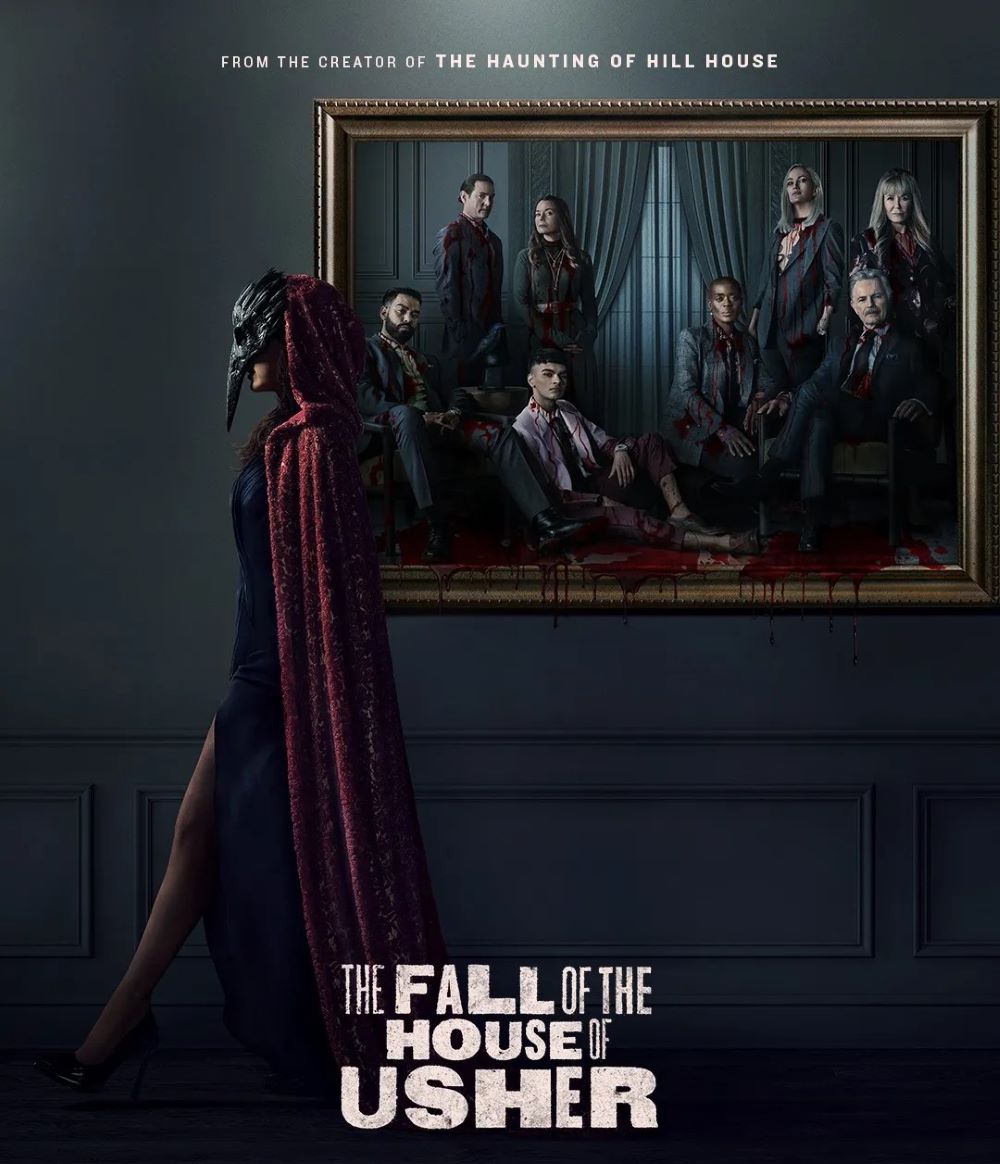
With October approaching, it’s time for yet another Mike Flanagan-directed horror miniseries to premiere on Netflix. This year, he’s bringing us what appears to be an updated version of The Fall of the House of Usher. Here’s the trailer. The series itself is scheduled to be released on October 12th!
Tag Archives: miniseries
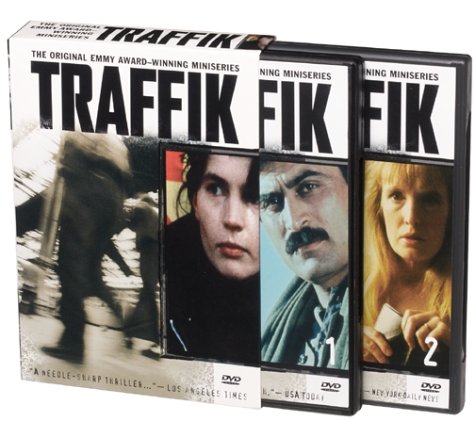
Miniseries Review: Traffik (dir by Alistair Reid)
First aired in 1989 and running a total of six episodes, Traffik is a British miniseries that takes a look at the War on Drugs.
British minister Jack Lithgow (Bill Paterson) has negotiated a treaty with Pakistan. The UK will send increased aide to Pakistan if the government will crack down on the heroin trade. In theory, it sounds like a good idea. Pakistan will get extra cash while joining the effort to stop the flow of heroin into Europe. In reality, it harms the poor farmers in Pakistan. After soldiers destroy his village’s poppy fields, Fazal (Jamal Shah) is left with no way to support his family. He travels to the city, where he gets a job with drug lord Tariq Butt (Talat Hussain). It’s a job that Fazal has to take in order to feed his family but it’s also a job that puts his family’s safety at risk.
After the heroin in processed in Pakistan, it is smuggled into Europe by men like Karl Rosshalde (Juraj Kukura), a German businessman whose company is a front for his operations. When two German police detectives (Fritz Müller-Scherz and Tilo Prückner) arrest Jacques (Peter Lakenmacher), one of Karl’s couriers, it looks like Karl might finally being going to prison. However, Karl’s British wife, Helen (Lindsay Duncan), proves herself to be just a ruthless as he was when it comes to running his operations.
Even with Karl on trial, the drug trade continues. The heroin that is processed in Pakistan and smuggled through Germany eventually ends up in the UK, where it is used to by Caroline (a very young Julia Ormond), the teenage daughter of Jack Lithgow. When Caroline runs away from home, Jack searches the streets and back alleys of London and, for the first time, he starts to understand the futility of Europe’s war on drugs.
If Traffik sounds familiar, that’s because it served as the basis for Steven Soderbergh’s 2000 film, Traffic. When I watched Traffik this week, I was actually surprised to see how closely Soderbergh’s film stuck to the plot of the miniseries. The only difference, beyond shifting the action from Europe to North America, is that Soderbergh replaced the farmer’s storyline with a story involving Benicio del Toro as a Mexican policeman. That’s a bit of shame, actually. Traffic is one of my favorite Soderbergh films but it is a bit cop-heavy. The people who actually do the day-to-day work in the drug trade, as opposed to the drug lords, aren’t really represented in Soderbergh’s film. As the British miniseries shows, people like Fazal end up working in the drug trade not because they’re evil but because they literally have no other choice. It’s either work for someone like Tariq or starve to death.
As I mentioned earlier, Traffic is one of my favorite Soderbergh films. Considering that I usually find Soderbergh’s films to be hit-or-miss, it’s actually kind of remarkable just how effective Traffic is. The original miniseries, however, is superior to the film in every way. Some of that is because the miniseries has six hours to explore its world whereas Soderbergh had to cram a lot of incidents into 147 minutes. Beyond that, the miniseries succeeds because director Alistair Reid takes a straight-foward, no frills approach to telling his story. Even at his best, Soderbergh has a tendency to be a bit pretentious. Even though Traffic deals with real-life issues, it never allows you to forget that you’re watching a film. Traffik, on the other hand, tells its story with an almost documentary-style immediacy. One need only compare the scenes where Bill Paterson searches for Julia Ormond in Traffik to the scenes where Michael Douglas searches for Erika Christensen in Traffic to see not only the differences between Reid and Soderbergh’s style but also to see why Reid’s more gritty style works better for the story that’s being told. Whereas Soderbergh can’t resist framing Christensen with a blonde halo when she’s finally rescued by Douglas, Traffik leaves little doubt that Ormond has been through Hell and that, even if she does eventually beat her addictions, she’ll be carrying the scars of her experience for the rest of her life. Whereas Traffic ended on a note of hope, Traffik ends with the realization that there is no perfect solution.
Traffic and Traffik are both good looks at the destructiveness of both drug abuse and the efforts to treat drug addiction as a crime. Both are worth watching.
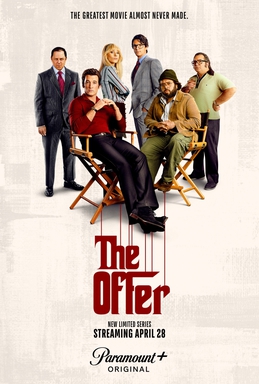
Miniseries Review: The Offer (dir by Dexter Fletcher, Adam Arkin, Colin Bucksey, and Gwyneth Horder-Payton)
Almost despite myself, I enjoyed The Offer.
That may come as a surprise to some. The Offer is a 10-hour miniseries about the making of The Godfather and how Hollywood politics aren’t really that much different from Mafia politics. As anyone who has regularly read this site over the past few years should know, I absolutely love The Godfather. It’s my favorite movie. It’s a movie about which I’ve done a lot of personal research. There’s very little about the making of The Godfather that I don’t know. If we’re going to be honest, I’m probably a little bit of a snob about it.
So, like many people, I was a bit skeptical when I first heard about The Offer. It didn’t seem like something that was particularly necessary and it was hard for me to imagine how the miniseries would ever be able to convincingly cast anyone as Marlon Brando or Al Pacino or, for that matter, Francis Ford Coppola. My skepticism only increased when I learned that the story was going to be told from the perspective of the film’s producer, Al Ruddy. Everyone agrees that Ruddy was an important part of The Godfather team but he’s never been quite as compelling a figure as the brilliant but often self-destructive Brando or the neurotic but playful Pacino. When people talk about what makes The Godfather such a brilliant film, they talk about the quotable dialogue. They talk about the masterful performances. They talk about Coppola’s skill as a storyteller. They talk about the way that Gordon Willis lit the scenes so that the characters often seemed to be on the verge of being swallowed by their shadows. They even talk about how Robert Evans insisted that the film could only be directed by an Italian and how Evans defied Paramount when the studio originally demanded that Coppola cut the film down to two hours. When Al Ruddy is praised, it’s usually for staying out of the way.
I knew that I would have to watch The Offer eventually but I avoided it while it was actually airing and I made sure not to read anyone else’s opinion to it. Despite my own obvious biases, I did want to try to maintain as open a mind as I possibly could. That said, I wasn’t expecting much when I finally watched The Offer this weekend.
But, as I said at the start of this review, I enjoyed it.
Don’t get me wrong. It’s a bit of a silly show. If The Offer was a sitcom, it would be called Everybody Loves Ruddy because the main theme of the show seems to be that Al Ruddy (played by a miscast Miles Teller) was literally the most important man in the entire history of Hollywood. There’s not a problem that Ruddy can’t solve, whether it’s convincing CBS to air a tasteless sitcom called Hogan’s Heroes or convincing Paramount to take a huge risk on a mercurial director named Coppola and an unknown actor named Pacino. When gangster Joe Colombo (Giovanni Ribisi) tries to interfere with production, Ruddy befriends him and is soon a popular guy with the crew. When Al Pacino (Anthony Ippolito) signs a contract with MGM, Ruddy puts the pressure on Paramount to find a way to get Pacino out of it. When Coppola (Dan Fogler) has a fight with Gordon Willis (T.J. Thyne), Ruddy convinces them to make up. When Robert Evans (Matthew Goode) goes on a coke binge, Ruddy snaps him out of it. When …. well, you get the idea. There’s nothing Al Ruddy can’t do! When Evans mentioned that Henry Kissinger was coming to the Godfather premiere, I half expected Al Ruddy to negotiate a ceasefire in Vietnam.
From the start, The Offer is full of visual cues and dialogue that pay homage to not only The Godfather but the other films of the period. The first line of the miniseries is Joe Colombo telling someone to, “Leave the cannoli.” At first, I groaned but, slowly but surely, the show won me over. By the end of the first episode, it was obvious that The Offer was not necessarily meant to be taken literally. The Offer doesn’t tell the story of what Hollywood was really like in the late 60s and early 70s. Instead, it tells the story of how people like me, who were born a few decades too late, imagine it was. It’s less about the decade itself and more about how that decade continues to fascinate us and spark our imagination. In our imagination, Robert Evans is snorting coke in his office, Ali MacGraw is lounging by the pool, Frank Sinatra is making angry phone calls to Joe Colombo, Al Pacino is so nervous that he can’t look anyone in the eye, and Marlon Brando is wandering around his mansion in a kimono and talking about how he can’t get anyone to see his latest, politically-charged film. In our fantasies, it only makes sense that Evans and his assistant Peter Bart (Josh Zuckerman) would spend all of their time dropping titles of well-regarded, still-remembered films because why would anyone fantasize about them discussing a film that was forgotten? And, of course, no one is going to fantasize about people discussing some actor who was briefly big in 1972 and then spent the rest of their career on television. Instead, in the fantasy, it’s all about Robert Redford, Jack Nicholson, Liz Taylor, and Marlon Brando. It also makes sense that only classic 70s music would be heard in the background of every scene because, seriously, who ever fantasizes about a bad song playing at a party?
Once it is accepted that it is all meant to be a fantasy, it becomes much easier to appreciate The Offer for what it is, a gossipy, Hollywood story with a Mafia subplot and an overabundance period detail. Once the viewer accepts The Offer is a fantasy, the viewer is freed up to appreciate the 70s-chic wardrobe. Once the viewer gets past the fact that the cast is playing characters based on actual people, it becomes much easier to appreciate the performances of character actors like Colin Hanks (who plays an uptight executive) and Burn Gorman (who plays the notoriously eccentric businessman, Charles Bluhdorn). Patrick Gallo is slyly funny as Mario Puzo while Dan Fogler does a credible enough job as Coppola, even if he never quite captures Coppola’s larger-than-life persona. Even Lou Ferrigno gets a nice bit, playing a mob enforcer turned unwilling actor. At the center of it all is the absolutely brilliant Matthew Goode, giving a charismatic performance as the brilliant but sometimes unstable Robert Evans.
As a history, The Offer won’t win any points for accuracy. But, as a fantasy, it’s undeniably entertaining. It’s not so much the story of how The Godfather was made but the story of how we wish it was made.
Miniseries Review: The Last Don II (dir by Graeme Clifford)
The Clericuzio saga continues and it’s sillier than ever!
The Clericuzios were the Mob family who were first introduced in a Mario Puzo novel called The Last Don. In 1997, CBS turned The Last Don in a three-part miniseries. The ratings were good enough that, in 1999, the network gave the world a two-episode sequel, The Last Don II. The Last Don II was created without the input of Mario Puzo (who died shortly before the miniseries aired) but director Graeme Clifford returned, as did a few members of the cast.
For example, Danny Aiello briefly returns as the honorable but aging Don Domenico Clericuzio, talking about life in the old country and demanding to know why some of his children have yet to marry. Under his leadership, the Clericuzios are almost totally legit and they’ve even become powerful in Hollywood. Claudia De Lena (Michelle Burke) is in charge of the family’s film studio and has recently become engaged to a film star named Dirk Von Schelburg (Andrew Jackson, trying to do an Arnie impersonation but coming across more like Jean-Claude Van Damme). Still, despite the fact that the Clericuzios are (slowly) abandoning organized crime, they haven’t completely cut their ties. They still have enemies. And when Don Clericuzio dies after dancing at his final birthday party, those enemies are set to strike.
Who can run the Clericuzio family? Only one of the Don’s son was actively involved in the underworld aspect of the organization and he’s promptly (and, to be honest, hilariously) crushed when someone drops a shipping crate on him. Another Clericuzio son is gunned down at his legitimate business, proving that someone is trying to take out the entire family, regardless of whether they’re a part of the family business or not. Georgio Clericuzio (David Marciano) goes to Paris and tires to convince Claudia’s brother, Cross (Jason Gedrick), to return from exile to take things over. Cross refuses because he’s happily married to the most famous actress in the world, the improbably named Athena Aquataine (Mo Kelso, replacing Daryl Hannah in the role). However, Athena is subsequently blown up by a bomb that was meant for Cross and that’s all it takes to bring Cross back to America.
Now that Cross is in charge, he sets about to discover who, among the other Families, is targeting the Clericuzios. Helping him out with this is Billy D’Angelo (James Wilder), who we are told is the the most important of the Clericuzios capos, despite the fact that he was neither seen nor mentioned in the previous Last Don. It seems pretty obvious from the start that Billy is not to be trusted. Everyone who has ever seen The Godfather will automatically look at Billy and say, “There’s your rat.” But Cross is a remarkably naïve crime lord. He’s apparently the only guy in the Mafia who has never seen a Mafia movie.
Of course, there’s more going on than just Cross trying to figure out who is targeting the Clericuzio family. His unstable aunt, Rose Marie (Kirstie Alley), wants revenge for the murder of her son Dante but, fortunately, she’s distracted by an affair with the family’s priest (Jason Isaacs, of all people). Disgraced former studio exec Bobby Bantz (Robert Wuhl) is plotting against Claudia. And finally, Cross is falling in love with his stepdaughter’s nanny (Patsy Kensit) despite the fact that it’s kind of obvious that the nanny is actually an undercover FBI agent. Remember what I said about Cross being impossibly naïve?
The Last Don was a fairly silly miniseries. The Last Don 2 is even sillier but, for that every reason, it’s also a bit more entertaining. If the first Last Don was held together by the rivalry between Cross and Dante, the sequel is held together by a nonstop flow of melodrama, overheated dialogue, and thoroughly unsubtle acting. It’s as if the director looked at every over-the-top scene and said, “It’s okay but can we turn things up just a little bit more?” As such, tt’s not enough for Danny Aiello to merely make a cameo before his character dies. Instead, he has to deliver cryptic words of wisdom about family and and honor and he has to do one final, Zorbaesque dance of joy before his heart gives out. Meanwhile, Kirstie Alley really throws herself into playing the insane Rose Marie and whether she’s seducing a priest or hoarsely yelling that she doesn’t know how to ice skate, her performance is always more than strange enough to be watchable. Jason Isaacs, meanwhile, furrows his brow desperately as he tries to resist temptation. Patsy Kensit is the world’s worst FBI agent while Kim Coates shows up as one of her colleagues. Conrad Dunn returns as Lia, the Sicilian assassin with the world’s silliest mustache. Even the presence of Robert Wuhl is less of a problem in the sequel. With everyone chewing up every piece of scenery that they can get their hands on, it somehow makes sense that Robert Wuhl would show up and start yelling, “DON’T LAUGH AT ME!” Somehow, it even seems appropriate that Joe Mantegna receives a “special appearance” credit, even though his character pretty much only appears in the archival footage used during the opening credits. The Last Don II is just that type of miniseries.
Jason Gedrick and James Wilder are both good actors and they both do what they can with the roles of Cross and Billy. Unfortunately, both of them were seriously miscast in The Last Don 2. Neither one of them is the least bit Italian and Wilder was a bit too young to be convincing as the most feared capo in the family. Compared to the classic gangster films that inspired them, both The Last Don and its sequel feels more like gangster cosplay than an actual portrait of life as a member of the Cosa Nostra. Like the first Last Don, The Last Don II suffers from a lack of authenticity but it’s just ludicrous enough to be fun.
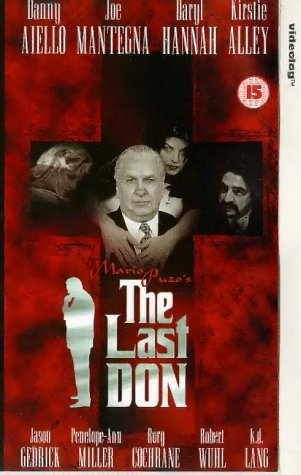
Miniseries Review: Mario Puzo’s The Last Don (dir by Graeme Clifford)
First broadcast over three nights in 1997, The Last Don tells the story of a powerful and respected Mafia family. They control politicians across the country and they own casinos in Vegas and their power even extends all the way to Hollywood. Despite having many enemies, the family has thrived due to the leadership of a wise but ruthless Don. This Don remembers the old ways and imparts lessons about honor to the members of his own family. Never let anyone know what you’re thinking. Never side against the family. If someone like you were to make enemies, they would become the Don’s enemies and then they would fear you …. you know, stuff like that.
However, times are changing and America is changing with it. The underworld is no longer run by men of honor. On top that, the Don is aging and in ill-health. Who will succeed him? One possible successor is respected by all but he’s stayed out of the dirtier aspects of the family’s business and, in fact, he seems to have no desire to be a feared man. Another possible successor is ruthless and has a terrible temper. He sometimes speaks out of turn, because the Don has a sentimental weakness for his children. This possible successor’s anger is feared but perhaps fear is the future of the organized crime in America. The old ways are changing but one thing remains the same. The Don believes in America and he believes in family and….
Wait.
Okay, is it just me or does this all sound just a little bit familiar?
If it does, that’s probably because The Last Don is based on a novel by The Godfather‘s Mario Puzo. Though the family may be called The Clerichuzios and the action may have been moved fro the 40s and the 50s to the 60s, 70s, and 80, the story is still the same basic one that was told in The Godfather. Don Clerichuzio (Danny Aiello) is an honorable man whose time is coming to an end. His grandnephew, Cross (Jason Gedrick), is the possible successor who isn’t crazy. His grandson, Dante (Rory Cochrane), is the possible successor who is violent and doesn’t know how to negotiate. Don Clerichuzio’s dream is for the family to become completely legitimate but good luck with that when the film business and the political world are just as corrupt as the Mafia. I supposed one could argue that The Last Don is narrated by Don Clerichuzio while The Godfather has no narration at all but, seriously, once you have to add a voice-over to explain what’s going on, you have pretty much already last the war.
And yes, I did mention the film business. When Francis Ford Coppola first read The Godfather, he famously hated the Hollywood sections of the book and, with the exception of Tom Hagen’s visit to Jack Woltz (and Woltz’s subsequent discovery of a horse’s head in his bed the next morning), Coppola refused to include them in the movie. The second half of The Last Don, however, goes full Hollywood and, more or less, proves Coppola’s point. Cross’s sister, Claudia (Michelle Burke, who also co-starred with Cochrane in Dazed and Confused), gets a job as an agent and one of her clients is the world’s most famous actress, the ludicrously named Athena Aquataine (Daryl Hannah). When Athena has trouble with her crazy ex-husband (Chris Meloni, bringing a spark of genuine danger to the production), Cross helps her out, falls in love, and gets involved in the production of her next film. This brings him into conflict with a studio exec named Bobby Bantz (Robert Wuhl). Unfortunately, all of the Hollywood stuff is pretty dull. One gets the feeling that Puzo was perhaps settling some old scores with the character of Bobby but Robert Wuhl is one of those goofy actors who belongs nowhere near a Mafia drama. And don’t even get me started on country singer k.d. lang, who is bizarrely cast as a film director.
(Add to that, how can anyone take a character named Athena Aquataine seriously? I never miss an Athena Aquataine movie!))
The Hollywood stuff distracts from the Mafia stuff, which is unfortunate because the Mafia stuff is at least occasionally interesting and it’s certainly better-acted than the Hollywood scenes. Joe Mantegna plays Pippi, who is Cross’s father and who, years earlier, killed Dante’s father. (Mantegna’s always good but it’s a struggle to take any character named Pippi seriously.) Kirstie Alley plays Rose Marie, who is Dante’s mentally unstable mother and the Don’s only daughter. Aiello, Mantegna, and Alley all give good performances, as do Burt Young and Seymour Cassel in the roles of family associates. As for the “younger generation” of Clerichuzios, Gedrick is a bit dull but then again, Cross isn’t a very interesting character. The slightly-built Cochrane is miscast as Dante but ultimately, that miscasting kind of works in that it reminds us that, due to his father being the scion of a rival family, Dante is destined to always be viewed as being an outsider.
As I said earlier, The Last Don was originally broadcast over three nights. I watched the whole thing — all five hours of it — in one sitting and, yes, it was a bit of an endurance test. It’s not just that it’s long but also that it keeps getting bogged down in all of the Hollywood stuff. You don’t watch a film like this because you want to spend five hours watching Robert Wuhl mug for the camera. You watch a film like this for the Mafia action and, for a film called The Last Don, there really wasn’t enough Mafia action. It has its moments but it never feels as authentic as The Godfather, Casino, Goodfellas, The Irishman, The Sopranos or any of the other classic films and shows about the Mafia.. The Last Don needed to be extremely Italian but instead, it was only slightly Italian. Robert Evans famously said that Coppola was selected to direct The Godfather because Coppola would make audiences “smell the pasta.” There’s very little pasta in The Last Don.
Here’s The Trailer For Nine Perfect Strangers!
If you’re in the States, this David E. Kelley-produced miniseries will be premiering on Hulu on August 21st. If you’re outside of the States, it’ll be premiering on Prime at some point.
Here’s the trailer:
Here’s The First Teaser For The Stand
Let’s just be honest here.
Come December, we all know what we’re going to be in the mood for. After making our way through 11 months of 2020, everyone is going to watch a miniseries about a society-destroying pandemic that leads to a civil war and the destruction of a major U.S. city.
I mean, seriously.
The latest version of The Stand will premiere on December 17th, on CBS All Access so, if you’re thinking of canceling your subscription because of how terrible Big Brother has been this season …. well, hold off for a few months. This version of The Stand features Alexander Skarsgard and Whoopi Goldberg and it’s probably going to be really bad but …. well, our longtime readers know how I feel about Alexander Skarsgard. I’ll watch him in anything.
Anyway, here’s the first teaser for The Stand.
Randall Flagg says hello.
Baby, can you dig your man?
He’s a righteous man!
Here’s the Teaser for 11.22.63
James Franco in Dallas!?
Yes, please!
(James was actually in Dallas filming last month but I was on vacation so I missed him.)
It’s just unfortunate that James is going to be appearing in yet another rehash of the Kennedy assassination. Allow me to turn on my sarcasm as I say that this film will probably be a totally fair and even-handed portrait of my home city and that everyone in the cast will actually try to get the local accents right (as opposed to sound like a bunch of yankees with peanut butter in their mouth).
But, ultimately, all that really matters to me is that 11.22.63 stars James Franco! It’ll be available on Hulu starting on February 15th, 2016.