Film Review: Boom! (dir by Joseph Losey)


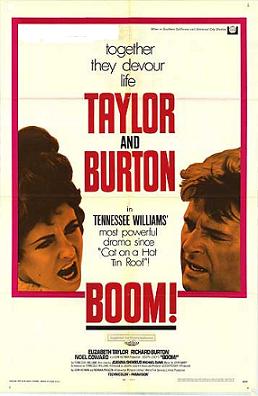
“Boom!” says poet Chris Flanders (Richard Burton) in the 1968 film of the same name. Boom, he goes on the explain, is the sound of life being lived. Every minute that we’re reminded that we’re still alive is a “Boom!” It’s the type of thing that 18 year-old artists say to get laid, though the film treats Chris’s comment with an almost supernatural reverence.

Chris has just shown up on an island that’s owned by Flora Goforth (Elizabeth Taylor), who is the richest woman in the world and who is apparently dying of one of those diseases that makes you lie in bed and yell a lot. Flora lives on the island with an entourage that includes a secretary named Miss Black (Joanna Shimkus) and a head of security named Rudi (Michael Dunn). Rudi is a dwarf and he dresses like a Nazi and often does a stiff-armed salute, just in case we missed the fact that he’s supposed to be a fascist. Why exactly Flora, who were supposed to sympathize with, would employ a Nazi, we never really find out. The film seems to think that there’s something extremely daring about casting a person of short statue as the head of Flora’s security though, ultimately, it’s about as profound as uttering “Boom!” every few minutes.

Anyway, Flora is dying but she’s also dictating her autobiography. It turns out that she’s rich because she married a lot of wealthy men, all of whom died and left her all of their money. Flora’s always in a bad mood but things improve a little when Chris mysteriously shows up on the island and starts saying, “Boom!” all the time. Flora and Chris have several conversations about life and the meaning of it all, the majority of which are full of obscure statements and half-baked attempts at being profound. The dialogue is pretentious but it’s also not very memorable, which is a shame. One can survive being pretentious but being forgettable is simply unforgivable.

Eventually, a friend of Flora’s shows up. Famed playwright Noel Coward plays The Witch of Capri, a flamboyant friend to the rich and famous. He loves to gossip and has a bitchy comment for every occasion. One could argue that Coward is merely playing himself, though one imagines that the real-life Coward could have also come up with a few genuinely witty lines. The Witch informs Flora that Chris has a habit of showing up at the bedside of rich women right before they die. Some people think that Chris is a gigolo while others believe Chris to be …. THE ANGEL OF DEATH!

(Dramatic music)

Which is it? Don’t worry, the answer is revealed by the end of the movie. Of course, it takes a while to get to the end. Boom! is two hours long but it feels much longer. Storywise, Boom! feels like it would be ideal as a 30-minute episode of some old anthology show but director Joseph Losey keeps the story moving at a very slow pace and there are so many dramatic pauses and unnecessary zoom shots that the film itself becomes a bit of an endurance test. Just when you think the movie is finally going to get moving, Chris says, “Boom!” or there’s an extreme close-up of Flora’s ring and everything slows down again.

Boom! is one of the many films that Richard Burton and Elizabeth Taylor made together in the 60s. Unfortunately, both actors are miscast in the lead roles. Flora is described as being old and sickly. Elizabeth Taylor was in her 30s and appeared to be in robust health during the shooting of the film. Chris Flanders is supposed to be in his 20s and a seeker of truth and enlightenment. Burton was in his 40s and looked like he was in his 60s. He spends most of the film looking and sounding as if he’s just come off a weekend bender, which makes him look all the more ludicrous when he hears the ocean and says, “Boom!”

On the plus side, the film is lovely to look at. Flora’s house is big and beautiful. The island scenery is gorgeous. Flora’s costumes are ludicrously ornate but still, they are what you would want to see an international movie star wearing in 1968. As such, the film is always nice to look at. In fact, perhaps the best way to watch Boom! is to turn down the sound so you don’t have to listen to any of the dialogue.

Boom! was based on a Tennessee Williams’s play called The Milk Train Doesn’t Stop Here Anymore. The filmmakers decided to change the name to Boom! and I really can’t blame them for that. This was Elizabeth Taylor’s third film to be based on a Tennessee Williams play. Unfortunately, it matched neither the critical nor the commercial success of Cat On A Hot Tin Roof or Suddenly, Last Summer.

Boom!
Growing Pains: YOU’RE A BIG BOY NOW (Warner Brothers 1966)


gary loggins's avatarcracked rear viewer

ybb1

Francis Ford Coppola  was still a UCLA film student when he made YOU’RE A BIG BOY NOW, the 1966 coming of age comedy he used as his MFA thesis. The young Coppola was 27, and had gained experience working for Roger Corman ; indeed, Corman gave him his first break when he hired Coppola to write and direct the horror quickie DEMENTIA 13. But YOU’RE A BIG BOY NOW was his first major studio release, and put him on the map as a talent to keep an eye on.

ybb2

Bernard Chanticleer is a 19 year old nerd with a way-overprotective mother and disinterested, authoritarian father. He works for Dad at a New York City library, and is constantly goofing up on the job. Dad thinks it’s time for Bernard to spread his wings and move on his own, much to Mom’s displeasure. She finds him a room at a house owned by Miss Thing, who’s tenants include conservative…

View original post 450 more words

Playing Catch-Up With Two Documentaries: 3 1/2 Minutes 10 Bullets and The Wolfpack


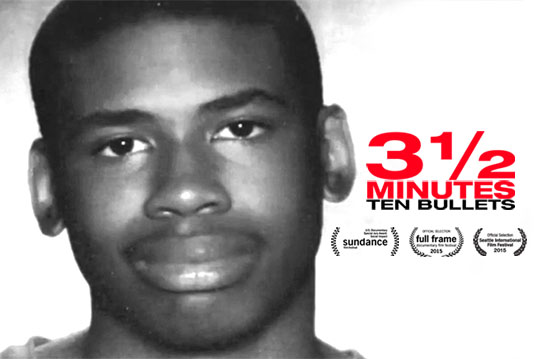
312 minutes

3 1/2 Minutes Ten Bullets (Dir by Marc Silver)

On November 23rd, 2012, an SUV pulled up to a gas station in Jacksonville, Florida.  Inside the SUV were four teenage boys, all of whom were black.  A car pulled up next to the SUV.  Inside the car was a man and his girlfriend.  They were both white.

The man was named Michael Dunn and reportedly, he was annoyed by the loud rap music that was being played in the SUV.  He told his girlfriend that he hated “thug music.”  He got out of his car and asked them to turn down the music.  What happened next depends on who you ask.  The driver of the SUV says that he turned down the music but then his friend, Jordan Davis, turned it back up.  Michael Dunn claims that Jordan Davis opened a door and pointed something at him that looked like a shotgun.

What everyone agree on is that Dunn grabbed his own gun and proceeded to fire it into the SUV, killing Jordan Davis.  Everyone also agrees that no shotgun was ever found in the SUV.

Michael Dunn was tried for the murder of Jordan Davis and the attempted murder of the other three teenagers.  Dunn claimed he was acting in self-defense.  He was “standing his ground.”  Dunn’s first murder trial ended in a mistrial.  His second trial ended with his conviction.

3 1/2 Minutes Ten Bullets was filmed during the two trials and it is infuriating.  Though Michael Dunn was not interviewed for the film, we do hear recordings of some of the calls he made to his girlfriend while he was in prison and it is chilling to listen to him as he continues to insist that he did nothing wrong.  Even when confronted by the fact that no shotgun was found in the SUV, Dunn continues to insist that the four teenagers had to have been armed.  After all, he says, they were listening to “thug music!”  If you had any doubt about the type of person Michael Dunn was before watching this documentary and hearing his voice, that doubt will be gone after watching 3 1/2 Minutes.

Even more importantly, 3 1/2 Minutes features extensive interviews with Jordan’s friends and family, all of whom express their sadness and anger with such articulation that it’s impossible not to get infuriated when Dunn and others casually dismisses them as being “thugs.”

3 1/2 Minutes is a powerful and moving documentary that should be seen by anyone who is interested in taking a serious look at race in America.

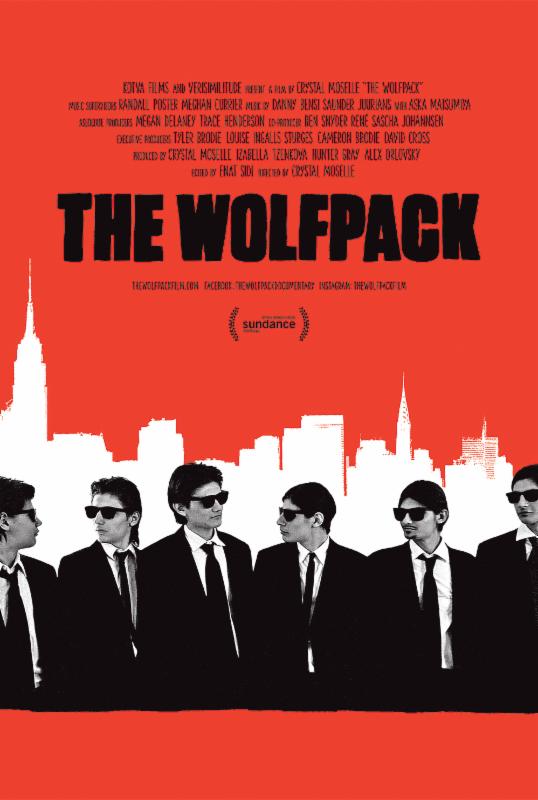
Wolfpack_film_poster

The Wolfpack (dir by Crystal Moselle)

I had mixed feelings about The Wolfpack.

On the one hand, The Wolfpack is a fascinating story about seven siblings who — after spending 14 years locked away in a New York apartment — finally start to enter the real world.  Everything that the siblings know about the world, they learned through the movies.  Inside the apartment, they obsessively recreate their favorite movies, with an elaborate production of Pulp Fiction being a definite highlight.  When they go out into the real world, they do so dressed like the characters from Reservoir Dogs.

(Except, of course, for the one time that one of them goes out while dressed like Michael Myers from Halloween.  That leads to some trouble with the authorities…)

Watching these brothers (and one sister) as they talked about their unconventional childhood and as they discovered what the world was like outside of their apartment, it was impossible for me not to be moved.  I was touched by their love for each other and I related to their obsession with the movies.  I hoped that they would survive in the outside world.  I was happy for them but, at the same time, I was scared for them.  I knew that their new opportunities would come with a certain loss of innocence.

At the same time, it frustrated me that less time was spent on the circumstances that led to them never leaving that apartment for 14 years.  Or, perhaps, I should say that it angered me that they didn’t seem to be as angry as I was.  The father was obviously mentally ill and, while it would be easy to just dismiss him as a monster, I couldn’t help but feel that the truth was perhaps a bit more complex.

The Wolfpack is a fascinating documentary and it’s currently available on Netflix!

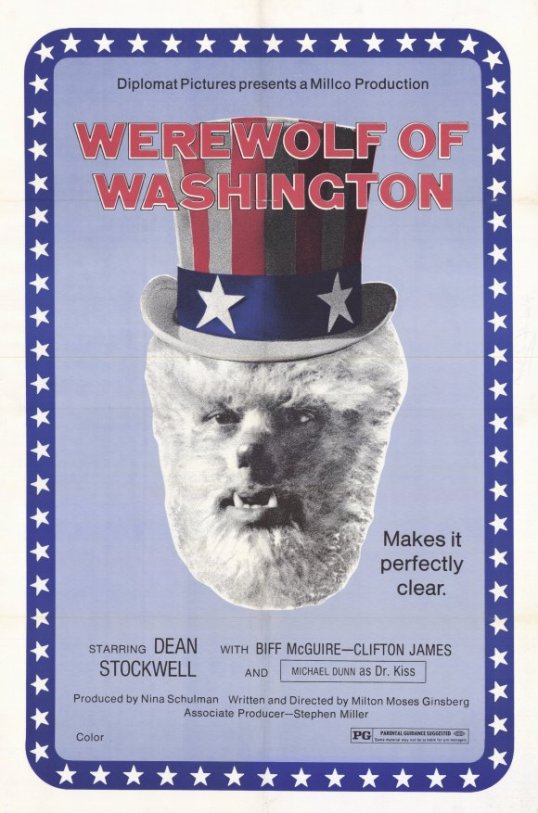
Shattered Politics #32: The Werewolf of Washington (dir by Milton Moses Ginsberg)


Werewolf of Washington (1973)

First released in 1973, The Werewolf of Washington is one of those obscure films that always seems to pop up in Mill Creek box sets.  That’s largely because Werewolf of Washington has slipped into the public domain and anyone can release and sell a copy of it.  (It’s also been uploaded to YouTube by a few hundred different users.)  It’s a film that I’ve actually watched quite a few times, largely because it is so easily available.

Which doesn’t necessarily mean that it’s any good.  I have to admit that, in between viewings, I always seem to convince myself that The Werewolf of Washington is a better film than it actually is.  The idea behind the film sounds clever.  The President’s press secretary (played by Dean Stockwell) is a werewolf.  When the full moon shines, he transforms and wrecks havoc on the streets on D.C.  Stockwell still wears his suit, even when he’s a wolfman.  The President (played by Biff McGuire) is a total idiot who spends a lot of time bowling.  The Attorney General (Clifton James) is a paranoid fascist who is quick to blame the werewolf’s murders on outside agitators.  For no particular reason, a dwarf mad scientist (Michael Dunn) shows up.

Yes, the idea is clever but the execution … actually, the execution is not terrible.  Dean Stockwell gives a good performance and there’s a funny scene where he starts to turn into a werewolf while bowling with the President.  Stockwell’s fingers swell up and get stuck in the bowling ball and Stockwell totally freaks out.  And then there’s a scene where the werewolf attacks a woman in a phone booth and it’s actually rather suspenseful and almost scary.  Plus, Biff McGuire is great and all too plausible as the vapid President.

And yet, overall, the film itself is never as good as you want it to be.  I think a large part of the problem is that the film opens with a long voice over from Dean Stockwell, which explains why his character ended up in Budapest (that would be where he gets bitten by the werewolf) and why the President subsequently named him press secretary.  It’s so much backstory that you get the feeling that the opening narration must have been added in post production in order to cover up scenes that either did not work or that the film’s director never got a chance to shoot.

And really, the entire film is like that.  The film is a collection of scenes that never really flow together or establish any sort of steady pace.  And, when it comes to both horror and comedy, pace is key.

The Werewolf of Washington is a clever idea.  I just wish the execution had been just as clever.

And I’ll probably continue to wish that the next time that I rewatch it.

The_Werewolf_of_Washington_FilmPoster


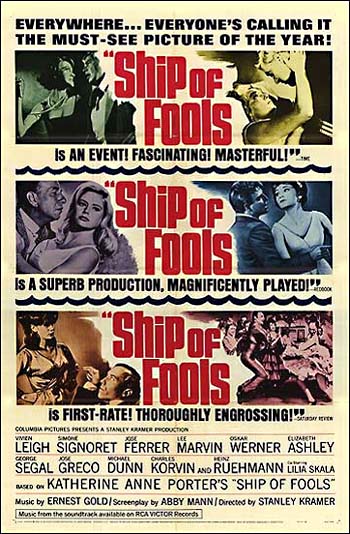
Embracing the Melodrama #20: Ship of Fools (dir by Stanley Kramer)


ship-of-fools-poster

The 1965 best picture nominee Ship of Fools follows a group of passengers as they take a cruise.  The year is 1933 and the luxury liner, which has just left Mexico, is heading for Nazi Germany.  Both the passengers and the crew represent a microcosm of a world that doesn’t realize it’s on the verge of war.

There’s Carl Glocken (played by Michael Dunn), a dwarf who has the ability to break the fourth wall and talk directly to the audience about all of the fools that have found themselves on this ship.  He alone seems to understand what the future holds.

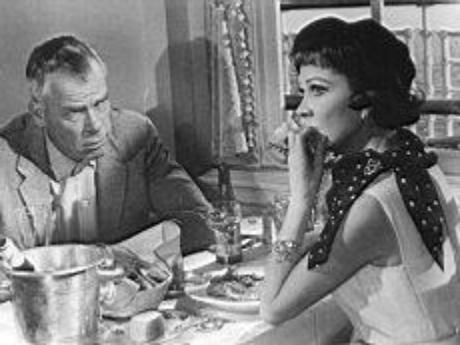
There’s Mary Treadwell (Vivien Leigh), an aging Southern belle who spends almost the entire cruise flirting with the crew and other passengers, desperate to recapture her fading youth.  That also seems to be the main goal of Bill Tenney (Lee Marvin), an unsophisticated former baseball player who spends most of the cruise brooding about his failed career.

There’s the Countess (Simone Signoret), a political prisoner who is being transported to an island prison.  She falls in love with the ship’s doctor (Oskar Werner).  The doctor’s dueling scar suggests that he is a member of the old aristocracy and he is literally the film’s only good German.  Perhaps not surprisingly, he is also in the process of dying from a heart condition.

And then there’s David (George Segal) and his girlfriend Jenny (Elizabeth Ashley).  David is a frustrated and depressed painter while Jenny is far more determined to enjoy life, which should be pretty easy because the boat is also full of performers and dancers.

Finally, there’s the buffoonish Rieber (Jose Ferrer), a German industrialist whose dinner table talk hints at the horrors that are soon to come.

Ship of Fools is a big, long film in which a large cast of stars deal with big issues in the safest way possible.  In short, it’s a Stanley Kramer film.  As one can tell from watching some of the other films that he directed (Judgment at Nuremberg, Guess Who’s Coming To Dinner, and R.P.M.), Stanley Kramer made films that were often easier to admire than to actually enjoy.  As the critic Mark Harris points out in his book Pictures At A Revolution, Kramer started out as a producer and he retained the sensibility of a producer even after he stared directing.  As such, his films would address issues that were certain to generate a lot of free publicity but, at the same time, he would never run the risk of alienating his audience by digging too deeply into those issues.  His films would have the type of all-star casts that would, again, bring in an audience but Kramer rarely seemed to give thought as to whether or not an all-star cast would distract from the film’s message.  Finally, unlike the truly great directors, Kramer never really figured out how to tell a story with images.  As a result, his movies were often full of characters whose sole purpose was to explain the film’s themes.

Does that mean that Stanley Kramer never made a good film?  No, not at all.  Judgment at Nuremberg remains powerful and R.P.M. is a guilty pleasure of mine.  Kramer was usually smart enough to work with talented professionals and, as a result, his films were rarely truly bad.  Some of them even have isolated moments of greatness.  It’s just that his films were rarely memorable and truly innovative and, therefore, they are easy for us to dismiss, especially when compared to some of the other films that were being made at the same time.

With all that in mind and for reasons both good and bad, Ship of Fools is perhaps the most Stanley-Kramerish of all the Stanley Kramer films that I’ve seen.  The film was apparently quite acclaimed and popular when it was originally released in 1965 but watched today, it’s an occasionally watchable relic of a bygone age.  How you react to Ship of Fools today will probably depend on whether or not you’re an admirer of any of the actors in large cast.  For the most part, all of them do a good job though you can tell that, as a director, Kramer struggled with how to make their multiple storylines flow naturally into an overall theme.  Not surprisingly, Vivien Leigh and Lee Marvin give the two most entertaining performances and Jose Ferrer makes for a wonderfully hissable villain.  Oddly enough, I find myself most responding to the characters played by George Segal and Elizabeth Ashley.  I’m not sure why — their storyline is rather predictable.  Maybe it was just because Elizabeth Ashley’s character goes wild and starts dancing at one point.  That’s what I would do if I found myself stuck on a boat with a tortured painted.

(What is especially interesting is that neither Oskar Werner or Simone Signoret are particularly memorable and yet they both received Oscar nominations.  Perhaps 1965 was a weak year for acting.)

In the end, Ship of Fools is a movie that will be best appreciated by those of us who enjoy watching old movies on TCM and take a special delight in spotting all of the wonderful actors that, though they may no longer be with us, have at least had their talent preserved on film.  Ship of Fools may not be a great film but it does feature Vivien Leigh doing an impromptu and joyful solo dance in a hallway and how can you not appreciate that?

ship-of-fools-1-1