Lisa Marie Reviews An Oscar Nominee: Reds (dir by Warren Beatty)


In the 1981 film Reds, Warren Beatty plays Jack Reed, the radical journalist who, at the turn of the century, wrote one of the first non-fiction books about Russia’s communist revolution and then went on to work as a propagandist for the communists before becoming disillusioned with the new Russian government and then promptly dying at the age of 32.

Diane Keaton plays Louise Bryant, the feminist writer who became Reed’s lover and eventually his wife.  Louise found fame as one of the first female war correspondents but then she also found infamy when she was called before a Congressional committee and accused of being a subversive.

Jack Nicholson plays Eugene O’Neill, the playwright who was a friend of both Reed and Bryant’s and who had a brief affair with Bryant while Reed was off covering labor strikes and the 1916 Democratic Convention.

Lastly, Maureen Stapleton plays Emma Goldman, the anarchist leader who was kicked out of the country after one of her stupid little dumbass followers assassinated President McKinley.  (Seriously, don’t get me started on that little jerk Leon Czolgosz.)

Together …. well, I was going to say that they solve crimes but that joke is perhaps a bit too flippant for a review of RedsReds is a big serious film about the left-wing activists at the turn of the century, one in which the characters move from one labor riot to another and generally live the life of wealthy bohemians.  Reed spends the film promoting communism, just to be terribly disillusioned when the communists actually come to power in Russia.  For a history nerd like me, the film is interesting.  For those who are not quite as obsessed with history, the film is extremely long and the scenes of Reed and Bryant’s domestic dramas often feel a bit predictable, especially when they’re taking place against such a large international tableaux.  At its best, the film is almost a Rorschach test for how the viewer feels about political and labor activists.  Do you look at Jack Reed and Louise Bryant and see two inspiring warriors for the cause or do you see two wealthy people playing at being revolutionaries?

Reds was a film that Warren Beatty spent close to 20 years trying to make, despite the fact that the heads of the Hollywood studios all told him that audiences would never show up for an epic film about a bunch of wealthy communists.  (The heads of the studio turned out to be correct, as the film was critically acclaimed but hardly a success at the box office.)  It was only after the success of the 1978, Beatty-directed best picture nominee Heaven Can Wait that Beatty was finally able to get financing for his dream project.  He ended up directing, producing, and writing the film himself and he cast his friend Jack Nicholson as O’Neill and his then-romantic partner Diane Keaton as Louise Bryant.  (Gene Hackman, Beatty’s Bonnie and Clyde co-star, shows up briefly as one of Reed’s editors.)  One left-wing generation’s tribute to an early left-wing generation, Reds is fully a Warren Beatty production and, for his efforts, Beatty was honored with the Oscar for Best Director.  That said, the Reds lost the award for Best Picture to another historical epic, Chariots of Fire.  Chariots of Fire featured no communists and did quite well at the box office.

The film is good but a bit uneven, especially towards the end when we suddenly get scenes of Louise Bryant trudging through Finland as she attempts to make it to Russia to be reunited with Reed.  The film actually works best when it features interviews with people who were actual contemporaries of Reed and Bryant and who share their own memoires of the time.  In fact, the interviews work almost too well.  The “witnesses,” as the film refers to them, paint such a vivid picture of the Reed, Bryant, and turn of the century America that Beatty’s attempt to cinematically recreate history often can’t compete.  One can’t help but feel that Beatty perhaps should have just made a documentary instead of a narrative film.

(Interestingly enough, many of the witnesses were people who were sympathetic to Reed’s politics in at the start of the century but then moved much more to the right as the years passed.  Reed’s friend and college roommate, Hamilton Fish, went on to become a prominent Republican congressman and a prominent critics of FDR.)

That said, Jack Nicholson gives a fantastic performance as Eugene O’Neill, adding some much needed cynicism to the film’s portrayal of Reed and Bryant’s idealism.  Keaton and Beatty sometime both seem to be struggling to escape their own well-worn personas as Bryant and Reed but Beatty does really sell Reed’s eventually disillusionment with Russia and the scene where he finally tells off his Russian handler made me want to cheer.  Fans of great character acting will want to keep an eye out for everyone from Paul Sorvino to William Daniels to Edward Herrmann to M. Emmet Walsh and IanWolfe, all popping up in small roles.

Reds is not a perfect film but, as a lover of history, I enjoyed it.


18 Days of Paranoia #6: Scandal Sheet (dir by David Lowell Rich)


“So be it,” journalist Helen Grant dramatically announces as she lifts up her camera and starts snapping pictures of a body in a casket, “I’m …. a ….. WHORE!”

That is just one of the many wonderfully, over-the-top moments that can be found in the 1985 film, Scandal Sheet.  Directed by David Lowell Rich, Scandal Sheet stars Burt Lancaster as Harold Fallen.  If this movie were being made today, Fallen would be in charge of a TMZ-style website.  Since this movie was made in the 80s, Fallen is the publisher and editor of a sleazy tabloid magazine.  He specializes in stories about aliens and ghosts.  When someone brings him in a story about the ghost of Grace Kelly haunting the beaches of Malibu, he announces, “Front page!”  When someone else tells him about a woman who wants to marry a man from outer space but who can’t find anyone to perform the ceremony, Fallen arranges to get the woman a lawyer.

When Fallen isn’t tracking down ghosts and arranging for interplanetary marriages, he’s trying to destroy celebrities.  When the film begins, he’s obsessed with taking down Ben Rowan (Robert Urich).  We’re told that Ben Rowan is one of the world’s top movie star.  (It’s important that we’re told this because there’s nothing about Urich’s bland performance that would lead us to suspect that to be the case.)  Ben’s career is in trouble because he’s got a drinking problem.  He just got out of rehab but no insurance company is willing to insure him.  His wife, Meg North (Lauren Hutton), is demanding that Ben be cast in her latest movie.  Everyone in Hollywood is like, “No way.”

It has the potential to be a big story and Fallen wants to be the first to break it.  But to do so, he’s going to need an inside source.  That’s where Helen Grant (Pamela Reed) comes in.  Helen was Meg’s college roommate and she’s still friends with both her and Ben.  Fallen decides to hire Helen to work for his magazine.  The only problem is that Helen is a serious journalist.  She writes stories about homeless children.  She has no desire to work for a tabloid.

“I’ll pay you more than you’re making right now,” Fallen tells her.

Helen’s not interested.

“I’ll pay you $80,000 a year.”

Helen’s interested.

Against her better judgment, Helen accepts Fallen’s offer.  At first, things seem okay.  She’s a bit annoyed with having to work with a sleazy photographer named Simon (Peter Jurasik, giving a wonderfully reptilian performance) but she’s got a nice house and her son is going to a good school and she gets to use the company credit card and she even gets a housekeeper out of the deal!

Then Fallen tells her that her next assignment is to write about Meg and Ben.  Helen refuses but she soon discovers that Howard Fallen is not an easy person to refuse.  Not when he’s got people watching your every move, along with paying your housekeeper to spy on you.  When her former boss (Max Wright) angrily tells her that no reputable magazine will ever work with her again, Helen is left with only two options: Become a whore or starve.

Scandal Sheet is a lot of fun.  Just the fact that the main bad guy is named Howard Fallen should tell you almost everything you need to know about this movie.  He’s Fallen — as in a fallen angel.  At the end of the movie, he even wears all black with a white tie, which we all know is the typical modern-day costume of demons pretending to be human.  (At one point, Fallen even says that he’s going to make someone an offer that they can’t refuse, giving us all a chance to see what The Godfather would have been like if Burt Lancaster had played Don Vito.)  Lancaster gives a charismatic performance and he’s so effortlessly manipulative that it’s hard not to enjoy watching him, even if he is destroying innocent people.  The rest of the cast is okay.  As I said earlier, Robert Urich was a bit too bland to be a convincing film star but Pamela Reed does a good job of capturing Helen’s struggle to decide whether to side with good or evil and Lauren Hutton tears into the scenery with just the type of ferocity that a film like this requires.  Late in the film, when she spits in Helen’s face, it’s the most dramatic spitting that you’ll probably ever see.

Scandal Sheet is an enjoyably over-the-top, anti-press melodrama.  Watch it with someone who you would be willing to sell out for $80,000 a year.

Other Entries In The 18 Days Of Paranoia:

  1. The Flight That Disappeared
  2. The Humanity Bureau
  3. The Private Files of J. Edgar Hoover
  4. The Falcon and the Snowman
  5. New World Order

Lisa Reviews An Oscar Nominee: All That Jazz (dir by Bob Fosse)


“Bye bye life….

Bye bye happiness….

Hello loneliness….

I think I’m going to die….”

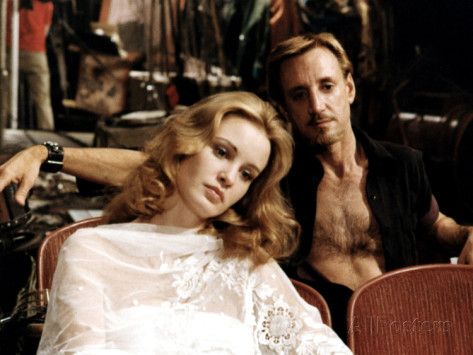
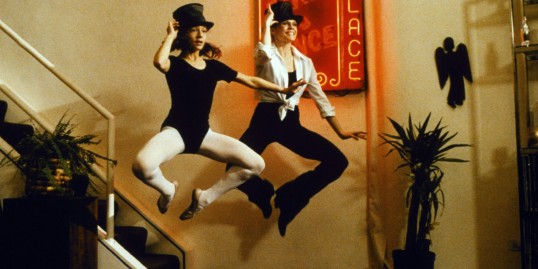
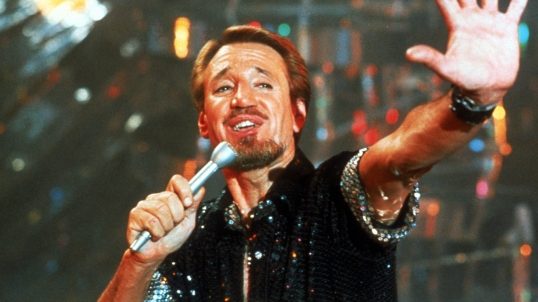
So sings Joe Gideon (Roy Scheider) at the end of the 1979 film, All That Jazz.  And he’s right!  It’s hardly a spoiler to tell you that All That Jazz ends with Joe Gideon in a body bag.  It’s not just that Gideon spends a good deal of the film flirting with the Angel of the Death (Jessica Lange).  It’s also that, by the time the film ends, we’ve spent a little over two hours watching Joe engage in non-stop self-destruction.  Joe is a director and a choreographer who is so in love with both death and show business that his greatest triumph comes from choreographing his own death.

Joe wakes up every morning, pops a handful of pills, stares at himself in the mirror and says, “It’s showtime!”  He spends his day choreographing a Broadway play.  He spends his nights editing his latest film, a biopic about Lenny Bruce called The Stand-Up.  He’s particularly obsessed with a long monologue that Lenny (played by Cliff Gorman) delivers about the inevitability of death.  When he’s not choreographing or editing, he’s smoking, drinking, and cheating on his girlfriend (Ann Reinking).  It’s obvious that he’s still in love with his ex-wife (Leland Palmer) and that she loves him too but she’s also too smart to allow herself to get fully sucked back into his self-destructive orbit.  He loves his daughter (Erzsébet Földi) and yet still ignores her when she begs him not to die.

Joe and the Angel of Death

When Joe has a heart attack and ends up in the hospital, he doesn’t change his behavior.  Instead, he and the Angel of Death take a look back at his youth, which was spent hanging out in strip clubs and desperately trying to become a star.  Joe Gideon, we see, has always know that he’s going to die early so he’s pushed himself to accomplish everything that he can in what little time he has.

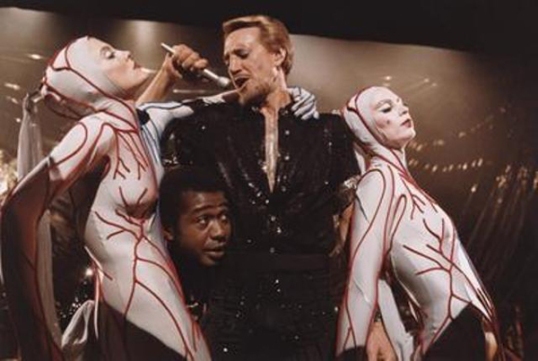
As a result of his drive and his refusal to love anyone but himself, Gideon is widely recognized as being an artistic genius.  However, as O’Connor Flood (Ben Vereen, essentially playing Sammy Davis, Jr.) puts it, “This cat allowed himself to be adored, but not loved. And his success in show business was matched by failure in his personal relationship bag, now – that’s where he really bombed. And he came to believe that show business, work, love, his whole life, even himself and all that jazz, was bullshit. He became numero uno game player – uh, to the point where he didn’t know where the games ended, and the reality began. Like, for this cat, the only reality – is death, man. Ladies and gentlemen, let me lay on you a so-so entertainer, not much of a humanitarian, and this cat was never nobody’s friend. In his final appearance on the great stage of life – uh, you can applaud if you want to – Mr. Joe Gideon!”

Now, of course, Connor doesn’t really say all that.  Gideon just imagines Connor saying that before the two of them launch into the film’s final musical number, Bye Bye Life.  It should be a totally depressing moment but actually, it’s exhilarating to watch.  It’s totally over-the-top, self-indulgent, and equally parts sincere and cynical.  It’s a Bob Fosse production all the way and, as a result, All that Jazz is probably about as fun as a movie about the death of a pathological narcissist can be.  This is a film that will not only leave you thinking about mortality but it will also make you dance.

All That Jazz was Bob Fosse’s next-to-last film (he followed it up with the even darker Star 80) and it’s also his most openly autobiography.  Roy Scheider may be playing Joe Gideon but he’s made-up to look exactly like Bob Fosse.  Like Joe Gideon, Bob Fosse had a heart attack while trying to direct a Broadway show and a film at the same time.  Gideon’s girlfriend is played by Fosse’s real-life girlfriend.  The character of Gideon’s ex-wife is clearly meant to be a stand-in for Gwen Verdon, Fosse’s real-life ex-wife.  When the film’s venal Broadway producers make plans to replace the incapacitated Gideon, Fosse is obviously getting back at some of the producers that he had to deal with while putting together Chicago.  It’s a confessional film, one in which Fosse admits to his faults while also reminding you of his talent.  Thank God for that talent, too.  All that Jazz is self-indulgent but you simply can’t look away.

It helps that Gideon is played by Roy Scheider.  Originally, Scheider’s Jaws co-star Richard Dreyfuss was cast in the role but he left during rehearsals.  Dreyfuss, talented actor that he was, would have been all-wrong for the role of Gideon.  One can imagine a hyperactive Dreyfuss playing Gideon but one can’t imagine actually feeling much sympathy for him.  Scheider, on the other hand, brings a world-weary self-awareness to the role.  He plays Gideon as a man who loves his talent but who hates himself.  Scheider’s Joe Gideon is under no illusions about who he is or how people feel about him.  When Fosse’s own instincts threatens to make the film unbearably pretentious, Scheider’s down-to-Earth screen presence keeps things grounded.

I love All That Jazz.  (Admittedly, a good deal of that love is probably connected to my own dance background.  I’ve known my share of aspiring Joe Gideons, even if none of them had his — or Bob Fosse’s — talent or drive.)  It’s not for everyone, of course.  Any musical that features actual footage of open heart surgery is going to have its detractors.  For the record, Stanley Kubrick called All That Jazz “the best film I think I’ve ever seen.”  It won the Palme d’Or at Cannes and it was nominated for Best Picture, though it ultimately lost to the far more conventional Kramer vs. Kramer.

All that Jazz would be the last of Fosse’s film to receive a best picture nomination.  (Fosse directed five features.  3 of them were nominated for Best Picture, with the other two being Cabaret and Lenny.)  8 years after filming his cinematic doppelganger dying during heart surgery, Fosse would die of a heart attack.  Gwen Verdon was at his side.

White Mile (1994, Directed by Robert Butler)


In this HBO movie, Alan Alda plays the biggest asshole in the world.

Alda is cast as Dan Cutler, an ad exec who books a corporate retreat to Canada’s White Mile.  He tells the nine men who accompany him, some of whom are clients and some of whom work for him, that it’s going to be a weekend of fishing and male bonding.  What he doesn’t reveal is that the trip is also going to require whitewater rafting.  Despite the fact that the majority of the men are out-of-shape and hardly any of them have any rafting experience, Dan insists that they all take part.  When their guide says that they’re going to need to take two boats, Dan refuses.  He wants everyone in one boat, the better so they can all work together to prove their manhood by conquering the river.

The trip starts out well but, when the raft hits a rock and turns over, five of the men end up dead.  Despite injuring his leg, Dan survives and, when he returns to work, he’s hailed as a hero.  However, one of the widows of the men who didn’t survive is now suing the company.  While Dan tries to cover his own ass, one of the survivors — Jack Robbins (Peter Gallagher) — is faced with a dilemma of his own.  As one of the few people who knows that Dan demanded that the guide only use one boat, will Jack testify to the truth at the trial or will he follow Dan’s orders and keep quiet about what really happened?

Based on a true story, White Mile features some brief but exciting (and harrowing) rafting scenes but the film is less about what happened in the wilderness and instead about what’s happening behind the closed doors of corporate America.  White Mile does a good job of taking Alda’s sensitive male persona and pushing it through the looking glass.  As played by Alda, Dan is the type of tyrannical boss who we’ve all had to deal with.  His friendly smile barely disguises a bullying streak.  Even after the accident leaves five of his colleagues dead, Dan is still convinced that the trip was a good idea and that everyone was having the best day of their lives until they hit that rock.  When the river guide initially finds Dan stranded on a rock, Dan makes a show of telling the guide to come back for him later and to find the others.  When Dan later comes across one of the dead men, he says, “He must have had a bad heart,” as he grasps at any way to avoid taking responsibility.  Though White Mile is dominated by Alda’s villainy, it also features good performances from Gallagher, Robert Loggia, Bruce Altman, and Jack Gilipin.  When Gilpin demands to know if anyone at the ad agency has shown any true remorse for what happened, he is speaking for the entire audience.

White Mile was an early HBO film and, because it was released before HBO became known for its original programming, it’s often unfairly overlooked.  When it was released on DVD, it was advertised as being an action-adventure film, which it definitely is not.  Instead, it’s a look at the type of head games that far too often act as a substitute for responsible and ethical management in corporate America.  It’s a good movie and you’ll never look at Alan Alda the same way again.