In this slow but amiable film, Paul Newman plays Jim Kane. Kane is a down-on-his luck cowboy who finds himself in Arizona with nearly a dollar to his name. Because Kane’s a likable sort, he has people who are willing to help him out but eventually, he finds himself with no choice but to accept a job offer from Stretch Russell (Wayne Rogers) and shady rancher Bill Garrett (Strother Martin). Kane agrees to Mexico to round up a heard of cattle. Helping Kane out on the job is an old friend by the name of Leonard (Lee Marvin).
Pocket Money was the last script to be written by Terrence Malick before Malick began his own directing career and the script’s dialogue shows off Malick’s skill at capturing the unique dialect and sound of the Southwest. It’s an episodic film, where the emphasis is more on the journey than the destination and it could be argued that the movie never really reaches its destination. The plot is far less important than the way Kane and Leonard talk to each other and view the world around them. Pocket Money is not for everyone. It’s the type of movie that will inspire some to complain that nothing really happens. For fans of Newman and Marvin, though, there’s a lot of enjoyment to be found. Newman and Marvin reportedly did not get along during shooting but that didn’t do a thing to harm their chemistry in their scenes together. This film reunites Paul Newman with Cool Hand Luke director Stuart Rosenberg and and also with two co-stars from that film, Strother Martin and Wayne Rogers. Newman gives a relaxed and likable performance. Lee Marvin gets to show his skill with comedy. If you’ve ever wanted to see Lee Marvin ride a horse while wearing a suit, this is the film for you.
Pocket Money was the first film to be produced by First Artists, a production company that was started by Paul Newman, Sidney Poitier, Barbra Streisand, Steve McQueen, and Dustin Hoffman. The company closed its doors in 1980 but not before giving the world not just this movie but also The Getaway, Straight Time, The Gauntlet, An Enemy of the People (starring Steve McQueen), The Life and Times of Judge Roy Bean, and The Gumball Rally, amongst others.
Though the Academy of Motion Picture Arts and Sciences claim that the Oscars honor the best of the year, we all know that there are always worthy films and performances that end up getting overlooked. Sometimes, it’s because the competition too fierce. Sometimes, it’s because the film itself was too controversial. Often, it’s just a case of a film’s quality not being fully recognized until years after its initial released. This series of reviews takes a look at the films and performances that should have been nominated but were, for whatever reason, overlooked. These are the Unnominated.
1982’s HonkytonkMan was a Clint Eastwood film that I had never heard of, until I came across it on Prime. I decided to take a chance and I rented it. I’m glad that I did because it turned out to be one of Eastwood’s best films.
Clint stars as Red Stovall, a country singer turned farmer during the Great Depression. Kyle Eastwood stars as Red’s nephew, 14 year-old Whit “Hoss” Wagoneer. When Red gets an opportunity to perform at the Grand Old Opry, he decides to head for Tennessee. Since Red is dying of tuberculosis and barely knows how to drive a car, he is accompanied by Grandpa Wagoneer (John McIntire) and Whit. Whit may be young but he knows how to drive and soon, he’s driving Red and Grandpa across the country. When a highway patrolman (Tim Thomerson) stops them, he says that Whit is too young to drive. After watching a speeding Red struggle to keep the car in the right lane, the patrolman pulls up beside them and says, “Let the kid drive.”
HonkytonkMan features an unexpected performance from Eastwood. Typically, we think of Eastwood’s characters as being the epitome of cool. Red is definitely not that. Red is a screw-up, someone who gets arrested while trying to steal chickens and who frequently gets conned by those that he meets during his journey. When the car breaks down in Arkansas, Red is too busy drinking to remember to catch the bus to Tennessee. He spends the night with a hitchhiker named Marlene (Alexa Kernin). The next morning, Whit wakes Red up and informs him that he only has a few minutes before the next bus leaves. Marlene announces that she’s pregnant. “HOLD THE BUS!” Red yells as he hastily puts on his clothes.
That said, Whit loves his uncle and the two Eastwoods, Clint and Kyle, both give excellent performances in HonkytonkMan. In fact, his performance here is probably the best that Clint Eastwood has ever given. Clint plays with his own image here. Initially, the film almost feels like a satire of Clint’s hypermasculine persona. (There is one scene where Eastwood handles a gun but it doesn’t play out the way that you might expect it to.) But, as the film progresses and Red’s illness grows worse, we start to understand Red and his way of looking at the world. Red is flawed but he loves his nephew and he loves music and, in the end, what’s important is not whether or not his song were recorded but instead that he spent his final days with Whit. The film may start out as a comedy but it ultimately becomes a meditation on aging and how one faces the inevitability of death.
As a director, Eastwood takes his time. He lets the movie play out slowly, with the casual pace of country story. It’s a film full of wonderful performance and beautiful visuals and it more than earns our patience. Wisely, Eastwood the director realizes that this story really isn’t about Red. The story is about Whit (or Hoss, as he asks to be known) and his experiences with his uncle. Whit worships his uncle but he also comes to learn that the most important thing is to be able to respect yourself. In this film, Clint Eastwood knows the story that he’s telling and he knows exactly how to tell it.
HonkytonkMan went unnominated as far as the Oscars are concerned. In the year when the well-intentioned but dramatically inert Gandhi dominated the awards and the nominations, HonkytonkMan was forgotten. That’s a shame.
Towards the end of 1976’s The Outlaw Josey Wales, Josey (played by Clint Eastwood) says, “I guess we all died a little in that damned war.”
He’s referring to the American Civil War and the film leaves you with no doubt that Wales knew what he was talking about. A farmer living in Missouri, Josey Wales wasn’t involved in the Civil War until a group of guerillas, the Redlegs, raided his home and killed his family. Seeking vengeance, Wales joined the Bushwackers, a group of Confederate guerillas that were led by the infamous “Bloody Bill” Anderson. After Anderson’s death and the South’s surrender, Senator James H. Lane (Frank Schofield) offers amnesty to any of the Bushwackers willing to surrender and declare their loyalty to the United States. Fletcher (John Vernon), the leader of the surviving Bushwackers, thinks it’s a good idea and his men eventually agree to surrender.
Everyone except for Josey Wales.
Fletcher tells Josey that he’ll be an outlaw and that Lane will send his men to capture and execute him. “I reckon so,” Josey Wales replies. It’s not that Josey was particularly a fan of the Confederate cause. Instead, having lost his family and his home and having seen hundreds of men killed, Josey no longer cares. He’s got a death wish, something that becomes apparent when he later sneaks over to Lane’s camp and discovers that the leader of the Redlegs, Terrill (Bill McKinney), has been made a captain in the Union Army. The surrendering Bushwackers, with the exception of Fletcher and a young man named Jamie (Sam Bottoms), are gunned down as they swear allegiance to the United States. Joey springs into action, hijacking a Gatling gun and mowing down soldiers. It’s a suicidal move and Josey appears to be willing to die, until he sees that Jamie has been wounded. Josey and Jamie go on the run, pursued by soldiers and bounty hunters.
It sounds like the start of typical Clint Eastwood film and, make no mistake about it, The Outlaw Josey Wales features everything that most people have come to expect from Eastwood. Josey Wales is an expert shot, often firing two guns while charging forward on his horse. Josey has a way of words, explaining the purpose of getting “plain man dog mean” and telling a bounty hunter that there are better ways to make a living. The main difference, though, is that Josey is no longer seeking revenge. He’s lost his family and his home and he knows nothing is going to bring them back. He sought revenge during the Civil War and saw so many people killed that, much like Jimmy Stewart in Broken Arrow, he just wants to disappear from civilization.
The problem is that men like Lane and Terrill have no intention of letting Josey Wales disappear. The sociopathic Terrill sees it as almost being his God-given duty to kill Josey Wales and anyone else that he dislikes. The bounty hunters are also after Josey Wales. As Fletcher explains it, bounty hunting is the only way that many former soldiers can make money and feed their families. As Josey moves through the southwest, his legend grows. Every town that Josey stops in, he hears stories about the growing number of men that he has supposedly killed.
Josey also discovers that he can’t do it all alone. He soon finds himself as a part of a new family, a collection of misfits that don’t have a home in Senator Lane’s America. Lone Waite (Chief Dan George) is an elderly Cherokee man who suggests that Josey head for Mexico. Little Moonlight (Geraldine Keams) is a Navajo woman who Josey rescues from two bounty hunters. Sarah Turner (Paula Trueman) and her granddaughter, Laura Lee (Sondra Locke), are rescued from Comancheros. Josey negotiates the release of two of Sarah’s ranch hands and befriends Chief Ten Bears (Will Sampson) while doing so. Slowly, Josey comes out of his shell and starts to embrace life once again. Josey goes from searching for death to searching for peace.
It’s one of Eastwood’s best films, ending on a note of not violence but instead sad regret. It’s not only a portrait of a man learning to embrace life but it’s also a portrait of a country trying to figure out how to come back together after the bloody savagery of the Civil War. Some, like Fletcher and Josey, want to move on. Others, like Terrill, don’t have an identity beyond fighting and killing. Eastwood gives a good performance but, as a director, he gives every member of the cast a chance to shine. If you only know John Vernon as Dean Wormer from Animal House, his sad-eyed performance here will be a revelation.
Originally, The Outlaw Josey Wales was meant to be directed by Phillip L. Kaufman but Eastwood felt that Kaufman was taking too long to set up his shots and worrying about details that really didn’t matter. Reportedly, while Kaufman was away from the set, spending hours searching for a historically-correct beer bottle to be used in a bar scene, Eastwood directed the scene himself and then convinced producer Robert Daley to fire Kaufman and allow Eastwood to direct the film. (Kaufman also objected to the script’s anti-government subtext but seriously, that’s pretty much the subtext of every film that Eastwood has ever been involved with.) The DGA later instituted a rule that, on productions in which the director was fired, the replacement could not be a member of his crew or an actor in the cast but that was too late to help out Kaufman.
(Rumor has it that another reason Kaufman was fired was because he and Eastwood both “liked” Sondra Locke. This was the first of six films that Eastwood and Locke would do together.)
To be honest, I think it worked out in the film’s favor. It’s a little surprising that someone other than Eastwood was ever considered as director to be begin with, so perfectly does the story and the lead character fit with Eastwood’s persona. Eastwood captures both the beauty of the untouched land and also the bloody violence of combat. In many ways, this film almost feels like a prequel to Unforgiven. The Outlaw Josey Wales is Eastwood at his best.
I love watching movies that are filmed in my home state of Arkansas. There’s something cool about seeing places I’ve been before showing up on the big screen, and if I haven’t been there before, I can go visit. We’ve had our share of big stars show up in the Natural State. Burt Reynolds, Billy Bob Thornton, Bill Paxton, Robert De Niro, Dennis Quaid, Matthew McConaughey, Tom Cruise, and Andy Griffith have all filmed really good movies here. Heck, Martin Scorsese directed one of his very first movies in southern Arkansas. It’s going to be fun revisiting some of my favorites and sharing them with you!
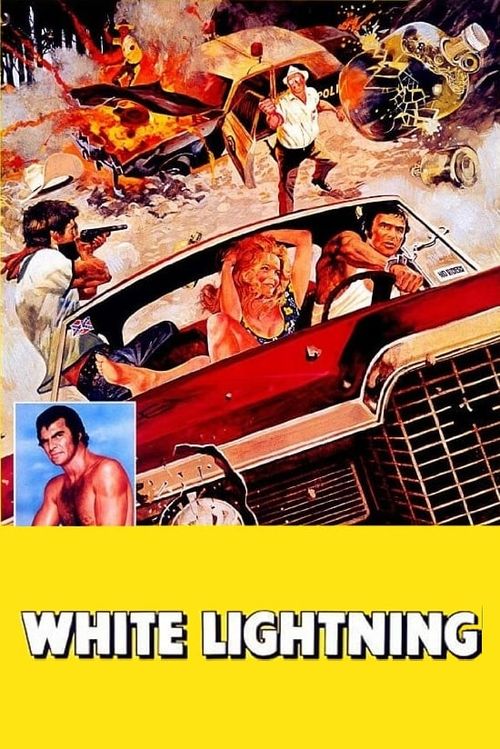
I’m kicking off #ArkansasMovies with WHITE LIGHTNING, the 1973 film from director Joseph Sargent that was filmed almost entirely within 30 minutes of my house in central Arkansas. Burt Reynolds is Gator McKlusky, a good ol’ boy who happens to find himself serving a stint in prison for “stealin’ cars, runnin’ cars, and runnin’ moonshine whiskey.” One day a cousin comes to visit him in prison and tells him that his younger brother Donny has been killed in Bogan County. Suspecting foul play, Gator first tries to escape. When that doesn’t work, he agrees to go stool pigeon and work with the federal authorities to infiltrate the world of illegal moonshining in Bogan County and provide them the names of the big money people in the area. This includes the crooked county Sheriff J.C. Connors (Ned Beatty), who Gator immediately zeroes in on as the key person responsible for his brother’s death.
In my opinion, WHITE LIGHTNING is one of the best of the good ‘ol boy, southern redneck films that were so popular in the 1970’s. One of the main reasons I like WHITE LIGHTNING so much is that while it does has some of the clowning that’s expected in these types of films, the tone gets deadly serious as McKlusky zeroes in on what happended to his brother. Reynolds is especially badass when he stops his signature laughing and goes into vengeance mode. And Ned Beatty is perfect casting as the small-town sheriff who is completely and irredeemably evil. The opening scene shows Beatty boating a couple of bound and gagged young men out into the middle of the lake, shooting a hole in the their boat, and then casually paddling away as the boat sinks. If you came up on him a little later, you’d think he was just heading in from a day of crappie fishing. For a guy that doesn’t look menacing at all on first glance, we know just how dangerous Sheriff J.C. Connors is. And so does Gator. We have a rooting interest in seeing Gator get his revenge.
The primary filming locations in WHITE LIGHTNING are practically in my backyard. My wife and I got married at the Saline County Courthouse in downtown Benton, which is featured very prominently in the film. It’s a beautiful courthouse, with a distinctive clock tower. They decorate it so beautifully for the Christmas season (see picture below). Burt also spends time at the “Benton Speedway” in the film. This is actually the old I-30 Speedway that was in operation in Little Rock for 66 years. Sadly, the Speedway held its final race on October 1, 2022, which is almost 50 years after filming completed. The rest of the locations used were also in central Arkansas in the towns of North Little Rock, Keo, Scott, Wrightsville, and Tucker. FYI, I don’t recommend poking around Tucker if you’re into film tourism. Tucker is the primary prison unit for the Arkansas Department of Corrections. If you do head that way, just don’t pick up any hitchhikers!
All in all, WHITE LIGHTNING is a movie I whole-heartedly recommend, and it’s especially meaningful to me since it’s so close to home. Billy Bob Thornton would be back in this same area in 1996 to film SLING BLADE.
The 1985 film, Out of the Darkness, takes place in New York City.
It begins in 1977 and it ends in 1978. As the opening title card informs us, it’s a film about a city that was living in fear of the gunman known as the Son of Sam. One of the first images that we see is an a handgun being fired at two people who are making out inside of a car. We then cut to a police station where a homicide detective (played by Sam McMurray) reads aloud the letter that the Son of Sam sent to Jimmy Breslin.
That said, David Berkowitz, the killer who claimed that he was told to murder by a dog before later changing his story and claiming that he was a part of a Satanic conspiracy, spends most of the film in the shadows. His name isn’t even mentioned until the film’s final third. Instead, the majority of the film focuses on Ed Zigo (Martin Sheen), a New York City detective who tries to balance his desire to catch the Son of Sam with taking care of his wife (Jennifer Salt), who is due to have surgery for her heart condition. Ed Zigo is dedicated and intelligent New York cop, the type who has no problem walking into a Mafia-controlled bar and asking the owner if his son has any connections to the family business. He’s also a dedicated family man who freaks out when his daughter goes out on a date. When his wife dies after surgery, Ed Zigo deals with his grief by throwing himself into his work but, as he tells his priest (Hector Elizondo), he no longer has his old confidence. He fears that he’s going to make a mistake that’s either going to put his partner (Matt Clark) in harm’s way or allow the Son of Sam to continue to killing.
And really, it’s not a problem that the film focuses less on the killer and more on the people trying to track him down. Martin Sheen gives a strong and sincere performance as the dedicated Ed Zigo, perfectly capturing not only his dedication but also his fear and his weariness. (In many ways, his performance here feels like a forerunner to his performance in The Departed.) The film captures the feel of living in a city where no one trusts anyone and it is also a good example of a “New Yorkers will be rude to anyone” film. Even with a killer running around, no one wants to listen to a word the police have to say. When David Berkowitz does show up, he’s played by an actor named Robert Trebor who gives an appropriately creepy performance.
Interestingly enough, Joe Spinell also appears in Out of the Darkness, playing the small but important role of an early Son of Sam suspect. Though he only appears in two scenes, Spinell makes a memorably seedy impression. Of course, today, Spinell is remembered for playing a character based on the Son of Sam in the infamous 1980 grindhouse shocker, Maniac.
(Trivia fans will also want to note that Charlie Sheen has a wordless cameo as a man who shuts his apartment door in the face of Martin Sheen and Matt Clark when they attempt to ask him if he witnessed the latest murder. “Nice guy,” Martin says, in response.)
If you’re looking for a film in which Berkowitz is cursed out by a dog, Summer of Sam is probably the one to go for. However, if you’re looking for a more low-key but realistic portrayal of Berkowitz’s reign of terror, Out of the Darkness is a good one to go with.
Sometimes, it takes a really good actor to give a really bad performance.
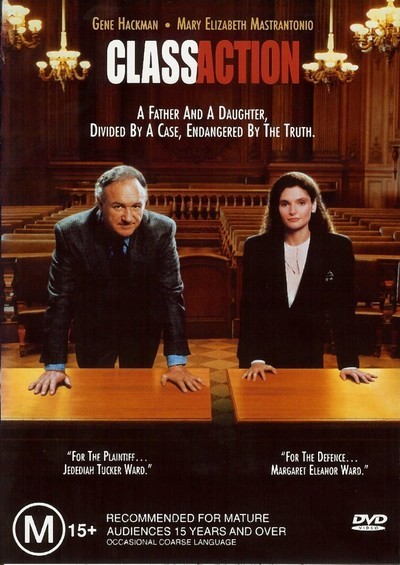
That’s what I found myself considering tonight as I watched the 1991 film, Class Action. I recorded this film off of Starz a few months ago, mostly due to the fact that I usually enjoy legal dramas. Class Action is about a father and a daughter, both of whom are attorneys, who find themselves facing each other in court. Gene Hackman plays Jedediah Ward Tucker while Mary Elizabeth Mastrantonio played Maggie, his daughter.
From the very first scenes, Jed Tucker is portrayed as being a firebrand, a crusader who stands up for the little guy against big corporate interests. (“Jed Ward is a great man!” one his clients exclaims while the other lawyers nod along in agreement.) Tucker is flamboyant, loud, perpetually outraged, in love with attention, and determined to make the world a better place. This is the type of role that would probably encourage any actor to overact just a bit. However, when you cast someone like Gene Hackman in the role, the performance becomes a masterclass in overacting. Gene Hackman was never a particularly subtle actor to begin with and casting him as Jed Tucker guarantees about two hours of Hackman bellowing, smirking, occasionally flirting, and basically coming across less like Gene Hackman and more like someone doing a particularly antic impersonation of Gene Hackman. Hackman goes so over overboard in the role that it becomes rather fascinating to watch. You watch and you ask yourself, “How much louder can he get? He much more obviously can he telegraph his intentions? Just how Gene Hackmanish is Gene Hackman going to get in this film?” Don’t get me wrong, Gene Hackman was a great actor. (He famously retired in 2004, after the indignity of appearing in Welcome to Mooseport.) One need only watch Bonnie and Clyde, The French Connection, Unforgiven, and The Royal Tennenbaums to see that Gene Hackman was a great actor. But sometimes, it takes a great actor to give a memorably bad performance.
Gene Hackman’s performance, as overbaked as it may be, is actually the only interesting thing about Class Action. It’s a well-made but ultimately rather silly mix legal maneuvering and family drama. Jed was a terrible father so Maggie becomes a corporate attorney in order to spite him. Class Action so embraces the idea that all professional women are motivated by daddy issues that even Aaron Sorkin would probably look at it and say, “Whoa, that’s really demeaning.” At one point, Maggie says to her father, “Have you ever considered that I might be a good attorney?,” just to have her father smirk and say that’s only because he’s her father. Jed’s response is to be expected, as he’s kind of an arrogant windbag. The problem is that the movie itself doesn’t seem to be willing to consider that Maggie could be a good attorney.
The other problem, of course, is that Class Action makes its good guys and its bad guys so painfully obvious that it’s hard to take any of the conflicts seriously. Of course, the big corporate law firm is going to be evil and of course, Jed Ward’s associates are going to be saints even if Jed isn’t. Laurence Fishburne plays Jed’s protégée and he gets stuck with all of the worst lines. Far more entertaining is future U.S. Senator and presidential contender Fred Dalton Thompson, playing a doctor who explains why it actually costs less for a car company to settle a lawsuit than to fix a design flaw.
Class Action is a forgettable film, not so much terrible as just bland. That said, if you want to hear some vintage Gene Hackman-style yelling, this might be the film for you.
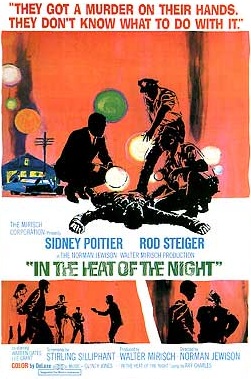
The 1967 film, In the Heat of the Night, tells the story of two very different men.
Chief Gillespie (Rod Steiger) is the police chief of the small town of Sparta, Mississippi. In many ways, Gillespie appears to the epitome of the bigoted Southern cop. He’s overweight. He loses his temper easily. He chews a lot of gum. He knows everyone in town and automatically distrusts anyone who he hasn’t seen before, especially if that person happens to be a black man or from the north.
Virgil Tibbs (Sidney Poitier) is a black man from the north. He’s a detective with the Philadelphia Police Department and he’s as cool and controlled as Gillespie is temperamental and uncouth. Tibbs has no patience for the casual racism that is epitomized by lawmen like Chief Gillespie. When Gillespie says that Virgil is a “fancy name” for a black and asks what people call Virgil in Philadelphia, Virgil declares, “They call me Mister Tibbs!,” with an authority that leaves no doubt that he expects Gillespie to do the same.
Together …. THEY SOLVE CRIMES!
For once, that old joke is correct. When a Chicago industrialist named Phillip Colbert is discover murdered in Sparta, Chief Gillespie heads up the investigation and, assuming that the murderer must be an outsider, orders Deputy Wood (Warren Oates) to check out the train station for any suspicious characters. When Wood arrives at the station, he discovers Virgil standing on the platform. Virgil is simply waiting for his train so that he can get back home to Philadelphia. However, Wood promptly arrests him. Gilespie accuses him of murdering Colbert, just to discover that Virgil’s a police detective from Philadelphia.
Though neither wants to work with the other, that’s exactly what Gillespie and Virgil are forced to do as they investigate Colbert’s murder. Colbert was planning on building a factory in Sparta and his wife (Lee Grant) makes it clear that, if Sparta wants the factory and the money that comes with it, Virgil must be kept on the case. Over the course of the investigation, Gillespie and Virgil come to a weary understanding as both of them are forced to confront their own preconceived notions about both the murder and life in Sparta. In the end, if it’s impossible for them to truly become friends, they do develop a weary respect for each other. That is perhaps the best that one could have hoped for in 1967.
I have to admit that it took me a few viewings before I really appreciated In the Heat of the Night. Though this film won the Oscar for Best Picture of 1967, it’s always suffered when compared to some of the films that it beat. One can certainly see that the film was superior to Doctor Dolittle and Guess Who’s Coming to Dinner. But was it a better film than The Graduate or Bonnie and Clyde? Did Rod Steiger really deserve to win Best Actor over Dustin Hoffman and Warren Beatty? (Amazingly, Poitier wasn’t even nominated.)
To be honest, I still feel that In The Heat of the Night was probably the 3rd best of the 5 films nominated that year, superior to the condescending Guess Who’s Coming To Dinner but nowhere near as groundbreaking as Bonnie and Clyde or The Graduate. The first time I watched In the Heat of the Night, I thought Steiger blustered a bit too much and the film’s central mystery didn’t really hold together and, to a large extent, I still feel like that.
But, at the same time, there’s a lot to appreciate about In the Heat of the Night. On subsequent viewings, I came to better appreciate the way that director Norman Jewison, editor Hal Ashby, and cinematographer Haskwell Wexler created and maintained an atmosphere that was so thick that you can literally feel the Mississippi humidity while watching the film. I came to appreciate the supporting cast, especially Warren Oates, Lee Grant, Scott Wilson, Anthony James, and Larry Gates. (Gates especially makes an impression in his one scene, playing an outwardly genteel racist who nearly cries when Tibbs reacts to his slap by slapping him back.) I also came to appreciate the fact that, while the white cop/black cop partnership has subsequently become a bit of a cliche, it was new and even controversial concept in 1967.
And finally, I came to better appreciate Sidney Poitier’s performance as Virgil. Poitier underplays Virgil, giving a performance of tightly controlled rage. While Steiger yells his way through the film, Poitier emphasizes that Virgil is always thinking. As in the same year’s Guess Who’s Coming To Dinner, Poitier plays a dignified character but, here, that dignity is Virgil’s way of defying the demands and expectations of men like Gillespie. When Virgil does strike back, it’s a cathartic moment because we understand how many times he’s had to hold back.
In the Heat of the Night may not have been the best film of 1967 but it’s still one worth watching.
For the crime of having murdered over a 100 people, “Meat Cleaver Max” Jenke (Brion James) is sentenced to death and sent to the electric chair. Even though everyone thinks that Max was electrocuted, his electricity-fueled spirit is still alive and pissed off. If this sounds familiar, that is because it is the exact same premise that was used in Destroyer. The only difference is that Max is not haunting a prison and killing a film crew. Instead, he is living in a basement and seeking revenge on Lucas McCarthy (Lance Henriksen), the cop who arrested him.
Lucas is already tightly wound. There is a scene where Lucas is watching as his family laughs uproariously at a late night comic who is telling a not very funny joke about then-Vice President Dan Quayle. When Lucas thinks that he sees Max on TV, he pulls out his gun and shoots the screen. His wife, son, and daughter will probably never laugh at another joke about any vice president. Soon, Lucas is seeing and hearing Max everywhere. Max says that he is going to tear Lucas’s world apart and he means it.
That The Horror Show is going to be a mess is obvious from the opening credits, where the screenplay is credited to Alan Smithee. The credited director is visual effects specialist James Isaac but most of the film was reportedly directed by David Blythe. Isaac stepped in when Blythe was fired by producer Sean S. Cunningham. Full of false scares and scenes where people go down into the basement for no reason other than to become Max’s latest victim, The Horror Show is usually boring, except for when it is violent, gory, and mean-spirited. There are moments of strange attempts at humor that do not seem to belong. In the middle of all the carnage, there is a subplot about McCarthy’s son (Aron Eisenberg) ordering case after case of Nestle Quick. Did Nestle pay for the product placement? Were they happy to be associated with a movie where Lance Henriksen has a nightmare that his daughter (played by DeeDee “sister of Michelle” Pfieffer) is pregnant with Max Jenke’s baby?
The Horror Show provided both Lance Henriksen and Brion James with rare starring roles and they did their best what they had to work with. Also keep an eye out for veteran tough guy Lawrence Tierney as the warden who supervises Max’s execution.
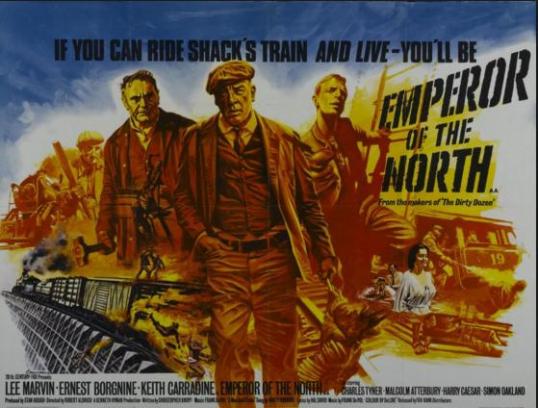
Emperor of the North Pole is the story of depression-era hobos and one man who is determined to kill them.
The year is 1933 and Shack (Ernest Borgnine) is one of the toughest conductors around. At a time when destitute and desperate men are riding the rails in search of work and food, Shack has declared that no one will ride his train for free. When Shack is first introduced, the sadistic conductor is seen shoving a hobo off of his train and onto the tracks. Shack smiles with satisfaction when the man is chopped in half under the train’s wheels.
A-No.1 (Lee Marvin) is a legend, the unofficial king of the hobos. A grizzled veteran, A-No. 1 has been riding the rails for most of his life. (The title comes from the hobo saying that great hobos, like A-No. 1, are like the Emperor of the North Pole, the ruler of a vast wasteland). A-No. 1 is determined to do what no hobo has ever done, successfully hitch a ride on Shack’s train. He even tags a water tower, announcing to everyone that he intends to take Shack’s train all the way to Portland.
If A-No. 1 did not have enough to worry about with Shack determined to get him, he is also being tailed by Cigaret (Keith Carradine), a young and cocky hobo who is determined to become as big a legend as A-No. 1. Cigaret and A. No. 1 may work together but they never trust each other.
Like many of Robert Aldrich’s later films, Emperor of the North Pole is too long and the rambling narrative often promises more than it can deliver. Like almost all movies that were released at the time, Emperor of North Pole attempts to turn its story into a contemporary allegory, with Shack standing in for the establishment, A-No. 1 representing the liberal anti-establishment, and, most problematically, Cigaret serving as a symbol for the callow counter culture, eager to take credit for A-No. 1’s accomplishments but not willing to put in any hard work himself.
As an allegory, Emperor of the North Pole is too heavy-handed but, as a gritty adventure film, it works wonderfully. Lee Marvin is perfectly cast as the wise, no-nonsense A-No. 1. This was the sixth film in which Marvin and Borgnine co-starred and the two old pros both go at each other with gusto. Carradine does the best he can with an underwritten part but this is Borgnine and Marvin’s film all the way. Marvin’s trademark underacting meshes perfectly with Borgnine’s trademark overacting, with the movie making perfect use of both men’s distinctive screen personas. As staged by Aldrich, the final fight between Shack and A-No. 1 is a classic.
Even at a time when almost every anti-establishment film of the early 70s is being rediscovered, Emperor of the North Pole remains unjustly obscure. When it was first released, it struggled at the box office. Unsure of how to sell a movie about hobos and worrying that audiences were staying away because they thought it might be a Christmas film, 20th Century Fox pulled the movie from circulation and then rereleased it under a slightly altered name: Emperor of the North. As far as titles go, Emperor of the North makes even less sense than Emperor of the North Pole. Even with the title change, Emperor of the North Pole flopped at the box office but, fortunately for him, Aldrich was already working on what would become his biggest hit: The Longest Yard.
Keep an eye out for Lance Henriksen, in one of his earliest roles. Supposedly, he plays a railroad worker. If you spot him, let me know because I have watched Emperor of the North Pole three times and I still can’t find him.
(I am currently trying to clean out my DVR! I recorded this 1979 sports film off of FXM on February 1st!)
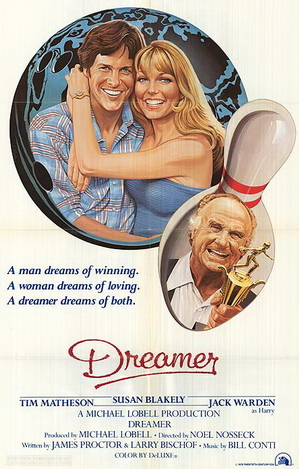
In Dreamer, Tim Matheson plays a character named Harold Nuttingham. His nickname is Dreamer. Do you think it’s possible that Harold has a dream!? Well, it would probably be a really cruel nickname if he didn’t!
Dreamer lives in small town Illinois. He loves to bowl. He spends all of his time down at the local bowling alley, where everyone knows him and they all love him and his dreams of becoming a professional bowler. His mentor is named Harry White (Jack Warden) and runs the pro shop. Harry dreamed of being a famous, champion bowler but his dreams didn’t come true. But now he can help Dreamer’s dreams work out. Everyone loves the fact that Harry is helping Dreamer. Dreamer’s girlfriend is named Karen Lee (Susan Blakely). She loves that Dreamer loves bowling but she is frustrated because everyone keeps telling Dreamer that it would be a mistake to take her to his games. Karen might bring bad luck.
Everyone in his hometown loves Dreamer but the Professional Bowling Association (which apparently is an actual thing) doesn’t love Dreamer. They don’t want to let Dreamer compete on a professional level. Or, at least, they don’t until Dreamer meets with them personally and shows off his amazing bowling skills. Then they love Dreamer.
Even though Dreamer is the new guy on the professional circuit, the audiences love him. And all the other professional bowlers love him, even when they lose to him. Everyone loves Dreamer, perhaps because everyone loves a dreamer…
Are you getting the impression that Dreamer might be one of the most positive movies ever made? Well, it is. Hardly anyone says a bad word about anyone in Dreamer. Nobody tells Dreamer to give up. Dreamer never really suffers from any self-doubt, though he does injure his thumb at one point. There is a moment of tragedy towards the end of the movie but it’s one of those tragedies that leads to better things. You can’t have light without a little darkness, though Dreamer seems to suggest that you can come awfully close.
Normally, films get on my nerves when they’re overwhelmingly positive but I can’t really complain about a movie like Dreamer. It’s just so earnest and sincere. There’s no real conflict and there’s no real drama but everyone in the movie is just so damn likable that you almost feel guilty for wishing something unexpected would happen. Dreamer struggles and fails to make bowling cinematic but Dreamer’s a nice guy so you wish him the best.
Perhaps the most interesting thing about Dreamer is that it was directed by Noel Nosseck, who also directed an incredibly odd little grindhouse film called Best Friends. Best Friends, which I recommend tracking down, is almost the anti-Dreamer. Watch Best Friends to have your faith in humanity destroyed and then follow it up with Dreamer so your faith can be restored.
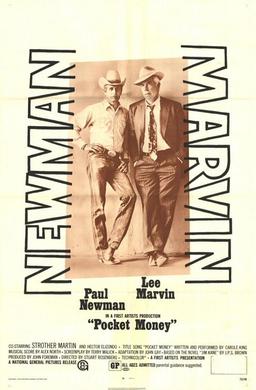 In this slow but amiable film, Paul Newman plays Jim Kane. Kane is a down-on-his luck cowboy who finds himself in Arizona with nearly a dollar to his name. Because Kane’s a likable sort, he has people who are willing to help him out but eventually, he finds himself with no choice but to accept a job offer from Stretch Russell (Wayne Rogers) and shady rancher Bill Garrett (Strother Martin). Kane agrees to Mexico to round up a heard of cattle. Helping Kane out on the job is an old friend by the name of Leonard (Lee Marvin).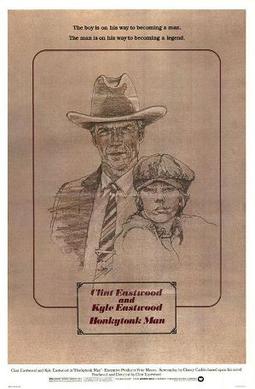


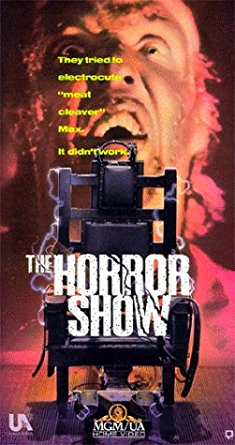 For the crime of having murdered over a 100 people, “Meat Cleaver Max” Jenke (Brion James) is sentenced to death and sent to the electric chair. Even though everyone thinks that Max was electrocuted, his electricity-fueled spirit is still alive and pissed off. If this sounds familiar, that is because it is the exact same premise that was used in
  Emperor of the North Pole is the story of depression-era hobos and one man who is determined to kill them.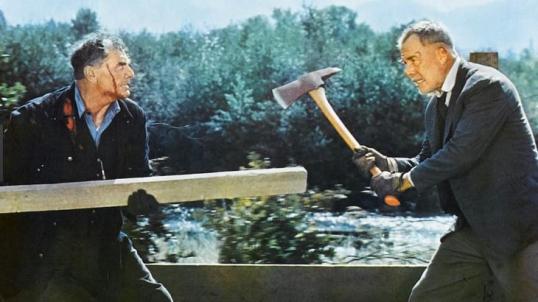
 Through the Shattered Lens