Film Review: Exodus (dir by Otto Preminger)


First released in 1960 and based on a novel by Leon Uris, Otto Preminger’s Exodous is two films in one.

The first half of the film takes place in Cyprus in the days immediately following World War II.  A young war widow named Kitty (Eva Marie Saint) is sightseeing when she learns of the Karaolos Internment Camp, where the British are interning thousands of Jewish refugees who demand to be allowed to go to the land that will eventually become the State of Israel.  Kitty visits with General Sutherland (Ralph Richardson), who oversees the camp and who is rumored to secretly be Jewish because of his relatively benevolent attitude towards the internees.  Disgusted by the anti-Semitism displayed by many of the British officers (one of whom is played by Kennedy in-law Peter Lawford), Kitty volunteers at the camp and learns about the Holocaust from those who survived it.  She also meets Ari Ben Caanan (Paul Newman), a former officer in the British army.  Ari manages to get control of a cargo ship, one that is renamed Exodus.  Six hundred refugees stage a hunger strike, vowing that they will willingly starve to death rather than be returned to Europe.

The second part of Exodus takes place in what will become the modern State of Israel.  It follows Ari, Kitty, and several of the passengers of the Exodus as they adjust to life and continue to fight for a land of their own, despite the opposition of the British and much of the rest of the world.  Karen (Jill Haworth) is a young woman who searches for her father, a brilliant man who has been driven into a nearly catatonic state by the horrors of the Holocaust.  Dov Landau (Sal Mineo) is an explosives expert who survived Auschwitz as a Sonderkommando and who was repeatedly raped by the guards at the camp.  Dov joins the Irgun, a paramilitary organization that the British consider to be terrorists.  Leading the Irgun is Ari’s uncle, Akiva (David Opatoshu), and Dov soon finds himself being targeted by both the British and the Arabs who, despite the moderating efforts of men like Taha (John Derek, who would later direct Ghosts Can’t Do It), want to violently force the Jews out of the land.

Legend has it that, after a private screening on Exodus, comedian Mort Sahl turned to director Otto Preminger and said, “Otto, let my people go.”  And it’s true that Exodus is a very long film.  Preminger, who started out making film noirs like Laura, spent the latter part of his career making “important” epics and, like many Golden Age directors struggling to compete with television and the 60s counterculture, he tended to make long, star-studded films that dealt with current events and which pushed the envelope just enough to be controversial without actually being radical.  However, I would argue that the three-hour running time of Exodus is justified.  To understand why Ari, Dov, Karen, and the other passengers of the Exodus would rather risk their lives by staying in what will become the State of Israel, one has to understand both what they went through to get there and also the anti-Semitism that they faced even in post-World War II Europe.  If Exodus were made today, it would be a mini-series.  Since it was made in 1960, it was instead a 3-hour film with an intermission.

Exodus holds up relatively well, with the sprawling action anchored by the presence of a cast of familiar faces.  Paul Newman and Eva Marie Saint bring a good deal of movie star glamour to scenes that would have otherwise just been dry exposition.  The film’s heart truly belongs to Jill Haworth and Sal Mineo, both of whom bring two life characters who have very differing views of the world.  Karen remains an optimist, one who is convinced that people can live together.  Dov, fueled by his own guilt and anger, has no room for negotiations and compromises.  Mineo received his second and last Oscar nomination for his performance in Exodus, though he lost to Peter Ustinov’s showy turn in Spartacus.  Exodus itself was clearly made with a hope for Oscar glory.  While Exodus did pick up a handful of nominations, it was left out of the five movie Best Picture slate.  The Academy only had room for one historical epic and they went for John Wayne’s The Alamo.  The eventual winner was The Apartment, the best of the nominated films.  (Indeed, even if Exodus had taken the Alamo’s spot, The Apartment would still be the best of the nominees.)  The Oscars aside, Exodus remains a good example of the type of epic filmmaking that once defined the Hollywood studios.
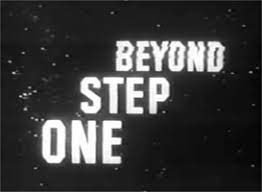
Horror On TV: One Step Beyond 3.31 “The Sorcerer” (dir by John Newland)


One tonight’s episode of One Step Beyond, the one and only Christopher Lee plays a German military officer who makes a fatal deal with a sorcerer.

This episode was Christopher Lee’s American television debut.  It originally aired on May 23rd, 1961.

Horror on TV: One Step Beyond 3.23 “Justice” (dir by John Newland)


Tonight’s episode of One Step Beyond takes us to Wales.  A man confesses to murdering his mistress.  The only problem is that he has an airtight alibi for the time of the attack.  Everyone in his village swears they saw him asleep in church when the murder occurred.

Could the man be capable of being in two places at once?

Watch to find out!  And, as always, can you prove it didn’t happen!?

This episode originally aired on March 7th, 1961.

Lisa Reviews An Oscar Nominee: Ivanhoe (dir by Richard Thorpe)


Welcome to England in the 12th century!

That’s the setting of the 1952 best picture nominee, Ivanhoe.  It’s a green and healthy land, full of chivalrous knights and corrupt royalty and outlaws who steal from the rich and give to the poor.  King Richard the Lion Heart (Norman Wooland) left on a crusade and he hasn’t been seen for a while.  Richard’s evil brother, the cowardly King John (Guy Rolfe), rules the country and has little interest in making sure that Richard returns.  Even when Wilfred of Ivanhoe (Robert Taylor) discovers that Richard is being held for ransom, John declines to do anything about it.

Ivanhoe is determined to raise the money to pay the ransom and restore Richard to the throne of England, even if he has to secretly compete in a tournament to do it.  Of course, before he can do that, he’ll have to buy a horse and some armor.  Fortunately, he comes across Isaac (Felix Aylmer) and his daughter, Rebecca (Elizabeth Taylor).  Isaac and Rebecca give Ivanhoe the money necessary to purchase a good horse and equipment.  Rebecca falls in love with Ivanoe, despite the fact that Ivanhoe is in love with Rowena (Joan Fontaine, who spends most of the movie looking rather bored).

Speaking of love, the king’s favorite knight — the hot-headed but honorable Sir Brian De Bois-Guilbert (George Sanders) — has fallen in love with Rebecca.  That, of course, complicates matters when the anti-Semitic King John attempts to have the Jewish Rebecca burned at the stake for witchcraft.  When Ivanhoe invokes the “wager of challenge,” in an effort to save Rebecca’s life, Sir Brian is chosen as the court’s champion.  Needless to say, this leads to some awkward moments….

Listen, I would be lying if I said that it was easy for me to follow the plot of Ivanhoe.  It seemed like every few minutes, someone else was plotting against either Ivanoe or King John and it got a bit difficult to keep track of what exactly everyone was trying to accomplish.  By the time Robin Hood (Harold Warrender) showed up, I have given up trying to make sense of the plot.

Instead of worrying about the exact details of the plot, I decided to just enjoy the film as a spectacle.  If nothing else, Ivanhoe is gorgeous to look at.  The colors are lush and full and the costumes and the sets are all wonderfully ornate.  Apparently, 12 Century England was a very colorful place.  There’s a lot of battles and jousts and sword fights.  I couldn’t always keep track of who was fighting who but at least the film moved at a steady pace.

Robert Taylor and Joan Fontaine make for a dull leading couple but a young Elizabeth Taylor is stunning in the role of Rebecca and George Sanders transforms Sir Brian into a truly tragic figure.  Guy Rolfe is memorably evil as King John, though he’s perhaps not as much fun as Oscar Isaac was in Robin Hood.  Everyone in the movie looks good in their period costuming.  Really, that’s the most important thing.

Ivanhoe was nominated for Best Picture but lost to The Greatest Show On Earth.

Embracing the Melodrama Part II #26: Cleopatra (dir by Joseph L. Mankiewicz)


Cleopatra_posterWhile watching the 1963 best picture nominee, Cleopatra, I had many thoughts.  The film lasts over 4 hours so I had a lot of time to think.

For instance, I often found myself impressed by the sheer size of the production.  I marveled at the recreation of ancient Greece and Rome.  I loved looking at the ornate costumes.  I loved feeling as if I was taking a look back at what Rome may have actually looked like at the height of the Roman Empire.  Making it all the more impressive was that this film was made in the days before CGI.  When the film’s Romans walked through the streets of Rome, they weren’t just actors standing in front of a green screen.  They were walking down real streets and surrounded by real buildings.  It reminded me of the awe and wonder that I felt when I was in Italy and I was visiting the ruins of ancient Rome.

(I don’t know if any of the cast accidentally flashed everyone like I did when I visited during Pompeii on a windy day but considering how short some of the skirts on the men were, it wouldn’t surprise me if they did!)

And, as I marveled at the recreation of Rome, I also thought to myself, “How long is this freaking movie?”  Because, seriously, Cleopatra is an amazingly long movie.  It’s not just the film is over four hours long.  It’s that the film feels even longer.  Gone With The Wind, The Godfathers Part One and Part Two, Once Upon A Time In America; these are all long films but, because they’re so great, you never find yourself checking the time while watching.  Cleopatra is the opposite of that.  Cleopatra is a film that, at its slowest, will make you very much aware of how many seconds are in a minute.

I found myself marveling at the lack of chemistry between Elizabeth Taylor and Richard Burton.  If anything, this is the most shocking thing about Cleopatra.  If Cleopatra is famous for anything, it’s famous for being the film where Elizabeth Taylor (cast in the role of Cleopatra) first met Richard Burton (who was playing Mark Antony).  Their affair dominated the gossip headlines.  (If TMZ and YouTube had been around back then, there would be daily videos of Richard Burton punching out paparazzi.)  Cleopatra was the first of many big-budgeted, overproduced films that Taylor and Burton co-starred in.

(Then again, they also starred in Who’s Afraid of Virginia Woolf, a film that is almost the exact opposite of Cleopatra.)

In the role of Mark Antony, Burton spends most of the film looking absolutely miserable.  Elizabeth Taylor, meanwhile, seems to be having a lot more fun.  It’s almost as if she understood what Cleopatra was going to become so she went out of her way to give the type of over-the-top performance that the film deserved.  The same can also be said about Rex Harrison, who plays Julius Caesar and who, perhaps because he appears to have shared her attitude, actually does have some chemistry with Taylor.

Actually, if anyone gives a truly great performance in Cleopatra, it’s Roddy McDowall.  McDowall plays the future Emperor Augustus with a mesmerizing intensity.  Again, McDowall’s performance is not exactly subtle but Cleopatra is not a film that demands subtlety.

As the film finally neared its end, I found myself wondering how Joseph L. Mankiewicz went from directing two close to perfect films, A Letter To Three Wives and All About Eve, to directing this.  Even more amazing, Mankiewicz had previously directed one of the best Roman Empire films ever, 1953’s Julius Caesar.  (When compared to Cleopatra, the low-key and thoughtful Julius Caesar appears to have been filmed on an entirely different planet.)  Well, in Mankiewicz’s defense, he was not the original director.  He was brought in to replace Rouben Mamoulian, who had previously attempted to make the film with Joan Collins, Ben-Hur‘s Stephen Boyd, and Peter Finch.  When Mankiewicz was brought in, the cast was replaced with Taylor, Burton, and Harrison.  Between the expensive stars, the troubled production, and all of the offscreen romantic melodrama, Mankiewicz probably did the best that he could.

Today, Cleopatra is mostly interesting as an example of a film from the “Only Gigantic Productions Will Save Us From Television!” era of Hollywood filmmaking.  Cleopatra started out as a $2,000,000 production and ended up costing $31,000,000.  It was the number one film at the 1963 box office and it still nearly bankrupted 20th Century Fox.  While the film does have some kitsch appeal, the critics hated it and it’s easy to see why.

And yes, it was nominated for best picture of the year, a tribute to the size of the production and the determination of 20th Century Fox to get something — anything — in return for their money.

Cleopatra is a bit of a chore to sit through but it can be fun if you’re in a snarky mood.  It’ll do until the inevitable Angelina Jolie remake comes along.

Horror Film Review: The Omen (dir by Richard Donner)


The Omen

A few days ago, Arleigh shared the theme song from 1976’s The Omen as Monday’s horror song of the day.  As I sat there and listened to Jerry Goldsmith’s award-winning hymn to Satan, it occurred to me that I happen to have all five of the Omen films sitting in my movie collection.  Seeing as how this is Halloween and how the world seems to be getting closer to ending with each passing day, I decided that this would be the perfect time to rewatch the entire franchise and consider whether or not The Omen films are truly as scary as a lot of people seem to think.

So, that’s what I did.

How did things turn out?

Well, in the long history of sequels and remakes, The Omen franchise is one of the more uneven collections.  This is one of those franchises where things tend to get less impressive with each subsequent entry.  However, 38 years after its initial release, the first Omen remains effective and, in its way, genuinely scary.

If you’re a horror fan, you probably know the general plot of The Omen regardless of whether you’ve actually watched it or not.  It’s one of those films that has been so frequently imitated that it’s almost possible to watch it by osmosis.

The film opens in Rome with diplomat Robert Thorn (Gregory Peck) being rushed to the hospital where his wife, Kathy (Lee Remick), has just given birth.  A priest (Martin Benson) tells him that his son died shortly after being born but that he can always just go home with an orphaned newborn that he just happens to have handy.  Robert agrees and decides not to tell his wife the truth about the child.  Robert and Kathy raise the boy and they name him Damien.  Four years later, the politically ambitious Robert is named as Ambassador to the Court of St. James.

The Thorns move to London and soon, odd things start to happen.  Damien (now played by Harvey Spencer Stephens) is a quiet boy with a piercing stare who throws a fit whenever he’s taken inside of a church.  When Kathy takes Damien to the zoo, they’re attacked by angry baboons.  A large Rottweiler mysteriously appears on the grounds of the Ambassador’s estate.  A mysterious and sinister nanny (Billie Whitelaw) shows up and explains that she’s been sent by an “agency.”  A crazed priest (Patrick Troughton) starts to stalk the Ambassador, demanding a chance to speak with him and insisting that Damien’s mother was actually a jackal.

Even more mysteriously, people start dying in the strangest of ways.  A young woman (Holly Palance) smiles as she shouts, “Damien, it’s all for you!” and then hangs herself, thoroughly ruining Damien’s fifth birthday party.  A freak lightning storm leads to a man being impaled by a weather vane.  Another person who suspects that there might be something wrong with Damien ends up losing his head in a graphic sequence that — even in this age of Hostel and Saw — is difficult to watch.

The Ambassador is contact by Keith Jennings (David Warner), a nervous photographer who fears that Damien may be planning on killing him.  Soon, Thorn and Jennings are flying to Italy and to the Middle East and discovering evidence that five year-old Damien might very well be the Antichrist.  Speaking of Damien, he and that nanny have been left alone with poor, victimized Kathy.

(“Oh, leave her alone,” I muttered as Damien attempted to kill Kathy for the hundredth time…)

As I watched The Omen, I tried to figure out why this film has held up so well.  It certainly wasn’t due to the performance of Gregory Peck who, quite frankly, seemed to mostly be going through the motions.  David Warner, on the other hand, gave such a good performance that it was almost difficult to watch.  (Don’t get attached to any character who appears in an Omen film.)   Some of the film’s effectiveness was undoubtedly due to Jerry Goldsmith’s intense score.  Anything’s scary when you’ve got a hundred voice shouting “Ave Satani” at you.

But, ultimately, I think the reason why The Omen still works is because the film generates such a palpable sense of doom.  This is one of those films that leaves you convinced that anyone can die at any minute and, considering that happens to be true in both this movie and in real life, that makes the horror of The Omen feel very real.  By the time the film ends, you’re left with little doubt that nobody in the film had the least bit of power or control over his or her own destiny.  Instead, they were all just pawns in a game that they had no hope of ever winning or understanding.  Is there anything scarier than feeling powerless?

All I know is that, having rewatched The Omen, I will never look at a plane of glass the same way again.

http://www.youtube.com/watch?v=vVK42hD9IaY